 50 punkti
Autor soovib selle materjali allalaadimise eest saada 50 punkti.
50 punkti
Autor soovib selle materjali allalaadimise eest saada 50 punkti.
 ~ 45 lehte
Lehekülgede arv dokumendis
~ 45 lehte
Lehekülgede arv dokumendis
 2015-01-26
Kuupäev, millal dokument üles laeti
2015-01-26
Kuupäev, millal dokument üles laeti
 2 laadimist
Kokku alla laetud
2 laadimist
Kokku alla laetud
 0 arvamust
Teiste kasutajate poolt lisatud kommentaarid
0 arvamust
Teiste kasutajate poolt lisatud kommentaarid
 K L
Õppematerjali autor
K L
Õppematerjali autor
Life in Estonia through the eyes of an economics student With a population of 1 313 271 people, Estonia is one of the least populous member states of the European Union. However, according to the IMF, it is a developed country with an advanced and high-income economy. Estonia follows market economy system which ensures the little government intervention and the determination of prices of goods and services in a free price system. Therefore, economic decisions are guided solely by the aggregate interactions of a country's citizens and businesses. In addition to mentioned afore, Estonia tends to perform favourably in measurements of civil liberties, education, and press freedom. Living in Estonia has many of its good sides, for instance it is a secure place from nature disasters and it has a beautiful nature. Although, when not to look only through rose-tinted
................................................................................................. 55 2 INTRODUCTION The current reading material focuses on the business peculiarities in Russia. *** The aim of the Traderun programme course "FUNDING PROJECTS IN RUSSIA AND EASTERN PARTNERSHIP COUNTRIES" is to provide the students with comprehensive and practical overview of the fundraising possibilities in EU and Estonia. The course gives an overview of EU structural support and regional implementing agencies, that are available for a businessman to apply for a fund. A successful student will be aware of and understand the EU fundraising possibilities in the frames of cooperation with Russian and Eastern Partnership countries, and able to define the financing criteria and priorities. The current reading material summarises the main aspects covered by lectures and
.................................................................................106 3 INTRODUCTION The current reading material focuses on business peculiarities in Ukraine and Belarus. *** The aim of the Traderun programme course "FUNDING PROJECTS IN RUSSIA AND EASTERN PARTNERSHIP COUNTRIES" is to provide the students with comprehensive and practical overview of the fundraising possibilities in EU and Estonia. The course gives an overview of EU structural support and regional implementing agencies, that are available for a businessman to apply for a fund. A successful student will be aware of and understand the EU fundraising possibilities in the frames of cooperation with Russian and Eastern Partnership countries, and able to define the financing criteria and priorities. The current reading material summarises the main aspects covered by lectures and
newest internationally compatible EU accounting framework for a systematic and detailed description of an economy, http://epp.eurostat.ec.europa.eu/portal/page/portal/esa_2010/introduction 3 Refer to the text in chapter ... 3 Figure ... Traditional banking based financial intermediation (Pozsar and Singh, 2011, p. 3). 5.1.3.Major Financial Services Appendix 1 (p. L177/57) of above mentioned EU directive 2006/48/EC lists particularly the services of credit institutions that are subject of mutual recognition in the EU: 1. Acceptance of deposits and other repayable funds 2. Lending including, inter alia: consumer credit, mortgage credit, factoring, with or without recourse, financing of commercial transactions (including forfeiting) 3. Financial leasing 4. Money transmission services 5. Issuing and administering means of payment (e.g
Sara Shaw, Rebecca Rosen and Benedict Rumbold June 2011 Nuffield Trust work on integrated care This report is part of the Nuffield Trust's extensive programme of work on integrated care, which is examining the potential of new forms of care that are intended to benefit patients and taxpayers. Other related projects include: ·Integration in action: four international case studies. A study of four international organisations that have attempted to improve integration between health and care services. Interviews, documentary analysis and literature review are used to identify the main stimuli for integration and the issues that help or hinder progress; drawing out lessons for the NHS. ·Towards integrated care in Trafford. A project that looks at the process of change and lessons learned to date in Trafford, where NHS organisations have been working on the development of an integrated care system across the whole health economy.
The main categories of public law in England are: Crimes – wrongs which, even when committed against an individual are considered to harm the well-being of society in general Constitutional Law – regulation of how the law itself operates and of the relation between private citizen and government International Law – regulation of relations between governments and also between citizens of different countries But in Estonia, the main categories are: constitutional law, administrative law, tax law, penal law and procedural law. 7. Classification of courts (general) Jurisdiction – the authority of a court or official organization to make decisions and judgments Adjudicate – the process of making an official decision about something Dispute – disagreement Commit a crime – to do something illegal Wrongdoer – a person who does something bad or illegal
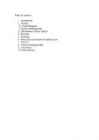
Table of contents 1. Introduction 2. History 2.1. Early Hospitals 2.2 Recent developments 3. The National Health Service 4. Diseases 5. First Aid 6. Medicine and elements of medical care 7. Doctors 8. Ways of keeping health 9. Conclusion 10.Used materials 1. Introduction The human body is just like a machine with many parts. Each part has a special job, and all the parts work together to keep you alive and healthy. Good health is one of the most important things in life. There are certain things we can do to stay healthy.
sequel ideology (ideoloogia järg) - principle of the seperation of goverment institutions and persons mandated to represent the state from religious institutsion criminal code (kriminaalseadustik) - a document which complies all or significant amount of particulal crimnal law unbiased (erapooletu) - to be fair and likely not support particular party of the case consumer (tarbija) - an indicual who purchases services and merchandises binding agreement (siduv kokkulepe) - an agreement in writing between two or more individuals or entities in which a court can impose penalties in case one party does not fulfill the obligations tort (seadusevastane tegu) - a civil wrong, intentional or not, from which injury occurs to another reputation (reputatsioon) - person's good name, honor or what the community thinks of him/her property (vara) - something that is owned by a person (bussiness, land, building etc)
 annaabi.ee

























Kõik kommentaarid