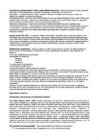
women's day. Women and girls go together to swim in a spring in the sunrise it will make them fresh and goodlooking for rest of the year. After they dance and sing and dance traditional round dances. It used to be the only day when men stayed at home and took care of the house and children. Women colored their cheeks with a herb "naistepuna" ("women's red") and went to tavern to have some red liqueur. Celebrating spring contains more or less fertilizing rituals. As we have to do a lot of work to making something grow, these rituals have an important place in our traditions. It is not only necessary for getting a good harvest from your field but also having a lot of children who will work in your farm.
At larger events to celebrate this important day with singing and dancing As Estonians have done for centuries. Midsummer customs Sauna Going cemetery Swaying Click to edit Master text styles Second level Singing Third level Dancing Fourth level Fifth level Tug-of-war Eating Rituals The lighting of the bonfire and then jumping over it Lovers go into the forest looking for the flower of Click to edit Master text styles the fern which is said to Second level bloom only on that night Third level Fourth level
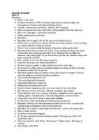
Afternoon ceremonies -> to love all mankind , stichball game Sundown-ceremony cief lights ceremonial pipe: ,,sacrifice meat to Sacred people" Stomp dance: flat sunken area with seats on all 4 sides: around the sacred fire. Moved in counter- clockwise direction .............. Rythm is hypnotic and spiritual. WINDY MOON (March) New year begins , prepare for planting FLOWER MOON (April) Time of many births, blooming of medicinal (spiritual) plants. Rituals to ,,Long Man" (spirit of rivers) ,,Knee deep dance of the water frog" PLANTING MOON (May) Beginning planting: corn, beans, squash, tomatoes, yams, potatoes+sunflower. GREEN CORN MOUNTH (June) First green corn Preparation for growing season festivals. ANIGADUGI SOCIETY (volunteer group that helps poor elderly + sick) active RIPE CORN MOON (July) Dances+celebrations dedicated to Earth Mother FRUIT MOON (August) Cathering fruits, herbs+other medicinal plants NUT MOON (September)
Fundamentalist, Wahhabi doctorine 1999 50000 – 260000 Videos of beheadings WORLD MUSLIM POPULATION FIVE PILLARS Five basic acts Obligatory for all believers 1.) The creed 2.) Daily prayers 3.) Almsgiving 4.) Fasting during Ramadan 5.) The pilgrimage to Mecca PILGRIMAGE Performed during the Islamic Month Mecca Every able-bodied Muslim At least once in his/her lifetime Rituals of the Hajj GREAT MOSQUE OF MECCA ISLAM IN ESTONIA 1508 followers (2011) Smallest in Europe Appartment in Tallinn Estonian Islamic Center Sunnis and Shias worship jointly Activity since 1860, Narva VIDEO https://www.youtube.com/watch?v=5AkAGc 5nOXw USED LITERATURE https://en.wikipedia.org/wiki/Islam http://www.bbc.co.uk/religion/religions/isl am/ https://en.wikipedia.org/wiki/Islam_in_Esto nia http://www.islam.pri
in Celtic society. · Celts was the first who saw the potential for crating large-scale artwork on the chalk hills of southern England, for example the famous chalkhorse. · There were taken place the rituals and the site is considered to be connected with the sun and the passing of the seasons. · The ruins consists of two stone circles and two stone horseshoes. · The Bronze Age reached Britain between 2100-1650 BC. · The basic unit of Celtic family life · European Celts invaded Britain in 2 was the clan-was bound together very waves: Gales around 600 BC and then loosely with other clan into tribe. Cymri or Britons around 300 BC
ancestry commit themselves to a 9-day vegetarian diet, a form of purification believed to help make the forthcoming year "trouble-free". The festival is marked by several ascetic displays, including fire-walking and ascending sharp-bladed ladders. Ghost Festival or PhoTo Festival- is held on the middle day of the 7th Chinese lunar month the realms of Heaven and Hell and the realm of the living are open and both Taoists and Buddhists would perform rituals to transmute and absolve the sufferings of the deceased. Pictures Thank you for your attention!
of Independence when Estonian forces defeated the German troops on 23 June 1919. After this battle against Estonia's traditional oppressors, Jaaniõhtu and the lighting of the traditional bonfires became linked with the ideals of independence and freedom. Jaanipäev marks a change in the farming year, specifically the break between the completion of spring sowing and the hard work of summer hay-making. Understandably, some of the rituals of Jaanipäev have very strong folkloric roots. The best-known Jaani, or midsummer, ritual is the lighting of the bonfire and the jumping over it. This is seen as a way of guaranteeing prosperity and avoiding bad luck. Likewise, to not light the fire is to invite the destruction of your house by fire. The fire also frightened away mischievous spirits who avoided it at all costs, thus ensuring a good harvest. So, the bigger the fire, the further the mischievous spirits stayed away.
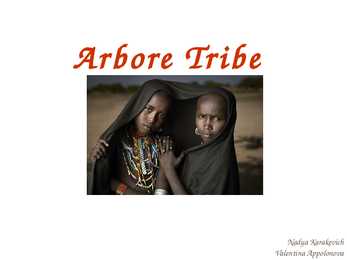
Traditions, habits Arbore women are well known or their long headdresses. The girls shave their heads to ndicate virginity, and only start growing hair after marriage . The women of the tribe cover heir heads with a black cloth and are known to wear very colorful necklaces and earrings. Young children wear a shell type hat that protects their heads from the sun. Traditions, habits The Arbore sing and dance whiles performing rituals,they believe that their singing and dancing eliminates negative energy and with the negative energy gone, the tribe will prosper. Body painting is done by the Arbore using natural colors made from solid and stone. Traditional dancing is practiced by the tribe and wealth is measured by the number of cattle a tribesman owns. Arbore is one of Ethiopia Cultural Tour in Omo Valley. Thanks for your attention!
113. Post pärast 114. Practitioners -. Praktiseerijad 115. Priority - eesõigus 116. Produce tootma 117. Profit - kasum 118. Pry nina toppima 119. Purpose - eesmärk 120. Rational- mõistusepärane 121. Recall mäletama 122. Reduce- vähendama, kahandama 123. Reform reform /uuendus 124. reinterpret - seletama, selgitama 125. reinvent uuesti leiutama (kontekst. Jalgratas) 126. reporting - aruandlus 127. resistance Vastupanu 128. rites rituals, rituaalid 129. Salary palk 130. Scientific teaduslik 131. signature nimemärk, allikiri 132. Skillfull Osav 133. Software - tarkvara 134. Stakeholders Võimul olijad 135. Stiff kange 136. Stock börss 137. Strain pinge 138. Subject- õppeaine, teema 139. Substantially- oluliselt 140. Subsystem - Allsüsteem 141. Supervision- järelvalve 142. Support - toetus 143. Taxpayer - maksumaksja 144. threats - ohud 145. Tips- vihjed 146
Dancing also develops one's movement. Dance is the world's most famous metaphor. It is the hidden language of the soul. Dancing is dreaming with your feet. All it takes is to convince your mind to move your feet. To touch, to move, to inspire. This is the true gift of dance. The only way to dance, is to believe in yourself and do it. It is not possible to say when dance became part of human culture. Dance has certainly been an important part of ceremony, rituals, celebrations and entertainment since before the birth of the earliest human civilizations. Archeology delivers traces of dance from prehistoric times. One of the earliest structured uses of dances may have been in the performance and in the telling of myths. It was also sometimes used to show feelings for one of the opposite gender. It is also linked to the origin of "love making." Before the production of written
conformists The Roman Catholic Church The Methodist Church – The Church of England The Baptist Union – see The Church of Scotland 9. Match the social grade and class C2 – skilled working class A- Upper middle class C1 – lower middle class D – working class B – middle class 10. Match the term to their definitions Movement in the Church of England that emphasizes Evangelicalism and lays little stress on sacraments, church rituals and church authority= the low church A church that attempts to be inclusive representing a wide spectrum of theological thought and practice – The church of England- broad church 11. Public schools are the same as state schools in the UK True False- see 12. Viewing the world from the perspective of one particular ethnic group, often with assumption that the values, beliefs and achievements
world. Archaeologists in Egypt and India (41) had found/have found/found jointed clay models that are operated by pulling (42) your/its/their strings, which date from 4,000 years ago. Historians tell us that puppets have been created (43) with/from/by nearly all peoples at all times. (44) A/ / The first puppets were probably used most by adults. Tribal peoples, such as Native Americans, (45) have used/used/were using puppets to represent people or animals in religious rituals. And early peoples in Africa, China and India used puppets to act out ancient stories (46) from/of/off gods and demons. Today, puppets (47) are/were/have been largely for children's entertainment. They range (48) of/to/from puppets tiny enough to fit on just one finger, to puppets big enough for (49) an/a/ adult to fit inside. Shows based around (50) les s large/the largest/larger puppets are popular in theatres, while smaller puppets usually perform on their own miniature stages
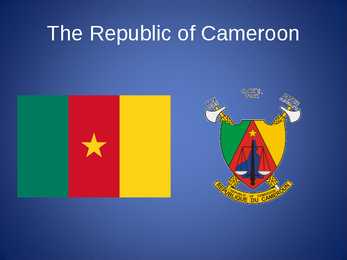
· Christians are concentrated chiefly in the southern and western provinces and Muslims reside in large numbers in every province. There is significant internal migration. Large cities have significant populations of both groups, with mosques and churches often located near each other. Culture · Each of Cameroon's ethnic groups has its own unique cultural forms. Typical celebrations include births, deaths, plantings, harvests, and religious rituals · Seven national holidays are observed throughout the year, and movable holidays include the Christian holy days of Good Friday, Easter Sunday, Easter Monday, and Ascension; and the Muslim holy days of 'Id al-Fitr, 'Id al-Adha, and Eid Miladun Nabi. · Music and dance are an integral part of Cameroonian ceremonies, festivals, social gatherings, and storytelling. Traditional dances are highly choreographed and separate men and women or forbid participation by one sex altogether.
võetakse lugu tükkideks, räägitakse eri rollidest. Jutustaja peab valima igale rollile mingi sümboli. Siis mängitakse uuesti läbi, aga rollidelt eemaldatakse teatud sümbolid, mis muudab ka nende klassi. (nt röövel on politsei vormis hoopis). Rituals and masks Pmst rollimäng. Eesmärk näidata, kuidas teatud rollid/maskid mõjutavad inimeste käitumist ühiskonnas. - Augusto Boal, et “(...) kogu teater on paratamatult poliitiline, sest kõik inimese tegevused on poliitilised ja teater on üks neist. Need, kes tahavad teatri poliitikast eraldada, on valel teel – ja see on
Their camps were comprised of number of gunyas or bark huts but people also lived in caves and in the open air. Some camps consisted of 10 people, some even more than 400 people. When children were born they were taught how to cope with the material and non- material elements of the world. There was a great emphasis on religion; all the children were taught the rhythms of dances in preparation for later participation in sacred and non- sacred rituals. Shortly after a child could walk he began to handle small spears, followed his father and other men to fishing. Little girls followed their mother and were taught all that was necessary for a mother to know. In Aboriginal society every person (particular every initiated male) was considered to be equal. No one had authority over anyone else in the sense of ruling them, but this is not to say that there weren't leaders. But there were no elected leaders in Aboriginal society.
competitions. It also customary to bring young willow twigs indoors for sprouting; sometimes grass seeds are planted in pots.Easter, according to recent polls, is most respected by the older generation, by women, and by non Estonians. Rular Easter customs, such as games involving eggs, are usually enacted at the Estonian Open Air Museum. St. George's Day On St. George's Day ( 23 April) the work in the fields began and cattle were let out to pastures on that day. There were several rituals to gain good luck involving cattle and horses. April 30 May 1 Volbriöö In Estonia, Volbriöö is celebrated on the night from April 30 to May 1
alMahfz, the "Preserved Tablet". The Shi'a understanding of predestination is called "divine justice" (Adalah). This doctrine, originally developed by the Mu'tazila, stresses the importance of man's responsibility for his own actions. In contrast, the Sunni deemphasize the role of individual free will in the context of God's creation and foreknowledge of all things. Duties and practices Five Pillars Islam's basic creed (shahadah) written on a plaque in the Great Mosque of Xi'an, China Rituals of the Hajj (pilgrimage) include walking seven times around the Kaaba in Mecca.The Five Pillars of Islam are five practices essential to Sunni Islam. Shi'a Muslims subscribe to eight ritual practices which substantially overlap with the Five Pillars.They are: · The shahadah, which is the basic creed or tenet of Islam: "'ashadu 'all ilha ill llhu wa 'ashadu 'anna muammadan raslullh", or "I testify that there is none
· Studied Mathematics (Pythagorean Theorem) · Made discoveries about music (sympathy of the strings, musical theory providing that there are hidden mathematical relations governing harmony) Political Theory: A Pythagorean was asked how one could give one's son the best possible education, to which he replied that one should make him citizen of a state with good laws (cited in Hegel) · Something of a mystery cult, with special rituals, diet (no beans) and claiming to have access to hidden knowledge. (early form of brain washing) a c b Plato's Timaeus- dialogue, myth of Atlantis. Chaos kosmos. Pythagorean Table of Opposites The one Multiplicity Unity · Limit- Unlimited · Odd- Even · One- Many · Right- Left · Male- Female · Rest- Motion · Straight- Curved · Light- Dark · Square- Oblong
human body. Each Olympic Games has an opening ceremony during which the sports stadium is filled with music, singing, dancing and fireworks. A closing ceremony in the same spirit takes place on the last day of the Games. The opening and closing ceremonies are an invitation to discover the culture of the country hosting the Games. Although most of the ceremony is creative and imaginative, there are some very strict rituals that have to be followed. Summer games: In the Summer Games, athletes compete in a wide variety of competitions on the track, on the road, on grass, in the water, on the water, in the open air and indoors. The Winter Games feature sports practised on snow and ice, both indoors and outdoors. Many new events have been added, such as basketball, baseball and beach volleyball. The Summer Games are held in various months and last for 16 days. Sports with separate
Wessex, Sussex, Essex, Kent, East Anglia. Due to constant conflict weakened the kingdoms. The political power was in Wessex, which was the most powerful of the kingdoms. The Anglo-Saxons were farmers and fishermen and lived in small communities. They deployed a crop rotation over three fields; used heavy ploughs. In 787 AD came the Vikings from Scandinavia, who set up their own state Danelaw. Had their own religion, however their rituals did not demand sacrifices. Introduced new words (1800). Placenames withe suffixes -by and -dale. They had their own customs and laws, which we know due to sagas (oral history). They had no written language. Beowulf Beowulf is an epic or a long poem describing the adventures of an hero. It belongs to the Anglo-Saxon period, when they were still living on the mainland and then brought to Greta Britain .
of the needy. Sawm is not obligatory for several groups for whom it would constitute an undue burden. For others, flexibility is allowed depending on circumstances, but missed fasts usually must be made up quickly. The pilgrimage, called the hajj has to be done during the Islamic month of Dhu-al-Hijjah, in the city of Mecca. Every able-bodied Muslim who can afford it must make the pilgrimage to Mecca at least once in his or her lifetime. Rituals of the Hajj include: spending a day and a night in the tents in the desert plain of Mina, then a day in the desert plain of Arafat, praying and worshiping God, following the foot steps of Abraham. Then spending a night out in the open , sleeping on the desert sand in the desert plain of Muzdalifah, then moving to Jamarat, symbolically stoning the Devil recounting Abraham's actions. Then going to Makkah and
It is considered a religious obligation (as opposed to voluntary charity) that the well-off owe to the needy because their wealth is seen as a "trust from God's bounty". The Qur'an and the hadith also suggest a Muslim give even more as an act of voluntary alms-giving . 4) Pilgrimage The pilgrimage, called the Hajj during the Islamic month of Dhu al-Hijjah in the city of Mecca. Every able-bodied Muslim who can afford it must make the pilgrimage to Mecca at least once in his or her lifetime. Rituals of the Hajj include walking seven times around the Kaaba, touching the black stone if possible, walking or running seven times between Mount Safa and Mount Marwah, and symbolically stoning the Devil in Mina. Golden Age (7501258) Under the Abbasids, Islamic civilization flourished in the "Islamic Golden Age", with its capital at the cosmopolitan city of Baghdad. The major hadith collections were compiled
They believe that it was the time, when spirit ancestors had traveled throughout the land, giving it its physical form, and setting down the ruled to be followed by the Aboriginals. There are also many different stories or legends about powerful beings like the "Fertility Mother", the "Great Rainbow Snake". The story about Pemulwuy is also famous. As there were shortages of food and water, the Aborigines blamed supernatural forces for those and all the other problems. Magic and rituals were used to correct the situation. A man called either the "medicine man" or the "doctor", who was a powerful man, cured physical ills that occurred quite often. Nowadays, there are not many Aborigines left in Australia. It is said that they conceive only 1.5% of Australia's population and suffer from discrimination in employment. The low population is that low because the British fleets that arrived there in the end of the 18th century
knowledge and worldly matters. They were leaders of family or kinship groups who made decisions about moving camp, when boys would be initiated, when girls would be married and settled disputes among other members of the social unit. Senior females were not considered to be Elders in traditional Aboriginal society. However they did play important roles in tribal matters. For example they decided when girls would undergo rituals in preparation for marriage, conducted or organized ceremonies including those that males and children participated in (but not initiation ceremonies). 7 They also acted as midwives and story-tellers. Aboriginal lore(the facts and stories about a particular subject or topic) was an important and vital aspect of community life. For example Aboriginal people learned their 'laws' from those
T h e result of this revival is a feeling of elation and exhilaration. T h e designers of amusement park thrill rides know how to use this principle. Roller coasters make their passengers feel as i f they're going to die, and there's a great thrill that comes from brushing up against death and surviving it. You're never more alive than when you're looking death in the face. T h i s is also the key element in rites of passage or rituals of initiation into fraternities and secret societies. T h e initiate is forced to taste death in some terrible 15 T H E W R I T E R ' S JOURNEY ~ T H I R D EDITION Christopher Vogler experience, and then is allowed to experience resurrection as he is reborn as a new member of the group. T h e hero of every story is an initiate being introduced to the
materiaalsed objektid kui lahutamatu osa sellest käitumisest. Kultuur koosneb keelest, ideedest, uskumustest, kommetest, koodidest, institutsioonidest, tööriistadest, tehnikatest, kunstiteostest, rituaalidest, tseremooniatest ja teistest elementidest." ,,behaviour peculiar to Homo sapiens, together with material objects used as an integral part of this behaviour. Thus, culture includes languages, ideas, beliefs, customs, codes, institutions, tools, techniques, works of art, rituals, and ceremonies, among other elements." Kust tuleb sõna "kultuur"? lad.k cultura < colere maad harima, taimi v loomi kasvatama, viljelema, hooldama, korras hoidma (vrdl e.k põllukultuurid; ingl.k agriculture) kultus religioosne talitus, jumalate austamine vrdl et Vanas-Kreekas vastas kultuuri mõistele sõna paideia = harimine, kasvatus u. 16 saj omandab sõna kultuur kujundliku tähenduse (nt kultuur kui vaimu harimine; vrdl haritud e kultuurne olema - kultuuritus) 1793
today demanding recognition of genocide, famine of 30s, millions died, wanting indemnities, etc. New Uk govt see SU past as kind of bad dream to genocide. Disconcerting to Ru. Pop rel begins to bubble up again, esp Islam and Orthodoxy. Islamic fundamentalism didn't really exist outside of Egypt in this time. Concerned about dual loyalties. Ambivalence on part of many, animosity on other parts. W religion come all sorts of things. Synagogue becomes again a problematic place. Restriction on J rituals, from matzah to circumcision. State more actively recruits informers w/in rel communities throughout Ru. Again, more concerned w Islam and Orthodoxy. "Mood of people." Conducting services w/o priest. Weddings, burials had been conducted under state, doing more under rel ritual. Aware and reacting. Govt in J case, forcibly trying to break up minyanim. Yeshivot in SU throughout, perhaps only for show, but do train rabbis, etc. Not many, mostly in major cities. Restricting travel for studies.
nende vanemate omast. Kriitiliste teooriate rõhuasetused Postkolonialism, globaliseerumine ja üleminek täiskasvanuikka Postkolonialistlikud realiteedid arengumaades Lapstööjõu kasutamise problemaatika, laste ja noorte õigused Birminghami koolkonna panus Euroopa noorsoouuringutesse Lääne-Euroopa noorsoouurijad on tugevasti mõjutatud 1970. aastate briti subkultuuriuuringutest. Stuart Hall & Tony Jefferson (1976): Resistance through Rituals, Paul Willis (1978): Profane Culture. Neid uurijaid ühendas Birminghamis tegutsev Centre for Contemporary Cultural Studies (CCCS). • CCCS ühendas erinevaid paradigmasid: feminism, postmodernism, kriminoloogia, konstruktivism. CCCS’s lähtuti nii vanematest Eriksoni ja Colemani lähenemistest kui uuematest Bourdieu käsitlustest. • Birminghami koolkond mõjutas tugevasti Põhjamaade noorsoouurijaid.
constitution added to restrict the power of the monarch and divide obligations and power with the Parliament. Beginning of the century, literature, especially drama flourished. Emergence of puritanism – poetry becomes leading form. Puritanism – purification of religion, of all unnecessary rituals and decorations, in essence, all pleasure equals sin. Closed theatres and denounced all drama, dance, rural festivals, even country sports. Puritan poetry is logical and undecorated in style; it strives to render God’s word directly, undecorated by human wit.
Homoloogia - strukturaalne resonants sotsiokultuurilist tervikut moodustavate elementide vahel. Teatud väljenduslaadid sobivad teatud ühiskonnakihist pärit olevatele inimestele. Ehk kui sa oled agulis kasvanud töönoor, siis nähtavasti sinust ei saa keegi, kes igal õhtul sümfooniad kuulab. Willis "Profane culture": subkultuur ei moodustu juhuslike väärtuste ümber, tegemist on väga korrastatud sisemise struktuuriga. Hall "Resistance through rituals" punk : vajaduse korral leiame homoloogiaid (riietus, käitumine, kõnepruuk). Kuid erinevus Hebdigei sõnul: traditsoooniliselt on subkultuuri sees olemas "pühad tähistajad" (ikoonid), mida ei saa muuta ega millega ei või mängida. Punkrockis on kõik tähistajad ajutised. Punk pigem kombineerib neid kui säilitab. Seega homoloogia päris sellisel viisil pungis ei toimi. Hebdige: "Punk-subkultuur ütleb seda, mida mõtleb, kuid ei mõtle seda, mida ütleb". Väljenduse tasandil juhtub
Palace under intense media coverage. The process did not stop there; to mark the first anniversary of Diana's death (31 August 1998), the Queen ruled that all flags at the royal residences should be lowered and half-masted as a special mark of respect. The British government declared immediately that they would follow suit. The national flag can be an `active' symbol on national days, coronations and royal weddings, and in parades, parliamentary debates, salutes, ceremonials, rituals, memorials and subtly in everyday procedures in the legislature. A specific example is the saluting of the flag, or standing up when singing the national anthem. The state not only controls which national flag is to be used but its usage of national flags as they appear on a number of places controlled by the state: embassies, vessels of war, airlines, national museums, national monuments, capital city squares and stationery. There is also a specific
25 Panihhiida eesmärk on hinge teispoolsusse teekonnaga seotud piinad leevendada. Matuseteenistus on jumalateenistus, mida peetakse õigeuskliku kristlase matustel tavaliselt kolmandal päeval pärast tema surma. On olemas nii piiskoppide, preestrite, ilmalike kui ka väikelaste matuseteenistuse kord. Eesti-vene õigeusu seletav sõnastik [WWW ] http://www.orthodox.ee/slovar.php?d=sl 16.06.2008 26 . [WWW ] http://www.requiem.ru/rituals/doc64 19.06.2008 27 Üks õigeusu kiriku seitsmest sakramendist, mida kasutatakse hinge- ja ihuhaiguste armurohkeks ravimiseks ning mis seisneb preestri poolt haige inimese seitsmekordses võidmises pühitsetud õliga. Eesti-vene õigeusu seletav sõnastik [WWW ] http://www.orthodox.ee/slovar.php?d=sl 16.06.2008 21 5.2
veebigrupp. Lühiajalisemaid vaatlusi võib läbi viia ka ajutiste rühmadega, nt üritustel osalejad või rongis sõitjad. Enamasti on välitöö pikaajalisem ja näeb ette igapäeva elus osalemist. Välitööl viiakse läbi poolstruktureeritud intervjuud või täiesti struktureerimata, kus ei ole ette antud ühtegi teemat. Välitöö iseärasused 1. Kultuuriline desorientatsioon: tuttavate enesestmõistetavuse kadu. - Horace Miner 1956. Body rituals among the Nacirema ehk (americaN). - Neil B. Thompson 1972. The Mysterious Fall of the Nacirema. Liminaalne olek – olek kahe normaalsuse vahel. Iseloomustab kõiki inimesi erinevate perioodide vahel. Initsiatsiooniriitused – nt ülikoolis rebaseks ristimine. 2. Refleksiivsus – oma kogemuse jälgimine ja mõtestamine. 3. Kontekst: - Koht – antropoloog ei uuri külasid, vaid külades. Antropoloogi eesmärk on uurida inimesi üldiselt.
säilitada sotsiaalset korda. - Rituaal kui sotsiaalne ventiil, aitab võimendada teatud emotsioone Oluline muutuse märkamine, aga stabiilsus siiski eksisteerib. Kord tuleb pärast ebastabiilsust tagasi. Principle of ,,cross-cutting ties or alliances Konfliktid on paratamatud ja aitavad süsteemi säilitada Inimgruppide loomuses on aeg-ajalt tükkideks laguneda ning siis nad tulevad jälle kokku, moodustades uusi 'liite'. Rites of reversal- Rituals of rebellion - Fredrik Barth (1928-...) Norra sotsiaalantropoloog. Esimene välitöö Norra mägede talupoegade juures. Terve rida järgijaid:Ladislav Holy, Andrew Strathern, Jeremy Boissevain,F. G. Bailey ja Bruce Kapferer. Publitseeris palju ja tegi välitööd väga erinevates kohtades. Kasutas palju võrdlevat analüüsi teooria arendamiseks. Bergeni Ülikool 1960ndad ,,Ethnic Groups and Boundaries" (1969). Esimesi antropoloogilisi katseid piiri mõistmiseks. Keskendub etniliste
elementidega teatud elemendid on vastavad teistele elementidele · Kuidas riietus vastab riietusele. Taandame teatud elemendid omavahel. · Teatud esindusvormid on sobivamad erinevatele inimestele, teatud sotsiaalgrupile, nt tänapäeva töömees ei kuula klassikalist muusikat. · Wills: Subkultuurid on korraldatud ja subkultuur on eluviis. Populaarkultuuri teooriad loeng 11 Hebidge through rituals · Asub kultusele üle, et mingisugused objektid, mida subkultuurne objekt kasutab ense määrtalemiseks, on seotud selle grupi väärtuste, hinnagnuge ja põhimõtetega Resistance. · Subkultuurne grupp skinhead, kelle hoiakuid uuriti, nende stiilielemendid, oli maskuliilnsed. · Subkultuuri stilistika kujuneb välja selle baasil, mis on igapäeva elu põhimõtted ning väärtused. o Grupi kogemust väljendati muusikaga, keelega, riiteusega jne.
Yoknapatawpha County-Jefferson as its capital. Signs of decay, the roads are dusty, the town is surrounded by swomps, the two rivers seem smooth but can be wild and destructive. His fictional world actually embraces several civilizations, it embraces the native americans and the black slaves, he describes the disintegration of southern culture after the civil war, the cheap materialism of later industrial society, fragmented 20th century, where moral codes have become mechanical rituals. Each of his books describe the towns experience that we get the picture of the long history of this place as. His attitude, his ambivalent. One the one hand he was deeply attached to the south, he wrote about the south, lived there. He was its severest critic. His literary method is southern modernism-apart from having southern features his fiction has modernism. He experiments a lot, casts aside traditional ways of writing, he is
CLICK, WHIRR _ whose maternal instincts are under the automatic control of that single sound. The ethologists tell us that this sort of thing is far from unique to the turkey. They have begun to identify regular, blindly mechanical patterns of action in a wide variety of species. Called fixed-action patterns, they can involve intricate sequences of behavior, such as entire courtship or mating rituals. A fundamental characteristic of these patterns is that the behaviors comprising them occur in virtually the same fashion and in the same order every time. It is almost as if the patterns were recorded on tapes within the animals. When a situation calls for courtship, a courtship tape gets played; when a situation calls for mothering, a maternal behavior tape gets played. Click and the appropriate tape is activated; whirr and out rolls the standard se- quence of behaviors.
Paladin Liebert Plenum R. M., Wicks-Nelson R., Kail R.V., 1986. Developmental press Psychology. Prentice-Hall, Englewood Cliffs, New Kaufmann, F.-X. 1970. Sicherheit ais soziologisches und Jersey sozial-politisches Problem. Untersuchungen zu einer 07632 Marks, I. M., 1987. Fears, phobias, and rituals. wertidee Hochdifferenzierter Gesellschaften. Neue Pank, Anxiety, and Folge Nr.31. Fer-dinand Enke Verlag. Stuttgart. Their Disorders. New York, Oxford: Oxford Kendall, P. C, & Ronan, K. R., 1990. Assessment of childrerTs University anxieties, fears, and phobias: Cognitive-behavioral Press models and methods. In C. R. Reynolds and R. W. Maurer, A., 1965
materiaalsed objektid kui lahutamatu osa sellest käitumisest. Kultuur koosneb keelest, ideedest, uskumustest, kommetest, koodidest, institutsioonidest, tööriistadest, tehnikatest, kunstiteostest, rituaalidest, tseremooniatest ja teistest elementidest." ,,behaviour peculiar to Homo sapiens, together with material objects used as an integral part of this behaviour. Thus, culture includes language, ideas, beliefs, customs, codes, institutions, tools, techniques, works of art, rituals, and ceremonies, among other elements." Kust tuleb sõna "kultuur"? lad.k cultura < colere maad harima, taimi v loomi kasvatama, viljelema, hooldama, korras hoidma (vrdl e.k põllukultuurid; ingl.k agriculture) kultus religioosne talitus, jumalate austamine vrdl et Vanas-Kreekas vastas kultuuri mõistele sõna paideia = harimine, kasvatus u. 16 saj omandab sõna kultuur kujundliku tähenduse (nt kultuur kui vaimu harimine; vrdl haritud e kultuurne olema - kultuuritus) 1793
(3) to 20 feet high. (A) an immense (B) a striking (C) an attractive (D) a plentiful 22. The evolution of agriculture in the early years of the twentieth century was characterized by the partial mechanization of the sowing and reaping processes. (A) created (B) enriched (C) accelerated (D) typified 23. One of the most striking aspects of Indian cultures was the production of ceremonial costumes and ornaments worn during religious rituals. (A) absurd (B) remarkable (C) arbitrary (D) spontaneous 24. The innovative use of iron and steel in construction represented an important advancement in the building industry of the 1800s. (A) improvement (B) element (C) influence (D) occasion 25. Professional interior design assignment are typically complex endeavors that begin with an interview with the client. (A) personal (B) intricate (C) orderly (D) gratifying 26
breath, poetry and classical harmony, while Bartók charms us with his alert and contrasting themes, juicy harmonic colouring, activated changes in rhythmic pulsation and linear polyphony. As a common feature of all Finno-Ugric composers we mark their individual starting point from national origins. Under national music I comprehend such works that express the temperament of the nation; its singular rhythms, ancient rituals, sagas, and also patriotism and the self-consciousness of the nation… Is folk melody needed as such a way of expression? I guess not; it is enough when in 1 this music these characteristic features can be found which are hidden in the folk tunes. National expression is an essential system of several characteristic features of that nation
Kripke. Objection 3 The Wittgensteinian theory seems helpless in the face of our original datum: speakers' amazing ability to understand long, utterly novel sentences at first hearing without a moment's thought. Chess pieces and the like are familiar, recurring types of object, and the rules for their use are directed one-to-one upon them. And similarly for "Slab," "Hello," "Ouch," "I do," and other Wittgensteinian examples of expressions whose uses are defined by local rituals or customs. But our ability to understand and act on long novel sentences cannot be the product of our knowing conventions directed upon those utterances, for no conventions have ever been directed upon those utterances. The Wittgensteinian must grant that we understand novel sentences com- positionally, in virtue of understanding the individual words that occur in them and working out the sentences' overall meanings from the way in which the individual words are strung together
The Free and Accepted Masons monopolized the antique pigpen cipher to such an extent that it is often called the Freemasons' cipher. Its most common modern form is this: [Codebreakers 413.jpg] Thus Scottish rite would be enciphered These symbols stand out here and there in the printed manuals of Masonry; they comprise part of the mixture of cryptography, abbreviation, and rebus with which the Masons diguise their secret rituals. In the postbellum South, the Knights of the Golden Circle, a kind of Ku Klux Klan, used essentially the same cipher for their occasional cor- | respondences. More recently, Alfred C. Kinsey and his associates | encoded the replies of interviewees about their sexual habits for Sexual Behavior in the Human Female. Only four persons on the staff of the Institute for Sex Research could read the code, which recorded the answers in the forms of x's and a few checks, dashes, and
 annaabi.ee