 50 punkti
Autor soovib selle materjali allalaadimise eest saada 50 punkti.
50 punkti
Autor soovib selle materjali allalaadimise eest saada 50 punkti.
 ~ 7 lehte
Lehekülgede arv dokumendis
~ 7 lehte
Lehekülgede arv dokumendis
 2018-10-30
Kuupäev, millal dokument üles laeti
2018-10-30
Kuupäev, millal dokument üles laeti
 2 laadimist
Kokku alla laetud
2 laadimist
Kokku alla laetud
 0 arvamust
Teiste kasutajate poolt lisatud kommentaarid
0 arvamust
Teiste kasutajate poolt lisatud kommentaarid
 Me_encorte1
Õppematerjali autor
Me_encorte1
Õppematerjali autor
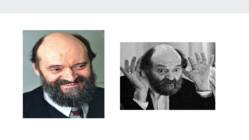
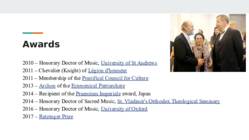
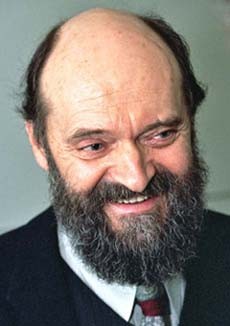
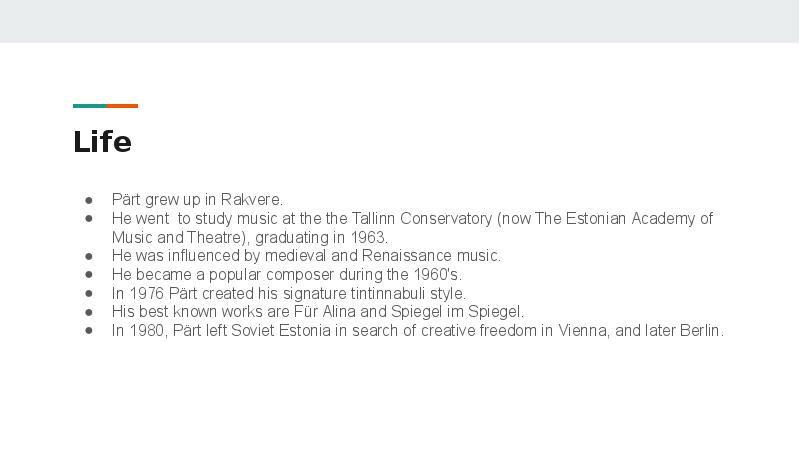
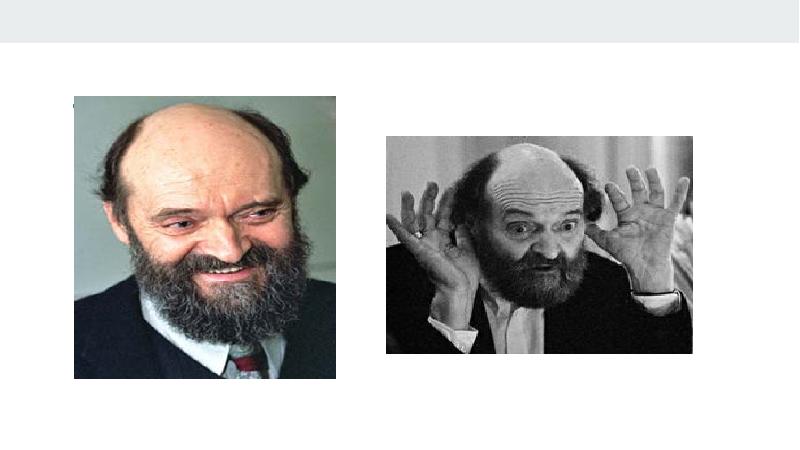
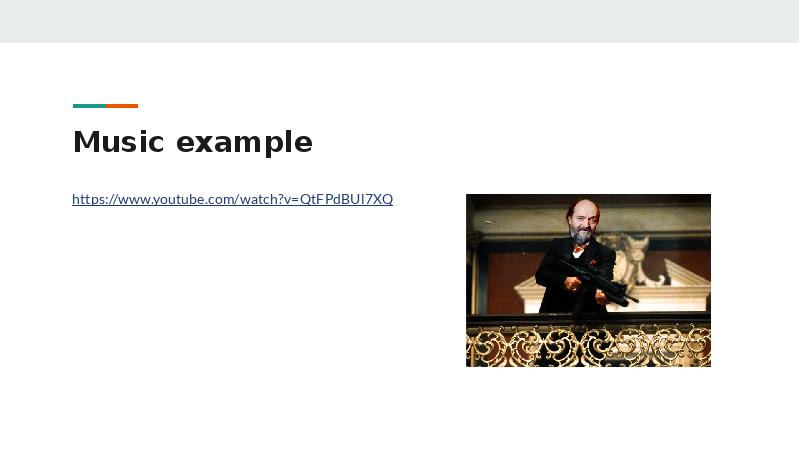
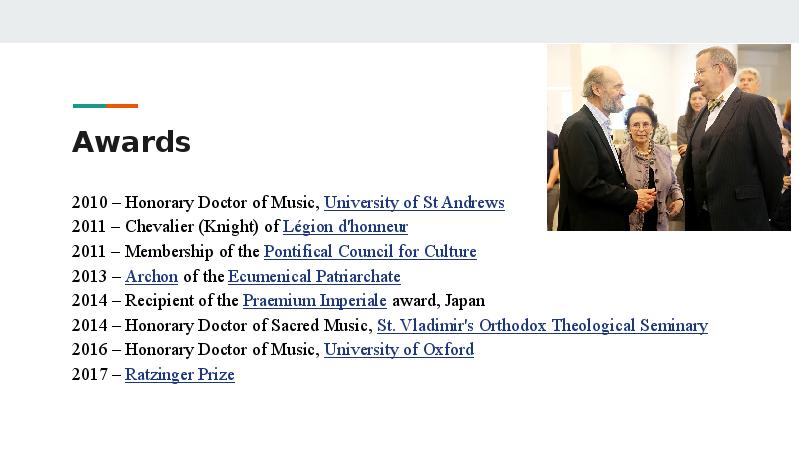
ARVO PÄRT Arvo Pärt is an Estonian composer of classical and sacred (vaimulik) music. He was born 11. september 1935 in Paide, Järva County, Estonia and was raised by his mother and stepfather in Rakvere. While at the Tallinn Conservatory, he studied composition with Heino Eller. During the 1950s, he also completed his first vocal composition, the cantata Meie aed for children's choir and orchestra. He graduated in 1963. From 1957 to 1967, he worked as a sound producer for Estonian Radio
HALF A CENTURY UNDER SOVIET OCCUPATION. IDEOLOGY OVER MUSIC. EXTENSIVE INFLUX OF CONTEMPORARY TRENDS. VIII. THE FORTIES. TRANSFORMATION OF ESTONIAN LIFE. THE WAR-TIME SYMPHONIC OUTPUT. IX. THE PLANTING OF NEW CREATIVE PRINCIPLES DURING THE POST-WAR YEARS. X. THE SECOND HALF OF THE FIFTIES. TOWARDS A MODERN IDIOM: EINO TAMBERG AND VELJO TORMIS. XI. THE NEOCLASSICISM AND CONSTRUCTIVE THINKING OF JAAN RÄÄTS. XII. THE FIRST HALF OF THE SIXTIES. DODECAPHONY OF ARVO PÄRT. XIII. THE DRAMATIC PHILOSOPHICAL OUTPUT OF HELMUT ROSENVALD. XIV. THE ELEMENTS OF JAZZ, FOLK MUSIC AND DODECAPHONY IN THE SYMPHONISM OF ANTI MARGUSTE. XV. HEIMAR ILVES AND HIS MUSIC – DEEP IN THOUGHT AND FEELING. XVI. THE POST-WAR SYMPHONIES OF EDUARD TUBIN. DEEPENING ACCENT ON PSYCHOLOGIC-DRAMATIC EXPRESSION. XVII. THE SECOND HALF OF THE SIXTIES. THE NATIONAL AND INTERNATIONAL IN THE ESTONIAN SYMPHONIC MUSIC. JAAN KOHA. ESTER MÄGI. KULDAR SINK. XVIII
ABSTRACT FAMOUS SINGERS AND BANDS IN THE ENGLISH 2010 Contents: page The Bands · The Beatles 3 · The Who 4 · Placebo 5 · The Kooks 6 · Coldplay 7 The Singers · Sir Elton Hercules John 8 · Andrew Abraham 9 · Robert Peter "Robbie" Williams 10 · Christopher Anthony John "Chris" Martin 11 The Bands The Beatles were an English rock band, formed in Liverpool in 1960 and one of the most commercially successful and critically acclaimed acts in the history of popular music. From 1962 the group consisted of John Lennon (rhythm guitar, vocals), Paul McCartney (bass guitar, vocals), George Harrison (lead guitar, vocals) and Ringo Starr (drums, vocals). Rooted in skiffle and 1950s rock and roll, the group later worked in many genres ranging from folk rock to psychedelic pop
English literature from the Baroque to the Romanticism 1. The Jacobean Masque The development of the cultural scene in England brought about the Jacobean masque. The courtly culture became gradually more distant and isolated from the public. Ben Jonson was to become the poet who would write masques for the court. He would, in his masques, try to represent the idea of kingship as it resided in the Platonic realm, and not its reality. Jonson’s aim was also to be educative. Inigo Jones, Jonson’s collaborator, was the one to revolutionize in the field of visual perception, also adding moving machinery and a manipulation of artificial light to the scenery. Jones also viewed the masque as something to be used in educating people. This idea of art as an educative vehicle soon affected all the different areas of courtly life. Jones’s masque sets, for example, educated the audiences about classical antiquity and classical architecture. Jonson and Jones were the ones who gave the Stuart
Charles Dickens Charles John Huffam Dickens was the foremost English novelist of the Victorian era, as well as a vigorous social campaigner. Considered one of the English language's greatest writers, he was acclaimed for his rich storytelling and memorable characters, and achieved massive worldwide popularity in his lifetime. Charles Dickens was born in Landport, Portsmouth in Hampshire, the second of eight children to John Dickens n 7 February 1812. The 12-year-old Dickens began working ten hour days in a Warren's boot-blacking factory. In May 1827, Dickens began work in the office of Ellis and Blackmore as a law clerk. At the age of seventeen, he became a court stenographer and, in 1830, met his first love, Maria Beadnell. Maria's parents disapproved of the courtship and effectively ended the relationship when they sent her to school in Paris. In 1834, Dickens became a political journalist, reporting on parliamentary debate and traveling across Britain by
The Presentations Triinu: "The Notorious Prisoners of the Tower" Built in 1078, has been used as a fortress, Royal Palace, a prison, the home for Crown Jewels. The first prisoner was Ranulf Flambard in 1100. The only woman tortured in the Tower was Anne Askew. Guy Fawkes was prisoned 5 th November 1605, hung in 1607. Walter Raleigh was knighted, married without queen´s permission. Last prisoners were in the Tower in 1952. Rita: "Alexander Fleming" Was a pharmacologist, has graduated 6 schools, studied anti-bacterial agents, found Lysozyme accidentally in 1922 and penicillin, which changed the world, in 1928. Won Nobel Prize in 1945. Has been married twice, first wife was a trained nurse. He died in 1955 at home because of a heart attack. He had 1 child. Liis: "The Phantom of the Opera" A.L. Webber is knighted, started writing musicals in 1965, owns 7 theatres and has written 13 musicals. The story is based on a book. The musical was
British Literature in the 20th-21st Century REVISION QUESTIONS 1. The Contradictory, diverse, chaotic 20th century. New developments in science and philosophy. The essence and influence of Freudian theory. Contradictory, diverse, chaotic 20th c- simultaneous rejection and invocation of the past. While modernists apotheosized the creative geniuses of the past, they also rejected old poetic forms. Challenge old and established beliefs and more and more people had access to books and education more people went to universities. profound change in morals: · No universal value and perspective on things · Multiple truths, multiple perspectives · Nothing has inherent (kaasasündinud, sisemist) importance · Life lacks purpose Science: Albert Einstein-general theory of relativity had a huge impact on culture as well. Everything is relative. Philosophy: Henri Bergson (French) came to challenge the
Russian philology The meaning of the word "philology" is "love for word". This is love that unites teachers and researchers of modern and Classical languages and literature, interpreters and diplomats, journalists and publishers, writers and poets. Russian philologis are highly demanded in various spheres of scholarly research and education, in the mass media, in civil service at the Ministry of Foreign Affairs, in archives, libraries, museums, in travel agencies, as well as Russian and international companies. Curriculum within in philological faculty includes courses of Russian and European languages and literature, courses of Linguistics and Theory of Literature for students to familiarize themselves with various schools and trends of Russian and foreign philology. The core curriculum also includes a number of Liberal Arts courses (Philosophy, History, Psychology, Pedagogy), as well as courses of basic mathematics and computer studies, and optional courses of science and the
 annaabi.ee










Kõik kommentaarid