The Renaissance 1500 1650: background 1. What does the word ,,renaissance mean? Characterize briefly the period called the Renaissance. "The rebirth" from French Renaissance, meaning "rebirth"; Italian: Rinascimento, from re- "again" and nascere "be born") Rebirth of scholarship based on classical learning and philosophy. The Renaissance was a cultural movement that spanned roughly the 14th to the 17th century, beginning in Italy in the late Middle Ages and later spreading to the rest of Europe. It encompassed a revival of learning based on classical sources, the development of linear perspective in painting, and gradual but widespread educational reform. (wikipedia)Bridge between Medieval Ages and Modern Era. 2. Where did the Renaissance start and why? In the opening years of the 14th century, there began to develop in Italy and increasing interest in the manuscripts that had surviv...
The Renaissance Between 14th and 16th century in Europe From French word rebirth It was an age of growth in Europe. New, powerful city states emerged. A new middle class had more and more money to spend. Great artists, writers and thinkers lived during this time. During the Middle Ages many people who lived in the countryside worked on the land that they got from the noblemen. In return, they were protected by them Between the middle and the end of the 14th century, the plague, also called "Black Death" killed almost half of Europe's population. It spread most rapidly in the larger cities where many people lived. This led to economic depression. When the plague slowly decreased in the 15th century, the population in Europe began to grow. A new middle class emerged --bankers, merchants and trades people had a new market for their services. People became wealthier and had more than enough money to spend. They bega...
William Shakespeare (1564-1616) playwright, actor, poet 37 plays, over 400 screen adaptions Lord Chamberlain's Men, King's Men, The Globe Early life: John Shakespeare, Mary Arden, 2 sis', 3 bros; married Anne Hathaway 3 children Life in London: 1599 built Globe, 1623 first compilation Forms: classical & history plays, comedies+tragedies, poetry Style: metaphors, rhetorical phrases, free flow of words, unrhymed iambic pentameter; deviations Renaissance (end of 14th century) Italy, reaches rest of Europe Elizabethan era (16th II h - 17th I h) Theatre: combined medieval theatre, morality plays & Roman drama to create Elizabethan tragedy Poetry: Italian influences, sonnet (English: cddc ee) Rulers of England: Henry VII (brings prosperity, repairs economic situation; made alliances); Henry VIII (beginning of English reformation; killed "traitors"; 6 marriages); Mary I (Catholic); Elizabeth I (The Virgin Queen restores order; Religiou...
The Renaissance * From the end of 15 century to the beginning of 17th century * The Renaissance is a cultural movement thata started in Italy and spread through Europe * The Renaissance in England covers the period of apporoximately 150 years (1492- 1623 ) * As Queen Elisabeth l was the ruler at that time, it is also called Elisabeth Age * It was the time of the spread of printing ( books) and the exploration of the New World * The Reformation and the establishment of national churches * Humanism. Value on individual human worth and dignity * Art. Reallistic portrayals of human beings * Science * It was also the time that brought federal domains under one man power and established absolute monarchy that only strengthened the influence of national cultures and languages. * The bourgeoisie- as a new class became as influencial as the... * The term ´´renaissance´´ comes from an Italian word and it means in English ´´rebirth´´ * First marke...
The Renaissance In the history the Middle Ages were followed by the Renassance period. During this period a new class called bourgeoeisie came into being. This is the period when monarchies based on nationality were estabilished. The Renaessance started in Italy In the 14th century. Then it spread all over Europe, reached England in 16th century. The struggle for power culminated in a war called The War of Roses. It was a civil war between two dynasties, families. They had different emblems on one side the Yorks (white rose) other Lancasters (red). They couldn't decide who gets the throne. War ended 1485. A new dynasty came to throne, Tudor, the first king in this dynasty was Henry Vll. When he came to throne a period of stability followed because he built a nation based state. He was good at diplomacy.He could avoid quarrels and wars with neigbouring countries. France, Spain - greatest enemies.So he ...
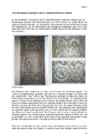
Epitaph Das Renaissance-Epitaph in der St. Benedikt Kirche in Herbern An der nördlichen Chorwand in der St. Benedikt Kirche in Herbern befindet sich ein Renaissance-Epitaph, eine Steinmetzarbeit von 2,87m Höhe und 1,35m Breite. Es zeigt den Grafen Hermann von Merveldt zu Westerwinkel und seine Gemahlin Ursula von Deipenbrock. Da die Sterbedaten des Ehepaares angegeben sind, weiß man, dass das Werk Ende des 16. Jahrhunderts erstellt worden ist. Der Bildhauer ist bis- her unbekannt. (Fotos: Cramer) Das Ehepaar steht betend da, mit Kopf und Schultern an ein Kissen gelehnt. Die Tracht ist zeitgenössisch, spanisch
THE ANGLO-SAXON PERIOD English literature came when the Angles, the Saxons, the Jutes and the Frisians invaded Britain. During this time English was called Anglo- Saxon or Old English. In the chronicles of Roman history (composed in Latin) is said that Britain makes its first appearance in written language when Romans invade the England. BEOWULF most important poem, surviving in a 10th-cent manuscript. The historical period of the poem's events can be dated in the 6th to 8th century. Much of the material of the poem is legendary and paralleled in other Germanic historical-mythological literature in Norse, Old English, and German. GEOFFREY CHAUCER (1340-1400) Politician and writer, fought in France during the 100 years war. He visited Genoa and Florence where he became acquainted with Italian literature and in particular with the works of Dante, Petrarch and Boccaccio. The French period (up to 1370). early works were ba...
RENESSANSS Rebessabsiks (prantsuse keeles renaissance ``taassünd``) nim. Keskajal järgnevat, antiigist ja loodusest innustunud vainuliikumist eelkõige Lääne-Euroopas 14-16 sajandil. Keskajal sisendas kirik inimestele, et ta on patune olnud ja , et maapealne elu on vaid ettevalmistus hauatagusele õudsusele või igavesele huumatusele.Renessansiaja mõtlejaid ja kunstnikud pidasid inimest tema puudustest holimata põhiliselt heaks ja seadsid ideaaliks maapealse õnne ja hormoonilis isikuse. Inimene kui isiksus vabanes keskaja kirikudogmaade ja seisulike normide kommitsaist.Oluliseks sai inimese individuaalsus-isikupära Renessansiga on lahutamatult seotud humanism ja humanistid. Algul, vararenessansis hakati humanistideks (ladina keels humanus ``inimlik`) nem. Õpilasi, kes uurisid ja tutvustasid antiikkultuuri. (kuigi antiiki tunti mingil määral ka keskajal antiikkirjandus on suurus osas säilinud tänu kesksaegsete munkade ümberkirjutustel...
10.KLASS ARVESTUSLIK KONTROLLTÖÖ NR.3 RENESSANSIAJASTU MUUSIKA 1.Selgita mõisted ,, renessanss ", ,, humanism " Renessanss (prantsuse sõnast renaissance 'taassünd') oli kõrgkeskajale järgnenud,14. sajandi algusest 17. sajandi alguseni väldanud periood Euroopa kultuuriloos. Humanism - väärtushinnangute lähtumine inimesest. 2.Milline oli renessansiajastu ideaalisiksus Renessansiajastu ideaalisiksus oli kirikukammitsatest vaba, antiikeeskujusid järgivalt ilus, vaimsust hindav iseteadev inimene 3.Nimeta ja kirjelda renessansiajastu uudseid pille lauto näppekeelpill klavessiin ja klavikord klaveri eelkäijad viola da gamba - tsello eelkäija pommer , krummhorn ja tsink puhkpillid 4.Nimeta ja kirjelda renessansiajastu mitmehäälseid laule Motett erinevalt keskaegsest motetist oli ühes keeles ja kõigis häältes sama tekstiga (vaimulik motett, ladinakeelne ). Madrigal - 14.sajandil 2 või 3 häälne laulkarjuseidüllist või armas...
1.Renesanss tähendab prantsuse keeles renaissance-taassündi sel ajastul taasväärtustati antiikkultuuri. 2.humanism tähendab ladina keeles humanus- inimlik, austatakse kõike mis on inimlik. 3.Renesanssi keskuseks sai Firenze, Itaalia. Renesanss sai alguse hiliskeskajal 14.saj Itaalias. 4.Renesanss tõi maailmapildi keskele jumala asemel inimese.Taassündis antiikkultuur 5.Renesanss väljendus kunstis, luules ja muus loomingulises. 6.”Jumaliku komöödia” kirjutas Dante Alighieri.Seda peetakse juba varasemaks renesanssteoseks kuna ta esitas keskajale iseloomulikke ideid renesanssile omase inimlikkusega. 7.Dekameroni kirjutas Giovanni Bocaccio.Teos räägib kuidas musta surma eest eraldunud noored jutustavad lõbusaid lugusid.Kiitsid armastust ja naudinguid kuid pilkasid askeetlust. 8.Petrarcaja Erasmus Rottedamist läks ajalukku “Narruse kiitus”ega -filosoofiline satiir, oli kriitiline vaimulike ja kiriku vastu.oli filosoof. 9.põhjapoolsed humanis...
Status der Frau im 16. Jahrhundert in Europa Bedeutet die Renaissance im 16.Jahrhundert auch die Wiedergeburt der Frau? Einleitung Das Leben der europäischen Frauen in Mittelalter und Renaissance spiegelt sich in vielfältigen Rollen wieder: als Mutter, Tochter, Ehefrau, Geschäftsfrau, Dienerin, Nonne, Ketzerin, Hexe, Königin und auch Märtyrerin. In der patriarchalischen Gesellschaft des Mittelalters unterstand die Frau dem nächsten männlichen Familienmitglied, sei es der Ehemann, Vater oder Bruder. Ihre Rolle war auf die häuslichen Pflichten ausgerichtet, so unterstanden ihr die Leitung des Haushaltes und die Erziehung der Kinder. Die Einflussmöglichkeiten der Frau hingen in der ständisch geprägten Gesellschaft stark von ihrer sozialen Stellung ab. Haupteil 1) Erziehung und Bildung junger Mädchen NEUE SCHULEN Unter der Einfluß des Humanismus hatte das Bildungswesen in allen Ländern Europas im 16.Jahrhundert ...
Humanism ja Renesanss Mõiste "Renessanss" tähendab taassündi (sõna tuleb pr. keelest renaissance; ka it. rinascita tähendab taassünd). Üldajaloo tänapäevasesse käsitlusse tõi mõiste `renessanss' prantsuse ajaloolane Jules Michelet (1855) ning kultuurihistoriograafiasse juurutas selle Jacob Burckhardt (1860). kultuuriloolased loobusid ajastu tähistamisel ajaloolisest itaalia mõistest `rinascimento' ning võtsid kasutusele prantsusekeelse sõna `renaissance', ajaloolise järjepidevuse katkemisest. Samas on nende mõistete tähenduses väga oluline ühisosa: mõlemas sisaldub hinnanguline vastandus keskajale. Renessanss mõistet kasutatakse seoses kultuuriliste muutustega 14.-16.sajandil. Renessanss on keskaja lõpus enamikus Lääne- ja Kesk-Euroopa riikides toimunud vaimne ja kultuuriline murrang, mille sotsiaalne ja majanduslik alus oli varakapitalistlike suhete tekkimine linnades. Renessansskultuuri iseloomulikud jooned ...
HISTORY OF ENGINEERING Deivid Armulik Kadrina Secondary School 2015 ENGINEERING Integral factor throughout history From first boats to present day projects Improve our life ERAS Ancient era Middle era Renaissance era Modern era ANCIENT ERA Stand as a testament to the ingenuity and skill of the ancient engineers Earliest civil engineer Imhotep, officials of the Djoser, designed Pyramid of Djoser at Saqqara Ancient Greece developed machines, civilian and military domains Chinese and Roman armies, military machines, Ballista and catapult MIDDLE ERA Al-Jazari, five machines to pump water, Turkish Artuqid dynasty 50 ingenious mechanical devices, developed segmental gears, mechanical controls, escapement mechanisms, clocks, robotics etc. Protocols for designing and manufacturing methods RENAISSANCE ERA First el...
Himself His birth name was Michelangelo di Lodovico Buonarroti Simoni, but commonly known as Michelangelo. He was born on March 6th 1475 Caprese near Arezzo, Republic of Florence. Today, Caprese is known as Caprese Michelangelo. A young boy Michelangelo was sent to Florence to school. The young artist showed no interest in his schooling, preferring to copy paintings from churches and seek the company of painters. He was fantastically gifted. He died on February 18th 1564 in Rome, Papal States when he was 88 year-old. Michelangelo was an Italian sculptor, painter, architect and poet and engineer of the High Renaissance. He field sculpture, painting, architecture and poetry. He is the best-documented artist of the 16th century. He told his apprentice, Ascanio Condivi: "However rich I may have been, I have always lived like a poor man." Works Two of his best-known works, the Pietà and David, were sculpted before he turned thirty. In a demo...
Deutsche kunst Deutsche kunst beschreibt die Geschichte der Sichtkünste in Deutschland. Die Kunstgeschichte der deutschen Kunst untersucht den Ursprung und die Entwicklung kultureller Kontinuitäten des Kunstschaffens, die territorial begrenzt sind.Die Donau Schule ist der Name eines Kreises der Maler des ersten Third vom 16. Jahrhundert in Bayern und in Österreich. Die deutsche Renaissance war ein Resultat der deutschen Künstler, die nach Italien gereist waren, um zu erlernen, daß mehr und zu werden durch die Renaissancebewegung anspornte. Die Düsseldorf Schule war eine Gruppe Künstler, die meistens Landschaften malten und dem an studierte oder von der Düsseldorf Akademie beeinflußt wurden. Museen In Deutschland existieren mehr als 6.000 Museen, wozu auch private und öffentliche Sammlungen, Schlösser und Gärten gehören. Zu den größten und bekanntesten musealen Einrichtungen gehören das Germanische Nationalmuseum in Nürnberg m...
ENGLISH LITERATURE Ancient Britain Lived on the British Isles in the 1st millenium. They most probably came from Eastern Europe and belonged to the Celtic race and also spoke Celtic. They were primitive hunters- gatherers, farmers. Some Celtic words are still used in modern English, however they are used mostly in place names. For example: · avon river · cumb valley · ford shallow place in the river Ancient Britons had their own religion and priests or druids and temples. In the year 55 BC Britain became a Roman province. Romans were highly developed and had their own language latin, which has also greatly influenced English. The military occupation of the Isles ended in 410 AD. The Romans eventually brought Christianity to Britain. Hadrian's wall on the border of Scotland and England. It began constru...
Valgamaa Kutseõppekeskus. Tisler 1. Renessanss kirjanduses, muusikas, kunstis Referaat Koostas: Rimmo Veinimäe Juhendaja: Sirje Speek 2009 Renessanssi mõiste: Renessanss (prantsuse sõnast renaissance 'taassünd') oli Itaaliast alguse saanud ning 14.-17. sajandil väldanud periood Euroopa kultuuriloos. Ajastut iseloomustas eemaldumine religioonikesksetelt väärtustelt inimesekeskse maailmapildi suunas. Renessanss järgnes keskajale. Renessansi sünnikohaks peetakse valdavalt Itaaliat, kuigi seda on ka vaidlustatud. Perioodi kultuuri iseloomustanud ideed on pärit 13. sajandi lõpu Firenzest, eelkõige Dante Alighieri ja France...
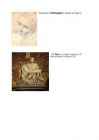
The portrait of Michelangelo by Daniele de Volterra The Pietà is a marble sculpture in St. Peter's Basilica in Vatican City MICHELANGELO Italian sculptor, painter, architect and poet. He was one of the founders of the High Renaissance and, in his later years, one of the principal exponents of Mannerism. He was born in 6 March, 1475 in Caprese, the son of the local magistrate, his family returned to Florence soon after his birth. During his life he lived in city's like Florence, Venice and Bologna in Tuscany, nowadays Italy. Later, during the prolonged illness and after the death of his mother, he lived as a stonecutter and his wife and family in the town of Settignano where his father owned a marble quarry and a small farm. Michelangelo once said to the biographer of artists Giorgio Vasari, "What little good I have within me came from the pure air of your native Arezzo and the chisels and hammers." Mi...
Ballet Merili Kaarna 11.d Italian renaissance court entertainment originated in the 15th century the epicentre moved to France obligatory component of opera Mlle La Fontaine 1681 St. Petersburg ballet reanimated in western Europe Styles Romantic ballet mid 19th century emphasized intense emotion most widely known and performed ● Classical ballet ○ based on technique and vocabulary ○ different styles ○ height in 19th century Neoclassical ballet use of the abstract diverse music choise possibilities for achitectureand design in choreography Contemporary ballet ballet technique apparent roots exploration experimentation
Classical music History The period from the 11th century to present times The term "classical music" did not appear until the early 19th century. The earliest reference is from about 1836 Haydn, Mozart and Beetohoven are the most known classical musicians. Periods in classical music Medieval (5001400) Renaissance (14001600) Baroque (16001750) Classical (17501830) Romantic (18151910) Modern (19102000) Form Concerto Symphony Sonata Opera Dance music Suite Étude Symphonic poem Classical music nowadays Postmodernism Polystylism Eclecticism http://www.youtube.com/watch?v= WXIhTodJ6M&playnext=1&list=PL50 B198056DD2973A Thank you for attention!
The square in front of Tallinn's Town Hall functioned as a marketplace for centuries, dating back to times even before the Town Hall itself was built. Through the years this served as a place of celebrations as well as executions. Today the square remains a cultural focal point for the city. In summer, it's filled with outdoor cafés and is home to countless openair concerts, handicraft fairs and medieval markets. In winter, an annual Christmas Market enchants the crowds on the square, as does the town's Christmas tree (a tradition whose roots stretch back to 1441), which stays up for a month or more. Town Hall Square has also become the traditional centre of the Old Town Days festival, a modern version of a medieval carnival. Traditions from the Middle Ages are kept alive here, including parades, a knights' tournament, a parrotshooting contest and the election of the May Count. Tallinn`s late Gothic Town Hall building is one of...
RENESSANSS (14.saj. II pool 17.saj. algus) Mis keelsest sõnast Millal algas renessanss Millest võttis eeskuju tuleb renessanss ja Itaalias ja millal Lääne renessanss? mida see tähendab? Euroopas? Prantsuse keelsest Itaalias algas renessanss Renessanss võttis eeskuju sõnast renaissance juba 14. sajandil, Lääne antiigist. ja see tähendab Euroopas 15. ja 16. saj. taassündi. Renessansi kunstnikud: Leonardo da Vinci Raffael Michelangelo Heliloojad: Kirjanikud: Giovanni Pierluigi da Palestrina (15251594) William Shakespeare Orlando di Lasso (15321594 Giovanni Bocc...
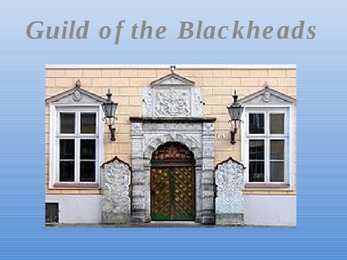
Guild o f the Blac khe ad s His to ry Mentioned in 1399 Origin of the name is not entirely clear St. Mauritius is depicted in the coat of arms of Blackheads Active only in Estonia and Latvia Left Tallinn in the 1940s They were merchants Were also in Tartu and Pärnu Main building was in Tallinn The Ho us e o f Bro the rho o d o f Blac khe ad s Located in the old town Is nearly the only preserved renaissance building in Tallinn When it's not occupied by concerts or other events it's open 10.00 19.00. Thank you for watching Kalev Gustav Lillepruun Sources : Wikipedia.org Tallinn.com Mustpeademaja.ee
25/11/2012 22:54 The World According to Student Bloopers Richard Lederer St. Paul's School One of the fringe benefits of being an English or History teacher is receiving the occasional jewel of a student blooper in an essay. I have pasted together the following "history" of the world from certifiably genuine student bloopers collected by teachers throughout the United States, from eight grade through college level. Read carefully, and you will learn a lot. The inhabitants of Egypt were called mummies. They lived in the Sarah Dessert and traveled by Camelot. The climate of the Sarah is such that the inhabitants have to live elsewhere, so certain areas of the dessert are cul- tivated by irritation. The Egyptians built the Pyramids in the shape of a huge triangular cube. The Pramids are a range of mountains between France and Spain. The Bible is full of interesting caricatures. In the first book of the Bible, Guinesses, Adam a...
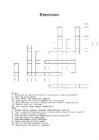
Renessanss Across 5. Õpetlased kes uurisid antiiki ja tutvustasid seda ka kaasajale? 9. Kust oli pärit Dante? 11. Kust kohast sai renessanss alguse? 13. Shakespeare kirjutatud tragöödia üks peategelane? 14. Mida tähendab renessanss(tulnud prantsuse sõnast renaissance)? 15. Inglise poliitik ,kirjanik 16. Kes kirjutas teose nimega "Dekameron"? Down 1. Milline tähtis inimene külastas tihti Gloobuse teatrit? 2. Teatri nimi,kus Shakespeare oli näitleja,näitekirjanik,teatri osanik? 3. Keda peetakse esseede rajajaks? 4. Keda peetakse tegelikult Shakespearei teosete autoriks? 6. Leiutati,seotud kirjutamisega? 7. Renessansiaegne kuulus kunstnik? 8. Kuulus Leonardo da Vinci maal? 10. Kes on "Jumalik komöödia" autor? 12. Shakespearei kirjutatud tragöödia? VASTUSED 1) ElisabethI 2) Gloobus 3) Montaigne 4) Bacon 5) Humanistid 6) Trükikunst 7) Michaelangelo 8) Mona Lisa 9) Firenze 10)Dante 11)Itaali...
RENESSANSSI KUNST Kunstis sai iseloomulikuks arutlemine ilu üle ja selle poole püüdlemine. Varem olid kunsti headuse kriteeriumid lähtunud sellest, mis on õige ning see õigsus oli inimesest kõrgemal. Nüüd hakati taotlema elamuste pakkumist inimese meeltele. R kunst haarab peamiselt 15-16 saj. Selle perioodi maalikunsti ja skulptuuri iseloomustab loodustunde tugevnemine ja realistliku looduslähedase käsitlusviisi võidulepääs. Maalikunstis rakendatakse kõiki perspektiive ja anatoomia seadusi ning tähtsale kohale tõuseb portree ja skulptuur on jälle eraldi kunstiharu. Püüd reaalsuse poole valitseb eelkõige Itaalias ning sealt edasi teistesse Lääne-E maadesse. Kohe alguses ilmneb antiikkunsti mõju ning seda eelkõige arhitektuuris ja siit ka kunstiajastu nimi renaissance (taassünd). Taassünni all mõeldakse antiikaegsete võtete taas kasutuselevõtmist. Renessa...
Andrea del Verrocchio Noorusiga • Sündis 1435. aastal Firenzeses. • Pottsepp Francesco Cioni poeg. • Õppis kellasepaks Giuliano Verrocchini juhendamisel. • Töövähesuse tõttu loobus kellassepa ametist ja otsustas tegutseda maalikunstnikuna. Firenze, Itaalia Andrea del Verrocchio • Rajas oma ateljee ning sai mainekaid tellimusi maalikunsti, skulptuuri ja ehituskunsti vallas. • Verrocchin sai aru, et ei saavuta maalijana midagi ning otsustas tegeleda rohkem skulptuuriga. • Tal oli palju õpipoisse, kellest hiljem saanud maailmakuulsad kunstnikud • Veneetsia linn tellis tema käest monumendi Bartolommeo Colleonile - ühele silmapaistvamale väepealikule. Bartolomeo Colleoni ''Madonna koos istuva lapsega'' ja ''Püha Moonika'' ''Kristus ja Püha Toomas'' ja ''Taavet'' Verrocchio ja Leonardo da Vinci • Verrocchio suureks karjääripöörde p...
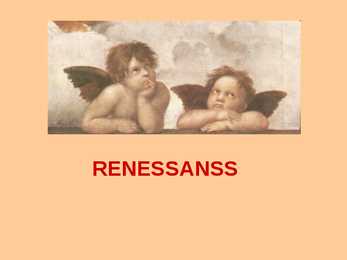
RENESSANSS Renessanss 14.-16.sajand · Mõistega "renessanss" (pr renaissance taassünd) tähistatakse kultuuriloos antiikkultuuri ideaalide taassündi ning seda mõistet hakati esmalt kasutama seoses Itaalia 14.-16.sajandi kultuuriga. · Muusikaloos on Itaaliast olulisemal kohal Prantsusmaa (14.saj.) ja Madalmaad (15 saj.). Teadus ja ajalugu · Mikolaj Kopernik (1473-1543) väitis, et Päikese ja tähtede näiv liikumine on seletatav Maa ja teiste planeetide tiirlemisega ümber Päikese ning samaaegse pöörlemisega ümber oma telje. Kopernik pidas Päikest universumi keskpunktiks. Teadus ja ajalugu · Galileo Galilei (1564-1642) valmistas esimese teleskoobi. · Johann Gutenberg (1400-1468) leiutas trükikunsti. · Martin Luther (1483-1546) algatas Saksamaal reformatsiooni (usupuhastuse). · Christoph Kolumbus (1451- 1506) avastas 1492.a. Ameerika. Eesti · 1558-1583.a....
WOMEN's IDEALS OF BEAUTY THROUGH THE AGES Renaissance 15th century High forehead In the warmer climate hair in plaits, jeweled turbans or caps Using bleach A few extra pounds of weight. Used white lead powder Elizabethan 16th century Queen Elizabeth Naturally pale complexion Red hair Healthy glow to cheeks 18th Century Women had trim Crimped or curled heads Powdered Decorated with garlands(vanikud) Wire cages Three feet in the air Feathers Ribbons Jewels Even ships, gardens Victorian Natural beauty Without makeup Used cosmetics less Hygiene and health 1840s heads were sleek, demure Heavy knot of curls Plaits in back 1920s "Bobbed" Waved or shingled hairstyles Louise Brooks Clara Bow Powder Circles to the cheeks Plucked eyebrows Penciled in thin arches Lips very red 1940s Feminine hairstyles Bette Davis' curls Rita Hayworth's gleaming waves A lock of hair that covered one eye. 1950s "Doe eye" Pale complexion Intensely ...
Michelangelo Buanarroti Katrin Jermoskin Mustvee Gymnasium Form 11 2010 Michelangelo di Lodovico Buonarroti Simoni 6 March 1475 18 February 1564 Italian Renaissance painter, sculptor, architect, poet, and engineer The second of 5 brothers Mother was Francesca Neri she died young Father was Ludovico di Leonardo di Buonarotti Simoni Childhood in Florence 1488 he got inspiration by painter Domenico Ghirlandaio 1489 he began to study sculpture under the protection of the Lorenzo Magnifico At this time(he was 16) he sculpted the reliefs Madonna of the Steps (14901492) and Battle of the Centaurs (14911492) 14931494 he studied human anatomy In 1496 (21 years old) he went to Rome, and did one of his fam...
Sandra Silver 22.05.10 Pildianalüüs Raffaeli ,,Ateena kool" ,,Ateena kooli", mis on maalitud aastatel 1510-1511, peetakse Raffaeli üheks kuulsaimaks freskoks. Suurejooneline seinamaal on peaaegu 8 meetri laiune ja 5 meetri kõrgune ning asub Vatikani palees, mis on Rooma paavsti ametlik residents. Ruum, kus kunstiteos asub, oli esialgu kasutusel raamatukoguna, hiljem hakati seal tähtsaid lepinguid allkirjastama. Oma pisut eksitava nimetuse sai fresko 18. sajandil : maali põhiteemaks on tegelikult filosoofia (mõningatel andmetel on teos tuntud ka selle nime all) ja seda peetakse tolleaegsete olulisemate ilmalike tõekspidamiste kajastuseks. Tähtsaimal kohal - maali keskpunktis- seisavad kaks ...
Prague Basic information Prague is the capital of the Czech Republic Population about 1.3 million Area of the city is 496 km². Prague is situated on the Vlatava river. The Old Town is included in the UNESCO list of World Heritage Sites. Coat of Arms Flag The location of Prague in the Czech Republic Name The name Prague is derived from an old Slavic root, praga, which means "ford", referring to the city's origin at a crossing point of the Vltava river. The native name of the city, Praha, is also related to the modern Czech word práh which means threshold. History The area of Prague was settled as early as the Paleolithic age. By the year 800 there was a simple fort fortified with wooden buildings. It was founded during the Romanesque era c. 885 and flourished in the Gothic and Renaissance eras. Prague flourished during the reign of Charles IV. Charles IV founded the first university in MiddleEurope Charles...
Literature of the 14th century The highpoint of medieval literature, the best writer of late medieval lived then. William Langland 1332-1376 the last important poet of alliterative verse. His masterpiece "The Vision of Piers Ploughman" how important working hard is, the labour of peasants is the base of the welfare of the people. A passionate protest against social injustice. A time when peasants were slowly rising against their feudal lords. Descriptions of different social classes. Religious mysticism. Two great principles: 1) all men are equal before God; 2) honest labour is dignified. It is a dream allegory. A young maiden named Youth, Greed is an old witch. The greatest writer of this period and the whole of medieval times Geoffrey Chaucer (1340?-1400): · The father of English poetry · The creator of English versification · The first poet to use various metres · Laid the foundation of the new literary English ...
Arvo Pärt Author: Heli Kopter Life Pärt grew up in Rakvere. He went to study music at the the Tallinn Conservatory (now The Estonian Academy of Music and Theatre), graduating in 1963. He was influenced by medieval and Renaissance music. He became a popular composer during the 1960's. In 1976 Pärt created his signature tintinnabuli style. His best known works are Für Alina and Spiegel im Spiegel. In 1980, Pärt left Soviet Estonia in search of creative freedom in Vienna, and later Berlin. Some Facts He was known for his self-invented compositional technique tintinnabuli. His tintinnabuli technique resembled the ringing of bells and was best displayed in his composition "Spiegel im Spiegel" from 1978. He translated the style of minimalism into sacred music, composing well-known instrumental works that became a part of the New Simplicity movement. He was the most performed contemporary compo...
RENESSANSS Rinascita (itaalia keeles "taassünd", prantsuse keeles renaissance). Renessanss sai alguse Itaaliast ja seepärast tähistatakse ka selle erinevaid perioode itaaliakeelsete tähistustega: 14. sajand - eelrenessanss e trecento 15. sajand - vararenessanss e quattrocento (u 1400-1500) 16. sajand - kõrgrenessanss e cinquecento (u 1500-1520/30) Just Itaalias vabanes kunst kõige varem keskaegseist kammitsaist, tärkas huvi looduse järgimise ja antiikkunsti vastu. MIS TOIMUS? Lagunes naturaalmajandus, laienes tööjaotus, kaubandus arenes kiiresti, tärkas pangandus, tekkisid esimesed manufaktuurid, kiirenes kogu elutempo, leiti tee Indiasse ümber Aafrika, avastati Ameerika (1492), tekkisid uued majandusvormid linnades. Tähtsamateks keskusteks Itaalias olid: Veneetsia, Genova, Milano ja Firenze (pangandus, kaubandus ja tööstus). Linnakodanikele ei kuulunud mitte ainult majanduslik võim vaid ka poliitiline võim. ...
Detroit Meriliin Lend 11 a Detroiti asukoht Detroit on Ameerika Ühendriikide osariigi Michigani suurim linn. Asub Wayne'i maakonnas Detroiti jõe ja Erie järve ääres. Detroiti asend Wayne'i maakonnas Detroiti pitsat Detroiti lipp Detroit õhtul Andmed Linna asutas 1701. aastal prantsuse maadeuurija Antoine de la Mothe Cadillac. 2010. aasta rahvaloenduse järgi oli Detroiti elanike arv 713 777. Linna kõrgeim hoone on Renaissance Center. Linnapea on alates 2002. aastast Kwame Kilpatrick. Linna pindala on 370,4 km2. Vaatamisväärsused Henry Fordi muuseum (Henry Ford Museum). Idaturg (Eastern Market). Cranbrooki kunstimuuseum (Cranbrook Art Museum). Motowni ajaloomuuseum (Motown Historical Museum). Bailey katedraal (Bailey Cathedral). Foxi teater (Fox Theatre). Foxi teater Bailey katedraal Motowni ajaloomuuseum Cranbrooki kunstimuuseum Henry Fordi muuseum Idaturg ...
Eesti maaülikool Põllumajandus- ja keskkonnainstituut ANTIQUE GARDEN ORNAMENT: fountains Kadi Mõttus Tartu 2011 Book what I use: Israel, Barbara ,,Antique garden ornament: two centuries of american taste" 256 pages LR tehnikakirjanduse Barbara osak. 21p Israel 712.2 ISR Fountain pros: · Most compelling of garden ornaments · Make viewer think how it works · Beauty · Musical sound · The play of light Compelling mõjuv The idea comes from... ... crops irrigation! Ornamental fountains variations: · Freestanding tazza-form · Shallow · Bowl Shallow - madal Ornamental fountains variations: · The wall-mounted · Semiattached water ensemble · Fountain figure Another ornamental fountain variation: · The grotto Thomas Jefferson (1743 1826) · Plan for a naturalistic grot...
Michelangelo Buonarroti Kaido Mõts Elulisi andmeid · Täisnimi on Michelangelo di Lodovico Buonarroti Simoni · Elas 6. märts 1475 - 18. veebruar 1564 · Sündis Itaalias Arezzo lähedal · Õppis Firenzes 1488 1489 maalikunsti ja 1489 1490 maalikunsti · Michelangelo oli väga mitmekülgne (skulptor, maalija, poeet, teadlane), oli ka oma aja geenius Teoseid · "Taavet" · "Viimne kohtupäev" · "Kentauride lahing" · "Mooses" · "Surev ori" · "Võitlev ori" · "Madonna Doni" · Sixtuse kabeli laemaal · Peetri kiriku kuppel · "Öö" · "Koidik" Michelangelo Buanorreti "Taavet" · Valmis vahemikus: 1501 1504 · On elusuurune · Asub Firenzes Fresko "Viimne kohtupäev" · Valmistatud vahemikus 1536 1541 · Mõõtmed: 1370 cm × 1200 cm · Asub Vatikanis Sixtuse kabelis Vatikani Sixtuse kabeli laemaal · Maalitud ...
The history of Scotland begins around 10,000 years ago, when humans first began to inhabit what is now Scotland after the end of the Devensian glaciation, the last ice age. Of the Stone Age, Bronze Age, and Iron Age civilization that existed in the territory, many artifacts remain, but few written records were left behind. The recorded history of Scotland begins with the arrival of the Roman Empire in Britain, when the Romans occupied what is now broadly England, Wales and the Scottish Lowlands, administering it as a Roman province called Britannia. To the north was territory not governed by the Romans -- Caledonia, by name. Its people were the Picts. From a classical historical viewpoint Scotland seemed a peripheral country, slow to gain advances filtering out from the Mediterranean fount of civilisation, but as knowledge of the past increases it has become apparent that some developments were earlier and more advanced than previously ...
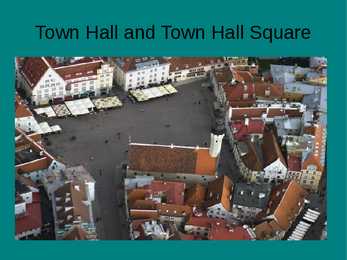
Town Hall and Town Hall Square History The building history of the Town Hall goes back to the 13th century. In its present form it was completed in 1404. The management of the city worked in the Town Hall until 1970. Since 1975 the Town Hall functions as the ceremonial building of the city government, but it also serves as a concert hall and a museum. The tower The tower was constructed together with the Town Hall in 1402 1404. The original Gothic pyramidal spire was replaced by a Late- Renaissance spire in 1627. The height of the Town Hall from the bottom of the arcade to the top of the spire is 64 meters. The spire was destroyed in an aerial bombing on March 9, 1944. It was rebuilt in 1952. Tallinn Town Council used to have its own guards, who maintained order in town and watched for possible enemy troops or destructive fire from...
Raphael Sanzio Raphael (April 6 or March 28, 1483 April 6, 1520) was an Italian painter and architect of the High Renaissance. Raphael was enormously productive, running an unusually large workshop. Most of his work remains especially in the Vatican. He received his first training from his father, Giovanni Santi, who was a poet and a painter. After that he became a student and assistant of the painter Perugino. Raphael imitated his master closely and sometimes it is difficult to distinguish which works are painted by Raphael. His work at that period is Marriage of the Virgin (1.) Mary receives a ring from Joseph. In contrast to the calm figures of the main group, there are one man, who is shown in motion (liikuvuses). He is breaking a dead stick over his knee, because he fail to win Mary's heart. Joseph's stick, on the other hand, has blossomed. Raphael moved to Florence, where he studied the ...
Da Vinci was an Italian Renaissance polymath. He was painter, sculptor, architect, musician, mathematician, engineer, inventor, anatomist, geologist, cartographer, botanist, and writer. a man of "unquenchable curiosity"( Kustutamat uudishimu) and "feverishly inventive imagination"( palavikuliselt leidlik kujutlusvõime) Characters Leonardo appears to have had no close relationships with women but he had many good friends.( Gay man) Mona Lisa Oil on cottonwood One of the most famous paintings of all times is a mystery. It is uncertain whether the painting is a portrait of the wife of the Florentine citizen Francesco del Giocondo as traditionally believed, while Mona Lisa’s enigmatic smile remains a subject of speculation. The painting can be seen in the Louvre Museum in Paris, France. The last supper Tempera on gesso, pitch and mastic. The mural repre...
GOTH SUBCULTURE Katrin Suviste 12.B TÕVL · Goths - a subculture, originated in the late 70s of the XX century in the UK based on punk movement. ORIGIN AND DEVELOPMENT (1979-1985) · The origin of the Gothic subculture dates back to the late 1970s. · ,,First wave" of gothic rock Bauhaus, Southern Death Cult etc. · The most important for the gothic subculture can be considered 1982, marked by the opening of the famous club Batcave. SPLITTING AND MAINSTREAM POPULARITY (1985- 1995) · The second half of the 1980s was marked by the emergence of the "second wave" of gothic rock by the gradual departure of the representatives of the "first wave" into the shadows. · With the advent of the 1990s, the Gothic subculture was established as a "stage,,. CURRENT STATE · For modern goths, constant arguments, discussions and reflections on what "really" is "real Gothic" are an integral part ...
estonian culture The culture of Estonia incorporates indigenous heritage, as represented by the country's rare Finno-Ugric national language Estonian, with mainstream Nordic and European cultural aspects. Due to its history and geography, Estonia's culture has been influenced by the traditions of the adjacent area's various Finnic, Baltic, Slavic and Germanic peoples as well as the cultural developments in the former dominant powers Sweden and Russia. Traditionally, Estonia has been seen as an area of rivalry between western and eastern Europe on many levels. An example of this geopolitical legacy is an exceptional combination of nationally recognized Christian traditions: a western Protestant and an eastern Orthodox Church. Like the mainstream culture in the other Nordic countries, Estonian culture can be seen to build upon the ascetic environmental realities and traditional livelihoods, a heritage of ...
My favorite part of town Toila Oru Park My Favorite part of town is called Toila Oru park, which is located 20 km outside the city. The park includes castle complex, luxurious gardens with more than 800 sorts of plants, large beach, amazing terraces, cafés, mysterious spring cave, singing stage and much more. One of the main reason I like it is that there you can always find place for yourself. You can walk in the park, relax on the beach, read on a park bench or just enjoy incredibly beautiful views. There are a lot of interesting places to see. One of the most visited places are the area near terrace, where you can find wonderful rose garden, which is very colorful and aromatic. At the beginning this land was owned by Grigori Jelissejev in 1897. Then he decided to build luxurious summer villa, which could compete with famous resting mekas in France, Riviera ...
Reichstag Reichstag wurde von 1884 bis 1894 nach den Planen von Paul Wallot erbaut. Paul Wallot nüzte Elementen von Renaissance, Barock und Klassizismus. Wenn das Deutsche Keiserreich in 1871 proklamiert wurde, wurde auch Berlin die Hauptstadt und dann brauchte das neu entstandene Parlament einen Regierungssitz. Der Reichstag war 137 m lang, 104 m Breit, vier Ecktürme waren 104 m hoch und der Kuppelspitze war 75 m hoch. Besonders schwer war der Bau der Kuppel, aber zum Glück fand Bauingenieur Hermann Zimmermann eine Lösung. Aber er musste die Höhe der Kuppel niedriger machen. Geplant war 85 m, aber gebaut wurde es 75 m hoch. Reichstag ist auch sehr wichtig in deutschen Geschichte. Am 9. November 1918 rief Philipp Scheidemann vom Balkon am Westportal die Republik aus. Am Abend des 27. Februar 1933 verbrannt der Plenarsaal und die Kuppel im ,,Reichstagsbrand" vollständig. Kurz nach dem Krieg wur...
Itaalia rahvatantsud Tants on läbi aegade andnud erinevatele rahvastele võimaluse salvestada om kogemusi, tundeid ja olemust. Kõik rahvad pole suutnud luua tugevaid tantsutraditsitsioone, kuid tuntumad tantsud on ulatanud üle riigipiiride. Nii tantsiti 14. ja 15. sajandil Euroopas kuningakodades Itaalia tarantellat ning Prantsuse menuette ja kadrille. Itaalia Rahvatants on olnud lahutamatu osa Itaalia kultuuris sajandeid. Tants on olnud pidev niit itaalia elu Dante läbi Renaissance tulekuga Tarantella ja tänapäeva ärkamised on rahvamuusika ja tants. Carole, ring või kett tants , mis sisaldab laulu, oli domineeriv Keskaja tantsu vorm Euroopas vähemalt 12 läbi 14. sajandi. See vorm tants leiti Itaalias samuti ja kuigi Dante on mõni põgus viide tantsida, see on Dante kaasaegseid Giovanni del Virgili, kes annab meile varem maininud Itaalia rahvatantsu. Ta kirjeldab grupp naisi...
Anete Merilin Leetberg Aule Pihlak Renessanss sai alguse Põhja-Itaalia linnriikidest, mis olid rohkem arenenud ja kõige lähemal antiigipärandile. Järgneva kahe sajandi jooksul levis üle Euroopa ja tõi kaasa suure murrangu inimeste mõtteviisis. Renessanss (prantsuse sõnast renaissance 'taassünd') oli Itaaliast alguse saanud ning 14.-17. sajandil väldanud periood Euroopa kultuuriloos. Ajastut iseloomustas eemaldumine religioonikesksetelt väärtustelt inimesekeskse maailmapildi suunas. Renessanss järgnes keskajale. 14. sajand eelrenessanss 15. sajand vararenessanss 16. sajand - kõrgrenessanss Renessansiajal hakati uuesti uurima vahepeal unustusse jäänud antiikaja kunsti, kirjandust, filosoofiat ja igapäevaelu. Renessansikultuur tajus end antiikkultuuri taassünnina, mis ei tähenda siiski, et renessansiaja inimmõtte areng piirduks ainult vana meeldetulet...
ART 1. visuaalne(nägemise kaudu tajutav) kunst-visual arts 2. arhitektuur- architecture 3. esitus(ettekandev)kunst-performing arts 4. skulptuur-sculpture 5. skulptor-sculptor 6. tarbekunst(rakenduskunst)- applied arts 7. vitraaz-stained glass 8. pastell- pastel 9. maastikumaal-landscape 10. portree-portrait 11. portretist(portreekunstnik)- portrait 12. portreemaal-portrait painting 13. viirutamine, viirutamistehnika-streaking 14. emailimine, emailivärviga katmine-enameling ? 15. graveerimine-engraving 16. papp-cardboard 17. elevandiluu-ivory 18. papüürus-papyrus 19. miniatuurkunst, miniatuurmaal-miniature painting 20. lõuend-canvas 21. õlivärvid-oil paints, oil colours 22. meremaal-seascape, marine painting ? 23. värvigamma, koloriit-colour, coulouring ? 24. (joonistamis)süsi-charcoal 25. käsitöö-handicraft 26. keraamika ja pottsepatöö-pottery 27. ...
Renessansiks ( prantsuse keeles renaissance 'taassünd') nimetatakse keskajale järgnevat, antiigist ja loodusest innustunud vaimuliikumist eelkõige Lääne-Euroopas 14.-16. sajandil. Keskajal sisendas kirik inimesele, et ta on patune olend ja et maapealne elu on vaid ettevalmistus hauatagusele õndsusele või igavesele hukatusele. Renessansiaja mõtlejad ja kunstnikud pidasid inimest tema puudustest hoolimata põhiliselt heaks ja seadsid ideaaliks maapealse õnne ja harmoonilise isiksuse. Inimene kui isiksus vabanes keskaja kirikudogmade ja seisuslike normide kammitsaist. Oluliseks sai inimese individuaalsus - isikupära. Renessansiga on lahutamatult seotud humanism ja humanistid. Algul, vararenessansis hakati humanistideks (ladina keeles humanus 'inimlik') nimetama õpetlasi, kes uurisid ja tutvustasid antiikkultuuri. (Kuigi antiiki tunti mingil määral ka keskajal - antiikkirjandus on suures osas säilinud tänu keskaegsete munkade ümberkirjutus...
 annaabi.ee