Leidsid 33 sarnast õppematerjali, mis on seotud failiga "Questions for the Second Philosophy Test". Need materjalid aitavad sul teemat sügavamalt mõista.
evil, hume, descartes, kurjus, exist, kant, philosophy, aristotle, find, olend, soul, truth, four, augustine, physical, between, concept, answer, keerukam, ideas, usaldada, kahtlemine, important, notion, pure, forms, perception, questions, souls, olemuslik, vegetatiivne, lauseid, causes, aineline, vormiline, gives, noesis, define, cannot, allow, kurjuseQuestions for the First Philosophy Test a. Introduction 1. How would you characterize Modern philosophy? Commanding outlook, power, will, Man is God. 2. How would you characterize Classical philosophy? Contemplative outlook, truth, intelligence, God is truth. b. Descartes 3. What is the main question that Descartes is trying to answer? How can I be certain [sure] that I am in the truth? 4. Which are precepts of Descartes' method? Only accept what is self-evident. Analysis. Synthesis. Enumeration. 5. Descartes will only accept one specific kind of ideas: which and why? He will only accept clear and distinct ideas that are indubitable. Because the complex ideas could then be constructed using the simple ideas. 6. How does Descartes call his method and why is it not skeptical? Methodic doubt
1. What does the word “philosophy” mean? The study of proper behaviour and the search for wisdom, in greek means love for wisdom 2. Is philosophy a science? Why? What kind of science it is? Yes it is. It tries to understand the meaning of reality. It’s the science of truth. Science, as it exists today, happens within the framework of philosophy. Philosophy, however, is bigger than science. It is also a form of art and discipline…... 3. Name three characteristics of Classical philosophy? deeply rooted in religious traditions ; believes that inferior was created by superior ; more positive ; seeks the real truth ; about intelligence ; reaalsuse üle mõtisklus ; believes that god is truth 4. Name three characteristics of Modern philosophy. believes that superior was created by inferior (!) ; more negative ; about will ; power ; domain of reality ; believes that knowledge is truth ; man is god 5. What was the problem that the first philosophers tried to solve?
Philosophy Aristotle - four causes or better "becauses" because they are the 4 ways in which we use the word "because" or answer the question "why?" 1. Material cause: - what it is made of - why is the bridge strong? because made of steel 2. Formal cause: - what form, definition or property it has - why is this salt? because made of sodium and chloride 3. Efficient cause:
History of Philosophy James Thurlow, Ph.D. 01.02.2012 Books to read · Plato's Republic · G.W.F. Hegel's Philosophy of History 1. Greek philosophy 2. Republic 3. Philosophy of History Ancient Greece - Ancient Greece vs. Persia (300-Herodotus) Salamis - Ancient Greece vs. Troy (Homer-screen writer)Iliad o Achilles- Hero of the heroes (main hero in Greece)- handsome, strong, brave, fast, anger(tema viga), young, bad temper o Agamemnon- son of King Atreus - Olympics - Sculptures- more lifelike, human figures come out of the stone - Greek liked physical beauty
An analysis of the problem of Political Power Written by: Katre Kikkas Introduction It is said that in the political philosophy there are only two questions: ,,Who can have what?" and ,,Who will decide over it?". It is not exactly like that but it is quite close to the trough, to begin with. The first question includes material amenity's, and dividing rights and liberties.(Wolff, 1996) What is power? It is ability to influence others to do something they otherwise would not. Also, others can be affected with threats and force. (Kilp, 2010) Political power includes also right to force the others and to punish them if
1. What is the object of philosophical study? The object of philosophical study is being itself on an abstract level. Everything and nothing can be or exist. Things like colour, nature, material things like a table just are, but the meaning of being in be-ing in itself is unclear. Non Material things can also be or exist. If something is, then it is a being. But what exactly is this IS that we can see or on the opposite can not see? Therefore this is one of the fundamental questions of philosophy. 2. Can you reject solipsism? Solipsism (solus ipse) means nothing exists, therefore everything is an illusion outside of our own minds. I think that it is true that we know WE as in myself exists. But i can not for certain say that the person reading this exists although it might seems like it to me. I think that you really can’t reject solipsism on the whole because you do know that you exists, but can you for certain say that anybody else does
hypothetical situations can hardly relate to real situations. The ticking bomb argument looks at the hypothetical case where a leader of a state is asked to give their permission to torture a captured rebel leader because he (probably) knows the locations of a few explosives that are spread around the city in different apartment buildings. In case they are not found within 24 hours, they will explode and many will be left dead (Walzer, 1973). Is it justified to torture this person to find out where the bomb is? This essay will look in to how it has according to the thinkers in the strand of consequentialism / utilitarianism been labelled justifiable to use torture techniques in combating terrorism and will present the reasons for why this controversial behaviour that democratic governments have been proven to conduct and still are being accused of until the current day is irrational and dangerous. Theoretical justification of torture
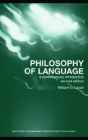
proper names, Searle's cluster theory, and the causalhistorical theory. Part II, Theories of Meaning, surveys the competing theories of linguistic mean- ing and compares their various advantages and liabilities. Part III, Pragmatics and Speech Acts, introduces the basic concepts of linguistic pragmatics, includes a detailed discussion of the problem of indirect force and surveys approaches to metaphor. Part IV, new to this edition, examines the four theories of metaphor. Features of Philosophy of Language include: · new chapters on Frege and puzzles, inferentialism, illocutionary theories of meaning, and relevance theory · chapter overviews and summaries · clear supportive examples · study questions · annotated further reading · glossary Praise for the First Edition: "This exceptional text fulfils two essential criteria of a good introduc- tory textbook in the philosophy of language: it covers a broad range of
Mis seda mõjutasid? Miks oli see nii revolutsiooniline? Miks oli tugevam protestantlikus põhjas? Aga minu arvates, enne kui me isegi alustada nendele küsimustele vastamist, tuleks küsida palju olulisem küsimus: Mis on teadus? ] Science is no doubt with us today it surrounds our daily lives to such an extent that we now take it as a given. We expect science to be, to exist. Its effects and products touch the statesman and the soldier, the house husband and the grocer. Science has given us nylon, fluoride, latex paint as well as 747s, everfaster microchips and PEZ. But science has also given us fluorocarbons, heroin, nuclear waste, dioxin, sarin gas and the atomic bomb. Science can be a mixed blessing with much that is good comes much that is clearly bad. But, what do we mean by science? Science is faith
colonies and across Europe. Main Ideas of the American Enlightenment: The Enlightenment caused a shift in the cultural and social attitudes of the people, bringing in some new and radical ideas. Republicanism: The doctrine of republicanism asserts a system of a government that is elected by the people of the nation. The roots of this ideology go back to ancient Greece, when the concept of a democratic government was examined by philosophers such as Plato and Aristotle. Individual Liberty: "Life, Liberty, and the pursuit of Happiness" developed as the motto of this era, which forms the cornerstone of the U.S. Constitution today. Since the colonies had very few individual rights, they declared certain fundamental rights that they deemed "inalienable." Democracy: The colonies had no say in the formation of the government, and had no representation in the lawmaking process
while others fail. How can we predict success or failure, and compensate the at-risk children? Few practical options may be available to teachers. It is inevitable in universal public schooling that the extreme students, either dull or bright, will be hurt by our emphasis on the average. It is horrible to admit, but our society cannot assume that all members are capable of being well educated. We have unequal physical, mental and environmental status, and the poorer fringe will always exist. Those of us lucky enough to have a conscience, mature enough to see how things really are, must do what we can to help the less fortunate. Obligation to help. How can a rich person help a poor one? By giving some money? Well, can smart, or educated people give education to those needing it? Sometimes just taking the time to discuss things with troubled people is a great favor and aid. I don't have much surplus money to give to worthy causes, yet donate my time freely
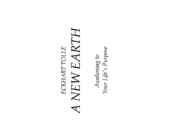
....................................................147 Addictions..................................................................................................149 Inner Body Awareness...............................................................................150 Inner and Outer Space................................................................................151 Noticing the Gaps.......................................................................................153 Lose yourself to Find Yourself....................................................................153 Stillness.......................................................................................................154 Chapter Nine Your Inner Purpose - 155 Awakening..................................................................................................156 A Dialogue on Inner Purpose.................................................
British Literature in the 20th-21st Century REVISION QUESTIONS 1. The Contradictory, diverse, chaotic 20th century. New developments in science and philosophy. The essence and influence of Freudian theory. Contradictory, diverse, chaotic 20th c- simultaneous rejection and invocation of the past. While modernists apotheosized the creative geniuses of the past, they also rejected old poetic forms. Challenge old and established beliefs and more and more people had access to books and education more people went to universities. profound change in morals: · No universal value and perspective on things
· Man is not a free agent, is govern by something · Unable to determine his own faith · Hereditary · Naturalists tried to apply in fiction the processes of natural sciences · Writers task is to record facts, systems of behaviour, living conditions, never revealing any natural unbiased (completely natural) · Point of view: amoral-outside the category of morality, neither good or bad · Naturalist find it absurd to blame the wicked. These criminals are doing what nature, environment, their unconscious tells them to do. Naturalists do not judge their characters, they simply report. Try to describe facts like they are. Naturalists depict the lower, coarser forms of life. · Drab, squallid set of scene. Revolting, disgusting · Characters are people with strong animal desires · Neurotic characters unable to understand the forces that control them
- it implies that - we may infer that - etc. Premise(s) indicators Swans must have wings, since they are birds and birds do have wings. The word “since” indicates the premises which are claimed to support the conclusion. Other premise(s) indicators include: - because - for - given that - as - for the reason that - may be inferred from - follows from - etc. Two remarks on indicators: 1. The occurence of an indicator does not suffice. We need to find also an inferential relationship. a. Since yesterday, it did not stop raining (temporal meaning) b. Since it is raining, I will take my umbrella (logical meaning) 2. Sometimes, there are no indicators. It is then necessary to inquire the implicit inferential relationshio between the statements in order to identify what statement follows from the other(s).
DORINE O admirable pattern! Virtuous dame! She lives the model of austerity; But age has brought this piety upon her, And she's a prude, now she can't help herself. As long as she could capture men's attentions She made the most of her advantages; But, now she sees her beauty vanishing, She wants to leave the world, that's leaving her, And in the specious veil of haughty virtue She'd hide the weakness of her worn-out charms. That is the way with all your old coquettes; They find it hard to see their lovers leave 'em; And thus abandoned, their forlorn estate Can find no occupation but a prude's. These pious dames, in their austerity, Must carp at everything, and pardon nothing. They loudly blame their neighbours' way of living, Not for religion's sake, but out of envy, Because they can't endure to see another Enjoy the pleasures age has weaned them from. MADAME PERNELLE (to Elmire) There! That's the kind of rigmarole to please you, Daughter-in-law
something. S The convent is on top of the high hill and from its window the Sisters can see the marrow of the town. to be privy to something (46) - If you're privy to something, you've been let in on a secret or know about something that most people don't. ... The adjective privy comes from the Latin privatus, meaning "private," and describes someone who has knowledge of secret or confidential information. S- Marie is privy to both worlds of Evil knowledge. a habit (49) - a long, loose garment worn by a member of a religious order. S Marie asks if she gets a habit when Leopolda tells her that Marie will be sleeping behind the stove. a stigma (59) - (in Christian tradition) marks corresponding to those left on Christ's body by the Crucifixion, said to have been impressed by divine favour on the bodies of St Francis of Assisi and others. S Leopolda is explaining how stigmata appears on Marie palm.
Each perspective is valid but none is complete without the others, for psychology is a field of many faces and to see it fully, we must see them all. Wilhelm Wundt (Germany) and William James (USA)- founders. General Principles and Unique Individuals: Psychology's main purpose is not to describe the distinctive characteristics of a particular individual. Its main goal is to get at the facts that are general for all of mankind. Psychology hopes to find a route back to understand the individual event. It tries to find explanations to some behaviors and once such explanations are found, they may lead to practical applications; to hel counsel and guide, and perhaps to effect desirable changes. BIOLOGICAL BASES OF BEHAVIOR Any question about bodily movement must inevitably call for some reference to the nervous system, for tu us it is quite clear that the nrevous system is the
relevant, real and communicative practice. Some solutions. We need to make a distinction between writing to learn (other things, like structures, spelling and vocabulary) and learning to write. If we understand this distinction and make sure our learners do too then the communicative purpose of writing will be clearer. We need to work hard on developing ways of responding to the content of what our learners write - the message - and not just the level of language. Teachers should help to find a real audience for their students. We need to use meaningful, realistic and relevant writing tasks, based on our learners' needs and interests. Another solution is to design individual tasks based on what individual learners need to write. In addition we should talk about writing with our learners: · How we write well? · Why we write? · Who we write for? · What makes it difficult? Ideas for communicative writing tasks.
· Hobbes leviathan · Locke second treatise of government · Rousseau - social contract · Montesquieu - The Spirit of the Laws · Kant idea for a universal history from a cosmopolitan point of view · Hegel - philosophy of right Key dates 1603 Shakespear's King Lear , Death of the Queen Elizabeth 1. 1618-48 The Thirty Year's War 1649 Execution of Charels 1 of England, Establishment of Oliver Cromwell's Prodecorate 1651 Hobbes' Leviathan(1588-1679) 1660 The Restoration of Charels 2. as king of England 1688 The Glorious Revolution of Willim and Mary in England 1689 John Locke publishes Two Treatises of Goverment 1707 formation of the British Parliament
herbs it is absolutely delicious? If you ask foreigners to name some typically English dishes, they will probably say "Fish and chips" then stop. It is disappointing, but true that, there is no tradition in England of eating in restaurants, because the food doesn't lend itself to such preparation. English cooking is found at home. So it is difficult to a good English restaurant with a reasonable prices. In most cities in Britain you'll find Indian, Chinese, French and Italian restaurants. In London you'll also find Indonesian, Mexican, Greek... Cynics will say that this is because English have no "cuisine" themselves, but this is not quite the true. Vocabulary: to criticize - tasteless overcooked - ingredient - to invent - sauces - to disguise - spice herb - delicious - disappointing - to lend cuisine British Youth (2) Most 18 and 19 year-olds in Britain are quite independent people. English people say
14. Good institutions help to overcome human moral inertia. 15. I am not one of your little friends. 16. If a dimension is anywhere it's everywhere. 17. If God's not crazy, why are you? 18. If one makes a promise one shouldn't have made it cannot stand against the obligation to do the right thing. 19. If you odn't give a certain amount of attention to filtering distractions, every distraction is a catastrophe. 20. If you don't know what your duty is, your duty is to find out. 21. If you're not an animal, then you must be a vegetable. 22. If you want to get along you have to get along with those who don't want to get along. 23. If you whine whenever anybody messes with your crutches you can't claim not to be crippled. 24. I hate an unfair fight, so I need to be ganged up on. 25. Inattention is not O.K. 26. Injustice in your vicinity is your business--particularly your own. 27. It is not enough to refrain from bearing false witness against your neighbor
cause. Thesis: Your thesis is the main idea you are intending to carry throughout the essay. It is the guiding theme that sets your essay tone. In a way, the thesis is a one-sentence answer to your question. You make a claim in your thesis statement and spend the rest of the essay supporting this claim. How do you come up with a thesis? Coming up with your thesis requires a great deal of thinking on your part. You should carefully focus on your topic and try to find an angle, which makes it interesting and probably different from what the others will be writing. The thesis statement should be something that people do not usually think about and when they read that line, they are automatically drawn towards the essay to see what it really holds. The thesis statement is the central orienting concept of your essay. Body: As mentioned before, you write your essay providing evidence supporting your thesis statement. All the
variety, how should one transfer that into another language? What is the equivalent of Saaremaa language variety in English? Here the translator has to think about cultural issues as well – what it means to be from Saaremaa? Is it a rural (country) area? Do Estonians from the mainland have any bad feelings towards people from Saaremaa? Do they make fun of them? And after answering these and many other questions, the translator has to find a dialect in English that has about the same connotations that the Saare language variety has for the Estonian language. 3-And society (social class). - The last parameter that defines the language user is social class. A century or so ago this notion was fairly straightforward, as several Western languages had accepted standard forms. For instance in England the language of the ‘educated middle classes’ was considered the norm. Thus, it was the only language variety
) 91. Use which, not what, to refer back to a whole sentence. She passed her exam, which surprised everybody. (NOT She passed her exam, what surprised everybody.) My father has just climbed Mont Blanc, which is pretty good for a man of 75. (NOT ... what is pretty good for a man of 75.) 92. Don't use the with society when it has a general meaning. We all have to live in society. (NOT We all have to live in the society.) Rousseau said that society makes people evil. (NOT Rousseau said that the society makes people evil.) 93. Use a toinfinitive after want. I want to go home. (NOT I want go home.) The children want to stay up late. (NOT The children want stay up late.) 94. Use make, not do, with mistake. I have made a mistake. (NOT I have done a mistake.) You can't speak a language without making mistakes. (NOT ... without doing mistakes.) 95. Don't repeat a relative pronoun with another pronoun. There's the man that I work for
But, look, the morn, in russet mantle clad, Walks o'er the dew of yon high eastward hill: Break we our watch up; and by my advice, Let us impart what we have seen to-night 12 Unto young Hamlet; for, upon my life, This spirit, dumb to us, will speak to him. Do you consent we shall acquaint him with it, As needful in our loves, fitting our duty? MARCELLUS Let's do't, I pray; and I this morning know Where we shall find him most conveniently. Exeunt 13 SCENE II. A room of state in the castle. Enter KING CLAUDIUS, QUEEN GERTRUDE, HAMLET, POLONIUS, LAERTES, VOLTIMAND, CORNELIUS, Lords, and Attendants KING CLAUDIUS Though yet of Hamlet our dear brother's death The memory be green, and that it us befitted To bear our hearts in grief and our whole kingdom To be contracted in one brow of woe, Yet so far hath discretion fought with nature
/ Can't complain, thanks. · So so, thanks. / So and so, thanks. · Not so good, actually 1 The English alphabet Spelling Work with your partner and spell out first your name and then some names of places. Write down each letter as you hear it, and then say the word. The English alphabet on the phone: You might find the following alphabet (used by international airlines) useful when trying to spell a word on the telephone. A Alpha O Oscar Ä Alpha-Echo Ö Oscar-Echo B Bravo P Papa C Charlie Q Quebec D Delta R Romeo E Echo S Sierra F Foxtrot Sch Sierra Charlie Hotel
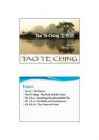
14) Invisible, Inaudible, Intangible y What cannot be seen is called the invisible y What cannot be heard is called the inaudible y What cannot be touched is called the intangible y These three cannot be examined and comprehended y And hence are mixed together as one y These three characteristics are the subtle characteristics of Tao y Beyond human examination and comprehension y Invisible, inaudible, and intangible doesn't mean it does not exist y Our love for others y The air that we breath can't be seen, touched, or heard 14.1) Invisible, Inaudible, Intangible y This "Oneness" is not much brighter in the sky, as it is not much dimmer on earth y Tao is not better in Heaven or on Earth y It is pervasive and the same everywhere y It is not more glorious in a saint or dimmer in an ordinary person y The Tao inside of Arnold is not brighter or dimmer than that of the Saints or that of any of us
She became a genuinely positive, confident, outgoing woman, highly articulate, well informed, and very much in demand as a speaker and authority in the medical profession. All memory of her negative childhood had been wiped out. Her feelings of inferiority were wiped out as well. She became a new person. She changed her thinking and changed her life. ■ THE BLANK SLATE The Scottish philosopher David Hume was the first to propose the idea of the tabula rasa or blank slate. This theory says that each per- son comes into the world with no thoughts or ideas at all, and everything that a person thinks and feels is learned from infancy on- ward. It is as though the child’s mind is a blank slate that every passing person and experience leaves a mark on. The adult becomes the sum total of everything he or she learns, feels, and experiences
.. 10 How about getting together next Friday instead? 11 Pop in for a chat some time soon ... 12 You've been very helpful ... 13 Well, I must leave now ... 14 By the way, I've got to tell you ... 15 I regret to inform you that ... 16 It is with great happiness that I congratulate you on your engagement ... 17 Please accept my sincere apology ... 18 Write back soon! 19 Keep in touch. 20 You are cordially invited to attend... TASK 3 Read the two models and find out which model: 1. uses an impersonal style 2. uses examples of the Passive voice 3. uses short forms 4. includes only facts 5. includes examples of colloquial English 6. uses a short, zappy style 7. omits pronouns 8. includes formal language MODEL 1 Dear Madam, I'm writing on behalf of "World Travel" in response to your request for information on holidaying in the Caribbean. A two-week package to the peaceful island of St. Kitts is being offered by our agency for only L 3,000
woman. However, a chance sighting of Kitty in her carriage as she travels to Dolly's house makes Levin realise he still loves her. In St. Petersburg, Karenin exasperates Anna by refusing to separate from her. He insists that their relationship remain as it was and threatens to take away their son Seryozha if she continues to pursue her affair with Vronsky. Part 4 Anna continues to pursue her affair with Vronsky. Karenin begins to find the situation intolerable. He talks with a lawyer about obtaining a divorce. In Russia at that time, divorce could only be requested by the innocent party in an affair, and required either that the guilty party confessed (which would ruin Anna's position in society) or that the guilty party was discovered in the act. Karenin forces Anna to give him some letters written to her by Vronsky as proof of the affair. However, Anna's brother Stiva argues
Scrap metal Vanapaber Packaging Pakend http://www.abiks.pri.ee Can plekkpurk Do you agree? Animals are much better than people. They never kill each other for no reason. All children should have pets. Working in the garden is really pleasant; it is more joy than work. I know recycling is important, but I find it boring if I have to think about it all the time. Hunting is a very good hobby. ABOUT ME 1. Where and when were you born? Where and when was your mother born? 2. What did you look like when you were 45 years old? Did you look like your mother? Your father? Some other relative? 3. Did you use to cry a lot? Did you use to eat too much? Too little? 4. Who did you use to play with? What games did you play? 5. Did you go to playschool? Who looked after you? 6. When did you start school
The absence of a methods section in your design report may be disconcerting because you might have spent up to half the semester considering different concepts before choosing one, but ultimately you won’t write about that process. The audience only cares about what you came up with and not how you got there. A design report is not a history (“first we tried this and that did not work so then we tried this and finally we got to this”), but instead is results oriented. If you find you are writing about your concept selection process in the main body of your design report, you are writing too much. Organizing a Design Report Page 1 of 9 A friend comes to you with a problem. “I haven’t been sleeping at night,” he says. You decide to help out. Upon further study you find that he hasn’t slept on a box spring for three months, has a persistent
 annaabi.ee