Leidsid 33 sarnast õppematerjali, mis on seotud failiga "Pildi kirjelduse märksõnad(Inglise keel)". Need materjalid aitavad sul teemat sügavamalt mõista.
here, contrast, photo, describe, similar, same, though, happening, photos, look, there, both, however, while, other, hand, although, compare, words, commonly, express, include, differ, contrary, left, bottom, middle, behind, front, present, continuous, doing, weather, outside, adjectives, happy, angry, bored, tired, feel, differences, might, could, seemsagain to keep the noise down. between Paul and Joe. 1D Sporting origins page 67 2 She recognised him at once. 2 Phobias can be genetically 3 He's working at his father's shop inherited. 1 1 staunchly / resolutely for the time being. 3 When it comes to politics, 2 By and large 4 They'll be here any moment now. Edward and his dad have a lot in 3 swiftly 5 Everybody makes mistakes once common. 4 loosely in a while. 4 Luke is the spitting image of Matt 5 categorically 6 My brother was still a baby at the Damon. 6 widely time
pronunciation and shape while not affecting the meaning of the word. For example: morpheme that shows plurality is s. In words cat+plural, bus+plural, man + plural the meaning of the word stays the same but the pronunciation varies between /s/ and /ez/. In the word man the shape of the word changes because its plurality is irregular men. So zero plurality is the allomorph of the plurality morpheme. Types of affixes → Affix is a morpheme that is attached
1 1 unreliable 4 modest 6 had belonged 2 naive 5 thoughtless Challenge! 7 had imagined 3 courteous 6 grumpy Students' own answers 8 had been spending 2 1 considerate 4 modest 2 broad-minded 5 self-confident 1D Survival at sea page 67 1F Talking about photos 3 naive 6 grumpy 1 1 horrified 4 determination page 9 2 relief 5 resigned 1 1 connected 6 say 3 1 gold 5 lamb 3 obstinate 6 misery 2 show 7 as though 2 bird 6 rake 3 imagine 8 would guess
· Expressing opinions Introduction State the topic and your own opinion clearly without using too many personal opinion words Main body (para. 2 - 4) Give the first, second and third argument and examples or reasons to support your opinion Conclusion Re-state your opinion, using different words Useful language To list points firstly, in the first place, first of all, to start with, secondly, thirdly, finally, last but not least To add more points to the same topic what is more, furthermore, also, apart from this, in addition to, moreover, besides, too, not to mention the fact that, another major reason To introduce conflicting viewpoints a lot of people believe/think, many people are in favour of/against, peopleoften claim that, it is popularly believed that, it is argued that, people argue that, opponents of this view say, however there are people/those who oppose, contrary to popular belief
Present the advantages and disadvantages in a fair way, discussing them objectively in equal detail. Do not use strong, emotional expressions (I know, I believe… Use words like: It seems that… It can be seen that…) Useful language: To list points: one major advantage/disadvantage of, a further advantage, one point of view in favor of/against, in the first place, first of all, to start with, secondly, thirdly, finally, last but not least… To add more points to the same topic: what is more, furthermore, also, in addition to, beside, apart from this/that, not to mention the fact that… To make contrasting points: on the other hand, however, in spite of, while, nevertheless, despite, even though, although, it can be argued that, one can argue that… To conclude: to sum up, all in all, all things considered, in conclusion, on the whole, taking everything into account, above all, as was previously stated… Opinion essays
sounds in human language. Phonetics: of the acoustic detail of speech sounds and how they are articulated. Phone: [p] A phone is actual pronunciation of a phoneme. A phone is represented between brackets Allophone: e.g. pin spin Phoneme: /p/ - /iz/ `houses' /s/ voicless `cats' /z/ `boys' /t/ `learned' /id/ `wanted' A phoneme is the smallest unit of the sound system of a language. If two sounds have the same phoneme, they are treated equally. A phoneme is represented between slashes. Morphology: is the study of word formations and the internal structure of words Morphemes: the smallest units of language that have their own meaning or grammatical function. cat, cat/s, laugh/ed, un/able, sheep Free morphemes: cat, laugh, eat, red Bound morphemes: prefixes: pre- prejudge dis- dislike suffixes: -ist typist
The aim of the section is to assist you to produce an effective topic outline: a skeleton of your document. If this stage of the production process is done properly all you really need are the language control techniques to connect your ideas logically and effectively. If you have a well documented list of techniques to connect your ideas effectively the writing process is less formidable. You will want to know how to join similarities, compare and contrast certain facts, introduce the next topic, offer a supporting idea, or refer to previously presented facts. You will also need to know how to present different shades of argument to produce logically a recommendation you wish to make. This requires an ability to emphasise certain facts and 'bury' others. However, all facts need to be linked to give a logical flow. This unit will give you language practice in this important aspect of producing written documents.
Body language Body language means communication with the movement or position of the human body. It can be conscious or unconscious. It is something that is noticed by everybody but is not always given enough attention. We sometimes ignore it and try to hide behind words, but we should never forget that we cannot fool everyone! Children react to body language because they experience the world through intuition. The same can be true for adults when feelings are involved. People who are in bad shape emotionally will often place great importance in it. In fact, they often pick up the smallest hint of a lapse in attention in the person they are speaking to. And they frequently jump to the conclusion that they are boring or a nuisance - thus compounding any sense of depression or poor self-esteem. A way to learn the secrets of body language is to watch television with the sound turned off and
.. I was wondering if you had considered this alternative? Would it not be possible to ... ? Letters of complaint I am writing to complain about ... I am writing to tell you how disappointed/annoyed I feel about ... I was amazed/distressed/horrified to find that ... As you must realise, ... I am sure you know that ... I am sure you can imagine ... I am sure you will appreciate that ... It goes without saying that ... At the very least, I look forward to receiving ... Unless you ... , I am afraid that I will have to take this matter further. Letters of recommendation I am writing to you on behalf of ... I have known X for ... years. She / He has shown herself/himself to be extremely ... X would seem to fit the requirements of this job perfectly. I have no hesitation in recommending X as a ... Letters to the editor
Best wishes, Anne C. Questions: a) Under what branch of literacy the given text goes to? ...................................................................................................... ............................................................ b) Who is the storyteller? ...................................................................................................... ............................................................. c) Describe her character with tree sentences. ...................................................................................................... ...................................................................................................... ...................................................................................................... ...................................................................................................... ..................
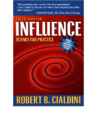
effects in new technologies, such as of persuasion. persuasion resulting from on line banner ads and the subliminal presentation o Twice as many Reader's Reports- first-person accounts in which readers of odors. of previous editions describe how e Increased coverage of how compliance they've seen a principle work on principles work in other cultures. or for them. Reader's Reports have New insights are derived from the become the most popular feature of research findings, sayings, and customs the book. Boston. New York • San Francisco Mexico City • Montreal • Toronto • London • Madrid • Munich • Paris Hong Kong • Singapore • Tokyo • Cape Town • Sydney
scientific prose, newspapers, official documents, business correspondenc etc. Style bears the stamp of indivual usage, that is every writer has a unique pattern/habit and abilities that form his style. This approach is best illustrated in the well-known victum of the french poet Georges-Louis de Buffon ,,Style is the man himself." Stylistics English stylistics or the study of style has not been discussed on the same scale as french stylistics, german or russian. The very term stylistics came into more common use in english only some 30-40 years ago. It was however recorded much earlier that is in 1882 for the first time, meaning ,,The Study of literary style, the study of stylistic features." A short history of the development of stylistics Stylistics is regarded a relatively new branch of philology, yet its roots go back as far as
discussing the advantages and disadvantages of something, the advantages should be grouped together and so should be the disadvantages. One paragraph should only talk about one thing, aspect, etc. If a new thought begins, a new paragraph should be started, too. In essays that express the writer's opinion mainly, one paragraph (usually the last one before the conclusion) should be reserved for the opposing viewpoint. When writing an essay, information should not be unnecessarily repeated. The same is true for grammatical patterns and vocabulary: different grammatical patterns and words make the essay more interesting and easily readable. As an essay is a formal piece of writing, contractions (e.g. isn't, aren't, etc.) are not acceptable because they are not formal enough. S/he can be used instead of the cumbersome "he or she" to save space when having in mind a person of either sex, or the also politically correct "they" for the singular
.. 3. Dear Sirs, I am writing to complain about the poor quality of the items which I received from your company. I have no other alternative but to cancel the order which 1 placed earlier this week ... 4. ... thus, I recommend that you accept this advice on the matter. I am pure that the suggestion offered is the best solution. Please let me know if this was helpful. Yours sincerely, Lee Jones 5. ... I would appreciate a reply at your earliest convenience. I look forward to meeting you to discuss employment opportunities. Yours faithfully, Nicole Porter Paragraph Plan for Letters · salutation · Paragraph 1 reasons for writing · Paragraphs 2, 3 development · Final paragraph closing remarks · Name · Letters are divided into two categories, formal and informal. There are various types of formal and informal letters .
expressive purposes: to convey the idea of utmost generalization (wife, child, house, dog--isn't it too much?) Nouns: In case of nouns, the expressive features are based on the nontypical use of the forms of number, case and pronoun substitutionin transposition of nouns from one lexicosematic group to another. · Personification: inanimate objects are endowed with human feelings, thoughts, parts of the body, etc. Here, the noun changes its usual connections with pronouns and its lexical combinability. (The Wind laughed his evil laugh and ran away) · Zoonymic metaphor: names of animals or birds and fantastic creatures are used for people and show their characteristic features (donkey, snake, wolf, worm, angel, devil, and witch) · Connotations vary when names of animals have synonyms (pig-swine; monkey- ape)
character more than specialist knowledge from an antisocial person. God knows we want everyone to be a well-mannered genius. But humans are not cut out to be happy like pigs in a pen. We instead have insatiable brains, with mental appetites. So our goal is to balance the brainwork with hearts and smiles. "Facts served with sauce." Where does common sense fit on? Is it teachable? To a degree, what we mean by common sense is simply learned experience. Something more exists, though. Those who we praise for common sense may be quick-witted, steady-nerved, and efficient at practical decision-making. It is likely some of those traits depend on genetic brain makeup. In any case, for purposes of an essay on education, I propose to say no more about common sense. Similarly, where do concentration, reflection, analysis and criticism enter? Are they best taught individually, or learned wholly as byproducts of studying mathematics, geography, history, etc
Using technology, and many of our volunteers, we located and mapped the illegal trash sites to get a better understanding of where to focus our efforts on the big day. On the 3rd of May, 2008, over 50,000 people – 4% of the Estonian population – stepped up together to clean up 10,000 tons of waste. Under normal circumstances, it would have taken the Estonian government three years and 22.5 million Euros to clean up the same amount of illegal garbage. We did it for 500,000 Euros and it took only 5 hours. Country by country this idea started to spread. Active people in many countries have joined to clean up their countries in one day. In Latvia (210,000), Lithuania (250,000), Portugal (100,000), Slovenia (270,000), Romania (250,000), Albania (147,000), Hungary (200,000), Bulgaria (375,000), Ukraine (500,000), India (54,000), the Philippines (28,000) and in many other countries massive Let’s
Another thing is that in schools, in classes generally students are not allowed to use their appliances, so it means they have to communicate verbally as well. I think that teachers should be creative to blend so-called digital learning/teaching with old-fashioned learning/teaching. · Sir Ken Robinson: Do schools kill creativity? Sir Ken Robinson claims in the clip that " creativity in education is as important as literacy, we should treat it with the same status." I totally agree with all what he said. We have very strict education systems that don't allow a room for mistakes and they categorize people based on their achievements in exams. There is nothing like potentials, creativeness, possibilities or even 2nd chances. Families put high expectations on academic achievements and they always compare their kids with other's kids. A minority in
The researchers placed rats into either an enriched or a deprived environment to measure the effect of the environment on the development of neurons in the cerebral cortex. The rats spent 30 or 60 days in their environment and were then sacrificed. The results showed that the rats that lived in a stimulating environment had a thicker cortex. The frontal lobe, associated with thinking, planning and decision-making was heavier in these rats as well. Similar studies show that if the rats were put in together with other rats, the thickness increases even more. These findings can be generalized to humans only to some extent because of the difference in genetic make-up. However, if learning always results in the development of the brain then the animal studies that show plasticity in response to environmental factors are important for the human cortex as well. Environmental changes can disrupt our circadian rhythms, that is, our biological 24-
3. the use of language typical of a literary genre (e.g. the style of a comedy, drama, novel). 4. the selective use of language that depends on spheres / areas of human activity (e.g. style of fiction, scientific prose, newspapers, business correspondence, etc.). These are called functional styles or registers. Stylistics is the study of style. In spite of the variety of styles English Stylistics has not been discussed on the same scale as French or German stylistics; it has not been discussed thoroughly. The very term "stylistics" came in more common use in English only some 45 years ago. However, it was recorded for the first time much earlier in 1882, meaning "the study of literary style, the study of stylistic features" (Oxford Dictionary). Stylist is a writer / speaker skilled in a literary style (e.g. Hemingway is considered a
affixes are used (e.g. unkind, impolite, injustice, heartless, etc.). This kind of connotation is purely linguistic. 3. Emotional connotation characterizes words in synonymic sets that occupy the so-called final position (e.g. big tremendous "tremendous" has emotional colouring; interesting amazing; good marvelous, etc.). The expressive use of language depends on the ability to choose the proper word among those that denote the same thing. 4. IC may comprise the stylistic colouring of the word that is the word belonging to a certain style of language. Words are then either neutral formal informal (or: neutral colloquial literary). This colouring (formal informal) is always present in a word (e.g. "drink" (neutral) "beverage" (literary) "pull" (colloquial); "home" (neutral) "residence" (literary) "digs" (colloquial). Phonestheme is a subtype of IC
Introducing yourself and your talk Greeting, name, position, opening formalities Good morning, ladies and gentlemen. Good afternoon, everyone. Good morning. My name's (...). I'm the new Finance Manager. Good morning. Let me start by saying just a few words about my own background. I started out in... Welcome to Standard Electronics. I know I've met some of you, but just for the benefit of those I haven't, my name's (...). It's very nice to see you all here today. I'm very pleased to be here. I'm glad you could all make it. Thanks for inviting me. Thank you (all) for coming. Title/Subject I'd like to talk (to you) today about ... I'm going to present the recent ... explain our position on ... introduce ... brief you on ... inform you about ... describe ... The subject of my talk
· action set by a timetable or usually schedule Present A: He is speaking. · action taking place in the at the moment, Continuous N: He is not speaking. moment of speaking just now, Q: Is he speaking? Listen!, Look!, · action taking place only for a now, right now limited period of time · action arranged for the future Past Simple A: He spoke. · Finished action in the past yesterday, 2 N: He did not speak. minutes ago, in Q: Did he speak
Words that ADD information · also · and · another · besides first, second, third, ... · furthermore · in addition · moreover The little girl put on her yellow shirt and brown overalls. Chris is on the basketball team this semester at Indiana School for the Deaf. In addition, he is on the soccer team. We will be here for one more week so we can finish up our work. Another reason we are staying longer is because we do not want to miss the Deaf Way conference. First of all, pour a half-cup of milk in the bowl; second, add two eggs; and third, stir the mixture. I admire I. King Jordan because he is the first deaf president of Gallaudet. Besides that, I admire him because he is a great long distance runner. Furthermore, he is a dedicated family man. All in
high, most sacred, and ultimately formless within ourselves. Flowers, more fleeting, more ethereal and more delicate than the plants out of which they emerged, would become like messengers from another realm, like a bridge between the world of physical forms and the formless. They not only had a scent that was delicate and pleasing to humans, but also brought a fragrance from the realm of spirit. Using the word “enlightenment” in a wider sense than the conventionally accepted one, we could look upon flowers as the enlightenment of plants. Any life-form in any realm – mineral, vegetable, animal, or human – can be said to undergo “enlightenment.” It is, however, an extremely rare occurrence since it is more than an evolutionary progression: It also implies a discontinuity in its development, a leap to an entirely different level of Being and, most important, a lessening of materiality. What could be heavier and more impenetrable than a rock, the densest of all forms
(Readers who wish to press on into metaphysics or philosophy of mind should consult, respectively, Michael J. Loux's Metaphysics and John Heil's Philosophy of Mind, both in the Routledge Contemporary Introductions series.) Many of my chapters and sections will take the form of presenting data pertinent to a linguistic phenomenon, expounding someone's theory of that phenomenon, and then listing and assessing objections to that theory. I emphasize here, because I will not always have the space to do so in the text, that in each case what I will summarize for the reader will be only the opening moves made by the various theorists and their opponents and objectors. In particular, I doubt that any of the objections to any of the theories is fatal; champions of theories are remarkably good at avoiding or refuting objec- tions. The real theorizing begins where this book leaves off. x Preface
follow me!" 2 The Capital Letter The capital letter is also called a big letter or upper- case letter, or sometimes just a capital. A B C D E F G H I J K L M N O P Q R S T U V W X Y Z When do you use a capital letter? 4Use a capital letter for the first letter in a sentence: The dog is barking. Come here! 4Always use a capital letter for the word I : I am eight years old. Tom and I are good friends. 4Use a capital letter for the names of people: Alice, Tom, James, Kim, Snow White 4Use a capital letter for the names of places: National Museum, Bronx Zoo, London, Sacramento 4Use a capital letter for festivals, holidays, days of the week, months of the year: New Year's Day, Christmas, Labor Day, Mother's Day, Sunday, Monday, Friday, January, May, July, October
adjective + preposition omadussõna + eessõna proud of, good at, married to adverb particle Some verbs are followed by adverb particles. Examples are: put on, take off, give away, bring up, call in. Sometimes the particle is detached from the verb and put after the object. •He took his boots off. •They called the doctor in. apposition a grammatical construction in which two usually adjacent nouns having the same referent stand in the same syntactical relation to the rest of a sentence (as the poet and Burns in “a biography of the poet Burns”) back-reference In grammatical analysis, the term reference is often used to state a relationship of identity which exists between grammatical units, e.g. a pronoun 'refers' to a noun or noun phrase. When the reference is to an earlier part of the discourse, it may be called a 'back-reference' (or anaphora); collective noun
"I am become death, the destroyer of worlds." So said the physicist Robert Oppenheimer, who helped to invent the atomic bomb. The two bombs dropped on Hiroshima and Nagasaki in 1945 killed around 200,000 Japanese people. No other species has ever wielded such power, and no species could. The technology behind the atomic bomb only exists because of a cooperative hive mind: hundreds of scientists and engineers working together. The same unique intelligence and cooperation also underlies more positive advances, such as modern medicine. But is that all that defines us? In recent years, many traits once believed to be uniquely human, from morality to culture, have been found in the animal kingdom (see part one in this two-part series). So, what exactly makes us special? The list might be smaller than it once was, but there are some traits of ours that no other creature on Earth can match.
Highly recommended." --Dr. Stewart D. Friedman, adviser to Jack Welch and former director of the Work/Life Integration Program at the Wharton School, University of Pennsylvania "It's about time this book was written. It is a long-overdue manifesto for the mobile lifestyle, and Tim Ferriss is the ideal ambassador. This will be huge." --Jack Can eld, cocreator of Chicken Soup for the Soul®, 100+ million copies sold "Stunning and amazing. From mini-retirements to outsourcing your life, it's all here. Whether you're a wage slave or a Fortune 500 CEO, this book will change your life!" --Phil Town, New York Times bestselling author of Rule #1 "The 4-Hour Workweek is a new way of solving a very old problem: just how can we work to live and prevent our lives from being all about work? A world of in nite options awaits those who would read this book and be inspired by it!" --Michael E. Gerber, founder and chairman of E-Myth Worldwide and the world's #1 small business guru
TABLE OF CONTENTS 2 1 THE CORNERSTONES OF SURVEY RESEARCH 1.1 Introduction The idea of conducting a survey is deceptively simple. It involves identifying a specific group or category of people and collecting information from some of them in order to gain insight into what the entire group does or thinks; however, undertaking a survey inevitably raises questions that may be difficult to answer. How many people need to be surveyed in order to be able to describe fairly accurately the entire group? How should the people be selected? What questions should be asked and how should they be posed to respondents? In addition, what data collection methods should one consider using, and are some of those methods of collecting data better than others? And, once one has collected the information, how should it be analyzed and reported? Deciding to do a survey means committing oneself to work through a myriad of issues each of which is critical to the
They usually go to bed at about midnight. 2 Macmillan Publishers Limited 2001. This sheet may be photocopied for use in class. 8 ____________________________________________________________________________________________ Yes, we own a BMW. 9 ____________________________________________________________________________________________ I don't know what the word means. Look it up in a dictionary. 10 ____________________________________________________________________________________________ No, I don't like the Spice Girls. Marks: /10 Words, words, words 4 Complete these sentences using the correct form of the words below. There is one extra word which you do not need to use.
Vampires -- Fiction. 2. High schools -- Fiction. 3. Schools -- Fiction. 4. Washington (State) -- Fiction.] I. Title. PZ7.M57188Tw2005 [Fic] --dc22 2004024730 Printed in the United States of America For my big sister, Emily, without whose enthusiasm this story might still be unfinished. But of the tree of the knowledge of good and evil, thou shalt not eat of it: for in the day that thou eatest thereof thou shalt surely die. Genesis 2:17 PREFACE I'd never given much thought to how I would die -- though I'd had reason enough in the last few months -- but even if I had, I would not have imagined it like this. I stared without breathing across the long room, into the dark eyes of the hunter, and he looked pleasantly back at me. Surely it was a good way to die, in the place of someone else, someone I loved. Noble, even. That ought to count for something. I knew that if I'd never gone to Forks, I wouldn't be facing death now. But, terrified as I was, I couldn't bring myself to regret the decision
 annaabi.ee