Leidsid 33 sarnast õppematerjali, mis on seotud failiga "Past tenses". Need materjalid aitavad sul teemat sügavamalt mõista.
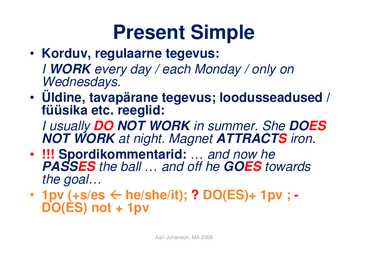
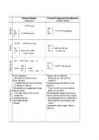
minevik, juhanson, call, times, perfect, phone, morning, while, ache, busy, even, friday, simple, pooleli, already, lõpetatud, enneminevik, minevikkued, going, visit, back, there, came, growing, arrived, feel, know, exist, seem, things, having, breakfast, five, barely, another, rest, calls, situations, thus, evening, driving, gave, thoughtPresent Simple · Korduv, regulaarne tegevus: I WORK every day / each Monday / only on Wednesdays. · Üldine, tavapärane tegevus; loodusseadused / füüsika etc. reeglid: I usually DO NOT WORK in summer. She DOES NOT WORK at night. Magnet ATTRACTS iron. · !!! Spordikommentarid: ... and now he PASSES the ball ... and off he GOES towards the goal... · 1pv (+s/es Å he/she/it); ? DO(ES)+ 1pv ; - DO(ES) not + 1pv Aari Juhanson, MA 2008 Present Progressive · Hetkel toimuv, pooleliolev tegevus: S/he IS TALKing on the phone now. I AM READing an interesting book. · Ajutine, regulaarsele ja tavapärasele vastanduv tegevus (tulevikku viitav): This summer they ARE not GROWing cucumbers as usual. They'RE GROWing tomatoes instead. · !!! Halvakspanu väljendus harjumuspärase tegevuse kohta: He IS always COMPLAINing! · BE (am/is/are) + 1pv-ing Aari Juhanson, MA 2008
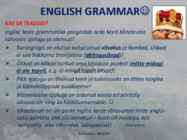
g. ei mingit topelt eitust)! Pikk ajalugu on lihvinud keelt ja tulemuseks on lihtne loogika ja käändelõppude puudumine! Mitmekesine ajalugu on aidanud kaasa eri päritolu sõnavarale ning ka hääldusmuredele. Väidetavalt on üle poole inglise keele sõnavarast mitte anglo- saksi päritolu, ehk siis laenatud – kontrolli hoolega, kas ‘sympathy’ ikka tähendab ‘sümpaatiat! kaastunne Aari Juhanson, MA 2009 Tenses – Tegusõna ajad • Olevik (Present) • Minevik (Past) • Tulevik (Future) • Kaudne tulevik (Future-in-the-Past) Aari Juhanson, MA 2009 Present Tenses • Lihtolevik (Present Simple / Present Indefinite) – regulaarne, korduv tegevus • Kestev olevik (Present Progressive / Present Continuous) – pooleliolev, ühes tükis tegevus • Täisminevik !!! (Present Perfect) – tehtud, *lõpetamata* tegevus
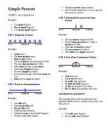
· Not so bad, thanks. / Can't complain, thanks. · So so, thanks. / So and so, thanks. · Not so good, actually 1 The English alphabet Spelling Work with your partner and spell out first your name and then some names of places. Write down each letter as you hear it, and then say the word. The English alphabet on the phone: You might find the following alphabet (used by international airlines) useful when trying to spell a word on the telephone. A Alpha O Oscar Ä Alpha-Echo Ö Oscar-Echo B Bravo P Papa C Charlie Q Quebec D Delta R Romeo E Echo S Sierra
carry - he carries Vrdl: play he plays 1. Harjumuspärane, korduv tegevus või seisund olevikus. Tom drinks tea every day. He lives in Brussels. 2. Üldtuntud tõed, loodusseadused The earth goes round the sun. 3. Tulevikus toimuv tegevus a) Sõiduplaanid, planeeritud programmid. The train for Tallinn leaves at 10. The course begins on Monday. b) Tingimuslausetes If you want me, just call c) Ajamääruslausetes I shall speak to him when he comes. 2. Spordireportaazid, arvustused. Lepp passes the ball to Kask. Gibson acts well in "Braveheart". 3. Seisundiverbidega (state verbs) verbid, mida tavaliselt ei kasutata kestvates aegades, sest nad kirjeldavad seisundit, mitte tegevust Need on verbid, mis väljendavad: a) meeltetaju (see, hear, feel, smell, taste, look, sound ). Kui meeltetaju verbidega
Tower, the Simpsons A – AN - THE Time Expressions • we don't use an article: at night, at noon, every We don't usually use an article week, every day, every night, last morning, last • to talk about things in general. • before the names of countries, cities, towns and villages. week, all night, all day, tomorrow, yesterday,... • with plural nouns and uncountable nouns when talking about them • use the with in the morning, in the afternoon, generally
.) · Fixed arrangements in the near future (I'm going to the dentist tomorrow) · Currently changing ang developing situations (The number of burgularies is increasing) · With ,,Always" to express anger or irritation at a repeated action (You're always forgetting..) TIME EXPRESSIONS USED WITH PRESENT CONTINUOUS: now, at the moment, at present, these days, nowadays, still, today, tonight etc. Present Perfect · Action happened at an unstated time in the past. Emphasis on the action, time is unimportant or unknown. (I have washed the car) · Action started in the past and continues up to the present, especially with stative verbs (I have known her for six years) · Recently completed action (I have finished my essay) TIME EXPRESSIONS USED WITH PRESENT PERFECT: for, since, already, always, just, ever, never, so far, today, this week/month etc
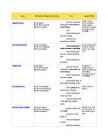
Continuous I pv + -ing III pv + -ing + sth + III pv week, now Kestev olevik Past Continuous Was/were + Was/were + being + III Was/were + have/get + Last night at 8 p.m. Kestev minevik I pv + -ing pv -ing + sth + III pv Present Perfect Have/has + Have/has + Have/has + had/got + sth Never, ever, before, Täisolevik III pv been + III pv + III pv already, since Past Perfect Had + been + Had + had/got + Had + III pv ----------------------
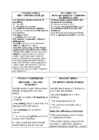
ajal: Teatud ajal minevikus toimunud They went camping by the last kestev tegevus: month. At six o'clock they were having Minevikus üksteise järel toimunud dinner. tegevused: Kaks või enam pikka samaaegset First she paid the driver, then she tegevust minevikus: got out the taxi. She was talking on her mobile Praeguseks lõppenud mineviku phone while she was driving to harjumused ja olukorrad: work. Kitchens were very different a Kestev tegevus minevikus, kui hundred years ago. teine tegevus tuli sisse: Laused, milles on järgmisi sõnu: He was walking down the street yesterday, then, when, How long when he ran into an old friend. ago ...?, last night/week/month/ /year, Tuesday, three days/years P.S. ago, in 1999.
ajal: Teatud ajal minevikus toimunud They went camping by the last kestev tegevus: month. At six o'clock they were having Minevikus üksteise järel toimunud dinner. tegevused: Kaks või enam pikka samaaegset First she paid the driver, then she tegevust minevikus: got out the taxi. She was talking on her mobile Praeguseks lõppenud mineviku phone while she was driving to harjumused ja olukorrad: work. Kitchens were very different a Kestev tegevus minevikus, kui hundred years ago. teine tegevus tuli sisse: Laused, milles on järgmisi sõnu: He was walking down the street yesterday, then, when, How long when he ran into an old friend. ago ...?, last night/week/month/ /year, Tuesday, three days/years P.S. ago, in 1999.
ajal: Teatud ajal minevikus toimunud They went camping by the last kestev tegevus: month. At six o'clock they were having Minevikus üksteise järel toimunud dinner. tegevused: Kaks või enam pikka samaaegset First she paid the driver, then she tegevust minevikus: got out the taxi. She was talking on her mobile Praeguseks lõppenud mineviku phone while she was driving to harjumused ja olukorrad: work. Kitchens were very different a Kestev tegevus minevikus, kui hundred years ago. teine tegevus tuli sisse: Laused, milles on järgmisi sõnu: He was walking down the street yesterday, then, when, How long when he ran into an old friend. ago ...?, last night/week/month/ /year, Tuesday, three days/years P.S. ago, in 1999.
· When do we board the plane? Examples: · The party starts at 8 o'clock. · When does class begin tomorrow? · I play tennis. · She does not play tennis. USE 4 Now (Non-Continuous Verbs) · Does he play tennis? · The train leaves every morning at 8 AM. · The train does not leave at 9 AM. · When does the train usually leave? · She always forgets her purse. · He never forgets his wallet. Examples: · Every twelve months, the Earth circles the Sun. · I am here now. · Does the Sun circle the Earth? · She is not here now. · He needs help right now.
•Where shall we go tonight? (=what's your opinion?). PRESENT CONTINUOUS PRESENT SIMPLE AM/IS/ARE + ING (AM INFINITIVE (WORK;WORKS) WORKING) We talk about things that we have We talk about events in the future already arranged to do in the which are 'timetabled'. future. •My plane leaves at 6 in the •I've got my ticket. I'm leaving on morning. Thursday. •The shop opens at 9.30. •I'm seeing Julie at 5 and then I'm •The sun rises a minute earlier having dinner with Simon. tomorrow. •He's picking me up at the Note the difference between: airport. *The plane leaves in ten minutes •The company is giving everyone
always, every ..., action in the present Simple Present A: He speaks. never, normally, N: He does not speak. taking place once, never or often, seldom, Q: Does he speak? several times sometimes, usually if sentences type I facts (If I talk, ...) actions taking place
Past Perfect Simple and Continuous Table of Contents Past Perfect Simple ............................................................... 2 When to use the Past Perfect Simple ..................................... 2 Past Perfect Continuous (Progressive) ................................... 3 When to use the Past Perfect Continuous.............................. 3 Comparison of the use of different past tenses ...................... 4 Past Perfect Simple The Past Perfect is had + a past participle. It is the same in all persons. I had worked he had gone Negative I had not slept/hadn’t slept Question Had he studied? When to use the Past Perfect Simple Past Perfect tenses in general refer to: An event in the past which happened before another event in the past, where there is no time expression to make this clear.
They are building a new bridge in our town. 2. Changes happening around now. The population of the world is increasing fast. 3. Arrangements for the future. I am flying to Toronto next Friday. Negative form: We aren't (are not) working at the moment. I am not enjoying this show very much. Question form: Are they playing football in the park right now?Why is she laughing? Signal words: at the moment, now, right now, Listen!, Look! etc. PRESENT PERFECT (täisminevik) Form: have/has + past participle (3. põhivorm) Use: 1. An action in the past, where the fact, not the time, is important. I have been to England four times. 2. An action in the past that has a result now. She has lost her keys. 3. Something that began in the past and still continues now. He has been in hospital since Monday. Negative form: We haven't (have not) done our homework yet. He hasn't (has not) visited his granny since August.
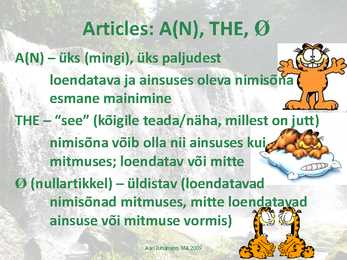
Articles: A(N), THE, Ø A(N) üks (mingi), üks paljudest loendatava ja ainsuses oleva nimisõna esmane mainimine THE "see" (kõigile teada/näha, millest on jutt) nimisõna võib olla nii ainsuses kui mitmuses; loendatav või mitte Ø (nullartikkel) üldistav (loendatavad nimisõnad mitmuses, mitte loendatavad ainsuse või mitmuse vormis) Aari Juhanson, MA 2009 A(N) Loendatavate, ainsuses olevate ja esmakordselt mainitavate nimisõnade/omadus- ja nimisõnade ees · Uus info: A (young) man in a streetcar smiled at me. · Ametid: She always wanted to be a dancer. · Kindlad väljendid: a couple of; be in a hurry; etc Aari Juhanson, MA 2009 A(N) set phrases They left a couple of days ago and all of a sudden I realized that it had been a long time since they last
Sequence of tenses if the verb in the main sentence is in the past tense the other verbs are usually in one of the past tense too. Present Simple Past Simple I'm a teacher. He said (that) he was a teacher Present Progressive Past Progressive I'm having lunch with my He said (that) he was having parents. lunch with his parents. Past Simple Past Perfect He said (that) he had bought a I bought a new car. new car. Future Simple FutureinthePast He said (that) he would go to the I will go to the cinema. cinema. Present Perfect Past Perfect I've been to France three He said (that) he had been to times. France three times.
I saw my grandmother yesterday. Lisa went to the cinema, after that she went home right away. John wrote us two months ago. · Harjumust või korduvat tegevust minevikus. John always wore a hat. They played football every Monday. · Tegevust, mis toimus teatud ajaperioodil, kuid on kõnemomendiks lõppenud. He lived in this apartment for 5 years. Present Perfect Täismineviku moodustamine Jaatav vorm Eitav vorm Küsiv vorm I have asked I have not asked Have I asked? He/she/it has gone He/she/it has not gone Has he/she/it gone? We/you/they have made We/you/they have not made Have we/you/they made? Täismineviku väljendab:
Golden Grammar rules 1. Don't use an with own. Sue needs her own room. (NOT Sue needs an own room.) I'd like a phone line of my own. (NOT ... an own phone line.) 2. Use or rather to correct yourself. She's German or rather, Austrian. (NOT She's German or better, Austrian.) I'll see you on Friday or rather, Saturday. 3. Use the simple present play(s), rain(s) etc to talk about habits and repeated actions. I play tennis every Saturday. (NOT I am playing tennis every Saturday.) It usually rains a lot in November. 4. Use will ..., not the present, for offers and promises. I'll cook you supper this evening
Kirjastus Studium Riia 15b, Tartu 51010 www.studium.ee Trükitud OÜ Greif trükikojas Lohkva, Luunja vald Tartumaa 62207 --- 3 xxx 1. The Big Apple 1. Write the verbs in the present continuous or the past continuous tense. Do you remember? am is are was were verb -ing 1 Sorry. I ... (write) a report at the moment. I can't come with you. 2 When Peter arrived, his friends ... (play) football. 3 I ... (sleep) when the alarm went off in my sister's room. 4 Dad's mobile phone is switched off because he ... (fly) to Paris. He's on the plane at the moment. 5 I ... (read) an interesting book. It's a collection of memories. 6 Leo was late again. He ... (step) out of his father's car when the bell rang. 7 Helen ... (lie) on the sofa when an ambulance stopped in front of the house. 8 I ... (give) this report from inside the school radio studio. Right now, the two teams ... (take) their places on the football field. 9 Mrs Watson ..
present simple past simple I'm a teacher. He said he was a teacher past continuous. present continuous He said he was having lunch with his I'm having lunch with my parents. parents. past perfect simple present perfect simple He said he had been to France three I've been to France three times. times. present perfect continuous past perfect continuous I've been working very hard. He said he had been working very hard. past simple past perfect I bought a new car
Past Simple (lihtminevik) -ed / II pv. Kasutus: Ago, yesterday, last. ?/- Did Tegevus: 1. Toimus minevikus ja on lõppenud. ,,I met him yesterday" 2. Used To, mineviku harjumused. ,,I used to play tennis." Past Continius (kestev minevik) was/were + ing Kasutus: When, while, as Tegevus: 1. ajutised sündmused. 2. 2 või enam tegevust ,,While i was reading, he was garding." 3. minevikus katkestatud tegevus ,,I was having a shower, when the phone rang." 4. konktreetne kellaaeg minevikus ,, I was watching TV yesterday at 5!" Present Perfect (täisminevik,olevikuaeg) have/has + III pv. Kasutus: Never, ever, already, yet, before, since, for. Tegevus: 1. tegevused alg. Minevik -> now
in brackets. _ 1 She is in a band and she _________________________________ (record) a CD at the moment. _ 2 She is an actress and often _________________________________ (appear) on television. _ 3 At the moment she _________________________________ (have) a rest because she is tired. _ 4 Mike is a doctor and he _________________________________ (live) in Manchester. _ 5 I _________________________________ (start) work at 8.30 every morning. _ 6 He is a good cook but she _________________________________ (prefer) to eat out. _ 7 English tests _________________________________ (get) more and more interesting. _ 8 They _________________________________ (have) a party because it's her birthday. _ 9 I sometimes _________________________________ (ride) my bicycle to school. 10_ She usually _________________________________ (go) to the gym on Friday evenings.
/Negative/Question · always · action in the present taking place Simple Present A: He speaks. · every ... once, never or several times N: He does not speak. tegevus, mis toimub ühe korra, mitte · never Lihtolevik Q: Does he speak? · normally kunagi või mitu korda · often I pv · facts - faktid
I wish I had a million dollars (now). After "If only" (even talking though we're talking about now= If only I had an apple (now). Past Continuous Used to say that somebody was in the middle of doing something at a certain time in the past. At 10:30 yesterday, I was preparing lessons. What were you doing at 6:30? Often used with Past Simple to show a continuing action interrupted by a sudden action in the past. I was studying when the phone rang. (Remember: there are some verbs that have no continuous know, believe, heat, etc.) Present Perfect Simple Used to talk about finished actions in an unfinished time period. I have eaten three cookies today (the cookies are finished but today isn't). I have cleaned my room this morning (the cleaning is finished, but it's still morning). Often the time period isn't mentioned. That means that it's the lifetime of the speaker.
kestev olevik · tegevused, mis praegu leiavad aset. Karl is doing his homework at the moment. · plaanitud tegevus lähitulevikus. I am going to school tomorrow. · kui midagi toimub/muutub praegu. The number of burglaries is increasing. · alati sama korduv tegevus. You are always eating, when i wake up. väljendid, mida kasutatakse: now, at the moment, at present, these days, nowdays, still, today, tonight etc. He is working He isn't working Is he working PRESENT PERFECT [have/has + ed] täisolevik · algab minevikus ja kestab siiani · just lõpetatud tegevus, mille tegevused ilmuvad olevikus · teadmata aeg, kui midagi on minevikus juhtunud. väljendid, mida kasutatakse: for, since, already, always, just ever, never, so far, today, this week/month etc, how long, lately, recently, still, etc. He has worked He hasn't worked Has he worked PRESENT PERFECT CONTINUOUS [have/has been + ing]
faces and styles and accents, the gorgeous architectural wonders...And the cars. Jesus Christ. The frenetic flow of tightly packed cars was unlike anything I'd ever seen anywhere. There was always an ambulance, patrol car, or fire engine trying to part the flood of yellow taxis with the electronic wail of ear-splitting sirens. I was in awe of the lumbering garbage trucks that navigated tiny one-way streets and the package delivery drivers who braved the bumper-to-bumper traffic while facing rigid deadlines. Real New Yorkers cruised right through it all, their love for the city as comfortable and familiar as a favorite pair of shoes. They didn't view the steam billowing from potholes and vents in the sidewalks with romantic delight and they didn't blink an eye when the ground vibrated beneath their feet as the subway roared by below, while I grinned like an idiot and flexed my toes. New York was a brand new love affair for me. I was starry-eyed and it showed.
. You called Debbie. I saw a movie yesterday. I finished work, walked to the beach, and found a nice place to swim. I lived in Brazil for two years. I studied French when I was a child. Active = Tom repaired the car. Passive= The car was repaired by Tom. 5. Past Continuous [was/were + present participle]. Pikalt kestev tegevus katkestati minevikus. You were studying when she called. I was watching TV when she called. Last night at 6 PM, I was eating dinner. I was studying while he was making dinner. She was always coming to class late. Active= The salesman was helping the customer when the thief came into the store. Passive= The customer was being helped by the salesman when the thief came into the store. 6. Present Perfect [has/have + past participle]. Tegevus toimus teadmata ajal minevikus. You have seen that movie many times. I have seen that movie twenty times. I have been to France. You have grown since the last time I saw you. Man has walked on the Moon
Past continuous is used for: Actions in the middle of happening at a stated past time. E.g. She was flying to Paris this time last Monday. A past action in progress interrupted by another past action. The longer action is in the Past Continuous, the shorter action is in the past Simple. E.g. I was watching television when my mother came home. Two or more simultaneous past actions of certain duration. E.g. I was reading while my brother was listening to music. Background description to events in a strong description. E.g. as he was walking through the woods, the birds were singing and the sun was shining brightly. Time expressions used with Past Continuous: while, when, as, the moment that, etc Used to Would Used to (+ infinitive) expresses past habits or states. It forms its negative and interrogative with did and is the same in all persons. E.g. Stacey used to
participle Perfect which had already happened is put mingit teist he had worked (infinitive + I had gone enne into Past Perfect, the other action tegevust into Simple Past minevikus ed) (III he had gone minevik the past of the Present Perfect põhivorm) · predictions about the future *tulevik, mis ei (you think that sth. will happen) sõltu meie tahtest
3) the / watch / often / they / TV / in / evening 4) the / gave / my / for / this / umbrella / is / that / Sally / me / my / birthday 5) particular / nothing / have / at / tell / you / to / moment / the 4. Give the comparative and the superlative of the following adjectives: ( 5 points ) e.g. tall taller the tallest lucky difficult soft good interesting 5. Put these sentences into the Reported Speech. ( 5 points ) e.g. She said:"I will call you from London." She said that she would call me from London. 1) Eric said:"Jack has gone out." 2) Frank said:"The car is waiting at the front door." 3) Tommy asked:"Is there anybody at home?" 4) I asked my friend:"Why do you come so late?" 5) Jane said:"Think before you answer!" 6. Use the correct Prepositions. ( 20 points ) 1) Jane started learning English two years........ 2) ........Monday Steve asked me to dine with him 3) Mary was born.......
The Six English Verb Tenses Three Simple Tenses Simple continuous Present You walk. You are walking I run. I am running. Past You Walked You were walking. I ran. I was running. Future You will walk. You will be walking. I will run. I will be running. Three Perfect Tenses Perfect continuous Present perfect you have walked. You have been walking. I have run. I have been running. Past Perfect You had walked. You had been walking. I had run. I had been running. Future Perfect You will have walked You will have been walking. I will have run. I will have been running. The Simple Present Tense Expresses a habit or often repeated action. Adverbs of
.................................................................................... 3 Lihtminevik The past simple....................................................................................... 3 Lihttulevik The future simple...................................................................................... 3 Kestev olevik The present continuous......................................................................... 3 Kestev minevik The past continuous........................................................................... 4 Kestev tulevik The future conrinuous..........................................................................4 Täisminevik The present perfect..................................................................................4 Enneminevik The past perfect..................................................................................... 4
 annaabi.ee