Leidsid 33 sarnast õppematerjali, mis on seotud failiga "Otherkin subculture (beliefs, behaviour, influences)". Need materjalid aitavad sul teemat sügavamalt mõista.
other, otherkin, here, them, body, soul, there, these, talk, understand, feel, beliefs, members, dragon, dies, claim, half, years, first, hundred, influence, wolf, share, without, mostly, internet, gather, subculture, things, stories, real, humans, know, lost, through, souls, never, takes, gets, than, sapiens, simply, prefer, peole, feelings, behaviour............................................................24 Identification with Things........................................................................25 The Lost Ring...........................................................................................26 The Illusion of Ownership........................................................................29 Wanting: The Need for More....................................................................31 Identification with the Body.....................................................................33 Feeling the Inner Body.............................................................................34 Forgetfulness of Being.............................................................................35 From Descartes's Error to Sartre's Insight...............................................36 The Peace that Passes All Understanding................................................37
Harold McMillan articulated his now famous “winds of change” sweeping Africa. We had high hopes for Africa, for the Black race, that the insidious imposition of foreign rule on us, the looting of Africa’s natural resources by our colonial masters accorded us would be things of history. That is more than forty years ago. Unfortunately, the promise of independence has not been fulfilled. Today, Africa has become more desolate; there is more starvation, diseases and non-provision of essential services than when we got our independence. There are all kinds of wars in Africa than the rest of world put together. The majority of so-called Africans leaders want to stay in power until the day their bodies are put in the grave. Through buffoonery, utter mismanagement and downright stealing of the wealth of the masses, these leaders have so impoverished Africa that we are now nothing but a beggar continent. We beg for
"I am become death, the destroyer of worlds." So said the physicist Robert Oppenheimer, who helped to invent the atomic bomb. The two bombs dropped on Hiroshima and Nagasaki in 1945 killed around 200,000 Japanese people. No other species has ever wielded such power, and no species could. The technology behind the atomic bomb only exists because of a cooperative hive mind: hundreds of scientists and engineers working together. The same unique intelligence and cooperation also underlies more positive advances, such as modern medicine. But is that all that defines us? In recent years, many traits once believed to be uniquely human, from morality to culture, have been found in the animal
PSYCHOLOGY PART 1: CORE Biological level of analysis Outline principles that define the biological level of analysis. 1) Behavior can be innate, because it is genetically based. Evolution may play a key role in behavior. 2) Animals may be studied as a means of understanding human behavior. 3) There are biological correlates of behavior. Cognitions, emotions and behaviors are products of the anatomy and physiology of our nervous and endocrine system. Explain how principles of the biological level of analysis may be demonstrated in research. 1) Correlational studies: Study by Buss, who hypothesized that across cultures, men will prefer to marry younger women because of greater reproductive capacity and women will place greater value on a potential mate's earning
but dealt only in a neutral, uninspired fashion with plants. The one thing that was constant and of supreme importance was my love of reading. I don't recall why, but by an early age, say age 9, I was a phenomenal reader of books, a habit that persisted all the way until college. Reading expands one's mind immensely. It fires the imagination, demonstrates grammar, teaches vocabulary, informs, challenges, helps one relax. In some cases it forces the mind to concentrate, as to understand. It can help build a moral or ethical framework, and help oneself form an individual worldview. Even an untraveled child, sitting at home, can be transported by a book into any place or time. Fantasy and facts weave together, but the result is almost an unmitigated improvement. If a bookworm grows up to be antisocial or worse, it is not because of too much reading, but because something else was lacking in the education or caregiving. Hands-on learning is another factor difficult to overrate
Ameerika Kirjandus 30.01.13 Naturalism · France, Emile Zola · Put down his theory in 1879: Le Roman Experimental, attempt to explain the development of human society throuch biological laws · Outlook is deterministic, pessimistic, fatalistic (fate or biology) · Man as an animal-clever than other beasts, still explainable within the framework · Man is not a free agent, is govern by something · Unable to determine his own faith · Hereditary · Naturalists tried to apply in fiction the processes of natural sciences · Writers task is to record facts, systems of behaviour, living conditions, never revealing any natural unbiased (completely natural) · Point of view: amoral-outside the category of morality, neither good or bad
Session: May 2017 Word count: 1212 It is only knowledge produced with difficulty that we truly value. To what extent do you agree with this statement? To be knowledgeable is to have an understanding about how things are and how things work. Knowledge is the combination of facts, information, and/or skills that when put together create a whole picture enabling us to fully understand a subject or situation. We, as ordinary people, can acquire knowledge either from our first hand experiences (personal knowledge) or from education and research (shared knowledge). Difficulty depends on how much effort or skill must be implemented for the information to be acquired, and the value of something lies in it's importance, usefulness or worth. We all value different things in our life, we are more likely to value things that benefit us and,
an apartment in Park Slope. "And I'd rather have a lot of people to share my day with." The impetus for the group home or collective they hope to form is less about finances -- though it is true that pooling resources yields better real estate -- and more about community building. Indeed, Ms. Berger and others seem to share the ideals of the old- fashioned communes of yore, except that their groups are tiny, urban-centric and linked to outside interests like fixing bikes or, here in New York City, membership in the Park Slope food co-op. And like communes, many collectives give themselves names: The House of Tiny Egos (a name that's decidedly more evocative than, say, Findhorn, that of the hoary Scottish commune) is a five-person collective in a century-old brick bungalow 1 in Bed-Stuy. Not only do they aim to remain of the world, they hope for a convenient
Why do we need morality? As an English philosopher Thomas Hobbes (1588-1679) said, all humans are made equal in mental and physical abilities. This does not mean that all of us are equally strong, smart or beautiful, but that everyone has the ability to damage or kill the other. The main goals, we all want to achieve, are having a shelter, security, power, wealth and enough food. This means that people are constantly competing with each other and that makes all of us (who desire the same things) enemies. Hobbes names the insecurity and fear people feel towards each other a "state of nature". In this state there are no moral rules or enforced laws, also no justice or injustice. People, being violent and arbitrary, will only follow their own interest. So without laws and boundaries, people would be in constant war - every man for himself. In this kind of society there is no time for cultural or industrial development.
disciplines and as such a high degree of research has been published in this area already. The increasing sociological interest in children in particular that has provided a new perspective around the idea of children as competent social actors has provoked a great controversy and confusion as it challenges the image of the incompetent child which is overwhelmingly prevalent in the Western society. The purpose of this dissertation is to critically explore this hotly debated tension between these two conflicting salient features that have often prevented the recognition of children as active citizens, entitled to respect and participation. With a particular interest in Wales, the following research project analyses the development of children`s active participation both in the Welsh Government and the County and Council of Swansea as they both have regarded the UNCRC on the basis of all its activity. Finally, the
for a particular purpose. No warranty may be created or extended by sales representatives or written sales materials. The advice and strategies contained herein may not be suitable for your situation. The publisher is not engaged in rendering professional sevices, and you should consult with a professional where appropriate. Neither the publisher nor author shall be liable for any loss of profit or any other commercial damages, including but not limited to special, incidental, consequential, or other damages. For general information on our other products and services, please contact our Customer Care Department within the United States at (800) 762-2974, outside the United States at (317) 572-3993 or fax (317) 572-4002. Wiley also publishes its books in a variety of electronic formats. Some content that
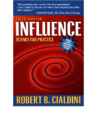
do it, enabled us to make significant changes. His work has enabled us to gain significant competitive differentiation and advantage" -LAURENCE HOF, Vice President, Relationship Consulting, Advanta Corporation "This will help executives make better decisions and use their influence wisely ... Robert Cialdini has had a greater impact on my thinking on this topic than any other scientist." -CHARLES T. MUNGER, Vice Chairman, Berkshire Hathaway, Inc. If you're wondering why of Latin America, the Far East, and Central Europe. you should buy this new edition of Influence: o More neuroscience evidence of how the influence process works is inte-
Maturitní otázka c. 23. Means of communication Introduction A few centuries ago people knew only a few kinds of communication. They could speak to each other, they could send their message from one place to another by smoke signals, they used mail. Later on, they also had some newspapers. The first expansion of media was when the radio and television were invented. The second and the biggest boom started in 1960s when the first communication satellite was launched into orbit. There are 4 main media: Newspapers, TV, Radio and the Internet. Today's people take this as an ordinary thing and we don't realise that we nearly can't live without it.
New Media Economy Social media information and data collection and security In this brief essay, i would like to focus on the social media platforms in our moren society. How people use them, what kind of information we give away, what companies will do with this. Information sharing and data protection has become very popular theme in the recent few years. People care more about their privacy and avoid „big brother“ foreshadowing. It is important to know what social media platforms promise and are they really going to keep it. Users should think about what they share and what kind of information they generate.
Silicon Valley Could you reproduce Silicon Valley elsewhere, or is there something unique about it? It wouldn't be surprising if it were hard to reproduce in other countries, because you couldn't reproduce it in most of the US either. What does it take to make a silicon valley even here? What it takes is the right people. If you could get the right ten thousand people to move from Silicon Valley to Buffalo, Buffalo would become Silicon Valley. That's a striking departure from the past. Up till a couple decades ago, geography was destiny for cities. All great cities were located on waterways, because cities made money by trade, and water was the only economical way to ship.
PIL regulates relations between states. Thats why PIL is important for international relation students. PIL influences the life of everybody, it doesn't regulate people directly but indirectly (through the decisions of the states), because it's everywhere. It's like air. E.g. when you want to send a letter to Brazil, you put a stamp from your own country and send it from your post office and the letter gets delivered. Why is this so easy, because there are certain international conventions that regulate postal services. E.g. traffic signs are almost the same everywhere, why? Because of certain int conventions that require the states to have more or less unified traffic signs. States apply international regulations to national regulations and they have to be in accordance with each other, the states can always specify these regulations. Therefore, PIL regulates people indirectly.
The making of a new nation. The Enlightenment in America. The emergence of the notion of the American Dream. The great Enlighteners: Crèvecoeur, Jefferson, Paine, Franklin. The American Enlightenment is the intellectual thriving period in the United States in the midtolate 18th century (17151789), especially as it relates to American Revolution on the one hand and the European Enlightenment on the other. Influenced by the scientific revolution of the 17th century and the humanist period during the Renaissance, the Enlightenment took scientific reasoning and applied it to human nature, society, and religion. American Enlightenment a gradual but powerful awakening that established the ideals of democracy, liberty, and religious tolerance in the people of America.
When there's a problem I want a solution. Don't offer me any half measures. 31. Literal-mindedness is good. 32. One of the biggest energy-wasting manifestations is the compulsion to begrudge energy. 33. One need not have a better theory to object to a theory's defects. 34. One needs more energy, higher frequencies, more bandwidth, and less interference in order to sustain a finer quality of attention. 35. One who has authority over others is responsible for deterring them from behaving unustly toward one another and for effecting the redress of injustices when they occur. 36. One who is not still looking for answers is either a buddha or a damn fool. 37. People say that they want to be "loved for themselves" but I find that insulting. I want to do things that are worthwhile and be admired because my actions are admirable, not for foolish subjective reasons. 1 38
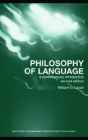
"This exceptional text fulfils two essential criteria of a good introduc- tory textbook in the philosophy of language: it covers a broad range of topics well, all of which are the basis of current active research, and does so in an accurate manner accessible to undergraduate students." Mike Harnish, University of Arizona ". . . an excellent textbook for teaching. The examples throughout are delightful and students will love them." Edwin Mares, Victoria University of Wellington William G. Lycan is William Rand Kenan Professor of Philosophy at the University of North Carolina. He is the author of over 150 articles as well as seven books. Routledge Contemporary Introductions to Philosophy Series Editor: Paul K. Moser Loyola University of Chicago This innovative, well-structured series is for students who have already done an introductory course in philosophy
Advantages and disadvantages of television Television is one of the greatest achievements of the 20-th century. It is the most popular part of mass media. Today every family has a TV-set. TV has changed much since the time of its invention and so has its role. There have been numerous debates concerning advantages and disadvantages of television. When TV first appeared its main purpose was to give official information to people. It was supported by the government. Now television plays a big role in every civilised society. Today television gives people a possibility to be well informed and enjoy "civilised pleasures." The programmes are various and people have a chance to select what they want to see. Television provides great opportunities for education
g. law of gravity Prescriptive law – prescribe how people ought to behave e.g. speed limits In all societies relations between people are regulated by prescriptive law; customs (informal rules of social and moral behaviour); rules we accept if we belong to a particular institution (religion, organization); laws imposed on people by a government Penalties for breaking the rules are different. For not following the customs there may not be a punishment, or a person may be criticized by the society; rules of a social institution tend to carry precise penalties but they are not enforceable by any political authority; however governments use a system of courts backed by the power of the police to enforce the laws they have made. The relations between people are regulated by a combination of all these rules. One of the ways to classify laws is to separate them into prescriprive and descriptive law.
Today more and more disputes are caused by the enormous spread of the English language throughout the world. Some scholars claim that it has already become the first global language. And this statement isn't far from truth. But what does it mean to say that a language is a global language? Why is English the language which is usually cited in this connection? How did the situation arise? And could it change? Or is it the case that, once a language becomes a global language, it is there for ever? [1, pg.2] These are fascinating questions to explore, whether your first language is English or not. A global language is a language that is spoken internationally and is learned and spoken by a large number of people as a second language. A global language is characterized not only by the total number of speakers (native and second language speakers), but also by its geographical distribution, as well as use ininternational organizations and diplomatic relations. [4]
1. Society- people who interact in such a way as to share a common culture. The cultural bond may be ethnic or racial or geographical, based on gender, or due to shared beliefs, values, and activities. 2. Culture- beliefs, behaviors, objects, and other characteristics common to the members of a particular group or society. 3. A unitary state- a state governed as one single power in which the central government is ultimately supreme and any administrative divisions (subnational units) exercise only powers that their central government chooses to delegate. The majority of states in the world have a unitary system of government. 4. A federal state-- a political entity characterized by a union of partially self-
What is the real meaning of life? Why prefer one thing to another? Can we trust observation? It’s raining outside - how do you know it is? I can see it’s raining. How to convince yourself its raining? A good reason to doubt - 49 other peaople have the same opinion. Falsifiable → possible; not falsified World disappeared in 2012 and got recreated 3 secs later → unfalsifiable - cannot prove it’s true/wrong, cannot provide any tests to prove it. Or - one or another but not both → exclusive - one or another (both) → inclusive (Invited those who are managers or specialists - both) Arguments valid or not - logic is a science where to decide it
· And when you begin to miss me, dont forget it was you who let me go. · There is an end to things no matter how much we want to hold into them. · Otsisin keset seda pimedust, sind ja loodetud vabadust,kui mu käed su poole, tegid alguse loole, printsessist ja printsist, ühest kaunist kandist, kus oleme meie kaks, kus lõbutseme, kuni otsas jaks. Sa ei pea muinasmaad looma, sa ei pea tähti taevast tooma. Ole vaid minu kõrval, kui tõuseb päike. Ole vaid mu kõrval kui mind piinab meeleheide. Ole mu kõrval, kui kumab kuu, kui su nime
Topic Health Introduction Good health is very important for us. We should do everything we can to stay healthy. Being in good health means having our body and mind in good working order, free from disease and pain. Ways of keeping health There are many ways for keeping health. To stay healthy we should eat right foot, dress comfortably, spend much time in fresh air, have enough rest, keep ourselves clean and have regular checkups with the doctor and the dentist. A big part of prevention of diseseases is sporting. Poeple need to have phsical exercise. If they can not have it, they will get stressed and they will be infected with dieseases much easier. For example it would be good to run every day for some time. That way one probably
Appendix – page 11-14 2 Introduction I selected this theme because it was the most interesting one for me. Aborigines have interested me for a long time now so doing this essay is really fun for me. Australian Aboriginal culture is one of the world's longest surviving cultures. Australian Aborigines, also known as Indigenous Australians , are the native people of Australia . Many of them suffered when white people from Britain arrived in Australia, because of disease, the loss of their hunting lands, and unfair laws. Australian Aborigines are those people regarded as indigenous to the Australian continent. In the High Court of Australia, Australian Aborigines have been specifically identified as a group of people who share, in common, biological ancestry back to the original occupants of the continent. History
A century ago communication across any distance was dependent upon the telegraph or letters. No jets crossed the ocean, no television pictures enabled us instantly to see events in any part of the world, there were no worldwide telephone networks and no computers. It is just a short lifetime since humanity first travelled into space and discovered how fragile our planet looks. FROM FIREWORKS TO THE MOON At first glance you might think that there couldn't possibly be anything common between a 13 th century festival in China and the Apollo 11 moon landing in 1969. However, there is a link and that is that they both relied on the use of rockets. The Chinese first developed rockets by filling bamboo tubes with an explosive made from saltpetre, charcoal, and sulphur. The sealed tubes would be thrown onto fires during celebrations because it was thought that the loud explosions would protect them
again to keep the noise down. between Paul and Joe. 1D Sporting origins page 67 2 She recognised him at once. 2 Phobias can be genetically 3 He's working at his father's shop inherited. 1 1 staunchly / resolutely for the time being. 3 When it comes to politics, 2 By and large 4 They'll be here any moment now. Edward and his dad have a lot in 3 swiftly 5 Everybody makes mistakes once common. 4 loosely in a while. 4 Luke is the spitting image of Matt 5 categorically 6 My brother was still a baby at the Damon. 6 widely time
Freedom of speech Freedom of speech is a wide speared conception. I can understand it in many different ways. For example in my state, Estonia, the freedom is a very important for every human. At least to me it is seemed to be like that. But at school is a little bit sad story with freedom of speech. Some teachers are not used that student expresses her own strong opinion. When another way some teachers are just waitening it. As well as people can not speak along with state public topics and express their opinion. Therefore freedom of speech is debateable.
Seperation of Power (võimude lahusus) - division of responsibilites into distinct branches to limit any branch from excersising the core functions of another (legislative, executive, judicial) pressure group (surve gurpp) - an interest group that attempts to influence legislation, for example through propaganda dangerous driving (ohtlik sõitmine) - a way of driving that threats other's safety or life international law (rahvusvaheline õigus) - body of rules that nations recognize as binding in their coundct towards one another operating law (õigusega töötamine) - ensuring obidieance to regulation; to have the rights to impliment justice on others political structure (poliitiline struktuur) - institutions or groups and their relations to each other within political systems as they constitute the political landscape of the political entity
BULLYING Bullying is a very big problem in almost every school. When bullying goes out of the limit, it might end with a terrible gunfire(Colombian massacre). I believe everyone have been bullied by someone and have been a bully for a once. Bullying is an issue that is very important in nowadays and needs a special attention. Some of the ways to bully other people are by: calling you names, making things up to get you into trouble, hitting, pinching, biting and pushing, taking things away from you, damaging your belongings, stealing your money, taking your friends away from you. Now, to talk about why people bully someone there are many aspects. Some bullies do it to get attention or to make other people afraid of them. Others might be jealous of the person they are bullying
Witchcraft Witchcraft is the alleged use of supernatural or magical powers. A witch (from Old English wicca m. / wicce f.) is a practitioner of witchcraft. Historically, it was widely believed that witchcraft involved the use of these powers to inflict harm upon members of a community or their property, and that all witches were in league with the devil. Since the mid 20th century, the term witchcraft has sometimes been used to distinguish between bad witchcraft and good witchcraft, with the latter often involving healing. Human misfortune was often blamed on a supernatural entity or a known person in the community. Reasons for accusations of witchcraft fall into four general categories:
 annaabi.ee