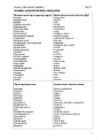
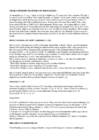
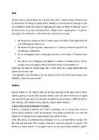
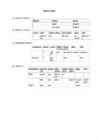
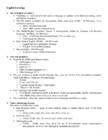
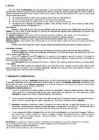
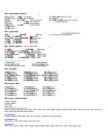
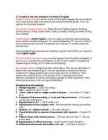
English structure revision for the exam 1. Terms Language → A systematic, conventional (tavakohane) use of sounds, signs or written symbols in a human society for communication and self-expression. Human language at all levels is rule- or principle- governed (valitsema) meaning that language corresponds to the grammar. Natural language is usually spoken, while language can also be encoded into symbols (such as letters, morse etc) For example: Estonian, English. Linguistics → The scientific study of human natural language. Broadly, there are three aspects to the study which are Pragmatics (studies the use of language → interested in the gap between the sentence’s meaning and the speaker’s meaning). Semantics (concerned with the meaning of the language aspects and the way they change, also how objects and language and thinking and language are related). ...
Book 1 BASIC ENGLISH BASIC ENGLISH GRAMMAR GRAMMAR BASIC ENGLISH GRAMMAR Book 1 Book 1 Younger students at beginning to intermediate levels will greatly benefit from this step-by-step approach to English grammar basics. This is the ideal supplement to your language arts program whether your students are native English speakers or beginning English language learners. Skill-specific lessons make it easy to locate and prescribe instant reinforc...
1. Nouns: how is the plural formed? The plural form of most nouns is created simply by adding the letter s: · more than one snake / snakes · more than one ski / skis · more than one Barrymore / Barrymores Words that end in -ch, x, s or s-like sounds, however, will require an -es for the plural: · more than one witch / witches · more than one box / boxes · more than one gas / gases · more than one bus / buses · more than one kiss / kisses · more than one Jones / Joneses BUT! Photos, kilos, pianos, zeros, studios, radios. When the word ends in the letter -y: · country / countries · family / families · story / stories Nouns ending in -f: (should be learned by heart) · calf / calves · elf / elves · half / halves · knife / knives · life /...
1 Grammatical Terminology PRACTICAL ENGLISH GRAMMAR FLGR.01.042 Grammatical Terminology analytic analüütiline (= uninflected - grammar is focused in the sentence , e.g. English) synthetic sünteetiline (= inflected - grammar is focused in the word, e.g. Estonian, Latin, Russian, Old English) ending lõpp (käände- ja pöördelõpud) marker tunnus (mitmuse, oleviku, lihtmineviku, tingiva kõneviisi, käskiva kõneviisi, kaudse kõneviisi, umbisikulise tegumoe, ma- tegevusnime, oleviku kesksõna, mineviku kesksõna) derivational affix liide, tuletusliide, tuletusafiks (e.g. postwar, anti-American, wiser, greenish) parts of speech sõnaliigid English Estonian ...
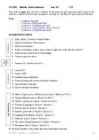
1. Be ready to explain the terms (lecture 1): language, linguistics, synchronic approach to language, diachronic approach to language, linguistic competence, linguistic performance, what is grammar?, prescriptive grammar vs. descriptive grammar; phonology, phonetics, phone, allophone, phoneme; morphology, morphemes (types of morphemes), morphs, allomorphs, types of affixes, derivational affixes, inflectional affixes; open vs closed class words; syntax. Language: a systematic, conventional use of sounds, signs or written symbols in a human society for communication and self-expression. - human language at all levels is rule- or principle-governed. Linguistics: the scientific study of human natural language Synchronic approach to language: Diachronic approach to language: Linguistic competence: Linguistic performance: What is grammar?: "The sounds and sound patterns, the basic units of meaning, such as words, and the rules to combine them...
The Article Table of Contents General Rules....................................................................... 2 The Definite Article ............................................................... 5 Names that take the Definite Article...................................... 6 No article.............................................................................. 7 Countable and uncountable nouns ....................................... 9 General Rules There are two articles in the English language – the Indefinite Article and the Definite Article. The Indefinite Article has two forms – a and an (a precedes words beginning with a consonant sound and an precedes words beginning with a vowel sound). It comes from the Old English word ãn, which meant one. The Definite Article is the. It comes from the Old English word ţis, which meant this. Thus, in most general term...
Pronouns By: Anneli Võikar Pronouns are small words that take the place of a noun. We can use a pronoun instead of a noun. Pronouns are words like: he, you, ours, themselves, some, each... If we didn't have pronouns, we would have to repeat a lot of nouns. Types of pronouns Personal pronouns Reflexive pronouns Demonstrative pronouns Interrogative pronouns Indefinite pronouns Relative pronouns Possesive pronouns Reciprocal pronouns Pronoun case Personal pronouns Personal pronouns represent specific people or things. We use them depending on: number person gender Case Singular: subject- I, you, he, she, it ; object-me, you, him, her, it. Plural: subject-we, you, they ; object-us, you, them. Examples: 1) Do you like coffee? (subject) 2) John loves you. (object) Reflexive pronouns We use a reflexive pronoun when we want to refer back to the subject of the sentence or clause. Reflexive pronouns end in "-self" (sin...
DEFINITE ARTICLE (THE) THE IS USED BEFORE: · nouns which are unique (the moon) · names of: o cinemas (the Opera) o hoteles (the Hilton) o theaters (the Palladium) o museums (the Louvre), o newspapers/magazines (the European but: Newseek) o ships (the Titanic), o galleries (the Tate Gallery) o rivers (the Thames) o seas (the Black Sea) o groups of islands/states (the USA) o mountain ranges (the Alps) o deserts (the Negev Desert) o oceans o canals o names or nouns with ''of'' (the Queen of Spain) · musical intruments (the piano) · dances (the samba) · names of families (the Browns) · nationalities ending in sh, -ch or ese (the Welsh). Othe plural nationalities are used with or without ''the'' (the Australians or Australians) · titles (the King, the Profess...
12. Articles zero, a/an, the Zero · Zero article is used, when article the or a/an is not used. · Articles are not used with the names of languages. Example: He was learning Chinese. · Is not used with the names of sports. Example: She plays badminton and basketball. · Is not used before academic subjects. Example: She's taking economics and math. · Is not used with seasons. Example: In spring, we like to clean the house. · Is not used with institutions. Example: He's in church/college/jail/class. · Is not used with meals. Example: Breakfast was delicious. · Is not used with diseases. Example: She has cancer. · Is not used with time of day. Example: We'll be there around midnight. · Is not used when you are speaking about transport. Example: He comes to work by taxi. A/an Using a or an depends on the sound that begins the next word. · a is used before ...
Read the following description I am from Seattle, Washington. Seattle is a city in the United States. It is near the border of Canada in the northwest corner of the USA. I live in a town called Olympia which is on the Puget Sound. I live in a house in a street in the countryside. The street is called "Bear Street" and the house is old - more than 100 years old! I am an English teacher at a school in the center of the town. I like books and taking photographs. I usually have lunch at school. I usually go home by car. We have all kinds of food in Olympia. I like Italian food very much. Sometimes, I go to an Italian restaurant in Seattle. The restaurant is called "Luigi's". Italian food is great! Here are the rules for when to use "A, An or The": · a = indefinite article (not a specific object, one of a number of the same objects) with consonants She has a dog. I work in a factory. · an = indefinite arti...
ARTICLES INDEFINITE ARTICLE (A/AN) 1.The indefinite article a/an is only used in front of a singular countable noun mentioned for the first time.The is used when it is mentioned.The is used when it is mentioned a second time, e.g. I bought a jacket and a dress. The jacket was quite cheap 2.Other uses: -to talk about someone's job, e.g. She's an architect. -with numbers and fractions, e.g. a hundred, a million, a third -to mean every with expressions of time, e.g. once a week, five times a year -with What...! exclamations, e.g. What a strange person! ZERO ARTICLE (NO ARTICLE) There is no article: -in front of plural countable nouns when making general statements, e.g. Apples are good for you. -in front of an uncountable noun when making general statements, e.g. Coffee keeps me awake. -in front of abstract nouns, e.g. Honesty is the best policy. -in front of meal times ,e.g. We have lunch at one. -in front of certain places like ho...
Indefinite Pronouns Table of Contents Some and any....................................................................... 2 No (+ Noun) and none (+ Pronoun) ........................................ 3 Every and each..................................................................... 3 Whole ................................................................................... 4 Both, either and neither ....................................................... 4 Few/a few – a little/little....................................................... 5 A lot of/lots of – much/many................................................ 5 Some, any + -body / -one, + -thing, + -where ........................ 6 Some and any Some and any mean a certain number or amount. They are used with or instead of plural or uncountable nouns. Some is a possible plural form of a/an and one: Have a ...
adjective + preposition omadussõna + eessõna proud of, good at, married to adverb particle Some verbs are followed by adverb particles. Examples are: put on, take off, give away, bring up, call in. Sometimes the particle is detached from the verb and put after the object. •He took his boots off. •They called the doctor in. apposition a grammatical construction in which two usually adjacent nouns having the same referent stand in the same syntactical relation to the rest of a sentence (as the poet and Burns in “a biography of the poet Burns”) back-reference In grammatical analysis, the term reference is often used to state a relationship of identity which exists between grammatical units, e.g. a pronoun 'refers' to a noun or noun phrase. When the reference is to an earlier part of the discourse, it may be called a 'back-reference' (or anaphora); collective noun Collective noun is the name we give to a group of nouns...
Russian 2 Oral Essential Vocabulary Week 3 . (PERSON. CHARACTER) (.) Positive features of one's character (adj.) strong-willed attentive kind friendly good-natured conscientious caring courageous, fearless , persistent, diligent kind-hearted, responsive observant , independent resourceful, quick-witted resolute ...
CHARACTERISTIC FEATURES OF OLD ENGLISH - 15 monophtongs, (7 long, 7 short, 1 central), 4 diphtongs, 17 consonants. Free variaton of R, and it was pronounced everywhere. Very much Germanic in character. Quite some special consonants that no longer exist. About morphology: synthetic with numerous aglutinating tendencies. System of tenses Germanic, but with a reduction of tenses. Paradigmatic leveling; Stress shift; Word order; Loan words (Old Norse, Old French). Dual pronouns. Determiners - no separate definite article. Strong and weak verbs. Word order relatively free with tendencies towards SVO. SVO, SOV, VSO most common. Adposition and podposition were both possible (eesliide ja tagaliide). About syntax: clauses were joined much simpler than nowadays, using and, then etc. Because of case syncretion the word order in a sentence became much more important to be able to tell the difference between words. FIRST CONSONANT SHIFT (GRIMM'S L...
Style The term style is a polysemantic one. The latin word ,,stilus" meant a writing instrument used by the ancients for writing on waxed tablets. Already, in classical latin the meaning of style was extended to denote the manner of expressing one's ideas in written or oral form. One of the abts/the best was given by Jonathan Swift: ,,Proper words in proper places." In present- day english, the world style is used in about half a dozen basic meanings. 1. the characteristic manner in which a writer expresses his ideas. Some speak about the style of Hemingway, Dickens etc. 2. the manner of expressing ideas, characteristic of a literary movement or period. Style of symbolism, romanticism 3. the use of language to pick a literary genre-comedy, novel, drama, O.D (poetic form) etc. 4. the selective use of language that depends on spheres of human activity fiction, scientific prose, newspape...
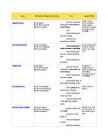
tense Affirmative/Negative/Question Use Signal Words always, every ..., action in the present Simple Present A: He speaks. never, normally, N: He does not speak. taking place once, never or often, seldom, Q: Does he speak? several times sometimes, usually if sentences type I facts (If I talk, ...) ...
Degrees of Comparison Table of Contents Degrees of Comparison ......................................................... 2 Formation of comparatives and superlatives from adjectives and adverbs:......................................................................... 2 Adjectives ................................................................. 2 Adverbs .................................................................... 4 Types of comparisons ........................................................... 4 Degrees of Comparison Degrees of Comparison are used to compare things (living beings, actions, phenomena, etc). We use the comparative degree to compare two things: She’s shorter than me. John works harder than Jim. After a comparative we use than. We use the superlative degree to compare more than two things: Mary is shorter than J...
BACK TO GRAMMAR WORKSHEETS WORKSHEET Antworten zum Arbeitsblatt: Adjektivendungen 1 Be sure to refer to your fourquestion flow chart or memorize it and follow its rules! A. Frage 1: Artikel? These nouns have no articles before them, so the answer to question 1 is `no'. 1. Deutsches Brot (n) schmeckt immer gut. 8. Mein Vater darf fettes Fleisch (n) nicht essen. 2. Wir können hier frischen Käse (m) kaufen. 9. Ich möchte armen Leuten (pl) helfen (=dative verb!). 3. Kleine Kinder (pl) sind immer freundlich. 10. Junger Mann (m), was machst du da? 4. Im Gasthof Luitpold gibt es originelle Musik (f). 11. Einige faule Studenten (pl) haben nichts gelernt. 5. Starker Kaffee (m) schmeckt besser mit 12. Hier finden ...
Articles 1. We use a / an when we are talking about something for the first time. He is wearing a suit and a tie. They have an elephant 2. We use the when we are talking about a specific person or thing, or if there is only one, or if it is clear which one we are talking about. She took a glass of water and started to drink. (one of many glasses of water) She took the glass of water nearest to her. (a specific glass) 3. We use no article when we are talking about people or things in general. English people drink a lot of tea. (English people in general) The English people in this hotel are very nice. (specific English people) 4. We use a / an to say what kind of person or thing someone or something is (often with an adjective, or to say it belongs to a particular group. You have a nice house. That's a very expensive car! A cat is an animal a bus is a vehicle. 5. We use the with si...
STYLISTICS 1. Style, stylistics, a survey of stylistic studies The term ,,style" is polysemantic. Latin ,,stilus"--a writing instrument used by the ancients for writing on waxed tablets. Soon, the meaning was extended to denote the manner of expressing one's ideas in written or oral form. Jonathan Swift said: ,, Style is proper words in proper places" Present day--half a dozen meanings: · the characteristic manner in which a writer expresses his ideas (Style of Byron) · the manner of expressing ideas characteristic of a literary movement or period (symbolism, romanticism) · the use of lg. typical of a literary genre (comedy, drama, novel) · the selective use of lg that depends on spheres of human activity. These are called functional styles or registers (fiction, newspaper) Stylist...
Word order: positive sentences subjects verb(s) object I speak English. I can speak English. Negative sentences subject verbs Indirect object Direct object place time I will not you the story at Tomorro tell school w. Subordinate Clauses conjunction subject verb(s) Indirec Direct place time t object object I will you the story...
INGLISE KEELE PÕHITÕED C.K 2017 A – AN – SOME Singular: a or an Use some for things you can't count ◦ *a banana *a car *a monkey *a football ◦ *some milk *some water *some coffee ◦ *an egg*an accident *an umbrella *an *some sugar eagle ◦ *some tea *some juice*some money *some butter Plural: some Exercises: 1. http://www.english-4u.de/a_an_some_ex1.htm ◦ *some bananas *some cats *some monkeys *some 2. http://www.english-4u.de/a_an_some_ex3.htm balls ◦ *some eggs*some oranges *some umbrellas *some 3. http://www.english-4u.de/a_an_some_ex6.htm eagles We us the ...
English lexicology 1. Size of English vocabulary Vocabulary is a sum total of words used in a language by speakers or for dictionary-making. Active and passive vocabulary. The Old English vocabulary was homogenous. There were about 50 000 – 60 000 words, 1/3 of which have survived. o About 450 loans from Latin o About 2000 from the Viking invasions. The Middle-English vocabulary became a heterogeneous hybrid of Germanic and Romanic languages. 100 000 to 125 000 words. o About 10 000 loans from Norman French, 75% are still in use o Continuing Latin influence Early Modern English. 200 000 – 250 000 words o English becomes a pluricentric language. o Polyglot. Cosmopolitan language Modern English. 500 000 words o At present at least 1 billion lexical units 2....
1. STYLE The term "style" is polysemantic (has many meanings): a Latin word "stilus" originally meant a writing instrument used by ancient people. Already in classical Latin the meaning was extended to denote the manner of expressing one's ideas in written or oral form. Jonathan Swift defined style as "proper words in proper places". In present day English the word "style" is used in about a dozen of principle meanings: 1. the characteristic manner in which a writer expresses his/her ideas (e.g. style of Byron) 2. the manner of expressing ideas, characteristic of a literary movement or period 3. the use of language typical of a literary genre (e.g. the style of a comedy, drama, novel). 4. the selective use of language that depends on spheres / areas of human activity (e.g. style of fiction, scientific prose, newspapers, business correspondence, etc.). STYLISTICS Stylistics is the study of s...
Unit 1/ Present Simple be /lihtolevik + - ? I am your teacher I'm not am I German? Yes- I am, you are, she/she/it is, we are, You are in room 13 you aren't am you German? you are, they are. He is jane he/she/it isn't Is he/she/it German? No I'm not, you aren't, he/she/it isn't, we aren't, She is marta we aren't are we German? you aren't, they aren't. It is a school. you aren't are you German? We are students they aren't are they German? You are in class 12 They are teachers Unit 2 / present simple + - ? yes- I do, you do, he/she/it does. I work I don't work ...
FGI 1081 Stilistika (Irina Ladusseva) Kab. 420 2 AP Ends with an exam; lasts only for 1 semester. At the exam you get 2 questions and an exercise (50 sentences: establish the device used, recognize it, and name it). Care about the pronunciation of the terms. Books: - I. Galperin "Stylistics" - I. Ladusseva "Rhythm and Text" - I. Ladusseva "Vocabulary and Style" - I. Ladusseva "Stylistic practice: Book I, Book II" - I. Ladusseva "A Guide to Punctuation" EXAMINATION TOPICS: 1. Style, stylistics, a survey of stylistic studies ...
1. Basic Phrases ¡Buenos días! ¡Buenas tardes! ¡Buenas noches! bway-nohs dee-ahs bway-nahs tard-ays bway-nahs noh-chays Hello! / Good morning! Good afternoon! Good evening! / Good night! ¡Hola! / ¡Chao! Adiós. Por favor. oh-lah / chow ah-dee-ohs por fah-bor Hi! / Bye! Good bye. Please. Hasta la vista / Hasta luego. Hasta pronto. Hasta mañana. ah-stah lah vees-tah / ah-stah ah-stah prohn-toh ah-stah mahn-yahn-ah loo-ay-go See you soon. See you tomorrow. See you / See you later. (Muchas) Gracias. De nada. Bienvenidos (moo-chah...
1) Standard and non-standard varieties of English Standard varieties of English are the varieties of the English language that are considered to be a norm and are spoken and written by the minority (educated people). This is the optimum for educational purposes. The standard varieties of English are: BrEng (British), EngEng (English), NAmEng (North-America), USEng (United States), CanEng (Canada), AusEng (Australia), NZEng (New Zealand). Standard English (British English) is the most widely accepted and understood among native speakers, learned by foreigners. It is used in broadcasting, TV, news etc. It doesn't concern pronounciation (accent), but grammar and vocabulary. It includes formal and informal styles. British Standard English grammar and vocabulary, together with the RP accent should be called English English. RP (Received Pronounciation) is an accent that originates from South-East of England. A social accent, associated o...
LEXICOLOGY 1. Size of English vocabulary 1) Old English – 50,000 to 60,000 words Vocabulary of Shakespeare OE – homogeneous; 1/3 of the vocabulary has survived • 884,647 words of running text About 450 Latin loans (Amosova) • 29,000 different words (incl. work, working, Viking invasions added 2,000 worked, which are counted here as separate 2) Middle English – 100,000 – 125,000 words) English becomes heterogeneous (Norman French, • 21,000 words English, Latin), hybrid of Germanic and Romance languages Norman French influence – about 10,000 words, 75 % are still in use (Baugh) Latin influence continues 3) Early Modern English – 200,000 – 250,000 English becomes a polycentric language; polyglot, cosmopolitan lang...
Golden Grammar rules 1. Don't use an with own. Sue needs her own room. (NOT Sue needs an own room.) I'd like a phone line of my own. (NOT ... an own phone line.) 2. Use or rather to correct yourself. She's German or rather, Austrian. (NOT She's German or better, Austrian.) I'll see you on Friday or rather, Saturday. 3. Use the simple present play(s), rain(s) etc to talk about habits and repeated actions. I play tennis every Saturday. (NOT I am playing tennis every Saturday.) It usually rains a lot in November. 4. Use will ..., not the present, for offers and promises. I'll cook you supper this evening. (NOT I cook you supper this evening.) I promise I'll phone you tomorrow. (NOT I promise I phone you tomorrow.) 5. Don't drop prepositions with passive verbs. I don't like to be shouted at. (NOT I don't like to be shouted.) This needs to be thought about some more. (NOT This needs to be thought some more.) 6. Don'...
MODULE 1 Greeting. Introducing oneself and the others. The alphabet. Spelling. The tenses. How to introduce yourself and others Formal introductions How to respond and reply to an May I introduce myself? I am John introduction Smith. How do you do. Allow me to introduce John Smith to Pleased to meet you. you. Standard introduction Nice to meet you. I'd like you to meet John Smith. Hello. I want you to meet John Smith. I'm so pleased to meet you. This is Jane Smith. I'm Jane Smith. My name's John Smith. Informal introduction Hi. John. Jane. Hello. Titles: Mr Mrs Miss Ms Ms is a modern form of address for women. It replaces the traditional forms of Mrs and Miss. Greetings Good morning/afternoon/evening...
Review questions English lexicology Size of English vocabulary. Average speaker 45,000-60,000 words, a total of about 200,000. Core and periphery. English has been heavily influenced by other languages. 31.8 % comes from Old English, 45% comes from French, 16,7% comes from Latin, 4,2% other germanic languages and 2,3 other languages. The very core is mono-syllabic (93 of the first 100 words and the other seven are two-syllabic). The core vocabulary is predominantly germanic. Native and foreign element. Native words belong to very important semantic group (modal verbs-shall, will, can, may; pronouns- I, you, he, my, his; preps- in, out, under; numerals and conjunctions::but, till, as. Native words are head, arms, back; mother, brother, son, wife; snow, rain, wind, sun; cat, sheep, cow; old, young, cold, hot, dark; do, make, go, come, see. Many native words have developed many meanings (nt, hand, man, head). Most native words have become ...
Suppletion Present in languages of different families. Present in Old, Middle and Modern English, though the general tendency is towards more regularity/iconicity so the number of suppletive forms has decreased.In the text: goon to go wenden - to turn Gan was suppletive in Old English, past form: eode.Eode was supplanted by went (past form of wenden) at the end of the Middle English period.To wend has survived in Modern English in phrases such as to wend one's way, we wended homewards (ironic usage). Thus: suppletivity- suppletion different parts of one and the same paradigm come from what were originally different paradigms (different words with close meanings or words in different but close dialects).Suppletion embraces verbs, adjectives, nouns. Be was/were been (Old English beon/wesan) (am, art, is, are); in Old English some suppletive forms were used parallel to one another) Good better best Bad worse worst Much more...
1 SYNTACTIC STYLISTIC DEVICES SYNTACTIC STYLISTIC DEVICES are based on a peculiar place of the word or phrase in the utterance (text, sentence, etc).This special place creates emphasis irrespective of the lexical meaning of the words used. Categories: syntactic stylistic devises based on: SDD: based on ABSENCE OF LOGICALLY REQUIRED ELEMENTS OF SPEECH ELLIPSIS ELLIPSIS or ELLIPTICAL SENTENCES means leaving out one or both principle members of the sentence that is the subject or predicate. NT: Where is the man I'm going to marry? - Out in the garden. (no subject) What is he doing out there? - Annoying father. Here, in the dialogue, ellipsis creates the colloquial tone of the utterance. It also renders realistically the way the characters speak. The elliptical sentences convoy/render carelessness, familiarity, harshness. It...
Philosophy of Language Philosophy of Language: a Contemporary Introduction introduces the student to the main issues and theories in twentieth and twenty-first-century phi- losophy of language, focusing specifically on linguistic phenomena. Topics are structured in four parts in the book. Part I, Reference and Referring, includes topics such as Russell's Theory of Descriptions, Donnellan's distinction, problems of anaphora, the description theory of proper names, Searle's cluster theory, and the causalhistorical theory. Part II, Theories of Meaning, surveys the competing theories of linguistic mean- ing and compares their various advantages and liabilities. Part III, Pragmatics and Speech Acts, introduces the basic concepts of linguistic pragmatics, includes a detailed discussion of the problem of indirect force and surveys approaches to metaphor. Part IV, new to this edition, examines the four theories of metaphor. Features...
CHAPTER 1 GETTING TO KNOW THE TOEFL WHAT IS THE TOEFL? The TOEFL is a comprehensive English language examination required by more than 3,000 colleges and universities in the United States, Canada, and other parts of the world. In addition, foreign born professionals frequently need a TOEFL score for certification to practice their profession in the United States or Canada. The TOEFL is a timed test that consists of the three sections listed here. THE TOEFL Section 1 Listening Comprehension 50 questions 35 minutes Part A Statements 20 questions Part B Short Dialogs 15 questions ...
1. Ancient Britain: the Celtic tribes. 2000 years ago there was an Iron Age Celtic culture throughout the Br Isles. It seems that the Celts, who had been arriving from Europe from the 8th cent BC onward, intermingled with the peoples who were already there. The Celts were extremely talented people, creative and artistic. More than 1 Celtic tribe invaded Br. The descendants of ancient Celts live in Wales, Scotland, Cornwall and Ireland. They lived in primitive society. Druids priests, more powerful than chiefs. Acted like prophets. 2. Stonehenge From prehistoric period. Was built on Salisbury plain between 2500 and 1500 bc. One of the most famous and mysterious archaeological sites in the world. One of the mysteries is how it was built at all with the technology of the time. Another is its purpose. It appears to function as a kind on astronomical clock and we know it was used by the Druids for ceremonies marking the passing ...
;P ulJbijlg lsBN 978-1-8432s-569-7 Illllll]ililil]t llll ||||rl 9 x781843x255697x Conlenls UNI T1 househol d & appl i ances; dw el l i ngs ln Searchof the Perfect My Home is my chores;colours& rooms;home H ome(mul ti pl choi e ce) Castle(pp. 5-19) safety TheCharmingPast:Blarney ...
;P ulJbijlg lsBN 978-1-8432s-569-7 Illllll]ililil]t llll ||||rl 9 x781843x255697x Conlenls UNI T1 househol d & appl i ances; dw el l i ngs ln Searchof the Perfect My Home is my chores;colours& rooms;home H ome(mul ti pl choi e ce) Castle(pp. 5-19) safety TheCharmingPast:Blarney ...
;P ulJbijlg lsBN 978-1-8432s-569-7 Illllll]ililil]t llll ||||rl 9 x781843x255697x Conlenls UNI T1 househol d & appl i ances; dw el l i ngs ln Searchof the Perfect My Home is my chores;colours& rooms;home H ome(mul ti pl choi e ce) Castle(pp. 5-19) safety TheCharmingPast:Blarney ...
;P ulJbijlg lsBN 978-1-8432s-569-7 Illllll]ililil]t llll ||||rl 9 x781843x255697x Conlenls UNI T1 househol d & appl i ances; dw el l i ngs ln Searchof the Perfect My Home is my chores;colours& rooms;home H ome(mul ti pl choi e ce) Castle(pp. 5-19) safety TheCharmingPast:Blarney ...
Some of the things you will learn in THE CODEBREAKERS • How secret Japanese messages were decoded in Washington hours before Pearl Harbor. • How German codebreakers helped usher in the Russian Revolution. • How John F. Kennedy escaped capture in the Pacific because the Japanese failed to solve a simple cipher. • How codebreaking determined a presidential election, convicted an underworld syndicate head, won the battle of Midway, led to cruel Allied defeats in North Africa, and broke up a vast Nazi spy ring. • How one American became the world's most famous codebreaker, and another became the world's greatest. • How codes and codebreakers operate today within the secret agencies of the U.S. and Russia. • And incredibly much more. "For many evenings of gripping reading, no better choice can be made than this book." —Christian Science Monitor THE ...
 annaabi.ee