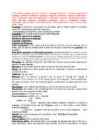
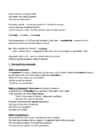
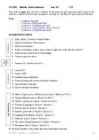
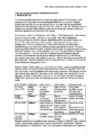
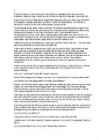
english-4u.de/am_i AM – IS – ARE s_are_ex1.htm 2. http:// www.english-4u.de/am_i s_are_ex3.htm Long form Short form Example Negation 3. http:// Question www.english-4u.de/am_i I am I'm I am late. I am not ('m not) late. s_are_ex6.htm Am I late? You are You're You are clever. You are not (aren't) clever. Are you clever?
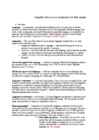
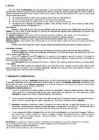
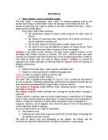
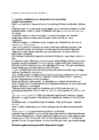
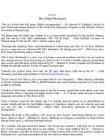
Wou can also turn it around: The result first and then the condition. • WILL + VERB + IF +PRESENT SIMPLE • Note: There is no comma when the „IF“ is between the two clauses. • She will get a good grade if she studies for the test. • We will go to the beach if the weather is nice tomorrow. • Peter will buy a new car if he gets a raise. • He will be late, if he doesn’t hurry up. Using „unless“ instead of „if“ • When the condition (the „if-clause“) uses a negation („not“), you can use the word „unless“ instead, • If it is not an emergency, do not call me. • Unless it is an energency, don’t call me. • Don’t call me unless it is an emergency. • If the doesn’t hurry up, he will be late. • Unless he hurries up, he will be late. • He will be late unless he hurries up.
..] Array creation typeof(T) Obtain System.Type object for T checked(x) Evaluate expression in checked context unchecked(x) Evaluate expression in unchecked context default(T) Obtain default value of type T delegate {...} Anonymous function (anonymous method) Unary +x Identity x Negation !x Logical negation ~x Bitwise negation ++x Pre-increment x Pre-decrement (T)x Explicitly convert x to type T Multiplicative x * y Multiplication x / y Division x % y Remainder
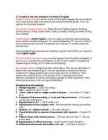
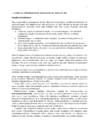
although some- is also used in questions to offer something, to ask for something or when we expect a positive answer: I saw somebody there. I did not see anybody there. Did you see anybody there? Would you like something to eat? ‘I did not see anybody there’ means the same as ‘I saw nobody there’, but two negative words cannot be used: *I did not see nobody there. (WRONG – there is no double negation in English!) Anybody, nobody and somebody mean the same as anyone, no-one and someone respectively. No-one can also be written no one. Any- in affirmative sentences means "every-" or "it does not matter which / who": Anybody can do it. It's very easy. 6 Somewhere else = elsewhere If you don’t like it here, find a new job elsewhere (=somewhere else). Some more examples: Somebody told me you were abroad.
6 If there is no modal verb or auxiliary verb in the sentence (Present and Past Simple), use do/does/did + not in front of the main verb. Note that the main verb will then be used in its original form: Julia works at a department store. - Julia does not work at the department store. Me and my brother went to the same school. - Me and my brother did not go to the same school. REMEMBER! There is no double negation in English – just one is enough: Nobody likes to be kept waiting. We need no education. We do not need any education. Word Order in General Questions To form a general question (i.e. a question requiring a yes/no answer), just bring the auxiliary or modal verb in front of the subject. All the other parts of the sentence will remain in the same place: Will you marry me, darling? Are you happy, darling? Was it a lovely day? Would you like a cup of coffee?
A feature [±AUX] distinguishes main verbs from auxiliary verbs There is no random usage of either [+AUX] or [AUX] element of this syntactic class in English dialects but their properties tend to cluster in the sense of exhibiting all or none of the properties. BE HAVE DO NICE aux main aux main aux main BrE AmE negation + + + +? -- + -- inversion + + + +? -- + -- code + + + +? -- + -- emphatic affirmation + + + +? -- + -- Helping verbs: modals and auxiliaries: Auxiliary verbs are generally divided into two subclasses: the modal auxiliaries, which show
...... . Übung 2. ,,haben" - omama, ,,on" järel AKK Sg einen, eine, ein, Pl -; Wir haben (das Zweibettzimmer) ein Zweibettzimmer. Ich ............... (das Problem).......................... . Frau Müller.......... (der Sessel,-) zwei ................... . Herr Meyer und Frau Meyer........................ (das Zimmer) Er .................. (der Schlüssel).......................... . Ihr.............. (der Balkon)......... Du..................... (der Hocker)...................... . Übung 3. Negation ,,es gibt" und ,,haben" - Sg keinen, keine, kein; Pl keine; Ich habe (das Bett).................... . Gibt es (der Lift)....................? In meinem Zimmer gibt es (der Teppich)......................... . Hast du (die Uhr)....................? Er hat (der Balkon)........................... .Wir haben (die Krone,-n)....................., wir haben russische Rubel. Es gibt (das Problem)................, alles ist erledigt. Übung 4. an, auf, hinter, neben, in, über , unter, vor, zwischen
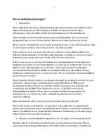
5. The English verbal system Basic verb types and their characteristics 5.1 Main verbs (full/lexical verbs) are verbs that have a meaning on their own and are the key to all sentences. For example: walk, sing, dance 5.2 Helping verbs add functional or grammatical information to the clause and they behave differently from the main verbs. The helping verbs have NICE-properties which distinguish them from the main verbs. Negation To make helping verbs negative, you must use ‘not’ or suffix ‘n’t. Main verbs can’t express negation like this For example: You should not do this. *She liken’t it.* Inversion In order to form a question, helping verbs can be inverted while main verbs cannot. For example: She likes it. Does she like it
Eric Partridge wrote the dictionary of slang in 1840. Some expressions: · Apples and pears - stairs · Bowl of water - daughter · Rabbit and pork - to talk · Trouble and strife - wife · You and me- tea · Butcher's hook - to look · Scooby doo - clue Some features: · [] -> [f] · [h] dropping · Prolonging dipthongs · /aI/ - > /I/ · // -> /v/ · [e] -> [w] · Done/seen, instead did/saw · []-[nk] · Adding [h] · [eI]-[aI] · [au]-[a] · Intrusive r · Double negation · Tag questions 6) Welsh English (peculiarities of pronounciation, grammar, vocabulary) Pronounciation: Differences between WEng and RP: · Last, dance, etc. often have /æ/ rather than /a:/ · Unstressed orthographic a tends to be /æ/ rather than · Unstressed orthographic o tents to be rather than · There is no contrast between · There is, in many varieties, an additional contrast between and between
3 2. Boolean functions and their representations In the following chapters the vector space of all binary vectors of length n will be denoted as 𝔽𝑛2 . For two vectors 𝑎 = (𝑎1 , … , 𝑎 𝑛 ) and 𝑏 = (𝑏1 , … , 𝑏𝑛 ) in 𝔽𝑛2 we define the scalar product < 𝑎, 𝑏 > = 𝑎 1 𝑏1 ⊕ …⊕ 𝑎 𝑛 𝑏𝑛 , where all the operations are over a finite field with two elements 𝔽2 . The logical negation (or complement) of a Boolean function 𝑓 is 𝑓 = 𝑓 ⊕ 1 . Definition 2.1. A Boolean function 𝑓 of 𝑛 variables is a map from 𝔽𝑛2 to 𝔽2 . 𝐹𝑛 will be used to mark the set of all Boolean functions of 𝑛 variables. The value vector of a Boolean function is very important term when describing the function. The weight and the support of a Boolean function refer to the weight and support of its value vector. Definition 2.2
Truth and falsity are Truth-values. The truth -value of simple proposition is not the business of propositional logic. The truth-value of compound propositions is determined by propositional logic. It depends on the truth-values of the simple propositions that compose it and the connectives that connect them. Example: Tallinn and Tartu are both nice cities = Tallinn is a nice city and Tartu is a nice city The definitions of connectives are given by their Truth tables. Negation Indicators: It is not the case that, not, it is false that, etc. It rains It is not the case that it rains P ¬P False (F) True (T) True (T) False (F) Negation inverts truth values. Implication Indicators: If...then…, implies, given that, provided that, in case that, on the condition that, etc.
of meaning). Connotation may be a permanent part of word meaning it is then called inherent connotation. Connotation is ever present when the word is used. Adherent connotation is the shade of meaning the word requires in a particular context only. Outside this context this shade of meaning is not present. ADHERENT CONNOTATION (AC) - is evoked only to create a particular context. AC may be positive or negative. Negative adherent connotation 1. Grammatical negation results in words becoming negatively charged (e.g. "Science has not got a soul. Cannot help itself." science here becomes negative). 2. The neighbourhood or closeness of words bearing adherent negative connotation. 3. Vulgar words in the context lend their negative charge normally to the following word. 4. The same do certain intensifiers, such as: merely, only, too, too much, horribly, perfectly, so, etc. 5
võrdub ühega. VÕI-tehte tähistamiseks kasutatakse kas pluss (+) märki või loogilise liitmise eritähist - V tähe kujulist märki (). Loogilist liitmist nimetatakse ka disjunktsiooniks (disjunction). Loogiline eitus (EI). EI-funktsioonil on argumendi vastandväärtus. Kui argument on 1, siis funktsioon võrdub 0 ning vastupidi. EI-tehet tähistatakse kriipsuga sümboli peal, näiteks argumendi x eitus on x . Loogilist eitust nimetatakse ka inversiooniks (negation). Loetletud kolm loogikatehet moodustavad loogiliselt täieliku süsteemi, mida rakendades saab realiseerida mis tahes loogikafunktsiooni. Kõiki kolme loogika põhifunktsiooni on loogikaalgbra reeglite alusel võimalik realiseerida ainult üht tüüpi loogikaelementide kas NING-EI või VÕI-EI abil. Järelikult võib NING-EI- ja VÕI-EI- elemente ning tehteid nendega nimetada universaalseteks loogikaelementideks ja -teheteks. 3.2 Loogikalülitused
not entail the existence of a present king, but merely presupposes it. The mark of this, according to Strawson, was that, when there is no king, "The present King of France is bald" is not false, but lacks truth-value entirely. The same goes for "The present King of France is not bald." A few philosophers and many more linguists took up Strawson's idea, and have made it a little more formal: When a sentence S1 entails a sentence S2 , and S2 is false, then necessarily S1 is false and S1's negation is true. But when S1 presupposes S2 and S2 is false, then S1 does not go false, but lacks truth- value, and so does S1's negation.5 Notice that presupposition in this sense (called semantic presupposition) is like entailment and unlike conversational implicature in being noncancelable. Both S1 and S1's negation necessitate S2 in the absolute way characteristic of entailment. There are actually no uncontroversial examples of semantic presupposi- tion
motion. ADHERENT CONNOTATION (AC) Is evoked only to create a particular context (e.g. O. Wilde: "I tell you what, you are very rude, and, after all, what are you? Only a student (negative here)." "He is some brainless (positive here), beautiful creature who should always be here in winter when we have no plants to look at" these examples show that AC may be either positive or negative. Negative adherent connotation 1. Grammatical negation results in words becoming negatively charged (e.g. "Science has not got a soul. Cannot help itself." science here becomes negative). 2. The neighbourhood or closeness of words bearing adherent negative connotation (e.g. "I saw myself as Mommy would see me uncouth (negative) and vulgar (negative) and working-class" (due to previous 2 words it becomes negative too, otherwise "working- class" is neutral). 3
e.g. flight, flimsy, flippant--suggest lightness, grace, insecurity e.g. slow, sluggish, sloppy--suggest slowness, inactivity 3. Adherent connotations Adherent connotation is the shade of meaning, that word acquires in a context and outside this context connotation is not present. AC may be positive or negative--any part of speech may acquire this connotation, the exact shade of meaning depending on the context. Negative adherent connotation: · (Grammatical negation (science has no soul)) · The proximity of words carrying inherent negative connotations (vulgar and working-class) · The context of the sentence of the words that have a strong vulgar colouring (your bloody principles) · The use of certain intensifiers (too, too much, horribly, perfectly, so, only) (too clean, too new) · We may have a repetition of a word in a sentence (always preaching,
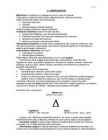
Tõeväärtustabeli vasakul pool esitatakse argumentide (komponentlausete) kõikvõimalikud tõeväärtused ning paremal pool esitatakse tehete tulemused. Kuna argumentidel saab olla vaid kaks väärtust (1 või 0), on tõeväärtustabelid väikese argumentide arvu korral küllaltki lühikesed: n argumendi korral on tabelis 2n rida. LAUSEARVUTUSE TEHETE TUTVUSTAV ÜLEVAADE (prioriteedi järjekorras) EITUS (ik negation, denial): Lause p eitus on lause, mis on tõene, kui p on väär ja mis on väär kui p on tõene. Tunnuseks on enamasti sõnade ei, pole ja mitte kasutamine. Nt Kass ei näu. Pole tõene väita, et tiiger näub. Tähistused: ¬p ~p p not p Eituse tõeväärtustabel (kahel samaväärsel kujul): p ¬p p ¬p t v 1 0
which a person has (a 'moral [including legal] quality' in Grotius's terminology), rather than 'that which is just in a given situation', the ensemble of juridical relationships established, by rules, between two or more persons in relation to some subject-matter (act, thing, or state of affairs). 12 Leviathan (1651), ch. xiv; in Raphael (ed.), British Moralists, vol. 1, para. 56. Thus, for Hobbes as for Hohfeld, liberty is simply the negation of duty; and this 'libertyright' is the only right Hobbes has in mind.[end] Bellum omnium contra omnes on vaadeldav nt kodusõdades. H. nägi [6]inimese väljapääsu sellest hukatuslikust olukorrast inimese egoistlikes püüdlustes: soov ületada surmahirmu sunnib vähendama surmaohtu ja soov kokkuahmitud vara segamatult nautida sunnib kehtestama rahu ja korda. [7]Mõistus käsib inimesi otsima rahu ning mõistus kätkeb põhimõtteid rahu saavutamiseks
arenguastme juurde, kus oli hõlpsam või kus oli probleeme. Seda mehhanismi kasutab mina momendi raskustest kõrvalehiilimiseks. Tüüpiline regressiooni näide on lapse tagasilangus allategemisse (enurees, enkoprees) siis, kui uus beebi rivaalina tema koha ära võtab. Regressioon on tähtis ka ravitegurina - psühhoanalüüsi tehnika võib patsiendi regresserida arengufaasi, kus konflikt tekkis, et see nüüd uuesti ja produktiivselt lahendada. (9) Eitamine (Verneinung; negation) on nähtus, kus inimene on endale sõnastanud mõne senini tõrjutud soovi, mõtte või tunde, kuid ei tunnista seda omaks, vaid jätkab enese kaitsmist. Eitamisena tõlgendatakse mitmesuguseid traumeerivatele elusündmustele ja katastroofidele järgnevaid reaalsuse eest põgenemise sümptomeid. Eitamisele lähedane mõiste on keeldumine, mis tähistab mõne välisilmast pärit tõsiasja tagasilükkamist. Eraldi kohal on sublimatsioon (Sublimierung; sublimation)
elementidele (rakendub üldiselt subjektile S) või mingile osale neist (rakendub osaliselt subjektile S). Kvantori üldist või osalist rakendumist nimetatakse ka väitlause kvantiteediks (kas üldine või osaline); • jaatus (affirmation, ld affirmatio ’jaatus’), mis väljendab predikaadi omistamist subjektile kvantoriga etteantud määral (vastavalt väitlause kvantiteedile). (Sel puhul on eestikeelseks koopulaks sõna on); • eitus (negation, ld negatio), mis muudab väitlause kvaliteeti (subjektile tuleb omistada väitlause predikaadiga väljendatud omaduse puudumine) ja kvantiteeti (muudab kas üldise osaliseks või osalise üldiseks). (Eitus ilmneb sageli koopula erikujus – eesti keeles on eituse puhul koopulaks tihti ei ole või pole). Atributiivne lihtväitlause üldkujul: „(kvantor) S on (ei ole) P”. Nt kirjeldav lihtväitlause
elementidele (rakendub üldiselt subjektile S) või mingile osale neist (rakendub osaliselt subjektile S). Kvantori üldist või osalist rakendumist nimetatakse ka väitlause kvantiteediks (kas üldine või osaline); · jaatus (affirmation, ld affirmatio 'jaatus'), mis väljendab predikaadi omistamist subjektile kvantoriga etteantud määral (vastavalt väitlause kvantiteedile). (Sel puhul on eestikeelseks koopulaks sõna on); · eitus (negation, ld negatio), mis muudab väitlause kvaliteeti (subjektile tuleb omistada väitlause predikaadiga väljendatud omaduse puudumine) ja kvantiteeti (muudab kas üldise osaliseks või osalise üldiseks). (Eitus ilmneb sageli koopula erikujus eesti keeles on eituse puhul koopulaks tihti ei ole või pole). Atributiivne lihtväitlause üldkujul: ,,(kvantor) S on (ei ole) P". Nt kirjeldav lihtväitlause
thought might serve to clarify social conditions that Marx himself had never seen. Mõjutajad: Max Weber, Sigmund Freud. Their emphasis on the "critical" component of theory was derived significantly from their attempt to overcome the limits of positivism, crude materialism, and phenomenology by returning to Kant's critical philosophy and its successors in German idealism, principally Hegel's philosophy, with its emphasis on negation and contradiction as inherent properties of reality. Major theorists include: Max Horkheimer; Theodor W. Adorno; Walter Benjamin; Herbert Marcuse; Erich Fromm, Jürgen Habermas Herbert Marcuse (July 19, 1898 July 29, 1979) was a German-Jewish philosopher, political theorist and sociologist, and a member of the Frankfurt School. His best known works are Eros and Civilization, One-Dimensional Man and The Aesthetic Dimension.
kohe, et ilma üliinimeseta ei saa, ehk muidu peab loobuma niihästi kristlasest kui ka marksistlasest. Tähendab: kõige pealt üliinimene, siis kristlane ja marksistlane või ka tagurpidi, üks kõik. Külva üliinimene, kasvab kristlane, mis ongi uus üliinimene, külva kristlane, kasvab marksistlane, mis ongi uus kristlane. Aga võib ka tagurpidi, s. t. võib külvata marksistlane ja siis tõuseb kristlane, mõistad? Nii on see lühidalt ja filosoofiliselt. Negation der Negation -- eitamise eitamine. Seeme, kõrs, uus seeme. Kõrs eitab seemne, uus seeme kõrre. Üliinimene eitab inimese, s. t. oma seemne, kristlane eitab üliinimese, s. t. oma kõrre, marksist eitab kristlase või ka tagurpidi. Negation der Negation. Selge, mis? Juba Kristus taipas seda, kui ta ütles: kes ei sünni veest ja vaimust jne. Mis see tähendab? Üliinimest, ei muud midagi. Enne pead sündima veest ja vaimust, alles siis saad kristlaseks või sotsialistlaseks
L.], siis kontseptsiooni kurjast kui hea puudumisest kinnitavad nii Ida kui Lääne kirikuisad. (4) Nad ei salga (nagu Kristlik Teadus) kurja tõelisust (vastupidi, nad kinnitavad selle olemasolu innukalt); nende rõhk langeb tegelemisele edasise küsimusega: milles see tõelisus seisneb? Või: mis tingib selle, et lugeda x ,,kurjaks" ja mitte ,,heaks"? (5) Nende vastus on, et see on alati tõelise hea puudumine (privatio, mitte vastand /negation/) tõelisel subjektil - kurjal pole positiivset eksistentsi iseeneses, nii nagu pimeolemine on tõeline (kuid kujutab enesest nägemise puudumist tõelise inimese puhul) või nagu pimedus on tõeline (aga kujutab endast valguse puudumist). (6) Selline puudus võib tõepoolest tuleneda reaalsest kohalolekust /presence/ (nõnda nagu kae olemasolu põhjustab nägemise puudumist- ja mida ,,parem" on kae, seda ,,hullem"
And if the means did not contribute to human happiness, neither will the end. The outcome, which is inseparable from the actions that led to it, is already contaminated by those actions and so will create further unhappiness. This is karmic action, which is the unconscious perpetuation of unhappiness. As you already know, your secondary or outer purpose lies within the dimension of time, while your main purpose is inseparable from the Now and therefore requires the negation of time. How are they reconciled? By realizing that your entire life journey ultimately consists of the step you are taking at this moment. There is always only this one step, an so you give it your fullest attention. This doesn't mean you don't know where you are going; it just means this step is primary, the destination secondary. And what you encounter at your destination once you get there depends on the quality of this one step. Another way of putting it: What the future holds for you
"Yes, without protein supplementation, it's totally possible, but it's much more di cult. And without some guidance, it's unlikely that people will do it properly if muscle building or high- level sport performance is the goal. "But it is possible." WHAT ARE THE MOST COMMON MISTAKES SELF-DESCRIBED "VEGETARIANS" MAKE? "Just dropping animal foods. The worst mistake any would-be vegan could make is to simply stop eating meat. Then their lifestyle choice isn't a positive one, it's about negation.16 Instead, people should focus on what they'll be eating more of. In other words, a proper vegetarian meal plan is based on eating mostly or only foods that come from plants: fruits, veggies, unprocessed grains, legumes, etc. It's not simply avoiding meat and lling up on processed junk foods. And this is something many vegetarians do. By focusing only on what they're dropping, there's no plan for getting enough calories, enough protein, and enough micronutrition to
 annaabi.ee