2018
* Univeristy of Tartu, Estonia
Lomonosov Moscow State University, Russia
Boolean Functions and their
Cryptographic Criteria
Contents
1. Introduction ..................................................................................................................................... 3
2. Boolean functions and their representations ................................................................................. 4
2.1
Truth table ............................................................................................................................... 4
2.1.1
Disjunctive normal form .................................................................................................. 4
2.1.2
Conjunctive normal form ................................................................................................ 5
2.2
Algebraic normal form ............................................................................................................. 5
3. Walsh and Fourier transforms ......................................................................................................... 7
3.1
Hadamard matrices ................................................................................................................. 8
4. Correlation immunity and algebraic immunity ............................................................................... 9
4.1
Cross-correlation and autocorrelation .................................................................................... 9
4.2
Correlation immunity .............................................................................................................. 9
4.3
Algebraic immunity ............................................................................................................... 10
5. Nonlinearity of Boolean functions ................................................................................................ 11
5.1
Bent functions ....................................................................................................................... 12
Bibliography ........................................................................................................................................... 13
3
1.
Introduction
Boolean functions have various applications in cryptography. Linear feedback shift registers (LFSR) use
Boolean functions to generate pseudo-random numbers while S-boxes used in block cyphers are just
vectorial Boolean functions.
To make the cryptanalysis more difficult to implement, we have to be careful when choosing the
Boolean functions for our cryptosystem and follow several recommendations, often called
cryptographic criteria. For example, the combining and filtering Boolean functions used in stream and
block cyphers must have certain properties to resist different kinds of attacks. Nonlinearity must be
high for resisting linear approximation attacks while correlation immunity determines the number of
LFSRs needed for a correlation attack.
This paper gives an overview on the topic of Boolean functions, starting with generalities of Boolean
functions and their representations and moving on to different cryptographic criteria of Boolean
functions, including correlation immunity, nonlinearity and algebraic immunity. Both Walsh and
Fourier transforms are introduced. The paper also includes a short chapter on Bent functions.
These topics are covered shortly, introducing the main points and giving their most important
properties. Thus the paper contains many definitions and properties, while only giving proofs to some
of them. The result is a concise material, covering the generalities of Boolean functions and their
properties relevant in cryptography.
4
2.
Boolean functions and their representations
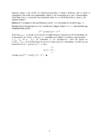
In the following chapters the vector space of all binary vectors of length n will be denoted as 𝔽2𝑛. For
two vectors 𝑎 = (𝑎1, … , 𝑎𝑛) and 𝑏 = (𝑏1, … , 𝑏𝑛) in 𝔽2𝑛 we define the scalar product
< 𝑎, 𝑏 > = 𝑎1𝑏1 ⊕ …⊕ 𝑎 𝑛𝑏𝑛, where all the operations are over a finite field with two elements 𝔽2 .
The logical negation (or complement) of a Boolean function 𝑓 is 𝑓 = 𝑓 ⊕ 1 .
Definition 2.1. A Boolean function 𝑓 of 𝑛 variables is a map from 𝔽2𝑛 to 𝔽2 .
𝐹𝑛 will be used to mark the set of all Boolean functions of 𝑛 variables.
The value vector of a Boolean function is very important term when describing the function. The weight
and the support of a Boolean function refer to the weight and support of its value vector.
Definition 2.2. A value vector of a Boolean function is a binary vector 𝑣𝑓 of length 2𝑛 composed of all
𝑓(𝑥) when 𝑥 ∈ 𝔽2𝑛.
Definition 2.3. The weight of a Boolean function 𝑓 of 𝑛 variables is the number of vectors from the
field 𝔽2𝑛, where the 𝑓 obtains the value of one:
𝑤𝑡(𝑓) = |{𝑥 ∈ 𝔽2𝑛 ∶ 𝑓(𝑥) = 1}|
We say that a Boolean function 𝑓 is balanced if 𝑡(𝑓) = 2 𝑛−1 .
2.1
Truth table
A Boolean function 𝑓 is often expressed through its truth table, which gives the values of function 𝑓
of 𝑛 variables using all of the elements in 𝔽2𝑛. Those values combine into its value vector.
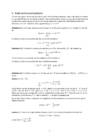
For example, the following Table 1 represents a truth table of a function 𝑓 over 𝔽23, where the last row
is its value vector.
𝑥1
0 0 0 0 1 1 1 1
𝑥2
0 0 1 1 0 0 1 1
𝑥3
0 1 0 1 0 1 0 1
𝑓(𝑥1, 𝑥2, 𝑥3) 0 0 0 1 0 0 0 1
Table 1.1. Truth table of function 𝑓 of three variables
2.1.1
Disjunctive normal form
Since making a table of all possible values is impractical at larger values of 𝑛, other representations of
Boolean functions are often used. One of them is disjunctive normal form (abbreviated DNF) which
presents a Boolean function in a form of disjunction consisting of conjunctive clauses.
In order to find the DNF of a Boolean function 𝑓(𝑥1, … , 𝑥𝑛) we must present all those sets of values of
𝑥1, … , 𝑥𝑛 where the function 𝑓 obtains the value of one in a form of a conjunction and combine those
conjunctions into a single disjunction.
For example, function 𝑓(𝑥1, 𝑥2, 𝑥3) presented in the Table 1 has two sets of 𝑥1, 𝑥2, 𝑥3 values, where
the function obtains the value of one: 𝑥1𝑥2𝑥3 and 𝑥1𝑥2𝑥3. Thus, the DNF of function 𝑓(𝑥1, 𝑥2, 𝑥3) is
𝑥1𝑥2𝑥3 + 𝑥1𝑥2𝑥3, where + marks the binary operation or.
5
2.1.2
Conjunctive normal form
Similarly to disjunctive normal form, a Boolean function can also be expressed by a conjunction of
disjunctive clauses.
To find the conjunctive normal form (CNF) of a Boolean function 𝑓(𝑥1, … , 𝑥𝑛) we must select those
sets of values of 𝑥1, … , 𝑥𝑛 where the function 𝑓 obtains a value of zero, invert those values and join
them into a single disjunction. Then all such disjunctions are combined into a single conjunction, which
is called the CNF of function 𝑓.
Thus the CNF of the function 𝑓(𝑥1, 𝑥2, 𝑥3) presented in the Table 1 is:
(𝑥1 + 𝑥2 + 𝑥3)(𝑥1 + 𝑥2 + 𝑥3)(𝑥1 + 𝑥2 + 𝑥3)(𝑥1 + 𝑥2 + 𝑥3)(𝑥1 + 𝑥2 + 𝑥3)(𝑥1 + 𝑥2 + 𝑥3)
2.2
Algebraic normal form
One of the most classical representations of Boolean functions is in a form of a 𝑛-variable polynomial
over the field 𝔽2 . It is also most commonly used in cryptography and coding. This representation is
called the algebraic normal form (ANF), also known as a Zhegalkin polynomial.
Definition 2.4. Let 𝑓 be a Boolean function of 𝑛 variables. Then the polynomial in the following form
𝑓(𝑥1, … , 𝑥𝑛) = ⊕𝑢∈𝔽
2
𝑛
µ𝑓 ∏ 𝑥 𝑖
𝑢𝑖
𝑛
𝑖=1
is called the algebraic normal form of function 𝑓. The monomial ∏
𝑥𝑖
𝑢𝑖
𝑛
𝑖=1
is often denoted by 𝑥𝑢.
The µ𝑓 is also a Boolean function of 𝑛 variables, which is called the
Möbius transformation of 𝑓. The
coefficients of ANF satisfy the following equation:
µ𝑓 = ∑ 𝑓(𝑥)
𝑥≤𝑢
𝑢∈𝔽2𝑛
where the sum is in 𝔽2 and 𝑥 ≤ 𝑢 if and only if 𝑥𝑖 ≤ 𝑢𝑖 for all 1 ≤ 𝑖 ≤ 𝑛 .
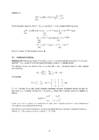
Let us compute the coefficients 𝑎𝑢 of the function 𝑓(𝑥1, 𝑥2, 𝑥3) shown in Table 1 above:
𝑎000 = 𝑓(000) = 0
𝑎001 = 𝑓(000) + 𝑓(001) = 0
𝑎010 = 𝑓(000) + 𝑓(010) = 0
𝑎011 = 𝑓(000) + 𝑓(010) + 𝑓(001) + 𝑓(011) = 1
𝑎100 = 𝑓(000) + 𝑓(100) = 0
𝑎101 = 𝑓(000) + 𝑓(001) + 𝑓(100) + 𝑓(101) = 0
𝑎110 = 𝑓(000) + 𝑓(010) + 𝑓(100) + 𝑓(110) = 0
𝑎111 = ∑ 𝑓 (𝑥) = 𝑤𝑡(𝑓) 𝑚𝑜𝑑 2 =
𝑥∈𝔽23
0
Thus the ANF of the function 𝑓 is 𝑥2𝑥3.
It is important to note that a
unique ANF exists for every Boolean function.
Definition 2.5. The (algebraic) degree of a function
𝑓 is the degree of the largest monomial in its
algebraic normal form. In other words:
deg 𝑓 = max
𝑢∈𝔽2𝑛
𝑎𝑢≠0
𝑤𝑡(𝑢)
6
Algebraic degree is one of the most important properties of Boolean functions, when it comes to
cryptography. One of the basic requirements relative to the Boolean functions used in stream ciphers
is that they allow to increase the linear complexity, which is obtained if these functions have a high
algebraic degree.[7]
Lemma 2.1. The weight of a Boolean function 𝑓 over 𝔽2𝑛 is an odd number if and only if deg 𝑓 = 𝑛.
Theorem 2.1. If a Boolean function 𝑓 of 𝑛 variables has a degree of deg 𝑓 = 𝑑 > 1 , then the following
inequality stands correct:
2𝑛−𝑑 ≤ 𝑤𝑡(𝑓) ≤ 2𝑛 − 2𝑛−𝑑
Proof. Let 𝑥𝑖
1 𝑥𝑖
2 … 𝑥𝑖𝑑 be the monomial with the highest degree enclosed in the ANF of function
𝑓. Let
us decompose the function 𝑓 through 𝑛 − 𝑑 variables not included in the highest order monomial
𝑥𝑖
1 𝑥𝑖
2 … 𝑥𝑖𝑑, let 𝑓1, … , 𝑓2𝑛−𝑑 be coefficients of this decomposition. Since the degree of
𝑓𝑐 ∈ {𝑓1, … , 𝑓2𝑛−𝑑 } is 𝑑 we know from the Lemma 2.1 that 𝑤𝑡(𝑓𝑐) is an odd number. From that we can
easily deduce that 1 ≤ 𝑤𝑡 (𝑓𝑐) ≤ 2𝑑 − 1. Since
𝑤𝑡(𝑓) = ∑ 𝑓 𝑐
2𝑛−𝑑
𝑐=1
it is clear, that 2𝑛−𝑑 ≤ 𝑤𝑡(𝑓) ≤ 2𝑛 − 2𝑛−𝑑 . ∎
7
3.
Walsh and Fourier transforms
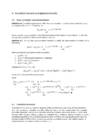
The terminology on these two transforms vary a lot in different materials. Often, the Walsh transform
is also called Hadamard transform or Walsh-Hadamard transform. In many cases, the Walsh transform
is defined in a same way as we define the Fourier transform. In this article the Walsh transform is
defined as a Fourier transform of its sign function 𝑓χ = (−1)𝑓(𝑥).
Definition 3.1. The Fourier transform of a function 𝑓 on 𝔽2𝑛 is the map from 𝑓 to function 𝐹𝑓 defined
by
𝐹𝑓(𝑢) = ∑ 𝑓(𝑥) (−1)<𝑥,𝑢>
𝑥∈𝔽2𝑛
Function 𝑓 can be recovered by the inverse Fourier transform:
𝑓(𝑥) = 2−𝑛 ∑ 𝐹 𝑓(𝑢)(−1)<𝑥,𝑢>
𝑥∈𝔽2𝑛
Definition 3.2. The Walsh transform of a function 𝑓 on 𝔽2𝑛 is the map 𝑊𝑓: 𝔽2𝑛 → ℝ, defined by
𝑊𝑓(𝑢) = ∑ (−1)𝑓(𝑥)⊕<𝑥,𝑢>
𝑥∈𝔽2𝑛
The value 𝑊𝑓(𝑢) is called the Walsh coefficient of the function 𝑓.
Function 𝑓 can be recovered by the inverse Walsh transform:
(−1)𝑓(𝑥) = 2−𝑛 ∑ 𝑊 𝑓(𝑢)(−1)<𝑥,𝑢>
𝑥∈𝔽2𝑛
Definition 3.3. The Walsh spectrum of 𝑓 is the set of all 2𝑛 Walsh coefficients {𝑊𝑓(𝑢) ∶ 𝑢 ∈ 𝔽 2𝑛} as 𝑢
varies.
Lemma 3.1. If 𝑢 ∈ 𝔽 2𝑛
∑ (−1)<𝑥,𝑢>
𝑥∈𝔽2𝑛
= { 0, 𝑢 ≠ 0
𝑛
2𝑛, 𝑢 = 0𝑛
Proof. Firstly, we can easily see that if 𝑢 = 0 𝑛, then all summands are 1 and the sum is 2𝑛. Now, if
𝑢 ≠ 0𝑛, we can look at two sets 𝐴 = {𝑥 ∈ 𝔽2𝑛 ∶ < 𝑥, 𝑢 > = 0 } and 𝐴′ = {𝑥 ∈ 𝔽2𝑛 ∶ < 𝑥, 𝑢 > = 1 }.
Obviously, those sets belong to 𝔽2𝑛 and their cardinalities are the same 2𝑛−1. Since for any 𝑥 ∈ 𝐴 , the
summand is 1 and for any 𝑥 ∈ 𝐴 , the summand is −1, we get the equation. ∎
If and only if the function is balanced the weight of a Boolean function can be expressed though it’s
Walsh transform:
𝑤𝑡(𝑓) = 2𝑛−1 −
1
2 𝑊𝑓(0
𝑛 )
Lemma 3.2. There is a straight relation between the Fourier and Walsh transform of a function:
𝑊𝑓(𝑢) = 2𝑛𝛿(𝑢) − 2𝐹𝑓(𝑢),
where 𝛿(𝑢) = {1, 𝑢 = 0
𝑛
0, 𝑢 ≠ 0𝑛
.
8
Lemma 3.3.
∑ 𝑊 𝑓(𝑥)𝑊𝑓(𝑥
𝑥∈𝔽2𝑛
⊕ 𝑣) = { 0, 𝑣 ≠ 0
𝑛
22𝑛, 𝑣 = 0𝑛
Proof. Using the equations 𝑊𝑓(𝑥) = 𝐹𝑓
χ(𝑥)
and 𝑓χ(𝑦)2 = 1 we complete following steps:
∑ 𝑊 𝑓(𝑥)𝑊𝑓(𝑥
𝑥∈𝔽2𝑛
⊕ 𝑣) = ∑ (−1)<𝑥,𝑦> 𝑓χ(𝑦)
𝑥∈𝔽2𝑛
𝑦∈𝔽2𝑛
∑ (−1)<𝑥⊕𝑣,𝑧> 𝑓χ(𝑧)
𝑧∈𝔽2𝑛
= ∑ (−1)<𝑣,𝑧>𝑓χ(𝑦)
𝑦∈𝔽2𝑛
𝑧∈𝔽2𝑛
𝑓χ(𝑧) ∑ (−1)<𝑥,𝑦⊕𝑧>
𝑧∈𝔽2𝑛
= ∑ (−1)<𝑣,𝑦>𝑓χ(𝑦)2 = 2𝑛 ∑ (−1)<𝑣,𝑦>
𝑦∈𝔽2𝑛
𝑦∈𝔽2𝑛
Based on Lemma 3.1 the equation stands. ∎
3.1
Hadamard matrices
Definition 3.4. A Hadamard matrix 𝐻 of order 𝑛 is an 𝑛 × 𝑛 matrix with elements from {−1, 1}, such
that 𝐻𝐻𝑡 = 𝑛𝐼𝑛, where 𝐻𝑡 is the transpose of 𝐻 and 𝐼𝑛 is the 𝑛 × 𝑛 identity matrix.
The product of any two distinct rows or columns of
𝐻 is zero. Hadamard matrix is often defined
recursively by:
𝐻𝑛 = (
𝐻𝑛−1
𝐻𝑛−1
𝐻𝑛−1 −𝐻𝑛−1) , 𝐻𝑜 = (1)
For example:
𝐻1 = (1 1
1 −1)
, 𝐻2 = (
1
1
1 −1
1
1
1 −1
1
1
1 −1
1
1
1 −1
) etc.
2𝑛 × 2𝑛 matrices 𝐻𝑖 are also called Sylvester-Hadamard matrices. Hadamard matrix can also be
described as a Kronecker product: 𝐻𝑛 = 𝐻1 ⊗ 𝐻𝑛−1, where the Kronecker product is defined as
follows:
𝐴 ⊗ B = (
𝑎11𝐵 ⋯ 𝑎1𝑛𝐵
⋮
⋱
⋮
𝑎𝑚1 ⋯ 𝑎 𝑚𝑛 𝐵
) ,
where 𝐴 is a 𝑚 × 𝑛 matrix. It is important to note, that Kronecker product is not commutative,
although it is associative and distributive.
Now the Fourier transform of function 𝑓 can be described through a Sylvester-Hadamard function as
follows: 𝐹𝑓 = 𝑓𝐻𝑛. Inverse of that is similarly 𝑓 = 2−𝑛𝐹𝑓𝐻𝑛.
9
4.
Correlation immunity and algebraic immunity
4.1
Cross-correlation and autocorrelation
Definition 4.1. The following function is called the cross-correlation function of two functions 𝑓 and 𝑔
is a map from 𝔽2𝑛 to [−2𝑛, 2𝑛] defined by:
∆𝑓,𝑔(𝑢) = ∑ (−1)𝑓(𝑥)⊕𝑔(𝑥⊕𝑢)
𝑥∈𝔽2𝑛
Let us note that cross-correlation is the difference between the number of cases where 𝑓(𝑥) coincides
with 𝑔(𝑥 ⊕ 𝑢) and the number of cases where it does not.
Definition 4.2. If 𝑓 = 𝑔 the cross-correlation function is called the autocorrelation function and is
defined by:
∆𝑓(𝑢) = ∆𝑓,𝑓(𝑢) = ∑ (−1)𝑓(𝑥)⊕𝑓(𝑥⊕𝑢) = ∑ (−1)𝑓𝑢
′ (𝑥)
𝑥∈𝔽2𝑛
𝑥∈𝔽2𝑛
Here are some basic properties of autocorrelation:
1. ∆𝑓(0𝑛) = 2𝑛
2. ∆𝑓(𝑢) = 0 if and only if function 𝑓 is balanced
3. ∆𝑓(𝑢) = ∆𝑊
𝑓 (𝑢) for every 𝑢
4. ∆𝑓(𝑢) = ∆𝑊
𝑓𝑢′
(0𝑛)
Theorem 4.1. If 𝑓, 𝑔 ∈ 𝔽2 , then
(∆𝑓,𝑔(0𝑛), … , ∆𝑓,𝑔(1𝑛)) 𝐻2𝑛 = (𝑊𝑓(0𝑛)𝑊𝑔(0𝑛), … , 𝑊𝑓(1𝑛)𝑊𝑔(1𝑛)),
where 𝐻2𝑛 is a Sylvester-Hadamard matrix.
Proof.
∑ ∆ 𝑓,𝑔(𝑢)(−1)<𝑢,𝑣>
𝑢∈𝔽2𝑛
= ∑
𝑢∈𝔽2𝑛
∑ (−1)𝑓(𝑥)⊕𝑔(𝑥⊕𝑢)(−1)<𝑢,𝑣>
𝑥∈𝔽2𝑛
= ∑ (−1)𝑓(𝑥)
𝑥∈𝔽2𝑛
∑ (−1)𝑔(𝑥⊕𝑢)⊕<𝑢,𝑣>
𝑢∈𝔽2𝑛
𝑧=𝑥⊕𝑢
⇒ ∑
(−1)𝑓(𝑥)
𝑥∈𝔽2𝑛
∑ (−1)𝑔(𝑧)⊕<𝑧,𝑣>
𝑧∈𝔽2𝑛
= ∑ (−1)𝑓(𝑥)⊕<𝑥,𝑣>
𝑥∈𝔽2𝑛
∑ (−1)𝑔(𝑧)⊕<𝑧,𝑣>
𝑧∈𝔽2𝑛
= 𝑊𝑓(𝑣)𝑊𝑔(𝑣) ∎
4.2
Correlation immunity
Correlation immunity is an important property of Boolean functions, since using Boolean functions
with low correlation immunity can allow effective attacks on the cryptosystem. For example,
correlation immunity plays a crucial role when attacking a stream cipher based on two or more linear
feedback shift registers, whose outputs are combined by a nonlinear Boolean function. In such a
combination generator, the correlation-immunity order 𝑘 of the combining function determines the
minimal number of LFSRs which must be considered in a correlation attack - the smallest number of
LFSRs involved in a correlation attack must be 𝑘 + 1.
10
Definition 4.3. A Boolean function 𝑓 on 𝔽2𝑛 is said to be correlation immune of order 𝑘, where m
satisfies 1 ≤ 𝑘 ≤ 𝑛 , if the values of 𝑓 and any subset of 𝑘 input variables are statistically
independent.
If a function is correlation immune of order 𝑘, it is also correlation immune of order 𝑘 − 1.
There is a strong connection between correlation immunity and the Walsh transform of a function.
Theorem 4.2. A Boolean function 𝑓 on 𝔽2𝑛 is correlation-immune of order 𝑘 if and only if 𝑊𝑓(𝑢) = 0
for all vectors 𝑢 ∈ 𝔽2𝑛, such that 1 ≤ 𝑤𝑡(𝑢) ≤ 𝑘.
A balanced correlation immune function of order 𝑘 is called an 𝑘-resilient function. That means that
the Boolean function 𝑓 is 𝑘-resilient if 𝑤𝑡(𝑓’) = 2𝑛−𝑚−1 for any subfunction 𝑓′ of 𝑛 − 𝑚 variables.
Theorem 4.3. (Siegenthaler’s inequality) Let 𝑓 be a Boolean function of 𝑛 variables. Then its correlation
immunity order 𝑘 satisfies
𝑘 + deg 𝑓 ≤ 𝑛.
If 𝑓 is balanced (it is 𝑘-resilient function) and 𝑘 < 𝑛 − 1 , then 𝑘 + deg 𝑓 ≤ 𝑛 − 1 .
That is a very important notion, since it shows that it is not possible to have both a very high degree
and high correlation immunity.
Theorem 4.4. If 𝑓 is a correlation immune function of order 𝑘 on 𝔽2𝑛, where 𝑘 ≤ 𝑛 − 1 , then
𝑊𝑓(𝑢) ≡ 0 (𝑚𝑜𝑑 2𝑘 + 1)
Moreover, if f is 𝑘-resilient and 𝑘 ≤ 𝑛 − 2 , then 𝑊𝑓(𝑢) ≡ 0 (𝑚𝑜𝑑 2𝑘 + 2) .
4.3
Algebraic immunity
In 2003 a new kind of attack, called algebraic attack, was introduced. Algebraic attacks recover the
secret key by solving a system of algebraic equations. High algebraic immunity is needed to resist this
kind of attacks.
Definition 4.4. An annihilator of a polynomial 𝑓(𝑥) is a nonzero polynomial 𝑔(𝑥) such that
𝑓(𝑥)𝑔(𝑥) = 0
Definition 4.5. The minimum degree of 𝑔(𝑥) ≠ 0 𝑛 such that 𝑓(𝑥)𝑔(𝑥) = 0 or (𝑓(𝑥) ⊕ 1)𝑔(𝑥) = 0
is called the algebraic immunity of 𝑓 and denoted by 𝐴𝐼(𝑓).
It is known, that algebraic degree has an upper bound of 𝐴𝐼(𝑓) ≤ ⌈
𝑛
2⌉
. Thus, a good design aims to use
a function 𝑓 such that neither 𝑓 nor 𝑓 ⊕ 1 has an annihilator at a degree less than ⌈
𝑛
2⌉
.
An interesting connection between algebraic immunity and the weight of a Boolean function has been
found. Weight of a Boolean function 𝑓 with given algebraic immunity satisfies:
∑ (
𝑛
𝑖 ) ≤ 𝑤𝑡
(𝑓) ≤
𝐴𝐼(𝑓)−1
𝑖=0
∑ (
𝑛
𝑖 )
𝑛−𝐴𝐼(𝑓)
𝑖=0
where (𝑛𝑖) are binomial coefficients (choose 𝑖 elements from 𝑛 elements).
11
5.
Nonlinearity of Boolean functions
Nonlinearity is one of the most important cryptographic criteria, since it provides confusion. According
to Shannon, confusion refers to making the link between the key and the ciphertext as complex as
possible. Nonlinearity must be high to resist different kinds of attack, including the fast correlation
attack.
In order to understand nonlinearity of Boolean functions, the definition of Hamming distance is
needed.
Definition 5.1. The Hamming distance between two Boolean functions 𝑓 and 𝑔 on 𝔽2𝑛 is defined as
𝑑𝑖𝑠𝑡(𝑓, 𝑔) = 𝑤𝑡(𝑓 ⊕ 𝑔)
Here are some properties of Hamming distance:
1. 𝑑𝑖𝑠𝑡(𝑓, 𝑔) = |{𝑥 ∈ 𝔽 2𝑛 ∶ 𝑓(𝑥) ≠ 𝑔(𝑥)}|
2. 𝑑𝑖𝑠𝑡(𝑓, 𝑔) + 𝑑𝑖𝑠𝑡(𝑔, ℎ) ≥ 𝑑𝑖𝑠𝑡(𝑓, ℎ)
3. 𝑑𝑖𝑠𝑡(𝑓, 𝑔) = 2𝑛 − 𝑑𝑖𝑠𝑡(𝑓, 𝑔)
Definition 5.2. The nonlinearity of a function 𝑓 is defined as 𝑛𝑙(𝑓) = min
φ∈A n
𝑑𝑖𝑠𝑡(𝑓, φ), where 𝐴𝑛 is the
class of all affine functions on 𝔽2𝑛.
Nonlinearity can be expressed through the Walsh transform: 𝑛𝑙(𝑓) = 2𝑛−1 −
1
2 max
𝑢∈𝔽2𝑛
|𝑊𝑓(𝑢)|.
Since max |𝑊𝑓(𝑢)| > 0, it is trivial that 𝑛𝑙(𝑓) < 2𝑛−1. Furthermore, the following and more precise
upper bound for nonlinearity has been proven:
Theorem 5.1. The nonlinearity of function 𝑓 satisfies:
𝑛𝑙(𝑓) ≤ 2𝑛−1 − 2
𝑛
2−1
It is important to note that this stands true only if n is even. In the case where 𝑛 is odd, the value of
the maximal nonlinearity is unknown.
Definition 5.3. A Boolean function 𝑓 is perfect nonlinear if and only if 𝑓(𝑥) ⊕ 𝑓(𝑥 ⊕ 𝑢) is balanced
for any 𝑢 ∈ 𝔽2𝑛, such that 1 ≤ 𝑤𝑡(𝑢) ≤ 𝑛 .
For a perfect nonlinear Boolean function, any change of input causes the change of output with the
probability of 1
2
. [10]
There is a straight connection between perfect nonlinearity and the autocorrelation of a Boolean
function:
Lemma 5.1. A Boolean function 𝑓 is perfect nonlinear if and only if ∆𝑓(𝑢) = 0 for every 𝑢 ∈ 𝔽2𝑛,
excluding 0𝑛.
Another substantial cryptographic criterion, closely linked to perfect nonlinearity is the propagation
criterion, which is important in Boolean functions used in block ciphers. It is difficult to find balance
between propagation criteria and algebraic immunity, thus designing Boolean functions with high
algebraic degree and high degree of propagation is a subject of many papers.
Definition 5.4. A Boolean function 𝑓 is said to satisfy the propagation criterion of degree 𝑘 (denoted
𝑃𝐶(𝑘)) if and only if 𝑓(𝑥) ⊕ 𝑓(𝑥 ⊕ 𝑢) is balanced for any 𝑢 ∈ 𝔽 2𝑛, such that 1 ≤ 𝑤𝑡(𝑢) ≤ 𝑘 .
We can see, that a perfect nonlinear function satisfies the propagation criterion of degree
𝑛. Important
narrowing of propagation criterion is the strict avalanche criteria:
Definition 5.5 A Boolean function 𝑓 is said to satisfy the strict avalanche criteria (SAC) if and only if
𝑓(𝑥) ⊕ 𝑓(𝑥 ⊕ 𝑢) is balanced for any 𝑢 ∈ 𝔽2𝑛, such that 𝑤𝑡(𝑢) = 1.
12
Thus SAC is equivalent to 𝑃𝐶(1). The SAC is a useful property of Boolean functions in cryptography
because satisfying the SAC means that a slight change in the input leads to a large change in the output.
5.1
Bent functions
Bent functions are functions with maximal nonlinearity, meaning their nonlinearity is equal to
2𝑛 − 2
𝑛
2−1
.
Lemma 5.2. A Boolean function 𝑓 is called bent if and only if the Walsh transform coefficients are all
±2
𝑛
2
. That indicates that 𝑊𝑓2 is constant.
Here are some main properties on bent Boolean functions:
1. Bent functions exist only in even size Boolean spaces, 𝑛 = 2𝑘 .
2. Bent functions are not balanced.
3. Bent functions are not correlation immune.
4. All of the bent functions have a weight of either 2𝑛−1 − 2
𝑛
2−1
or 2𝑛−1 + 2
𝑛
2−1
.
5. If 𝑓(𝑥) is a bent function and 𝜑(𝑥) is an affine function on 𝔽2𝑛, then the function 𝑓(𝑥) + 𝜑(𝑥)
is also bent.
For example, function 𝑓 on 𝔽2𝑛 such as 𝑓(𝑥) = 𝑥1𝑥2 is a bent function, since 𝑊𝑓(𝑢) = ±2.
Theorem 5.2. Any 𝑛-variable Boolean function, where 𝑛 is even, is bent if and only if it satisfies the
propagation criterion of degree 𝑛. Thus, bent functions are perfect nonlinear functions.
Even though bent functions have maximal nonlinearity, they are improper for use in cryptosystems,
because they are unbalanced. Stream ciphers using a bent combining function are vulnerable to a
correlation attacks. On the other hand, it is possible to modify bent functions randomly to achieve
balancedness, so that the function will preserve its high nonlinearity. This method will be faster than
a brute-force search. It is important to undergo careful testing though, since functions produced in this
way may lose other desirable properties like satisfying the SAC.
13
Bibliography
1. Cusick, T.W. Stănică, P. (2009) Cryptographic Boolean Functions and Applications. San Diego.
Elsevier Inc.
2. Carlet, C. Boolean Functions for Cryptography and Error Correcting Codes. University of Paris.
3. Canteaut A. Lecture Notes on Cryptographic Boolean Functions. Paris. Inria.
4. Cheng-Xin Qu. (2002) Boolean functions in cryptography. University of Wollongong.
5. Pankratova, I. (2014) Булевы функции в криптографии. Tomsk State University.
6. Tarannikov, Y. Korolev, P. Botev, A. Autocorrelation Coefficients and Correlation Immunity of
Boolean Functions. Moscow State University.
7. Climent, J. J. Garcia, F. J. Requena, V. The degree of a Boolean function and some algebraic
properties of its support. Universitat d’Alacant. Universidad Miguel Hernandez de Elche.
8. Çalik, Ç. (2013) Nonlinearity Computation for Sparse Boolean Functions. Ankara. Middle East
Technical University.
9. Rodier, F. On the nonlinearity of boolean functions. Marseille. Institut de Math´ematiques de
Luminy.
10. Hirose, S. Ikeda, K. (1994) Nonlinearity criteria of Boolean functions. Kyoto University.
11. Deepak, K. D. Subhamoy, M. (2008) Algebraic Immunity of Boolean Functions – Analysis and
Construction. National Institute of Science Education and Research. Indian Statistical Institute.
12. Mesnager, S. (2014) A note on linear codes and algebraic immunity of Boolean functions.
Groningen.
Document Outline
- Slide 1
- Slide 2
- Slide 3
- Slide 4
- Slide 5
- Slide 6
- Slide 7
- Slide 8
- Slide 9
- Slide 10
- Slide 11
- Slide 12
- Slide 13
 50 punkti
Autor soovib selle materjali allalaadimise eest saada 50 punkti.
50 punkti
Autor soovib selle materjali allalaadimise eest saada 50 punkti.
 ~ 13 lehte
Lehekülgede arv dokumendis
~ 13 lehte
Lehekülgede arv dokumendis
 2020-09-23
Kuupäev, millal dokument üles laeti
2020-09-23
Kuupäev, millal dokument üles laeti
 1 laadimist
Kokku alla laetud
1 laadimist
Kokku alla laetud
 0 arvamust
Teiste kasutajate poolt lisatud kommentaarid
0 arvamust
Teiste kasutajate poolt lisatud kommentaarid
 stib
Õppematerjali autor
stib
Õppematerjali autor
 annaabi.ee















Kõik kommentaarid