Leidsid 33 sarnast õppematerjali, mis on seotud failiga "National Symbols of New Zealand". Need materjalid aitavad sul teemat sügavamalt mõista.
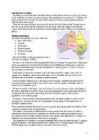
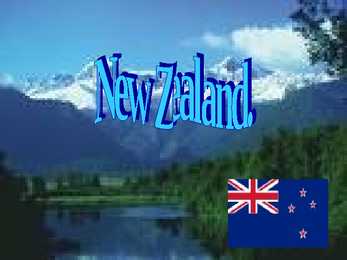
zealand, nation, kiwi, coat, ship, symbol, sent, anthem, royal, first, trading, during, represent, south, part, queen, australia, official, ships, cross, competition, version, bird, came, built, british, description, government, blue, stars, southern, country, until, became, hold, stand, permission, century, games, symbols, murray, sydney, customsNew Zealand New Zealand is an island country. It is in the south-western Pacific Ocean comprising two main island, North- and the South Island with lots of smaller islands. New Zealand is notable for its geographic isolation. It's about 1,600 kilometers from Australia and its closest neighbours to the north are New Caledonia, Fiji and Tonga. New Zealand's total land area is 268,021 square kilometers. The country extends more than 1600 kilometers along its main,north - north-east axis and has about 15,000 kilometers of coastline. The South Island is the largest land mass of New Zealand and is divided along its
Misso Keskkool New Zealand Precis Compiler: Maiki Joakit Instructor: Mailis Teppo Misso 2011 New Zealand is an island country in the south-western Pacific Ocean comprising two main landmasses (the North Island and the South Island), and numerous smaller islands, most notably Stewart Island/Rakiura and the Chatham Islands. The indigenous Mori language name for New Zealand is Aotearoa, commonly translated as land of the long white cloud. Population (1998): 3,801,000.New Zealand is notable for its geographic isolation; it is
This was a saying refering to the fact that Britian had colonies all around the world. 2. What is the Commonwealth? The Commonwealth is an association of sovereign nations that support each other and work together towards international goals. 3. When was it founded? 1931 4. Who were the founder members? Great Britain, the Irish Free State (now the Republic of Ireland), Canada, Newfoundland (since 1949 part of Canada), Australia, New Zealand, and South Africa. 5. Are they still members? Why? Irish Free State left in 1949 with the republic of ireland acts, Newfoundland (since 1949 part of Canada), 6. What was the difference between the British Empire and the British Commonwealth of Nations? the british Empire has a constitutional monarchy, all countries were a part of the british Empire and the queen was the head of all countries,
Geography New Zealand is an island country in the Southwest Pacific Ocean. It lies about 1600 kilometres southeast of Australia, its nearest continental neighbour. New Zealand belongs to Polynesia, a large island group. The country consists of two main islands The North Island and the South Island and several dozen much smaller islands. The population is 4.1 million. New Zealand is a beautiful country of snowcapped mountains, green lowlands, beaches and many lakes and waterfalls. No place is more than 130 kilometres from the coast. Lakes, rivers, and waterfalls are found throughout New Zealand. Most of the lakes lie in the volcanic plateu of the North Island and in glacial valleys near the Southern Alps of the South Isaland. On both islands the rivers rise in the mountains and flow down to the sea
state of Colorado. North Island is volcanically active with three active volcanoes. South Island has the high snow covered mountain peaks and glaciers of the Southern Alps, a range running almost 500Km along the Island. The longest river is the Waikato on North Island (425 Km), the largest inland stretch of water is Lake Taupo also on North Island (607 sq Km) and the highest point is Mount Cook on South Island (3754 m). Over 75% of New Zealand is above 200m. Land use is broken down to about: forested 30% - meadows and pastures 50% - agricultural and under permanent cultivation 15% . Sheep and cattle graze on the rich farmland around Hamilton and New Plymouth in North Island and around Dunedin and Invercargill on South Island. It lies just west of the International Date Line and is among the first into the new millennium. People : New Zealand has a population of around 3.65 million.
SOCIETY AND CULTURE OF ENGLISH-SPEAKING COUNTRIES Introduction 1. Nowadays, English is so widely spoken that it can hardly be considered "a one nation's" language. The main countries where English is spoken are: the U.K, the U.S, Canada, Australia, the Republic of Ireland, New Zealand, West Indies 2. There are approx. 300-400 million speakers of English in the world. English occupies the 3rd place by its number of speakers; it is right behind Mandarin and Spanish. 3. ESL (English as a Second Language) used in your own country (e.g. India) EFL (English as a Foreign Language) used in a foreign country ESP (English for Specific Purposes) used in business, airlines, hotels etc. 4
..........................................................................2 INTRODUCTION............................................................................................................................3 1. BRITISH NATIONAL SYMBOLS..............................................................................................5 1.1 Great Britain and British story................................................................................................5 1.2 National Symbols and Nation Building..................................................................................5 1.3 The Use of Flags throughout History.....................................................................................6 1.4 The Early Modern Flags. United Kindom: Union Jack..........................................................8 1.5 National Flags as Political Instruments................................................................................12 2. RESEARCH.......................
....................................................... ................................. Climate............................................................................................. ................................. States and Territories.......................................................................................... .......... Industry............................................................................................. ................................. Aborigines and first settlers.......................................................................................... Sports............................................................................................. .................................... Culture............................................................................................. .................................. Factfile Australia is the only country in the worlf that fills the whole continent.
capital. The population is about 19 million people and growing. New South Wales is the most populated state and Victoria is the most densely populated state. The national language is English. It is English because British settlers came to live in Australia in the past and they brought convicts with them who were also British. Symbols. The Australian Flag came into being after the federation of the Australian States into the Commonwealth of Australian on the first January, 1901. The Commonwealth Blue Ensign was selected as a result of a public competition (over 30 000 designs were submitted). In the upper left corner there is the Union Jack that is the national flag of England. It denotes Australia's historical links with Great Britain. Under the flag there is the Commonwealth star which has seven tips. Six of them represent the states and the last one is for the Commonwealth of Australia. The Southern Cross is in the right. It consists of five stars
4. What is the difference between settlement colonies and the trading empire (dependencies)? Settlement colonies were regions colonized by the UK that later established governments and became dominions and independent. Dependencies were regions in the world that became trading partners and where English became a second language. 5. Which British colonies became dominions? What was their status? Is the name dominion used for these countries nowadays? The first dominions were Canada (1867), Australia (1901), and New Zealand (1907) The name "dominion" is not used anymore. 6. Which organisation unites Britain and most of its former colonies nowadays? The Commonwealth unites Britain with its former colonies. Ireland 1. Who were the early inhabitants of Ireland? Seafarers, fisheremen and hunter-gatherers from mainland Europe arrived around 8000 BC 2. When was Christianity established in Ireland?
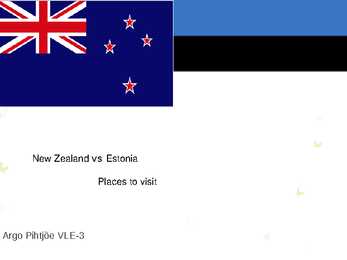
New Zealand vs Estonia Places to visit Argo Pihtjõe VLE-3 Some facts: Full name: Republic of Estonia Full name: New Zealand Population: 1.3 million (UN, 2010) Population: 4.3 million (UN, 2010) Capital: Tallinn Capital: Wellington Area: 45,227 sq km (17,462 sq miles) Area: 270,534 sq km (104,454 sq miles) Major languages: Estonian Major languages: English, Maori Major religion: Christianity Major religion: Christianity Life expectancy: 69 years (men), 79 Life expectancy: 79 years (men), 83 years (women) (UN)
and Northern Ireland and of Her other Realms and Territories Queen, Head of the Commonwealth, Defender of the Faith. 2. The Queen’s working day. Starts after breakfast. Reads the newspapers which are prepared by the Press Secretary, and a report on the previous day’s proceedings in the Parliament and the letters she receives. Also phone calls. Once a month she attends the Privy Council in order to give Royal Assent to various items of government legislation. Discusses domestic matters with the Master of the Household. Towards the end of the day, there is always another pile of official papers and reports waiting to be read or acted upon. The business on constitutional monarchy never ends. 3. Who is the present heir to the throne? Speak about his education. Who are the 2nd and 3rd in line? Present heir is Prince Charles, The Prince of Wales
Commonwealth of Australia. It’s the official name of the country. Australia is the smallest continent, but one of the largest countries on Earth. It’s 6th largest country. Its area is about 7.6 million sq km. One third of it is occupied by deserts. It’s both the flattest and, except for Antarctica the driest. Neighbouring countries include Indonesia, East Timor and Papua New Guinea in the north, the Solomon Islands, Vanuatu in the northeast, and New Zealand in the southeast. Its capital is Canberra. Other big cities are Melbourne, Sydney, and Brisbane. National language in Australia is English. Monetary unit is Australian dollar. Their national holiday is on the 26th of January. In 1788 on the 26th of January the first fleet arrived at Botany Bay and established a penal colony near modern-day Sydney. Geographical Position Australia is located in the Southern Hemisphere. It’s the only continent except for Antarctica that is all south of
the Southern Cross on it. The large seven-pointed star represents the six original states and the territories of Commonwealth. There is also the Indigenous Australian flag, which represents the Aboriginal Australians. The flag with its colours of red (representing the land), black (representing the people) and the yellow in the middle (representing the sun) is a source of pride for Indigenous Australians. The present coat of arms was granted by King George V in 1912. It consists of a shield containing the badges of six Australian states, enclosed by an ermine border. The shield is a symbol for the federation of the states, which took place in 1901. The crest, which is above the shield, is a seven-pointed gold star on a blue and gold wreath. The seven points of the star represent exactly the same thing that they do on the flag. The supporters of the shield
The Flag Museum was opened in 1996. During the Soviet time the flag was prohibited. But many people hided their flags somewhere and the flag was seen again in 1988 in public. A meeting was held in Tartu and elderly people were carrying the flags, nationalistic speeches were told and patriotic songs were sung. Tears were rolling down people's cheeks. The Estonian flag is hoisted every morning at sunrise and lowered at sunset. The national anthem of Estonia is called My Native Land, My Pride and Joy. It was composed in 1848 by Friedrich Pacius. The words were written by Johann Voldemar Jannsen. It was performed in 1869 in the first Song Festival in Tartu and it gained popularity during the national movement. It was adopted as the national anthem in 1920, after the World War I. The melody of the anthem is the same as the Finnish have. During the Soviet time the anthem was banned and My Native Land, My
them to travel at high speeds and jump very high and far. The koalas live in eucalyptus trees, sleeping for 18 hours and drinking almost nothing. Both of those animals have pouches for their babies. Two very strange animals are the spiny anteater and the platypus. Their babies are born from eggs but drink milk from their mothers. There are more than 800 kinds of birds in Australia. The emu is a flightless bird. It is up to two metres tall and can run very fast. The first people to inhabit Australia were the ancestors of the Aborigines, who arrived over 40,000 years ago. The first Europeans to sight the Australian continent were the Dutch in 1606. They called what they had found New Holland, but made no attempt at settlement. In 1770, James Cook sailed there, mapping the east coast of Australia, which he named New South Wales and claimed for Britain. Britain started sending its convicts to the place now called Sydney, and they established the colony of
5. Symbols The flag The Estonian blue-black and white national flag was originally the flag of the Estonian Students' Society and was consecrated in Otepää Church in 1884. Today there is a memorial plaque on the church wall commemorating the event. The Flag Museum, opened in an annex in 1996, attracts tourists who take an interest in the history of the flag. After about half a century, during which it was prohibited by the Soviet authorities, the flag was seen again in public for the first time in Tartu in May 1988. 24 February 1989, Estonia, still part of the Soviet Union, hoisted its tricolor on the tower of Pikk Hermann in Tallinn. Since then the flag has always been hoisted with ceremony on that day, which is the national holiday the anniversary of the republic. According to the Estonian tradition, the national flag is hoisted at sunrise and lowered at sunset except on June 23, Victory Day, when it is left out for the shortest night of the year, followed by
Southern Ocean. Four seas are surrounding Australia, which are the Timor Sea and Arafura Sea in the north of Australia, the Coral Sea in the north-east of Australia and the Tasman Sea, near the island of Tasmania, in the south-east of Australia. Government The full name of the county is the Commonwealth of Australia. Its territory is 7.7 million square kilometres and population is about 19.7 million. The state symbols are the coat of arms, flag anthem and aboriginal symbols. Australia's flag has a British Union flag. . It is blue with the flag of the UK in the upper left corner. Five stars represent the Constallation Southern Cross and a large star is for the country's states and territories. The coat of arms features a kangaroo and an emu. The kangaroo and emu are chosen for the coat of arms of Australia because they can only move forward just like Australia.
Attempts to get Halloween off the ground have stalled due to one too many homeowners telling little kids to get off their property or they will see a scary sight. Australia celebrates many of the same holidays as do people of the Western world, such as Easter and Christmas. However, Australians also celebrate some holidays unique to their country and culture. Australia Day Australia Day, 26 January, is the anniversary of the arrival of the First Fleet of 11 convict ships from Great Britain, and the raising of the Union Jack at Sydney Cove by its commander Captain Arthur Phillip, in 1788. On Australia Day, over half of the nation's population of 21 million attend either an organised community event, or get together with family and friends with the intention of celebrating our national day. It is celebrated with parties, picnics, and fireworks and coincides with the last days of summer vacations. Anzac Day
In my essay I will describe the most characteristic features of the Maori people and the aborigines. I will divide the essay in 3 parts the Maori people, the aborigines and their comparison. Maori are the host people of New Zealand. Their name is derived from Ma-Uri which means the children of heaven. The arrival of the Maori people to New Zealand is considered to be somewhat of a mystery. It is known that first Polynesians arrived to New Zealand about 1000 years ago, when navigator Kupe discovered the land in 950 AD. He named it Aotearoa The Land of the Long White Cloud. Although these facts can be debatable, I will focus my attention on this interpretation of Maori history. After the Maori arrived to New Zealand, they started to develop into tribes and sub tribes, this tribal system is still in use. Their culture had almost no influence from the rest of the world
Official animal- Dragon. There used to be a lot of coalmines. 7. What are the symbols of the 4 constituent countries? England- The three national symbols of England are St.George's cross; The red Rose and the Three Lions Crest; The oak is national tree; Northen Ireland- Shamrock; St.Patrick ;Scotland-thistle, St.Andrew 's cross . ; Wales-daffodil, leek, Prince of Wales's feathers; St.David, red dragon 8. How did the Romans influence Britain? The Romans built the first bridge(in London), the capital(London) is a Roman city, the street system(paved roads), benefits for the poor, public heated baths, art, architecture. They also influenced the language (pound, butter, cheese, wine, candle). 9. Which areas of life is English used in? technology, science, politics, tourism, aviation 10. Which languages influenced the Old English (until the 10th century) most?Anglo-Saxon, Celtic(the Celts),
Government The head of the State in Australia is queen of the United Kingdom who is also the queen of Australia. In practice, GovernorGeneral performs her functions in queen's absence. Because Australia is a part of the UK, the Australian flag has a British Union flag on it, plus five stars that represent the constellation Southern Cross and a big star for all the states and territories of the country. The coat of arms has a kangaroo and an emu, golden wattle blossoms, a star for the states and territories and a shield with the coats of arms of the six states of Australia on It. The Parliamentary triangle The Parliament consists of two houses-the 76-member Senate and the 148-member House of Representatives, so there are total of 224 members in the Parliament. The polity is constitutional monarchy, but in practice, parliamentary democracy
the world. · 19-20th century the number of speakers only grew. The growth was achieved by covering more land, exploring more land, going west, and accepting new immigrants from other places of the world. The spread of English also brought political growth and the spread of power. Besides the number of countries, it also grew from the economic and military might and strength of the people. When Elizabeth I didn't have much choice but to let the empire grow and so the nation, the wealth, the trade, the industrial sntregth and might.At that time the countries and the colonies felt like they were saved by the white people and the British brought with them democracy, bureaucracy, christianity, the English language, literacy. English is often the language of education, internet, airline services, EU, the language of business, international tourism, preferable language when studying cultures, literature etc
One of the mysteries is how it was built at all with the technology of the time. Another is its purpose. It appears to function as a kind on astronomical clock and we know it was used by the Druids for ceremonies marking the passing of the seasons. It appears in number of novels. These days it is not only the interest of tourists but is also a gathering point of certain minority groups. It is now fenced off to protect it from damage. 3. The Roman conquest Julius Caesar's first raid was in 55 BC but the romans left. Ad 43- the Romans came to stay. The army established Roman rule in the south and SW of the country. The Romans started to introduce their laws to a new province of the Roman Empire and started to build good roads. Officials were appointed (governors, procurators to collect taxes, look after the estates and mines and se that the gold, silver, iron and lead were exported back to Rome). Introduced schools,a new language Latin, large farms (villas), baths.
*Estonians conquered by the crusaders 1208 *Reformation 16th century establishments of new school, Estonians first book appeared in 1525 *Tartu University 1632 founded by King Gustavus II Adolphus, classical university, member of the Coimbra group *Abolition of serfdom 1816 *Song festival 1869 in Tartu, an organiser was J.V.Jannsen, 822 singers, men only *Declaration of independence 24th February 1918 *War of independence 1918-1920 during the Russian Civil War, resulted in a victory for Estonia *Deportation 1949 *Estonia becomes independent 20th August 1991
And the paintings and carvings are increaslibly falling victim to vandalism: they have been painted over, spoilt with knives, even used for target practice. The American Rock Art Research Association protects rock-art sites. 2) THE FAVOURITE SPORT IN BRITAIN The most popular sport is probably football. Two kinds of football is played in Great Britain. One of them, which is called association football, is played all over Europe. The other kind: rugby football is also very popular in New Zealand, France, and some other European countries. English boys play it at school, and in public parks. When they grow up, they play as members of important amateur teams or as a professional in teams competing in football ,,leagues". Professional football is as much a business as a sport. Rugby football was first played in 1823. In rugby every player is allowed to carry the ball. The ball is oval, not round. Each team contains 15 players. The oldest
tribes. The Celts built a number of hill forts throughout the region. The society was divided into warrior aristocracy, agricultural commons and the priests, the druids. *Caesar in Britain - Britain was very rich in minerals but that wasn't the main reason Caesar wanted to defeat it. He could clearly see that Britain was a threat to his latest and greatest conquest - France. He invaded Britain twice, in 55 and 54 BC. The first invasion was unsuccessful - it gained a beachhead on the coast of Kent but achieved little else. The second was more successful, the Celts asked for truce. However it wasn't a victory he had imagined and Julius Caesar never returned to Britain after that. The island was left undisturbed for nearly a century. *The Roman occupation of Britain 43-410 and its legacy Britain was conquered by Emperor Claudius, the Roman rule in England lasted up to 410. The Romans left behind a
Newest territoy is Nunawut, it became a territory in 1999. It was created from the eastern part od North- West territories. Quebec and Ontario are the biggest provinces. In the central part of Canada there are prairies and agriculture is very common. Alberta is rich in natural resources such as oil and natural gas. In Quebec and Ontario are many manufactories and industries. In the west there is maritime climate and so they fish and ship there. Toronto is the biggest city in Canada, with a population of 5,1 million people. It is followed by Montreal with 3,9, Vancouver, Ottawa (which is the capital of Canada) 800 000 and Quebec with 700 000. Government Canada is a federation of ten provinces (Alberta, British Columbia, Manitoba, New Brunswick, Newfoundland and Labrador, Nova Scotia, Ontario, Prince Edward Island, Quebec, and Saskatchewan) and three territories (Northwest Territories, Yukon, and Nunavut)
km POPULATION: 20 million people HEAD OF STATE: Queen Elizabeth II represented by Governor- General FORM OF GVERNMENT: Constitutional monarchy PORTS: Sydney, Melbourne, Brisbane LONGEST RIVER: the Darling (2,740 km) HIGHEST POINT: Mount Kosciusko (2,230 m) NATURAL RESOURCES: coal, zink, nickel, gold, wool NATIONAL HOLIDAY: Australian Day , 16 January (1788) MONEY: basic unit Australian dollar NATIONAL SYMBOLS: Kangaroo and Emu NATIONAL ANTHEM: "Waltzing Matilda" Captain James Cook discovered Australia in 1770. He was sent to discover the huge land that many people believed was south of the equator. He landed south of present day Sydney in New South Wales. He claimed this part of the land for the King of England. In 1851 gold was discovered
Data of New Zealand. · Capital - Wellington. · Largest city - Aucland. · Official languages - English, Maori, NZ Sign Language. · Government - Constitutional monarchy . · - Head of State Queen Elizabeth II . · - Governor-General Anand Satyanand . · - Prime Minister Helen Clark . · Independence from the UK in September 26, 1907. · Area- 268 680 km². Water (%)2.1. · Population - 4,143,279 . · Currency New Zealand dollar. New Zealand geography. · New Zealand is a country in the southwestern Pacific Ocean. · New Zealand comprises two main islands . · NZ has got many smaller islands. · NZ is mountanious country. The highest peak is Aoraki/Mount Cook at 3754 meters. · NZ have an active volcano Mount Ruapehu. · The climate throughout the country is mild, mostly cool temperate to warm temperate, with temperatures rarely falling below 0°C (32°F) or rising above 30°C (86°F) · The climate in West is different from South.
Tartu Secondary School of Business New Zealand Report Kati-Liis Karu 10.A - I group TARTU 2009 Contents 1. Introduction ...................................................................................................3 2. Area. Population. Climate.........................................................................................4 3. Economy. Largest Cities..................................
Topic Australia Tallinn English College 2006 Australia 1 . Introduction The name Australia is derived from the Latin Australis, meaning of the south. In land area, Australia is the sixth largest nation, its territory is 7,686,850 sq km and its population reaches today over 20,5 million people. It is the only nation to govern an entire continent and its outlying islands. Australia's capital is Canberra, the only city with its own territory. It was built in the early 1900s just to be the capital. The official language is English and the official name of Australia is the Commonwealth of Australia. Australia is located on the Southern Hemisphere (because of that Australia is also called "A land down under"). 2 . Geographical position
Northern Ireland * the population is about 60,000,000 people, the population density is 242 people/sq km * its coasts are washed by the Atlantic Ocean, the North Sea, the English Channel, the Celtic Sea, Saint George's Channel, and the Irish Sea. It is linked to France by the Channel Tunnel * the United Kingdom is a constitutional monarchy. The current monarch is Queen Elizabeth II, who is also the Queen and Head of State of fifteen other Commonwealth Realms, such as Canada, Australia, New Zealand and Jamaica. England: * it has 50 cities, the capital city is London * despite of the density of population and the high degree of urbanisation, England has many unspoilt rural and coastal areas which have been placed under protection * the flag is called the Saint George's Cross Scotland: * the biggest cities are Glasgow and Edinburgh (the capital) * Stirling has been an important settlement in Scotland for over 800 years
 annaabi.ee