Leidsid 33 sarnast õppematerjali, mis on seotud failiga "Names with and without the". Need materjalid aitavad sul teemat sügavamalt mõista.
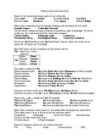
names, usually, road, times, bridge, these, hotel, british, building, bank, kennedy, cambridge, university, place, palace, restaurant, museum, church, without, street, square, station, cathedral, royal, other, places, hotels, theatre, cinema, tate, ocean, canal, sometimes, noun, newspaper, named, shop, fiat, parks, avenue, circus, broadway, waterlooNames with and without the Names fot the streets/roads/squares/parks etc are without the: Union street Fifth avenue Piccadilly Circus Hyde Park Blackrock road Broadway Times Square Waterloo Bridge Many names (especially names of important buildings and institutions) are two words: Kennedy Airport Cambridge University The first word is usually the name of a person (Kennedy) or a place (Cambridge). We do not usually use ,,the" with names like these. Some more examples: Victoria Station Edinburgh Castle London Zoo Westminister Abbey Buckhingham Palace Canterbury Cathedral But we say 'the White House' and 'the Royal Palace' because 'white' and 'royal' are not names like 'Kennedy' and 'Cambridge' Most other names (of laces, buildings etc) have names with the: The + adjective or + noun
the Definite Article. The Indefinite Article has two forms – a and an (a precedes words beginning with a consonant sound and an precedes words beginning with a vowel sound). It comes from the Old English word ãn, which meant one. The Definite Article is the. It comes from the Old English word ţis, which meant this. Thus, in most general terms, a and an cannot be used with countable nouns in the plural and with uncountable nouns. Countable nouns are names of the things you can count (one elephant, two elephants, three elephants, etc). Uncountable nouns are names of the things you cannot normally count (love, air, philosophy, etc). The can usually be used when we mean this. The Indefinite Article – a/an (= one!) can only be used with singular countable nouns. a child, a book, an elephant, an apple On the other hand, singular countable nouns cannot be used without any determiner. Determiners are both articles (a/an and the) and different
ARTICLES INDEFINITE ARTICLE (A/AN) 1.The indefinite article a/an is only used in front of a singular countable noun mentioned for the first time.The is used when it is mentioned.The is used when it is mentioned a second time, e.g. I bought a jacket and a dress. The jacket was quite cheap 2.Other uses: -to talk about someone's job, e.g. She's an architect. -with numbers and fractions, e.g. a hundred, a million, a third -to mean every with expressions of time, e.g. once a week, five times a year -with What...! exclamations, e.g. What a strange person! ZERO ARTICLE (NO ARTICLE) There is no article: -in front of plural countable nouns when making general statements, e.g. Apples are good for you. -in front of an uncountable noun when making general statements, e.g. Coffee keeps me awake. -in front of abstract nouns, e.g. Honesty is the best policy. -in front of meal times ,e.g. We have lunch at one.
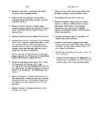
THE NO ARTICLE · Names in the plural = countries: the Nether- * Names of countries / towns (also with an es- lands, the USA; the West Indies ablished modifier): (South) Estonia, Tartu · Names of the countries, and towns with a * Expressions from North to South etc. characteristing / spacifying modifer: the Tartu of th 19th century * Names of streets, bridges, airports, parks, squares, buildings, railway stations, shops, · Names of rivers, channels / canals, seas, addresses: Fleet Street, Tower Bridge, oceans, streams, straits: the Danube; the Suez Kennedy Airport, Hyde Park, Trafalgar Canal; the Baltic Sea; the Pacific Ocean; the Square, Buckingham Palace, Victoria Station,
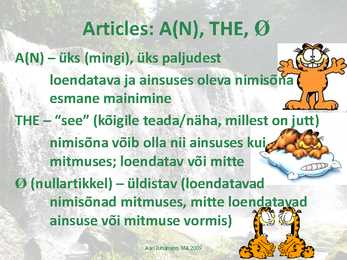
Loendatavate, ainsuses olevate ja esmakordselt mainitavate nimisõnade/omadus- ja nimisõnade ees · Uus info: A (young) man in a streetcar smiled at me. · Ametid: She always wanted to be a dancer. · Kindlad väljendid: a couple of; be in a hurry; etc Aari Juhanson, MA 2009 A(N) set phrases They left a couple of days ago and all of a sudden I realized that it had been a long time since they last called. We usually have a good time together and, unless we are in a hurry, we are in a good mood. As a matter of fact, it's a shame that people are so often in such a rush that they forget to smile. What a pity that a great many things of much lesser importance make a good number of students irritable and stressed. Luckily a great number of such issues are temporary and do not require a great deal of attention. However, many a diligent student has been confused ...
Acted like prophets. 2. Stonehenge From prehistoric period. Was built on Salisbury plain between 2500 and 1500 bc. One of the most famous and mysterious archaeological sites in the world. One of the mysteries is how it was built at all with the technology of the time. Another is its purpose. It appears to function as a kind on astronomical clock and we know it was used by the Druids for ceremonies marking the passing of the seasons. It appears in number of novels. These days it is not only the interest of tourists but is also a gathering point of certain minority groups. It is now fenced off to protect it from damage. 3. The Roman conquest Julius Caesar's first raid was in 55 BC but the romans left. Ad 43- the Romans came to stay. The army established Roman rule in the south and SW of the country. The Romans started to introduce their laws to a new province of the Roman Empire and started to build good roads.
INGLISE KEELE KORDAMINE TIME CLAUSES Present Simple · Permanent states, facts (Tom works..) · Repeated and habitual actions, routines (She usually goes..) · Laws of nature and general truths (The sun sets in the west) · Timetables and programmes · Sporting commentaries, rewiews (Beckham wins the ball, crosses and Owen scores) · Feelings and emotions (I love Tallinn..) TIME EXPRESSIONS USED WITH PRESENT SIMPLE: usually, often, always, every day/week etc, in the morning/evening etc, at night/the weekend, on Fridays etc. Present Continuous
adjective + preposition omadussõna + eessõna proud of, good at, married to adverb particle Some verbs are followed by adverb particles. Examples are: put on, take off, give away, bring up, call in. Sometimes the particle is detached from the verb and put after the object. •He took his boots off. •They called the doctor in. apposition a grammatical construction in which two usually adjacent nouns having the same referent stand in the same syntactical relation to the rest of a sentence (as the poet and Burns in “a biography of the poet Burns”) back-reference In grammatical analysis, the term reference is often used to state a relationship of identity which exists between grammatical units, e.g. a pronoun 'refers' to a noun or noun phrase. When the reference is to an earlier part of the discourse, it may be called a 'back-reference' (or anaphora); collective noun
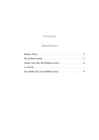
................................................................................... 5 Prepositions of Place – at .................................................................................... 5 Prepositions of Place – on ................................................................................... 6 Prepositions of Place - in & at with towns & villages............................................ 6 Prepositions of Place – in, on & at with addresses and names of streets / roads .. 7 Prepositions of Place with the words ‘corner’, ‘front’ and ‘back’ ............................ 7 Prepositions of Place with the word ‘arrive’.......................................................... 7 Prepositions of Place – in & on with travelling ..................................................... 8 Prepositional Phrases ......................................................................................... 8
The United Kingdom and London United Kingdom is a political name of the United Kingdom of Great Britain and Northern Ireland. These political names include the countries of England, Scotland and Wales. Every country has its own capital and language. The capital of England is London, the people there are english and the language spoken is English. In scotland live the scots, capital is Edingburg and the languages spoken are English and Scottish. The capital of Wales is Cardiff, the people tehre are welsh and the languages spoken are welsh and English. N.
Example: She is a student at our school. republic or unionExamples: the UK, the USA with a singular noun to say something about all things of that kind. • with countries which have plural nouns as their names Example: A cat likes drinking milk. Example: the Netherlands, the Bahamas • before newspapers, organisations, hotels, pubs and rest aurants, well known buildings or works of
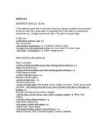
DEFINITE ARTICLE (THE) THE IS USED BEFORE: · nouns which are unique (the moon) · names of: o cinemas (the Opera) o hoteles (the Hilton) o theaters (the Palladium) o museums (the Louvre), o newspapers/magazines (the European but: Newseek) o ships (the Titanic), o galleries (the Tate Gallery) o rivers (the Thames) o seas (the Black Sea) o groups of islands/states (the USA) o mountain ranges (the Alps) o deserts (the Negev Desert) o oceans o canals
London History The Romans AD 43- AD 410 The Romans finally invaded Britain in AD 43 from Kent. The Romans lead by Julius Caesar attempted to invade Britain twice before that in 55 and 54 BC but the invasions were unsuccessful. They made their way to the river Thames and sailed up it. The Romans knew it was important to control a crossing point at the river Thames, so they decided to build a settlement on the north bank. Although small settlements had been built on the banks of the Thames, the Romans were the ones who built the first city. They called their city Londinium. The Roman engineers noticed that the point where the swampy river narrowed would make an ideal crossing point, they built London Bridge. Less than 20 years later the native Iceni tribe, led by Queen Boudicca, rose up against the Romans in revenge for mistreatment and burnt Londinium to the ground
case letter, or sometimes just a capital. A B C D E F G H I J K L M N O P Q R S T U V W X Y Z When do you use a capital letter? 4Use a capital letter for the first letter in a sentence: The dog is barking. Come here! 4Always use a capital letter for the word I : I am eight years old. Tom and I are good friends. 4Use a capital letter for the names of people: Alice, Tom, James, Kim, Snow White 4Use a capital letter for the names of places: National Museum, Bronx Zoo, London, Sacramento 4Use a capital letter for festivals, holidays, days of the week, months of the year: New Year's Day, Christmas, Labor Day, Mother's Day, Sunday, Monday, Friday, January, May, July, October Exercise 1 Circle the letters that should be CAPITALS. Then write the correct letter in the space above them.
· Fine, thanks. / On top of the world, thanks. · OK, thanks · Not so bad, thanks. / Can't complain, thanks. · So so, thanks. / So and so, thanks. · Not so good, actually 1 The English alphabet Spelling Work with your partner and spell out first your name and then some names of places. Write down each letter as you hear it, and then say the word. The English alphabet on the phone: You might find the following alphabet (used by international airlines) useful when trying to spell a word on the telephone. A Alpha O Oscar Ä Alpha-Echo Ö Oscar-Echo B Bravo P Papa C Charlie Q Quebec
Philosophy of Language Philosophy of Language: a Contemporary Introduction introduces the student to the main issues and theories in twentieth and twenty-first-century phi- losophy of language, focusing specifically on linguistic phenomena. Topics are structured in four parts in the book. Part I, Reference and Referring, includes topics such as Russell's Theory of Descriptions, Donnellan's distinction, problems of anaphora, the description theory of proper names, Searle's cluster theory, and the causalhistorical theory. Part II, Theories of Meaning, surveys the competing theories of linguistic mean- ing and compares their various advantages and liabilities. Part III, Pragmatics and Speech Acts, introduces the basic concepts of linguistic pragmatics, includes a detailed discussion of the problem of indirect force and surveys approaches to metaphor. Part IV, new to this edition, examines the four theories of metaphor.
Page |1 Your Name:__________________ Grade:______________________ Date:_______________________ Do you often read books voluntarily? What books do you usually read? Discuss it with your neighbor. Ask your neighbor: Who is Harry Potter? What's so magical about him? Part I 1/9/2013 Page |2 Reading: Read through the text, look up unknown words by J. K. Rowling
American English Take-home exam 1) Discuss the significance of American English in the English-speaking world. English is one the most widely used languages in the world and globally acknowledged as the lingua franca. It is also the dominant business language. For these facts already, English has a great importance in the today’s world. As the United States of America is one of the leading countries of the world, American English has a certain authority as well. It is now an inescapable fact that America, through its worldwide influence and massive entertainment industry is the mighty power-house that drives the English language. Although British English is considered to be more sophisticated and prestigious than
"Poetry can be beautiful"- poetry in general. "The poetry of Hopkins is beautiful" - I'm only talking about the poetry Hopkins wrote. 4. Rule:Rivers, mountain ranges, seas, oceans and geographic areas all use 'the'. For example, "The Thames", "The Alps", "The Atlantic Ocean", "The Middle East". Unique things have 'the'. For example, "the sun", "the moon". Some institutional buildings don't have an article if you visit them for the reason these buildings exist. But if you go to the building for another reason, you must use 'the'. "Her husband is in prison." (He's a prisoner.) "She goes to the prison to see him once a month." "My son is in school." (He's a student.) "I'm going to the school to see the head master. "She's in hospital at the moment." (She's ill.) "Her husband goes to the hospital to see her every afternoon." Musical instruments use 'the'. "She plays the piano." Sports don't have an article. "He plays football." Illnesses don't have an article. "He's got appendicitis
often at war with each other. In AD 43 the Roman Emperor Claudius invaded, and made Britain a Roman province. They stayed for three hundred years, and built villas, roads and towns. Many Roman remains can be visited in Britain today. The Romans finally abandoned Britain in AD 410 and a long period of invasion by Nordic peoples (from northern Germany and Scandinavia) started. The Angles, Saxons and Jutes began to settle from the sixth to the eighth centuries, and the Angles gave England its name. These invaders introduced a new culture to Britain, and even today British customs and habits are described as ´Anglo-Saxon`. Anglo-Saxon England was one of the most civilised countries in Europe, with organised systems of agriculture and trade. The Vikings came from Scandinavia in the tenth century; they settled in the north and made the town of York the capital of their kingdom. The last successful invasion of Britain was in 1066, when William the Conqueror defeated the English at the Battle of
). You start reading a book: think of your own topic and make notes (take a sheet of paper for a book: in the left hand margin you indicate the page, on the right hand write a quotation you wish to use, or "in pages 10 to 12 the author analyses .... and ......". You should use quotation marks when you take some author's ideas, but your own comment should be without quotation marks. THE MECHANICS: · font size 12 · lines double spaced · Times New Roman · margins (one left side margin should be 3cm, all other (up, down, and right) 1.5 cm) · the page number should be in the right hind corner (upside) NB! It should be within those 1.5 cm no special space. And no "p." letter! · on the right side the text should be justified · title page is not numbered but it counts as a page, so the next page is number 2 · use only white paper (not yellow, blue, or pink)
proper words in proper places" Present day--half a dozen meanings: · the characteristic manner in which a writer expresses his ideas (Style of Byron) · the manner of expressing ideas characteristic of a literary movement or period (symbolism, romanticism) · the use of lg. typical of a literary genre (comedy, drama, novel) · the selective use of lg that depends on spheres of human activity. These are called functional styles or registers (fiction, newspaper) Stylistics is the study of style. However, for some reason, English stylistics is less developed than French, German or Russian. The term ,,stylistics"came into more common use in English only some 35 years ago. It was recorded much earlier; in 1882 as "the study of literary style, the study of stylistic features" Stylistics is a branch of
technical as well). If you refer to your heart as your ticker, you have chosen a more colloquial or slangy term. 3. Native and foreign element. Native vocabulary. 3 strata: Indo-European words mother, father, night, foot, heart, bear (bore, born), see names of close relatives, names of natural objects, parts of the body, numerals Germanic words friend, bridge, ship, life, heaven, glass, death, make v, meet v Old English words Bad, bird, woman, lady, daisy, gospel 23,000 – 24,000 items. Only about 3 % are of non-
BRITISH NATIONAL SYMBOLS Research work CONTENTS CONTENTS.....................................................................................................................................2 INTRODUCTION............................................................................................................................3 1. BRITISH NATIONAL SYMBOLS..............................................................................................5 1.1 Great Britain and British story................................................................................................5 1.2 National Symbols and Nation Building..................................................................................5 1.3 The Use of Flags throughout History.....................................................................................6 1.4 The Early Modern Flags. United Kindom: Union Jack..........................................................8 1
and the third-tallest free-standing clock tower in the world. The clock first ticked on 31 May 1859. The pendulum is installed within an enclosed windproof box sunk beneath the clockroom. It is 3.9m long, weighs 300 kg and beats every 2 seconds. The clockwork mechanism in a room below weighs 5 tons. · Buckingham Palace is the official London residence of the British monarch. Originally known as, the building which forms the core of today's palace was a large townhouse built for the Duke of Buckingham in 1703 on a site which had been in private ownership for at least 150 years. During the 19th century it was enlarged, principally by architects John Nash and Edward Blore, forming three wings around a central courtyard. Buckingham Palace finally became the official royal palace of the British monarch on the accession of Queen Victoria in 1837.
Act (1988). Notwithstanding its name, it does not apply to independent schools.Academies and free schools may also set their own curricula, though many choose to follow the National Curriculum. The purpose of the National Curriculum was to standardise the content taught across schools to enable assessment, which in turn enabled the compilation of league tables detailing the assessment statistics for each school. These league tables, together with the provision to parents of some degree of choice in assignment of the school for their child (also legislated in the same act) were intended to encourage a 'free market' by allowing parents to choose schools based on their measured ability to teach the National Curriculum. Whilst only certain subjects were included at first, in subsequent years the curriculum grew to fill the entire teaching time of most state schools.
begin commence Get going Stylistics is a very special signs because it has no fixed, single unit of study. Stylistics studies everything that makes the text expressive. Stylistics cuts right across all the basic linguistic sciences.e.g silent, sleepy streets. Stylistic point of view ,,s" sound, alliteration, drowsyness' effect. Morphology spoke and spake the truth. From the point of view of morphology, these are 2 variants of the past-tense. From the point of view of stylistics, they are 2 different modes of expression, because they carry different stylistic overtones. Spoke is archaic and so used either in elevated style or sometimes in everyday's speech for the sake of humour. Spoke is just the ordinary way of expressing this meaning. The structure of words e.g endlessnessnessness the very notion of endlessness (Irish writer somebody) Syntax e.g neutral one: He came in
Chika Onyeani ………………………Every African must internalise this book - period….DAA INTRODUCTION In October 1960, Nigeria received its independence from Britain. By then, Ghana the former Gold Coast had been independent for three years under the great Osagyefo Kwame Nkumah. It was a time for celebrating Africa’s coming of age, as more and more African countries received their independence either from Britain or France. It was especially a poignant time for Africa, as then British Prime Minister Harold McMillan articulated his now famous “winds of change” sweeping Africa. We had high hopes for Africa, for the Black race, that the insidious imposition of foreign rule on us, the looting of Africa’s natural resources by our colonial masters accorded us would be things of history. That is more than forty years ago. Unfortunately, the promise of independence has not been fulfilled.
British Cuisine Some people criticize English food. They say it's unimaginable, boring, tasteless, it's chips with everything and totally overcooked vegetables. The basic ingredients, when fresh, are so full of flavour that British haven't had to invent sauces to disguise their natural taste. What can compare with fresh pees or new potatoes just boiled and served with butter? Why drown spring lamb in wine or cream and spices, when with just one or two herbs it is absolutely delicious? If you ask foreigners to name some typically English dishes, they will probably say "Fish and chips" then stop. It is disappointing, but true that, there is no tradition in England
o 100 just (> Old French) Core vocabulary and syllable structure: o 93 of the first one hundred words in the Brown Corpus are monosyllabic, and the remaining have two syllables (only, about, other, also, many even people) Core vocabulary – often short (monosyllabic) words of Germanic and Old Norse origin. 3. Native and foreign element. The native vocabulary has 3 strata Indo-European words - names of close relatives, names of natural objects, parts of the body, numerals. o Mother, father, night, foot, heart, bear (bore, born), see Germanic words o Friend, bridge, ship, life, heaven, glass, death, make, meet Old-English words – o 23,000 – 24,000 items. Only about 3% are of non-Germanic origin. Etymologically homogeneous. 65-85% of the Old English vocabulary has been lost
grown up around it. London has been an important settlement for over two millenniums. It is also one of the world's leading business, financial and cultural centres and its influence in politics, education, entertainment and even fashion contribute to its status as a major global city. London is a major tourist attraction with four world heritage sites, several royal parks and numerous iconic landmarks such as the Houses of Parliament, Towe Bridge, the Tower of London, Westminster Abbey and the London Eye. 2. History Although there is some evidence of a permanent settlement before the Romans came in 43 A.D., it is more accepted by historians that the Romans were the first. The settlement was called Londinium. The first London lasted for just seventeen years, for around AD 61, a tribe of Celts led by Queen Boudica stormed London, burning it to the ground. The next heavily-planned London
American literature The literary history of this nation when the first humanbeing living in what has since become the U.S used language creatively. · Mid to late 18 century put down · Words are powerful, magical · Words must be remembered · Native Americans stories creation of the world · Attidude thought their land/language · Similar stories Dates and names · America was discovered in 1492 by Columbus · 1497 John Cabot went to Canada · 1579 San Fransisco/St. Fransis · 1607 Jamestown collony/John Smith · 1620 a boat called MayFlower · 1630 Boston was established · 1636 Harvard University · 1773 Boston Teaparty · 1775 War of Independence · 1776 4 July Declaration of Independence · First President George Washington
London London is the capital of Great Britain. It is situated on the river Thames. The Thames is a river flowing through southern England and connecting London with the sea. The Thames has a length of 346 kilometres (215 miles). The first bridge was the tower bridge, built in the 12th century. The second bridge was built in the year 1750. .The river Thames divides London into the northern and the southern part. The port of London is one of the greatest trade centres in the world. The river Thames is certainly the most famous water body in London. London is also the seat of the government of Great Britain. It is one of the largest cities in the world with its population of about seven million. Before the great fire in 1666 there were many wooden houses and
 annaabi.ee