Leidsid 33 sarnast õppematerjali, mis on seotud failiga "Monarch". Need materjalid aitavad sul teemat sügavamalt mõista.
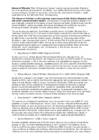
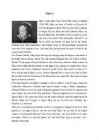
queen, monarch, nation, duties, king, rule, present, there, british, ability, parliament, official, support, role, important, service, royal, members, ruled, part, functions, britain, other, unity, such, birth, oldest, government, canada, denmark, norway, sweden, thailand, known, means, while, pass, legislation, elizabeth, country, since, february, seenHouse of Winsdor. Their influence on modern society, key personalities. People all over the world are obsessed with the British royal family. Most fans know all the royal names and faces, the line of succession to the throne, and even the family's rarely- used last name. But let's start from the beginning. The House of Windsor is the reigning royal house of the United Kingdom and the other Commonwealth realms. The dynasty is of German paternal descent and was originally a branch of the House of Saxe-Coburg and Gotha, itself derived from the House of Wettin, which succeeded the House of Hanover to the British monarchy
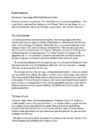
British Parliament Structure and Functioning of the British Parliament today Britain is a parliamentary monarchy . The British Parliament is a bicameral parliament , that is to say that it is made up of two chambers, or two "Houses"; above the two Houses, but in an essentially formal role , there is the Sovereign - king or queen - also known as "the crown." Role of the Sovereign The British monarch has all authority, but no power. The Sovereign appoints the Prime Minister, and every year opens the sessions of parliament, in a historical and ritual ceremony called the State Opening of Parliament . Historically, this ceremony used to take place in the Autumn; but since 2012, it has been brought forward to May. This is the only regular time when the members of both Houses come together. During the ceremony, the Sovereign reads out the government's intended programme
1. The Queen’s official title. Elizabeth the Second, by the Grace of God, of the United Kingdom of Great Britain and Northern Ireland and of Her other Realms and Territories Queen, Head of the Commonwealth, Defender of the Faith. 2. The Queen’s working day. Starts after breakfast. Reads the newspapers which are prepared by the Press Secretary, and a report on the previous day’s proceedings in the Parliament and the letters she receives. Also phone calls. Once a month she attends the Privy Council in order to give Royal Assent to various items of government legislation. Discusses domestic matters with the Master of the Household.
Established church The Church of England is the established church, which means that: 1.)the Monarch is the Supreme Governor of the church, 2.)the Church performs a number of official functions, 3.)Church and State are linked. To disestablish Disestablishmentarianism refers to campaigns to sever links between church and state, particularly in relation to the Church of England as an established church. It was initially a movement in the United Kingdom in the 18th century. The established churches
1. Ancient Britain: the Celtic tribes. 2000 years ago there was an Iron Age Celtic culture throughout the Br Isles. It seems that the Celts, who had been arriving from Europe from the 8th cent BC onward, intermingled with the peoples who were already there. The Celts were extremely talented people, creative and artistic. More than 1 Celtic tribe invaded Br. The descendants of ancient Celts live in Wales, Scotland, Cornwall and Ireland. They lived in primitive society. Druids priests, more powerful than chiefs. Acted like prophets. 2. Stonehenge From prehistoric period. Was built on Salisbury plain between 2500 and 1500 bc. One of the most famous and mysterious archaeological sites in the world
QUEEN VICTORIA & HER TIME Project Mari Murakas Class 11A 2011 Early life of Queen Victoria Victoria was born in London on 24 May 1819, the only child of Edward, Duke of Kent, and Victoria Maria Louisa of Saxe-Coburg. [1] The Duke of Kent was the fourth son of George III and Victoria Maria Louisa was the sister of King Leopold of Belgium. The Duke and Duchess of Kent selected the name Victoria but her uncle, George IV, insisted that she be named Alexandrina after her godfather, Tsar Alexander II of Russia. [2] Victoria's father died when she was eight months old. The Duchess of Kent developed a close relationship with Sir John Conroy, an ambitious Irish officer. Conroy acted as if Victoria
4. How many people approximately speak English? Approximately 600 million 5. Who (which tribes) gave the base of the English language?Germanic tribes- Anglo-Saxons. 6. Describe Wales.- Wales is a mountainous country on the western side of Great Britain. The national game of Wales is Rugby. Flag- Red dragon on a green and white field. They have their own language Cymraeg ( Welsh) . Anthem- Land Of My Fathers. Official animal- Dragon. There used to be a lot of coalmines. 7. What are the symbols of the 4 constituent countries? England- The three national symbols of England are St.George's cross; The red Rose and the Three Lions Crest; The oak is national tree; Northen Ireland- Shamrock; St.Patrick ;Scotland-thistle, St.Andrew 's cross . ; Wales-daffodil, leek, Prince of Wales's feathers; St.David, red dragon 8. How did the Romans influence Britain? The Romans built the first bridge(in London), the capital(London) is a
The British Parliament The Parliament of the United Kingdom of Great Britain and Northern Ireland, commonly known as the British Parliament,Westminster Parliament or simply "Westminster". The British constitution has envolved over many centuries and unlike many other nations, the UK has no single constitutional documents. But Britain does, however, have certain important constitutional documents, including Magna Carta, Bill of Rights and Reform Act. It is formed partly by statue law, partly by common law and partly by conventions. Fundamental law doesn´t exist in the United Kingdom. There can be distinguish three separate organs: the legislature, the executive and the judiciary.
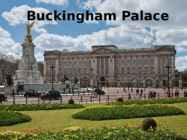
Buckingham Palace • Buckingham Palace is the official London residence and principal workplace of the British monarch. Located in the City of Westminster, the palace is a setting for state occasions and royal hospitality. Buckingham Palace: • was built in 1705 for Duke of Buckingham and is originally known as Buckingham House. • George III bought Buckingham House in 1761 for his wife Queen Charlotte to use as a comfortable family home close to St James's Palace, where many court functions were held. Buckingham House became known as The Queen's House. • During the 19th century it was enlarged, principally by architects John Nash and Edward Blore, forming three wings around a central courtyard. Before reconstruction Nowadays • Buckingham Palace has 775 rooms. These include 19 State rooms, 52 Royal and guest bedrooms, 188 staff bedrooms, 92 offices and
United Kingdom AT115 Martin Pillai Early history • In 1066, the Normans invaded England from France • In 1603, the kingdoms of England, Scotland and Ireland were united in a personal union when James VI, King of Scots, inherited the crowns of England and Ireland and moved his court from Edinburgh to London • In the mid-17th century, all three kingdoms were involved in a series of connected wars, which led to the temporary overthrow of the monarchy and the establishment of the short-lived unitary republic of the Commonwealth of England, Scotland and Ireland. Acts of Union • On 1 May 1707, the united Kingdom of Great Britain came
Protestantism and other religious reforms by J. Calvin and M. Luther. For that, the pope named Henry VIII the Fidei Defensor, meaning Defender of the Faith 4. Why did Mary I get the nickname Bloody Mary? Because during her reign, England became officially a Roman Catholic country, Parliament persecuted a lot of protestants and over 300 people who were burned at the stake. 5. Historians often speak about different ages or times in British history. When (in which centuries) were the following ages: Elizabethian, Georgian, Victorian. Characterise each of them (2 3 sentences). Elizabethian time started in the middle of 16th century and ended in the beginning of 17th century. During Elizabeth I reign, England became independent of the Pope in religious matters, England's overseas expansion began. It was a prosperous period. Georgian time was from the beginning of 18th century to 19th century
History exam *Stonehenge - is a monument located in England. It is one of the most famous prehistoric sites in the world and is composed of earthworks surrounding a circular setting of large standing stones. The surrounding circular, earth bank and ditch, have been dated to about 3100 BC. Stonehenge was produced by a culture with no written language. Many aspects of Stonehenge remain subject to debate. There is little or no direct evidence for the construction techniques used by the Stonehenge builders. *The Celts in Britain and their legacy The Cets lived in Britain in The Iron Age. They were warring tribes who were battleful amongst themselves as well as inter-tribal war. They were not centrally governed. The Celts brought iron working, iron ploughs and metal swords, horses, wheels and chariots - all these things gave them an instant superiority over the native tribes
island situated to the northwest of Continental Europe. It is the ninth largest island in the world, the largest European island, and the largest of the British Isles. With a population of about 60.0 million people in mid-2009, it is the third most populous island in the world, after Java and Honsh. Great Britain is surrounded by over 1,000 smaller islands and islets. The island of Ireland lies to its west. Politically, Great Britain may also refer to the island itself together with a number of
Mary I Mary I, called Mary Tudor (1516-1558), Queen of England (1553-1558). Mary was born in London on February 18, 1516, the daughter of Henry VIII by his first wife, Catherine of Aragón. Because Henry divorced Catherine, Mary was declared illegitimate. Nonetheless, Henry included her in his will, and on the death of her half-brother, Edward VI, on
that their central government chooses to delegate. The majority of states in the world have a unitary system of government. 4. A federal state-- a political entity characterized by a union of partially self- governing states or regions under a central (federal) government. 5. A multinational state- A multinational state is a sovereign state which is viewed as comprising two or more nations. Such a state contrasts with a nation-state where a single nation comprises the bulk of the population. 6. A single-nation state- a geographical area that can be identified as deriving its political legitimacy from serving as a sovereign nation. A state is a political and geopolitical entity, while a nation is a cultural and ethnic one. The term "nation state" implies that the two coincide, but "nation state" formation can take place at different times in different parts of the world. 7
minority. Asians and non-Mori Polynesians are also significant minority groups, especially in urban areas. The most commonly spoken language is English.New Zealand is a developed country that ranks highly in international comparisons on many topics, including lack of corruption, high educational attainment and economic freedom. Its cities also consistently rank among the world's most liveable.Elizabeth II, as the Queen of New Zealand, is the country's head of state and is represented by a Governor-General, and executive political power is exercised by the Cabinet of New Zealand. Some Quick facts Capital: Wellington Government: Representative parliamentary democracy and Constitutional monarchy Currency: New Zealand dollar (NZD) Area: 270,534 sq km Population: 4,347,000 (February 2009 est.) Language: English, Maori, and New Zealand sign language
melts the snow. Winters are mild and wet on the west coast, in cities such as Vancouver and Victoria. Territories and provinces Canada consists of 3 territories and 10 provinces. Very few people live in the territories, but it has more power on deciding important questions. Newest territoy is Nunawut, it became a territory in 1999. It was created from the eastern part od North- West territories. Quebec and Ontario are the biggest provinces. In the central part of Canada there are prairies and agriculture is very common. Alberta is rich in natural resources such as oil and natural gas. In Quebec and Ontario are many manufactories and industries. In the west there is maritime climate and so they fish and ship there. Toronto is the biggest city in Canada, with a population of 5,1 million people. It is followed by Montreal with 3,9, Vancouver, Ottawa (which is the capital of Canada) 800 000 and Quebec with 700 000. Government
.............................................................................................................4 Geographical Position .................................................................................................4 History .........................................................................................................................4 Government..................................................................................................................5 Queen Victoria.............................................................................................................5 Relief............................................................................................................................6 Climate ........................................................................................................................7 Plants........................................................................................................
Country study test # 3 1. Why was it often said that ,,the sun never sets on the British Empire"? ... is used to describe an empire of such a large extent that, at any one time, at least part of its territory is in daylight. This was a saying refering to the fact that Britian had colonies all around the world. 2. What is the Commonwealth? The Commonwealth is an association of sovereign nations that support each other and work together towards international goals. 3. When was it founded? 1931 4. Who were the founder members
Buckingham Palace The history of the original building dates back to the early 1700's and finally became the official residence of the British monarch in 1837 after Queen Victoria came to the throne. George III bought Buckingham House in 1761 for his wife Queen Charlotte to use as a comfortable family home close to St James's Palace, where many court functions were held. Buckingham House became known as the Queen's House, and 14 of George III's 15 children were born there. Buckingham Palace is not only the home of the Queen and Prince Philip but also the London residence of the Duke of York (Prince Andrew) and the Earl and Countess of Wessex (Prince Edward and his wife) and their daughter. The 19 State Rooms at the palace are regularly used by the Royal family to entertain guests on their State, ceremonial and official visits to the United Kingdom. During August and September the Queen makes her yearly visit to Scotland allowing the palace to
bring cold and dry weather. The distribution of rainfall is influenced by the Atlantic Stream. The mountainous areas of the north and west have more rain than the lowlands of the south and east. Wales is located on a peninsula in central-west Britain. The entire area of Wales is about 20,779 km². Wales borders by England to the east and by sea in the other three directions: the Welsh Channel to the south, St George's Channel to the west, and the Irish Sea to the north. There are many bays, peninsulas, cliffs and beaches, together Wales has almost 2000 km of coastline. There are several islands off the Welsh mainland, the largest being Anglesey in the northwest. About 3 million people live in Wales. The main population and industrial areas are in South Wales, consisting of the cities of Cardiff (also the capital), Swansea and Newport and surrounding areas. Much of Wales' beautiful and diverse landscape is mountainous. It has two
Technical English, Scientific English, English for medical professionals, English for waiters, English for tourism, English for Art Purposes, etc 4. What is the difference between settlement colonies and the trading empire (dependencies)? Settlement colonies were regions colonized by the UK that later established governments and became dominions and independent. Dependencies were regions in the world that became trading partners and where English became a second language. 5. Which British colonies became dominions? What was their status? Is the name dominion used for these countries nowadays? The first dominions were Canada (1867), Australia (1901), and New Zealand (1907) The name "dominion" is not used anymore. 6. Which organisation unites Britain and most of its former colonies nowadays? The Commonwealth unites Britain with its former colonies. Ireland 1. Who were the early inhabitants of Ireland?
Changing the Guard · Perhaps the epitome of London's surviving pageantry can be found in the ceremonial Changing of the Guard. · A hugely popular spectacle, the Changing of the Guard takes place at a range of royal locations in and around · London daily during the summer and on alternate days for the rest of the year. · There is no ticketing, so make sure you get there early. · Ever since 1660 Household Troops have guarded the Sovereign Palaces. · The Palace of Whitehall was the main residence until 1689 and was guarded by the Household Cavalry. · The court moved to St James's Palace in 1689 and when Queen Victoria moved into Buckingham Palace the Queen's Guard remained at St James's Palace and a detachment guarded Buckingham Place, as it does today. Trooping the Colour
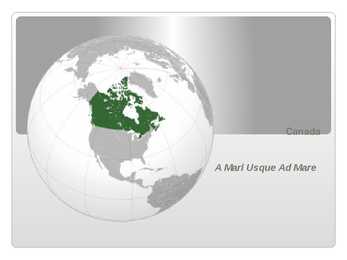
in the east to the Pacific Ocean in the west, and northward into the Arctic Ocean spanning over 9.9 million square kilometers, Canada is the world's second largest country by total area its common border with the United States is the longest land border in the world. Some facts The land that is now Canada was inhabited for millennia by various groups of Aboriginal peoples beginning in the late 15th century, British and French France ceded nearly all of its colonies in North America in 1763 after the Seven Years' War Historical Background in 1867, with the union of three British North American colonies through Confederation, Canada was formed as a federal dominion of four provinces this began an accretion of provinces and territories and a process of increasing autonomy from the United Kingdom widening autonomy was highlighted by the Statute of Westminster 1931
The Iberians brought their metal-working skills and the first real civilization to Britain in the third millennium B.C and were overrun by various Celtic invasions that began in the 8th century. The Celts introduced their tribal organization and an early form of agriculture before they were forced westward by the Roman invasion. Forms of Celtic language are still spoken in Britain. Romans (with Julius Caesar in the head of them) first tried to occupy Britain in 55 B.C., but there was a rebellion in Gaul so they had to leave to fight against it. Next time they came in 43 A.D. and their leader was Emperor Claudius. Romans brought a lot with them. Their brought paved roads, the sites of important cities, the seeds of Christianity, the Roman law, Roman baths, language and advanced civilization. They also built Hadrian's Wall in 122 A.D. Romans occupied Britain for four centuries. The Roman way of life all vanished after the invasions from Northern Europe by the
The United Kingdom and London United Kingdom is a political name of the United Kingdom of Great Britain and Northern Ireland. These political names include the countries of England, Scotland and Wales. Every country has its own capital and language. The capital of England is London, the people there are english and the language spoken is English. In scotland live the scots, capital is Edingburg and the languages spoken are English and Scottish. The capital of Wales is Cardiff, the people tehre are welsh and the languages spoken are welsh and English. N. Ireland is the home for the Irish, the capital is Belfast and the language is Irish. The first inhabitants were Iberians and Celts who settled on the land and were often at war with each other
Most of the knowledge of the period stems from archaeological investigations and especially epigraphic evidence. The invasion force in AD 43 was led by Aulus Plautius.It is not known how many Roman legions were sent; only one legion, the II Augusta, commanded by the future emperor Vespasian, is directly attested to have taken part. The IX Hispana,the XIV Gemina (later styled Martia Victrix) and the XX are attested in 60/61 during the Boudican Revolt, and are likely to have been there since the initial invasion. However, the Roman army was flexible, with units being used and moved whenever necessary, so this is not certain. Only the Legio IX Hispana is likely to have stayed there, as it is attested to being in residence at Eburacum (York) in AD 71 and on a building inscription there dated AD 108, before its eventual destruction fighting in the East, likely during the Bar Kochba Revolt. The invasion was delayed by a mutiny of the troops, who were eventually persuaded by an
Legacy- new types of animals, plants; miles, feet, inches-roman measurements;christianity; Roman basilica in curches; reading, writing; buildings, roads Christianity in Roman Britain Until 4th C christians were persecuted 313 AD Emperor Constantine legalised christianity 380 AD Emperor Theodosius I made it the official religion of the empire Paganism had been eclipsed but continued to pose a political, religious challenge Boudicca Queen of Iceni people of Eastern England, led an uprising against Roman forces Prasutagus(ruler) was first allowed to rule when romans conquered England, after his death, romans decided to rule Iceni and flogged Boudicca and raped her daughters 60-62 AD Iceni rebelled, Boudicca´s warriors defeated Roman Ninth Legion, destroied capital-Colchester Finally Boudicca was defetated, she poisoned herself to avoid capture Hadrian´s wall
The Romans knew it was important to control a crossing point at the river Thames, so they decided to build a settlement on the north bank. Although small settlements had been built on the banks of the Thames, the Romans were the ones who built the first city. They called their city Londinium. The Roman engineers noticed that the point where the swampy river narrowed would make an ideal crossing point, they built London Bridge. Less than 20 years later the native Iceni tribe, led by Queen Boudicca, rose up against the Romans in revenge for mistreatment and burnt Londinium to the ground. The well disciplined Roman army defeated her forces and Londinium was rebuilt. By AD 100 it had also become the capital of the Roman province. A massive wall was built to protect the city from further attacks. The Roman Empire came under increasing attack across Europe and in AD 410 they retreated. The Romans gave us a language based on Latin, the calendar, law and legal system, the
THE U.K Different Parts The United Kingdom is a short way of saying the United Kingdom of Great Britain and Northern Ireland. The UK is the political name for those countries which share a parliament in London. All of them were at one time independent kingdoms with their own monarch. Now they are all part of the same kingdom and share the same monarch. The UK consists of Northern Ireland, Scotland, England and Wales. The peoples of these countries are British subjects; they hold British passports and therefore their nationality is British. The british Isles is the geographical name for all the islands off the west coast of Europe. These islands also include The Republic of Ireland, which is politically independent of the Britsh government. Many people refer to the inhabitants of the British isles as 'the English',
Margus Maasik G1a SANDRINGHAM HOUSE The Queen and other members of the Royal Family regularly spend Christmas at Sandringham and make it their official base until February each year. When The Queen or members of the Royal Family are not in residence, the house is open to the public. The Estate is run commercially by the Land Agent, on The Queen's behalf. Over half of the Estate is let to farm tenants, the remainder being farmed in hand or used for forestry (the Estate has its own sawmill). There are also two studs, a fruit farm and a country park. These, together with the house's gardens, employ over 100 full-time staff.
By the 12th century, the kings of Alba had added to their territories the Anglic-speaking land in the south-east and attained overlordship of Gaelic-speaking Galloway and Norse-speaking Caithness; by the end of the 13th century, the kingdom had assumed approximately its modern borders. However, processes of cultural and economic change beginning in the 12th century ensured Scotland looked very different in the later Middle Ages. The stimulus for this was the reign of King David I and the Davidian Revolution. Feudalism, government reorganisation and the first legally defined towns (called burghs) began in this period. These institutions and the immigration of French and Anglo-French knights and churchmen facilitated a process of cultural osmosis, whereby the culture and language of the low-lying and coastal parts of the kingdom's original territory in the east became, like the
mosaic floors o 122 AD- Hadrian's Wall; 138 AD- Antonine Wall o Druids(celtic priests) were banned and Britain was influenced by christianity 3) The Germanic Invasions I. The Anglo-Saxons o 5th century- 1066 o From Southern Denmark(angles); Germany(saxons); Jutland(jutes) o By the 7th c kingdoms had emerged and later KING ALFRED united the kingdoms o They were pagans and very rural people, built in wood rather than stone o It was the saxon farmstead that laid the foundations of the English village II. The Vikings o 8th century- 11th century o From Denmark, Norway o They were ship builders and sailors o In 886 the Danelaw peace treaty was made
 annaabi.ee