Leidsid 33 sarnast õppematerjali, mis on seotud failiga "Lexical and syntactic stylistic devices". Need materjalid aitavad sul teemat sügavamalt mõista.
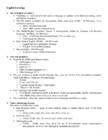
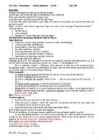
sent, function, meaning, phrase, part, based, order, logical, effect, same, stress, noun, thing, original, things, words, repeating, size, elements, subject, clause, emotional, individual, comparison, instead, author, context, inverted, idea, notion, beginning, object, structure, stylistic, devices, secondary, longer, description, plain, types, transfer1. STYLE The term "style" is polysemantic (has many meanings): a Latin word "stilus" originally meant a writing instrument used by ancient people. Already in classical Latin the meaning was extended to denote the manner of expressing one's ideas in written or oral form. Jonathan Swift defined style as "proper words in proper places". In present day English the word "style" is used in about a dozen of principle meanings: 1. the characteristic manner in which a writer expresses his/her ideas (e.g. style of Byron) 2. the manner of expressing ideas, characteristic of a literary movement or period 3. the use of language typical of a literary genre (e.g
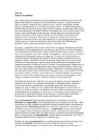
STYLISTICS 1. Style, stylistics, a survey of stylistic studies The term ,,style" is polysemantic. Latin ,,stilus"--a writing instrument used by the ancients for writing on waxed tablets. Soon, the meaning was extended to denote the manner of expressing one's ideas in written or oral form. Jonathan Swift said: ,, Style is proper words in proper places" Present day--half a dozen meanings: · the characteristic manner in which a writer expresses his ideas (Style of Byron) · the manner of expressing ideas characteristic of a literary movement or period (symbolism, romanticism) · the use of lg
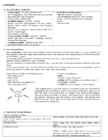
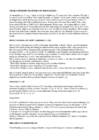
1 SYNTACTIC STYLISTIC DEVICES SYNTACTIC STYLISTIC DEVICES are based on a peculiar place of the word or phrase in the utterance (text, sentence, etc).This special place creates emphasis irrespective of the lexical meaning of the words used. Categories: syntactic stylistic devises based on: SDD: based on ABSENCE OF LOGICALLY REQUIRED ELEMENTS OF SPEECH ELLIPSIS ELLIPSIS or ELLIPTICAL SENTENCES means leaving out one or both principle members of the sentence that is the subject or predicate. NT: Where is the man I'm going to marry? - Out in the garden. (no subject) What is he doing out there? - Annoying father. Here, in the dialogue, ellipsis creates the colloquial tone of the utterance. It also renders realistically the way the characters speak
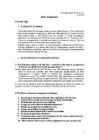
Phonetic. expr. means Synonymic repetition Trochee Prosody Lexical repetition Anapaest Orchestration Syntactic SD Dactyl Euphony Ellipsis Amphibrach Phonetic SD Aposiopesis Spondee Onomatopoeia Nominative sent. Pyrrhic Alliteration Asyndeton Rhythmic invers. Assonance Apokoinu Run-on line Rhyme: Gap-sentence link Stanza: Full Framing Heroic couplet Incomplete Anadiplosis Ballad stanza
Style The term style is a polysemantic one. The latin word ,,stilus" meant a writing instrument used by the ancients for writing on waxed tablets. Already, in classical latin the meaning of style was extended to denote the manner of expressing one's ideas in written or oral form. One of the abts/the best was given by Jonathan Swift: ,,Proper words in proper places." In present- day english, the world style is used in about half a dozen basic meanings. 1. the characteristic manner in which a writer expresses his ideas. Some speak about the style of Hemingway, Dickens etc. 2. the manner of expressing ideas, characteristic of a literary movement or period. Style
and other abstract relations. Prepositions can occur as single words (at, by) or in pairs (out of, next to). postposition tagasõna, postpositsioon adposition kaassõna, suhtesõna, adpositsioon conjunction, connector sidesõna, Refers to items used to mark logical relationships Mary felt ill and could not go to konjunktsioon between words, phrases, clauses and sentences. There school. are two types of conjunctions: coordinating and He failed the exam (main) although subordinating. Coordinating conjunctions he worked hard. (subordinate)
English structure revision for the exam 1. Terms Language → A systematic, conventional (tavakohane) use of sounds, signs or written symbols in a human society for communication and self-expression. Human language at all levels is rule- or principle- governed (valitsema) meaning that language corresponds to the grammar. Natural language is usually spoken, while language can also be encoded into symbols (such as letters, morse etc) For example: Estonian, English. Linguistics → The scientific study of human natural language. Broadly, there are three aspects to the study which are Pragmatics (studies the use of language → interested in the gap between the sentence’s meaning and the speaker’s meaning).
words; syntax. Language: a systematic, conventional use of sounds, signs or written symbols in a human society for communication and self-expression. - human language at all levels is rule- or principle-governed. Linguistics: the scientific study of human natural language Synchronic approach to language: Diachronic approach to language: Linguistic competence: Linguistic performance: What is grammar?: "The sounds and sound patterns, the basic units of meaning, such as words, and the rules to combine them to form new sentences constitute the grammar of a language" Prescriptive grammar vs. Descriptive garmmar: Descriptive grammar: the systematic study and description of a language. Descriptive grammar refers to the structure of a language as it is actually used by speakers and writers. Prescriptive grammar: a set of rules and examples dealing with the syntax and word
sampan, tai chi, taipan, Tao, tea, yang, yen, yin. Japanese: aikido, banzai, bonsai, bushido, futon, geisha, haiku, hara-kiri, judo, jujitsu, Kabuki, kamikaze, kimono, koan, mikado, sake, samisen, samurai, sayonara, Shinto, shogun, soy(a), sushi, teriyaki, tofu, tycoon, yen, Zen Arabic: artichoke, alcohol, sugar, camel, alchemy, algebra, elixir, 13. Etymological doublets Two (or more) words derived from the same source, but having a different meaning. Fashion/faction Dialect based: Road/raid Seek/beseech Old English, Old Norse Skirt/shirt Rear/raise Anglo Norman, French Guarantee, warranty, quaranty Latin/Greek, French Thesaurus/treasure Abbreviation/abridge French, French Genteel/gentle Dragon/dragoon 14. Folk etymology
adjective + preposition omadussõna + eessõna proud of, good at, married to adverb particle Some verbs are followed by adverb particles. Examples are: put on, take off, give away, bring up, call in. Sometimes the particle is detached from the verb and put after the object. •He took his boots off. •They called the doctor in. apposition a grammatical construction in which two usually adjacent nouns having the same referent stand in the same syntactical relation to the rest of a sentence (as the poet and Burns in “a biography of the poet Burns”) back-reference In grammatical analysis, the term reference is often used to state a relationship of identity which exists between grammatical units, e.g. a pronoun 'refers' to a noun or noun phrase. When the reference is to an earlier part of the discourse, it may be called a 'back-reference' (or anaphora); collective noun
are still in use (Baugh) Latin influence continues 3) Early Modern English – 200,000 – 250,000 English becomes a polycentric language; polyglot, cosmopolitan language 4) Modern English – 500,000 words (OED) At present at least 1 billion lexical units 2. Core and periphery Core vocabulary – often short (monosyllabic) words of Germanic and Old Norse origin = ie core vocabulary of most frequent words, and vague fuzzy peripherial words. Core meaning is the meaning which is at the centre of the word.periphery – vague. Formal usage (often polysyllabic words) from Norman French (rank, courtliness,refinement). Learning, science, abstraction: Latin, and Greek. The core vocabulary is predominantly Germanic (the, I, you, etc.) Only 4 of the topranked one hundred words in the Brown Corpus are of foreign origin. 93 of the first one hundred words in the Brown Corpus are monosyllabic, and the
There is diachronic (historical) L that studies origin and development; syncronic studies voc at a given historical period. There are general L (studies words disregarding particular features of any particular lg); special L (studies specific features of a separate lg, there is Engl that bases on general L); contrastive (compares vocabularys in different languages). 2. Connection of L with other linguistic disciplines a) the word performes a certain grammatical function (nt, he always misses the class, how many misses are there; the girl powders her nose, soliders face powder)In speech words are combined according to grammatical rules. The plural of nouns may carry a new meaning (nt, arms-weapons, looks-appearance, works-plant) b)connected with phonetics. The meaning of a word is expressed by sounds and it depends on the order of sounds(spoonerism) c)history of the lg helps to understand ahanges in the meanings of words (nt, legend ment a book
head). Most native words have become parts of set expressions, borrowed words haven't. (nt, heart- to break a heart, to take to heart, to have heart in one's mouth). Most native words make up large groups of derived and compound words (nt, heart-ly, heart-less, to heart-en, hard hearted, sad hearted) The native elements play a very important role in English. Influence of borrowings some say that English is so rich mainly due to loan words. The first effect of foreign influences is of course the volume of the vocabulary. Borrowings influence native words stilistically and semantically. If we have 2 words in the language: one native, other borrowed, then they become different in meaning and usage (nt, to meet or to encounter- meaning's the same, but stilistically different) Under the influence of borrowings native words narrowed their meaning (nt stool-iste, chair was borrowed, chair infuenced stool and it is now a taburet)
Philosophy of Language Philosophy of Language: a Contemporary Introduction introduces the student to the main issues and theories in twentieth and twenty-first-century phi- losophy of language, focusing specifically on linguistic phenomena. Topics are structured in four parts in the book. Part I, Reference and Referring, includes topics such as Russell's Theory of Descriptions, Donnellan's distinction, problems of anaphora, the description theory of proper names, Searle's cluster theory, and the causalhistorical theory. Part II, Theories of Meaning, surveys the competing theories of linguistic mean- ing and compares their various advantages and liabilities. Part III, Pragmatics and Speech Acts, introduces the basic concepts of linguistic pragmatics,
UNIT 1 Writing in the Business World Writing gives structure and form to our ideas. In the business world this is done for a purpose: to persuade, recommend, offer advice, give an order, etc. The business text must therefore be easily and quickly read and its message must be understood exactly as intended. If you learn to recognize and avoid the more common errors of information control, grammar and style, you will achieve this aim. You will write more confidently and more correctly if you check everything you write. Pay particular attention to the following:
In phonology syllables are the possible combinations of phonemes. The syllable consists of - onset, nucleus, coda. (every syllable has a nucleus: vowel, syllabic l, or m, n). Rhyme/rime nucleus + coda; the nucleus and the coda constitute a sub-syllabic unit rhyme. Words rhyme, when their nucleus and coda are identical. (E.g 'cr-o-wn', 'd-o-wn'). The hierarchical structure of the syllable: Onset the beginning of the syllable Nucleus/peak the open part of a syllable, generally a vowel. Coda a consonant sound which ends the syllable. Open syllable - has no coda Closed syllable - has a coda! Texts: [t-e-k-s-t-s]- (Consonant, Vowel, Consonant, Consonant, Consonant, Consonant). Strong syllables - has as its nucleus one of the vowel phonemes but not "schwa" Weak syllables has 4 types of nucleus 1) the vowel ,,schwa" 2) a close front unrounded vowel in the general area of i: and ý 3) a close back unrounded vowel in the general area of u:
Written task 2 - Outline Prescribed question: How does the text conform to, or deviate from, the conventions of a particular genre and for what purpose? Title of the text for analysis: I have a dream by Martin Luther King Jr, 1963. The part of the course to which the task refers: Part 2: Language and presentation of speeches and campaigns. My critical response will: • Analyse the rhetorical and literary devices used in Martin Luther King’s speech ‘’I have a dream’’ and state the reasons for why he had made use of them. • Examine the impact these devices have on the reader/listener. • State whether the speech conforms to, or deviates from, the conventions of a one.
In addition, foreign born professionals frequently need a TOEFL score for certification to practice their profession in the United States or Canada. The TOEFL is a timed test that consists of the three sections listed here. THE TOEFL Section 1 Listening Comprehension 50 questions 35 minutes Part A Statements 20 questions Part B Short Dialogs 15 questions Part C Minitalks and Extended Conversations 15 questions Section 2 Structure and Written Expression 40 questions Structure 25 minutes
massachusetts, michigan, mianiappolis, milwaukee, minnesota, mississippi, niagara, ohio, oklahoma, pontiac, seattle, wiaoming, jazz, blues, rythm and blues, rock and roll, jukes lang, cakewalk, jive, banana, jelly, jam, tote, vodoo, banjo, reggae, ska. AUSTRALIA- kangaroo, kookaburra, boomerang, dingo, coolibah, wallaby, koala, billabong, jumbuck, budgerigar, wombat, currawong, corroboree, barramundi, jackeroo. 4) Etymologycal doublets Wors that have the same etymological roots but have entered the language differently. One of two or more words derived from one source for exsample. Cattle-chattle, road-raid, guarrantee-warranty- guaranty. 5) Folk etymology First of all commonly held misunderstanding of the original word. Rosmarine- rosemary, somblind- sand-blind. The second thing is when people themselves have made the word up- changed the grammar throughtout time- naperon became apron, nadre-addre. 6) Archaism
To get a seat, you'd better come early. After the test but before lunch, I went jogging. The sun radiating intense heat, we sought shelter in the cafe. c. Common introductory words that should be followed by a comma include yes, however, well. Well, perhaps he meant no harm. Yes, the package should arrive tomorrow morning. However, you may not be satisfied with the results. 3. Use a pair of commas in the middle of a sentence to set off clauses, phrases, and words that are not essential to the meaning of the sentence. Use one comma before to indicate the beginning of the pause and one at the end to indicate the end of the pause. Here are some clues to help you decide whether the sentence element is essential: · If you leave out the clause, phrase, or word, does the sentence still make sense? · Does the clause, phrase, or word interrupt the flow of words in the original sentence? · If you move the element to a different position in the sentence, does the sentence
Choose your topic and find a supervisor. Language needs to be very transparent, but do not use colloquial elements and abbreviations (e.g. I'll, you're). Start collecting the expressions you like (e.g. "many" "the abundance" etc.) How to elaborate a topic? collaborate with supervisor (a topic has to be narrowed down). Background studies who else has written about this topic (what has been already done and what else I can do here). Papers of this kind test logical thinking. What is assessed: - the ability to collect material (both theoretical (who has written about it) and practical; - the ability to classify it (grouping ability); - the ability to describe the material ("some say this ..., they are not wrong, but other say that ...." Etc.); - the ability to draw conclusions (on theoretical and practical materials); - your personal contribution (do something that no one has done before);
Free variaton of R, and it was pronounced everywhere. Very much Germanic in character. Quite some special consonants that no longer exist. About morphology: synthetic with numerous aglutinating tendencies. System of tenses Germanic, but with a reduction of tenses. Paradigmatic leveling; Stress shift; Word order; Loan words (Old Norse, Old French). Dual pronouns. Determiners - no separate definite article. Strong and weak verbs. Word order relatively free with tendencies towards SVO. SVO, SOV, VSO most common. Adposition and podposition were both possible (eesliide ja tagaliide). About syntax: clauses were joined much simpler than nowadays, using and, then etc. Because of case syncretion the word order in a sentence became much more important to be able to tell the difference between words. FIRST CONSONANT SHIFT (GRIMM'S LAW) Grimm's Law (also known as the First Germanic Sound Shift or Rask's rule) is a set of statements
LEL 2E Notes on Vocabulary One of the key facts about the lexicon of any language is that it reflects in various ways the physical and cultural environment in which the language is spoken. A people unfamiliar with, say, horses is unlikely to have a word for `horse'; similarly with ploughs, printing presses, and internet porn sites. For the most part this is trivial it's hard to imagine how it could be otherwise, given the general nature of human language. People tend to make a great deal of the alleged fact (see Pullum 1989) that "the Eskimos have lots of words for snow", but it doesn't take much thought to realise that any language spoken in a given physical and cultural environment is likely to have efficient ways of referring to distinctions that are important in that environment. That doesn't mean that you can read very much into
Another thing is that in schools, in classes generally students are not allowed to use their appliances, so it means they have to communicate verbally as well. I think that teachers should be creative to blend so-called digital learning/teaching with old-fashioned learning/teaching. · Sir Ken Robinson: Do schools kill creativity? Sir Ken Robinson claims in the clip that " creativity in education is as important as literacy, we should treat it with the same status." I totally agree with all what he said. We have very strict education systems that don't allow a room for mistakes and they categorize people based on their achievements in exams. There is nothing like potentials, creativeness, possibilities or even 2nd chances. Families put high expectations on academic achievements and they always compare their kids with other's kids. A minority in
Relevance of the topic Ø The English language becomes the means of international communication, the language of trade, education, politics, and economics. People have to communicate with each other. It is very important for them to understand foreigners and be understood by them. Goal of my research work Ø Goal of my research work is to prove that idioms in the English language are integral part of it, which make our speech more colorful and authentically native. Tasks I like to achieve the following tasks: 1. To classify idioms; 2. To study the problem of the translation of idioms; 3. To understand the aim of the modern usage of idioms; 4. To distinguish different kinds of idioms; 5. To analyze the frequency of idioms' usage referring to English. Hypothesis Ø My suggestions is the Second World
symbolism, from the point of view of the numerous studies his being protagonist. Larkin was not one of the major essay writers in the history of British literature. He never wrote a text comparable with Wordsworth’s “Preface” to Lyrical Ballads, Shelley’s “A Defence of Poetry” or Eliot’s “Tradition and the Individual Talent”. This lack of a conceptualized theory, however, does not indicate a lack of principles. In the first part of this study I will offer an outline of Larkin’s poetics, based on the form and the style he used to use, to get in to a second part in which I will assess the way he presents and expresses his ideas. 1.CHAPTER I 1.1. LARKIN STUDIES POINTS OF VIEW: BIOGRAPHY AND POETRY In the collection of essays edited by Stephen Regan (Philip Larkin, 1997) we can find some underlying question as: are we discussing the poem or the poet? Or, in
and then selects the one that explains the most variance. In the second approach, the evaluation of content may be accomplished through the specification of vocabulary (i.e., the evaluation of the other aspects of writing is performed as described above). Latent Semantic Analysis and its variants are employed by some developers to provide estimates as to how close the vocabulary in the candidate answer is to a targeted vocabularly set. The third approach is to develop models that are based on a "gold standard" formulated by experts. To date this mechanism for developing models is more theoretical than applied. If normative models can be created for the relevant dimensions of writing (i.e., age and writing genre), then other variables could be tailored on an a priori basis to generate a statistical blueprint for the ideal response. The blueprint may or may not be aligned with human ratings. For example, the guidelines for a few high-stakes writing
tips and useful language notes Book 1 Anne Seaton · Y. H. Mew Three Watson Irvine, CA 92618-2767 Web site: www.sdlback.com First published in the United States by Saddleback Educational Publishing, 3 Watson, Irvine, CA 92618 by arrangement with Learners Publishing Pte Ltd, Singapore Copyright ©2007 by Saddleback Educational Publishing. All rights reserved. No part of this book may be reproduced in any form or by any means, electronic or mechanical, including photocopying, recording, or by any information storage and retrieval system, without the written permission of the publisher. ISBN 1-59905-201-6 Printed in the United States of America 13 12 11 10 09 08 07 9 8 7 6 5 4 3 2 1 Introduction Grammar is a very old field of study. Did you know that the sentence was first divided into subject and verb by Plato,
Louise Erdrich Love Medicine Assignment 2 (pp. 4384) 1. Define the following words and expressions (considering the context) and reproduce (in your own words) the situations in which they appear in the book: the marrow of something (44) - The soft stuff inside of a bone is called marrow. ... From this biological kind of marrow comes a figurative meaning of marrow -- the essence of something. S The convent is on top of the high hill and from its window the Sisters can see the marrow of the town. to be privy to something (46) - If you're privy to something, you've been let in on a secret or know about something that most people don't. ... The adjective privy comes from the Latin privatus, meaning "private," and describes someone who has knowledge of secret or confidential information
Literal translation is translating directly from source language into target language b. Which types of words are more/less literal? More literal: objects and movements Less literal: qualities and ways of moving c. What are the two views of translation that the author brings out? Explain. 1) A process of explanation, interpretation, reformulating ideas and words. 2) Impossible due to other definitions 2. Expressive function a. Name the three expressive text types. - Serious imaginative literature; Authoritative statements; Autobiographies, essays, personal correspondence. b. Why is it difficult to translate an expressive text? - Because of the used dialect may get lost in the translation. c. What constitutes the personal component in an expressive text? - original metaphors, unusual collocations d. What is at the heart of the expressive (‘väljenduslik’) function of language?
Word Order Table of Contents Types of Sentences ..................................................................................2 Parts of the Sentence ..............................................................................2 Word Order in Affirmative Sentences ...................................................3 Position of Adverbs of Frequency .........................................................5 Word Order in Negative Sentences......................................................6 Word Order in General Questions.........................................................7 Word Order in Special Questions ..........................................................8 Word Order in Subject Questions .......................
consisting of several indiscernible voices, and that literature is precisely the invention of this voice, to which we cannot assign a specific origin: literature is that neuter, that composite, that oblique into which every subject escapes, the trap where all identity is lost, beginning with the very identity of the body that writes. — Probably this has always been the case: once an action is recounted, for intransitive ends, and no longer in order to act directly upon reality — that is, finally external to any function but the very exercise of the symbol — this disjunction occurs, the voice loses its origin, the author enters his own death, writing begins. Nevertheless, the feeling about this phenomenon has been variable; in primitive societies, narrative is never undertaken by a person, but by a mediator, shaman or speaker, whose “perfor- mance” may be admired (that is, his mastery of the narrative code), but not his “ge-
9. Different forms of the relative pronoun ,,The man what lives there."/ ,,The man as lives there." 10. Regularisation of reflexive pronouns myself; herself; hisself; theirselves 11. Distinction between main and auxiliary verb ,,do" ,,You done it, did you?" 2) The spread of English. The Inner / Outer / Expanding Circle THE SPREAD OF ENGLISH · 16-18th century the spread took place. · By the beginning of the 19th century English had spread to virtually every part of the world. · 19-20th century the number of speakers only grew. The growth was achieved by covering more land, exploring more land, going west, and accepting new immigrants from other places of the world. The spread of English also brought political growth and the spread of power. Besides the number of countries, it also grew from the economic and military might and strength of the people. When Elizabeth I didn't have much choice but to let the empire grow and so
 annaabi.ee