Leidsid 33 sarnast õppematerjali, mis on seotud failiga "Kaasaegse arhitektuuri diskursused 1-11". Need materjalid aitavad sul teemat sügavamalt mõista.
place, architecture, space, nature, modernism, build, says, building, postmodernism, thing, author, idea, construct, good, between, context, construction, architects, keep, usual, reconstruction, usually, understand, there, harmony, understood, work, find, character, feel, before, important, means, part, nowadays, urban, create, needs, location, while..........................................................................128 The Joy of Being.........................................................................................130 Allowing the Diminishment of the Ego......................................................130 As Without, So Within................................................................................132 Chapter Eight The Discovery of Inner Space - 135 Object Consciousness and Space Consciousness.......................................137 Falling Below and Rising Above Thought.................................................138 Television...................................................................................................139 Recognizing Inner Space...........................................................................141 Can You Hear the Mountain Stream? .......................................................143
It is intertwined with curiosity. An ideal education affords numerous and varied opportunities for students to touch, see, smell, listen, hear; to spark their curiosity. When I was a child the things that pleased me were largely other than the plants which have earned me a living as an adult. For example, I collected postage stamps, played basketball, was fond of listening to music, played all manner of games, but dealt only in a neutral, uninspired fashion with plants. The one thing that was constant and of supreme importance was my love of reading. I don't recall why, but by an early age, say age 9, I was a phenomenal reader of books, a habit that persisted all the way until college. Reading expands one's mind immensely. It fires the imagination, demonstrates grammar, teaches vocabulary, informs, challenges, helps one relax. In some cases it forces the mind to concentrate, as to understand. It can help build a moral or ethical framework, and help oneself
01.2010 Juhendaja: Roode Liias ……………………….. Ülesande vastu võtnud: Tanel Friedenthal ………………………. Abstract How are 3D and BIM Changing the Design, Fabrication and Construction of Complex Steel Structures? The adoption of three-dimensional (3D) design and construction tools have created a remarkable shift in the building industry. Intelligent 3D technology in the form of Building Information Modeling (BIM) not only promises to improve the notoriously inefficient construction process, but also opens the door for designing new geometric shapes, which until recently have been considered unbuildable. Steel has been extensively used to build some of the most challenging architectural icons of the 21st century, due to its low weight and high strength in both compression and tension. Therefore, the steel
-term paper 10-15 sources (1 page), -graduation paper (2 pages of sources). FGI 1811 Proseminar I. Ladusseva 1 10.09.2002 At the defense aspects that are considered are: - your own contribution (whether it is there and is sufficient) - theory (you should have at least 6-10 connected pages discussing the state of the art) - mechanics (the layout of the paper: font size 12, double space, etc.) - answering questions - performance (pronounce distinctly, make good impression, no language mistakes, etc.) - extra linguistic part (how you stand, how you speak, etc.). Will be checked student's ability to classify, to describe material, to draw conclusions (e.g. you give an example and then comment on it). Internet sources: it is nice to have some Internet sources to show your sophistication, but not too many of them, because they are not very reliable.
· Unable to determine his own faith · Hereditary · Naturalists tried to apply in fiction the processes of natural sciences · Writers task is to record facts, systems of behaviour, living conditions, never revealing any natural unbiased (completely natural) · Point of view: amoral-outside the category of morality, neither good or bad · Naturalist find it absurd to blame the wicked. These criminals are doing what nature, environment, their unconscious tells them to do. Naturalists do not judge their characters, they simply report. Try to describe facts like they are. Naturalists depict the lower, coarser forms of life. · Drab, squallid set of scene. Revolting, disgusting · Characters are people with strong animal desires · Neurotic characters unable to understand the forces that control them
characteristics like the most appreciated by its followers. Larkin gives us through his poetry, a vision of middle-aged conservative, that in a politically incorrect way in our days, does not stand children, detests the life in family, he does not believe in anything and he does not wait anything of the life. He scorns the “literary life” and also the things that normally soften everybody: the romantic love, the memories of the childhood, the nature, etc. Keywords: Larkin, poetry, cruelty, suffering, nature Index Introduction 4 1. Chapter I 5 1.1. Larkin Studies Points of View: Biography and Poetry 5 1.2. Larkin Stylistic Map 8 2. Chapter II 11 2.1 Expressing Himself 11
a. I really need some money. I should get a job. b. I really need some money. Therefore, I should get a job. Non-arguments Not all passages are arguments. Examples: Simple non-inferential passages where nothing is said to be proved. ● Be careful! (Warning or piece of advice) ● I believe that good behaviour is always rewarded (Statement of believe or opinion) ● The protest started at 3pm. The main place was crowded… (Report about something) Expository passages where we develop an opening sentence (without attempting to prove it). ● There are two types of elephants: the African elephant and the Asian elephant. African elephant has large ears and both females and males have tusks. The Asian elephant has smaller ears and only males develop tusks. Conditional statements of the form “if...then…”. ● If it rains, then I will take my umbrella.
move from fear of dreadful accidents. So, we may say that the British climate has three main features: it is mild, humid and very changeable. Vocabulary: to surround -- insular climate -- to determine -- temperate belt -- prevailing winds -- the Gulf Stream -- to flow -- shores -- moderate -- striking difference -- throughout -- fickle -- wet -- to blow -- It's raining cats and dogs -- fog -- awful -- dense -- vehicle.-- dreadful -- English Meals The English proverb says: every cook praises his own broth. One can not say English cookery is bad, but there is not a lot of variety in it in comparison with European cuisine. The English are very particular about their meals. The usual meals in England are breakfast, lunch, tea and dinner. Breakfast time is between seven and nine a.m. A traditional English breakfast is a very big meal. It consists of juice, porridge, a rasher or two of bacon and eggs, toast, butter, jam or marmalade, tea or coffee
Ego-rational behavior, motivation, self-identification, conscious decisions Id-instincts, natural responses, the pleasure principle, aggressive instincts, the death wish Influence: In art and literature, Freud's theories influenced surrealism . Like psychoanalysis, surrealistic painting and writing explores the inner depths of the unconscious mind. Freudian ideas have provided subject matter for authors and artists. Critics often analyze art and literature in Freudian terms. 2. Literary Modernism and its sub-movements. The influence of Structuralism and psychoanalysis. Main characteristic features of Modernism. Denial of conventions, traditional structure, plot and presentation of character. The stream of consciousness. Allusiveness. Virginia Woolf's Modern Fiction as a theoretical platform for Modernism. Criticism of Realist literary method. Literary modernism: end of the 19th century-1920 (reached its height) and ended 1940s. A self-
11. Exclusive occupancy of a private room is a basic human right. 12. Fair compensation for genius is wealth. 13. God's not perfect, so it's a pretty good bet that you're not, either. 14. Good institutions help to overcome human moral inertia. 15. I am not one of your little friends. 16. If a dimension is anywhere it's everywhere. 17. If God's not crazy, why are you? 18. If one makes a promise one shouldn't have made it cannot stand against the obligation to do the right thing. 19. If you odn't give a certain amount of attention to filtering distractions, every distraction is a catastrophe. 20. If you don't know what your duty is, your duty is to find out. 21. If you're not an animal, then you must be a vegetable. 22. If you want to get along you have to get along with those who don't want to get along. 23. If you whine whenever anybody messes with your crutches you can't claim not to be crippled. 24. I hate an unfair fight, so I need to be ganged up on. 25
The great Enlighteners: Crèvecoeur, Jefferson, Paine, Franklin. The American Enlightenment is the intellectual thriving period in the United States in the midtolate 18th century (17151789), especially as it relates to American Revolution on the one hand and the European Enlightenment on the other. Influenced by the scientific revolution of the 17th century and the humanist period during the Renaissance, the Enlightenment took scientific reasoning and applied it to human nature, society, and religion. American Enlightenment a gradual but powerful awakening that established the ideals of democracy, liberty, and religious tolerance in the people of America. If there were just one development that directly caused the American Revolution and uplifted the intellectual culture of the continent while it was only a British colony, it would be the American Enlightenment. Broadly, the Enlightenment was an intellectual movement that changed the fundamental
Three forms: If you take a certain provision from IL and put it in national law. If you take a certain provision from IL and make certain specifications or amendments to it for it to fit into national law. Possibility to make a reference, in national law you make a reference to the applicable IL treaty. Some topical question: Which one is more important, national or international law? Depends, there are different views. A certain view says that if there is a contradiction in national law to the IL, then national law should be changed. Also, many countries write it in their constitution that IL should prevail. However, some countries don't support this idea. Sometimes treaties and customs can overlap. Sometimes conventions put on paper some customs. Or some successful conventions can become customary norms. This is important
because made of steel 2. Formal cause: - what form, definition or property it has - why is this salt? because made of sodium and chloride 3. Efficient cause: - what initiated the change or movement - why did the baseball move? because someone hit it 4. Final cause: - what end or goal does it have? - why does he walk? because he wants to be healthy - also nature operates in terms of final causes - things don't happen spontaneously, every action that nature takes is for the sake of something, everything has a purpose - where a series has a completion, all the previous steps are done for the sake of that - art partly competes with and imitates nature - animals and plants do things for the sake of an end - plants grow leaves to provide shade for fruit - has roots downwards for nourishment
Also, others can be affected with threats and force. (Kilp, 2010) Political power includes also right to force the others and to punish them if they disobey. Who should have that kind of power? Actually the political power is quite mysterious by itself. If someone has legitimate political power over me then he or she has a right to force me to do things that they want.(Wolff, 1996) But how can other person have rights to tell me what I have to do? It feels insulting if someone says to me what I have to do especially if he or she thinks that he or she has a right to punish me if I disobey. But of course there is a different view. We need to think about, how will the others behave if they were not held back by laws. If we think about it then there might be a lot to say about the importance of political power. (Wolff, 1996) Nature condition We think that it is self-evident that we live in the world of political institutions.(Wolff,
and not “oneself”: Mallarme’s entire poetics consists in suppressing the author for the sake of the writing (which is, as we shall see, to restore the status of the reader.) Valery, encumbered with a psychology of the Self, greatly edulcorated Mallarme’s theory, but, turning in a preference for classicism to the lessons of rhetoric, he unceasingly questio- ned and mocked the Author, emphasized the linguistic and almost “chance” nature of his activity, and throughout his prose works championed the essentially verbal condition of literature, in the face of which any recourse to the writer’s inferiority seemed to him pure superstition. It is clear that Proust himself, despite the apparent psychological cha- racter of what is called his analyses, undertook the responsibility of inexorably blurring, by an extreme subtilization, the relation of the writer and his characters: by making the
have the issues begun to appear in high resolution. One crucial development in the past forty years is the attention of philoso- phers of language to formal grammar or syntax as articulated by theoretical linguists. I personally believe that such attention is vital to success in phi- losophizing about language, and in my own work I pay as much of it as I am able. With regret, however, I have not made that a theme of this book. Under severe space limitations, I could not expend as many pages as would be needed to explain the basics of formal syntax, without having to omit presentation of some philosophical issues I consider essential to competence in the field. Since around 1980, some philosophers of language have taken a turn toward the philosophy of mind, and some have engaged in metaphysical exploration of the relation or lack thereof between language and reality. These adversions
Innate idea. If God is God, he should be perfect. 9. How does Descartes prove the existence of God? The fact that I have an idea of God implies its existence. Also unicorns 10. Why God's truthfulness is important for Descartes? If God is the truth, and he created our minds, we can trust that our minds are good means to reach the truth. 11. According to Descartes, by what elements is man constituted and how are they connected? Human beings are formed by the union of a res cogitans (thinking thing - mind/soul) and a res extensa (an extended thing - material substance), that are united in the pineal gland. 12. What is the main problem of Descartes philosophy? Dualism. Idea- Things; soul-body c. Hume 13. What is the problem that Hume is trying to solve? What answer he gives to this problem? Can we be certain about anything? He wants to show that this pretension is absolutely false. 14. What is Empiricism? 15. What is Skepticism? Skepticism is generally any questioning attitude
Change Your Thinking, Change Your Life shows you how to dis- cover your extraordinary inner resources and tap your incredible powers.You will learn how to attract into your life all the people and resources you need to achieve any goal you can set for yourself. You will absolutely amaze yourself as you start to achieve new and better results by employing these concepts and ideas in every- thing you do. These are the same concepts used by all big-time win- ners, self-made millionaires, and leaders in every field. In this book, you will learn a step-by-step process to great suc- cess that you will eventually implement, easily and effortlessly. This strategy for success is so logical, so inviting, and ultimately so fulfill- ing and omni-beneficial that it is virtually a breakthrough in per- sonal performance.
started creating a movement, taking the ‘battle for meaning’ into their own hands. Soon, this subcultural phenomenon gained the attention and respect in the ‘grown-up’ world. From the fingers and cans of teenagers, it had taken a form of true artistic expression. Although still subversive, and in its large part an illegal movement, through art enthusiasts and professionals, street art earned its place in the contemporary art world. Thus, street art gave birth to artists who create breathtaking murals, and those who have incorporated video art and other performative aspects to creative work ‘on the streets’. To understand the history of street art, one must immerse oneself into the energy of this sublime cultural phenomenon, as an admirer, but perhaps as a creator as well. (Maric B. The History of Street Art, 2014 [https://www.widewalls.ch/the-history-of-street-art/] 20.12.17)
nerds. They're the limiting reagents in the reaction that produces startups, because they're the only ones present when startups get started. Everyone else will move. Observation bears this out: within the US, towns have become startup hubs if and only if they have both rich people and nerds. Few startups happen in Miami, for example, because although it's full of rich people, it has few nerds. It's not the kind of place nerds like. Whereas Pittsburgh has the opposite problem: plenty of nerds, but no rich people. The top US Computer Science departments are said to be MIT, Stanford, Berkeley, and Carnegie- Mellon. MIT yielded Route 128. Stanford and Berkeley yielded Silicon Valley. But Carnegie- Mellon? The record skips at that point. Lower down the list, the University of Washington
However, it was recorded for the first time much earlier in 1882, meaning "the study of literary style, the study of stylistic features" (Oxford Dictionary). Stylist is a writer / speaker skilled in a literary style (e.g. Hemingway is considered a peculiar stylist used a lot of repetitions). Stylistician is a scholar (a student). Style is applied to many things: clothing, architecture, hairstyles, etc. A linguistic style (style in language) is a variety of subsystems of language with its peculiar vocabulary, phraseology, grammatical and phonetic features that are used selectively to express ideas in a given situation. Stylistics is a part of style; it studies principles of selecting and using different linguistic means (grammatical and phonetic) that serve to render shades of meaning. Stylistics studies
Translations into Romanian of such contemporary books have not been undertaken so far. One of the reasons for their omission from current translation policies could be that, by reading narratives the setting of which is their home space, readers would be deprived of one of the very raisons d'e^ tre of the genre, i.e. the curiosity-arousing travel to exotic places, the thrilling encounters with the locals, etc. Downloaded by [KU Leuven University Library] at 06:11 02 June 2015
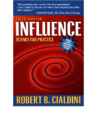
ity to serve as an enjoyable, practical, yet scientifically documented offering. In a re- lated vein, the book might be seen as a way to demonstrate that, properly presented, what often seems like dry science can actually prove to be lively, useful, and relevant to all readers' personal lives. Comment on the Fifth Edition of Influence: Science and Practice It has been some time since Influence was last published. In the interim, some things have happened that deserve a place in this new edition. First, we now know more about the influence process than before. The study of persuasion, compli- ance, and change has advanced, and the pages that follow have been adapted to re- flect that progress. In addition to an overall update of the material, I have devoted special attention to updated coverage of popular culture and new technology, as well as to research on cross-cultural social influence-how the influence process
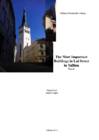
It was not until the 18th century that the name Lai also started to appear. In 1872, when the street names were being fixed, Lai remained the sole name of the street. 4 1 Lai Street / 4 Nunne Street A good example of Neo-Renaissance and early Art Nouveau styles combined is Lai Street 1, the present Youth and Puppet Theatre, erected at the beginning of the 20th century as the Nobility Club. The three-storey building replaces two medieval properties. In 1784 an amateur theatre began playing in a house situated in the same place and soon became a professional German City Theatre. The famous German writer August von Kotzebue (1761-1819), the life and soul of the theatre, lived in Tallinn for several long periods. (Otto von Kotzebue, the son of August von Kotzebue, accompanied explorer Adam Johann von Krusenstern on his Journey around the World of 18031806.) Estonian was heard
In everything is altogether wrong; You ought to set a good example for 'em; Their dear departed mother did much better. You are extravagant; and it offends me, To see you always decked out like a princess. A woman who would please her husband's eyes Alone, wants no such wealth of fineries. CLEANTE But, madam, after all . . . MADAME PERNELLE Sir, as for you, The lady's brother, I esteem you highly, Love and respect you. But, sir, all the same, If I were in my son's, her husband's, place, I'd urgently entreat you not to come Within our doors. You preach a way of living That decent people cannot tolerate. I'm rather frank with you; but that's my way-- I don't mince matters, when I mean a thing. DAMIS Mr. Tartuffe, your friend, is mighty lucky . . . MADAME PERNELLE He is a holy man, and must be heeded; I can't endure, with any show of patience, To hear a scatterbrains like you attack him. DAMIS What! Shall I let a bigot criticaster Come and usurp a tyrant's power here?
"My dear Mr. Bennet," said his lady to him one day, "have you heard that Netherfield Park is let at last?" Mr. Bennet replied that he had not. "But it is," returned she; "for Mrs. Long has just been here, and she told me all about it." Mr. Bennet made no answer. "Do you not want to know who has taken it?" cried his wife impatiently. "You want to tell me, and I have no objection to hearing it." This was invitation enough. "Why, my dear, you must know, Mrs. Long says that Netherfield is taken by a young man of large fortune from the north of England; that he came down on Monday in a chaise and four to see the place, and was so much delighted with it, that he agreed with Mr. Morris immediately; that he is to take possession before Michaelmas, and some of his servants are to be in the house by the end of next week." "What is his name?" "Bingley." "Is he married or single?" "Oh! Single, my dear, to be sure
Idealization of Nature in Romantic Poetry One of the main characteristics of romanticism in general is the constant praising of nature and connecting it with almost everything. As the second half of the 18 th century was the time of the industrial revolution, urbanization and mankind's distancing from nature in every way, it is not surprising that as a result it became more and more important to and valued by people it had suddenly become something remote and far from everyday life, somewhat a luxury. The utmost way this luxury manifests in romantic poetry is nature's ability to help whoever takes the time to value its divinity get in touch with themselves and get away from everything that might influence their way of acting. Nature provides the ideal atmosphere and
Adherent connotation is the shade of meaning the word requires in a particular context only. Outside this context this shade of meaning is not present. INHERENT CONNOTATION (IC) 1. IC may be secured by the very object, quality or notion that word denotes. Positively charged words are: noble, manly, virtue, beauty, love, etc. Negatively charged words: nasty, vulgar, greedy, sin, death, fool, etc.). This connotation is called referential; it depends on the referent (mean the thing the word stands for). 2. IC may depend on the structure of the word. Such words normally have a transparent structure and more often negative affixes are used (e.g. unkind, impolite, injustice, heartless, etc.). This kind of connotation is purely linguistic. 3. Emotional connotation characterizes words in synonymic sets that occupy the so-called final position (e.g. big
Finding a roommate has never been easy, but for some, the endeavor has lately assumed all the urgency, emotion and extreme specificity of shopping for a life partner. Last month, just in time for leases to turn over, the housing portion of Craigslist, the uber-community bulletin board and road map to the 20-something's psyche, featured dozens of impassioned tone poems, vivid personal biographies and ideological wish lists. Unfettered by space restrictions -- since Craigslist is free and space on the Internet is boundless, the word count of housing posts can stretch into the thousands, and some do -- and schooled in a culture of idealism that's uniquely 21st century, those in search of shared housing and compatible mates are crafting come-ons that are as far removed from, say, "female nonsmoker wanted" as a business card is from a doctoral thesis. Consider the efforts of Ms. Berger, 28, and Ms. Hazard, 24, who advertised eloquently
development. The central theme of this dissertation rests on the commitment of the Cadle Primary School towards children`s right to participation as underpinned in the Article 12 of the UNCRC. The Cadle Primary School is one of the first schools in Swansea to adopt the UNCRC through the Rights Respecting School programme (RRSA). The RRSA school initiative is developed by the UNICEF UK, which encourages the schools to place the UNCRC `at the heart of its ethos and curriculum across all areas of the school`. 7 Thereupon, the primary goal is to critically explore the spaces the Cadle has created for children that allow them to actively to engage with meaningful discussions on the matters that concern them.The Cadle Primary School was chosen for this study mainly due to the growing interest of the author towards citizenship education after recognizing a great change in her children`s personal and social development
A month later Estonia joined the United Nations. In 1997 the population reached 1.462 million; from this Estonians total 65% (950,124) and other nationalities 35%. The capital Tallinn, mentioned for the first time in 1154, has a population of 434,800 (1995). Other important towns are Tartu, Kohtla-Järve, Narva and Pärnu. Estonia is a developed industrial and agricultural country. In industrial output: oil shale, electrical energy, mineral fertilisers, paper, chemicals, building material, and textile production are prominent. In agriculture: milk, milk products, meat, grain, potatoes, fruits and vegetables. Estonian cultural life is manifold and intense, initiated by the National Awakening movement during the second half of the 19th century. Estonian folk arts date back to the remote past. In Estonia there are 27 higher educational establishments, among them seven universities with more than 25,000 students and post-graduates
coat. 4 mistake for 8 come up with resemblance between my dad and me. I can't see it myself, not facially anyway 3 Well, she would keep driving too 2 1 bring about 5 go ahead although there are certain similarities fast in the town. 2 fall through 6 go down with in our physical build. I also seem to 4 Well, he would keep misbehaving 3 tip off 7 come to have inherited his big feet, unluckily in class. 4 come up with 8 mistake for for me. It was the first thing my parents 5 Well, you would keep eating too noticed when I was born! 3 1 Laura was offered a place at
old. 3 1 was getting, arrived Challenge! 2 It's a mixed class of girls and boys. 2 was preparing, cut Students' own answers 3 It's difficult to tell what kind of 3 discovered, were building 1E Past perfect simple and lesson their in. 4 started, was talking 4 It could be that they're in a maths 5 found, was living continuous page 8 lesson.
 annaabi.ee