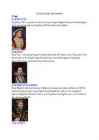
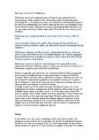
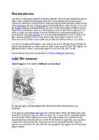
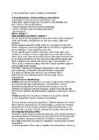
King William I When William died his lands were divided between his eldest two sons. Robert inherited Normandy, while William became king of England. Died from injuries EDWARD V He and his brother Richard were murdered in the Tower of London Alfred the Great - King of Wessex (part of England). All British modern British monarchs trace from the Wessex line. William I, the Conqueror. Founder of the modern British state. Henry II - added Ireland the British possessions John I - signed Magna Carta, the beginigs of the British constitution Edward I - conquered Wales
Subsequently järgnevalt Tendency kalduvus Incremental kasvav Pulpwood pabripuit Stumpage puidu langetamise hind Rapidly kiiresti Resemble sarnanema Consistent järjepidev Asserting kinnitades Contrary vastupidi Postwar sõjale järgnev aeg Prewar sõjale eelnev aeg Exceed ületama Sufficiency piisavus Stagnation seisak Comparative võrdlev Deterministic deterministlik Stochastic stohhastilise Postpone pikendama Thus seega Burden koormus Inherited päritud Comprehensive ulatuslik Solely ainult Denote tähendama Uncertainty ebakindlus Fluctuation kõikumine Vary varieeruma Consequence tagajärg
For example, the class Dog might have sub-classes called Collie, Chihuahua, and GoldenRetriever. In this case, Lassie would be an instance of the Collie subclass. Suppose the Dog class defines a method called bark() and a property called furColor. Each of its sub-classes (Collie, Chihuahua, and GoldenRetriever) will inherit these members, meaning that the programmer only needs to write the code for them once. Each subclass can alter its inherited traits. For example, the Collie class might specify that the default furColor for a collie is brown-and-white. The Chihuahua subclass might specify that the bark() method produces a high pitch by default. Subclasses can also add new members. The Chihuahua subclass could add a method called tremble(). So an individual chihuahua instance would use a high-pitched bark() from the Chihuahua subclass, which in turn inherited the usual bark() from Dog. The chihuahua object
East India Company In 1815 William was sent to England 20th August 1836 William married Isabella Gethin Shawe Died on 23 December 1863 Education 1817 attends school on Chiswick Mall 1822-1828 in Charterhouse 1828-Camberidge 1829-1830-Trinity 1831-1833-studies law in Middle Temple, London 1834-1835-studies art in Paris Stepping Into World Went to German After returning lived of young indulgent man Thackeray inherited £ 20,000 from his father In 1832, Thackeray met William Maginn Bad times with his wife Thackeray worked as a freelance journalist for about 10 years Works Contributions to Punch, 1843-1854 The Book of Snobs Miss Tickletoby's Lectures on English History Papers by the Fat Contributor The History of the Next French Revolution A Little Dinner at Timmins's Fiction The Luck of Barry Lyndon, 1844 Mrs. Perkin's Ball, 1846 Vanity Fair, 1847 Pendennis, 1850 Henry Esmond, 1852
King George III was the first Hanoverian monarch to be born in England. Notably, King George III was the first monarch since Queen Anne to put Britain before Germany, or Hanover. King Henry I Henry is the first English king of the Normans. Son of William I and Matilda of Flanders, he was crown on 6th August, 1100 at Westminster Abbey. He married twice, one of his wives was a Scottish princess. King Henry I was king of both England and Normandy. Henry I was brother to Rufus, from whom he inherited the throne. King William II, Rufus King William II (Rufus) was often known as William the Red due to his odd red colour and hair/complexion. William II is William I son and inherited England while his brother inherited France. William II died under suspicious circumstances. King Henry V King Henry V is one of the most well-known English kings, thanks to Shakespeare. Unknown to a lot of people, Henry V was the first English king who could read and write easily in English.
dysplasias include: 1. Achondroplasia (one per 26,000 to 40,000 births) 2. Diastrophic dysplasia (one per 110,000 births) 3. SED (one per 95,000 births) Primordial dwarfism A rare form of dwarfism that results in a smaller body size in all stages of life beginning from before birth. Potential causes Many forms of dwarfism are usually the result of a spontaneous mutation in a single gene from averagesized parents. By genes inherited from one or both parents. Diagnosis Through prenatal testing. Most cases are not identified until after the child is born. Treatment Hormonal therapy. Limblengthening surgery. Most forms of dwarfism cannot be treated or cured. Prevention Prompt treatment of any childhood illnesses and proper nutrition. During pregnancy avoiding cigarettes and alcohol. Some causes of dwarfism are genetic. There are no ways to prevent them. Interesting facts
GLOBE THEATRE. Liis-Mariin Remmelg The Globe Theatre was a theatre in London associated with William Shakespeare. It was built in 1599 by Shakespeare's playing company, the Lord Chamberlain's Men, on land owned by Thomas Brend and inherited by his son, Nicholas Brend and grandson Sir Matthew Brend, and was destroyed by fire on 29 June 1613. A second Globe Theatre was built on the same site by June 1614 and closed The Globe was owned by actors who were also shareholders in Lord Chamberlain's Men. Two of the six Globe shareholders, Richard Burbage and his brother Cuthbert Burbage, owned double shares of the whole, or 25% each; the other four men, Shakespeare, John Heminges, Augustine Phillips, and Thomas Pope, owned a
According to the laws of male primogeniture effective in the mid-nineteenth century, estates went to the closest male descendant of the original owner. Since Old Mr. Dashwood has no sons, his estate is bequeathed to his nephew, Henry Dashwood. Henry, in turn, leaves the estate to his eldest son, John. However, as Austen notes, Henry Dashwood's money was far more vital to his daughters than to his son, because John was already provided for both by his mother's fortune--which he inherited as eldest son--and by the money he received by marrying his own wife. (In general, a man inherited all of his wife's money upon marriage, though the wife usually entered into the marriage with a "settlement," a legal document ensuring that some of her property would revert to her or her children following her husband's death.) In this case, the money that Mr. Henry Dashwood's late first wife brought to the marriage was settled on their son John, and
Today, the practice of plural marriage continues among tens of thousands of Mormon fundamentalists, mostly in the western United States, Canada, and Mexico, where it is generally illegal. Practitioners are almost never prosecuted. They even have their own private schools for the children who grow up in polygamous families. In some countries polygamy is much needed, without it people would not be able to keep up their farms. It helps them to get food more easily and share the property they inherited from their parents. I think that in about hundred years or so there will be no more polygamous families.I believe people are too jealous to share their loved ones. Although people in the all countries are getting more and more accepting towards different lifestyles and customs. People have fought and sacrificed their lives so this type of lifestyle would be accepted. If people have gave their lives for this then it must have meant something important to them. In conclusion I support
Bennet - Elizabeth's father. Mrs. Bennet - wife of Mr.Bennet and mother of Elizabeth and her sisters. Mr. Bingley- Darcy's friend, who becomes fond of Jane Summary of the plot: In Georgian England, Mrs. Bennet raises her five daughters - Jane, Elizabeth, Mary, Kitty and Lydia with the purpose of getting them married with a rich husband that can support the family. They are not from the upper class, and their house in Hartfordshire will be inherited by a distant cousin if Mr. Bennet dies. When the wealthy bachelor Mr. Bingley and his best friend Mr. Darcy arrive in town to spend the summer in a mansion nearby their property, the shy and beautiful Jane falls in love with Mr. Bingley. Lizzie finds Mr. Darcy an arrogant and proud man, and she swears to loathe him forever. This is the beginning of their wonderful love story. My opinion: I found the book quite interesting, not as good as I had expected or hoped, but still something
TOPIC 8 The greatest poet of Scotland Robert Burns is loved by all Scotsmen as their greatest poet. The future poet was fortunate in his father who was understanding, friendly and fearless man. So it was probably from him that the poet inherited his great love and undrestanding of people. From his mother he, too, learned something that was to be value to him. His mother often sang the old songs and ballads of the countryside. Although William Burns, Robert´s father, was a poor peasant, he was man who valued knowledge. His greatest wish was to give his children the best education in his power. It was from him where Robert received his love of books. When Robert was six
emotional needs. Life is busy and complicated enough, so why not have someone make things simple suited to your life but good for your health. A Nutritional Therapist takes a comprehensive case history covering your current and past health, diet, and lifestyle, as well as your family health. They may also ask you to provide the results of blood test or other tests done by healthcare professionals, to assess your nutritional status and inherited genetic strengths and weaknesses. ֎For For exampleexample, blood tests show vitamin D levels and a Nutritional Therapist can recommend what foods to eat should your vitamin D levels be low and explain what symptoms low vitamin D level may cause. Recommendations by Nutritional Therapists may also include guidance on supporting your digestion and absorption, natural detoxification, and stress management.
The Literary Analyses of "Beowulf" "Beowulf" is a heroic epic that was written down around 1000 AD in Old English. The poem's composition, however, is considered to date back to about 700 AD, meaning that it is from the Anglo-Saxon literary period. The epic was most probably created by scop(s) who composed it for entertainment and in praise of their master. Over the three centuries the epic was being changed and adapted by them, as it was inherited by word of mouth. The events occurring in the poem are set in Southern Scandinavia, Geatland and Denmark, in the fifth and sixth centuries. It should be observed that the narrative is written in the third person point of view and the narrator is omniscient. The subject matters in this poem are restricted to war and death. This was their present and therefore interesting to them as they could identify with the characters.
Usually a small countries where income tax for foreign companies are low. Such as Liechestein, Monaco, the Cayman Islands, the Bahamas. Off-shore comapny- is a company what is registered in tax haven. Evasion-illegal tax avoidance. Trying illegally not to pay tax. Corpotation tax- (ettevõtte tulumaks)Tax on the profits made by a company. Value-added tax- (lisaväärtusmaks)goods bought in stores. Tax imposed as a percentage of the invoice value of goods and services. Transfer tax, inherited tax, death duty- money recived from relatives after their death Income tax, social security tax, national insurance- salaries and wages. Tax on persons income. Tariffs- goods made in other countries. Capital gain tax- income tax 21/79- (kapitali kasumaks)money made by selling stock at a profit. Proportional- flat tax- a tax that has one rate is the same for everybody. Progressive income tax- a tax that has a higher rate for taxpayers with higher income.
Bennet is the owner of the medium-sized Longbourn estate in Hertfordshire. He is an intelligent man, who dislikes the frivolity of his wife and three younger daughters. He is closest to Elizabeth, who is the main female protagonist. She is intelligent, lively, attractive and witty.Mrs. Bennet finds the most important thing is to find husbands for her five daughters. In my oppinion, she is quite frivolous and narrow-minded. Unfortunately for the Bennets, if Mr. Bennet dies their house will be inherited by a distant cousin Mr. Collins. So the family's future happiness and security is dependant on the daughters making good marriages. Life is uneventful until the arrival in the neighbourhood of the rich gentleman Mr Bingley, who rents a large house so he can spend the summer in the country. Mr Bingley brings with him his sister and the dashing but proud Mr Darcy, who is the main male protagonist. Darcy is the wealthy owner of an estate in Derbyshire. He is
party, a lack of funds, and the intervention of the American Civil War. A difference in shading of the marble, visible approximately 150 feet (46 m, or 27%) up, shows where construction was halted for a number of years. Its cornerstone was laid on July 4, 1848; the capstone was set on December 6, 1884, and the completed monument was dedicated on February 21, 1885. It officially opened October 9, 1888. Upon completion, it became the world's tallest structure, a title it inherited from the Cologne Cathedral and held until 1889, when the Eiffel Tower was finished in Paris, France.
Which individuals survived in hard times, and which died? Luck was probably the largest factor, but not the only one, other factors applied, such as the strong, the courageous, or the adaptable had a somewhat better chance of surviving than those who lacked those characteristics. To the degree that strength, drive, or adaptability were acquired characteristics, they would have no effect on future generations since Lamarckianism had been proven wrong. But to the degree that some individuals inherited these characteristics, they were more likely to survive, to hand down these same characteristics to their descendants. As the lower branches of the ancient African trees were plucked bare, the longer-necked ancestral giraffes were more likely to survive than their shorter-necked cousins, and they handed down the tendency toward long necks to their descendants. The modern, long-necked giraffe thus evolved through countless generations of natural selection.
The Mysterious Affair at Styles, published in 1920, is Agatha Christie's first novel. In it Agatha introduces her world-famous Belgian detective, Hercule Poirot. The story begins when Captain Hastings, recovering(taastama) from wounds he suffered during the World War I, runs into an old friend, John Cavendish. Hastings is invited down to Styles, where Cavendish lives, to recuperate. At Styles, the center of attention is Emily Inglethorp, John Cavendish's stepmother. Emily inherited Styles from John's father when he died and runs the household with a firm hand. Hastings describes her as "an energetic, autocratic personality" with a fondness for "playing the Lady Bountiful." She is devoted to charitable causes and is always getting involved(haaratud) in bazaars and other functions. Emily hasn't changed since Hastings last saw her, and there is no question of who is running the show at Styles. Emily Inglethorp's presence and conversation dominate everyone's life at Styles
United Kingdom AT115 Martin Pillai Early history • In 1066, the Normans invaded England from France • In 1603, the kingdoms of England, Scotland and Ireland were united in a personal union when James VI, King of Scots, inherited the crowns of England and Ireland and moved his court from Edinburgh to London • In the mid-17th century, all three kingdoms were involved in a series of connected wars, which led to the temporary overthrow of the monarchy and the establishment of the short-lived unitary republic of the Commonwealth of England, Scotland and Ireland. Acts of Union • On 1 May 1707, the united Kingdom of Great Britain came
of the national money income, while 90 per cent recieve the remaining 55 per cent. The distribution of property is even more uniequal. 1 per cent of the population own 60 per cent of the saleable assets of the nations. Individual incomes range from £1 000 000 a year to £50 per year. This extreme degree of inequality is due to the right of inheritance at present vested in the legal institution of property. Large individual fortunes are, for the most part, made up of inherited property. The rich, as a class, are born with silver spoon in their mouths and the economic privileges that they enjoy were not acquired by the possession or exercise of great talents, but by the accident of birth. Social inequality. The apparatus of social hierarchy is amazingly complete. It is manifest in the Court with its great expense and elaborate display; the country house with its ancient associations and dependent village; the segregation of a group of schools (ironically called
I think it was allowed because those five were the major powers of the world on what the peace of the world depended . c) The specialized Agencies of the United Nations were the International Telecommunications Union ITU , which co-ordinates the telegraph and telephone links between countries and the Universal Postal Union UPU which performed a similar service for mail. Those two were some of the older international organisations. It also inherited some departments from the Leafue of Nations like the International Labor Organization ILO , which employs experts to make studies of the working conditions in various industries, give work training and so on and the International court at the Hague in Holland. There also in the World Health Organization WHO, hich is helped by the richer memeber countries and the Food and Agricultural Organization FAO which experts have
Queen is the official Head of State. Britain has a constitutional monarchy where the Queen only rules symbolically; in reality, power belongs to Parliament. The Queen has the final say on whether a bill becomes law. Parliament represents the peopleParliament is made up of three parts: The Queen, The house of lords and the house of commons. The House of Lords is made up of people who have inherited family titles and those who have been given titles because of their outstanding work.(675)( they 'double check'new laws, to make sure they are fair and will work. The House of Commons has 659 members who have been elected by local residents to represent an area of the country in Parliament. 27. (most important place for discussing policies and making laws.) There are 2 main parties that have contolled by the government since 1945
million people. The UK flag is called the Union Flag. It is sometimes referred as the Union Jack. It is the flag of Great Britain and Northern Ireland. The flag is actually three flags in one. It is made up from the England flag, the Scotland flag and the patron saint of the Ireland's flag. Parlament is the most important authority in Britain. Parlament is made up of two chambers the House of Commons and the House of Lords. The House of Lords is made up of people who have inherited family titles and those who have been given titles because of their outstanding work in one filed or another. There are 675 members of the Lords. The main job of the House of Lords is to ´double check` new laws to make sure they are fair and will work. Many people think that the House of Lords should be abolished. The House of Commons have 659 members who have been elected by the British public. The members are called MPs (Members of Parlament). Each MP
the gene, cinnamon, was apparently unfamiliar to Shaw (or not reflected in his terminology). Shaw’s Barrington Brown article was first written in the 1960’s in the Journal of Cat Genetics, and reprinted in the early 1970’s in Cats Magazine and has been subject to much reinterpretation, especially when a dilute modifier emerged in the cat fancy. According to Shaw's breeding data, Barrington Brown (mahogany brown) dilution was inherited in much the same way as “standard chocolate dilution" (black/chocolate alleles) by reducing the amount of pigment in the hair and by producing elliptical pigment granules instead of round granules. Elliptical pigment granules refract light differently and give a reddish-brown colour instead of black/sepia. In Shaw's terminology which can confuse modern readers, chocolate is a dilute of black (while blue is "maltesing" of black).
SVO, SOV, VSO most common. Adposition and podposition were both possible (eesliide ja tagaliide). About syntax: clauses were joined much simpler than nowadays, using and, then etc. Because of case syncretion the word order in a sentence became much more important to be able to tell the difference between words. FIRST CONSONANT SHIFT (GRIMM'S LAW) Grimm's Law (also known as the First Germanic Sound Shift or Rask's rule) is a set of statements named after Jakob Grimm describing the inherited Proto-Indo-European (PIE) stop consonants as they developed in Proto-Germanic (the common ancestor of the Germanic branch of the Indo- European family) in the 1st millennium BC. It establishes a set of regular correspondences between early Germanic stops and fricatives and the stop consonants of certain other centum Indo-European languages (Grimm used mostly Latin and Greek for illustration). Grimm's law consists of three parts which form consecutive phases in the sense of a chain shift.
being put to jail. When the pig does not eat anymore because of that then Lord Emsworth starts to worry about it and starts searching for solutions. At the same time a young relative of his, Angela, is brought to the castle by his sister to be kept away from flirting with a lower class man. Also, his sister tells Lord Emsworth to meet with the man and tell him that if they should marry, Angela will not have any money that she inherited for another 4 years. So he goes to London to meet him. While speaking with him, he gets on the subject of pigs and finds out that the man used to be a pig caller. So he teaches Lord Emsworth the universal pig call, which is supposed to call any pig to its manger and make it eat. After hearing it Lord Emsworth rushes out without even speaking a word on the matter he was sent there. During the trip back he falls asleep and forgets the call
THE ROAD OF DREAMS, 1925 THE MYSTERIOUS MR. QUINN, 1930 Young Agatha Christie: Old Agatha Christie: PLOT The story begins when Captain Hastings, recovering(taastama) from wounds he suffered during the World War I, runs into an old friend, John Cavendish. Hastings is invited down to Styles, where Cavendish lives, to recuperate. At Styles, the center of attention is Emily Inglethorp, John Cavendish's stepmother. Emily inherited Styles from John's father when he died and runs the household with a firm hand. Hastings describes her as "an energetic, autocratic personality" with a fondness for "playing the Lady Bountiful." She is devoted to charitable causes and is always getting involved(haaratud) in bazaars and other functions. Emily hasn't changed since Hastings last saw her, and there is no question of who is running the show at Styles. Emily Inglethorp's presence and conversation dominate everyone's life at Styles.
As she regains her health, St. John finds her a teaching position at a nearby charity school. Jane becomes warm friends with Mary and Diana, but St. John is too reserved for her to relate to, despite his efforts on her behalf. Jane sees that the brother and sisters have money-related worries, but does not enquire further. Rosamond Oliver shows an St. John tells Jane she has Jane considering St. John's interest in St. John. inherited £20,000. proposal. When the sisters leave for governess jobs in London, St. John becomes more comfortable around Jane, evidencing his own conflicts of the heart, which involve the beautiful and wealthy Rosamond Oliver. When Jane confronts him about his feelings for Miss Oliver, he confesses that he has turned away from them, because he feels called to be a missionary, and he knows that Miss Oliver would not accept such a life. St
British politics. Everyone wants to know what has been decided behind the closed doors of the Cabinet Room! Britain is administered from the Palace of Westminster in London. This is also known as the Houses of Parliament. Parliament is made up of two chambers - the House of Commons and the House of Lords. The members of the House of Lords are not elected; they qualify to sit in the House because they are bishops of the Church of England. aristocrats who have inherited their 'seats' from their fathers, people with titles, or senior judges of the legal system. There has been ta lk of reform this century because many Britons think that this system is undemocratic. The House of Commons, by contr'ast, has 651 seats which are occupied by Members of Parliament (MPs) who are elected by the British public. The United Kingdom is divided into constituencies, each of which has an elected MP in the House of Commons
home library. She had been strangled to death. Nobody nearby recognized the poor girl but police from a nearby county identified the body as a missing 18-year-old woman. She was a dancer at the Majestic Hotel and this leads the investigation there. There are many suspects-the widower of Conway Jefferson's daughter and the widow of his son because Conway wrote a will and put Ruby in it although he had known her only for about a week and she would have inherited lots of money from the sick man although the widower was in money problems. Ruby was Josie Tuner's replacement in the dancing show as Josie had injured her ankle but Ruby was doing very well and Josie was afraid she would lose her job. The situation becomes more complicated when the burnt-out wreck of George Bartlett's car is found, with a second murder victim inside it. This body is charred beyond recognition, but on the basis of fragments of clothing it is identified as Pamela
His modest background and upbringing are crucial to his development as a writer. Chekhov always felt that he missed out on childhood. It was a very hard lifeand it may have contributed to his poor health: he succumbed later on to the"family disease", tuberculosis, which led to his early death at the age of 44.His mother was a quiet, gentle soul who was full of stories of her early life. In later years, Chekhov would say that "we inherited our talent from our father,but mother gave us soul". The other great passion of his formative years was nature, the Russiancountryside. As a port, Taganrog was surrounded on all sides by the landscapes of the Steppe and Chekhov's earliest stories reveal how intensely aware he was of his bond with the Don Steppe. Chekhov had always claimed that medicine was his wife and literature his mistress. Chekhov had lived for much of his career as a writer under the shadow of the great literary
to come to the throne and establish the Stewart Dynasty. The Stewarts ruled Scotland for the remainder of the Middle Ages. The country they ruled experienced greater prosperity from the end of the 14th century through the Scottish Renaissance to the Reformation. This was despite continual warfare with England, the increasing division between Highlands and Lowlands, and a large number of royal minorities. Modern history In 1603, James VI King of Scots inherited the throne of the Kingdom of England, and became King James I of England, and left Edinburgh for London. With the exception of a short period under the Protectorate, Scotland remained a separate state, but there was considerable conflict between the crown and the Covenanters over the form of church government. After the Glorious Revolution, the abolition of episcopacy and the overthrow of the Roman Catholic James VII by
support, and comfort from their parents, and on nothing else. But government being for the benefit of the governed, and not the sole advantage of the governors, (but only for their's with the rest, as they make a part of that politic body, each of whose parts and members are taken care of, and directed in its peculiar functions for the good of the whole, by the laws of society) cannot be inherited by the same title, that children have to the goods of their father. The right a son has to be maintained and provided with the necessaries and conveniences of life out of his father's stock, gives him a right to succeed to his father's property for his own good; but this can give him no right to succeed also to the rule, which his father had over other men. All that a child has right to claim from his father is nourishment and education, and the things nature
members of the House of Lords. The term is used to differentiate these members—who are either life peers or hereditary peers, although the hereditary right to sit in the House of Lords was abolished for all but ninety-two peers in 1999—from the Lords Spiritual, who sit in the House as a consequence of being bishops in the Church of England. Hereditary peers Hereditary peers form part of the peerage in the United Kingdom. There are over eight hundred peers who hold titles that may be inherited.[1] Formerly, most of them were entitled to sit in the House of Lords, but since the House of Lords Act 1999 was passed, only ninety-two are permitted to do so, unless they are also a life peer. [2] Peers are called to the House of Lords with a writ of summons. Life peers In the United Kingdom, life peers are appointed members of the peerage whose titles cannot be inherited, in contrast to hereditary peers. In modern times, life peerages, always
This is the group that took over the baton from the former colonial rulers. They took over the opulent life lived by the oppressors. Rather than eliminate the excesses of the Caucasian masters, the elite saw their takeover as an opportunity to double the pain of the masses of the people. Their claim to the throne vacated by the Caucasians was that they had gone to school, an education in which practical learning was not a requirement. The elite inherited the European’s position; he inherited his huge offices; he inherited his more than 10 messengers; he inherited his sex on demand from his numerous secretaries; he inherited his disrespect of his subordinates; he inherited more than three cars; he inherited his huge houses with several servants and drivers. He inherited his demand for unquestioned authority and obedience. He was pampered beyond human endurance by the masses who expected to see a difference from Caucasian behaviour
Since the situation was peaceful at home, he began fighting with France again in 1415. His war was as popular as Ed III's had been. The French king was mad & his nobles were quarrelsome. He managed to capture most of Normandy & the nearby areas. By the treaty of Troyes in 1420 Henry was recognised as heir to the mad king & married Katherine of Valois, the king's daughter. But he never became the king of France, he died a few months before the French king. His 9-month-old baby son Henry VI inherited the thrones of England & France. Henry the V's brother John duke of Bedford continued to enlarge the area under English control, but soon the French, inspired by Joan of Arc began to fight back. John of Bedford died in 1435 & with the loss of Cascony in 1453 the Hundred Years War was over. England had lost everything except for the newly captured port of Calais. Henry VI grew up to be simple-minded & book-loving. He hated the warlike nobles & was unsuitable for such a violent society
overlooked. 54. Stereotyping- - a fixed, over generalized belief about a particular group or class of people. 55. Social class- Social class (or, simply, class), as in class society, is a set of concepts in the social sciences and political theory centered on models of social stratification in which people are grouped into a set of hierarchical social categories,[1] the most common being theupper, middle, and lower classes. 56. Upper classes- The Upper Classes: people with inherited wealth, defined by their title, their education, and their pastimes (hunting, shooting, fishing, horse riding) 57. Nobility/ aristocracy- a privileged class holding hereditary titles; the hereditary aristocracy recognised formally as a social class 58. Peer/ nobleman- a nobleman; a member of one of the five degrees of the British nobility (duke, marquis, earl, viscount, baron) 59. Gentry- in a restricted sense, those between the nobility and the yeomanry, the landed people
effect on enzyme; in synapses; slows down fall in ACh concentration/keeps some ACh at synapses/slows breakdown of ACh; in parts of brain associated with memory; improved short term memory; 3 max [8] 48. innate/instinctive/stereotypic; inherited/genetic/inborn; does not require, learning/conscious thought; AVP; e.g. reflex 3 max searches for breast/bottle/AW; 4 max [4] 49. (a) plants/protoctists; animals/fungi/protoctists;
• Non-structural, “using” relationship III Relationships: Generalization • A relationship among classes where one class shares the structure and/or behavior of one or more classes • Defines a hierarchy of abstractions in which a subclass inherits from one or more superclasses – Single inheritance – Multiple inheritance • Generalization is an “is-a-kind of” relationship What Gets Inherited? • A subclass inherits its parent’s attributes, operations, and relationships • A subclass may: – Add additional attributes, operations, relationships – Redefine inherited operations (use caution!) • Common attributes, operations, and/or relationships are shown at the highest applicable level in the hierarchy IV Relationships: Realization • One classifier serves as the contract that the other classifier agrees to carry out • Found between:
historical life of the group. Ameerika antropoloog Edward Sapir 1924. Culture, Genuine and Spurious. Americal Journal of Sociology. Kultuur on mis tahes sotsiaalselt päritud element inimese elus, olgu siis materiaalne või vaimne. 4 1. loeng Sissejuhatus: kultuuri mõistest ja määratlustest Culture is any socially inherited element in the life of man, material and spiritual. Ameerika sotsioloog Talcott Parsons 1949. Essays in Sociological Theory. Kultuur koosneb neist mustritest, mis on seotud teatud käitumisega ja inimtegevuse tulemitest, mis võivad olla päritud, s.t, edastatud põlvest põlve sõltumatult bioloogilistest geenidest. Neis kultuuridefinitsioonides rõhutatakse eeskätt kultuuri sotsiaalset päritavust, mis on samas erinev bioloogilisest pärinemisest.
Teadusartikkel peaks sisaldama järgmisi osasid: sissejuhatus, meetodi kirjeldus, tulemuste esitamine ja diskussioon. Update Code:20090107PMID: Early and Very Early Parenting Maternal Emotions and Human Development By Bruce H. Lipton, Ph.D. (1995) For nearly a hundred years, we have been enslaved with the notion that our fate is locked in our genes. This vision, grounded in the dogma of traditional medical sciences, perceives that organismal development represents a simple read-out of inherited genetic programs. The dogma, officially couched as the "primacy of DNA," concedes that genes play a causal role in controlling biological expression and behavior by their ability to turn themselves on and off. This perspective on the role of genes has lead to the concept of "genetic determinacy," the idea that our lives are predetermined by the hard-wiring of gene programs. Whenever deviations in behavior or alterations in physiology arise, genetic determinists immediately
size and value of each manor. Their records formed the Domesday Book which provided information for William’s tax officers. French became the language of the country’s ruling class for several hundred years. But Anglo-Normans had to talk to the conquered population – traders, craftsmen and peasants, and fairly soon they (the third generation) became bilingual. The Anglo-Norman Empire William controlled two large areas: Normandy, which he had inherited from his father, and England, which he had won in war. As duke of Normandy he had to recognize the king of France as his lord, whereas in England he was king with no lord above him. Through a number of marriages, William’s successors added to Normandy the provinces of Anjou6, Aquitaine7 and Brittany, and expanded their territories in France to the Pyrenees. King Henry II (1154–1189) controlled a greater area than the king of France.
It is surrounded by over 1,000 smaller islands. The island is part of the United Kingdom of Great Britain and Northern Ireland, constituting most of its territory: most of England, Scotland, and Wales are on the island, with their respective capital cities, London, Edinburgh, and Cardiff. (wikipedia, 2015) The Kingdom of Great Britain resulted from the Union of Scotland and England in 1707. More than a hundred years before, in 1603, King James VI, King of Scots, had inherited the throne of England, but it was not until 1707 that the Parliaments of the two countries agreed to form a single kingdom. Subsequently, in 1801, Great Britain united with the neighboring Kingdom of Ireland, forming the United Kingdom of Great Britain and Ireland. When five-sixths of Ireland seceded from the United Kingdom in 1922, the state was renamed the United Kingdom of Great Britain and Northern Ireland. 1.2 National Symbols and Nation Building
5 obsolete 4 1 I've asked you time and time 3 1 There's a strong resemblance again to keep the noise down. between Paul and Joe. 1D Sporting origins page 67 2 She recognised him at once. 2 Phobias can be genetically 3 He's working at his father's shop inherited. 1 1 staunchly / resolutely for the time being. 3 When it comes to politics, 2 By and large 4 They'll be here any moment now. Edward and his dad have a lot in 3 swiftly 5 Everybody makes mistakes once common. 4 loosely in a while
system developed mailny in 9th C, loyal dynasties became independent and started to build up small territorial states Manor system- political, economical, social system, peasants depended on their land and lord The head of the society was the lord of the manor, part of his land was rent out or by military Peasants who held a land and field, were attached tot heir land, paid for in money or labour Edward the Confessor The king of England, inherited the srtongest government in 11th C Europe The royal writs appeared, was a brief notification to the shire-earl and the bishop that a grant of land had been made and should be witnessed in court Wax seals, clerical staff Highly efficient tax system, real rulers were advisors and noblemen Harold Godwinson The last Anglo-Saxon king, nominated as successor by Edward Strong ruler, skilled general Defeated the Norman invaders, was killed in
Pay damages kahjutasu maksma Beneficiary kellegi kasuks Bring actions kohtuasja algatama Breach of contract lepingu rikkumine Specific performance täitmine natuuras Trust hooldusel olev ese või vara Trust deed volikiri Source of law õiguse allikas Avoid the obligation to kohustust välitma Computer theft arvuti abil kahju tegemine (nt häkkimine) Former, ex endine Evidence, proof tõend Unified ühine Codified kodifitseeritud inherited pärima egalitarian kõik on võrdsed (pole term) lawmakers seadusetegijad judiciary kõik kohtunikud kokku canon law kanooniline-/kirikuõigus supersede, replace välja vahetama/tõrjuma impact, influence mõju challenge vaidlustama secular ilmalik section paragrahv (seaduses) põhiseaduses voib olla sectionite asemel article. Employment contract, employment agreement, labor contract töölevõtuleping
Imports contribute to welfare, but for that to be sustainable, any country also has to be able to cover the import bill with exports, running down reserves, inward investment (direct or other), or raising foreign credit. But exports, of course, were not providing the necessary boost. And Ukraine had to begin with in practice no official reserves or foreign assets and liabilities, as Russia had taken responsibility for the Soviet bequest. Ukraine inherited no assets to run down. And no reserve funds were built to sustain the fiscal situation over a longer term. Thus, Ukraine's dependence on foreign, usually short-term, funding increased (which would prove dangerous in the 2008 crisis and will threaten Ukraine in the future as well). Net inward foreign direct investment (FDI) has been positive since 1992, varying in 2005 2010 between $5 and $10 billion annually. But most foreign direct investment has gone to
inheritance influence behavior? Psychologists argue that an individual may have a genetic predisposition towards a certain behavior; however, without the appropriate environmental stimuli, this behavior will not be manifested. There is no single cause-and-effect relationship between genes and behavior. It is not provable that a single gene is responsible for such complex behaviors as intelligence, criminal behavior or attachment. Instead, what is inherited may be one of the building blocks for such complex behaviors. Genetic arguments on behavior are based on the principle of inheritance. Genes and DNA are passed on from parents to their offspring. Genetic research in humans is to a large extent based on correlational studies. One of the most common ways to study the correlation between genetic inheritance and behavior is through twin studies. Also family studies, where the traits of children are compared with relatives and adoption
The culture of a group is the sum total and organization of the social heritages which have aquired a social meaning because of racial temperament and of the historical life of the group. Ameerika antropoloog 1. loeng Sissejuhatus: kultuuri mõistest ja määratlustest 5 Edward Sapir 1924. Culture, Genuine and Spurious. Americal Journal of Sociology. Kultuur on mis tahes sotsiaalselt päritud element inimese elus, olgu siis materiaalne või vaimne. Culture is any socially inherited element in the life of man, material and spiritual. Ameerika sotsioloog Talcott Parsons 1949. Essays in Sociological Theory. Kultuur koosneb neist mustritest mis on seotud teatud käitumisega ja inimtegevuse tulemitest, mis võivad olla päritud, s.t., edastatud põlvest põlve sõltumatult bioloogilistest geenidest. Culture consists in those patterns relative to behavior and the products of human action which may be inherited, that is, passed on from generation to
2 I asked him what his job title was. 9 police officer 3 I asked him if/whether he had 5 1 documented 5 ensured 10 mystery seen the robbery. 2 compelled 6 torpedoed 11 most important 4 I asked him how much money the 3 epitomised 7 inherited 12 request robbers stole/had stolen. 4 stranded 13 investigation 5 I asked him if/whether it was a 14 manager/head Challenge! frightening experience. 15 cause/set off Students' own answers
 annaabi.ee