Leidsid 33 sarnast õppematerjali, mis on seotud failiga "Inglise keele sõnad". Need materjalid aitavad sul teemat sügavamalt mõista.
ally, force, military, agree, something, other, rank, person, kill, between, control, nation, army, prejudice, demand, different, country, subject, period, feat, skill, place, such, official, forces, reign, atlantic, error, defect, consistent, rule, admiral, naval, highest, unit, marshal, lieutenant, another, others, cause, purpose, suddenly, prominentPublic International Law is a system of law, different from domestic law. Why is this system unique? Usually law regulates relations between people, people and the state etc, PIL regulates relations between states. Thats why PIL is important for international relation students. PIL influences the life of everybody, it doesn't regulate people directly but indirectly (through the decisions of the states), because it's everywhere. It's like air. E.g. when you want to send a letter to Brazil, you put a stamp from your own country and send it from your post office and the letter gets delivered. Why is this so easy, because there are certain international conventions that
descriptive law (kirjeldav õigus) - laws which simply describe how people or even natural phenomenas usually behave nation (riik) - country with its own goverment citizen (kodanik) - person native of a country; realationship between country and a person stranger (välismaalne) - person who is unfamiliar, from another country penalty (karistus) - punishment fixed by law, as for a crime or from any soical groups goverment (valitsus) - organization which controlls a stre or community System of Courts (kohtusüsteem) - organization applying law in the name of states to commit a crime (kuritegu läbi viima) - breaking a law, usually given out by the goverment fine (trahv) - certain sum of money person pays for breaking a law
.. We learn the vocabulary + explaining. Process of law-making draft law/bill (seaduseelnõu) is developed draft is sent to the parliament readings(amendments made to the law (seadusemuudatused)pass/ adopt the lawpass on to the presidentproclame (väljakuulutama) or veto or sent to supreme court (riigikohus) (may declare it un-constitutional)it has to be published in the state gazette (riigiteataja) Vald rural municipality Kihelkond - parish Come/enter into force - jõustuma Legislative bodys seadusandlikud organid Curia.europa.eu Eur-lex.europa.eu c-200/02 Zhu Chen 12.02.09 Case brief You have to know the name and nr of the case (ex Zhu or Chen) When I answer home reading start with the name and nr of the case. And then the parties. (preferably ,,Full court"). Then the relevant problems and events. Let the details be. The next
promote the delivery of services across diverse socio-economic sectors. A research by Machina Research predicts that the Internet of Things is likely to boost the economy by an enormous amount up to US$ 4.5 trillion yearly. The needs of variable industries are already met by the use of Machine to Machine (M2M) solutions using wireless networks. Being a relatively new sector, the M2M connections are expected to grow up to 55% a year in Europe, North America, Oceania and Asia between 2010 and 2013. Approximately two-thirds of mobile operators in Europe provide M2M services, being a sign of market maturity, in comparison with about half of the operators in the Americas, Asia and Oceania. By 2020 the amount of connected devices is anticipated to ascend to 25.6 billion, of which 10.5 billion use mobile technology. The automation of services and cross-industry cooperation will presumably be beneficial for the sectors of transportation, healthcare and utilities
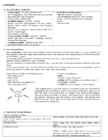
TOPICS For the PRELIM Year 1 Put down 10-12 relevant terms and retell about: 1. Prescriptive and descriptive law Prescriptive law – prescribe how people ought to behave Descriptive law – describes the way people or natural phenomena behave Break the law – do something illegal Penalty – punishment Government – system by which a state or community is controlled Law – the system of rules System of courts – all judicial institutions Enforce – to make people obey the law Authority – a group of people with official responsibility for a particular area of activity /the moral or legal right or ability to control Prescribe – to tell someone what they must have or do, or to make a rule of something Impose
Accessible- easy for anyone to obtain and use Admittedly- used for saying that you admit something is true, especially when this makes your main idea weaker Affordable- cheap enough for ordinary people to afford Agricultural- relating to farming Alcoves- a small area in a room that is created by building part of one wall further back than the rest of the wall Ample- enough, and often more than you need Attic- the room in a house under the roof Bedsit- a room that you rent that is used for both living and sleeping in Brick pillars- Bungalow- a house that is all on one level
histories give it but passing mention. Churchill's great history of World War II has been cleaned of every single reference to Allied communications intelligence except one (and that based on the American Pearl Harbor investigation), although Britain thought it vital enough to assign 30,000 people to the work. The intelligence history of World War II has never been written. All this gives a distorted view of why things happened. Furthermore, cryptology itself can benefit, like other spheres of human endeavor, from knowing its major trends, its great men, its errors made and lessons learned. I have tried in this book to write a serious history of cryptology. It is primarily a report to the public on the important role that cryptology has played, but it may also orient cryptology with regard to its past and alert historians to the sub rosa influence of cryptanalysis. The book seeks to cover the entire history of cryptology
1. Bereft a simple past tense and past participle of bereave, to deprive 2. Cognition the act or process of knowing, preception 3. Derive to receive or obtain from a source or origin, in Chemistry to produce or obtain from another 4. Pitchblende a major ore of uranium and radium 5. Deplorable causing or being a subject for regret; very bad 6. Fission the act of cleaving or splitting into parts 7. Harnessing the combination of straps, bands, and other parts forming the working gear of a draft animal 8. Cripple offensive way to say person who is disabled or impaired in ay way 9. Succumb to give way to superior force 10.Hefty heavy, weighty 11.Abode a place in which a person resides; residence 12.Currents a flowing; something that flows; moving in a certain direction 13.Dissymmetry absence or lack of symmetry 14.Estrange to turn away in feeling or affection 15
to 1924 (vast majority to West, 3rd and 4th aliyahs). J pop growth still significant, high birth rates, but pop static. Grows more in SU than anywhere else few leaving, pop growth significant. Vast majority in W borderlands. Very few emigrate during year and a half from annexed areas. Germans occupied Leningrad-Moscow-Stalingrad, all and more of former Pale. 1939, started evacuating. Stalin thought 43-44, war. Purges, Winter War, military needed improvement, military industrial complex and factories and personnel moved E. Disassemble, move by rail beginning 1939. They know what happened in Spain, total war. Disproportionate # of Js in SU industry, moved E. Js involved in evacuation because of potential for betraying, wealthy capitalists? Crimean factories moved on kurdish straits. Uk factories not moved, Ger war too fast. Month and a half, most J kolkhozes moved. Also evacuated govt officials, those at risk. Also unorganized
international business. documents and may A notary's main research legal issues. functions are to administer oaths and affirmations, take affidavits and statutory declarations, witness and authenticate the execution of certain classes of documents, take acknowledgments of deeds and other conveyances, protest notes and bills of exchange, provide notice of foreign drafts, prepare marine or ship's protests in cases of damage, provide exemplifications and notarial copies, and perform certain other official acts depending on the jurisdiction
Established church The Church of England is the established church, which means that: 1.)the Monarch is the Supreme Governor of the church, 2.)the Church performs a number of official functions, 3.)Church and State are linked. To disestablish Disestablishmentarianism refers to campaigns to sever links between church and state, particularly in relation to the Church of England as an established church. It was initially a movement in the United Kingdom in the 18th century. The established churches in Wales and Ireland could not count on even nominal adherence by a majority of the population of those countries. In Ireland, the predominantly Roman Catholic population campaigned against the position of the established Anglican Church of Ireland - eventually disestablished in Ireland from 1 January 1871.
1. Society- people who interact in such a way as to share a common culture. The cultural bond may be ethnic or racial or geographical, based on gender, or due to shared beliefs, values, and activities. 2. Culture- beliefs, behaviors, objects, and other characteristics common to the members of a particular group or society. 3. A unitary state- a state governed as one single power in which the central government is ultimately supreme and any administrative divisions (subnational units) exercise only powers that their central government chooses to delegate. The majority of states in the world have a unitary system of government. 4. A federal state-- a political entity characterized by a union of partially self-
köhima of alternative medicine. 19.discharge v - to officially allow someone to leave 2. anonymous ['nnims] adj - unknown by name: Our somewhere, especially the hospital or the army, navy client prefers to remain anonymous. etc, or to tell them that they must leave: Hospitals now 3. antagonise v - to annoy someone very much by doing tend to discharge patients earlier than in the past. something that they do not like: Matt wasn't the sort of välja laskma man to antagonize people. vastuollu sattuma, vastu 20.disheartened adj - [dis'h:t()n] disappointed, so that seisma you lose hope and the determination to continue doing 4. antiquated adj - ['æntikweitid] old-fashioned and not something: If young children don't see quick results,
.................................................................................................... 5 1.1.2. Post-Independent Ukraine. Economy and politics ............................................... 6 1.1.3. Key Macroeconomic indicators ......................................................................... 14 1.1.4. Foreign Direct Investments ................................................................................ 16 1.1.5. Demographics and labor force .......................................................................... 17 1.1.6. New emerging industry....................................................................................... 19 1.2. The Business Environment ........................................................................................ 23 1.3. Banking system.......................................................................................................... 27 1.4
economic challenges due to economic liberalization reforms. In this direction, Georgian Govern- ment made several important steps: Tax -The administration of tax and customs systems has been simplified. The number and rates of taxes have been significantly reduced making it easier for local and foreign businesses to do business. Currently, there are only 6 taxes and no capital gains, inheritance, wealth, property transfer; social, branch remittance or any other taxes are in place in Georgia. The coming into effect of a new comprehensive Tax Code (including customs legislation) on January 1, 2011 con- stitutes a further milestone in the development of tax legislation. Licenses and permits - Georgia has dramatically reduced licensing and permitting requirements to ease constraints on business. The total number of licenses and permits was cut by 84% in re- forms that eliminated 756 licenses and permits and streamlined procedures. Currently, licenses
High system of laws Northwest Ordinance of 1787 Signed in 1787 by Thomas Jefferson. The creation of the Northwest Territory as the first organized territory Ohio River was settled, 5 new states Advancement of education, maintenance of civil liberties, exclusion of slavery Promised not to invade or disturb Indians Northwest Indian War-> to stop white expropriation (sundkoormis) · Indian Removal Act of 1830 Destructive to tribes. Many died when travelled to the other side of Missisippi. Signed on May 28 by Andrew Jackson "Trade" land with the tribes Resolve the Georgia crisis (dispute with Cherokee) Move of over 70,000 natives (vabatahtlik-sunniviisiline) Reservations (kaitsealad)1851- the Indian Appropriations Act About 310 reservations 55,7 million acres Unevenly distributed Tribal sovereignty (iseseisvus) Poverty and unemployment · Indian citizenship Act of 1924 Granted citizenship to 300,000 indigenous people, to friendly tribes
giant of Africa. In the last 32 years, I have watched with horror and outright helplessness as the downward slide of the African race continues to escalate. But rather than address the problems, we resort to blaming the Caucasians, Asians and others for our misfortune. We are not men enough to accept responsibility for our actions. Africans blame either the British, French or little Portuguese/Spanish for their problems. Africans in America blame the Caucasians for all their problems, or any other ethic group they have allowed to take over their neighbours, a frequently recurring phenomena. Africans blame the International Monetary Fund, the World Bank, the Group of 7, the former colonial masters for the abject poverty in our respective countries. We blame the wars ravaging several African sectors on the interference of our former colonial masters on “our internal affairs.” Ha! – some kind of independence!
The Example 4 Solution and Problems 5 The Main Economical Problem 6-8 Free riding Problem on Public Transport 9 References 10 2 The Political Problem A common example of a free rider problem is defense spending: no one person can be excluded from being defended by a state's military forces, and thoes free riders may refuse or avoid paying for being defended, even though they are still as well guarded as those who contribute to the state's efforts. Therefore, it is usual for governments to avoid relying on volunteer donations, using taxes and, in some countries, conscription instead. In the case of defense spending, alternative perspectives of the free rider problem also exist
Prepositions Name Form 11b Supervisor: Name Viljandi 2009 Viljandi County Gymnasium 1. Prepositions of place The ball is in the box The ball is on the box. The ball is under the box. Jane's house Bill's house John's house John's house is next to Jane's Jane's house is between Bill's Bill's house is next to Jane's house. and John's houses. house. The man stood The climbers The man stood The enemies stood The gardners next to the gopher stood on top of between the two opposite each stood behind the
English literature is one of the oldest literatures in Europe; dates back to the 6th century AD. Oral literature, i.e. not written down, spread from person to person. In 449 AD Anglo-‐Saxon tribes invaded England – beginning of the Anglo-‐Saxon period in English literature. The first form of literature was folklore, carried by scops and gleemen, who sang in alliterative verse (a kind of simple poetry). Prose developed much later.
King Æthelberht converted to Christianity and also allowed the missionaries to preach freely, giving them land to found a monastery outside the city walls. *St George He is immortalised in the tale of George and the Dragon. According to this story he saved a maiden in distress from a dragon. His memorial is celebrated on 23 April. St. George is a very popular saint and is the patron saint of England, Georgia, Greece, Russia and many other countries. George was offered gifts of land, money and slaves if he made a sacrifice to the Pagan gods, but he refused. So, he was executed for his refusal. Before the execution George gave his wealth to the poor and after his death, the Christians soon came to honor him as a martyr. *St Andrew He is the patron saint of Scotland. He was a very humble man and to honour the Savior he had himself crucified on the X-shaped cross. It was not a regular cross, because
........................................................................... 45 7. ACCOUNTING ............................................................................................................................ 49 7.1 Levels of the system of accounting regulation in the Russian Federation ................................ 49 7.2. The Federal Law "On Accounting" ............................................................................................ 51 7.3. Chart of accounts and other documents .............................................................................. 52 7.4. Russian tax system ................................................................................................................ 53 7.5. Banking system in Russia....................................................................................................... 53 ABOUT TRADERUN PROGRAMME........................................................................................................
o Continuing Latin influence Early Modern English. 200 000 – 250 000 words o English becomes a pluricentric language. o Polyglot. Cosmopolitan language Modern English. 500 000 words o At present at least 1 billion lexical units 2. Core and periphery. Origin of the 10,000 most frequent words: o Old English 31.8 % o French 45 % o Latin 16.7 % o Other Germanic languages 4.2 % o Other languages 2.3 % The core vocabulary is predominantly Germanic (the, I, you, etc.) Only 4 of the top-ranked one hundred words in the Brown Corpus are of foreign origin. o 64 state o 81 use v (Old French) o 93 people (Anglo-Norman, > Old French) o 100 just (> Old French) Core vocabulary and syllable structure:
moment. Continuous tenses may express surprise, disbelief, indignation. Sometimes continuous tenses are more polite and mild. In the dialogue we may come across ungrammatical instances: I says; we says; times has changed. These cases reflect ungrammatical, uneducated, original, or excited state of mind. Archaic verbal forms may be used to create the historical background or make the narrative more elevated. On the other hand they may suggest the colloquial speech, because these forms are preserved in dialects (e.g. ending st (you live you livest (second person Singular). ADVERBS: are expressive when used as intensifiers (e.g. terribly smart, horribly polite, awfully pleased, etc.). Such adverbs give a colloquial touch and their expressiveness depends on 2 incompatible clashing notions put together (oxymoron case). Also degrees of comparison may be involved (e.g. better weller).
word.periphery – vague. Formal usage (often polysyllabic words) from Norman French (rank, courtliness,refinement). Learning, science, abstraction: Latin, and Greek. The core vocabulary is predominantly Germanic (the, I, you, etc.) Only 4 of the topranked one hundred words in the Brown Corpus are of foreign origin. 93 of the first one hundred words in the Brown Corpus are monosyllabic, and the remaining have two syllables (only, about, other, also, many even people) Origin of the ten 10000 most frequent words: Example of stratification • Old English 31.8 % heart • French 45 % core ME [origin unknown] (!) • Latin 16.7 % cardiac LME [Fr. cardiaque or L cardiacus adjs., f. • Other Germanic languages 4
The purpose of the United Nations is to bring all nations of the world together to work for peace and development, based on the principles of justice, human dignity and the well-being of all people. It affords the opportunity for countries to balance global interdependence and national interests when addressing international problems. There are currently 192 Members of the United Nations. The Aims of the United Nations: -To keep peace throughout the world. -To develop friendly relations between nations. -To work together to help people live better lives, to eliminate poverty, disease and illiteracy in the world, to stop environmental destruction and to encourage respect for each other's rights and freedoms. -To be a centre for helping nations achieve these aims. The Principles of the United Nations: -All Member States have sovereign equality. -All Member States must obey the Charter. -Countries must try to settle their differences by peaceful means.
Phoenicians and Carthaginians, incorporated in the Roman Republic dominions as Lusitania and part of Gallaecia (both part of Hispania), after 45 BC until 298 AD, settled again by Suebi, Buri, and Visigoths, and conquered by Moors. Other minor influences include some 5th century vestiges of Alan settlement, which were found in Alenquer, Coimbra and even Lisbon. THE PRE-ROMAN TRIBES OF ANCIENT PORTUGAL AND THEIR EXPANSION PATTERNS. The region of present-day Portugal was inhabited by
and seat occupancy sensors. When the requisite 'threshold' has been reached or exceeded, the airbag control unit will trigger the ignition of a gas generator propellant to rapidly inflate a nylon fabric bag. As the vehicle occupant collides with and squeezes the bag, the gas escapes in a controlled manner through small vent holes. The airbag's volume and the size of the vents in the bag are tailored to each vehicle type, to spread out the deceleration of (and thus force experienced by) the occupant over time and over the occupant's body, compared to a seat belt alone. The signals from the various sensors are fed into the Airbag control unit, which determines from them the angle of impact, the severity, or force of the crash, along with other variables. Depending on the result of these calculations, the ACU may also deploy various additional restraint devices, such as seat belt pre-tensioners, and/or airbags (including frontal bags for driver and front
overtones that are attached to the main content of the utterance. Every speaker has experienced that the form of speech may vary depending on a speaker, a listener, and the circumstances in which they communicate: Neutral Literary Colloquial To eat to partake to gobble To die to expire to go west To kill to slay to make away / to do in To begin to commence to get going Stylistics is a very special science because it has no fixed single unit of study. In contrast to other linguistic sciences (e.g. lexicology (words), morphology (word structure), syntax (structure of sentences), phonetics (sounds and intonation) stylistics studies everything that FGI 1081 Stylistics (I
1. The Queen’s official title. Elizabeth the Second, by the Grace of God, of the United Kingdom of Great Britain and Northern Ireland and of Her other Realms and Territories Queen, Head of the Commonwealth, Defender of the Faith. 2. The Queen’s working day. Starts after breakfast. Reads the newspapers which are prepared by the Press Secretary, and a report on the previous day’s proceedings in the Parliament and the letters she receives. Also phone calls. Once a month she attends the Privy Council in order to give Royal Assent to various items of government legislation.
misused, and for that reason, the skilled speechmaker should know this distinction. THE EYES Within many cultures around the world, it is believed that the eyes are the windows to the soul. In public speaking, since we usually want to arouse both spirit and soul, the eyes become the most important physical equipment of all! Have you ever conversed with someone who kept looking away constantly, avoiding eye contact? This behavior often illustrates discomfort or dishonesty. Conversely, the person who maintains good eye contact is displaying sincerity, attention, and respect. How can you practice and learn good eye contact? The only way to cultivate good eye contact is to practice doing it each and every time you speak. Here are some tricks for doing that: · Be aggressive. When speaking, pick out a specific pair of eyes in the audience and bore right into them, for just a few seconds. Then move over to another set; do the same, and on and on.
do it, enabled us to make significant changes. His work has enabled us to gain significant competitive differentiation and advantage" -LAURENCE HOF, Vice President, Relationship Consulting, Advanta Corporation "This will help executives make better decisions and use their influence wisely ... Robert Cialdini has had a greater impact on my thinking on this topic than any other scientist." -CHARLES T. MUNGER, Vice Chairman, Berkshire Hathaway, Inc. If you're wondering why of Latin America, the Far East, and Central Europe. you should buy this new edition of Influence: o More neuroscience evidence of how the influence process works is inte-
Tallinn English College Topic Estonia Tallinn 2008 1. Introduction Estonia is a small country about the size of Switzerland, or New Hampshire and Massachussetts combined. Estonia is named after the people called "Ests" who lived in the region in the 1 st century AD. The Republic of Estonia is one of the three countries commonly known as the "Baltic States". The other Baltic States are Latvia and Lithuania. 2. Geographical position Estonia is situated in northeastern Europe. Estonia is bounded on the north by the Gulf of Finland, on the east by Russia, on the south by Latvia and on the west by the Baltic Sea. In the north it borders on Finland. The coastline of the Baltic Sea in Estonia is characterized by numerous gulfs and bays, the biggest of them being the Gulf of Finland, the Gulf of Riga and the Gulf of Pärnu. Bays include the
 annaabi.ee