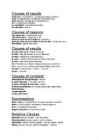
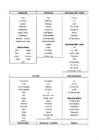
Leidsid 33 sarnast õppematerjali, mis on seotud failiga "Inglise keele siduvad sõnad". Need materjalid aitavad sul teemat sügavamalt mõista.
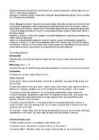
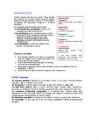
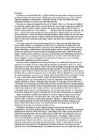
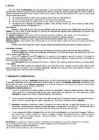
other, case, part, words, alternative, first, furthermore, result, consequence, particular, therefore, same, rather, contrast, however, expected, giving, examples, finally, instance, begin, whole, rule, reinforcement, cases, usually, moreover, addition, particularly, besides, above, mainly, thus, hence, simply, reason, similarly, these, circumstancesendiltteisele. Viimane lõik moodustab kokkuvõtte ja peaks esimeseslauses võtma eelpoolt oodud arutluse kokku ning seejärel lisamasellest tuleneva lõpumärkuse. · Expressing opinions Introduction State the topic and your own opinion clearly without using too many personal opinion words Main body (para. 2 - 4) Give the first, second and third argument and examples or reasons to support your opinion Conclusion Re-state your opinion, using different words Useful language To list points firstly, in the first place, first of all, to start with, secondly, thirdly, finally, last but not least To add more points to the same topic what is more, furthermore, also, apart from this, in addition to, moreover, besides, too, not to mention the fact that, another major reason To introduce conflicting viewpoints a lot of people believe/think, many people are
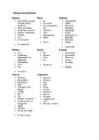
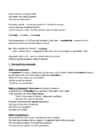
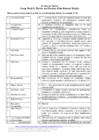
linking words and phrases Sequence Result Emphasis · First / firstly, second / · So · Undoubtedly secondly, third / · As a result · Indeed thirdly etc · As a consequence · Obviously · Next, last, finally (of) · Generally · In addition, moreover · Therefore · Admittedly · Further / furthermore · Thus · In fact · Another · Consequently · Particularly / in · Also · Hence particular · In conclusion · Especially · Due to · Clearly · To summarise
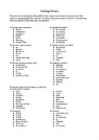
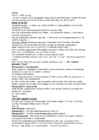
Linking Devices Transition words and phrases help establish clear connections between ideas and ensure that sentences and paragraphs flow together smoothly, making them easier to read. Use the following words and phrases in the following circumstances. To indicate more information: To indicate an example: Besides For example Furthermore For instance In addition In particular Indeed Particularly In fact Specifically Moreover To demonstrate Second, Third... To illustrate
Words that ADD information · also · and · another · besides first, second, third, ... · furthermore · in addition · moreover The little girl put on her yellow shirt and brown overalls. Chris is on the basketball team this semester at Indiana School for the Deaf. In addition, he is on the soccer team. We will be here for one more week so we can finish up our work. Another reason we are staying longer is because we do not want to miss the Deaf Way conference. First of all, pour a half-cup of milk in the bowl; second, add two eggs; and third, stir the mixture. I admire I
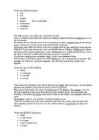
So + omadussõna/määrsõna So much/little + loendamatu nimisõna So many/few + mitmus Clauses of reasons The reason for + nimisõna/-ing vorm The reason why + clause (he verb) Because of/on account of/due to + nimisõna Because of/on account of/due to the fact that + clause (he verb) Now (that) + clause (they verb) Clauses of results In order to/so as to + infinitive (formal) So that + can/will (present or future reference) So that + could/would (past reference) In case + present tense (present or future reference) In case + past tense (past reference) For + nimisõna (kui tahame väljendada tegevuse eesmärki) For + -ing vorm (kui tahame väljendada millegi funktsiooni) Prevent + noun/pronoun + (from) + -ing vorm Avoid + -ing vorm Clauses of contrast Although/even though/though + clause In spite of/despite + nimisõna/-ing vorm In spite of/despite the fact that + clause However/nevertheless (koma kasutatakse alati peale sõna) While/whereas
Adding and Contrasting Expressing cause / reason *and *but because as well as However, as besides Although since Moreover, despite This is why Furthermore, In spite of because of What is more, Nevertheless, Due to In addition, On the contrary, Owing to not only .... but also on the one hand For this reason, another point is that on the other hand, whereas Expressing effect / result
This edition published in the Taylor & Francis e-Library, 2008. "To purchase your own copy of this or any of Taylor & Francis or Routledge's collection of thousands of eBooks please go to www.eBookstore.tandf.co.uk." First edition © 2000 Taylor & Francis Group Second edition © 2008 Taylor & Francis Group All rights reserved. No part of this book may be reprinted or repro- duced or utilised in any form or by any electronic, mechanical, or other means, now known or hereafter invented, including photocopying and recording, or in any information storage or retrieval system, without permission in writing from the publishers. Trademark Notice: Product or corporate names may be trade- marks or registered trademarks, and are used only for identification and explanation without intent to infringe. Library of Congress Cataloging in Publication Data Lycan, William G. Philosophy of language: a contemporary introduction/William G. Lycan.
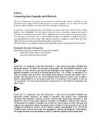
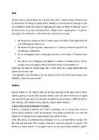
The aim of the section is to assist you to produce an effective topic outline: a skeleton of your document. If this stage of the production process is done properly all you really need are the language control techniques to connect your ideas logically and effectively. If you have a well documented list of techniques to connect your ideas effectively the writing process is less formidable. You will want to know how to join similarities, compare and contrast certain facts, introduce the next topic, offer a supporting idea, or refer to previously presented facts. You will also need to know how to present different shades of argument to produce logically a recommendation you wish to make. This requires an ability to emphasise certain facts and 'bury' others. However, all facts need to be linked to give a logical flow. This unit will give you language practice in this important aspect of producing written documents.
..2 REFERENCES...................................................................................11 INTRODUCTION Due to the rapid expansion of technology over the past decade, hypermedia instructional programs have become commonplace. Learners of all ages have increased access to technology such as the World Wide Web, which provides a seemingly limitless amount of information. New technologies such as Mp3, podcasting, and social networking are booming. In contrast to more traditional environments, technology offers greater opportunities for interactivity and learner control. There are more educators and language teachers using the Internet in language teaching as well. Many computer applications, especially asynchronous computer-mediated communication such as email and electronic bulletin boards, promote interactive learning. With the booming growth of technology, blogs have become another learning platform for language teaching.
paragraphs. Each paragraph should present a Viewpoint 2 and reason separate viewpoint supported by your reasons. Another paragraph giving the Paragraph 4 opposing viewpoint and reasons may be Give the opposing viewpoint and included; and reasons c) a conclusion in which you restate your opinion using different words. Conclusion Final paragraph Restate your opinion, using different words Points to consider * you may include more · First decide whether you agree or disagree viewpoints, and therefore more
Essay 200 (+/- 10%) words The text consists of 4-5 paragraphs discussing a specified topic. Usually the task contains points you have to discuss. Make sure they are all covered! Keep in mind! Formal language – no slang, so contracted forms, colloquialisms, try to avoid repetition of words. Indented lines! Clear paragraphs with one central idea. Avoid strong feelings 8everybody hates... it is absurd to believe...) and strong personal expressions Use generalization (children assume…), but do not use overgeneralizations (all children assume…) At least 2 linking words per paragraph (separate them from the rest of the sentence by commas!) that show the connection between paragraphs. Make references to other sources (Police officials believe that…)
The Rise and Demise of the New Public Management Wolfgang Drechsler (University of Tartu and Tallinn University of Technology, Estonia) © Copyright: Wolfgang Drechsler 2005 Within the public sphere, the most important reform movement of the last quarter of a century has been the New Public Management (NPM). It is of particular interest in the post-autistic economics (pae) context because NPM largely rests on the same ideology and epistemology as standard textbook economics (STE) is based (for my take on this, see Drechsler 2000), and it has had, and still has, similar results. Already more on the defensive within public administration (PA) than STE is within economics, NPM also shows that such major paradigm shifts in theory and policy may actually happen. In addition, it occasionally appears that pae-oriented scholars have overlooked the fact that some features in public management reform, state
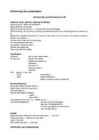
Performing the presentation Introducing yourself and your talk Greeting, name, position, opening formalities Good morning, ladies and gentlemen. Good afternoon, everyone. Good morning. My name's (...). I'm the new Finance Manager. Good morning. Let me start by saying just a few words about my own background. I started out in... Welcome to Standard Electronics. I know I've met some of you, but just for the benefit of those I haven't, my name's (...). It's very nice to see you all here today. I'm very pleased to be here. I'm glad you could all make it. Thanks for inviting me. Thank you (all) for coming. Title/Subject I'd like to talk (to you) today about ... I'm going to present the recent ... explain our position on ...
do it, enabled us to make significant changes. His work has enabled us to gain significant competitive differentiation and advantage" -LAURENCE HOF, Vice President, Relationship Consulting, Advanta Corporation "This will help executives make better decisions and use their influence wisely ... Robert Cialdini has had a greater impact on my thinking on this topic than any other scientist." -CHARLES T. MUNGER, Vice Chairman, Berkshire Hathaway, Inc. If you're wondering why of Latin America, the Far East, and Central Europe. you should buy this new edition of Influence: o More neuroscience evidence of how the influence process works is inte-
pen. We instead have insatiable brains, with mental appetites. So our goal is to balance the brainwork with hearts and smiles. "Facts served with sauce." Where does common sense fit on? Is it teachable? To a degree, what we mean by common sense is simply learned experience. Something more exists, though. Those who we praise for common sense may be quick-witted, steady-nerved, and efficient at practical decision-making. It is likely some of those traits depend on genetic brain makeup. In any case, for purposes of an essay on education, I propose to say no more about common sense. Similarly, where do concentration, reflection, analysis and criticism enter? Are they best taught individually, or learned wholly as byproducts of studying mathematics, geography, history, etc? It is obvious that such skills are more valuable than any single subject which might be used as the vehicle to develop them. Inequality
(Verplaetse, 2008). Since 9/11 and the following fight against terrorism it became clear that the Bush administration thought of torture as something justifiable while it goes against all possible agreed upon treaties and conventions. One could indeed possibly think of situations that could serve as an exception to the prohibition of torture but these hypothetical situations can hardly relate to real situations. The ticking bomb argument looks at the hypothetical case where a leader of a state is asked to give their permission to torture a captured rebel leader because he (probably) knows the locations of a few explosives that are spread around the city in different apartment buildings. In case they are not found within 24 hours, they will explode and many will be left dead (Walzer, 1973). Is it justified to torture this person to find out where the bomb is? This essay will look in to how it has according to the thinkers in the strand of
What is the real meaning of life? Why prefer one thing to another? Can we trust observation? It’s raining outside - how do you know it is? I can see it’s raining. How to convince yourself its raining? A good reason to doubt - 49 other peaople have the same opinion. Falsifiable → possible; not falsified World disappeared in 2012 and got recreated 3 secs later → unfalsifiable - cannot prove it’s true/wrong, cannot provide any tests to prove it. Or - one or another but not both → exclusive - one or another (both) → inclusive (Invited those who are managers or specialists - both) Arguments valid or not - logic is a science where to decide it Different arguments lead to different methods.
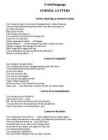
.. I was extremely alarmed/sorry/distressed to hear about your plans to ... As I think you know, ... May I point out that ... I feel I really must object to ... I am extremely concerned at the thought that ... It must be very clear that ... If these proposals go ahead, ... will happen. Another threat to ... , if these proposals go ahead, would come from ... I dread to imagine what damage this will cause. May I respectfully suggest that you ... I was wondering if you had considered this alternative? Would it not be possible to ... ? Letters of complaint I am writing to complain about ... I am writing to tell you how disappointed/annoyed I feel about ... I was amazed/distressed/horrified to find that ... As you must realise, ... I am sure you know that ... I am sure you can imagine ... I am sure you will appreciate that ... It goes without saying that ... At the very least, I look forward to receiving ... Unless you ..
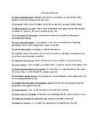
LINKING DEVICES To make contrasting points: although, yet, however, neverthless, in spite of, but, while, despite, even if, been though, at the same time To list points: firstly, in the first place, first of all, to start with, secondly, thirdly, finally To add more points on a topic: what is more, furthermore, also, apart from this/that, besides, in addition to, moreover, too, not to mention the fact that To list advantages/disadvantages: one/another/a further/the main/the first/the greatest advantage/disadvantage To express personal opinion: in my opinion, in my view, to my mind/way of thinking, personally I belive, I feel strongly that, it seems to me that To refer to other sources: according to, with the reference to
Style The term style is a polysemantic one. The latin word ,,stilus" meant a writing instrument used by the ancients for writing on waxed tablets. Already, in classical latin the meaning of style was extended to denote the manner of expressing one's ideas in written or oral form. One of the abts/the best was given by Jonathan Swift: ,,Proper words in proper places." In present- day english, the world style is used in about half a dozen basic meanings. 1. the characteristic manner in which a writer expresses his ideas. Some speak about the style of Hemingway, Dickens etc. 2. the manner of expressing ideas, characteristic of a literary movement or period. Style of symbolism, romanticism 3. the use of language to pick a literary genre-comedy, novel, drama, O.D (poetic form) etc. 4
concept of comparative federalism. States retain power to regulate as long as national regulation does not interfere with `federal` law. 5 Free trade E Common foreign and security policies first appear at the stage of integration called ... 6 Free Trade Area F Emerges due to decentralized approach to integration, when different national systems struggle to produce the best set of rules to attract capital and labor.
1. STYLE The term "style" is polysemantic (has many meanings): a Latin word "stilus" originally meant a writing instrument used by ancient people. Already in classical Latin the meaning was extended to denote the manner of expressing one's ideas in written or oral form. Jonathan Swift defined style as "proper words in proper places". In present day English the word "style" is used in about a dozen of principle meanings: 1. the characteristic manner in which a writer expresses his/her ideas (e.g. style of Byron) 2. the manner of expressing ideas, characteristic of a literary movement or period 3. the use of language typical of a literary genre (e.g. the style of a comedy, drama, novel). 4. the selective use of language that depends on spheres / areas of human activity (e.g
sounds in human language. Phonetics: of the acoustic detail of speech sounds and how they are articulated. Phone: [p] A phone is actual pronunciation of a phoneme. A phone is represented between brackets Allophone: e.g. pin spin Phoneme: /p/ - /iz/ `houses' /s/ voicless `cats' /z/ `boys' /t/ `learned' /id/ `wanted' A phoneme is the smallest unit of the sound system of a language. If two sounds have the same phoneme, they are treated equally. A phoneme is represented between slashes. Morphology: is the study of word formations and the internal structure of words Morphemes: the smallest units of language that have their own meaning or grammatical function. cat, cat/s, laugh/ed, un/able, sheep Free morphemes: cat, laugh, eat, red Bound morphemes: prefixes: pre- prejudge dis- dislike suffixes: -ist typist
STYLE AND STYLISTICS FGI 1081 Stylistics (I. Ladusseva) 2 The term "style" is polysemantic (has many meanings): a Latin word "stilus" originally meant a writing instrument used by ancient people. Already in classical Latin the meaning was extended to denote the manner of expressing one's ideas in written or oral form. The precise definition was given by Jonathan Swift, who defined style as "proper words in proper places". In present day English the word "style" is used in about a dozen of principle meanings: 1. the characteristic manner in which a writer expresses his/her ideas (e.g. style of Byron). 2. the manner of expressing ideas, characteristic of a literary movement or period (e.g. symbolism, romanticism, renaissance). 3. the use of language typical of a literary genre (e.g. the style of a comedy, drama, novel). 4
© 2013. All rights reserved. This electronic file may not be altered in any way. The author(s) of this article is/are permitted to use this PDF file to generate printed copies to be used by way of offprints, for their personal use only. Permission is granted by the publishers to post this file on a closed server which is accessible to members (students and staff) only of the author's/s' institute, it is not permitted to post this PDF on the open internet. For any other use of this material prior written permission should be obtained from the publishers or through the Copyright Clearance Center (for USA: www.copyright.com). Please contact [email protected] or consult our website: www.benjamins.com Tables of Contents, abstracts and guidelines are available at www.benjamins.com Subtitle reading speed A new tool for its estimation José Luis Martí Ferriol Universitat Jaume I 1.Introduction
the accuracy, completeness, or suitability for any purpose of the Content. Any opinions and views expressed in this publication are the opinions and views of the authors, and are not the views of or endorsed by Taylor & Francis. The accuracy of the Content should not be relied upon and should be independently verified with primary sources of information. Taylor and Francis shall not be liable for any losses, actions, claims, proceedings, demands, costs, expenses, damages, and other liabilities whatsoever or howsoever caused arising directly or indirectly in connection with, in relation to or arising out of the use of the Content. This article may be used for research, teaching, and private study purposes. Any substantial or systematic reproduction, redistribution, reselling, loan, sub-licensing, systematic supply, or distribution in any form to anyone is expressly forbidden. Terms & Conditions of access and use can be found at http://www.tandfonline.com/page/terms-
sources (the Collected Poems in 1988, the Selected Letters in 1992, and Andrew Motion’s authorized biography in 1993) numerous further books, essays and articles have contributed to Larkin studies. These include publications of Larkin’s texts (such as Further Requirements in 2001, Trouble at Willow Gables in 2002, and Early Poems and Juvenilia in 2005), personal recollections (for instance, Maeve Brennan’s The Philip Larkin I Knew in 2002), another biography (Richard Bradford’s First Boredom, Then Fear in 2005), and critical studies (the latest being M. W. Rowe’s Philip Larkin: Art and Self in 2011). A. T. Trolley’s Larkin at Work (1997) offers an insight into the genesis of a number of major poems and Larkin’s method of composition. Shorter essays add further aspects to the discussion of Larkin. To mention a few examples: Oliver James has approached “This Be The Verse” from a genetician’s point of view, Richard T. Cauldwell has analysed
potential to provide survival advantages. This evolutionary hypothesis was tested in 37 cultures by sending out questioners. 2) Twin studies (type of correlational studies) compare trait similarities in identical and fraternal twins (Minnesota twin study by Tellegen, Buchard). 3) Experiment: Split-brain experiments by Gazzaniga & Sperry, brain plasticity experiments by Rosenzweig and Bennett. Neurotransmission experiment by Martinez and Kesner. 4) Case studies: Phineas Gage studied by Dr John Harlow and Oliver Sack's study on Dr P. Discuss how and why particular research methods are used at the biological level of analysis. Biological researchers often adopt a reductionist approach to the study of human behavior. They work on a micro-level of research, breaking down complex behavior into its smallest parts (e.g. genes, neurotransmitters or proteins). This approach is
"Delivery is more important than content." Arch Lustberg, speech trainer According to wellknown social anthropologist Edward T. Hall, 60% of our communication is nonverbal. That means whenever we stand before an audience, our stance, our posture, our facial expressions, our hand gestures, our whole body dynamic communicate more than our actual spoken words. A stiff, immobile speaker is often a boring and usually ineffective speaker as. It is therefore essential to know how to be physically relaxed, which will allow your actions to complement your words. Before we start, two important definitions: A podium is the raised platform at the front of the room where speakers stand to deliver presentations; it is also called the dais (pronounced dayus)
11.02.09 INGLISE KEEL Palju aega läheb. 10 nädalat aint. One of the ESP courses. What we are going to do, what is needed: · What we do - 1 test, on words. · 2 Essays, that means that we have to look into academic writing · Homereading we read a case from European Court of Justice thingy. · Oral thing. · 90% you have to attend · Have to prepare for class and take part of it etc What we learn: Terms Expressions / collocations (nt obey/abide by the law) Explaining AWOL absence without a leave Legal English can be divided into 3 levels. We learn the first one, which is needed for the other two! You have to know the vocabulary etc. Second level has to do with legal contracts... The third level both 1 and 2 and explaining... We learn the vocabulary + explaining.
LEXICOLOGY 1. Size of English vocabulary 1) Old English – 50,000 to 60,000 words Vocabulary of Shakespeare OE – homogeneous; 1/3 of the vocabulary has survived • 884,647 words of running text About 450 Latin loans (Amosova) • 29,000 different words (incl. work, working, Viking invasions added 2,000 worked, which are counted here as separate 2) Middle English – 100,000 – 125,000 words) English becomes heterogeneous (Norman French, • 21,000 words English, Latin), hybrid of Germanic and Romance languages Norman French influence – about 10,000 words, 75 % are still in use (Baugh) Latin influence continues
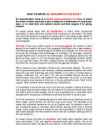
HOW TO WRITE AN ARGUMENTATIVE ESSAY An argumentative essay is a formal, impersonal piece of writing in which the writer is either expected to give a balanced consideration of a particular topic, or to state their own opinion clearly and then support it by giving reasons. An essay should begin with an introduction in which some background information is given about the problem that is going to be discussed. The angle from which the problem is going to be looked upon in the essay is also stated. In longer essays these are in different paragraphs, in shorter ones they can be in one paragraph. The body of the essay usually consists of several paragraphs, the number of which
Tehnoloogia ja ringmajanduse instituut Õpperühm: Juhendaja: Tallinn 2021 TABLE OF CONTENTS 2 1 THE CORNERSTONES OF SURVEY RESEARCH 1.1 Introduction The idea of conducting a survey is deceptively simple. It involves identifying a specific group or category of people and collecting information from some of them in order to gain insight into what the entire group does or thinks; however, undertaking a survey inevitably raises questions that may be difficult to answer. How many people need to be surveyed in order to be able to describe fairly accurately the entire group? How should the people be selected? What questions should be asked and how should they be posed to respondents? In addition, what data collection methods should one consider using, and are some of those methods of collecting data better than others? And, once one
 annaabi.ee