Leidsid 33 sarnast õppematerjali, mis on seotud failiga "Inglise keel " The problems the contemporary world faces " ". Need materjalid aitavad sul teemat sügavamalt mõista.
cause, weapon, caused, there, species, change, chemicals, endangered, different, important, average, structures, nuclear, racism, direct, contemporary, loorits, motor, soil, released, underground, lakes, running, enough, fresh, fossil, fuels, 2050, percent, biodiversity, habitat, hunting, widespread, statistical, weather, surface, risen, since, warmingThe ship spilt only 5% of the oil spilt that year, and oil is just one of many pollutants that people dump into the water every year. Every year, 14 billions pounds of sewage, sludge, and garbage are dumped into the world's oceans. 19 trillion gallons of waste also enter the water annually. The problem of ocean pollution affects every nation around the world. This is especially true because water is able to transport pollution from one location to another. For many years, chemicals were dumped into bodies of water without concern. While many countries have now banned such behavior, it continues to go on today. As the world has industrialized and its population has grown, the problem of water pollution has intensified. The simple fact that millions of people live along coastlines and near rivers means that these bodies of water are likely candidates for heavy and destructive pollution. It is hard to know now what our oceans will look like in the future
Current environmental problems make us vulnerable to disasters and tragedies, now and in the future. Unless we address the various issues seriously we are surely doomed for disaster. Current environmental problems require urgent attention. 1. Pollution: Pollution of air, water and soil require millions of years to recoup. Industry and motor vehicle exhaust are the number one pollutants. Heavy metals, nitrates and plastic are toxins responsible for pollution. While water pollution is caused by oil spill, acid rain, urban runoff; air pollution is caused by various gases and toxins released by industries and factories and burning of fossil fuels; soil pollution is majorly caused by industrial waste that deprives soil from essential nutrients. FIND OUT 5 WAYS HOW TO STOP POLLUTION. 2. Global Warming: Climate changes like global warming is the result of human practices like emission of Greenhouse gases. Global warming leads to rising temperatures of the oceans and the earth surface
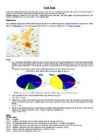
Acid Rain Acid rain is any precipitation that is unusually acidic. It possesses elevated levels of hydrogen ions(it has low pH level). Acid rain is caused by emissions of carbon dioxide, sulfur dioxide and nitrogen oxides, which react with water molecules. Distilled water(doesn't contain CO 2), has pH level 7. Liquids with pH level less than 7 are acidic, liquids with pH level greater than 7 are alkaline. Unpolluted rain has a pH level over 5.7, so it is slightly acidic. Affected areas Places significantly impacted by acid rain around the globe include most of eastern Europe from Poland northward into Scandinavia, the eastern
had been just recently discovered at the time 1895. It is energy released by the splitting (fission) or merging together (fusion) of the nuclei of atoms. The conversion of nuclear mass to energy is consistent with the mass-energy equivalence formula E = m.c², in which E = energy release, m = mass defect, and c = the speed of light in a vacuum. Nuclear chemistry can be used as a form of alchemy to turn lead into gold or change any atom to any other atom (albeit through many steps). Radionuclide (radioisotope) production often involves irradiation of another isotope (or more precisely a nuclide), with alpha particles, beta particles, or gamma rays. Iron has the highest binding energy per nucleon of any atom. If an atom of lower average binding energy is changed into an atom of higher average binding energy, energy is given off. What is nuclear fusion? Nuclear fusion is the process by which multiple like-
......................................................................................................4 USES OF ENERGY............................................................................................................. 4 2.1 Uses of energy in homes...............................................................................................5 2.2 Types of energy used in homes.................................................................................... 6 2.3 Energy use in different types of homes........................................................................ 6 2.4 Commercial Energy Use...............................................................................................9 2.5 Industrial and Manufacturing Energy Use..................................................................11 2.6 Transportation Energy Use.........................................................................................12 RENEWABLE ENERGY...............................
Air pollution Every day, the average person inhales about 20,000 liters of air. Every time we breathe, we risk inhaling dangerous chemicals that have found their way into the air. Air pollution includes all contaminants found in the atmosphere. These dangerous substances can be either in the form of gases or particles. Air pollution can be found both outdoors and indoors. Pollutants can be trapped inside buildings, causing indoor pollution that lasts for a long time. The sources of air pollution are both natural and human-based. As one might expect, humans have
In 2006, about 18% of global final energy consumption came from renewables, with 13% coming from traditional biomass, such as wood-burning. Hydroelectricity was the next largest renewable source, providing 3% (15% of global electricity generation),followed by solar hot water/heating, which contributed 1.3%. Modern technologies, such as geothermal energy, wind power, solar power, and ocean energy together provided some 0.8% of final energy consumption. While there are many large-scale renewable energy projects and production, renewable technologies are also suited to small off-grid applications, sometimes in rural and remote areas, where energy is often crucial in human development.Kenya has the world's highest household solar ownership rate with roughly 30,000 small (20100 watt) solar power systems sold per year. Some renewable energy technologies are criticised for being intermittent or unsightly, yet the market
and trace amounts of metals such as iron, nickel, copper and vanadium. The exact molecular composition varies widely from formation to formation but the proportion of chemical elements vary over fairly narrow limits as follows: Composition by weight Element Percent range Carbon 83 to 87% Hydrogen 10 to 14% Nitrogen 0.1 to 2% Oxygen 0.05 to 1.5% Sulfur 0.05 to 6.0% Metals < 0.1% Four different types of hydrocarbon molecules appear in crude oil. The relative percentage of each varies from oil to oil, determining the properties of each oil. Composition by weight Hydrocarbon Average Range Paraffins 30% 15 to 60% Naphthenes 49% 30 to 60% Aromatics 15% 3 to 30% Asphaltics 6% remainder Most of the world's oils are non-conventional. Crude oil varies greatly in appearance depending on its composition. It is usually black
Many plants have dark red leaves that allow the plant to absorb more heat from the sun in the cold tundra climate. All of the plants are adapted to sweeping winds and disturbances of the soil. Many plants grow in a low, tight clump - this growth habit helps protect them from the cold and snow. They can carry out photosynthesis at low temperatures and low light intensities. The growing season is short and most plants reproduce by budding and division rather than sexually by flowering. There are no deep root systems in the vegetation of the tundra; however, there are a wide variety of plants that are able to resist the cold climate. The fauna is also diverse. Animals such as mammals and birds also have additional insulation from fat. Many animals hibernate during the winter because food is not abundant. Another alternative is to migrate south in the winter, like birds do. Reptiles and amphibians are few or absent because of the extremely cold temperatures
Estonian University of Life Sciences Report on Soil Microflora By Katrin Vares Tartu 2013 Introduction The purpose of this report is to define soil microflora and establish the importance of it. Since the microorganisms clearly play an important role in preserving the balance of life, the next objective is to look into factors that influence this balance. Natural conditions and cultural impact could be considered as the variables that correlate the most with the activity and composition of microflora, hence some of the natural and cultural factors will be looked into a little more in detail. Definition, composition and importance of microflora
Global Warming One of the biggest issues our planet and its inhabitants are facing nowadays is global warming. Global warming, also often referred to as the greenhouse effect, has not always been a problem. However, over the last centuries, since the Industrial Revolution things have changed. Polar regions are melting, species are dying, climate zones are shifting, migration patterns for animals such as polar bears and birds are being disrupted our world as we know it is changing. Some scientists believe that the climate will reach a tipping point, a point at which even a tiny additional increase would throw the system into violent change. We started doing harmful things and only now do we realize what we have done and what we are doing
Kool Tallinn, 2009 How can we make our planet a safer place to live Essay Nimi Klass Juhendaja notice the cars. But to put this in pracitce, public Is our problems and transport should be improved the buses planet a safe therefore we should be cleaner, they should drive more place to live can't fight frequently and there must be buses driving for animals, them. This to more destinations. This way people would fish, birds, way the air is understand that this is an easier, faster and a ourselves or being more cheaper way to get where ever you want. plants? Many and more You do not have to worry about parking and people think it polluted and gas prizes. is. But they
precipitation can eventually wash pollutants into streams, lakes, and rivers. Acidity itself is determined based on the pH level of the water droplets. PH is the scale measuring the amount of acid in the water and liquid. The pH scale ranges from 0 to 14 with lower pH being more acidic while a high pH is alkaline; seven is neutral. Normal rain water is slightly acidic and has a pH range of 5.3-6.0. Acid deposition is anything below that scale. It is also important to note that the pH scale is logarithmic and each whole number on the scale represents a 10-fold change. Causes and History of Acid Rain Acid deposition can occur via natural sources like volcanoes and rotting vegetation but it is mainly caused by the release of sulfur dioxide and nitrogen oxide during fossil fuel combustion. When these gases are discharged into the atmosphere they react with the water,
Public International Law is a system of law, different from domestic law. Why is this system unique? Usually law regulates relations between people, people and the state etc, PIL regulates relations between states. Thats why PIL is important for international relation students. PIL influences the life of everybody, it doesn't regulate people directly but indirectly (through the decisions of the states), because it's everywhere. It's like air. E.g. when you want to send a letter to Brazil, you put a stamp from your own country and send it from your post office and the letter gets delivered. Why is this so easy, because there are certain international conventions that regulate postal services. E.g
will be facing water-based vulnerability and human demand for water will account for 70% of all available freshwater. • Freshwater is the most fundamental finite resource with no substitutes for most uses, yet we are consuming fresh water at least 10 times faster than it is being replenished in regions of northern Africa, the Middle East, India, Pakistan, China, and the U.S.. Species Extinction • Human beings are currently causing the greatest mass extinction of species since the extinction of the dinosaurs 65 million years ago at rates 1000 to 10,000 times faster than normal. • The 2012 update of the IUCN Red List of Threatened Species shows that of the 63,837 species examined worldwide, 19,817 are threatened with extinction - nearly a third of the total. • If present trends continue, scientists warn that within a few decades, at least half of all plant and animal species on Earth will be extinct, as a result of climate change, habitat
It stretches over Eurasia and North America. The taiga is located near the top of the world, just below the tundra biome. The winters in the taiga are very cold with only snowfall. The summers are warm, rainy, and humid. Some of the animals in the taiga hibernate in the winter, some fly south if they can, while some just cooperate with the environment. GrasslandsGrassland biomes can be found in the middle latitudes. They can have either moist continental climates or dry subtropical climates. There are two different types of grasslands; tall-grass, which are humid and very wet, and short-grass, which are dry, with hotter summers and colder winters than the tall-grass prairie. In the winter, grassland temperatures can be as low as -40° F, and in the summer it can be as high 70° F. There are two real seasons: a growing season and a dormant season. Deciduos forest The average annual temperature in a deciduous forest is 50° F. The average rainfall is 30 to 60 inches a year
............9 6. Resources..............................................................................................................................10 Introduction I chose this theme because I'm interested in the world politics, especially in the dangerous hot spots in the world, and also in the contemporary history. Due to the facts that Iraq is closely related to terrorism and many Estonian soldiers took part in the Iraq war I think it is important to know how did those countries became enemies. In this report I'm going to write about relations between Iraq and the USA. First of all I am going to write about the common history between those countries. Because they do not share long history, I'm going to characterize every decade from 1980. Many people think that the U.S and Iraq have been enemies forever, but it is not so. The United States has supported Iraq in war and I am going to find out why and how
Protecting endangered species will make a difference in humans' life In the nature of humankind it is natural to hunt animals. However, nowadays hunting endangered species will make humans be just killers, because it is not necessary to kill something just to have a trophy on the wall at home. People can be proud of what they have done, but decreasing the population of a species largely will cause the specific animal breed to go extinct faster than it would happen via natural causes. Therefore, humans should stop hunting endangered species to slow down their extinction, as these species offer balance in the wildlife, are used without purpose in medicine, and may even reduce poverty. Species on the brink of extinction affect us more than we realize. Sure, pandas are cute, and rhinos are fun to look at, but is there anything more to that
The Executive power in Australia is in the hands of the Commonwealth Government lead by the Prime Minister. Today the Prime Minister is John Howard, the leader of the Liberal Party. History Australia was once a part of the giant continent Gondwana. It included Africa, South America and Antarctica. First Australia and Antarctica split from Gondwana, then Australia broke away from Antarctica and began to move north. Aborigines arrived there about 50 000 years ago. They had occupied the whole continent by 30 000 years ago. At that time Tasmania was still part of the mainland. About 20 000 years ago the ice began to melt and the rising water level cut Tasmania off from the mainland. Traders from what is now Indonesia are thought to have been visiting Australia well before the 17th century. Chinese, Malaysian and Arab sea Captains may also have landed in Northern Australia after the 15 th century.
It is impossible to capture on film, to describe in words, or to explain to those who have never had the awe-inspiring experience of standing in the heart of a primary rainforest. Rainforests have evolved over millions of years to turn into the incredibly complex environments they are today. Rainforests represent a store of living and breathing renewable natural resources that for eons, by virtue of their richness in both animal and plant species, have contributed a wealth of resources for the survival and well-being of humankind. These resources have included basic food supplies, clothing, shelter, fuel, spices, industrial raw materials, and medicine for all those who have lived in the majesty of the forest. However, the inner dynamics of a tropical rainforest is an intricate and fragile system. Everything is so interdependent that upsetting one part can lead to unknown damage or even destruction of the whole
of New Britain. To the north and south of this central mountain range on the main island lie vast stretches of mangrove swamps and coastal river deltas. /1/ Volcanoes and thermal pools are also found in the southeast of other islands. Papua New Guinea offers the greatest variety of terrestrial ecosystems in the South Pacific, including five types of lowland rainforest, 13 types of montane rainforest, five varieties of palm and swamp forest and three different mangrove forests. Two-thirds of the world's species of orchids come from New Guinea. /1/ Birds include 38 species of the bird of paradise, and the megapode and cassowary. Marsupials and mammals include cuscus, tree kangaroos, wallabies, bandicoots, spiny anteaters and, in the coastal waters, the dugong. There are between 170 and 200 species of frog and 450 species of butterfly. /3/ 4 The forests of New Guinea
Formaldehyde Formaldehyde is a colorless, flammable gas at room temperature. It has a pungent, distinct odor and may cause a burning sensation to the eyes, nose, and lungs at high concentrations. Formaldehyde is also known as methanal, methylene oxide, oxymethylene, methylaldehyde, and oxomethane. Formaldehyde can react with many other chemicals, and it will break down into methanol (wood alcohol) and carbon monoxide at very high temperatures. Formaldehyde is naturally produced in very small amounts in our bodies as a part of our normal, everyday metabolism and causes us no harm. It can also be found in the air that we breathe at home and at work, in the food we eat, and in some products that we put on our skin. A major source of formaldehyde that we breathe every day is found in smog in the lower atmosphere. Automobile
4 lactose binds to repressor; 5 changes shape of protein molecule; 6 unable to bind (to operator); 7 RNA polymerase binds (at promoter) / transcription occurs / genes switched on; 8 AVP; e.g. production of lactose permease / production of beta- galactosidase; max 5 [5] 4. a change in the genetic material; unpredictable / AW; extra detail; e.g. addition / substitution / deletion / frame shift / small part of chromosome / may code for different protein / may code for no protein [2] 5. 1 mark max for general effect of mutations: mutation may give different, amino acid / primary structure; A ref stop codon
Its name means ,,Southland". The official name of the country is the Commonwealth of Australia. It's capital is Canberra. Australia is the sixth largest country in the world but the smallest continent. Australia has 6 states and 2 territories (New South Wales, Victoria, Tasmania, Queensland, Western Australia , South Australia, The Australian Capital Territory and the Northern Territory). The Australian people are culturally the same as the Anglo Americans. There also live aborigines. Aborigines are the ancestors of the people. Like the US and Canada, Australia was an English speaking colony of Great Britain. Today Australia is a modern developed country with a diversified economy. Australia is an island continent of 7.7 million square kilometres, which makes it a little smaller than the USA. Located in south of Asia, between The Pacific and Indian Oceans, Australia is the World's driest continent
Canada 8a Teacher: Merike Sisask Composer: Kärt Kalvet 2010 Canada, Kärt Kalvet 8a Canada General Information Canada is in North America. It's area is 9220970 sq km. Canada's population is 313.612.000 people. Canada is divided into 10 provinces and 3 territories. The capital of Canada is Ottawa. Canada has constitutional monarchy. The head of state in Canada's government is the Queen of England. There are two main languages in Canada: English and French. Canada's curreny is Canadian dollar (1 dollar=100 cents[Can$]). The highest peak of Canada is Mount Logan, 5959 metres. The lowest point is sea level. The longest river is the Mackenzie. The climate and geography of Canada vary greatly from temperate in the south to arctic in the north and from islands and plains in the east to mountains in the west. Location Canada is located in the northern-most region of North America
3. Relief Australia is the smallest continent in the world It is often called the island continent because is too big for an island but rather small for a continent. Australia is 1,800 miles from the mainland of Asia and almost half way round the world from Europe. More than 6,000 miles of ocean separate in from the America. Australia is the only continent except for Antarctica that lies all south of the equator. The natural zones of Australia are very various. There are deserts, semi deserts, grasslands, savannas, bushlands and rainforests. The wet forests occupy the narrow region in the east. Most of the animals, birds and insects live in that region, because there is enough food. The savannas which are grasslands with some trees are mostly in the west. Farther west are the bushlands. The real deserts occupy the centre of the Western Plateau. In the very south west there are thin forests of evergreens trees.
8 million square miles of land and fresh water it is the second biggest country in the world after Russia. Canada covers most of the northern part of North America. Canada has over 151,480 miles of coastline. Most of Canada's human population lives along its southern border. 3. Relief Canada's geography is very diverse. It has huge lakes, evergreen forests, prairies, meadows and beautiful mountains. There are thousands of miles of coastline with beaches, fjords and wild rivers flowing to the oceans. Canada is a country of wide open spaces and beautiful landscape where traveling visitors can unexpectedly bump into wild animals like bears or be struck by unusual sight like the scarecrows on the Cabot Trail. Canada is rich in natural wonders, one of them, the Niagara Falls between lakes Erie and Ontario, which is the
ecosystem appears to be the result of human use of fire. For example Native Americans created subtropical savannas by periodic burning in some areas of the US southeastern coast where fire-resistant Longleaf Pine was the dominant species. Aboriginal burning appears to have been responsible for the widespread occurrence of savanna in tropical Australia and New Guinea and savannas in India are a creation of human fire use. The maquis shrub savannas of the Mediterranean region were likewise created and
How to Stop Water Pollution Water pollution is one of the biggest threats to the environment today. There are several sources of water pollution ranging from sewage and fertilizers to soil erosion. The impact of water pollution on wildlife and their natural habitat can be immense. While it may seem like preventing water pollution can be an overwhelming subject to tackle, there are also a number of things that the average person can do to help stop water pollution. Tips on Preventing Water Pollution The best solution for water pollution is prevention. While pollution that has already occurred is a current threat to all life on Earth, attempts to clean it up may cause even more harm.There are several steps that can be taken to help prevent water pollution from getting worse. Keep Machinery in Good Working Order
Margit Tepner k0848752 Sustainability aspects of biofuels 1. Introduction The literature review will discuss the sustainability aspects of biofuels. Food production will be the main concern as it is the most debated issue, but other aspects, such as land use change and water consumption will be also considered as they are essential aspects in the biofuels sustainability criteria. The review will discuss the viability of biofuels based on the current technologies. Second-generation biofuels are not yet commercially viable and therefore will not be discussed; although they could significantly improve the sustainability of biofuels when they break through to the industrial scale. 2. The scale of biofuels production 2.1
Zoos are sometimes seen as necessary alternatives to a natural environment. Not only people are trying to keep endangered species and rare animals in the nature reserves, but also the number of zoos built around the world is slowly growing. Do we actually need those kind of man-made "homes" for animals or is it better for them to live outside cement walls in their natural habitat? First of all, nowadays we need to help the nature and animals that are the ones facing quite big danger of becoming extinct. Mostly it is caused by our selfish attitude: we do not take care of nature. Zoo is
......................................................................7 10. History..........................................................................................................8 11. Conclusion....................................................................................................9 12. References....................................................................................................10 Introduction I chose finland because there are friendly people and beautiful nature. Finland is bigger than Estonia. There lives over 5 milj. people. Finland capital is Helsingi and there lives about 2 milj. people. Highest top is 1328m. Finland is bordersed with Sweden to the west, Russia to the east and Norway to the north. It is the eight largest city in Europe. Most Finns speak Finnish. The second language is Swedish. Finland is rated the sixth most peaceful country in the World. In Finland there are more than 60000 lakes.
Flag Names: The Stars and Stripes, Old Glory, The Starry Banner Seal: Great Seal of the United States Flag Seal Geography America consists of 50 states. 48 of them are on North American continent and 2 of them (Alaska and Hawaii) are separated. Alaska is separated by Canada and Hawaii lies in the Pacific Ocean. America shares borders with Canada, Mexico and Russia. According to different sources American landmass is from 9,522,055 km2 to 9,826,630 km2 which makes it the third or fourth largest country in the world. America is surrounded by three oceans Pacific Ocean, Atlantic Ocean and Arctic Ocean. It's also bounded with Gulf of Mexico and Bering Strait. The highest point in America is Mount McKinley (6,194 m) in Alaska. The lowest point is Death Valley which lies 86 metres below sea level. The Great Basin Desert is the largest desert in America. Missouri river is the
 annaabi.ee