 10 punkti
Autor soovib selle materjali allalaadimise eest saada 10 punkti.
10 punkti
Autor soovib selle materjali allalaadimise eest saada 10 punkti.
 ~ 15 lehte
Lehekülgede arv dokumendis
~ 15 lehte
Lehekülgede arv dokumendis
 2010-02-05
Kuupäev, millal dokument üles laeti
2010-02-05
Kuupäev, millal dokument üles laeti
 18 laadimist
Kokku alla laetud
18 laadimist
Kokku alla laetud
 1 arvamus
Teiste kasutajate poolt lisatud kommentaarid
1 arvamus
Teiste kasutajate poolt lisatud kommentaarid
 Marko-Eero Kruus
Õppematerjali autor
Marko-Eero Kruus
Õppematerjali autor
Water pollution Attention for water pollution exploded in the 1980s. The oil spill of the Exxon Valdez showed many around the world just how horrible the effects of water pollution could be. However, even the Exxon Valdez spill barely touched the surface of the problem of water pollution. The ship spilt only 5% of the oil spilt that year, and oil is just one of many pollutants that people dump into the water every year. Every year, 14 billions pounds of sewage, sludge, and garbage are dumped into the world's oceans. 19 trillion gallons of waste also enter the water annually.
ENVIRONMENTAL PROBLEMS Our environment is constantly changing. However, as our environment changes, so does the need to become increasingly aware of the problems that surround it. With a massive influx of natural disasters people need to be aware of what types of environmental problems our planet is facing. Current environmental problems make us vulnerable to disasters and tragedies, now and in the future. Unless we address the various issues seriously we are surely doomed for disaster. Current environmental problems require urgent attention. 1. Pollution: Pollution of air, water and soil require millions of years to recoup. Industry and motor vehicle exhaust are the number one pollutants. Heavy metals, nitrates and plastic are toxins responsible for pollution
be carried very far by wind. As a result, the two compounds travel long distances where they become part of the rain, sleet, snow or fog. SO2 and NOx come mainly from power stations and factories burning fossil fuels, or from motor vehicles. · Carbon dioxide in the air can dissolve in rain water to form carbonic acid, H 2CO3 CO2 + H2O H2CO3 · During the last century the rain water in some parts of the world has become far more acidic. This acid rain has been caused by the emission of pollutants gasses such as sulfuric dioxide, when goal is burned in electric power stations, sulfur impurities form sulfur dioxide S + O2 SO2 · The gas is also produced when fuels obtained crude oil are burned. When sulfur dioxide is released into the air it reacts with water and oxygen to form sulfuric acid, which is strong it ionizes completely to hydrogen ions.
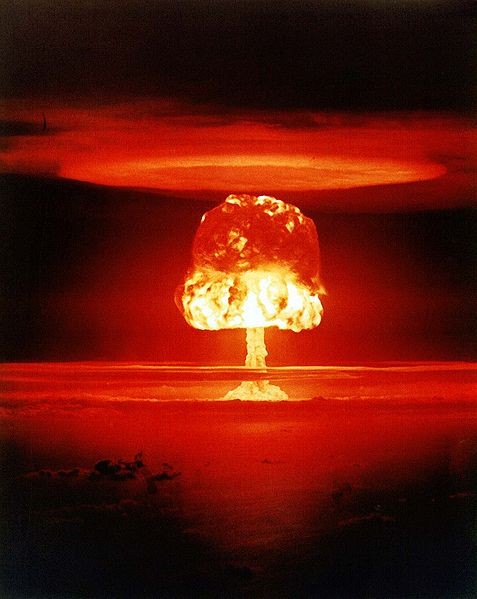
Reprocessing of nuclear fuel, and the implementation of Integral Fast Reactor technology, will enable us to turn the vast majority of what is currently considered waste into energy. As of 2005, nuclear power provided 6.3% of the world's energy and 15% of the world's electricity, with the U.S., France, and Japan together accounting for 56.5% of nuclear generated electricity. As of 2007, the IAEA reported there are 439 nuclear power reactors in operation in the world, operating in 31 countries. In 2007, nuclear power´s share of global electricity generation dropped to 14%. According to the International Atomic Energy Agency, the main reason for this was an earthquake in western Japan on 16 July 2007, which shut down all seven reactors at the Kashiwazaki-Kariwa Nuclear Power Plant. There were also several other reductions and "unusual outages" experienced in Korea and Germany
The outer shells cans hold even more. Some atoms with many protons can have as many as seven shells with electrons in them. The electrons in the shells closest to the nucleus have a strong force of attraction to the protons. Sometimes, the electrons in the outermost shells do not. These electrons can be pushed out of their orbits. Applying a force can make them move from one atom to another. These moving electrons are electricity. 7.2 Static electricity Electricity has been moving in the world forever. Lightning is a form of electricity. It is electrons moving from one cloud to another or jumping from a cloud to the ground. Have you ever felt a shock when you touched an object after walking across a carpet? A stream of electrons jumped to you from that object. This is called static electricity. Have you ever made your hair stand straight up by rubbing a balloon on it? If so, you rubbed some electrons off the balloon. The electrons moved into your hair from the balloon
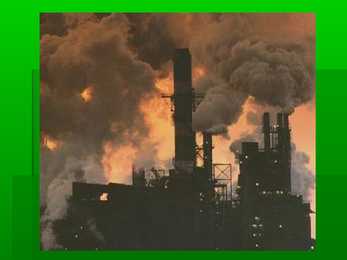
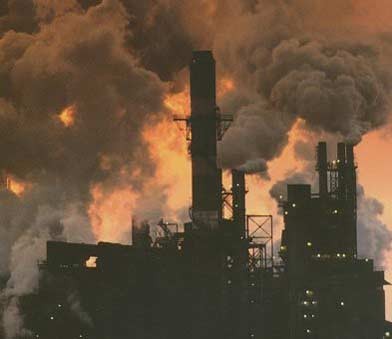
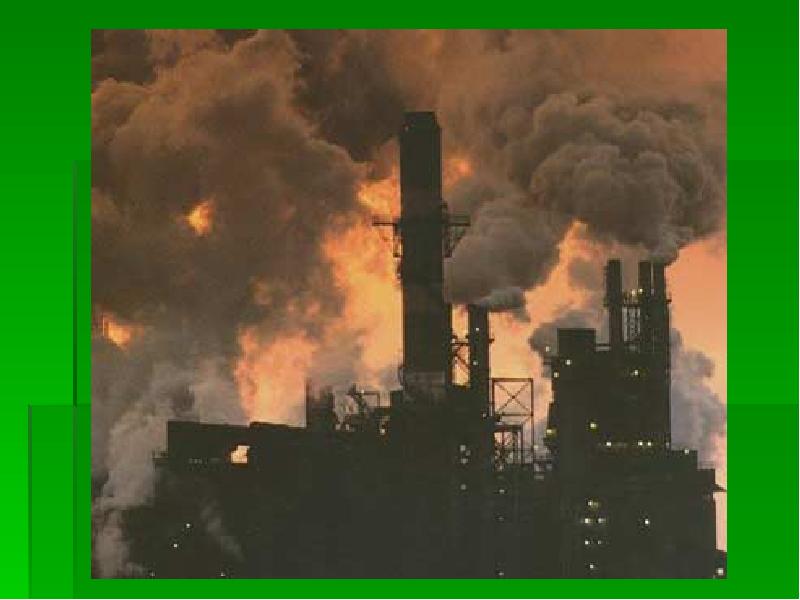
Air pollution can have serious consequences for the health of human beings, and also severely affects natural ecosystems. Because it is located in the atmosphere, air pollution is able to travel easily. As a result, air pollution is a global problem and has been the subject of global cooperation and conflict. Some areas now suffer more than others from air pollution. Cities with large numbers of automobiles or those that use great quantities of coal often suffer most severely from problems of air pollution. CAUSES There are many different chemical substances that contribute to air pollution. These chemicals come from a variety of sources. Among the many types of air pollutants are nitrogen oxides, carbon monoxides, and organic compounds that can evaporate and enter the atmosphere. Air pollutants have sources that are both natural and human. Now, humans contribute substantially more to the air pollution problem.
Coal (comparison) 4 ¢/kWh Geothermal heat 0.55 ¢/kWh Biomass -- heat 16 ¢/kWh Low temp solar heat 225 ¢/kWh All costs are in 2001 US$-cent per kilowatt-hour. Source: World Energy Assessment, 2004 update[28] Potential future utilization Present renewable energy sources supply about 18% of current energy use and there is much potential that could be exploited in the future. As the table below illustrates, the technical potential of renewable energy sources is more than 18 times current global primary energy use and furthermore several times higher than projected energy use in 2100. The Renewable Energy Resource Base (Exajoules per year)
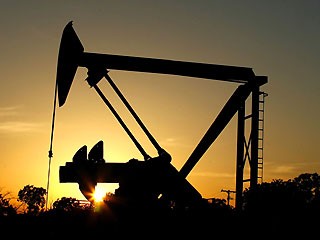
This comes after the studies of structural geology (at the reservoir scale), sedimentary basin analysis, reservoir characterization (mainly in terms of porosity and permeable structures). It is refined and separated, most easily by boiling point, into a large number of consumer products, from petrol (or gasoline) and kerosene to asphalt and chemical reagents used to make plastics and pharmaceuticals. Petroleum is used in manufacturing a wide variety of materials, and it is estimated that the world consumes about 88 million barrels each day. The use of fossil fuels such as petroleum can have a negative impact on Earth's biosphere, releasing pollutants and greenhouse gases into the air and damaging ecosystems through events such as oil spills. Concern over the depletion of the earth's finite reserves of oil, and the effect this would have on a society dependent on it, is a field known as peak oil. Etymology
 annaabi.ee































Kõik kommentaarid