Leidsid 33 sarnast õppematerjali, mis on seotud failiga "How can the issue of intolerance be addressed by the government?". Need materjalid aitavad sul teemat sügavamalt mõista.
tolerance, intolerance, government, teach, child, children, know, fear, grow, early, rights, thing, afraid, difficult, ways, open, minded, bigger, laws, issue, individual, members, rooted, gets, either, parents, requires, fought, later, change, person, values, other, than, seems, taught, curious, adult, something, enough, responsible, find, solutionThe highest result of education is tolerance Ladies and gentleman! Today I will discuss a topic what is opened by a quote by beautiful Helen Keller: The highest result of education is tolerance. Today is the day you will understand that her quote is accurate. So I should probably start with a question. Why should we be tolerant to weird kids at school? Does anybody in this room know why?........Okay, let's just drop that question for now, we'll come back to it later. If I would ask you Where do we get our education from you all would probably say: From schools duuuh! But what is a school? Tallinn English College? Yeah, it is a school with all those fancy numbers with what you can become successful........but the greatest education comes from the life school where we learn about other people's views and thoughts. And
degree of B.A. International Relations` Table of Contents Abstract 3 Introduction 4 Chapter 1: Citizenship, Children`s Rights and Participation: from the UN to the UK 6 Chapter 2: Citizenship Education in Wales………………………………………………14 Active Citizenship in Cadle Primary School: A Case Study 20 Conclusion 29 Bibliography 32 Appendices Appendix 1: The United Convention of the Rights of the Child Appendix 2: Interview with Jamie Richards, the Head Teacher of Cadle Primary School 2 Abstract: Children inherently have had a rather tenuous relationship with citizenship. Similarly to how women were once viewed, children have not been considered as subjects of rights due to their perceived incompetence and irrationality. Currently, children are not considered as being
Tolerance and Diversity Janne Susi In today's world, the coexistence of different cultures is one of the most vital developments. Furthermore, the principles of tolerance and peaceful coexistence of different nations have often been underlined by the representatives of the European Union. The same ideas have lately been spreading in the Baltic countries. So, what are the main dangers to the tolerance and friendly coexistence in these countries? There are several phenomena which counteract the successful coexistence and integration of people from different cultural backgrounds. First and foremost, both coexistence and integration require a high level of tolerance from all those involved. Here, the major obstacle is often xenophobia which may be caused by a wide range of factors. As a rule, xenophobia occurs in big, mostly mono-cultural societies, where strangers are
Education Education is so multifaceted that it is difficult for me to know where to begin discussing it, or how to prioritize the many factors. Relaying my own experience is easy: I had a standard classroom approach, supplemented by inordinate reading. In only the briefest and least memorable instances did I receive any individual tutoring. Education is commonly thought of as the job of schools. Adults cry "educate our children!" Everyone has opinions about the best way to do the job. It is of urgent importance, and all the numerous factors are much studied, debated, and new (or old) ideas continually tested or retested. Some people say "it's as simple as . . . " and then name their pet peeve or passion. My view is not of an education specialist, but of one who loves sharing what I learn, and owes much to educators. Since I don't have an educational theory neatly worked-out, nor an outline
If you have created something, then try to be open minded Teacher: O'Mahony V.PG 11A 09.03.2009 This written essay here is talking about my thoughts and facts of life, what is around us. First I thought that why is always easier to create something but to destroy is much harder. Exactly there have been so many wars in history. Everybody wanted to own a lot of countries and others had to fight for their created country. Also they started to teach young people to kill and protect their country with killing enemies. Also government tried to keep a low profile, if there were some wars in state. These are my thoughts of creating and keeping something. In the old times were many wars. Some states predominated over other weaker countries or states. Weaker countries had created their own and loved country and they wanted to live like that for a long time. But also stronger countries wanted to broaden their
or you can have negative beliefs about yourself and your potential that act as roadblocks to the realization of everything that is truly possible for you. The most harmful beliefs you can have are your self-limiting be- liefs. These are beliefs about yourself and your potential that hold you back. Most of them are not true. Most of them are the result of information you have accepted without question, often from early childhood. Even if it is completely untrue, if you believe yourself to be limited in areas such as achieving wonderful health and happi- ness and earning a lot of money, that will become your truth. As the author Richard Bach in his book Illusions wrote, “Argue for your limitations and sure enough, they’re yours.” ccc_tracy_fm_i-xviii.qxd 7/7/03 3:23 PM Page xvii
· Naturalists show man as a small figure in deterministic system which ignores him · Man is a huge machine · Lot of these novels end in tragedy · For 20 years naturalism remained dominant method. The beginning of the 1910 (modernism starts ) · American naturalists: frank Norris ,,The Octopus", Stephan Crane ,,Red badge of courage" · Jack London (1876-1916) · Grew up in extreme poverty. From early age had to support himself with dangerous manual jobs. Experienced the trouble of survival. Outlooks were eclectic (combination of various philosophies). Was influenced by socialism by Karl Marx, on the other hand the dark views of Nietzche. Believed in the trimph of working man (marx), but at the same the in the necessity of of the survival of the strongest. Was attracted to the Nietzches theory of the superman- the true aristocrats
maximal satisfaction to the individual. Eudemonism replaces the word satisfaction by happiness. The difference between the two words is that satisfaction usually is short- term and focuses more on the senses. Happiness is something long-term and is more 'part' of a person than an experience its senses undergo. Utilitarianism believes a certain action should result in maximum happiness for the biggest group of people. The government should always think of the interests of the population. Eudemonism and hedonism are however more focused on the individual. Here, classical utilitarianism 1 justifications will be discussed (Ibid.). Classic utilitarianism departs from the idea that there are two intrinsic values, pain and happiness. Jeremy Bentham believed that happiness includes wellbeing and absence of pain. It was him who defined that utility holds that the good is what produces most
relates to American Revolution on the one hand and the European Enlightenment on the other. Influenced by the scientific revolution of the 17th century and the humanist period during the Renaissance, the Enlightenment took scientific reasoning and applied it to human nature, society, and religion. American Enlightenment a gradual but powerful awakening that established the ideals of democracy, liberty, and religious tolerance in the people of America. If there were just one development that directly caused the American Revolution and uplifted the intellectual culture of the continent while it was only a British colony, it would be the American Enlightenment. Broadly, the Enlightenment was an intellectual movement that changed the fundamental perspective of the masses, urging them to foster skepticism and apply scientific principles in matters of religion and morality. Its chief values were:
14. Good institutions help to overcome human moral inertia. 15. I am not one of your little friends. 16. If a dimension is anywhere it's everywhere. 17. If God's not crazy, why are you? 18. If one makes a promise one shouldn't have made it cannot stand against the obligation to do the right thing. 19. If you odn't give a certain amount of attention to filtering distractions, every distraction is a catastrophe. 20. If you don't know what your duty is, your duty is to find out. 21. If you're not an animal, then you must be a vegetable. 22. If you want to get along you have to get along with those who don't want to get along. 23. If you whine whenever anybody messes with your crutches you can't claim not to be crippled. 24. I hate an unfair fight, so I need to be ganged up on. 25. Inattention is not O.K. 26. Injustice in your vicinity is your business--particularly your own. 27
and practices. Anglican church(es) The Anglican Communion is an international association of independent churches consisting of the Church of England and national and regional Anglican churches in full communion with it. Full participation in the sacramental life of each church is available to all communicant Anglicans. The Kirk = the Church of Scotland is Presbyterian in its structure, governed by a system of local, regional and national 'courts' or councils. 'Presbyterian' government refers to the sharing of authority in the church by an equal number of 'elders' (elected from the membership of the church) and ministers. Evangelical = low church The Low Church movement can trace its roots back to the early 18th century but is primarily associated with the opposition to the Anglo-Catholic movement of the later 19th century. Low Church placed great emphasis on preaching, personal piety and the
State (def) "Inter-American convention on the rights and Duties of States!" (Montevideo 26.12.1933) A permanent population biggest part are citizens of the state, + citizens of other states, who have a residence permit, stateless person (apatrid), people with multiple citizenships (bipatrid). How to get citizenship by birth: lex sanguinis blood principle, by birth, given to the child according to the citizenship of the parents (if parents are citizens of different countries different legislation can provide different solutions, they could choose or the child could choose); lex soli ground principle, given due to the place of birth, typical for Anglo- America and Latin-American, this can lead to dual-citizenship. Child if found
SSRI-s, that block serotonin reuptake when it is in the synapse, causing it to act for a longer time than normal and increasing the available serotonin that is needed for mood regulation. Using one or more examples, explain functions of two hormones in human behavior. Oxytocin is a hormone that is produced by the hypothalamus after being stimulated by the pituitary gland. It is released with touches and hugs. Oxytocin is associated with bonding between a mother and a child and as well as between lovers. If oxytocin is given to healthy individuals, it seems that their brain circuits involved in fear are affected and there is an increase in trust and generosity. The production of melatonin by the pineal gland is stimulated by darkness and inhibited by light. Melatonin levels peak in the middle of the night and decrease towards the morning. As the days get darker, we become tired more early. The use of artificial light can increase the awake time dramatically
Filmikunsti ajalugu 31.01.12 The age of pioneers: the early history of film How the horses helped to ivent the cinema. Cinema was invented by accident. 1872, west coast: leland standford, party, rich people, end of the 19 century, bored. Stanfrod talks friends about horses: problem: question is, what happens with the hooves while its moving, running. Bet, with eyes, can't settle this. Cannot ever see if the hooves touch the ground. Stanford has enough money, hires most famous photographer. Eadwerd muybridge, comes to usa
and not a victim. As a predator and not a victim, I have decided to confront the truth of my misfortune and when I look in the mirror I see the culprit standing right in front of me – it is me. As the saying goes, truth shall set you free. Truth has set me free. The truth in being a Capitalist Nigger is that it sets you free. Being a Capitalist Nigger puts you in control of every aspect of your life – you are in charge and nobody else. You want your children to have good grades in school? Then practice Capitalist Niggerism because then you will not blame the teachers for failing your children or blame the nationwide testing services for using non-black questions in their testing. You will be in control because you will totally understand that everything that happens to your child at school is a result of the learning environment you have provided him or her at home. You want to succeed in creating wealth, join Wall Street
In London you'll also find Indonesian, Mexican, Greek... Cynics will say that this is because English have no "cuisine" themselves, but this is not quite the true. Vocabulary: to criticize - tasteless overcooked - ingredient - to invent - sauces - to disguise - spice herb - delicious - disappointing - to lend cuisine British Youth (2) Most 18 and 19 year-olds in Britain are quite independent people. English people say that children grow up more quickly now. Relationships within the British family are different now. Children have more freedom to make their own decisions. For example, children aged 13 may be employed part time in Great Britain. Age 15 is legally a "young person" not a "child". Age 16 is a school leaving age. They can leave home, drive a moped, marry with "parents' consent" buy beer. Age 17 can drive a car. Age 18 can vote, get married, drink in pubs.
law. Descriptive law – describes the way people or natural phenomena behave, e. g. law of gravity Prescriptive law – prescribe how people ought to behave e.g. speed limits In all societies relations between people are regulated by prescriptive law; customs (informal rules of social and moral behaviour); rules we accept if we belong to a particular institution (religion, organization); laws imposed on people by a government Penalties for breaking the rules are different. For not following the customs there may not be a punishment, or a person may be criticized by the society; rules of a social institution tend to carry precise penalties but they are not enforceable by any political authority; however governments use a system of courts backed by the power of the police to enforce the laws they have made. The relations between people are regulated by a combination of all these rules.
nation, though its geography as described in the book closely matches real-life Colombia). Costaguana has a long history of tyranny, revolution and warfare, but has recently experienced a period of stability under the dictator Ribiera. Charles Gould is a native Costaguanero of English descent who owns an important silver-mining concession near the key port of Sulaco. He is tired of the political instability in Costaguana and its concomitant corruption, and uses his wealth to support Ribiera's government, which he believes will finally bring stability to the country after years of misrule and tyranny by self-serving dictators. Instead, Gould's refurbished silver mine and the wealth it has generated inspires a new round of revolutions and self-proclaimed warlords, plunging Costaguana into chaos. Among others, the revolutionary Montero invades Sulaco; Gould, adamant that his silver should not become spoil for
.................................................................59 Happiness as a Role Vs. True Happiness..................................................59 Parenthood: Role or Function? ................................................................60 Conscious Suffering.................................................................................63 Conscious Parenting.................................................................................64 Recognizing Your Child...........................................................................65 Giving Up Role-playing............................................................................66 The Pathological Ego................................................................................68 The Background Unhappiness...................................................................70 The Secret of Happiness............................................................................71
reputation (reputatsioon) - person's good name, honor or what the community thinks of him/her property (vara) - something that is owned by a person (bussiness, land, building etc) to administer property (vara haldamine) - to manage some kind of property (bussiness, land, building, real estate) family law (perekonnaõigus) - an area of the law that deals with matrimonial matters and domestic relations (marriage, civil unions, child abuse, divorce, adoption) unjust enrichment (alusetu rikastumine) - when a person unfairly gets a benefit by chance, mistake or another's misfortune legal remedies (õiguskaitsevahendid) - the way a right is enforced by a court of law when wrongful act is imposed upon another individual procedure (menetlus) - the official and proper way of doing things in a legal case in certain way or order victim (ohver) - a person who has been attacked, injured, robbed, or killed by someone else.
6 drop me off A. So there you are ... problem solved! 7 to lay off Rosie Yeah, these are good 8 turned up intentions, but not if we end up poisoning people in the long run. I 1F Discussion page 9 don't know, I just find the whole thing unnatural. I don't think we have a right 1 1 laboratory 5 crops to `play God' in this way. 2 controversy 6 harmful Leo I see what you mean. But to be 3 discredited 7 term honest with you, people have been 4 campaign 8 crisis crossing breeds for hundreds of years.
Different estimates about their number in Canada when Europeans reached North America from 300,000 to 1 mln. Saw themselves as part of nature, not as its masters. The First Nations were called "Indians" by Christopher Columbus when he landed in North America, because he thought he had reached India. Many now prefer to call themselves First Nations, though many still call themselves Indians in everyday conversation. They are still legally categorized by the Canadian Government under the Indian Act as Status Indians. Those who have lost their legal status are called Non-Status Indians. Prime Minister Pierre Trudeau tried to get rid of the Indian Act, but First Nations political groups insisted on keeping it, because it defines their special status. The Inuit are the people who originally lived in the Arctic. Their language is Inuktitut, but it has several dialects the differ considerably from place to place.
Truancy in school individual responsibility Hello ladies and gentlemen, today I am here to talk to you about truancy in school and why is it an individual responsibility. Truancy in school is a very serious problem nowadays. Unfortunately many students have lost their motivation to study. According to the BBC 400,000 children were persistently absent from England's schools in the past year and missed about one month of school each. The effect that poor attendance at school can have on a child's education can be permanent and damaging but skipping should be child's own responsibility and it is not right to punish the parents for it. Students have many reasons why they are skipping school, mostly they do not like the teachers or the subjects that they are taught. They tend think that they won't need
What is the real meaning of life? Why prefer one thing to another? Can we trust observation? It’s raining outside - how do you know it is? I can see it’s raining. How to convince yourself its raining? A good reason to doubt - 49 other peaople have the same opinion. Falsifiable → possible; not falsified World disappeared in 2012 and got recreated 3 secs later → unfalsifiable - cannot prove it’s true/wrong, cannot provide any tests to prove it. Or - one or another but not both → exclusive
· Hobbes leviathan · Locke second treatise of government · Rousseau - social contract · Montesquieu - The Spirit of the Laws · Kant idea for a universal history from a cosmopolitan point of view · Hegel - philosophy of right Key dates 1603 Shakespear's King Lear , Death of the Queen Elizabeth 1. 1618-48 The Thirty Year's War 1649 Execution of Charels 1 of England, Establishment of Oliver Cromwell's Prodecorate 1651 Hobbes' Leviathan(1588-1679) 1660 The Restoration of Charels 2. as king of England
communication marketing drive is to see if it gets the people talking. If it does, then not only does it mean that the advertising drive has been successful, but the organization in charge of the mass communication is also getting publicity by the word-of-mouth channel! Mass Media Influence It is hard to argue with the fact that mass media has a compelling effect on the human mind. Especially on minds which are more impressionable. For example, the mass media influence on children is understandably higher than it is in adults. So how exactly does mass media influence us? Mass Media Influence on Youth There is a burgeoning need amongst the youth to be accepted as a part of a group, to be popular, to have friends and relationships with people of the opposite sex etc. Mass media experts understand this need of the people and hence they come out with advertisements on TV, or in the newspapers, or on websites on how people can be more popular using a certain product
was in orbit around the Earth. `Sputnik' was small, no bigger in fact than a football, and compared to today's technology, it was very primitive. All it could do was to bleep. But its impact was enormous. After its launch, things began to happen quickly. Less than a month later it was followed by `Sputnik 2' which carried a dog Laika into orbit. The USA sent its first satellite, `Explorer 1', into space early the next year. The next step, putting a man in space followed in 1961 when the Russian pilot called Yuri Gagarin orbited the Earth in `Vostok 1'. In 1961, President Kennedy announced that America would begin a programme to put a man on the Moon. Use the Internet to get answers to the following questions: 1 When did the first man take the first steps on the Moon? What was the name of the first man on the Moon and what did he say? Was he walking on the Moon alone?
· What were the most important changes in politics, religion and social life that occurred during the Victorian age? Politics: 1848 Chartist movement (voting right for the working class); women's suffrage movements; feminist outburst (wanted to have business openly; own property, voting etc.); world dominion (British empire); Economy: Industrialization; urbanization (people moved to towns no agriculture & food); laissez- faire economy new type, where government has no control over economy; booming economy- needed new markets and endless supply of raw materials; 1845- potato famine in Ireland, 1846- Corn Laws (import of cheap corn to feed hungry people); Social life: religious doubts (Darwin's The Origin of Species 1859)- question raised: is there a God at all?; sexual liberation- changed people thoughts about sex (before men & women had different bedrooms); problems: alcoholism, prostitution, child workforce, primitive technology.
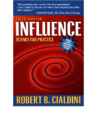
In a re- lated vein, the book might be seen as a way to demonstrate that, properly presented, what often seems like dry science can actually prove to be lively, useful, and relevant to all readers' personal lives. Comment on the Fifth Edition of Influence: Science and Practice It has been some time since Influence was last published. In the interim, some things have happened that deserve a place in this new edition. First, we now know more about the influence process than before. The study of persuasion, compli- ance, and change has advanced, and the pages that follow have been adapted to re- flect that progress. In addition to an overall update of the material, I have devoted special attention to updated coverage of popular culture and new technology, as well as to research on cross-cultural social influence-how the influence process works similarly or differently in various human cultures. I have also expanded a fea-
frequently jump to the conclusion that they are boring or a nuisance - thus compounding any sense of depression or poor self-esteem. A way to learn the secrets of body language is to watch television with the sound turned off and try to interpret what is being said simply from reading body language. You will experience that humans say a lot with their mouth which is contradicted by their body, gestures and other channels of communication. Messages are ambiguous. But a notable feature of the early years of the 21st century is the fact that the body language of different nations is gradually becoming more similar. Thus, a gesture made by someone in (say) South America can often be easily interpreted by people in Russia or Japan. Much of this is due to the effects of TV, which of course shows the same sort of `soap operas' in all parts of the globe. Words and body language If a child is to believe the parents who say that it's healthy to go to bed early, it usually doesn't
It has small narrow corridors and the walls of the rooms were carpeted as floors. The importance of the shuttle is that Ender learned something about orientation in zero gravity and that knowledge helped him a lot later. Most of the time passes in Battle School, which is composed of army barracks with rows of bunk beds; dining halls one for soldiers and one for commanders, with scoreboards decorating both; the game room, with various video games for the children to play; battlerooms, where the children have practice and battles in zero gravity; and a gym with shower rooms, where Ender and Bonzo fight. There is also an area for teachers' quarters, which the children never go to, but it is presumably in this vicinity where the conversations between Graff and other adults takes place. After Battle School he returns to Earth before going to Command School. There in the wilderness is a large house, overlooking lakes on either side. Although there are wasps that
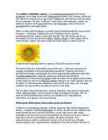
The sunflower (Helianthus annuus) is an annual(iga aastane) plant in the family Asteraceae, with a large flower head (inflorescence(õiekobar, õisik, õitseaeg, õidumine)). The stem(tüvi) of the flower can grow up to 3 metres tall, with the flower head reaching 30 cm in diameter. The term "sunflower" is also used to refer(nimetama, viitama, üle andma) to all plants of the genus(perekond, sugu) Helianthus, many of which are perennial(alaline, aastaringne) plants. What is usually called the flower is actually a head (formally(ametlikult) composite(liit-, komposiit- ; korvõieline, komposiit) flower) of numerous flowers (florets) crowded(täistuubitud, tunglev, rahvarohke) together
Lately, this stereotype is starting to change thanks to a more understanding and flexible society (culture) attitude towards adventure tourism and the growing female interest in tourism. This is illustrated by travel operators, like Explore having around 60% female customers (Mintel, 2010). Nowadays, women seek more thrill and self-fulfilment from their leisure time. They want to have more personal challenge to overcome fear and increase confidence, but also to experience a natural environment (Myers, 2010). Interestingly, many women are willing to go to an adventure holiday alone: they account for 60% of small group or solo adventure (Mintel, 2010). Culture differs across the human groups, and such difference in cultural backgrounds affects 2 Anthropology of Tourism Madli Tuvike tourism behaviour
 annaabi.ee