Leidsid 33 sarnast õppematerjali, mis on seotud failiga "History of paprika.". Need materjalid aitavad sul teemat sügavamalt mõista.
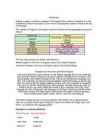
pepper, paprika, peppers, spice, mild, dried, ground, sweet, country, south, spain, plants, spanish, hungarian, monika, these, than, chilli, size, powder, heat, vary, strength, originally, native, columbus, brought, back, royal, court, growing, them, through, expansion, routes, spread, around, globe, late, eastern, europe, today, popular, types, smokedAfrikaner and British descent and their slaves and servants - this includes the cuisine of the Cape Malay people, which has many characteristics of Malaysia and Java, and recipes from neighbouring colonial cultures such as Portuguese Mozambique. Indigenous cookery traditional South African cuisine In the precolonial period, indigenous cuisine was characterized by the use of a very wide range of fruits, nuts, bulbs, leaves and other products gathered from wild plants and by the hunting of wild game. The domestication of cattle in the region about two thousand years ago by Khoisan groups enabled the use of milk products and the availability of fresh meat. However, during the colonial period the seizure of communal land in South Africa restricted and discouraged traditional agriculture and wild harvesting, and reduced the extent of land available to black people. Decline of indigenous cookery
drink. Apple juice drinks are widely available in Himachal Pradesh. Coconut milk, straight from the young coconut, is a popular street-side drink. Finally there is the Lassi, it is refreshing and delicious iced curd drink. Lassi is a popular and traditional yogurt-based drink of India. It is made by blending yogurt with water or milk and Indian spices. Traditional lassi is sometimes flavored with ground roasted cumin. Sweet lassi is a form of lassi flavored with sugar, rosewater and/or lemon, strawberry or other fruit juices. Saffron lassis, which are particularly rich, are also very popular. Sharbat is a cold sweet beverage that is prepared from fruits or flower petals. · Beers in India are either lagers or strong lagers. The most notable Indian brewer is United Breweries, even though there are several other popular ones including the foreign brewers
Italian food also has a lot of vegetables and healthy fats, such as olives, broccoli, and lettuces. Italians are also famous for the different kinds of breads they make. Spaghetti is traditional Italian cuisine Ingredients and dishes vary by region. Many dishes that were once regional, however, have proliferated with variations across the country. Cheese and wine are a major part of the cuisine, with many variations and Denominazione di origine controllata (DOC) (regulated appellation) laws. Coffee, specifically espresso, has become important in Italian cuisine. Essential Italian herbs and spices in the Essential Italian food in the kitchen: kitchen: * Garlic * Olive oil * Prosciutto ham
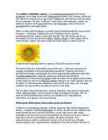
The sunflower (Helianthus annuus) is an annual(iga aastane) plant in the family Asteraceae, with a large flower head (inflorescence(õiekobar, õisik, õitseaeg, õidumine)). The stem(tüvi) of the flower can grow up to 3 metres tall, with the flower head reaching 30 cm in diameter. The term "sunflower" is also used to refer(nimetama, viitama, üle andma) to all plants of the genus(perekond, sugu) Helianthus, many of which are perennial(alaline, aastaringne) plants. What is usually called the flower is actually a head (formally(ametlikult) composite(liit-, komposiit- ; korvõieline, komposiit) flower) of numerous flowers (florets) crowded(täistuubitud, tunglev, rahvarohke) together. The outer flowers are the ray florets(pähik (õisiku osa) and can be yellow, maroon, orange, or other colors, and are sterile(steriilne, viljatu). The florets inside the circular head are called disc florets.
limited to very few defectors and dissidents who immigrated to the United States of America and other Western Bloc countries for political reasons. Russians who had been deported to Germany during World War II (displaced persons). Approximately 20,000 Displaced Persons arrived in the US. Immigration in 1969-...: the Soviet Union temporarily loosened emigration restrictions for Jewish emigrants, which allowed nearly 250,000 people leave the country, escaping covert anti-semitism. Jews were allowed to leave Russia for Israel, but many had the US as their real goal. Most had no knowledge of Yiddish or Hebrew or the Jewish religion. Immigration after 1985: the Soviet government under Mikhail Gorbachev allowed anyone to leave the Soviet Union. The major group of post-Soviet immigrants were the political refugees, persons who claim persecution or reasonable fear of persecution in Russia.
non-native speakers. Spanish is the second language. The largest city is the New York City. The Government is Federal constitutional republic and the president is George W. Bush. 2. Geographical position The United States of America is located on the continent of North America. It has borders with two countries Mexico and Canada. There are also the Atlantic Ocean, the Pacific Ocean and the Gulf of Mexico surrounding the big country. There are 50 states in America. Most of the people live in towns. The biggest state is Alaska; next by size are California, Alaska and Montana. Six states - Maine, Vermont, New Hampshire, Connecticut, Rhode Island and Massachusetts are called New England. They are all small states in the USA that lie in the north- east. The first colony of immigrants settled down in Virginia, in the eastern part of the USA. 3. Relief The USA is situated in the central part of the North American continent
Japan. E-mail: [email protected] E-mail: [email protected] Marta Castro-Giráldez M. Concepción Aristoy Institute of Food Engineering for Department of Food Science, Instituto de Development, Universidad Politécnica de Agroquímica y Tecnología de Alimentos Valencia, Camino de Vera s/n, 46022 (CSIC), PO Box 73, 46100 Burjassot Valencia, Spain. (Valencia), Spain. E-mail: [email protected] Pier Sandro Cocconcelli Istituto di Microbiologia, Centro Ricerche António Salvador Barreto Biotecnologiche, Università Cattolica del Faculdade de Medicina Veterinária, Sacro Cuore, Piacenza-Cremona, Italy. DPASA, TULisbon, Av. da Universidade E-mail: [email protected] Tecnica, Polo Universitário, Alto da Ajuda,
................................ ................................. Aborigines and first settlers.......................................................................................... Sports............................................................................................. .................................... Culture............................................................................................. .................................. Factfile Australia is the only country in the worlf that fills the whole continent. The continent is also called Australia, if you want to make clear that you are speaking about the country you may call it by its official name: Commonwealth of Australia. Australia is the smallest continent, but one of the largest countries in the world. Its area is about 7,6 million sq kilometers. Its population is about 20,0 million and most of the people live in bigger cities: Sydney (4.2 million), Melbourne (3
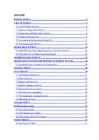
......................................................................................27 SOLAR ENERGY..............................................................................................................27 8.1 Photovoltaic energy...................................................................................................... 28 8.2 Solar thermal heat.......................................................................................................29 8.3 Solar thermal power plants......................................................................................... 30 8.4 Solar energy and the environment..............................................................................30 WIND ENERGY.................................................................................................................31 9.1 The History of Wind ..................................................................................................31 9.2 How wind machines work...
Introduction English is spoken on all five continents. With regard to the numbers of speakers it is only exceeded by Chinese and Spanish. But in terms of geographical spread it stands at the top of the league. The varieties of English in the modern world are divided into four geographical groups as follows. British Isles America United States (with African American England English) Wales Canada
Sometimes it rains so heavily, that they say «It's raining cats and dogs». Britain is known all over the world for its fogs. Sometimes fogs are so thick that it's impossible to see anything within a few meters. The winter fogs of London are, indeed, awful; they surpass all imagination. In a dense fog all traffic is stopped, no vehicle can move from fear of dreadful accidents. So, we may say that the British climate has three main features: it is mild, humid and very changeable. Vocabulary: to surround -- insular climate -- to determine -- temperate belt -- prevailing winds -- the Gulf Stream -- to flow -- shores -- moderate -- striking difference -- throughout -- fickle -- wet -- to blow -- It's raining cats and dogs -- fog -- awful -- dense -- vehicle.-- dreadful -- English Meals The English proverb says: every cook praises his own broth. One can not say English
numbers. As you can see Clay brick has somewhat better characteristics, but is also a little bit more expencive. The making of bricks (slide 9) Modern clay bricks are formed in one of three processes soft mud, dry press, or extruded. Mud bricks The soft mud method is the most common, as it is the most economical. It starts with the raw clay, preferably in a mix with 30% sand to reduce shrinkage. The clay is first ground and mixed with water to the desired consistency. The clay is then pressed into steel moulds with a hydraulic press. The shaped clay is then burned at 1000 °C to achieve strength. In modern brickworks, this is usually done in a continuously fired tunnel kiln, in which the bricks are fired as they move slowly through the kiln on conveyors, rails, or kiln cars, which achieves a more consistent brick product. The bricks often have lime, ash, and organic matter
............................................................10 Conclusion....................................................................................................................11 Materials........................................................................................................................11 2 Australia Introduction Australia is the one and only country in the world which fills the whole continent. The continent it fills is called Australia too. So, Australia is both a country and a continent. If you want to make clear that you are speaking about the country, you may call it the Commonwealth of Australia. It’s the official name of the country. Australia is the smallest continent, but one of the largest countries on Earth. It’s 6th largest country. Its area is about 7.6 million sq km. One third of it is occupied by deserts. It’s both
Nowadays, English is so widely spoken that it can hardly be considered "a one nation's" language. The main countries where English is spoken are: the U.K, the U.S, Canada, Australia, the Republic of Ireland, New Zealand, West Indies 2. There are approx. 300-400 million speakers of English in the world. English occupies the 3rd place by its number of speakers; it is right behind Mandarin and Spanish. 3. ESL (English as a Second Language) used in your own country (e.g. India) EFL (English as a Foreign Language) used in a foreign country ESP (English for Specific Purposes) used in business, airlines, hotels etc. 4. Settlement colonies people migrated into them from Britain and started their own communities, they are the present English-speaking countries (USA, Australia, Canada, New Zealand) Trading Empire (dependencies) mainly ESL countries; British people were seen
1788 was also the first penal colony. 160000 prisoners were transported from England and Ireland. · 1820 - New settlers began to arrive in New Zealand in larhe numbers. As a result, the dialects mixed. · 1840 The first official colony in New Zealand. Immigrants arrived there in 3 stages. (from Britain; from Australia and Ireland; from UK). This also resulted in the mixture of dialects. There was also a great influence of Maori. · 1795 The British arrived in South Africa and later began to settle in larger numbers. · 1822 English was declared as the official language is South Africa. 2. DISPERSAL · 1795 South Asia is occupied · 18th and 19th century English in west Africa is tied to slave trade. · From 15th century British travel to and from West Africa · 18th century first settlement in West Africa. English was emplored as lingua franca to be used between the English traders and the people living there. One by one the
Topic Canada Tallinn English College 2006 1. Introduction If you had to use two words to describe Canada, they might be large and diverse. Canada is the second largest country in the world with a territory of about 10 million square kilometers and it is bordered by three oceans: the Arctic, the Pacific and the Atlantic Oceans. The population of Canada is about 31 million people. About 77% of the people live in cities which lie in a band about 100 miles wide above the border of the United States. The capital of Canada is Ottawa. Other large cities are Montreal, Toronto, Vancouver, Winnipeg and Quebec. 2
class; 2) free Blacks, emancipated slaves and their descendants made up the middle class; and 3) slaves who were household property, were the lowest class. The Creoles were the majority of the white population. They had a complex social organization, which included foreign groups such as Germans, Irish, and Spaniards whose names were given a French accent. The people who could trace their noble ancestors called themselves "Creole." Others were "chacas" or tradesmen, "chacalatas" or country folk (peasants), or "chacumas" for anyone with Black blood. All Creoles, no matter what level of society they were in, including slaves, looked down on the Americans. 3 Family life In the Creole family the father was dominant. His word was law. He was not always a faithful spouse, but he was an indulgent parent. If he was a planter, he ruled his estate like a king. He had a large house, large crops, and a large family. He was a dutiful husband
Estonia. Estonia, officially the Republic of Estonia is a country in Northern Europe. It is the smallest of the three Baltic countries. Estonia has land borders with Latvia (339 km) to the south and Russia (229 km) to the east. It is separated from Finland in the north by the narrow Gulf of Finland and from Sweden in the west by the Baltic Sea. Estonia has been a member of the European Union since May 1, 2004 and of the NATO since March 29, 2004. The area of Estonia is about 45000 square kilometres and the population is about 1.4 million people. The capital of Estonia is Tallinn and the official language is Estonian. The currency is Eesti kroon. The main religion is Lutheran
Australia Topic Koostas: Aineõpetaja: Tallinn 2011 Location Only one country in the world fills a whole continent. That country is Australia. The continent it fills is Australia, too. Australia, then, is both a country and a continent. If someone wants to make clear that he is speaking of the country, he may call it by its full name of Commonwealth of Australia. Sixty million years ago Australia and its nearby islands were separated from the rest of the world by a great upheaval. They were cut off from Asia by the ocean. Very few people and almost no animals visited Australia before English colonists began to settle there in 1788. During all those 60 million years the native Australian mammals developed by themselves, undisturbed by the animals developing elsewhere.
..................................................................................................................8 Culture..........................................................................................................................9 Materials.................................................................................................................... 11 3 Introduction The United States of America is an enormous country. It is the third largest in the world after Russia and Canada. In the USA there are 50 states of which 48 lie together. The population of The USA is about 300 million people. The territory is about 10 million square kilometers. Its geography is very diverse ranging from moist rainforests to dry deserts and bald mountain peaks. There are two big mountain ranges, one of them is the Rocky Mountains and the other is The Appalachian Mountains. The Capital of The USA is Washington D.C
After which language? English occupies second place by its number of speakers after Mandarin Chinese. 3. What is the difference between English as a Second Language, English as a Foreign Language and English for Specific Purposes? Give examples of situations where they are used. English as a Second Language (ESL or TESL) is a traditional term for the use or study of the English language by non-native speakers in an English-speaking environment. That environment may be a country in which English is the mother tongue (e.g., Australia, the U.S.) or one in which English has an established role (e.g., India, Nigeria) English as a foreign language A traditional term for the use or study of the English language by non-native speakers in countries where English is generally not a local medium of communication. English for specific purposes - a sphere of teaching English language including Business English,
Tallinn English College Topic The United States of America Form Tallinn 2005 Introduction The United States of America is a very big country. Its territory is about 9.4 million square kilometres and its population is more than 260 million people, 12% of them are the Afro-Americans. It is the world's third-largest country by size and by population. The population density is about 27 people per square kilometre. Most of the people live in towns. There are 50 states in America. The biggest of the state is Texas, next by size are California, Alaska and Montana. Six states - Maine, Vermont, New Hampshire, Connecticut ,Rhode Island and Massachusetts are called New England. They are all small states in the U.S. that lie in the north-east. The first colony of immigrants settled down in
then is free to fill it with their choice of food. It is common to combine several options in one container, and some outlets charge by weight rather than by item. Many of these restaurants offer free delivery for purchases over a minimum amount. Sushi has seen rapidly rising popularity in recent times. A form of fast food created in Japan (where bent is the Japanese equivalent of fast food), sushi is normally cold sticky rice flavored with a sweet rice vinegar and served with some topping (often fish), or, as in the most popular kind in the West, rolled in nori (dried laver) with filling. The filling often includes fish, chicken or cucumber. Pizza is a common fast food category in the United States, with chains such as Papa John's, Domino's Pizza, Sbarro and Pizza Hut. Menus are more limited and standardized than in traditional pizzerias, and pizza delivery, often with a time commitment, is offered.
turbines. At the end of 2008, worldwide nameplate capacity of wind-powered generators was 121.2 gigawatts.Although wind produces only about 1.5% of worldwide electricity use, it is growing rapidly, having doubled in the three years between 2005 and 2008. In several countries it has achieved relatively high levels of penetration, accounting for approximately 19% of electricity production in Denmark, 11% in Spain and Portugal, and 7% in Germany and the Republic of Ireland in 2008. Wind energy has historically been used directly to propel sailing ships or converted into mechanical energy for pumping water or grinding grain, but the principal application of wind power today is the generation of electricity. Wind power, along with solar power, is non-dispatchable, meaning that for economic operation all of the available output must be taken when it is available, and other
3) Discuss the meaning and origin of the following words and phrases: Among other sources use the evidence of the Corpus of Historical American English (http://corpus.byu.edu/coha/) department store – The term was first brought to use in the 19th century. In 1877, George and Edward Butler founded a small wholesale mail-order company in Boston, which later became known as the Butler Bros. Their innovation of the “Five Cent Counter” started the epidemic of department stores all over the country. From the French department, which meant “group of people” and “departure”, English has borrowed the sense of “separate division”. Meanwhile, store originally meant “supplies or provisions for a household, camp, etc” and was related to warfare. The word as “a place where goods are kept for sale” was first recorded in 1721 in American English. Eskimo pie - Eskimo Pie was America's first chocolate covered ice cream bar and it was invented
and the Dominican Republic are situated. Its indigenous Arawakan-speaking Taíno inhabitants named the island Xaymaca, meaning either the "Land of Springs," or the "Land of Wood and Water". Formerly a Spanish possession known as Santiago, it later became the British West Indies Crown colony of Jamaica. It is the third most populous anglophone country in the Americas, after the United States and Canada. I chosed Jamica because there are many things what I like in this country. Mostly I like Jamaica´s music, culture and climate. Geography Jamaica is the third largest island in the Caribbean, and the most populous English speaking island there. The island of Jamaica is home to the Blue Mountains inland and is surrounded by a narrow coastal plain. Most major towns and both cities are located on the coast. Chief towns include the capital city Kingston, Portmore, Spanish Town, Mandeville, Ocho Rios, Port Antonio, and the city of Montego Bay. History
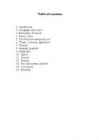
Table of contents 1. Introduction 2. Geographical position 3. Mountains, lowlands 4. Rivers, lakes 5. The territories and provinces 6. Towns, economy, agriculture 7. Climate 8. Animals, plantlife 9. Population 10. Sports 11. Culture 12. History 13. Political system, symbols 14. Conclusion 15. Materials 1. Introduction If you had to use two words to describe Canada, they might be large and diverse. Canada is the second largest country in the world, bordered by three oceans, and across the country, Canadians experience many different landscapes from rolling plains and mountains to the cold tundra of the north. Despite Canada's great size, it is one of the world's most sparsely populated countries. This fact, coupled with the grandeur of the landscape, has been central to the sense of Canadian national identity. 2. Geographical position Canada is the second largest country in the world after Russia. In the Arctic, Canada
Topic Australia Introduction Many people know Australia as the land down under because it is the only continent except for Antarctica that is all on the southern hemisphere. Its name means ,,Southland". The official name of the country is the Commonwealth of Australia. It's capital is Canberra. Australia is the sixth largest country in the world but the smallest continent. Australia has 6 states and 2 territories (New South Wales, Victoria, Tasmania, Queensland, Western Australia , South Australia, The Australian Capital Territory and the Northern Territory). The Australian people are culturally the same as the Anglo Americans. There also live aborigines. Aborigines are the ancestors of the people. Like the US and Canada, Australia was an English speaking colony of Great Britain. Today Australia is a modern developed country with a diversified economy. Australia is an island continent of 7.7 million square kilometres, which makes it a little smaller than the USA.
rather than a colour. Different countries, registries and breeds have different names for some of the same basic colours. Even where the same name is used, there may be different views on what is an acceptable or ideal version of that colour. Colours which appear identical to the human eye are caused by different genetic interactions. The same colours are called by different names in different breeds. Even in the same breed, the colour may have different names depending on which country the cat comes from and which registry it is registered with. American registries like to add "mink" after the Tonkinese colours whereas British registries use the same name for that colour as is used in the equivalent Siamese or Burmese colour. Confused? Don't worry - there are some cross- reference tables later on! The jet-black colour you known as "black" is called "ebony" and "ebony tabby" in Orientals, "black" in solid coloured domestic shorthairs, "brown" when it refers to brown tabby
At that time Asia and North America were joined, and what is now the bottom of the Bering Sea between Russia and Alaska was dry land, (a "land bridge) because sea levels were much lower than they are now. The earliest man-made artifacts tools or ornaments that archaeologists have found date from that time. The theory is that nomadic hunting people followed the big animals (moose, deer, elk, buffalo) for food, and eventually moved south and spread out as the ice sheets melted back. Then they evolved different cultures to suit different environments. Scientists now think that the ancestors of First Nations people may have come to North America from several different parts of Asia and Polynesia, following several different routes. Some may have come on woven reed rafts, or boats, across the Pacific from Asia and various islands.
The dried cod has been soaked for a week in a lye solution, then in clear water to soften it to the right texture. Also on the menu is roast suckling pig or a roasted fresh ham, mashed potatoes, and vegetables. After dinner the children go to bed while the older people stay up to chat with visitors and drink coffee until about midnight. Christmas Day services in the churches begin at six in the morning. It is a day for family visits and reunions. In some parts of the country the Star Boys tour the countryside singing Christmas songs. During all these days the people keep wishing each other a "Merry Yule." Christmas in Argentina People go to the church with family, then come back to a family gathering. At midnight after eating they toast, then the adults' dance while younger people go out to see the fireworks. After this they go to sleep, but before opening the presents under the Christmas tree. That day
Geography The name Australia means ,,southland". It is both a country and a continent, with an area of 7,617,930 square kilometres and it is also an island, separated from Asia by the Arafura and Timor seas. But Australia is also surrounded by the Indian and Pacific oceans. The Great Barrier Reef is the world's largest coral reef. It lies off the north-eastern coast and extends for over 2000 kilometres. The famous mountain range in the eastern part of Australia is the Great Diving Range and it's highest peak is Mount Kasciusco's 2230m. In the continental part,
island in Europe. It consists of England, Wales and Scotland. The next largest island is Ireland, which is made up of Northern Ireland and the Irish Republic. Britain and Northern Island together form the United Kingdom. When referring to Britain or Great Britain in everyday life, the names are used to mean the United Kingdom. The English Channel (and best known: the Strait of Dover) separate Britain from mainland Europe and its closest neighboring country France. 3. History Great Britain has a long and interesting history stretching back millennia's. The Iberians brought their metal working skills and the first real civilization to Britain in the 3rd millennium B.C. And were then overrun by the various Celtic tribes that begun in the 8th century B.C. The Celts introduced the tribal organization and an early form of agriculture before they were forced westwards to Cornwall, where the Celtic language
 annaabi.ee