Leidsid 33 sarnast õppematerjali, mis on seotud failiga "Halloween in the United Kingdom". Need materjalid aitavad sul teemat sügavamalt mõista.
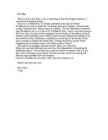
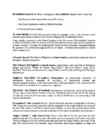
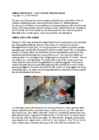
hallo, halloween, trick, century, treat, holidays, ghosts, witches, activities, costumes, least, playing, ireland, england, black, tradition, britain, lisett, tomson, mustvee, english, 2017, 2018, 31st, thought, night, year, active, include, parties, carving, 18th, scottish, spread, 20th, symbols, colours, spiders, bats, cats, north, since, late, 1920sDear Meg Thanks a lot for your letter. It was so interesting to hear about English traditions. I wrote about an Estonian holiday. Halloween, or Hallowe'en, is a holiday celebrated on the night of October 31.Halloween activities include trick-or-treating, ghost tours, bonfires, costume parties, visiting "haunted houses" and carving jack-o-lanterns. The term Halloweenis shortened from All-hallow-even, as it is the eve of "All Hallows' Day", which is now also known as All Saints' Day. Irish and Scottish immigrants carried versions of the tradition to North America in the nineteenth century. Other western countries embraced the holiday in the late twentieth century
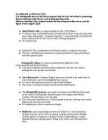
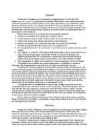
flowers, offering confectionery, and sending greeting cards. Modern Valentine's Day symbols include the heart-shaped outline, doves, and the figure of the winged Cupid. Saint Patrick's Day is a religous holiday on the 17th of March St. Patrick's Day is celebrated by the Irish and Irish at Heart in big cities and small towns alike with parades, "wearing of the green," music and songs, Irish food and drink, and activities for kids such as crafts, coloring and games. Its a time for fun. April Fools' Day is celebrated in the Westrn world on 1st april of every year The day is marked by the commission of good humoured or funny jokes hoaxes and other practical jokes. Trooping the Colour is a ceremony performed by regiments of the Commonwealth and the British Army. It has been a tradition of British infantry regiments since the 17th century, although the roots go back much earlier
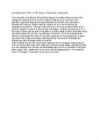
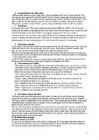
One of the nosiest and most crowded of New Year's Eve celebrations takes place in Times Square, New York City. Many people travel from one party to another to celebrate with several different groups of friends. Following a long exciting New Year's Eve Americans spend a quiet New Year's Day. One famous New Year's Day festival is the Mummer's Parade. It takes place in Philadelphia. It is a ten hour spectacle. The mummer's parade is colourful and high-spirited. Men dress in splendid costumes. The tournament of roses takes place in Pasadena, California. All these events help to make the New Year's Day relaxing holiday. On new years day people talk about turning a new leaf. Many Americans make new years resolutions promising themselves to improve their behaviour. Typical resolutions are to spend less money, give up smoking, begin a diet or control one's temper 7) HALLOWEEN Every year on October 31, Hallowe'en, or all souls' eve is celebrated in the United States and Canada
5. The Angles, Saxons and Jutes. The Angles were one of the main groups that settled in Britain in the post-Roman period, founding several of the kingdoms of Anglo-Saxon England, and their name is the root of the name "England". The Saxons were a confederation of Old Germanic tribes. Their modern-day descendants are generally considered ethnic Germans, Dutch or English.. Saxons participated in the Germanic settlement of Britain during and after the 5th century The Jutes were a Germanic people who were one of the three most powerful Germanic peoples of their time. They are believed to have originated from Jutland in modern Denmark. Were associated with the Saxons. The Jutes, along with some Angles, Saxons and Frisians, sailed across the North Sea to raid and eventually invade Great Britain from the late 4th century onwards, either displacing, absorbing, or destroying the native Celtic peoples there. 6. The Anglo-Saxon invasion
Festivals often close with choirs of around 25,000 taking part in an electrifying finale, in front of an openair audience of about 100,000. The festival takes place at the beginning of July, and it's common for many Estonians to take the week off work and travel to Tallinn to join in the celebrations. Visitors from other countries converge in Tallinn to experience the powerful singing, lively dances and intricate, colourful folk costumes at first hand. If you're interested in seeing this spectacular live performance, or maybe even taking part in a festival, the next event happens in 2004, 2009 and 2013. The song festivals began in 1869, part of the romantic and nationalist movement in Europe. They developed a network of interactions among people along with making folk customs more widely known and practiced. The solidarity that the
The Angles, Saxons and Jutes came from present-day Northern-Germany and Denmark in 449. A number of tribes from the European mainland invaded and settled in large numbers; however, they were not always victorious. These Anglo- Saxons soon had the south-east of the country in their control. In the west, their advance was temporarily halted by an army of (Celtic) Britons under the command of the legendary King Arthur. By the 7th century the Anglo-Saxons were ruling most of Britain. 10. Scandinavian raids. In 789 three Viking ships landed on the coast of the kingdom of West Saxon. They were traders and raiders. In the 9th century they conquered and settled the islands around Scotland and some coastal regions of Ireland. Their conquest of England was halted when they were defeated by King Alfred of the Saxon kingdom of Wessex
................................23 Surprisingly, according to the results, more than 50 percent of students are aware of the national flags of Great Britain, Scotland, Northern Ireland and Wales. As can be seen, quite a lot of children also know the name of the Great Britain flag. However, almost all of the students have no idea about other names of the British flags, as well as about the patron saints. In addition, almost 90 percent of students are also unaware about the national holidays..........23 All things considered, we see that there is a need for students to pay more attention to Scotland, Northern Ireland and Wales and to learn more information concerning those parts of the United Kigdom.....................................................................................................................23 2.4 The questionnaire 2...............................................................................................................23 2
on one of his voyages. Leif Eriksson (C11) was a Norseman who likely landed in North America around 1000 AD. John Cabot was an Italian explorer who reached North America in 1497. Jacques Cartier was a French explorer who landed in modern-day Newfoundland on 10 May 1534 6. From which countries did most immigrants arrive in Canada in the following periods: before the 1760s - The French founded New France and Québec City in 1608. 1760s to the end of the 19th century The French and Indian War (1754-1763) was the North American theater of the Seven Years' War. The British colonies in America defeated New France, forcing France to cede almost all of its territory to Britain and Spain.Subsequently, most immigrants arrived from Britain, either directly or via US Chinese immigration to British Columbia was extensive in the latter half of C19. In the beginning of 20th century, most immigrants were from Central and Eastern Europe, as well as Scandinavia
The Australian Capital Territory was formed in 1911 to provide a location for the new federal capital of Canberra. Canberra an aboriginal word meaning "meeting place" is the newest city, and unlike other cities, it is a long way 120 kilometres from the sea. It was created just for the sake of having a capital city. It is small in area and population. Australia has an active tradition of music, ballet and theatre. The Sydney Opera House is one of the most famous 20th century buildings, and one of the most famous performing arts venues in the world. Australian Aboriginal music, dance and art have a great influence on Australian visual and performing arts today. Over the past 50 years, Australian culture has been strongly influenced by American popular culture (particularly television and cinema), large-scale immigration from non-English-speaking countries, and Australia's Asian neighbours.
wanted to defeat it. He could clearly see that Britain was a threat to his latest and greatest conquest - France. He invaded Britain twice, in 55 and 54 BC. The first invasion was unsuccessful - it gained a beachhead on the coast of Kent but achieved little else. The second was more successful, the Celts asked for truce. However it wasn't a victory he had imagined and Julius Caesar never returned to Britain after that. The island was left undisturbed for nearly a century. *The Roman occupation of Britain 43-410 and its legacy Britain was conquered by Emperor Claudius, the Roman rule in England lasted up to 410. The Romans left behind a huge legacy: many types of animals and plants were brought to Britain in Roman times. Roman introduced theire measurements, Christianity, reading and writing. Also, many words in English and Welsh have been borrowed from the Latin language. An important legacy of the Romans was its roads, agriculture and cities
Each tendency was born by the influence of economic and political changes in the society. Those trends are known as the "hippies" the "punks" the "rockers". But certainly there are different traditional youth organizations in Great Britain. Among them -- the Scout Association, the Girl Guides Association, the National Union of Students, the Youth Club. The latter offers, for example, a wide range of sporting and social activities. The National Union of Students was founded in 1922. It operates through local branches in colleges and universities. It promotes the educational, social and general interests of students. But certainly the most numerous is the Scout Association, founded in 1908 for boys and in 1910 for girls by Lord Baden-Powel. The Scout movement is to encourage a sense of adventure and of responsibility for others among young people. The programme of training
Cromwell’s dictatorship. In 1660, monarchy restored under Charles II. 1668 the Glorious Revolution + constitutional monarchy, i.e. constitution added to restrict the power of the monarch and divide obligations and power with the Parliament. Beginning of the century, literature, especially drama flourished. Emergence of puritanism – poetry becomes leading form. Puritanism – purification of religion, of all unnecessary rituals and decorations, in essence, all pleasure equals sin. Closed theatres and denounced all drama, dance, rural festivals, even country sports
Next time they came in 43 A.D. and their leader was Emperor Claudius. Romans brought a lot with them. Their brought paved roads, the sites of important cities, the seeds of Christianity, the Roman law, Roman baths, language and advanced civilization. They also built Hadrian's Wall in 122 A.D. Romans occupied Britain for four centuries. The Roman way of life all vanished after the invasions from Northern Europe by the Angles, Saxons and Jutes from the 5th century onwards. They ruined Londinium, but they were easily turned into Christianity and religion became more and more important. The Vikings, who came in the 9th century, first raided England to plunder it, but then they decided to stay. In the 10th century England fell under Danish Rule, with King Canute finally managing to unite the Anglo-Saxons and Danes at the beginning of 11th century. Medieval England After defeating the Anglo-Saxon King Harold at the Battle of Hastings in 1066,
Established church The Church of England is the established church, which means that: 1.)the Monarch is the Supreme Governor of the church, 2.)the Church performs a number of official functions, 3.)Church and State are linked. To disestablish Disestablishmentarianism refers to campaigns to sever links between church and state, particularly in relation to the Church of England as an established church. It was initially a movement in the United Kingdom in the 18th century. The established churches in Wales and Ireland could not count on even nominal adherence by a majority of the population of those countries. In Ireland, the predominantly Roman Catholic population campaigned against the position of the established Anglican Church of Ireland - eventually disestablished in Ireland from 1 January 1871. A broad church The Church of England is a broad church, representing a wide spectrum of theological thought and practice
Witchcraft Witchcraft is the alleged use of supernatural or magical powers. A witch (from Old English wicca m. / wicce f.) is a practitioner of witchcraft. Historically, it was widely believed that witchcraft involved the use of these powers to inflict harm upon members of a community or their property, and that all witches were in league with the devil. Since the mid 20th century, the term witchcraft has sometimes been used to distinguish between bad witchcraft and good witchcraft, with the latter often involving healing. Human misfortune was often blamed on a supernatural entity or a known person in the community. Reasons for accusations of witchcraft fall into four general categories: · A person was caught in the act of positive or negative sorcery · A well-meaning sorcerer or healer lost their clients' or the authorities' trust
associated with the United Kingdom since its creation. Throughout its history, the United Kingdom has been a major exporter and source of musical innovation in the modern and contemporary eras, drawing its cultural basis from the history of the United Kingdom, from church music, from Western culture and from the ancient and traditional folk music and instrumentation of England, Scotland, Northern Ireland and Wales. In the 20th century, influences from the music of the United States became most dominant in popular music. This led to the explosion of the British Invasion, while subsequent notable movements in British music include the New Wave of British Heavy Metal and Britpop. The United Kingdom has one of the world's largest music industries today, with many British musicians having had an impact on modern music. Art Galleries 6
AMBER AND RUSSET - LATE COLOUR CHANGE GENES Copyright 2014, Sarah Hartwell The ancestors of the domestic cat were nondescript black/brown striped tabbies. Over the centuries, mutation produced a wide array of colours based on 2 different pigments. Eumelanin gives the blacks, browns and blues while phaeomelanin gives the reds, fawns and creams. A few other genes give further variations on those colours such silvers, colourpoints and solids/selfs. Mutations continue to occur and unexpected colours also turn up due to inbreeding where recessive genes, hidden for generations, start showing up. AMBER AND LIGHT AMBER During the 1990s, some purebred Norwegian Forest Cats in Sweden produced chocolate/lilac and cinnamon/fawn offspring. However, those colours are not found in the purebred Norwegian Forest Cat gene pool. Had the gene pool become polluted by someone, perhaps generations ago, breeding their Norwegian Forest Cat to another breed? Was it a spontaneous mutation? Crossing of those c
ABSTRACT FAMOUS SINGERS AND BANDS IN THE ENGLISH 2010 Contents: page The Bands · The Beatles 3 · The Who 4 · Placebo 5 · The Kooks 6 · Coldplay 7 The Singers · Sir Elton Hercules John 8 · Andrew Abraham 9 · Robert Peter "Robbie" Williams 10 · Christopher Anthony John "Chris" Martin 11 The Bands The Beatles were an English rock band, formed in Liverpool in 1960 and one of the most commercially successful and critically acclaimed acts in the history of popular music. From 1962 the group consisted of John Lennon (rhythm guitar, vocals), Paul McCartney (bass guitar, vocals), George Harrison (lead guitar, vocals) and Ringo Starr (drums, vocals). Rooted in skiffle and 1950s rock and roll, the group later worked in many genres ranging from folk rock to psychedelic pop
SCIENCE AND TECHNOLOGY A century ago communication across any distance was dependent upon the telegraph or letters. No jets crossed the ocean, no television pictures enabled us instantly to see events in any part of the world, there were no worldwide telephone networks and no computers. It is just a short lifetime since humanity first travelled into space and discovered how fragile our planet looks. FROM FIREWORKS TO THE MOON
When do you use a capital letter? 4Use a capital letter for the first letter in a sentence: The dog is barking. Come here! 4Always use a capital letter for the word I : I am eight years old. Tom and I are good friends. 4Use a capital letter for the names of people: Alice, Tom, James, Kim, Snow White 4Use a capital letter for the names of places: National Museum, Bronx Zoo, London, Sacramento 4Use a capital letter for festivals, holidays, days of the week, months of the year: New Year's Day, Christmas, Labor Day, Mother's Day, Sunday, Monday, Friday, January, May, July, October Exercise 1 Circle the letters that should be CAPITALS. Then write the correct letter in the space above them. 1 peter and i are good friends. we are going to chicago during our summer 2 vacation. 3 there is an interesting football game on sunday. 4 jason lives on thomson avenue.
American literature The literary history of this nation when the first humanbeing living in what has since become the U.S used language creatively. · Mid to late 18 century put down · Words are powerful, magical · Words must be remembered · Native Americans stories creation of the world · Attidude thought their land/language · Similar stories Dates and names · America was discovered in 1492 by Columbus · 1497 John Cabot went to Canada · 1579 San Fransisco/St. Fransis · 1607 Jamestown collony/John Smith · 1620 a boat called MayFlower
twentieth centuries. Race served to distinguish between populations or groups when describing an individual who was of mixed ethnicity or "blood." The term has historically been used to identify people that are now often called `Métis' in Canada. Many people back then considered the `half-breed' to be a degenerate, inferior sort of human. Some of this is related to racial theories of the 19th century that believed each `race' had a distinct origin, and that mixing would lead to serious troubles. That's why it is now considered to be a derogatory term. Métis, on the other hand, is a more general French term for mixed race, which has generally referred to a person of descent from two different major ethnic groups. Contemporary usage of Métis is also different from its historical meaning. At Red River in the 19th century there were two prominent communities of mixed-descent
1734) married Isaac Roosevelt, which makes her the great-great-grandmother of Franklin Delano Roosevelt, president of the US from 193345. · Hans Rebane = 1897 founded the first Estonian-language newspaper in the US Eesti Ameerika Postimees (published in NY until 1911) · 1898 founded an Estonian Lutheran congregation in NY (still exists today) 2. Signficant waves of migration from Estonia to the US in the 20th century, their reasons. *The failure of the 1905 Revolution: The first significant wave of immigration · Brought a strong Socialist contingent to the United States; led to the formation of many Estonian American Socialist and Communist organizations. * The 1920s30s: · Establishment of independent Estonia · Tightening of American immigration laws · Estonian immigration to the United States slowed down dramatically
English was spoken until around 1100. [5] 2) Middle English (1100-1500) In 1066 William the Conqueror, the Duke of Normandy (part of modern France), invaded and conquered England. The new conquerors (called the Normans) brought with them a kind of French, which became the language of the Royal Court, and the ruling and business classes. For a period there was a kind of linguistic class division, where the lower classes spoke English and the upper classes spoke French. In the 14th century English became dominant in Britain again, but with many French words added. This language is called Middle English. It was the language of the great poet Chaucer (c1340-1400), but it would still be difficult for native English speakers to understand today. [5] 3) Early Modern English (1500-1800) Towards the end of Middle English, a sudden and distinct change in pronunciation (the Great Vowel Shift) started, with vowels being pronounced shorter and shorter. From the
flooding the lower-lying land that is now under the North Sea and the English Channel. The improving climate changed the environment. Vast forests covered most of the lowlands and highlands, which were rich in various animals. Rivers teemed with fish. The island became a very comfortable place to live in. Albion The most ancient name for Britain was Albion which was first used by a Greek author in the 6th century BC. Though Celtic in origin, it was supposed by the Romans to come from Lat. albus (white), with reference to the chalk cliffs at Dover. White cliffs are the first and last sight of land for visitors who come to Britain by sea. Notes 1. The British Isles is a geographical term for the islands bounded by the English Channel, the Strait of Dover, the North Sea, and the Atlantic Ocean. The
Foreword Bridging rivers, gorges, narrows, straits, and valleys always has played an important role in the history of human settlement. Since ancient times, bridges have been the most visible testimony of the noble craft of engineers. A bridge can be defined in many ways, but Andrea Palladio, the great 16th century Italian architect and engineer, hit on the essence of bridge building when he said "...bridges should befit the spirit of the community by exhibiting commodiousness, firmness, and delight." In more practical terms, he went on to explain that the way to avoid having the bridge carried away by the violence of water was to make the bridge without fixing any posts in the water. Since the beginning of time, the goal of bridge builders has been to create as wide a span as possible
that it fills, the largest lake in Australia and is the lowest point in Australia, at approximately 15 m. The lake is located in the deserts of central Australia, in northern South Australia. Even in the dry season there is usually some water remaining in Lake Eyre, Rivers The Darling River is the longest river in Australia, flowing 2,739km from northern New South Wales to its confluence with the Murray River at Wentworth, New South Wales. (Some geographers treat the Darling and the lower Murray as a single river, 3,000km long. This is largely a matter of semantics). Today the Darling is in poor health, suffering from overuse of its waters, pollution from pesticide runoff and prolonged drought, possibly the result of manmade global warming. In some years it barely flows at all. The river has a high salt content and declining water quality Deserts Deserts of Australia cover a large portion of the land in Australia
Topic Australia Introduction Many people know Australia as the land down under because it is the only continent except for Antarctica that is all on the southern hemisphere. Its name means ,,Southland". The official name of the country is the Commonwealth of Australia. It's capital is Canberra. Australia is the sixth largest country in the world but the smallest continent. Australia has 6 states and 2 territories (New South Wales, Victoria, Tasmania, Queensland, Western Australia , South Australia, The Australian Capital Territory and the Northern Territory). The Australian people are culturally the same as the Anglo Americans. There also live aborigines. Aborigines are the ancestors of the people. Like the US and Canada, Australia was an English speaking colony of Great Britain. Today Australia is a modern developed country with a diversified economy. Australia is an island continent of 7.7 million square kilometres, which makes it a little smaller than the USA. Located in
The making of a new nation. The Enlightenment in America. The emergence of the notion of the American Dream. The great Enlighteners: Crèvecoeur, Jefferson, Paine, Franklin. The American Enlightenment is the intellectual thriving period in the United States in the midtolate 18th century (17151789), especially as it relates to American Revolution on the one hand and the European Enlightenment on the other. Influenced by the scientific revolution of the 17th century and the humanist period during the Renaissance, the Enlightenment took scientific reasoning and applied it to human nature, society, and religion. American Enlightenment a gradual but powerful awakening that established the ideals of democracy, liberty, and religious tolerance in the people of America.
Homereading 4 Changing world Religions Islam Islam is a monotheistic Abrahamic religion originating with the teachings of Muhammad, a 7th century Arab religious and political figure. The word Islam means "submission", or the total surrender of oneself to God An adherent of Islam is known as a Muslim, meaning "one who submits (to God)". There are between 1.1 billion and 1.8 billion Muslims, making Islam the secondlargest religion in the world, after Christianity. Muslims believe that God revealed the Qur'an to Muhammad, God's final prophet, and regard the Qur'an and the Sunnah (words and deeds of Muhammad) as the fundamental
Henrietta Maria Love and Beauty and Charles – Heroic Virtue, together a great force. Masques centre of court life. Stuart divinity + now queen as a Platonic love goddess. Maria – from French court amnners and highly artificial language of adoration – fashion. Idealised love wiped away all stains. Through their harmony, Charles could make his heavenly ascent and bring great benefits to their obedient subjects. Very costy. Closed court, believed in masques. 3. 17th century „metaphysical” poetry (Donne, Quarles, Herbert, Crashaw, Vaughan, Marvell) Religious poetry, books of emblems (allegorical pictures, verses explaining their moral), unconventional or „unpotic” figures like compass or mosquito to reach surprise effects, paradox and oxymoron. About the profound areas of experience: love (romantic and sexual), man’s relationship with God. Brief but intense meditations, striking use of wit, irony and wordplay.
and by Spain to the north and east. The Atlantic archipelagos of the Azores and Madeira are Portuguese territory as well. The country is named after its second largest city, Porto, whose Latin name was Portus Cale. SETTLEMENT The land within the borders of the current Portuguese Republic has been continuously settled since prehistoric times. In the 8th century most of the Iberian Peninsula was conquered by Moorish invaders professing Islam, who were later expelled by the Knights Templar. During the Christian Reconquista, Portugal established itself as an independent kingdom from León in 1139, claiming to be the oldest European nation-state. In the 15th and 16th centuries, as the result of pioneering the Age of Discovery, Portugal expanded western influence and
The Division of the Russian Language and Literature unites the Department of the Russian Language, the Department of Russian Literature, the Department of Russian Literature of XX century, and the Department of Russian Folklore. The core curriculum includes courses in the history of Russian literature (from Kievan Rus times to the present) and folklore, modern Russian , Old Slavonic, the history of the Russian language and Russian dialectology, etc. The Department of Russian Literature of XX century in Russian literature explore (from 1890s to the present), including works of Russian emigrants abroad and nonRussian writers in Russia proper. Curriculum at the Division of Russian as a Foreign Language is similar to the one of the Division of the Russian Language and Literature, with additional stress laid on foreign languages, the theory and methods of teaching Russian as a foreign language, and area studies.
 annaabi.ee