Leidsid 33 sarnast õppematerjali, mis on seotud failiga "Global overpopulation". Need materjalid aitavad sul teemat sügavamalt mõista.
billion, areas, global, overpopulation, lack, birth, critical, encourage, definition, condition, numbers, exceed, capacity, habitat, relationship, between, years, medical, substantial, increases, diseases, china, africa, europe, states, solutions, limit, live, places, religious, beliefs, todayHuman overpopulation Liis Lukk MJ15 What is overpopulation? • Overpopulation is an undesirable condition where the number of existing human population exceeds the carrying capacity of Earth. • Human overpopulation is among the most pressing environmental issues • Overpopulation can result from an increase in births, a decline in mortality rates, an increase in immigration, or an unsustainable biome and depletion of resources • Human population has been rising continuously since the end of the Black Death, around the year 1350 • The most significant increase has been since the 1950s, mainly due to medical advancements and increases in agricultural productivity • The recent rapid increase in human population over the past
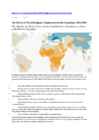
If current trends continue, by 2050 … The number of Muslims will nearly equal the number of Christians around the world. Atheists, agnostics and other people who do not affiliate with any religion – though increasing in countries such as the United States and France – will make up a declining share of the world’s total population. The global Buddhist population will be about the same size it was in 2010, while the Hindu and Jewish populations will be larger than they are today. In Europe, Muslims will make up 10% of the overall population. India will retain a Hindu majority but also will have the largest Muslim population of any country in the world, surpassing Indonesia.
Tallinna Mustamäe Humanitargümnaasium Valeria Jefremenkova ENGLISH AS A GLOBAL LANGUAGE INGLISE KEEL KUI ÜLEMAAILMNE KEEL Research work Supervisor: Jevgenija Kozlova Tallinn 2016 1 Table of Contents СONTENT…………………………………………………………………………………...2 INTRODUCTION…………………………………………………………………………...3
These conditions help in the development of forests. Finally, around the Great Lakes and alongside the St. Lawrence River as far downstream as the city of Québec, the climate is characterized by relatively warm summers and cool winters, moderated by surrounding water bodies. These conditions are suitable to the development of mixed wood and broadleaf forests. Mineral Resources Mining and fuel extraction and production accounted for 4.5 percent of Canada's GDP or some US$36.1 billion. Fuel exploration and production dominate this sector, but the processing of other types of mineral resources has grown significantly. In 1996, the top non-fuel minerals were gold with production of US$2.05 billion, copper US$1.47 billion, nickel US$1.45 billion, and zinc US$1.25 billion. There was also significant production of lead and iron. There are about 50 major gold mines in Canada and the country leads the world in technologies which extract gold from rock and soil
Scientists first discovered acid rain in 1852, when the English chemist Robert Agnus invented the term. From then until now, acid rain has been an issue of intense debate among scientists and policy makers. Acid rain, one of the most important environmental problems of all, cannot be seen. The invisible gases that cause acid rain usually come from automobiles or coal-burning power plants. Acid rain moves easily, affecting locations far beyond those that let out the pollution. As a result, this global pollution issue causes great debates between countries that fight over polluting each other's environments. For years, science studied the true causes of acid rain. Some scientists concluded that human production was primarily responsible, while others cited natural causes as well. Recently, more intensive research has been done so that countries have the information they need to prevent acid rain and its dangerous effects. The levels of acid rain vary from region to region
Jamaica prospered from the wealth brought by buccaneers, notably Sir Henry Morgan, to Port Royal, the capital; in 1692, however, much of the city sank into the sea during an earthquake, and Spanish Town became the new capital. A huge, mostly African, slave population grew up around the sugarcane plantations in the 18th cent., when Jamaica was a leading world sugar producer. Freed and escaped slaves, sometimes aided by the maroons (slaves who had escaped to remote areas after Spain lost 3 control of Jamaica), succeeded in organizing frequent uprisings against the European landowners. The sugar industry declined in the 19th cent., partly because of the abolition of slavery in 1833 (effective 1838) and partly because of the elimination in 1846 of the imperial preference tariff for colonial products entering the British market. Economic hardship was
School of Governance, Law and Society Coca-Cola Company's role in IPE Final paper Tallinn 2018 Brief overview The Coca-Cola Company is an American corporation founded in 1892 and today engaged primarily in the manufacture and sale of syrup and concentrate for Coca-Cola, a sweetened carbonated beverage that is a cultural institution in the United States and a global symbol of American tastes, headquartered in Atlanta, Georgia (Encyclopædia Britannica). Coca-Cola is the world's largest beverage company, refreshing consumers with more than 500 sparkling and still brands and nearly 3,900 beverage choices. Led by Coca-Cola, one of the world's most valuable and recognizable brands, their company's portfolio features 21 billion- dollar brands, 19 of which are available in reduced-, low- or no-calorie options. These brands
..........................................16 3. Conclusion............................................................................................................ ....18 4. Sources............................................................................................................... .......19 Renewable energy Renewable energy is energy generated from natural resources--such as , wind, rain, tides and geothermal heat--which are renewable (naturally replenished). In 2006, about 18% of global final energy consumption came from renewables, with 13% coming from traditional biomass, such as wood-burning. Hydroelectricity was the next largest renewable source, providing 3% (15% of global electricity generation),followed by solar hot water/heating, which contributed 1.3%. Modern technologies, such as geothermal energy, wind power, solar power, and ocean energy together provided some 0.8% of final energy consumption.
Industry and motor vehicle exhaust are the number one pollutants. Heavy metals, nitrates and plastic are toxins responsible for pollution. While water pollution is caused by oil spill, acid rain, urban runoff; air pollution is caused by various gases and toxins released by industries and factories and burning of fossil fuels; soil pollution is majorly caused by industrial waste that deprives soil from essential nutrients. FIND OUT 5 WAYS HOW TO STOP POLLUTION. 2. Global Warming: Climate changes like global warming is the result of human practices like emission of Greenhouse gases. Global warming leads to rising temperatures of the oceans and the earth surface causing melting of polar ice caps, rise in sea levels and also flash floods, excessive snow or desertification. FIND OUT 5 WAYS HOW TO STOP GLOBAL WARMING. 3. Overpopulation: The population of the planet is reaching unsustainable levels as it faces shortage of resources like water, fuel and food
The United Nations officially came into existence on 24 October 1945, when the UN Charter had been ratified by a majority of the original 51 Member States. The day is now celebrated each year around the world as United Nations Day. The purpose of the United Nations is to bring all nations of the world together to work for peace and development, based on the principles of justice, human dignity and the well-being of all people. It affords the opportunity for countries to balance global interdependence and national interests when addressing international problems. There are currently 192 Members of the United Nations. The Aims of the United Nations: -To keep peace throughout the world. -To develop friendly relations between nations. -To work together to help people live better lives, to eliminate poverty, disease and illiteracy in the world, to stop environmental destruction and to encourage respect for each other's rights and freedoms.
INDIA Demography and Bollywood Demographics With an estimated population of 1.2 billion, India is the world's second most populous country. The last 50 years have seen a rapid increase in population due to medical advances and massive increase in agricultural productivity due to the "green revolution". The percentage of Indian population living in urban areas has consistently grown; from 1991 to 2001, India's urban population increased by 31.2%. In 2001, about 285 million Indians lived in urban areas while more than 70% of India's population resided in rural areas. As per the 2001 census, there are twenty seven million- plus cities, with the largest cities being Mumbai, Delhi and Kolkata. English is used extensively in business and administration and has the status of a
S. through its largest tributary, the Tennessee River. During the eighteenth century, it was the southern boundary of the Northwest Territory, thus serving as the border between free and slave territory. Other The Great Plains is the board expanse of prairie and steppe which lies east of the Rocky Mountains in the United States and Canada. Grand Canyon created by Colorado River cutting a channel over millions of years, is about 227 miles long, and attains a depth of more than a mile. Nearly two billion years of Earth's history has been exposed as the Colorado River and its tributaries cut through layer after of sediment as the Colorado Plateaus have uplifted. 5. Climate Due to its large size and wide range of geographic features, the United States contains examples of nearly every global climate. The climate is temperate in most areas, tropical in Hawaii and southern Florida, polar in Alaska, semiarid in the Great Plains west of the 100 th meridian,
Second-generation biofuels are not yet commercially viable and therefore will not be discussed; although they could significantly improve the sustainability of biofuels when they break through to the industrial scale. 2. The scale of biofuels production 2.1. Drivers of biofuels production Lal (2010) stated that "three inter-connected challenges face humankind in the 21st century": food security, climate change, and energy security. The world population is projected to reach 9 billion in 2050, posing more demands on energy, food, and other natural resources. It has been estimated that the world food production needs to double and meat production increase by 85% by 2050 to fulfill projected demand by population (Karp, 2011). In the recent decades, the food consumption in the most populous counties has shifted from grain-based diets to meat and dairy diets. Meat production requires times more biomass in the form of
gone eras, but which have been stolen from us, and the ones who stole them have gone on to become very rich. This is nothing but an excuse for our failures. In 1987, David Sun and John Tu, both immigrants, started their Kingston Technology Company in Fountain Valley, California with hardly much financing 3 other than their savings. Nine years later they sold 80 percent of the company to the Softbank Corporation of Japan for $1.5 billion. The company is still going strong, and they still control 20%, after pocketing $1.5 billion. In 1997, former US President George W. Bush was asked to speak to a group of officials of Global Crossing Ltd., a telecommunications company, at a fee of $80,000. Since the company was supposedly short on cash, he was asked if he would prefer to take his fee instead in stocks of the company. In early February, 1999 the $80,000 stock had skyrocketed to over $14million. Who says some
About 91,000 insect species have been described. In America, there are very many parks, which 58 are national parks and there are hundreds of federally managed parks, forests and wilderness areas. The first national park in the world was Yellowstone national park in Wyoming. The flora is so diverse in America because of the different climates and good weather in some places (like California). Many species became extinct soon after the first settlements. The U.S. climate is temperate in most areas, tropical in Hawaii and southern Florida, polar in Alaska, semiarid in the Great Plains, Mediterranean in coastal California and arid in the Great Basin. The droughts and floods are infrequent in America. In north Alaska was recorded the lowest temperature in U.S. -62.2 °C . The highest temperature was recorded in California in Death Valley when the temperature reached 57 °C. The hurricanes occur almost every year along the Atlantic seaboard and the Gulf of Mexico
large-scale capitalists--the oligarchs--are former Soviet-era industrial managers who succeeded on a grand scale when industries were privatized. Their wealth was originally based on a traditional, simple formula: convert cheap energy and raw materials into metals and manufactured goods. The six richest Ukrainians are all metallurgy magnates. In Ukraine--like in Russia--incumbent managers (there is a special term in Russian for such executives/ owners Red Director) were present at the birth of private property and could harness privatization. The political atmosphere of nation building helped keep foreigners-- Russians and Westerners alike--mostly out of the game. The major exception was the financial system; several banks both from the West and the East have entered Ukrainian markets. Crucially for Ukraine's survival, between 2001 and 2008, as metals and chemicals prices boomed on the back of fast international economic growth while the price of gas imported
The label is intended to assert an hegemony of a dominant population, or to reflect a consensus of condemnation for the identified behavior and to justify a punishment imposed by the State, in the event that an accused person is tried and convicted of a crime. Usually, the perpetrator of the crime is a natural person, but in some jurisdictions and in some moral environments, legal persons are also considered to have the capability of committing crimes. Definition A normative definition views crime as deviant behavior that violates prevailing norms cultural standards prescribing how humans ought to behave normally. This approach considers the complex realities surrounding the concept of crime and seeks to understand how changing social, political, psychological, and economic conditions may affect the current definitions of crime and the form of the legal, law enforcement, and penal responses made by society. These structural realities remain fluid and often contentious
wide. The most mountainous region is of course Scotland with its highland and highest peak: Ben Nevis 1343 m. Scotland also has a wide lowland are between the Grampians and Southern Uplands, where most of the largest cities and population are located. Much of Wales is also mountainous and in England the Pennine Range extends 224 kilometres. The rest of England tends to be quite bumpy, for not even the large plains of East Anglia are perfectly flat. In Ireland all the highland areas are around the edge, but there are no peaks that surpass the height of one kilometer. The rivers are quite short, the longest being the Severn and the Thames. Their easy navigability has made them an important part of the inland transport network. 5. Population With 57 million people, the UK ranks about fifteenth in the world in terms of population, with England being the most populous part, followed by Scotland, then Wales and finally Northern Ireland
It ended with complete victory for the parliamentary forces. The king was captured and executed after a trial for crimes against his people. The leader of the parliamentary army, Oliver Cromwell, became "Lord Protector" of the republic. The monarchy was restored in 1660, after the death of Cromwell. In the 18th.century Britain expanded its empire in America, in Africa and India. Technological inventions led to the Industrial Revolution. Hundreds of thousands of people moved from rural areas into new towns and cities. London became an important business and trading centre. By the 19th century Britain was a powerful empire with its colonies in Canada, France, Australia, New Zealand, India and Africa. Tens of thousands people left Great Britain to settle in these colonies. Government The United Kingdom is a constitutional monarchy with Elizabeth II, Queen of the United Kingdom of Great Britain and Northern Ireland, as the head of state. The monarch of the
engineering and licencing ● Appropriating the benefits of investment in technology: ○ Capacity to translate technological advantage into commercially viable products and processes (commitment of complementary assets in production and marketing) ○ Capacity to defend advantage against imitators (patent protection) Sectoral system of innovation: definition, types A sector is a set of activities that are unified by some related product group for a given or emerging demand and that share some basic knowledge. Firms in sectors have commonalities and at the same time are heterogeneous. Innovation in sectors has relevant systemic features. ● Knowledge and technologies; ● Actors and networks; ● Institutions Examples of sectoral system of innovation from different
Rivers The Darling River is the longest river in Australia, flowing 2,739km from northern New South Wales to its confluence with the Murray River at Wentworth, New South Wales. (Some geographers treat the Darling and the lower Murray as a single river, 3,000km long. This is largely a matter of semantics). Today the Darling is in poor health, suffering from overuse of its waters, pollution from pesticide runoff and prolonged drought, possibly the result of manmade global warming. In some years it barely flows at all. The river has a high salt content and declining water quality Deserts Deserts of Australia cover a large portion of the land in Australia. Most of the deserts lie in the central and northwestern part of the country. The Great Victoria Desert is a barren, arid and sparsely populated desert ecoregion in southern Australia. It falls inside the states of South Australia and Western Australia
circumstances and the prescriptive recommendations by the World Bank and IMF fail to resolve the economic problems within the countries. As a example author is using Ecuador that is a small country in South America. In 1968- 1998 IMF and World Bank interviened with large loans to help the country but the growth of poverty increased form 50% to 70%, under or unemployment 15%to 70% and the public debt grew from 240 million to 16 billion (Perkins, 2004, lk 239). This essay is going to explore how this kind of thing could have happened? The idea is not to blame well-known organizations. The idea is to observe and explain what happened to Ecuador and discuss if the criticism about this matter is grounded. In this essay author is going to use a book “ Confessions of an Economic Hitman“ by John Perkins that spent a year on New York Times bestseller list in 2004 and caused lot of discussion all over the world
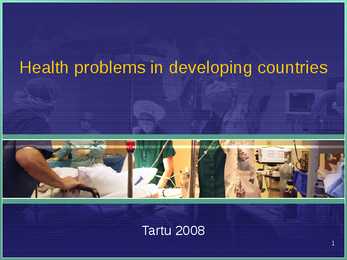
· Morocco Republic · Indonesia · Mexico Republic of · Zambia · East Timor · Iran · Micronesia, Fed. China · Zimbabwe · Ecuador · Iraq Sts 4 Access to Health Services · Physical barriers · Lack of transport · Travel time · Lack of evening clinics · Lack of home visits · Linguistic access · Lack of firstaid 5 Equipment & Conditions · Equipment is old-fashoined · Money comes only from donations of the aidfunds, not from the government · New equipment, sent by aidfunds, is only in small
Social problems Self-awareness Mixture of old and new HOW GOVERNMENT ACTS NOW- gives natives money and near Las Vegas the right to own casinos to compensate injustice and taking away land. II First Settlements · Jamestown Colony (living conditions, population, plantations, import of slaves) First permanent English colony in North-America 214 settlers Searching for gold (none found) Strategically good location, James River Quite poor conditions. Starvation, diseases, lack of water, attacks of natives , fierce weather Tobacco plantations African slaves, working in tobacco harvest 1620 by Dutch boat. Also Englishmen (convicts and poor people) Mayflower and Pilgrim Fathers Mayflower- cargo ship In 1620 one hundred Puritans boarded the Mayflower From Plymouth, England, to today's Plymouth, Massachusetts, United States Claim they are the forefathers of USA aristocracy- FALSE They saw little chance of England becoming a proper country
9 Northern Ireland 1,741,600 2.9 United Kingdom 60,587,300 100 Although Britain is quite small in terms of land area (245,000 sq km), it has a large population of nearly 61 million, which ranks the 21st in the world (Britain is the 21st most populous state in the world) and the third largest in the European Union. The size of population is changing very slowly. Natural change is the difference between birth and death rates. It may be a natural increase or a natural decrease. Birth rate the number of babies born per 1,000 persons per year 12 Death rate the number of people who die per 1,000 persons 9.9 Natural increase per 1,000 population 2.1. (USA 5.5, Brazil 12.9, Bangladesh 17,3) The size of population may change mechanically, too through immigration and emigration. 2. Distribution. What does a population distribution map show? How people are spread out across the
the UK is 58.6 million and area is 244,110 sq km. Britain has a temperate humid climate. Its characteristic features are mild winters, warm summer, no temperature extremes, abundant rain all year round and frequent changes of weather. The mild climate is partly due to the warm Gulf Stream and partly to the south westerly winds. Occasional winds from the east in winter may bring cold and dry weather. The distribution of rainfall is influenced by the Atlantic Stream. The mountainous areas of the north and west have more rain than the lowlands of the south and east. Wales is located on a peninsula in central-west Britain. The entire area of Wales is about 20,779 km². Wales borders by England to the east and by sea in the other three directions: the Welsh Channel to the south, St George's Channel to the west, and the Irish Sea to the north. There are many bays, peninsulas, cliffs and beaches, together Wales has almost 2000 km of coastline. There are several islands
hospitals,long-term healthcareand dentistry. It was founded in 1948 and has become an important part of British culture and everyday life. The NHS is controlled by the UK government.Some of their agencies have influence in other parts of the United Kingdom but the service is mainly known simply as NHS. The NHS has recently been the target of criticism over the years. Examples of such are: the length of waiting lists for consultations and surgical procedures; the lack of availability of various treatments either due to long waiting lists or lack of professionals willing to treat NHS patients and leading to people seeking private treatment in cheaper countries overseas. 4. Diseases In humans, disease is often used more broadly to refer to any condition thatcauses discomfort, dysfunction, distress or death to the person affected. In broader sense, it sometimes includes injuries, disabilities, disorders, syndromes and infections.
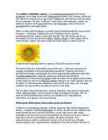
and food manufacturers alike for a healthy and high performance non-transgenic vegetable oil. Sunflower plantings, production, and supply and disappearance activities throughout the world are ever- changing. Statistics provide persons with a vested interest in the industry a foundation of where we've been in order to help us understand where we need to go. Use the Sunflower Statistics section as a resource for data on a global, national, and state-level perspective. Meal/Wholeseed Feeding Sunflower meal is the by-product of the oil extraction process. Oil is the majority value of sunflower seed and meal is considered a by-product. Sunflower meal is an excellent livestock feed, especially for ruminants. For the last several years, the supply of U.S. sunflower meal has been somewhat inconsistent. That is changing as the domestic market for sunflower oil increases.
the influx of ideas and people on which this nation was founded--and on which it still rests. The opening of America brought the ideas and achievements of Aristotle, Galileo, Newton, and the thousands of thinkers, writers, and inventors who followed. Queen Isabella pawning her jewels to finance Columbus' trip. This myth of the pawned jewels obscures the true and more sinister story of how Columbus financed his trip. The Spanish monarch invested in his excursion, but only on the condition that Columbus would repay this investment with profit by bringing back gold, spices, and other tribute from Asia. This pressing need to repay his debt underlies the frantic tone of Columbus' diaries as he raced from one Caribbean island to the next, stealing anything of value. After he failed to contact the emperor of China, the traders of India or the merchants of Japan, Columbus decided to pay for his voyage in the one important commodity he had found in ample supply - human lives
Farmers throughout the country rear dairy cattle for milk and other products. Much of the dairy production is concentrated in a belt that extends from Minnesota to New York. Midwestern states account for much of the nation's maize, soybeans and pig production. The nation's chief wheat-growing region stretches across the Great Plains. Most of the chickens are reared in the South. California and states in the South and Southwest produce almost all of the country's cotton. Farmers in other areas also produce poultry, eggs, fruit, vegetables, nuts and many other crops.The use of modern machinery and agricultural methods has helped make U.S. farms to be one of the most efficient in the world but it has also increased production costs. Many farmers who have been unable to meet these rising costs, have been forced to leave farming and sell their land. Since 1925, the number of farms has decreased to about 2 million. But at the same time, average farm size has increased about 30%.
ST stands for demand and supply side, where demand side is policies, practices and plans that take into account not only the expectations of tourists about responsible natural resource management and where supply side fights for the needs and quality of life, environment and communities that support tourist projects. All above mentioned ST definitions have similarities, but they are also different at one point or another. For example, Hunter (1999) definition of ST is more likely to be one-sided; author suggests that sustainability can be reached only if there is enough flexible arrangement of resources. This definition does not give any answers to how reach ST it also does not give any examples or role models. Swarbrooke (1999) is more specific about defining ST, it can be more likely to use as a definition of ST, and author suggests that there is several sides to consider in order reaching ST. First hand, Faulkner et al
A highly mechanized agricultural sector employs no more than 4% of the labor force but provides large surpluses for the food-processing industry and for exports. The Netherlands, along with 11 of its EU partners, began circulating the euro currency on 1 January 2002. The country continues to be one of the leading European nations for attracting foreign direct investment. Economic growth slowed considerably in 2001-02, as part of the global economic slowdown, but for the four years before that, annual growth averaged nearly 4%, well above the EU average. (3) 1.4 Population The great majority of inhabitants of the Netherlands are Dutch. They are mainly descended from Franks, Frisians, and Saxons. Most residents of Friesland Province are Frisian, a distinct cultural group with its own language. Fearing overpopulation, the government encouraged Dutch emigration after World War II (1939-1945), and some 500,000 people left
(Central Intelligence Agency, 2012, ISSN 15538133). 2.1.3 People and Society Ethnic groups: Finn 93.4%, Swede 5.6%, Russian 0.5%, Estonian 0.3%, Roma (Gypsy) 0.1%, Sami 0.1% (2006) Languages: Finnish (official) 91.2%, Swedish (official) 5.5%, other (small Sami and Russian speaking minorities) 3.3% (2007) Religions: Lutheran Church of Finland 82.5%, Orthodox Church 1.1%, other Christian 1.1%, other 0.1%, none 15.1% (2006) Population: 5,262,930 (July 2012 est.) Life expectancy at birth: total population: 79.41 years male: 75.94 years, female: 83.02 years (2012 est.) Health expenditures: 11.7% of GDP (2009) Education expenditures: 5.9% of GDP (2007) (Central Intelligence Agency, 2012, ISSN 15538133). 2.1.4 Economic Overview Finland has a highly industrialized; largely freemarket economy with per capita output roughly that of Austria, Belgium, the Netherlands, and Sweden. Trade is important with exports accounting for over one third of GDP in recent years
 annaabi.ee