Leidsid 33 sarnast õppematerjali, mis on seotud failiga "Gestures 2". Need materjalid aitavad sul teemat sügavamalt mõista.
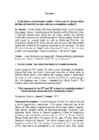
gestures, body, words, specific, close, language, hand, finger, mean, palm, communication, visible, bodily, actions, particular, either, place, speech, parallel, include, movement, hands, face, other, iconic, affect, meaning, understood, substitutes, sign, than, everyday, holding, closed, except, spread, apart, peace, away, ratherA feeling of helplessness. Delay or refusal to learn the lg of the host country. Excessive fear of being cheated. Excessive concern over minor pains. Terrible longing to be back home. Reverse CS- re-entry shock- the unexpected confrontation with the familiar. Cultural dimensions. Non-verbal communication Nonverbal communication is usually understood as the process of communication through sending and receiving wordless messages. Such messages can be communicated through gesture; body language or posture; facial expression and eye contact; object communication such as clothing, hairstyles or even architecture; symbols and infographics. Speech may also contain nonverbal elements known as paralanguage, including voice quality, emotion and speaking style, as well as prosodic features such as rhythm, intonation and stress. 1
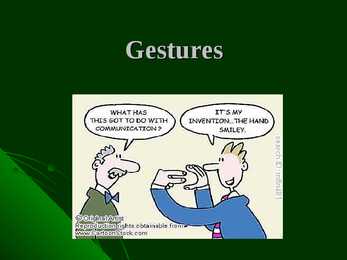
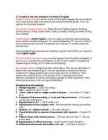
Gestures Gestures A gesture is a form of non-verbal communication in which visible bodily actions communicate conventionalized particular messages, either in place of speech or together and in parallel with spoken words. Gestures include movement of the hands, face, or other parts of the body. Examples Hands on knees: indicates readiness. Hands on hips: indicates impatience. Lock your hands behind your back: indicates self-control. Locked hands behind head: states confidence. Sitting with a leg over the arm of the chair: suggests indifference. Legs and feet pointed in a particular direction: the direction where more interest is felt. Crossed arms: indicates submissiveness. Facial expressions A facial expression results from one or more
Body language Body language means communication with the movement or position of the human body. It can be conscious or unconscious. It is something that is noticed by everybody but is not always given enough attention. We sometimes ignore it and try to hide behind words, but we should never forget that we cannot fool everyone! Children react to body language because they experience the world through intuition. The same can be true for adults when feelings are involved. People who are in bad shape emotionally will often place great importance in it. In fact, they often pick up the smallest hint of a lapse in attention in the person they are speaking to. And they frequently jump to the conclusion that they are boring or a nuisance - thus compounding any sense of depression or poor self-esteem.
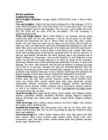
BODY LANGUAGE Denis Horenzenko What is Body Language? Body Language is the communication of personal feelings, emotions , attitudes(), thoughts through body movements gestures(), postures() , facial expressions, walking styles, positions & distance - either consciously(c) or involuntarily( ) .Its not only your tongue you communicate with but also you speak with your body movements and gestures. The Main Aspects of Body Language Gestures: A gesture is the verbal or non-verbal body movement used to express or emphasize() an idea , an emotion or a state of mind. Body Movements: This includes the head, eyes, eyebrows , lips , neck , shoulders, fingers and so on. One can distinguish() four main kinds of gesticulation(): Emblem, illustrators, regular and self-touching. Behavior : This refers quite simply , to everything we do which is overt or observable()
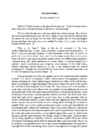
GETTING PHYSICAL Tallinn 2012 "Delivery is more important than content." Arch Lustberg, speech trainer According to wellknown social anthropologist Edward T. Hall, 60% of our communication is nonverbal. That means whenever we stand before an audience, our stance, our posture, our facial expressions, our hand gestures, our whole body dynamic communicate more than our actual spoken words. A stiff, immobile speaker is often a boring and usually ineffective speaker as. It is therefore essential to know how to be physically relaxed, which will allow your actions to complement your words. Before we start, two important definitions: A podium is the raised platform at the
1. STYLE The term "style" is polysemantic (has many meanings): a Latin word "stilus" originally meant a writing instrument used by ancient people. Already in classical Latin the meaning was extended to denote the manner of expressing one's ideas in written or oral form. Jonathan Swift defined style as "proper words in proper places". In present day English the word "style" is used in about a dozen of principle meanings: 1. the characteristic manner in which a writer expresses his/her ideas (e.g. style of Byron) 2. the manner of expressing ideas, characteristic of a literary movement or period 3. the use of language typical of a literary genre (e.g. the style of a comedy, drama, novel). 4. the selective use of language that depends on spheres / areas of human activity (e.g
12. Special literary vocabulary 13. Special colloquial vocabulary 14. Metre in English poetry. Modifications of metre ("Rhythm and Text") 15. Typically English stanzas ("Rhythm and Text") 16. Rhythm in poetry and in prose ("Rhythm and Text") Study independently 17. Varieties of language (I. Galperin "Stylistics") 18. Emotive prose (I. Galperin "Stylistics") 19. Scientific prose style (I. Galperin "Stylistics") 20. Language of the drama (I. Galperin "Stylistics") 21. Publicistic style (I. Galperin "Stylistics") 22. The style of official documents (I. Galperin "Stylistics") 23. Newspaper style (I
English lexicology 1. Size of English vocabulary Vocabulary is a sum total of words used in a language by speakers or for dictionary-making. Active and passive vocabulary. The Old English vocabulary was homogenous. There were about 50 000 – 60 000 words, 1/3 of which have survived. o About 450 loans from Latin o About 2000 from the Viking invasions. The Middle-English vocabulary became a heterogeneous hybrid of Germanic and Romanic languages. 100 000 to 125 000 words. o About 10 000 loans from Norman French, 75% are still in use o Continuing Latin influence Early Modern English. 200 000 – 250 000 words
Style The term style is a polysemantic one. The latin word ,,stilus" meant a writing instrument used by the ancients for writing on waxed tablets. Already, in classical latin the meaning of style was extended to denote the manner of expressing one's ideas in written or oral form. One of the abts/the best was given by Jonathan Swift: ,,Proper words in proper places." In present- day english, the world style is used in about half a dozen basic meanings. 1. the characteristic manner in which a writer expresses his ideas. Some speak about the style of Hemingway, Dickens etc. 2. the manner of expressing ideas, characteristic of a literary movement or period. Style of symbolism, romanticism 3. the use of language to pick a literary genre-comedy, novel, drama, O.D (poetic form) etc. 4
LEXICOLOGY 1. Size of English vocabulary 1) Old English – 50,000 to 60,000 words Vocabulary of Shakespeare OE – homogeneous; 1/3 of the vocabulary has survived • 884,647 words of running text About 450 Latin loans (Amosova) • 29,000 different words (incl. work, working, Viking invasions added 2,000 worked, which are counted here as separate 2) Middle English – 100,000 – 125,000 words) English becomes heterogeneous (Norman French, • 21,000 words English, Latin), hybrid of Germanic and Romance languages Norman French influence – about 10,000 words, 75 % are still in use (Baugh) Latin influence continues
STYLISTICS 1. Style, stylistics, a survey of stylistic studies The term ,,style" is polysemantic. Latin ,,stilus"--a writing instrument used by the ancients for writing on waxed tablets. Soon, the meaning was extended to denote the manner of expressing one's ideas in written or oral form. Jonathan Swift said: ,, Style is proper words in proper places" Present day--half a dozen meanings: · the characteristic manner in which a writer expresses his ideas (Style of Byron) · the manner of expressing ideas characteristic of a literary movement or period (symbolism, romanticism) · the use of lg. typical of a literary genre (comedy, drama, novel) · the selective use of lg that depends on spheres of human activity. These
1 SYNTACTIC STYLISTIC DEVICES SYNTACTIC STYLISTIC DEVICES are based on a peculiar place of the word or phrase in the utterance (text, sentence, etc).This special place creates emphasis irrespective of the lexical meaning of the words used. Categories: syntactic stylistic devises based on: SDD: based on ABSENCE OF LOGICALLY REQUIRED ELEMENTS OF SPEECH ELLIPSIS ELLIPSIS or ELLIPTICAL SENTENCES means leaving out one or both principle members of the sentence that is the subject or predicate. NT: Where is the man I'm going to marry? - Out in the garden. (no subject) What is he doing out there? - Annoying father. Here, in the dialogue, ellipsis creates the colloquial tone of the utterance
Roman politician, philosopher & translator. Theory ‘‘word-for-word’’ & ‘‘sense-for-sense’’. • Martin Luther – his role in the history of translation studies. Lived during the 15th century. He was a priest, theologian & translator. During that time, the Bible’s were only available in either Latin or Hebrew, which made it very difficult for common people to understand. He came out with a radical plan to translate the Bible into local languages (the first language was German – translated by Martin Luther). This inspired many other translators during that period. • What happened in the 19th and 20th century in translation studies? When and who created the term ‘translation studies’? Translation Studies – James S. Holmes - 1972 Ferdinand de Saussure – Lived during the 19th and 20th century. He was a Swiss linguist and a semiotician. He is widely considered one of the
Review questions English lexicology Size of English vocabulary. Average speaker 45,000-60,000 words, a total of about 200,000. Core and periphery. English has been heavily influenced by other languages. 31.8 % comes from Old English, 45% comes from French, 16,7% comes from Latin, 4,2% other germanic languages and 2,3 other languages. The very core is mono-syllabic (93 of the first 100 words and the other seven are two-syllabic). The core vocabulary is predominantly germanic. Native and foreign element. Native words belong to very important semantic group (modal verbs-shall, will, can, may; pronouns- I, you, he, my, his; preps- in, out, under; numerals and conjunctions::but, till, as. Native words are head, arms, back; mother, brother, son, wife; snow, rain, wind, sun; cat, sheep, cow; old, young, cold, hot, dark; do, make, go, come, see
But why are people dancing? With the latest decades more and more people have started dancing. They all have their own reasons and ways how and why they’re doing it. Some of us do it to entertain others and themselves, some are doing it as an art form. There’s people, who are communicaiting by dancing and those who work out or even meditate by doing it. In my case, I’m doing it because of all the above. [2] What is „A Dance“? Dance is the art of movement of the body, usually rhythmically and to music, using prescribed or improvised steps and gestures. "A dance" is any one prescribed sequence of such movements, or the music to which it is performed, or an event at which it takes place. It can be categorized and described in various ways. Still there’s many generic similarities in dances from many different times and places. Theatrical dance, also called performance or concert dance, is intended primarily as a
1) Standard and non-standard varieties of English Standard varieties of English are the varieties of the English language that are considered to be a norm and are spoken and written by the minority (educated people). This is the optimum for educational purposes. The standard varieties of English are: BrEng (British), EngEng (English), NAmEng (North-America), USEng (United States), CanEng (Canada), AusEng (Australia), NZEng (New Zealand). Standard English (British English) is the most widely accepted and understood among native speakers, learned by foreigners. It is used in broadcasting, TV, news etc. It doesn't
References: Kahny, Jim. Classroom dynamics: An interview with Jill Hadfield. Available at http://ltprofessionals.com/journalpdfs/vol1no1/features/winter2000kahny.pdf accessed 27.12.2012 ESOL Teaching Skills TaskBook. Classroom dynamics: unit 1 a). Available at http://akoaotearoa.ac.nz/download/ng/file/group-4/n2431-esol-teaching-skills- taskbook-unit-1-a---classroom-dynamics.pdf accessed 27.12.2012 III Language teaching methods. · (Traditional: the grammar-translation method/ classical method.) · Traditional: the direct method Youtube: http://www.youtube.com/watch?v=XiQvG-fvzLM Kids lesson (direct method) Language is primarily speech Reading skills are developed through practice with speaking Realia is used to convey the meaning Demonstration instead of translation or explanation Complete sentences instead of vocabulary lists The purpose of language learning is communication
............................................................24 Identification with Things........................................................................25 The Lost Ring...........................................................................................26 The Illusion of Ownership........................................................................29 Wanting: The Need for More....................................................................31 Identification with the Body.....................................................................33 Feeling the Inner Body.............................................................................34 Forgetfulness of Being.............................................................................35 From Descartes's Error to Sartre's Insight...............................................36 The Peace that Passes All Understanding................................................37
Acoustic phonetics the study of the physical properties of the sounds themselves. Auditory phonetics the study of the way listeners perceive these sounds. Articulatory phonetics the study of how the vocal tract produces the sounds of language. Phonology maybe used by actors, teachers, computer engineers etc. Phonology the description of the systems and patterns of speech sounds in a language. It studies: the abstract or mental aspect of the sounds in a language the actual physical articulation of speech sounds The phoneme. Phoneme is a meaning distinguishing sound in a language; it functions contrastively/ the smallest contrastive unit in the sound system of a language. When there is a contrast in identical environment we must be dealing with separate phonemes - when we replace one sound with another, we get another word with another meaning, therefore that sound must be a phoneme.
exists between grammatical units, e.g. a pronoun 'refers' to a noun or noun phrase. When the reference is to an earlier part of the discourse, it may be called a 'back-reference' (or anaphora); collective noun Collective noun is the name we give to a group of nouns to refer to them as one entity. A crew of sailors. A flock of birds. A range of mountains. conjunction any member of a small class of words distinguished in manylanguages by their function as connecto rs between words, phrases,clauses, or sentences, as and, because, but, however. content words Content words are words that have meaning. They can be compared to grammatical words, which are structural. Nouns, main verbs, adjectives and adverbs are usually content words. Auxiliary verbs, pronouns, articles, and prepositions are usually grammatical words. Example ‘We flew over the mountains at dawn'. countable nouns Countable nouns are easy to recognize. They are things that we can count. For example: "pen"
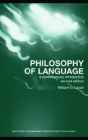
Philosophy of Language Philosophy of Language: a Contemporary Introduction introduces the student to the main issues and theories in twentieth and twenty-first-century phi- losophy of language, focusing specifically on linguistic phenomena. Topics are structured in four parts in the book. Part I, Reference and Referring, includes topics such as Russell's Theory of Descriptions, Donnellan's distinction, problems of anaphora, the description theory of proper names, Searle's cluster theory, and the causalhistorical theory. Part II, Theories of Meaning, surveys the competing theories of linguistic mean- ing and compares their various advantages and liabilities. Part III, Pragmatics
If you don't exercise regularly, you might want to stretch at least three times a week to maintain flexibility. If you have a problem area, such as tightness in the back of your leg, you might want to stretch every day or even twice a day. Stretching the Hands & Forearms You may not even realize how tight your forearms can get from typing until you stretch them out. This simple moves helps stretch those muscles in the forearms and wrists. 1. a) Start with your hand open. b) Make a fist. Keep your thumb straight, not tucked under your fingers. c) Slide your finger tips up your palm so the tips of your fingers are near the base of you fingers and you should feel a stretch. Do not force your fingers with your other hand if something is painful. 2. With your hand open and facing down, gently bend wrist from side to side, as far as possible. Hold for 3 to 5 seconds. Repeat 3 times.
1. Be ready to explain the terms (lecture 1): language, linguistics, synchronic approach to language, diachronic approach to language, linguistic competence, linguistic performance, what is grammar?, prescriptive grammar vs. descriptive grammar; phonology, phonetics, phone, allophone, phoneme; morphology, morphemes (types of morphemes), morphs, allomorphs, types of affixes, derivational affixes, inflectional affixes; open vs closed class words; syntax. Language: a systematic, conventional use of sounds, signs or written symbols in a human society for communication and self-expression.
verses of the Qur'an were revealed to Muhammad by God through the angel Gabriel on many occasions between 610 and his death on July 6, 632. The Qur'an was written down by Muhammad's companions (sahabah) while he was alive, although the prime method of transmission was orally. It was compiled in the time of Abu Bakr, the first caliph, and was standardized in the time of Uthman, the third caliph. The Qur'an in its actual form is generally considered by academic scholars to record the words spoken by Muhammad because the search for variants in Western academia has not yielded any differences of great significance and that historically controversy over the content of the Qur'an has never become a main point. The Qur'an is divided into 114 suras, or chapters, which combined, contain 6,236 yt, or verses. The chronologically earlier suras, revealed at Mecca, are primarily concerned with ethical and spiritual topics
brain. EEG Prints out brainwaves, registers patterns of voltage change in the brain. PET scan monitors radioactive glucose metabolism in brain. Produces colored maps of brain activity. Can record ongoing activity. fMRI provides 3D pictures of the brain structures, using magnetic fields and radio waves. It shows actual brain activity and has a higher resolution that PET scans. Experiments with animals are still used a lot because this enables psychologists to study specific biological correlates of behavior using invasive techniques (removing or scarring brain tissue). Prior to the development of modern technology, one of the most common ways to study the brain was case study. Often case studies provide researchers with a situation that they could never ethically reproduce in a laboratory. One of the most famous case studies of how brain damage can affect behavior is the study of Phineas Gage by Dr John Harlow
At the begging the music gives a special nuance to a certain mood and reminds us of lead characters and their activities in the morning. Down by the law is a intriguing paradox of clear picture and gritty sets. It is a poetical film, without any clear message, rather a story of personalities in a vague familiar Louisiana. At the end of a film the crossroads is a certainly a deep image that will give a time to think what will does it mean? Jean Renoir film '' La REgle du Jeu'' is a black and white drama/comedy film. It is a combination and continuity of space and light, soft and dark lights. Jean Renoir make's a strong accent on actors work. The combination of ''MisE en Scene'', drawing lens, dark sides, creating a foreground scene, use of the mirrors and smooth camerawork can be found in '' La Regle du Jeu''. Depth of field is what Renoir is trying to show. In everything from the
ENGLISH IDIOMS Nõmmik Vilian Apprentice 10 "A" class Ahtme Gymnasium Kohtla-Järve Relevance of the topic Ø The English language becomes the means of international communication, the language of trade, education, politics, and economics. People have to communicate with each other. It is very important for them to understand foreigners and be understood by them. Goal of my research work Ø Goal of my research work is to prove that idioms in the English language are integral part of it, which make our speech more colorful and authentically native. Tasks
L. studies the voc of lg as a system. Word-learning, lexis-logos. The task of L is to establish the general features of modern Engl voc. Theoretical L. gives a complete picture of voc. Practical value lies in using and appretiating the lg more conciously. There is diachronic (historical) L that studies origin and development; syncronic studies voc at a given historical period. There are general L (studies words disregarding particular features of any particular lg); special L (studies specific features of a separate lg, there is Engl that bases on general L); contrastive (compares vocabularys in different languages). 2. Connection of L with other linguistic disciplines a) the word performes a certain grammatical function (nt, he always misses the class, how many misses are there; the girl powders her nose, soliders face powder)In speech words are combined according to grammatical rules. The plural of nouns may carry a new meaning (nt, arms-weapons, looks-appearance, works-plant)
Do not expect a tour of the house - homes are private. Dress conservatively. Try and offer to help the hostess with the preparation or clearing up after a meal is served. This will be turned down but is nonetheless polite. Do not discuss business. Reciprocate any hospitality received. Table Manners Table manners are relatively formal in Estonia. Remain standing until invited to sit down. Table manners are Continental, i.e. the fork is held in the left hand and the knife in the right while eating. Do not begin eating until the hostess starts or someone says "head isu" ("good appetite"). Avoid resting your elbows of the table. Compliment the hostess on the meal. Try to finish everything on your plate. Business Meeting & Greeting Estonians are quite formal and may not come across as quote cold or even friendly to people from more informal cultures. This should not be interpreted so.
Is it true that the flower is the earth's rarest flower? If we want to know about flowers hadn't we better listen to botanists than poets? Isn't it apparent that whatever value Landor's poem has is not in its botany? THE NATURE OF LITERATURE: THE IMITATIVE THEORY Art is an imitation of something. Poetics Aristotle (384322B.C.): A form is presented in a substance not natural to it: Michelangelo imitates Moses in stone Shakespeare imitated Caesar in an actor's words and gestures Although no one whistled at Waterloo, one might whistle waterloo. THE IMITATIVE THEORY The imitative instinct is not the artist's private possession A boy can play cops. This natural tendency to imitate is combined, Aristotle says, with a tendency toward rhythm or pattern, and the result can be a work of art. In its simplest form the imitative theory appeals to the naive " How lifelike that wax apple is!" "How like a Frenchman that actor
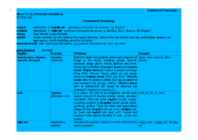
tegevusnime, oleviku kesksõna, mineviku kesksõna) derivational affix liide, tuletusliide, tuletusafiks (e.g. postwar, anti-American, wiser, greenish) parts of speech sõnaliigid English Estonian Definition Example noun (proper, common, nimisõna, Refers to words which denote classes and categories of book, water, sincerity, Mary, concrete, abstract) substantiiv things in the world, including people, animals, Estonia inanimate things, places, events, qualities, and states. Nouns can be divided into proper nouns and common nouns
design team disbands at the end of the project. The report has three sections. The first section describes the problem that was being solved and provides the background to the design. The second section describes the design and the third section evaluates how well the design worked by comparing its performance to the design requirements. The report starts with a short executive summary that contains a synopsis of the three sections. The body of the report is relatively short. Appendices to the report contain supporting information with the details needed by a reader who wishes to fully understand the design. While this document describes the general content and organization of a design report, some of the specifics (section headings, length, and format) may be determined by your project client. Before You Begin Some basics that you need to understand before starting to write the report.
the fabliau (a comic, often anonymous tale that is characterised by an excess of sexual and other types of obscenity) and (3) literature on religious topics – either moralistic (teach right from wrong) or ecclesiastical (biblical subject). Middle ages – English becomes a literary language. Geoffrey Chaucer (1343–1400) – Father of English literature, The Canterbury Tales in English, increased the prestige of the language, provided a standardised form. The Canterbury Tales: frame story. Majority in verse, some prose. Intended to contain 124 stories, only finished 24
 annaabi.ee