Leidsid 33 sarnast õppematerjali, mis on seotud failiga "Genetic Engineering". Need materjalid aitavad sul teemat sügavamalt mõista.
engineering, diseases, modified, able, mutagen, genes, nature, difficult, plants, there, them, than, usual, safe, changes, lead, affect, consequences, artificial, meeting, nowadays, concerns, around, engaged, testing, however, different, theme, known, globe, growing, appeared, technologies, modify, such, cold, weather, found, possible, treat, brainpollutants which are a major threat to human health. FIND OUT 5 WAYS HOW TO REDUCE WATER POLLUTION. 9. Urban Sprawl: Urban sprawl refers to migration of population from high density urban areas to low density rural areas which results in spreading of city over more and more rural land. Urban sprawl results in land degradation, increased traffic, environmental issues and health issues. FIND OUT 5 WAYS HOW TO FIX URBAN SPRAWL. 10. Genetic Engineering: Genetic modification of food using biotechnology is called genetic engineering. Genetic modification of food results in increased toxins and diseases as genes from an allergic plant can transfer to target plant. Genetically modified crops can cause serious environmental problems as an engineered gene may prove toxic to wildlife. Another drawback is that increased use of toxins to make insect resistant plant can cause resultant organisms to become resistant to antibiotics.
[2] 3. 1 ref to operon; 2 normally repressor substance bound to operator; 3 prevents RNA polymerase binding (at promoter) / prevents transcription; 4 lactose binds to repressor; 5 changes shape of protein molecule; 6 unable to bind (to operator); 7 RNA polymerase binds (at promoter) / transcription occurs / genes switched on; 8 AVP; e.g. production of lactose permease / production of beta- galactosidase; max 5 [5] 4. a change in the genetic material; unpredictable / AW; extra detail; e.g. addition / substitution / deletion / frame shift / small
All about High Tech High tech is technology that is at the cutting edge--the most advanced technology currently available. There is no specific class of technology that is high tech--the definition shifts over time--so products hyped as high tech in the 1960s would now be considered, if not exactly low tech, then at least somewhat obsolete. This fuzzy definition has led to marketing departments describing nearly all new products as high tech. Economy Because the high-tech sector of the economy develops or uses the most advanced technology known, it is often seen as having the most potential for future growth
PSYCHOLOGY PART 1: CORE Biological level of analysis Outline principles that define the biological level of analysis. 1) Behavior can be innate, because it is genetically based. Evolution may play a key role in behavior. 2) Animals may be studied as a means of understanding human behavior. 3) There are biological correlates of behavior. Cognitions, emotions and behaviors are products of the anatomy and physiology of our nervous and endocrine system. Explain how principles of the biological level of analysis may be demonstrated in research. 1) Correlational studies: Study by Buss, who hypothesized that across cultures, men will prefer to marry younger women because of greater reproductive capacity and women will place greater value on a potential mate's earning
The ship spilt only 5% of the oil spilt that year, and oil is just one of many pollutants that people dump into the water every year. Every year, 14 billions pounds of sewage, sludge, and garbage are dumped into the world's oceans. 19 trillion gallons of waste also enter the water annually. The problem of ocean pollution affects every nation around the world. This is especially true because water is able to transport pollution from one location to another. For many years, chemicals were dumped into bodies of water without concern. While many countries have now banned such behavior, it continues to go on today. As the world has industrialized and its population has grown, the problem of water pollution has intensified. The simple fact that millions of people live along coastlines and near rivers means that these bodies of water are likely candidates for heavy and destructive pollution.
26. Sensory Evaluation of Meat Products 457 Geoffrey R. Nute 27. Detection of Chemical Hazards 469 Milagro Reig and Fidel Toldrá 28. Microbial Hazards in Foods: Food-Borne Infections and Intoxications 481 Daniel Y. C. Fung Contents vii 29. Assessment of Genetically Modified Organisms (GMO) in Meat Products by PCR 501 Marta Hernández, Alejandro Ferrando, and David Rodríguez-Lázaro 30. HACCP: Hazard Analysis Critical Control Point 519 Maria João Fraqueza and António Salvador Barreto 31. Quality Assurance 547 Friedrich-Karl Lücke
75 per cent of the students surveyed eat three or more slices of brown bread per day, with only a quarter of respondents restricting themselves to one or two slices. Eating fat As regards fat consumption, the majority of the students eat margarine. Four students prefer butter, and another four eat neither. Conclusion It is noticeable that the eating habits of students in their final year at Freedonian Secondary School are not very healthy. Moreover, there are no students who have both breakfast and school lunch, eat more than four slices of brown bread per day, and avoid fat. In this essay, I will discuss whether prevention is better than trying to treat people who are ill and whether or not this is possible in all cases. I will divide the subject into illnesses caused by lifestyle, and illnesses caused by other factors such as genetic factors.
AMBER AND RUSSET - LATE COLOUR CHANGE GENES Copyright 2014, Sarah Hartwell The ancestors of the domestic cat were nondescript black/brown striped tabbies. Over the centuries, mutation produced a wide array of colours based on 2 different pigments. Eumelanin gives the blacks, browns and blues while phaeomelanin gives the reds, fawns and creams. A few other genes give further variations on those colours such silvers, colourpoints and solids/selfs. Mutations continue to occur and unexpected colours also turn up due to inbreeding where recessive genes, hidden for generations, start showing up. AMBER AND LIGHT AMBER During the 1990s, some purebred Norwegian Forest Cats in Sweden produced chocolate/lilac and cinnamon/fawn offspring. However, those colours are not found in the purebred Norwegian Forest Cat gene pool
considerably. Humus being defined as an organic residue in the soil resulting from decomposition of plant and animal residues in soil, or it is the highly complex organic residual matter in soil which is not readily degraded by microorganism (Kausadikari). There are several other variables that impact the soil microflora. For instance, a study by Canbolat et al. (2007) showed that root length, root and shoot weight of plants were decreased by soil compaction, which suggests that microfloral activity in compact soil is lower. Cultural practices The mankind has and will have a major influence on changing the microflora of soils. There are countless activites that have and minor effect, but change the soil composition in the long term as a whole. Although, some activites like agriculture, waste management and forestry carried out to satisfy the needs of the people have major impact on in areas of action.
Education Education is so multifaceted that it is difficult for me to know where to begin discussing it, or how to prioritize the many factors. Relaying my own experience is easy: I had a standard classroom approach, supplemented by inordinate reading. In only the briefest and least memorable instances did I receive any individual tutoring. Education is commonly thought of as the job of schools. Adults cry "educate our children!" Everyone has opinions about the best way to do the job. It is of urgent importance, and all the
Intragenomic Profiling Using Multicopy Genes: The rDNA Internal Transcribed Spacer Sequences of the Freshwater Sponge Ephydatia fluviatilis Liisi Karlep, To~nu Reintamm, Merike Kelve* Department of Gene Technology, Tallinn University of Technology, Tallinn, Estonia Abstract Multicopy genes, like ribosomal RNA genes (rDNA), are widely used to describe and distinguish individuals. Despite concerted evolution that homogenizes a large number of rDNA gene copies, the presence of different gene variants within a genome has been reported. Characterization of an organism by defining every single variant of tens to thousands of rDNA repeat units present in a eukaryotic genome would be quite unreasonable. Here we provide an alternative approach for the
Table of contents 1. Introduction 2. History 2.1. Early Hospitals 2.2 Recent developments 3. The National Health Service 4. Diseases 5. First Aid 6. Medicine and elements of medical care 7. Doctors 8. Ways of keeping health 9. Conclusion 10.Used materials 1. Introduction The human body is just like a machine with many parts. Each part has a special job, and all the parts work together to keep you alive and healthy. Good health is one of the most important things in life. There are certain things we can do to stay healthy. We should eat a balanced diet that includes the right kinds of food and drink plenty
but the service is mainly known simply as NHS. The NHS has recently been the target of criticism over the years. Examples of such are: the length of waiting lists for consultations and surgical procedures; the lack of availability of various treatments either due to long waiting lists or lack of professionals willing to treat NHS patients and leading to people seeking private treatment in cheaper countries overseas. 4. Diseases In humans, disease is often used more broadly to refer to any condition thatcauses discomfort, dysfunction, distress or death to the person affected. In broader sense, it sometimes includes injuries, disabilities, disorders, syndromes and infections. Many different factors may cause disease. Examples of such are genetic defects or nutritional deficiencies. The reasons that may cause disease can be broadly categorized
intelligentsus-tundmuslik arukus). · Eesmärgiks uurida ja anda teada kui oluline on individuaalne lähenemine igale kliendile ja seda läbi holistilise maailmapildi. · Pealkiri/teema- teadlik rasedus, vanemaks olemine- tähendus, .... Matters of great importance for our future lives are taking place, yet we have no memory of this time. Further, as if to deny any relevance of this period, it is only when it ends that our official age begins. · There is good news and bad news. We can no longer think that the placenta can protect the prenate from anything bad going on in the mother's body, or that the mother's body can protect the prenate from bad things going on in her world. · Parents, too, can be a source of contamination and injury to the unborn baby as a consequence of their personal habits and lifestyle choices. · To a pioneering minority holding the ideal of conscious conception, parenting has
the majority of pollutants released into the air. Air pollution has been a problem throughout history. Even in Ancient Romepeople complained about smoke put into the atmosphere. The effects of air pollution are diverse and numerous. Air pollution can have serious consequences for the health of human beings, and also severely affects natural ecosystems. Because it is located in the atmosphere, air pollution is able to travel easily. As a result, air pollution is a global problem and has been the subject of global cooperation and conflict. Some areas now suffer more than others from air pollution. Cities with large numbers of automobiles or those that use great quantities of coal often suffer most severely from problems of air pollution. CAUSES There are many different chemical substances that contribute to air pollution. These chemicals come from a variety of sources.
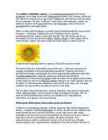
The sunflower (Helianthus annuus) is an annual(iga aastane) plant in the family Asteraceae, with a large flower head (inflorescence(õiekobar, õisik, õitseaeg, õidumine)). The stem(tüvi) of the flower can grow up to 3 metres tall, with the flower head reaching 30 cm in diameter. The term "sunflower" is also used to refer(nimetama, viitama, üle andma) to all plants of the genus(perekond, sugu) Helianthus, many of which are perennial(alaline, aastaringne) plants. What is usually called the flower is actually a head (formally(ametlikult) composite(liit-, komposiit- ; korvõieline, komposiit) flower) of numerous flowers (florets) crowded(täistuubitud, tunglev, rahvarohke) together. The outer flowers are the ray florets(pähik (õisiku osa) and can be yellow, maroon, orange, or other colors, and are sterile(steriilne, viljatu). The florets inside the circular head are called disc florets.
steam engine. In 1813, the precursors to the steam engine train was built by William Hedly. Between 1800 and 1825 steam powered travel increased. Boats, vehicles, and trains used steam engines. The method of steam production was by burning some substance. Superheated steam was produced in an experiment by Jacob Perkins in 1823. His experiment was called a flash boiler. Steam of this type is later used in nuclear power plants to turn the steam turbine. In 1892, Rudolf Diesel of Germany patented the diesel engine. It operated through fuel ignition that caused highly compressed air to expand against a piston. The diesel engine had a 50% thermal efficiency, and was more efficient than steam engines. From 1880 - 1890's Carl Gustaf Patrik de Laval developed an impulse type of steam turbine. Between 1900 to the present, turbine technology improved.
4.04.4 Harmful to adult fish of many types which have not been progressively acclimated to low pH 3.53.9 Lethal to salmonids, although acclimated roach can survive for longer 3.03.4 Most fish are killed within hours at these levels Environmental effects Very obvious environmental effect of acid rain is the loss of fish in acid sensitive lakes and streams. Loads of fishes are not able to survive in acidic water. There are 2 ways acid rain effects lakes and streams: chronic and episodic. The first one is long-term process and this acidification is result from years of acidic rainfall. Episodic, on the other hand, is rapid change sudden jump in the acidity of water. Acid deposition may influence forest vegetation and soils. It removes soil nutrients such as calcium and magnesium from soils in high elevation forests
is a great challenge because I have not done anything like this before, especially in English. Primary goal for me is to improve my knowledge about renewable energy and also usage of English language. This report is going to talk about biogas. It provides a brief review of usage and future prospects of the biogas. I have tried to make this report as understandable as possible. By the end of this report I want to come to a conclusion whether biogas is the best source of future energy or are there any other sources that are better. What is biogas? Typically it refers to the gas produced by the anaerobic digestion or fermentation of organic matter including manure, sewage sludge, municipal solid waste, biodegradable waste. If opportunely refined it can be used for electricity production. Also for space-, water- or process heating. Unintentional production of biogases has been an ongoing issue in many regions of
relatives and so on, who are far away from them. Of course, seeing them in real live is better than just seeing their messages or talking in Skype, but programs give feeling, that distance has no matter and loved one is near you. Even if he or she is at the other end of the world. Development of technologies gave new working places. Without computers where would be no such profession like computer science, web designer. Also, being an architect, engineer would be difficult without technology usage. Technologies can be found in education, too. All materials are now available in internet or can be found in university sites. Now there is no need to go to lectures – students can see it online or watch recording. It is more easier to combine studies and work. Technologies are used in banking – for transferring money or getting financial information; in agriculture –genetically engineered crops make farmers out puts bigger, because they can
individual experience · Usually measured by questionnaire; descriptive · `Why and how' of development are important · `Why and how' are not so important · Standard measures difficult or impossible to obtain Measuring Personality Personality · Self-report tests Questionnaires (yes/no, true-false, agree-disagree) Nomothetic Idiographic Adjectives E.g. Minnesota Multiphasic Personality Inventory (Schacter p. 492)
esivanema külge. 7. Mis on fitness (ökoloogias)? Suurema kohanemusega isendid annavad rohkem järglasi kui populatsiooni keskmine isend 8. Mille alusel eristatakse bioome? Bioom ehk makroökosüsteem on geograafiliselt piiritletav ala mingi taimkatte- ja ühtlasi ka kliimavööndi piires. Biomes are climatically and geographically defined as similar climatic conditions on the Earth, such as communities of plants, animals, and soil organisms,[1] and are often referred to as ecosystems. A fundamental classification of biomes is: 1. Terrestrial (land) biomes 2. Aquatic biomes (including Freshwater biomes and Marine biomes) Biomes are often known in English by local names. For example, a temperate grassland or shrubland biome is known commonly as steppe in central Asia, prairie inNorth America, and pampas in South America. Tropical grasslands are known assavanna in Australia, whereas in
..) –personnel (took so long, half the team left) –User doesn't get to see anything real until the very end, and they always hateit. –System Testing doesn't get involved until later in the process. Test-Action-Cycleas optimisationcycle •Each individual optimisation cycle consists of a test and an action component which are suitably coupled. •An important dimension of the optimisation cycle is its length, i.e. the time required to complete the cycle once. •Depending on the nature of the activity and the testing, the length can be anything from a matter of a few seconds to up to possibly several years. •The longer this period, the more costly the optimisation cycle. •It is the aim of user-oriented software development to incorporate an as efficient optimisation cycle as possible into software development procedures 7. CAPABILITY MATURITY MODEL (CMM) Capability Maturity Model (CMM) broadly refers to a process improvement approach that is based on a process model.
Topic Health Introduction Good health is very important for us. We should do everything we can to stay healthy. Being in good health means having our body and mind in good working order, free from disease and pain. Ways of keeping health There are many ways for keeping health. To stay healthy we should eat right foot, dress comfortably, spend much time in fresh air, have enough rest, keep ourselves clean and have regular checkups with the doctor and the dentist. A big part of prevention of diseseases is sporting. Poeple need to have phsical exercise. If they can not have it, they will get stressed and they will be infected with dieseases much easier. For example it would be good to run every day for some time. That way one probably
The disguise explains why dreams are so often odd and senseless. Senselessness is only on the surface, a cunning mask that lets us indulge in the unacceptable wish without realizing that iti is unacceptable. ' some distortions involve various transformations of the unacceptable themes, one is symbolism'. ( riding a horse and walking up a staircase refer to intercourse and passion ). Dreams and Human Development: How children learn there is a difference between two realms of phenomena, those which we call subjective and those we call objective. ( How we attain our adult notion of objective reality, how we come to know that the tree in the garden unlikea dream will still be there after we blink our eyes) Young children tend to think of them as physical objects. Dreams and Individual Differences: Dreams are reflection of a fact that people are different.
A century ago communication across any distance was dependent upon the telegraph or letters. No jets crossed the ocean, no television pictures enabled us instantly to see events in any part of the world, there were no worldwide telephone networks and no computers. It is just a short lifetime since humanity first travelled into space and discovered how fragile our planet looks. FROM FIREWORKS TO THE MOON At first glance you might think that there couldn't possibly be anything common between a 13 th century festival in China and the Apollo 11 moon landing in 1969. However, there is a link and that is that they both relied on the use of rockets. The Chinese first developed rockets by filling bamboo tubes with an explosive made from saltpetre, charcoal, and sulphur. The sealed tubes would be thrown onto fires during celebrations because it was thought that the loud explosions would protect them
Craving for tobacco is much stronger. These changes in the brain and body make nicotine highly addictive. Other addictive drugs of abuse, including heroin and cocaine, cause the same changes in the brain. While inhaling a cigarette, smokers are pulling more than nicotine into their lungs. Tobacco smoke contains more than 4,000 chemicals. Besides nicotine, the most dangerous chemicals in cigarette smoke are tar and carbon monoxide. Tar causes lung cancer, emphysema, and bronchial diseases. Carbon monoxide causes heart problems; smokers are at high risk for heart disease. Smokers also have a dulled sense of smell and taste, reduced stamina for exercise and sports, and they smell of smoke. After smoking for a long time, smokers find that their skin ages faster and their teeth turn brown or discolored Each year, nearly half a million Americans die from tobacco use. One of every six deaths in the United States is a result of smoking tobacco, making tobacco more lethal than all other
Extended Essay Research Question: To What Extent Does a Plant Based Diet Lower the Risk of Coronary Artery Disease? Subject: Biology Word Count: 3482 Abstract: Because there has been much debate over whether plant based diets are beneficial or not, I’m willing to learn more about it and since there’s eligible data available on the effects of vegetarian/vegan diets on cardiovascular diseases, my research question is formed accordingly: To what extent does a plant based diet lower the risk of coronary artery disease? The importance of this study lies in my own curiosity and my desire to acquire further knowledge on the prevention and treatment of coronary artery disease. In this investigation I will study two similar prospective studies on plant based diets and cardiovascular diseases, mainly coronary artery disease, to find out if the outcomes of one
SECTION 1: LISTENING COMPREHENSION This section of the TOEFL test your ability to understand spoken American English. You will hear taped conversations to which you will make responses. Part A and B contain samples of informal American English. Idiomatic expressions and two-word verbs are common in these parts. Single Statement In Part A you will hear a single statement made by a man or a woman. In your test booklet, there are four sentences. You must choose the sentence that is closest in meaning to the one you heard. YOU WILL HEAR: To get to the post office, cross the street, go three blocks, and you'll see it right on the corner. YOU WILL SEE: (A) The post office is right on the corner. (B) The post office is at the next corner. (C) The post office has a cross near it. (D) The post office is three blocks away. The correct choice is, which most closely gives the same meaning as the sentence you heard
1 Caffeine 2 3 Caffeine (C8H10N4O2) is the common name for trimethylxanthine (systematic name is 1,3,7- 4 trimethylxanthine or 3,7-dihydro-1,3,7-trimethyl-1H-purine-2,6-dione). The chemical is also 5 known as coffeine, theine, mateine, guaranine, or methyltheobromine. Caffeine is naturally 6 produced by several plants, including coffee beans, guarana, yerba maté, cacao beans, and tea. 7 For the plants, caffeine acts as a natural pesticide. It paralyzes and kills insects that attempt to 8 feed on the plants. The molecule was first isolated by the German chemist Friedrich Ferdinand 9 Runge in 1819. 10 When purified, caffeine is an intensely bitter white powder. It is added to colas and other soft 11 drinks to impart a pleasing bitter note. However, caffeine is also an addictive stimulant. In
Precipitation (750-1500 mm) is distributed evenly throughout the year. Temperate grassland- Semiarid, continental climates of the middle latitudes typically have between 25 cm and 50 cm of precipitation a year. Much of this falls as snow, serving as reservoir of moisture for the beginning of the growing season. Warm to hot summers are experienced, depending on latitude. In the winter, grassland temperatures can be as low as -40° C, and in the summer it can be as high 20° C. There are two real seasons: a growing season and a dormant season. The growing season is when there is no frost and plants can grow (which lasts from 100 to 175 days). During the dormant (not growing) season nothing can grow because it's too cold. Taiga- Long, cold winters, and short, mild, wet summers are typical of this region. In the winter, chilly winds from the arctic cause bitterly cold weather in the taiga. The length of day also varies with the seasons in the taiga
Social Problems Crime In the sociological field, crime is the breach of a rule or law for which some governing authority or force may ultimately prescribe a punishment. The word crime originates from the Latin crimen. When society deems informal relationships and sanctions insufficient to create and maintain a desired social order, there may result more formalized systems of social control imposed by a government, or more broadly, by a State. With the institutional and legal machinery at their disposal, agents of the State can compel individuals to conform to behavioural codes and punish those that do not. Various mechanisms are employed to regulate behaviour, including rules codified into laws, policing people to ensure they comply with those laws, and other policies and practices designed to prevent crime
Ergo Pikas Integration of Lean Construction and Building Information Modelling DISSERTATION Tallinn 2010 2 UNIVERSITY OF APPLIED SCIENCES Author: Ergo Pikas- Civil Engineering student, Faculty of Construction, Tallinn University of Applied Sciences Supervisor: Rafael Sacks- Associate Professor, Faculty of Civil and Env. Engineering, Technion Israel Institute of Technology Consultant: Roode Liias- Professor and Dean, Faculty of Civil Engineering, Tallinn University of Technology Title: Integration of Lean Construction and Building Information Modelling Archived: University of Applied Sciences, Faculty of Construction ABSTRACT This research can be divided into two. The first part investigates the current state of the construction
 annaabi.ee