Leidsid 33 sarnast õppematerjali, mis on seotud failiga "European Union Exam". Need materjalid aitavad sul teemat sügavamalt mõista.
europe, policy, unit, council, unity, member, treaty, nation, part, join, power, states, economic, parliament, foreign, rate, government, members, single, sign, inter, signed, agree, security, operation, year, order, january, create, cooperation, pillar, institutions, ecsc, portugal, exchange, market, structure, within, france, euratom, association- Arendab EL ühist välis- ja julgeolekupoliitikat - Sõlmib rahvusvahelisi lepinguid (annab komisjonile volitused pidada EL nimel läbirääkimisi) - Võtab vastu eelarve (koos parlamendiga) - Liikmeteks valitsuse ministrid igast ELi liikmesriigist vastavalt arutamisele kuuluvale poliitikavaldkonnale st esindab riike; permanent representaties (COREPER) - Eesistuja!!! - Asutati 1958 ECSC raames Council of Europe – Euroopa Nõukogu - Rahvusvaheline organisatsioon; 47 riiki Euroopast ja Aasiast - Tegevusvaldkonnad: inimõigused, sotsiaalõigused, keelelised õigused, haridus ja kultuur - Ei ole EL institutsioon - Asutas inimõiguste kohtu pärast EHCR 1950. aastal - Juhtorganiks parlamentaarne assamblee ja ministrite komitee European Council – Euroopa ülemkogu - Liikmeteks riigipead või valitsusjuhid, Euroopa Ülemkogu eesistuja ja Euroopa
Introduction and history of the European Union History The European Union is set up with the aim of ending the frequent and bloody wars between neighbours, which culminated in the Second World War. The idea is that countries who trade with one another become economically interdependent and so more likely avoid conflict.The ancestor of the European Union is the European Coal and Steel Community (ECSC) which was created with the Treaty of Paris (1951) and was signed by France, Italy, Belgium, Netherlands, Luxembourg and West Germany (total of 6 countries). European Economic Community (EEC) was created with the Treaty of Rome (1958), establishing a customs union (tolliliit). The European Union (EU) was created by the Maastricht Treaty which came into effect on November 1st 1993. Introduction The European Union (EU) is an economic and political union.EU policies aim to ensure the
The European Union (EU) is an economic and political union where are 27 member states drom European continent. The EU operates through a system of independent institutions and decisions are made by the member countries. EUs population is of over 500 million inhabitants which is 7.3% of the world population, there are 23 different languages and for now 17 countries are using EUs common currency Euro. EU was founded after World War II, when Europe was struggeling in social and political devastations. In 1948 a congress in Hague was held to discuss ideas about the development of European political co-operation. There were many important political figures such as Konrad Adenauer and Winston Churchill. On 9th May in 1950 French Minister of Foreign Affairs proposed that France and the Federal Republic of Germany should combine their coal and steel resources and let other European countries join also. From that on, the 9th of May has
The Membership of World Organisations Merilin Tamme Xa Tallinna Järveotsa Gymnasium 2008 The schedule · 04.04.1949 establishment of NATO. · 1951 Supreme Headquarters Allied Power Europe (SHAPE) was created near Paris in France. Later, SHAPE was relocated to Mons in Belgium. · 1952 Greece and Turkey join NATO. · 1955 Western Germany joins NATO. · 1982 Spain joins NATO. · 1991 Rome summit. Estonia is one of the founding members of the NACC. · January 1994 Brussels summit. Estonia joins PFP on 3 February. · March 1995 Estonia submits the first Individual Partnership for Peace (IPP) to NATO. It contains priority areas of cooperation with NATO and future cooperation events, altogether in 23 subject fields.
It must be considered not only whether law making powers are granted to elected persons, but also whether the balance of power between institutions within the European Union promotes the ideals of democracy. Firstly,the democratic nature of the European Union must be measured by the extent to which its institutions (particularly those with executive and legislative power) are elected bodies of persons. The European Union is governed by seven institutions; the European Parliament, the European Council, the Council of the European Union (the Council), the European Commission, the Court of Justice of the European Union, the European Central Bank and the Court of Auditors.The first four of these hold the executive and legislative power of the European Union. Of these four institutions, the only one directly elected is the European Parliament whose 736 members are elected every 5 years; each citizen in each member state having the right to vote
................................................3 The main aurthorities....................................................................4 Information...............................................................................5 What does European Union? European integratsion process began in 1951, when concluded European Coal and Steel Community founding agreement between Belgium, Netherland, Luxenbourg, Italy, France and West Germany. It was to prevent armed conflicts between the Member States. EU is economic and political partnership between 27 democratic European countries (Austria, Belgium, Bulgaria, Cyprus, the Czech Republic, Denmark, Estonia, Finland, France, Germany, Greece, Hungary, Ireland, Italy, Latvia, Lithuania, Luxembourg, Malta, the Netherlands, Poland, Portugal, Romania, Slovakia, Slovenia, Spain, Sweden, and the United Kingdom) . Its aims are peace, prosperity and freedom for its 498 million citizens -- in a fairer, safer world
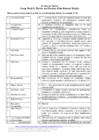
monopoly, creation, and more efficient use of resources by means of free movement of labor force and capital. 8 Harmonization H Free movement of all factors of production, single currency, single monetary and fiscal policy are elements of ... 9 Market Access I In a ... free movement of goods complemented by single customs tariff. 1 Monetary Union J Introduction of single currency between the participating
development). The ENP goes beyond existing relationships to offer political association and deeper economic integration, increased mobility and more people-to- people contacts. The level of ambition of the relationship depends on the extent to which these values are shared. Some examples which steps ENP has made in the field of human rights and which are represented in the report of implementation of the European Neighbourhood Policy about Eastern Partnership: The adherence to the shared values of democracy, rule of law, human rights and fundamental freedoms is the very foundation of the Eastern Partnership. Significant steps have been taken to strengthen bilateral dialogues on these matters. Since July 2009 three rounds of Human Rights Dialogue have taken place with Georgia. The first meeting of the EU Armenia Human Rights Dialogue took place in December 2009 and
were put under one organisation, so war was almost impossible between these six country. Cooperation in different areas improved, when in 25. March 1957 Treaties of Rom , European Economic Community and European Atomic Energy Community memorandum of association were signed. These were sundry organisations. But they had one name- European Community. As the authorisations broaden, it become European Union in 1993. The European Union was formally established when the Maastricht Treaty came into force. In 1985, the Schengen Agreement led the way toward the creation of open borders without passport controls between most member states and some non-member states. 1957 Belgium , Netherlands, Luksembourg, Italy, Federal Republic of Germany and France 1973 Great Britain, Ireland and Denmark 1981 Greece 1986 Spain and Portugal 1990 Rest of Germany
1. Social Policy aspects in EU Treaties Social and employment policy: Objectives: - The promotion of employment - Improved living and working conditions - Proper social protection - Dialogue between management and labour - The development of human resources with a view to lasting high employment and the combating of exclusion. Treaty of Rome: belief that improved working and living conditions would arise from the functioning of the common market – cooperation in the areas of employment, labour law and working conditions, vocational training, social security, occupational health and safety, and social dialogue. Improved mobility and professional opportunities of employees and introduced the equal pay for men and women – directly applicable.
EU Internal Market Law Mid-term online evaluation assignment for Distance Learning Students The Assignment: Hypothetical Case In the Member State A several NGOs, uniting parents concerned with safety of children and young adults, ordered a study of dog attacks on people (and especially children) resulting in deaths or maiming. The aim of the study was to identify, if possible, the dog breeds of potentially enhanced danger for people. The study’s results showed that pit bulls and their close mixes as well as Rottweilers and their close mixes were jointly responsible for over 70% of attacks. The authors of the study explained
The current reading material summarises the main aspects covered by lectures and structurises the information channels for the future. The course supports the other Traderun courses, especially the course related to EU cooperation with Russia and Eastern Partnership Countries. 4 1. UKRAINE 1.1. General information 1.1.1. Country Profile Capital: Kyiv. Total area: 603,550 sq. km (the largest country in Europe by area that is physically within Europe entirely). Population: ~ 45 million (declining). Major cities and estimated population (Good news! Not all the business and capital concentrated in the capital): Kyiv (Kiev) 2.8 million, Kharkiv (Kharkov) 1.5 million, Lviv (Lvov) - 1.5 million, Donetsk 1 million, Dnipropetrovsk (Dnepropetrovsk) - 1 million, Odesa (Odessa) 1 million. Zaporizhzhya (Zaporozhye) 0.8 million.
would be different from previous enlargements because of the combined impact of Turkey's population, size, geographical location, economic, security and military potential. The case of Turkey will be different and more challenging from previous accessions for a number of reasons, some of them are presented below. Turkey is a country with a large population and geographic area. With a population of 74 million today, it is projected that it could be the largest member state at the time of accession. As a Moslem secular country, Turkey will also add a new demographic and religious dimension to the EU. Also, the presence of a large number of Turkish immigrants in European countries raises the issue of possible additional migration, as a natural consequence of accession, which may affect the labor market and demography of small member states. The social repercussions of such a development raise sensitivities and pose challenges with political ramifications
Which side is more interested? The main cornerstones of the EU and Russia relations are the trade and energy relations. One biggest breakthrough has been gas pipeline Nord Stream. Russia is the third biggest trade partner of the EU and is the main importer of gas and crude oil. The economic benefits are the biggest cornerstones of the relations. Cooperation between Russia and the European Union progressively strengthens in foreign policy and security issues, in combating illegal migration, organised crime and terrorism. The main achievement of recent years, which can be hardly overestimated, is the understanding increasingly gaining ground that partnership between Russia and the EU is one of the cornerstones of maintaining stability and prosperity not only in Europe, but world-wide. Joint Russian-EU program called "A Partnership for Modernization" was launched. The main
I. Portugal ABOUT Photo Location of Portugal (dark green) Portugal (Portuguese: Portugal, IPA: [putua]; officially the Portuguese Republic, Portuguese: República Portuguesa) is a country located in Southwestern Europe, on the Iberian Peninsula. It is the westernmost country of mainland Europe, and is bordered by the Atlantic Ocean to the west and south and by Spain to the north and east. The Atlantic archipelagos of the Azores and Madeira are Portuguese territory as well. The country is named
Writting a summary I read the following sections of the booklet „Europe. A journal for young people“. The booklet is listed in 7 sections:“ Europe in everday life“; „The European Union- what does this mean exactly?“; „How does the European Union work?“; „What exactly does the EU do?“; „Europe moves on_ the enlargement of the European Union“; „Europe and the wider world“ and „The future of Europe“. ‘Europe is somewhere else.’ This provocative statement opens the first chapter of „Europe. A journal for young people“. It is, of course, not true. As EU citizens, Europe is our home
..................................................17 Appendix 1...................................................................................................................................18 2 Introduction The aim of this research is to get know more about the Netherlands history and its geographical facts. This report is describing one of most the most beautiful countries in the Europe - Netherlands. Netherlands is famous for its windmills and flowers. Netherlands is also known unofficially as Holland. Government is constitutional monarchy of north-western Europe. Netherlands is bordered on the north and west by the North Sea, on the east by Germany and on the south by Belgium. The European portion of the Netherlands has a total area of 41,528 sq km of which 33,939 sq km is land surface. Country's capital and largest city is Amsterdam. Population is about 16 million.
do belong to a “goods” category so as it is described in CJEU case law that a good is a product which can be valued in money and which is capable of forming the subject of commercial transactions. Therefore PB&R company and its business is selling dogs, or shall I say goods not just on a local fields, but the movement of goods is linked to abroad EU countries by making a profit of it I shall conclude that it involves a “movement of goods within the EU Member States” (Articles 26 and 37). 2. Is there a restriction of trade in goods? a. Can we name an animal, or to be more exact a dog as a “good” – yes, in accordance of Article 13 TFEU: “In formulating and implementing the Union's agriculture, fisheries, transport, internal market, research and technological development and space policies, the Union and the Member
Ireland Ireland (Irish: Éire, Irish pronunciation:) is a country in north-western Europe. The modern sovereign state occupies about five-sixths of the island of Ireland, which was first partitioned on 3 May 1921. It is bordered by Northern Ireland--part of the United Kingdom--to the north, by the Atlantic Ocean to the west, the Irish Sea to the east and the Celtic Sea and St George's Channel to the South and South-East. The legal name of the state is simply "Ireland", but its legal description the Republic of Ireland is sometimes used to differentiate the state from the island.
11.02.09 INGLISE KEEL Palju aega läheb. 10 nädalat aint. One of the ESP courses. What we are going to do, what is needed: · What we do - 1 test, on words. · 2 Essays, that means that we have to look into academic writing · Homereading we read a case from European Court of Justice thingy. · Oral thing. · 90% you have to attend · Have to prepare for class and take part of it etc What we learn: Terms Expressions / collocations (nt obey/abide by the law) Explaining AWOL absence without a leave Legal English can be divided into 3 levels. We learn the first one, which is needed for the other two! You have to know the vocabulary etc. Second level has to do with legal contracts... The third level both 1 and 2 and explaining... We learn the vocabulary + explaining.
There are currently 192 Members of the United Nations. The Aims of the United Nations: -To keep peace throughout the world. -To develop friendly relations between nations. -To work together to help people live better lives, to eliminate poverty, disease and illiteracy in the world, to stop environmental destruction and to encourage respect for each other's rights and freedoms. -To be a centre for helping nations achieve these aims. The Principles of the United Nations: -All Member States have sovereign equality. -All Member States must obey the Charter. -Countries must try to settle their differences by peaceful means. -Countries must avoid using force or threatening to use force. -The UN may not interfere in the domestic affairs of any country. -Countries should try to assist the United Nations. The basic structure of the United Nations is outlined in an organizational chart. What the structure does not show is that decision-
before the creation of UN and the collapse of the colonial system, only metropolitan nations were considered subject of international law, this was created before the collapse of the colonialized system, UN charter is a very old and stupid document, that's why there's still such a definition) Strong point of int. Conventions - it's easier to apply, no proof is needed, the rules exist in the text. However, int. Treaties and conventions are only legally binding for member states, some conventions are not applicable to everybody. Customs are compulsory for everybody, for all countries of the world. However, it's harder to apply these, because there should be a consensus that a custom is customary norm for it to be legally binding. To create a legally binding norm, two criteria: 1) should have general practice of the states (practice should be established, wide-spread and consistent; it should be a settled practice),
Britta Kase 143123HAKB Summary The booklet offers a brief, simple explanation how the European Union is relevant to us in our everyday life, how it affects our lives in many areas and how can we benefit from it. The booklet gives also a very readable overview of EU’s history and how its member states have come together. It’s a great starting point to know the roots, history and functioning of the European Union. I found this booklet interesting because it provides an insight into relevance of the EU. I have never thought that making phone calls and flying has become cheaper as a result of EU. EU has abolished national monopolies and has permitted competition. For me the most important thing is air, water and food quality. The EU has introduced compulsory
judges through decisions of courts and similar tribunals a common law system is based on legal precedents. The roots of the common law legal systems can be traced back to the first common law system created in England during the Middle Ages. Today, most countries that once had ties to England, including the United States, Australia, New Zealand, and Hong Kong, to name a few, operate under common law. Aside from Great Britain, the majority of the countries in Europe operate under a version of civil law modeled after the Roman legal system created centuries ago In a common law system, the law is created by precedents set after judges decide actual cases. When a judge hears a case that has a new issue in it, the judge makes a decision regarding the issue in the case. That decision then becomes a precedent that must be followed by other courts with equal standing within the legal system.
that euro improves the standard of living - I hope they are right because at the moment Estonia is one of the poorest countries in the European Union being ahead of only Poland, Latvia and Lithuania (based on statistics of 2004). I also picked this problem due to the unawareness of myself and many others. If I help at least one person (excluding myself) to clarify this concern then I've achieved my purpose. European Union is a political and economic union, which has 27 member countries. 17 of them have taken collective currency into use - euro. The main goal of this union is to assure uncommitted movement of citizens, commodities, services and capital. The first usage of euro (as an electronical currency) was in 1999 within banks and enterprises. In 2002 first bank-notes came into money-traffic. The whole value of issued euro coins and notes is over 704 billion euros. In 1995 on 25th November Estonian prime minister Tiit Vähi signed the
Introduction Estonia, officially the Republic of Estonia (Estonian: Eesti or Eesti Vabariik) is a country in the Baltic region of Northern Europe. It is bordered to the north by Finland across the Gulf of Finland, to the west by Sweden across the Baltic Sea, to the south by Latvia (343 km), and to the east by the Russian Federation (338,6 km). The territory of Estonia covers 45,227 km² and is influenced by a temperate seasonal climate. The Estonians are a Finnic people closely related to the Finns, with the Estonian language sharing many similarities to Finnish. The modern name of Estonia is
and an autonomous grand duchy of Russia after 1809. It won its complete independence in 1917. During World War II, it was able to successfully defend its freedom and resist invasions by the Soviet Union albeit with some loss of territory. In the subsequent half century, the Finns made a remarkable transformation from a farm/forest economy to a diversified modern industrial economy; per capita income is now among the highest in Western Europe. A member of the European Union since 1995, Finland was the only Nordic state to join the euro system at its initiation in January 1999. In the 21st century, the key features of Finland's modern welfare state are a high standard of education, equality promotion, and national social security system currently challenged by an aging population and the fluctuations of an exportdriven economy (Central Intelligence Agency, 2012, ISSN 15538133). 2.1.2 Geography
About 310 reservations 55,7 million acres Unevenly distributed Tribal sovereignty (iseseisvus) Poverty and unemployment · Indian citizenship Act of 1924 Granted citizenship to 300,000 indigenous people, to friendly tribes State support was limited Absorb Indians into the mainstream Didn't have the right to vote · Trail of Broken Treaties of 1972 Took place in 1972 Cross-country protest by American Indian organizations Intended to bring attention to American Indian issues such as treaty rights, living standards, and inadequate housing. Huge media coverage "20-Point Program" · Present situation 1 Reservations situated west of the Mississippi 1% of the population Minority group, less privileged Social problems Self-awareness Mixture of old and new HOW GOVERNMENT ACTS NOW- gives natives money and near Las Vegas the right to own casinos to compensate injustice and taking away land. II First Settlements
2. Cartels-a formal agreement of some kind of raw materials. ASEAN-Association of Southeast-Asia Nations. It was established in 1967-Its aim is to make favorable conditions for membership countries. The members are Brunei,Philippines,Indonesia,Thailand, Myanmar, Cambodia, Laos, Vietnam, Malaisia and Singapore. NAFTA-North American Free Trade Agreement.It was established in 1989 by Canada, USA, and Mexico. They have remained totally independent.All countries may join with this organisation.It is one of the world's biggest economic organisations. MERCOSUR-The South common market.Regional Trade Agreement among Uruguay,Paraguay,Brazil and Argentina.It was founded in 1991. Bolivia, Chile, Colombia, Ecuador and Peru currently have associate member status. Venezuela is an applicant country. . Its purpose is to promote free trade and the fluid movement of goods, people, and currency. WTO-World Trade Organisations.At first it was known as GATT-General Agreement on
Archbishop In Christianity, an archbishop is a bishop of higher rank or office. Like popes, patriarchs, metropolitans, cardinal bishops, diocesan bishops, and suffragan bishops, archbishops are in the highest of the three traditional orders of bishops, priests, also called presbyters, and deacons. An archbishop may be granted the title, or ordained as chief pastor of a metropolitan see or another episcopal see to which the title of archbishop is attached. Bishop is an ordained or consecrated member of the Christian clergy who is generally entrusted with a position of authority and oversight. Some Protestant churches including the Lutheran and Methodist churches have bishops serving similar functions as well, though not always understood to be within apostolic succession in the same way. One who has been ordained deacon, priest, and then bishop is understood to hold the fullness of the (ministerial)
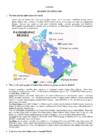
According to Canadian census 2011, 1.4 mln people of Aboriginal origin (4.3%): 852,000 First Nations persons, 452,000 Métis, 59,000 Inuit. Indian (First Nations) - No written history before the contact with Europeans. Chief historical sources European priests, travellers and traders not interested in the preservation of "pagan"myths. Different estimates about their number in Canada when Europeans reached North America from 300,000 to 1 mln. Saw themselves as part of nature, not as its masters. The First Nations were called "Indians" by Christopher Columbus when he landed in North America, because he thought he had reached India. Many now prefer to call themselves First Nations, though many still call themselves Indians in everyday conversation. They are still legally categorized by the Canadian Government under the Indian Act as Status Indians. Those who have lost their legal status are called Non-Status Indians
institutions institutions in the first group (MFIs) play important role in the process of money creation in modern economies. European Central Bank (ECB) describes Monetary financial institutions as including national central banks (and also ECB in the euro area), credit institutions and non-credit institutions which receive deposits from general public (individuals and non-MFI firms) and grant credit and/or invest in securities. Major non-credit MFIs in Europe are money market funds. Credit institutions are defined in the directive 1 relating to the taking up and pursuit of the business of credit institutions as: a) undertakings whose business is to receive deposits or other repayable funds from the public and to grant credits for its own account; or 1 Directive 2006/48/EC of the European Parliament and of the Council of 14 June 2006 relating to the taking up and pursuit of the business of credit institutions, http://eur-lex.europa
*Estonians conquered by the crusaders 1208 *Reformation 16th century establishments of new school, Estonians first book appeared in 1525 *Tartu University 1632 founded by King Gustavus II Adolphus, classical university, member of the Coimbra group *Abolition of serfdom 1816 *Song festival 1869 in Tartu, an organiser was J.V.Jannsen, 822 singers, men only *Declaration of independence 24th February 1918 *War of independence 1918-1920 during the Russian Civil War, resulted in a victory for Estonia *Deportation 1949 *Estonia becomes independent 20th August 1991 *Joining EU 1st May 2004 Language: Estonian language, belongs to the Balti-Finnic group of the Finno-Ugric languages,
 annaabi.ee