 50 punkti
Autor soovib selle materjali allalaadimise eest saada 50 punkti.
50 punkti
Autor soovib selle materjali allalaadimise eest saada 50 punkti.
 ~ 1 leht
Lehekülgede arv dokumendis
~ 1 leht
Lehekülgede arv dokumendis
 2011-02-06
Kuupäev, millal dokument üles laeti
2011-02-06
Kuupäev, millal dokument üles laeti
 9 laadimist
Kokku alla laetud
9 laadimist
Kokku alla laetud
 0 arvamust
Teiste kasutajate poolt lisatud kommentaarid
0 arvamust
Teiste kasutajate poolt lisatud kommentaarid
 granary
Õppematerjali autor
granary
Õppematerjali autor
European Union Research Compose: x X School 2009/10 What is European Union? The European Union (EU) is an economic and political partnership between 27 democratic European countries. EU population is almost a half milliard European union stands for caring and fair community. All EU members are devoted to peace, democracy, human rights respecting and working together to spread these values all the world. History The beginning of EU might consider the year 1951, when European Coal and Steel Community (ECSC) was constitute. Six countries joined with it for peace: Belgium, Netherlands, Luxembourg, Italy, France and Germany. With that move, coal and steel industry
............................................................................................51 2.1. General information ................................................................................................... 51 2.1.1. Country Profile ................................................................................................... 51 2.1.2. Overview of Belarusian economy ....................................................................... 52 2.2. Customs Union of Belarus, Russia and Kazakhstan.................................................. 55 2.3. The Business Environment ........................................................................................ 58 2.4. Banking system.......................................................................................................... 59 2.5. Development of Private Sector .................................................................................. 61 2.5.1
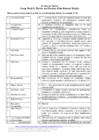
participating countries, but autonomous external trade policies in relation to non-participants. 2 Comparative B A top-down approach to integration that can be best Advantage explained by market failure. 3 Customs Union C Allows for specialization, specialization leads to competitive advantage, and comparative advantage leads to economies of sales which maximizes consumer welfare and ensures the most efficient use of world-wide resources.
06.05.2012 Abstract 06.05.2012 Experience and Wellness management Author Group Girli Vasiljev RB1X Title of report Number of pages Economic Country Review: Finland, Estonia 20 and Hungary Teacher Kalevi Torunen The goal of this paper is to compare the economic performance of Finland, Estonia and Hungary. First, a general overview on the countries will be given. After, economic indicators (real GDP growth rate, inflation, unemployment, household consumption, investment, current account, government budget and deficit) of the three countries will be compared to draw a conclusion. Keywords GDP, inflation, unemployment, household consumption, investment, current account, government budget, deficit, surplus Table of contents 1 Introduction
Life in Estonia through the eyes of an economics student With a population of 1 313 271 people, Estonia is one of the least populous member states of the European Union. However, according to the IMF, it is a developed country with an advanced and high-income economy. Estonia follows market economy system which ensures the little government intervention and the determination of prices of goods and services in a free price system. Therefore, economic decisions are guided solely by the aggregate interactions of a country's citizens and businesses. In addition to mentioned afore, Estonia tends to perform favourably in measurements of civil liberties, education, and press freedom. Living in Estonia has many of its good sides, for instance it is a secure place from nature disasters and it has a beautiful nature. Although, when not to look only through rose-tinted glasses, there are still some minuses in country’s organization
European Union Exam 1949 France, UK and the Benelux countries decide to set in place a Council of Europe. 1951 Treaty of Paris signed by the Six (Belgium, France, Germany, Italy, Luxembourg, Netherlands), establishing the European Coal and Steel Community (ECSC). 1957 Treaties of Rome establish the European Economic Community (EEC) and the European Atomic Energy Community (Euratom). 1959 July, seven countries of the Organisation for European Economic Co- operation (OEEC) – Austria, Denmark, Norway, Portugal, Sweden, Switzerland and the UK – decide to establish a European Free Trade Association (EFTA). 1960 Creation of European Free Trade Association 1961 UK applies to join the Community. 1962 The Parliamentary Assembly changes its name to the European Parliament. 1965 The Treaty merging the executives of the three Communities (ECSC, EEC, Euratom) is signed in Brussels; enters into force on July 1, 1967. Empty chair crisis 1966
Kati-Liis Karu 03.01.2011 The euro in Estonia Joining the European Union in 2004 made people in Estonia think about the changing of currency. We had almost six years to get used to the fact that the Estonian kroon is eventually going to end. In that time there was a lot of discussion about whether we should stick to the kroon or change our money to the euro. Lots of people were afraid that they lose their money during the period of transition - this belief was quite popular among people who still remember the time when the Russian rubles
Tallinn University TURKEY AND THE EUROPEAN UNION Tallinn 2013 INTRODUCTION The accession negotiations and the forthcoming Turkish accession present challenges to both Turkey and the EU. It is widely accepted that Turkey's accession would be different from previous enlargements because of the combined impact of Turkey's population, size, geographical location, economic, security and military potential. The case of Turkey will be different and more challenging from previous accessions for a number of reasons, some of them are presented below. Turkey is a country with a large population and geographic area. With a population of 74 million today, it is projected that it could be the largest member state at the time of accession. As a Moslem secular country, Turkey will also add a new demographic and religious dimension to the EU
 annaabi.ee





Kõik kommentaarid