 50 punkti
Autor soovib selle materjali allalaadimise eest saada 50 punkti.
50 punkti
Autor soovib selle materjali allalaadimise eest saada 50 punkti.
 ~ 1 leht
Lehekülgede arv dokumendis
~ 1 leht
Lehekülgede arv dokumendis
 2016-05-12
Kuupäev, millal dokument üles laeti
2016-05-12
Kuupäev, millal dokument üles laeti
 1 laadimist
Kokku alla laetud
1 laadimist
Kokku alla laetud
 0 arvamust
Teiste kasutajate poolt lisatud kommentaarid
0 arvamust
Teiste kasutajate poolt lisatud kommentaarid
 meow.dandelion
Õppematerjali autor
meow.dandelion
Õppematerjali autor
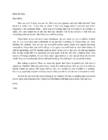
Letters Letters FORMAL, INFORMAL, TRANSACTIONAL TASK 1 Read the extracts and answer the questions. · Where are the extracts from? · What is the purpose of each letter? · How do they differ? · Which extracts are examples of formal letters? · How is the reader addressed in a formal letter? · What are the closing remarks for formal letters? · What is the salutation in a friendly letter? · How would you end extracts 1,2,3 ? · How would you begin the extracts 4 and 5? 1. Dear Mr Miller, I received your kind invitation to the reception. Unfortunately, owing to other commitments. I will be unable to attend ... 2. Dear Ralph, l just got your invitation to the company's event. l `m afraid I can't make it because I've a/ready made plans which l can "t change ... 3. Dear Sirs, I am writing to complain about the poor quality of the items which I received from your co
Golden Grammar rules 1. Don't use an with own. Sue needs her own room. (NOT Sue needs an own room.) I'd like a phone line of my own. (NOT ... an own phone line.) 2. Use or rather to correct yourself. She's German or rather, Austrian. (NOT She's German or better, Austrian.) I'll see you on Friday or rather, Saturday. 3. Use the simple present play(s), rain(s) etc to talk about habits and repeated actions. I play tennis every Saturday. (NOT I am playing tennis every Saturday.) It usually rains a lot in November. 4. Use will ..., not the present, for offers and promises. I'll cook you supper this evening. (NOT I cook you supper this evening.) I promise I'll phone you tomorrow. (NOT I promise I phone you tomorrow.) 5. Don't drop prepositions with passive verbs. I don't like to be shouted at. (NOT I don't like to be shouted.) This needs to be thought about some more. (NOT This needs to be thought some more.) 6. Don't use a present tense after It's time. It's t
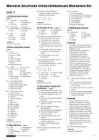
Maturita Solutions Upper-Intermediate Workbook Key Unit 1 2 members of the royal family, politicians, reality TV contestants, 4 1 2 had known had been waiting singers and TV presenters 3 had enjoyed/had been enjoying 1A Talking about people
The Project Gutenberg EBook of Pride and Prejudice, by Jane Austen This eBook is for the use of anyone anywhere at no cost and with almost no restrictions whatsoever. You may copy it, give it away or re-use it under the terms of the Project Gutenberg License included with this eBook or online at www.gutenberg.org Title: Pride and Prejudice Author: Jane Austen Release Date: August 26, 2008 [EBook #1342] [Last updated: August 11, 2011] Language: English Character set encoding: ASCII *** START OF THIS PROJECT GUTENBERG EBOOK PRIDE AND PREJUDICE *** Produced by Anonymous Volunteers, and David Widger PRIDE AND PREJUDICE By Jane Austen Contents Chapter 1 Chapter 22 Chapter 2 Chapter 23 Chapter 43 Chapter 3 Chapter 24 Chapter 44 Chapter 4 Chapter 25 Chapter 45
Edulugude võistlus Success-story competition „Small Town Inhabitants – Educated or Uneducated People“ To begin with, my childhood was quite ordinary, I spent a lot of time in my country home, spending most of my time playing. I have been raised by my mother. As I grew older, I got more and more interested in different things. At one point it occured to me that when I want to be successful in some field, then I really have to educate myself in that filed.When my friends have characterised me then they have mainly mentioned that I am an active person, who has been successful in different fields. I still do not think I am succesful because it is a really complicated definition, but I know that I have succeeded in doing several things. For me the key is my so called success has been that when dealing with a particular thing I have tried to delve into the subject as deep as possible. Firstly, when we are talking about success and asking the question who is a succesful person, we h
British Cuisine Some people criticize English food. They say it's unimaginable, boring, tasteless, it's chips with everything and totally overcooked vegetables. The basic ingredients, when fresh, are so full of flavour that British haven't had to invent sauces to disguise their natural taste. What can compare with fresh pees or new potatoes just boiled and served with butter? Why drown spring lamb in wine or cream and spices, when with just one or two herbs it is absolutely delicious? If you ask foreigners to name some typically English dishes, they will probably say "Fish and chips" then stop. It is disappointing, but true that, there is no tradition in England of eating in restaurants, because the food doesn't lend itself to such preparation. English cooking is found at home. So it is difficult to a good English restaurant with a reasonable prices. In most cities in Britain you'll find Indian, Chinese, French and Italian restaurants. In London you'll also find Indonesian,
TARTUFFE A COMEDY CHARACTERS MADAME PERNELLE, mother of Orgon ORGON, husband of Elmire ELMIRE, wife of Orgon DAMIS, son of Orgon MARIANE, daughter of Orgon, in love with Valere CLEANTE, brother-in-law of Orgon TARTUFFE, a hypocrite DORINE, Mariane's maid M. LOYAL, a bailiff A Police Officer FLIPOTTE, Madame Pernelle's servant The Scene is at Paris ACT I SCENE I MADAME PERNELLE and FLIPOTTE, her servant; ELMIRE, MARIANE, CLEANTE, DAMIS, DORINE MADAME PERNELLE Come, come, Flipotte, and let me get away. ELMIRE You hurry so, I hardly can attend you. MADAME PERNELLE Then don't, my daughter-in law. Stay where you are. I can dispense with your polite attentions. ELMIRE We're only paying what is due you, mother. Why must you go away in such a hurry? MADAME PERNELLE Because I can't endure your carryings-on, And no one takes the slightest pains to please me. I leave your house, I tell you, quite disgusted; You do the opposi
Catherine Morland My name is Catherine Morland. I would like to tell you a bit about myself. To begin with, I am seventeen years old and grew up in a countryside in a small town named Fullerton with my parents and nine siblings. As a child I was interested in many things like drawing, sports and music. I was very lively and cheerful, enjoyed cricket, horse riding and just hated cleanliness and restriction. As I grew up, I chose reading over sports and all of the wild games I used to like. Undoubtedly, I would now describe myself with the word naivety. I am very naïve and do not notice the most obvious things happening around me. I really hope that it is caused by the lack of experience and will eventually pass. In addition, I find myself a kind and caring person because I always want and agree to help people when needed. Furthermore, I really like reading. Sometimes I think that I read too much because I often mix fiction up with reality and in some cases it does not do me any good.
 annaabi.ee






Kõik kommentaarid