 50 punkti
Autor soovib selle materjali allalaadimise eest saada 50 punkti.
50 punkti
Autor soovib selle materjali allalaadimise eest saada 50 punkti.
 ~ 1 leht
Lehekülgede arv dokumendis
~ 1 leht
Lehekülgede arv dokumendis
 2014-02-10
Kuupäev, millal dokument üles laeti
2014-02-10
Kuupäev, millal dokument üles laeti
 1 laadimist
Kokku alla laetud
1 laadimist
Kokku alla laetud
 0 arvamust
Teiste kasutajate poolt lisatud kommentaarid
0 arvamust
Teiste kasutajate poolt lisatud kommentaarid
 Eagle1
Õppematerjali autor
Eagle1
Õppematerjali autor
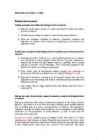
PIL directly regulates private persons, e.g. punishment of international crimes (crimes against peace=crime of aggression, genocide, crimes against humanity, war crimes). This is if specific countries do not want to punish the criminals, specific international tribunals etc are created to do the job for them. Humanitarian doctrine if a certain country violates human rights very severely and if other attempts have failed to prevent and stop this, then war can be used as a method to stop this stuff. Süüria chemical weapons doctrine is one of the strongest doctrine ever, respected by almost everyone, that's why people are so shocked about the events there. It's a grave violation of PIL. If there's enough evidence that chemical weapons were used, then war is basically a legal method, but not fully, because it isn't one of the reasons that allows war as a method to resolve conflict. Differences:
not courts. The clear distinction between legislature and judiciary has weakened in many counties as the courts are able to challenge the legality of a law made by parliament. Lawmakers were often influenced by the canon law. Canon law had a stronger influence in countries with less secular ideology. 5. Civil law Civil law – the part of the legal system that relates to personal matters, such as marriage and property, rather than crime Public law – the area of law that deals with the relationship between the government and other organizations or between the government and the public Private law – the area of law that deals with disagreements between people or companies Family law – an area of the law that deals with matrimonial matters and domestic relations Plaintiff – someone who makes a legal complaint against someone else in court
of supreme importance was my love of reading. I don't recall why, but by an early age, say age 9, I was a phenomenal reader of books, a habit that persisted all the way until college. Reading expands one's mind immensely. It fires the imagination, demonstrates grammar, teaches vocabulary, informs, challenges, helps one relax. In some cases it forces the mind to concentrate, as to understand. It can help build a moral or ethical framework, and help oneself form an individual worldview. Even an untraveled child, sitting at home, can be transported by a book into any place or time. Fantasy and facts weave together, but the result is almost an unmitigated improvement. If a bookworm grows up to be antisocial or worse, it is not because of too much reading, but because something else was lacking in the education or caregiving. Hands-on learning is another factor difficult to overrate. Imagine trying to learn to draw from listening to a lecture
utilitarianism is considered here as the other possible option, rule-utilitarianism, does not provide exceptions to rules and if it would, then it would automatically have shifted to act-utilitarianism as the fact that the exceptions were admitted to, would mean they did so to contribute to the maximizing of happiness. 3 considering the aim of the torture (Twinning, 1973). Even when absolutely condemning the act of torture, it is still important to do this for the right reasons. There are enough legal and ethical grounds to do so. The most evident grounded reason is probably the fact that it harms the dignity of a human being. However, this argument convinces some more than others. The consequential idea that a small evil is allowed to avoid a bigger evil doesn't uphold any valid norms or values but emphasizes the justness of the outcome. This gives room
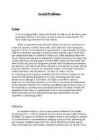
Social Problems Crime In the sociological field, crime is the breach of a rule or law for which some governing authority or force may ultimately prescribe a punishment. The word crime originates from the Latin crimen. When society deems informal relationships and sanctions insufficient to create and maintain a desired social order, there may result more formalized systems of social control imposed by a government, or more broadly, by a State. With the institutional and legal machinery at their disposal, agents of the State can compel individuals to conform to behavioural codes and punish those that do not
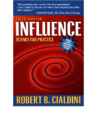
The story involved a certain al- lotment of turquoise jewelry she had been having trouble selling. It was the peak of the tourist season, the store was unusually full of customers, the turquoise pieces were of good quality for the prices she was asking; yet they had not sold. My friend had attempted a couple of standard sales tricks to get them moving. She tried call- ing attention to them by shifting their location to a more central display area; no luck. She even told her sales staff to "push" the items hard-again without success. Finally, the night before leaving on an out-of-town buying trip, she scribbled an exasperated note to her head saleswoman, "Everything in this display case, price x '/2 ," hoping just to be rid of the offending pieces, even if at a loss. When she re- turned a few days later, she was not surprised to find that every article had been sold
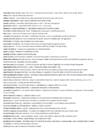
descriptive law (kirjeldav õigus) - laws which simply describe how people or even natural phenomenas usually behave nation (riik) - country with its own goverment citizen (kodanik) - person native of a country; realationship between country and a person stranger (välismaalne) - person who is unfamiliar, from another country penalty (karistus) - punishment fixed by law, as for a crime or from any soical groups goverment (valitsus) - organization which controlls a stre or community System of Courts (kohtusüsteem) - organization applying law in the name of states to commit a crime (kuritegu läbi viima) - breaking a law, usually given out by the goverment fine (trahv) - certain sum of money person pays for breaking a law corruption (korruptsioon) - dishonest or unethincal conduct by a person entrusted with a position of authority
the effect of the environment on the development of neurons in the cerebral cortex. The rats spent 30 or 60 days in their environment and were then sacrificed. The results showed that the rats that lived in a stimulating environment had a thicker cortex. The frontal lobe, associated with thinking, planning and decision-making was heavier in these rats as well. Similar studies show that if the rats were put in together with other rats, the thickness increases even more. These findings can be generalized to humans only to some extent because of the difference in genetic make-up. However, if learning always results in the development of the brain then the animal studies that show plasticity in response to environmental factors are important for the human cortex as well. Environmental changes can disrupt our circadian rhythms, that is, our biological 24- hour clock. Jet lag is a sudden circadian disruption caused by flying across several
 annaabi.ee







Kõik kommentaarid