Leidsid 33 sarnast õppematerjali, mis on seotud failiga "Clauses of purpose". Need materjalid aitavad sul teemat sügavamalt mõista.
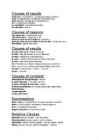
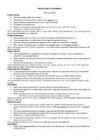
order, case, infinitive, purpose, present, could, sail, around, tense, never, noun, shopping, forget, things, wanted, prevent, vältima, avoid, fear, might, clauses, brother, tell, good, went, bank, apply, loan, catering, course, chef, tommy, moved, countryside, sophia, bought, sailing, boat, umbrella, there, storm, afternoon, booked, brought, wife, talkSuch a/an + omadussõna + ainsuses loendatav nimisõna Such + omadussõna + loendamatu nimisõna/mitmus Such a lot of + loendamatu nimisõna/mitmus So + omadussõna/määrsõna So much/little + loendamatu nimisõna So many/few + mitmus Clauses of reasons The reason for + nimisõna/-ing vorm The reason why + clause (he verb) Because of/on account of/due to + nimisõna Because of/on account of/due to the fact that + clause (he verb) Now (that) + clause (they verb) Clauses of results In order to/so as to + infinitive (formal) So that + can/will (present or future reference) So that + could/would (past reference) In case + present tense (present or future reference) In case + past tense (past reference) For + nimisõna (kui tahame väljendada tegevuse eesmärki) For + -ing vorm (kui tahame väljendada millegi funktsiooni) Prevent + noun/pronoun + (from) + -ing vorm Avoid + -ing vorm Clauses of contrast Although/even though/though + clause In spite of/despite + nimisõna/-ing vorm
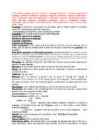
child-my child-my-PLURAL - gender or noun class: It. il libro `the book' la casa `the house' Swahili (Niger-Congo): m-tu m-zuri `a nice man' n-yumba n-zuri `a nice house' ki-tu ki-zuri `a nice thing' - definiteness: a house the house Sw. ett hus huset det röda huset II. Relational categories for nouns: case English vs Estonian Grammatical categories for verbs I. Inherent categories for verbs: - tense: He walks a mile every day. He walked a mile every day Grammaticalized expression of location in time. The Wishram-Wasco dialect of Chinook: 4 inflectional past tenses ga-ciux `He did it some time ago' ni-cíux `He did it long ago.' na-ciúxw-a `He did it recently.' i-cíux `He just did it.'
Golden Grammar rules 1. Don't use an with own. Sue needs her own room. (NOT Sue needs an own room.) I'd like a phone line of my own. (NOT ... an own phone line.) 2. Use or rather to correct yourself. She's German or rather, Austrian. (NOT She's German or better, Austrian.) I'll see you on Friday or rather, Saturday. 3. Use the simple present play(s), rain(s) etc to talk about habits and repeated actions. I play tennis every Saturday. (NOT I am playing tennis every Saturday.) It usually rains a lot in November. 4. Use will ..., not the present, for offers and promises. I'll cook you supper this evening. (NOT I cook you supper this evening.) I promise I'll phone you tomorrow. (NOT I promise I phone you tomorrow.) 5. Don't drop prepositions with passive verbs. I don't like to be shouted at. (NOT I don't like to be shouted
Conditionals Sentences with if are used to express possibilities. 0 Zero conditional If-clause present (past) simple Main clause present (past) simple Sometimes sentences with if express certainty rather than possibility. The zero conditional is used to talk about sth. that is always true (such as a scientific fact), or that was always true in the past. In this type of conditional we can use when instead of if. E.g., If/When you mix blue and red, you get purple. If/When you don't water flowers, they die. (present simple in both parts of the sentence) If/When I asked her to come with us, she always said no.
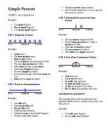
every day something happens repeatedly sometimes how often something happens always I work. I don't work. Do I work? one action follows another often Infinitive He works. He doesn't work. Does he work? Simple Present things in general usually he/she/it + -s I go. I don't go. Do I go? after the following verbs (to love, seldom to hate, to think, etc.) He goes. He doesn't go. Does he go?
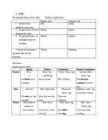
Spell in turns some names using the alphabet for international airlines. 1 KLM 9 ENIRO 2 FARWEK 10 SAUREX 3 TALLEGG 11 MIZDE 4 VESITERM 12 LADA 5 STOW 13 SCHWUNG 6 KALEV 14 MAIASMOKK 7 YAMAHA 15 ISKU 8 ESTRAVEL 2 Affirmative tense Use Signal Words Negative/Questions · action in the present taking always, Present Simple A: He speaks. place once, never or several every ..., N: He does not speak. normally, often, Q: Does he speak? times
TIME CLAUSES Present Simple · Permanent states, facts (Tom works..) · Repeated and habitual actions, routines (She usually goes..) · Laws of nature and general truths (The sun sets in the west) · Timetables and programmes · Sporting commentaries, rewiews (Beckham wins the ball, crosses and Owen scores) · Feelings and emotions (I love Tallinn..) TIME EXPRESSIONS USED WITH PRESENT SIMPLE: usually, often, always, every day/week etc, in the morning/evening etc, at night/the weekend, on Fridays etc. Present Continuous · Actions taking place at or arount the moment of speaking (The kids are watching TV..) · Fixed arrangements in the near future (I'm going to the dentist tomorrow) · Currently changing ang developing situations (The number of burgularies is increasing)
All students of English, be they native speakers or those who are studying English as a second language, will profit from the fundamental introduction and review of grammar provided by SADDLEBACK'S BASIC ENGLISH GRAMMAR 1 and 2. Helpful marginal notes throughout the books have been provided to reinforce existing skills and call attention to common problem areas. We wish you every success in your pursuit of English proficiency. 1 What is Grammar? 5 The Simple Past Tense 98 Regular and Irregular Verbs 99 Was and Were 104 2 The Capital Letter 6 The Past Progressive Tense 106 The Future Tense 108 Can and Could 112 May and Might 113
.............................. 3 Making offers........................................................................ 5 Making requests ................................................................... 6 Expressing possibility/probability......................................... 7 Asking about possibilities ..................................................... 7 Infinitives ............................................................................. 8 Introduction Modal Verbs are can, could, may, might, must, will, would, shall, should, ought to. They are known as modal auxiliary verbs because they ‘help’ another verb, i.e. they are always used with another verb in its base form. e.g. I can swim. Do you think I should go? Characteristics of Modal Verbs • There is no -s in the third person singular: She can ski. He must be tired. It might rain. • They are used to form questions and negatives: Shall we go for a walk? What should I do?
7. Verb: The principal forms of the verbs: Verbil on 4 põhivormi: Regular verb Irregular verb 1. the base form Talk Speak üldoleviku tüvivorm 2. the past form/ -ed form Talked Spoke üldmineviku vorm 3. the past participle (-ed Talked Spoken participle) mineviku kesksõna 4. the present participle (- Talking Speaking ing participle) oleviku kesksõna The tenses: Expressing the future: Simple Perfect Continuous Perfect Continuous Present Base Have / has + to be + base+ ing has/ have been +s + pariticiple base+ -ing
Was Born Traveled to Europe Husband 1978 School graduates @ Oxford 1999 Started Got married School 1983 2008 2 The Six English Verb Tenses Three Simple Tenses Simple continuous Present You walk. You are walking I run. I am running. Past You Walked You were walking. I ran. I was running. Future You will walk. You will be walking. I will run. I will be running. Three Perfect Tenses Perfect continuous Present perfect you have walked. You have been walking. I have run
Letters Letters FORMAL, INFORMAL, TRANSACTIONAL TASK 1 Read the extracts and answer the questions. · Where are the extracts from? · What is the purpose of each letter? · How do they differ? · Which extracts are examples of formal letters? · How is the reader addressed in a formal letter? · What are the closing remarks for formal letters? · What is the salutation in a friendly letter? · How would you end extracts 1,2,3 ? · How would you begin the extracts 4 and 5? 1. Dear Mr Miller, I received your kind invitation to the reception. Unfortunately, owing to other commitments
Tests Superstar 1 Luke Prodromou Test 1 Name____________________ Class_______ Use your English 1 Complete these sentences using the correct form (present simple or present continuous) of the verb in brackets. _ 1 She is in a band and she _________________________________ (record) a CD at the moment. _ 2 She is an actress and often _________________________________ (appear) on television. _ 3 At the moment she _________________________________ (have) a rest because she is tired. _ 4 Mike is a doctor and he _________________________________ (live) in Manchester. _ 5 I _________________________________ (start) work at 8.30 every morning.
I do not recommend going to that restaurant. After an adjective, verb or noun followed by a preposition. She is really good at swimming. He apologised to arriving late. I quite like the thought of working in a travel agency. In some fixed expressions I can not bear listening to people who complain. I can not help feeling that he is cheating us. That book is not worth reading. The infinitive with to The infinitive with to is used: After some main verbs (afford, agree, appear, arrange, ask, attempt, bear, begin, care, choose, consent, decide, determine, expect, fail, forget, happen, hate, help, hesitate, hope, intend, learn, like, love, manage, mean, offer, prefer, prepare, pretend, promise, propose, refuse, remember, seem, start, swear, try, want, wish) I can not afford to eat in that restaurant. After some main verbs Followed by object + infinitive with to
That'll be Jim at the door. (This means that I suppose it is Jim.) 2. Will is also used to express an immediate decision, when we decide on something or agree to do it more or less at the moment of speaking. I’ll take this one. Decisions expressed with going to refer to a more distant point in the future. 3. Will does not express an intention. For that we use be going to. 2 Be going to We use the present tense of the verb be in the right form + going to + verb. I am going to travel I’m going to travel he/she is going to play he’s/she’s going to play we/you/they are going to drive we’re/you’re/they’re going to drive Negative I am not going to work I’m not going to work he/she is not going to fly he/she isn’t going to fly we/you/they are not going to walk
., can not bear I+ing.., can not help I+ing.., worth I+ing..) 2) After prepositions (before I+ing.., of I+ing.., for I+ing.., by I+ing.., at I+ing..) 3) After verbs (enjoy, admit, consider, can`t stand/ help/ bear, deny, avoid, mind, suggest, understand) 4) With from and to with some verbs (He prevented her from leaving. Look forward to I+ing.., Get used to I+ing..) Forming: to+ verb I (to+v) USING: 1) After some adjectives (happy to+v.., wrong to+v..) 2) To express purpose (She went to Spain to meet her friend.) 3) After some nouns ( decision to+v.., time to+v.., wish to+v..) 4) After some main verbs ( appear, agree, ask, begin, choose, decide, expect, happen, help, hope, learn, like, love, mean, offer, prepare, promise, refuse, remember, start, try, want..) USING 1) After some main verbs (let,make, hear, see, watch, feel, notice, help...) In passive sentences make, hear, help are followed by an infinitive with to!
use which can be characterized as ‘linguistic’. Abstract sets of rules that help us to form and understand grammatical sentences. Linguistic performance → According to Chomsky linguistic performance is the production of actual utterances which rely on our mental reality of language. The way people actually speak with mistakes and stops and unfinished sentences. What is grammar? → Grammar is the system of a language, could also be described as rules in how to form new sentences constitute (tervik) the grammar of a language. Although you don’t need to know grammar to learn a language (children for example start speaking before they learn grammar), it makes studying a foreign language easier because it helps to understand the system of a specific language. Grammar divides into two: Prescriptive grammar → Prescribes rules that tell to the
speaking, spoken). There are three main grammatical classes of verb: lexical (walk, put, love), auxiliary (do, be, have) and modal (can, must, will). Lexical and auxiliary verbs indicate contrasts of tense, person and number. adjective omadussõna, Describes the qualities, features or states attributed to a a nice room, a happy girl, the blue adjektiiv noun or pronoun. sky 2 Grammatical Terminology
tricacies of social influence to the fact that he was raised in an entirely Italian family, in a predominantly Polish neighborhood, in a historically German city (Milwaukee), in an otherwise rural state. Preface The initial version of Influence was designed for the popular reader, and as such, an attempt was made to write it in an engaging style. In the subsequent versions, that style is retained, but in addition, I present the research evidence for my statements, recommendations, and conclusions. Although they are dramatized and corrobo- rated through such devices as interviews, quotes, and systematic personal observa- tions, the conclusions of Influence are based on controlled, psychological research. This fact allows the reader to feel confident that the book is not "pop" psychology but represents work that is scientifically grounded. The subsequent versions also
on Christmas Day (but at Christmas) We use at in these expressions: at night - at Christmas - at the moment / at present - at the same time - at weekends - at the age of... IN DURING
Vosotros is used only in Spain when speaking to more than one person with whom you know well. Nosotras and vosotras refer to a group of all females, as well as ellas. Ustedes is almost always used for saying "you all" in all Spanish speaking countries. Usted can be abbreviated to Ud. Ustedes can also be abbreviated to Uds. Please note that the subject pronouns are rarely used before verbs. 6. To Be & to Have ser - to be present past future soy I am fuí I was seré I will be eres you are fuiste you were serás you will be es he/she/it is fué he/she/it was será he/she/it will be somos we are fuimos we were seremos we will be
2 been meaning 9 came 2 A 4 B 6 E old-fashioned-looking uniform, so 3 got 10 grew 5 1 at first hand 5 maiden voyage I would guess that it's a private 4 fell 11 were chatting 2 tuberculosis 6 mine school, but it could be a state 5 seen 12 walked school. It's hard to say. 6 were waiting 13 didn't admit 3 stewardess 7 retirement 7 was looking 4 wonderful 2 1 I reckon they are about 17 years old.
First Conditional: A real possibility in the future A First Conditional sentence is for future actions dependent on the result of another future action or event, where there is a reasonable possibility of the conditions for the action being satisfied. Formation: if + present simple, + will For example: If she gets good grades, she will go to university. We are talking about the future, but we use a present tense for the condition and will for the result. In this case, the person is sure about going to university. We can use other modal verbs in the result part of the sentence. For example: I Condition Result Possibility F she gets good she will go to If the condition is met, then she definitely If grades, university. will go he gets good he may go to If He is not sure about going to university.
6 widely time. 5 Personality-wise, I take after my 7 resolutely / staunchly mum. 8 strictly 5 unaffected inappropriate 9 gravely immobile disapproval 4 1 never used to irresponsible illogical 2 always used to 2 A France B USA C USA 6 1 self-employed 4 supersensitive 3 used to 3 1 A 2 C 3 C 4 A 5 B 2 undercooked 5 co-starred 4 would help / helped 6 C 7 B 8 A 9 C 10 A 3 anticlockwise 6 misheard 5 didn't use to 11 A 12 B
........................ 3 Linking words used in Conditionals ...................................... 4 Conditionals Conditions deal with imagined situations: some are possible, some are unlikely, some are impossible. A. Real Conditionals Real Conditionals refer to situations that are true, have happened, generally happen or are likely to happen. The First Conditional expresses a possible condition and a probable result: If I have time, I will help you. In the if-clause we use the Present Simple, in the main clause will + the verb. We can also use the Present Continuous or Perfect in the if-clause and a Modal Verb in the main clause. If we are having a party tomorrow, we shouldn’t go out tonight. If you have finished with the computer, you should turn it off. It can also be used in offers and suggestions, or warnings and threats. If you need a ticket, I can get you one. If you don’t study harder, you won’t pass the exam.
You do the opposite of my instructions; You've no respect for anything; each one Must have his say; it's perfect pandemonium. DORINE If . . . MADAME PERNELLE You're a servant wench, my girl, and much Too full of gab, and too impertinent And free with your advice on all occasions. DAMIS But . . . MADAME PERNELLE You're a fool, my boy--f, o, o, l Just spells your name. Let grandma tell you that I've said a hundred times to my poor son, Your father, that you'd never come to good Or give him anything but plague and torment. MARIANE I think . . . MADAME PERNELLE O dearie me, his little sister! You're all demureness, butter wouldn't melt In your mouth, one would think to look at you. Still waters, though, they say . . . you know the proverb; And I don't like your doings on the sly. ELMIRE But, mother . . . MADAME PERNELLE Daughter, by your leave, your conduct In everything is altogether wrong; You ought to set a good example for 'em;
ECKHART TOLLE A NEW EARTH Awakening to Your Life's Purpose CONTENTS Chapter One The Flowering of Human Consciousness – 6 Evocation..................................................................................................6 The Purpose of This Book........................................................................8 Our Inherited Dysfunction........................................................................10 The Arising New consciousness..............................................................12 Spirituality and Religion..........................................................................14 The Urgency of Transformation...............................................................16
"Very good advice, Miss Tramell." Stepping out from under the modern glass entrance overhang that somehow meshed with the age of the building and its neighbors, I enjoyed the relative quiet of my tree-lined street before I reached the bustle and flow of traffic on Broadway. One day soon, I hoped to blend right in, but for now I still felt like a fraudulent New Yorker. I had the address and the job, but I was still wary of the subway and had trouble hailing cabs. I tried not to walk around wide-eyed and distracted, but it was hard. There was just so much to see and experience. The sensory input was astonishing-the smell of vehicle exhaust mixed with food from vendor carts, the shouts of hawkers blended with music from street entertainers, the awe-inspiring range of faces and styles and accents, the gorgeous architectural wonders...And the cars. Jesus Christ. The frenetic flow of tightly packed cars was unlike anything I'd ever seen anywhere.
Estonia May 2th, 2010 Mr. Murdock, Blackshire 25, London, England 1. Dear Mr Murdock, kui sa tead, kellele kirjutad; kasuta perenime; naiste puhul Ms Dear Sir or Madam, kui sa ei tea, kellele kirjutad 2. First paragraph The first paragraph should be short and state the purpose of the letter- to make an enquiry, complain, request something, etc. The paragraph or paragraphs in the middle of the letter should contain the relevant information behind the writing of the letter. Most letters in English are not very long, so keep the information to the essentials and concentrate on organising it in a clear and logical manner rather than expanding too much. 3. Last Paragraph
ISBN 0-316-16017-2 [1. Vampires -- Fiction. 2. High schools -- Fiction. 3. Schools -- Fiction. 4. Washington (State) -- Fiction.] I. Title. PZ7.M57188Tw2005 [Fic] --dc22 2004024730 Printed in the United States of America For my big sister, Emily, without whose enthusiasm this story might still be unfinished. But of the tree of the knowledge of good and evil, thou shalt not eat of it: for in the day that thou eatest thereof thou shalt surely die. Genesis 2:17 PREFACE I'd never given much thought to how I would die -- though I'd had reason enough in the last few months -- but even if I had, I would not have imagined it like this. I stared without breathing across the long room, into the dark eyes of the hunter, and he looked pleasantly back at me. Surely it was a good way to die, in the place of someone else, someone I loved. Noble, even. That ought to count for something. I knew that if I'd never gone to Forks, I wouldn't be facing death now
development of human society throuch biological laws · Outlook is deterministic, pessimistic, fatalistic (fate or biology) · Man as an animal-clever than other beasts, still explainable within the framework · Man is not a free agent, is govern by something · Unable to determine his own faith · Hereditary · Naturalists tried to apply in fiction the processes of natural sciences · Writers task is to record facts, systems of behaviour, living conditions, never revealing any natural unbiased (completely natural) · Point of view: amoral-outside the category of morality, neither good or bad · Naturalist find it absurd to blame the wicked. These criminals are doing what nature, environment, their unconscious tells them to do. Naturalists do not judge their characters, they simply report. Try to describe facts like they are. Naturalists depict the lower, coarser forms of life. · Drab, squallid set of scene
Kordamine inglise keele eksamiks A 1.1 Read the text and answer the questions below. Dear Mary-Alice, It's been ages since I last wrote to you, isn't it weird? Yes, so it is, but, I do have a certain reason. Do you remember Sir Thom of the Minquettes'? That fine young man with fascinating blue eyes... Oh, my sweet Mary, you will never guess what happened yesterday! It was about seven o'clock in the evening when Lillian called me out for a walk you know I can't say `no' to my little sis. Anyway we went to the forest near the Swan Lake and, believe it or not, got lost! Awful! I was so scared... We walked and walked, not even knowing the direction we were heading to, until we reached a huge mansion. And the garden around it was so extraordinary... That is something you just must see! But neither the trees nor flowers
Windows are not made of wood. Simple Present · · New York is a small city. It is not important that this fact is untrue. [VERB] + s/es in third person USE 3 Scheduled Events in the Near Examples: Future · You speak English. · Do you speak English?
 annaabi.ee