Leidsid 33 sarnast õppematerjali, mis on seotud failiga "BRITISH CULTURE Etiquette". Need materjalid aitavad sul teemat sügavamalt mõista.
literature, etiquette, football, english, england, sport, eating, contact, than, team, women, match, british, everyday, sports, meeting, someone, shake, hand, considered, wants, person, discussion, plays, never, game, first, years, prefer, possible, wait, party, introduction, britain, pleased, sure, wave, often, done, states, strong, among, casualEtiquette in england *meeting and greeting · The British are reserved, which may cause them to appear cool and indifferent or overly formal. In fact, they are very friendly and helpful to foreigners. · Shake hands with everyone present men, women, and children at business and social meetings. Shake hands again when leaving. · Use last names and appropriate titles until specifically invited by your British hosts or colleagues to use their first names. *body language
just across the border in Russia, are neither common nor popular in Finland. Emotions are not expressed publicly, only among relatives and very good friends. It is inappropriate to eat food while walking on the street. The only exception might be ice cream. The European style of eating--fork remaining in the left hand--prevails in Finland. Avoid eating anything with your fingers, including fruit. Refrain from eating before your host begins, and take small portions because it is the custom to eat everything on one's plate. At a dinner party, it is customary to refrain from drinking until the host offers a toast, and to refrain from eating until the host begins. Standing with arms folded is sometimes viewed as a sign of arrogance. Always cover the mouth when yawning! Finnish Behaviour Finns believe there is a proper way to act in any circumstance and always expect courteous behaviour.
Being rational, calm and not going to emotional extremes are all qualities that respected. At first Estonians can come across as aloof. Once a relationship warms up this becomes less so. Meeting and Greeting Greetings can come across as rather formal and rather reserved. Men should initiate greetings with women and the younger person always greets the older person. When meeting someone make sure you are stood up, offer direct eye contact and give a nice firm handshake. The most common greeting is "tere" ("hello"). Titles are very important. "Härra" is for Mr, "Prova" is Mrs and "Preili" is Miss. All should be followed with the surname. Only use first names once you have been invited to do so. Gift Giving Etiquette Gifts are usually exchanged for birthdays and at Christmas. Gifts need not be expensive as it is more about the thought than monetary worth.
They say it's unimaginable, boring, tasteless, it's chips with everything and totally overcooked vegetables. The basic ingredients, when fresh, are so full of flavour that British haven't had to invent sauces to disguise their natural taste. What can compare with fresh pees or new potatoes just boiled and served with butter? Why drown spring lamb in wine or cream and spices, when with just one or two herbs it is absolutely delicious? If you ask foreigners to name some typically English dishes, they will probably say "Fish and chips" then stop. It is disappointing, but true that, there is no tradition in England of eating in restaurants, because the food doesn't lend itself to such preparation. English cooking is found at home. So it is difficult to a good English restaurant with a reasonable prices. In most cities in Britain you'll find Indian, Chinese, French and Italian restaurants. In London you'll also find Indonesian, Mexican, Greek..
If you are given the gift in person and open it in front of the giver, a thank you note is usually not expected · Americans give gifts for birthdays and major holidays, such as Christmas. · A gift can be as simple as a card · Gift giving is not an elaborate event, except at Christmas. · When invited to someone's home for dinner, it is polite to bring a small box of good chocolates, a bottle of wine, a potted plant or flowers for the hostess. 5. EATING AND TABLE MANNERS · .Chew with your mouth closed and don't talk with your mouth full. · Don't pick your teeth at the table. · Say thank you to the host/server. · Give the food to the person next to you to pass the dish around the table; don't reach across someone else's plate. · Use a fork, unless you are eating a finger food. 6.MEETING AND GREETING · When asking for anything use "Please" with your request and follow up with "Thank You".
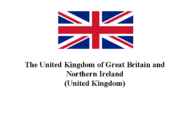
The United Kingdom of Great Britain and Northern Ireland (United Kingdom) • The United Kingdom is an island country located off The North West of Europe • It is composed of four countries: Scotland Northern Ireland England Wales • Queen of The United Kingdom Elizabeth II Symbols • Flag • National animal(s) Lion Bulldog Symbols • National Personification Britannia • Coat of Arms Symbols • Anthem „God Save the Queen“ "Queen" is replaced with "King" in the lyrics whenever the monarch is male England • Capital is London • Population about 53 million • Territory covers 130 439 km2 England Scotland • Capital is Edinburgh
France business etiquette Keiu Peetsalu 2012 Main points France France economy France business etiquette Good to know Summary France France is the largest country in Western Europe and the third-largest in Europe France shares borders with six neighbours Capital : Paris Population; 65,350,000 Area; 674,843 km2 (41st) Economy France has the world's fifth largest economy by nominal figures Main export partners: Germany , Italy , Spain , Belgium, United Kingdom, United States , Netherlands
Topic Sports Tallinn English College 8b form 2007 1. Introduction For some people sport plays a very important part in their lives. And to some, it is even a way of life. There are different kinds of sports. For instance, there are sports meant for playing indoors, some can be practised only at a certain time of year. There are winter and summer sports also. Skiing, figure-skating, sledding and snowboarding these four most popular are practised during winter. Good examples of summer sports are: swimming, badminton, roller skating and golf. 2. The ancient Olympic Games
THE REAL FABIO CAPELLO Independent, The (London), Dec 13, 2007 The Italian poised to become the new England manager is an admirer of the Pope and Silvio Berlusconi and praised the 'order' left by General Franco. The FA may be hoping he learns to keep his opinions to himself. By Cahal Milmo A touchline philosopher The blazerati of the Football Association are well known for their dislike of controversy. In the past, rampant publicity over the personal affairs of England managers has done little to endear them to the sport's mandarins. So a disciplined, conservative Italian who attempts to shun the limelight, avoids late nights and socialises outside football circles would appear to be their man. Yesterday, Fabio Capello sat down for talks with FA bosses that are expected to result in him being awarded a multi-million pound contract before Christmas. A perfect match? Well, possibly. There's just one thing. The conservatism that makes
Business Mentality *Australians are very straightforward when it comes to business, so they do not need to build relationships for a long time before doing business. They are receptive to new ideas. * They appreciate modesty, so try not to oversell your company and do not even think of applying aggressive sales techniques. Try to be factual, friendly and to the point, avoiding self-importance. *If you manage to impress them, they will not make it obvious. *The decision making will be slower than usually, as the work environment in Australian business culture is collaborative. Top management will consult subordinates. *Do not try to rush the decision - patience is very much appreciated. * The good news is that Australians do not find it hard to say "no", so the answer will be clear and straightforward. * Business hours are 9:00 am to 5:00 pm, Monday to Friday. *For business purposes, it is best to visit the country from March to November, as the
Their culture is rich and varied. Theatre The British have a tradition of theatre. Long, long time ago the culture of theatre was introduced from Europe to the British by the Romans. Many auditoriums were constructed across the country. The most famous British playwright is obviously William Shakespeare. He lived from 1564 to 1616. During that time he wrote about 40 plays, which are still played and used in today's theatre. His plays are performed more often than those of any other playwright. The first professional woman playwright was Aphra Behn. Nowadays there are not so many world famous dramatists in England but the memory of William Shakespeare and many others has preserved until today. Important modern playwrights include Alan Ayckbourn, John Osborne, Harold Pinter, Tom Stoppard, and Arnold Wesker. Music Many British music composers have made major contributions to world's music, and are known internationally
process. Consequently, they were attracted to the idea of democracy, where the government is "of the people, by the people, for the people," as Lincoln later expressed in his Gettysburg Address. Religious Tolerance: Much impetus for the ideas of religious tolerance came from the rule of King George II, who was a staunch Catholic and did not allow freedom of religion to Protestants in New England. Voltaire was among the first to denounce Christianity and other organized religions as mere ploys to support monarchy. What emerged was Deism, which was more or less a new religion that considered reason its foundation. In Deism, there is no interference by a deity, and man controls his own destiny. These ideas stirred the masses into action, as the people dreamed of carving their own futures. Adopted by the Founding Fathers, Enlightenment
England and Wales, administering it as a Roman province called Britannia. To the north was territory not governed by the Romans -- Caledonia, by name. Its people were the Picts. From a classical historical viewpoint Scotland seemed a peripheral country, slow to gain advances filtering out from the Mediterranean fount of civilisation, but as knowledge of the past increases it has become apparent that some developments were earlier and more advanced than previously thought, and that the seaways were very important to Scottish history Loch In Scotland, the word "loch" is used to describe any large, enclosed expanse of water (such as Loch Katrine, illustrated above), including areas coming in from the sea (equivalent to the Norwegian "fjiords"). Tartan Tartan is a woven material,generally of wool,having stripes of different colours and varying in breadth.Tartan is a pattern consisting of criss-crossed horizontal and vertical bands in
60.0 million people in mid-2009, it is the third most populous island in the world, after Java and Honsh. Great Britain is surrounded by over 1,000 smaller islands and islets. The island of Ireland lies to its west. Politically, Great Britain may also refer to the island itself together with a number of surrounding islands which comprise the territory of England, Scotland and Wales. All of the island is territory of the sovereign state of the United Kingdom of Great Britain and Northern Ireland, and most of the United Kingdom's territory is in Great Britain. Most of England, Scotland, and Wales are on the island of Great Britain, as are their respective capital cities: London, Edinburgh, and Cardiff. The Kingdom of Great Britain resulted from the political union of the kingdoms of England
English literature is one of the oldest literatures in Europe; dates back to the 6th century AD. Oral literature, i.e. not written down, spread from person to person. In 449 AD Anglo-‐Saxon tribes invaded England – beginning of the Anglo-‐Saxon period in English literature. The first form of literature was folklore, carried by scops and gleemen, who
Drink water and milk most often. When you're really thirsty, cold water is the No. 1 thirst-quencher. And there's a reason your school cafeteria offers free milk. You need calcium to grow strong bones, and milk is a great source of this mineral. How much do you need? Aim for 3 cups of milk per day, or its equivalent. You can mix it up by having milk and some other calcium-rich dairy foods. You probably will want something other than milk or water once in a while, so it's OK to have 100% juice, too. But try to limit sugary drinks, like sodas, juice cocktails, and fruit punches. They contain a lot of added sugar. Sugar just adds calories, not important nutrients. Listen to your body. What does it feel like to be full? When you're eating, notice how your body feels and when your stomach feels comfortably full. Sometimes, people eat too much because they don't notice when they need to stop eating. Eating
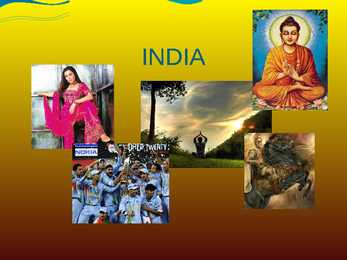
INDIA Some facts.. You should know.. § Under constitution, Hindi and English are official languages of the state § Indian communication tends to be indirect and a person's words may only convey a fraction of what is being said. Directness Polite answer is considered rude. (Thus, the Real rest of the answer § message is delivered via tone, body language, past history, and often, by what is not said)
" --Phil Town, New York Times bestselling author of Rule #1 "The 4-Hour Workweek is a new way of solving a very old problem: just how can we work to live and prevent our lives from being all about work? A world of in nite options awaits those who would read this book and be inspired by it!" --Michael E. Gerber, founder and chairman of E-Myth Worldwide and the world's #1 small business guru "Timothy has packed more lives into his 29 years than Steve Jobs has in his 51." --Tom Foremski, journalist and publisher of SiliconValleyWatcher.com "If you want to live life on your own terms, this is your blueprint." --Mike Maples, cofounder of Motive Communications (IPO to $260M market cap) and founding executive of Tivoli (sold to IBM for $750M) "Thanks to Tim Ferriss, I have more time in my life to travel, spend time with family, and write book blurbs. This is a dazzling and highly useful work." --A. J. Jacobs, editor-at-large of Esquire
problems associated to them?); language use – tenor, mode and domain (what do these notions mean and what are some problems associated to them?). Register-analysis Language user vs. language use – the two main parameters of language change. Variability in the language user is further defined by three broad parameters: 1-Time- (when?) the time when the speaker or the writer lived. For example, if you were to translate a Dickens book from english to russian, you could use the same language as did Dostoyevsky, because they lived at the same time (19th century) 2-Region- The second parameter that defines the language user is region. Region refers to where the author/speaker (sometimes character) is from. May be on a broader scale – Middle East, Western world; but also narrower – Germany, Latvia, Minnesota; and even narrower – Conrwall, London, Pärnu, etc. Problems related to region (similar to the problems covered in previous
Outstanding figures in British literature Eva Martina Põder 11.b British literature Refers to all literature produced by British authors from the United Kingdom, which includes England, Scotland, Northern Ireland, Wales, the Channel Islands, and Isle of Man Includes early works written in Gaelic, Welsh, and Latin, works in Old, Middle, and Modern English, each of which represents a different period Full of great works British works in Latin Venerable Bede He lived between 673 and 735 AD The greatest of all the AngloSaxon scholars He's the earliest English historian, whose work has shed light on a period of English history that would have otherwise been unknown ,,The Father of English History" Wrote / translated about 40 books on almost every area of knowledge, i.e. nature, astronomy, and poetry
Tests Superstar 1 Luke Prodromou Test 1 Name____________________ Class_______ Use your English 1 Complete these sentences using the correct form (present simple or present continuous) of the verb in brackets. _ 1 She is in a band and she _________________________________ (record) a CD at the moment. _ 2 She is an actress and often _________________________________ (appear) on television. _ 3 At the moment she _________________________________ (have) a rest because she is tired. _ 4 Mike is a doctor and he _________________________________ (live) in Manchester.
'How are you?' Very often people expect you to say something positive. Here's a breakdown of how you can express how you really are without complaining too much. · Fine, thanks. / On top of the world, thanks. · OK, thanks · Not so bad, thanks. / Can't complain, thanks. · So so, thanks. / So and so, thanks. · Not so good, actually 1 The English alphabet Spelling Work with your partner and spell out first your name and then some names of places. Write down each letter as you hear it, and then say the word. The English alphabet on the phone: You might find the following alphabet (used by international airlines) useful when trying to spell a word on the telephone. A Alpha O Oscar Ä Alpha-Echo Ö Oscar-Echo
Main Sights England is known for its many world-famous sightseeings and people all around the world come to see them. Some of them are even like symbols of England. The most famous ones are: Stonehenge is one of the greatest national icons of Britain. That prehistoric monument is located in the plain of Salisbury, in the county of Wiltshire in the south-west of England. It is built of 150 enormous stones which are set in a purposive circular pattern. Stonehenge was probably built to mark the longest and shortest day of the year because it lies on the line of the midsummer sunrise and the midsummer sunset. That would have enabled people to keep a record of changing of seasons. Although it is still unclear who built it. Hadrian’s Wall is an ancient wall which was built in 2nd century by Hadrian, the emperor of
1. Ancient Britain: the Celtic tribes. 2000 years ago there was an Iron Age Celtic culture throughout the Br Isles. It seems that the Celts, who had been arriving from Europe from the 8th cent BC onward, intermingled with the peoples who were already there. The Celts were extremely talented people, creative and artistic. More than 1 Celtic tribe invaded Br. The descendants of ancient Celts live in Wales, Scotland, Cornwall and Ireland. They lived in primitive society. Druids priests, more powerful than chiefs. Acted like prophets. 2. Stonehenge From prehistoric period. Was built on Salisbury plain between 2500 and 1500 bc. One of the most famous and mysterious archaeological sites in the world. One of the mysteries is how it was built at all with the technology of the time. Another is its purpose
*Surfing is a surface water sport in which a person (the surfer) moves along the face of a breaking ocean wave (the surf). Surfing also takes place on rivers, riding a standing wave. *Two major subdivisions within stand-up surfing are longboarding and shortboarding, reflecting differences in surfboard design -- particularly including surfboard length, and riding style. *It's important to observe the correct etiquette while out surfing, otherwise things will just descend in to total chaos. These are the most importand rules you have to follow. Probaly the most important word and rule in surfing. Respect for the land, the ocean and the people who grew up surfing here. You have to give respect and behave while visiting a spot, keep things friendly, earn some respect yourself *You will never know what may happen out there and its better if you have some friend with you.They can look over you and you over them.
About Tea "Shall I put the kettle on?" or "Would you like a nice cup of tea?" are questions you might be asked if you visit someone's home in the UK. The traditional English drink is tea - it is drunk throughout the day and is often made during social occasions. Coffee has become popular in recent years, but many people continue to drink tea. In the UK there are as many different ways of making and drinking tea as there are flavours. People drink Indian teas, Chinese teas, herbal teas, and fruit teas. English tea is specially adapted for UK tastebuds. To make a cup of English tea the first step is to boil some water - usually in an electric kettle.
Music, dance, poetry, lavish illusionistic scenic display to express the doctrines of divine kingship. Great impact. Like gods come down to earth. 2. The Caroline masque Charles decided on subject matter, and acted and danced in masques. Now the regal divinity even more obvious. Ben Jonson. Divine minds of this incomparable pair. Arts role – to set a noble ideals, to strengthen practice of virtue. He and queen living incarnations of ideals. Visual style of his reign more classical than James’s. Thomas Carew „Coelum Britannicum”. King’s policy of peace (peace in every courtly celebration). Benefits to the isle by the union of divine couple. Henrietta Maria Love and Beauty and Charles – Heroic Virtue, together a great force. Masques centre of court life. Stuart divinity + now queen as a Platonic love goddess. Maria – from French court amnners and highly artificial language of adoration – fashion. Idealised love wiped away all stains
wishes/Yours, Mike. 4. Remember that it is not necessary to write addresses in the exam. Style in formal and informal letters Formal letters Greeting: Dear Sir/Madam / Mr bobbins, Informal letters · impersonal style Greeting: Dear Julie, · complex sentence structure - frequent · personal, short, zappy style use of Passive Voice - single word · use of slang or colloquial English use of verbs - non-colloquial English -- formal idioms/phrasal verbs language · pronouns are often omitted · each paragraph develops one specific · chatty, wide use of descriptive adjectives topic · use of short forms · only facts, infrequent use of descriptive Best wishes / Love / Yours / Regards.
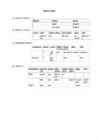
Word order: positive sentences subjects verb(s) object I speak English. I can speak English. Negative sentences subject verbs Indirect object Direct object place time I will not you the story at Tomorro tell school w. Subordinate Clauses conjunction subject verb(s) Indirec Direct place time
Pierre de Frédy, was a French pedagogue and historian, but is best known as the founder of the modern Olympic Games. He was born in Paris into a French aristocratic family. As a young man he was an avid sportsman with rowing being one of his favourites, also practicing the sports of boxing, fencing and horse-riding. Influenced by the social, political and scientific events of the late 19th century and his substantial education, Coubertin developed a passionate belief that sport possessed a power to benefit humankind and encourage peace among the nations of the world. He refused the military career planned for him by his family, as well as renouncing a promising political career. De Coubertin was inspired by his visits to British and American colleges and universities, and set out to improve education. He thought part of this improvement should be sports education, which he considered an important part of the personal development of young people.
education more people went to universities. profound change in morals: · No universal value and perspective on things · Multiple truths, multiple perspectives · Nothing has inherent (kaasasündinud, sisemist) importance · Life lacks purpose Science: Albert Einstein-general theory of relativity had a huge impact on culture as well. Everything is relative. Philosophy: Henri Bergson (French) came to challenge the immediate experience ad intuition are more significant than rationalism and science for understanding reality. Opposition to materialism and positivism. Opposition to abstract, untested theories &ideologies. Friedrich Nietzsche ,,God is dead"-through explaining and putting forward theories had killed Christian god. The essence of Freudian theory: the process in the human psyche Superego-society, conscience, morals, traditions, religion, a moral censor Ego-rational behavior, motivation, self-identification, conscious decisions
Intercultural communication What is business English? Loosely defined, BE refers to the Engl lg used in international trade or business. Loosely defined, BE refers to the Engl lg used in international trade or business. It is a specialized area of the Engl lg learning and teaching largely attributed to non-native English speakers Aim to enhance their chances of doing business with companies from English speaking countries. BE can refer to the study of business Engl voc used in the fields of trade, business, finance, or international relations. If the study focuses on techniques on business presentations, negotiations, correspondence, writing and other skills needed for business communications, then it can be classified as the study of Business English communication skills in the workplace. Both are important and used usually together. Culture. Barriers to Intercultural communication
Where? 25. Have you ever been to a circus? When? Where? 26. Have you ever seen a circus show on TV? 27. What did you see in the show? (an animal act? clowns? acrobats? jugglers?) 28. Are you good at juggling? What makes you think so? 29. Do you like aerobics? Are you good at it? Do you know anybody who is? 30. Would you like to perform in a circus? 31. Do you know anybody who might become a good clown? What must a clown be good at? 32. Have you ever played sport regularly? What training classes do you go to and how often? What sport would you like to play and why? 33. Have you ever taken part in sport competitions? When, where and what were the results? 34. Are sports days held at your school? 35. What sports events do you watch on TV? 36. Do you read the sports page in a paper? Do you watch/listen to sports news? Could you tell us the latest sports news? 37. Who is the best athlete in your class? 38. Who is your favourite athlete
 annaabi.ee