 50 punkti
Autor soovib selle materjali allalaadimise eest saada 50 punkti.
50 punkti
Autor soovib selle materjali allalaadimise eest saada 50 punkti.
 ~ 2 lehte
Lehekülgede arv dokumendis
~ 2 lehte
Lehekülgede arv dokumendis
 2009-05-25
Kuupäev, millal dokument üles laeti
2009-05-25
Kuupäev, millal dokument üles laeti
 4 laadimist
Kokku alla laetud
4 laadimist
Kokku alla laetud
 0 arvamust
Teiste kasutajate poolt lisatud kommentaarid
0 arvamust
Teiste kasutajate poolt lisatud kommentaarid
 Liteon
Õppematerjali autor
Liteon
Õppematerjali autor
Book 1 BASIC ENGLISH BASIC ENGLISH GRAMMAR GRAMMAR BASIC ENGLISH GRAMMAR Book 1 Book 1 Younger students at beginning to intermediate levels will greatly benefit from this step-by-step approach to English grammar basics. This is the ideal supplement to your language arts program whether your students are native English speakers or beginning English language learners. Skill-specific lessons make it easy to locate and prescribe instant reinforcement or intervention. · Illustrated lessons a
China C .......... M ......... Maltese P ........... Portuguese Japan J .......... Decide if you agree with the following statements: French wine is the best in the world. Japanese cars are the best in the world. Make sentences using the words in the box: coffee watches beer pop music fashion perfume tea rice roads food shops films football players mobile phones What's it like? This question asks about the characteristics of people or things. You usually answer it with an adjective or adjective phrase. What's Madrid like? It's big and exciting. What are the people in your village like? They are very friendly. Think about the city you have visited. You are going to tell your partner about it. Think about the following:
We don't often use would in subordinate clauses; instead, we use past tenses. Would you follow me wherever I went? (NOT Would you follow me wherever I would go?) I would tell you if I knew. (NOT I would tell you if I would know.) 66. With when, use the past perfect to make it clear that one thing finished before another started. When I had written my letters, I did some gardening. (NOT When I wrote my letters, I did some gardening.) When he had cleaned the windows, he stopped for a cup of tea. (NOT When he cleaned the windows, he stopped for a cup of tea.) 67. Don't use can to talk about the chance that something will happen. It may/might/could rain this evening. (NOT It can rain this evening.) I think Jane may/might/could come tomorrow. (NOT I think Jane can come tomorrow.) 68. Don't use an infinitive after think. I'm thinking of changing my job. (NOT I'm thinking to change my job.) Are you thinking of going home this weekend? (NOT Are you thinking to go home this weekend?) 69
What is it? talk to you for a moment? 18) Could I use your phone? Yes, of course you can. It´s over there. 19) Can I borrow your pen, please? Yes, here you are. I´m sorry, I need it myself at the moment. 20) Can I help you? Oh, thank you. That´s very kind of you. 21) Would you like some more tea? Yes, please. No, thank you. Not for me, thank you 22) Would you like to go to the cinema? Yes, I´d love to. No, not really. I´m tired. 23) May I smoke here? Please do.
Lamb to the Slaughter by Roald Dahl (1916-1990) The room was warm and clean, the curtains drawn, the two table lamps alight - hers and the one by the empty chair opposite. On the sideboard behind her, two tall glasses, soda water, whiskey. Fresh ice cubes in the Thermos bucket. Mary Maloney was waiting for her husband to come him (correction: home) from work. Now and again she would glance up at the clock, but without anxiety, merely to please herself with the thought that each minute gone by made it nearer the time when he would come. There was a slow smiling air about her, and about everything she did. The drop of a head as she bent over her sewing was curiously tranquil. Her skin - for this was her sixth month with child - had acquired a wonderful translucent quality, the mouth was soft, and the eyes, with their new placid look, seemed larger darker than before. When the clock said ten minutes to five, she began to listen, and a few moments later, punctually as always, she hear
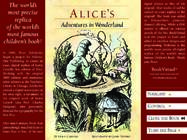
The world’s digital edition to that of the original. After weeks of toil he most precise replica A L I C E ’S created an exact replica of the original! The book was added to VolumeOne’s print-on- of the world’s Adventures in Wonderland demand offering. While a PDF version is offered on various most famous portals of the Net, BookVirtual
Tests Superstar 1 Luke Prodromou Test 1 Name____________________ Class_______ Use your English 1 Complete these sentences using the correct form (present simple or present continuous) of the verb in brackets. _ 1 She is in a band and she _________________________________ (record) a CD at the moment. _ 2 She is an actress and often _________________________________ (appear) on television. _ 3 At the moment she _________________________________ (have) a rest because she is tired. _ 4 Mike is a doctor and he _________________________________ (live) in Manchester. _ 5 I _________________________________ (start) work at 8.30 every morning. _ 6 He is a good cook but she _________________________________ (prefer) to eat out. _ 7 English tests _________________________________ (get) more and more interesting. _ 8 They _________________________________ (have) a party because it's her birthday. _ 9 I sometimes ____________
Hamlet Shakespeare, William Published: 1599 Categorie(s): Fiction, Drama Source: Feedbooks 1 About Shakespeare: William Shakespeare (baptised 26 April 1564 – died 23 April 1616) was an English poet and playwright, widely regarded as the greatest writer in the English language and the world's pre-eminent dramatist. He is often called England's national poet and the "Bard of Avon" (or simply "The Bard"). His surviv- ing works consist of 38 plays, 154 sonnets, two long narrative poems, and several other poems. His plays have been trans- lated into every major living language, and are performed more often than those of any other playwright. Shakespeare was born and raised in Stratford-upon-Avon. At the age of 18 he married Anne Hathaway, who bore him three children: Susanna, and twins Hamnet and Judith. Between 1585 and 1592 he began a successful career in London as an actor, writer, and part ow
 annaabi.ee







Kõik kommentaarid