Leidsid 33 sarnast õppematerjali, mis on seotud failiga "Britain in WW I". Need materjalid aitavad sul teemat sügavamalt mõista.
britain, russia, serbia, german, hungary, germany, europe, women, france, late, empire, century, started, part, power, alliance, british, country, allies, through, bosnia, isolation, policy, 19th, land, role, mutual, between, belgium, japan, later, states, wanted, before, throughout, expansion, those, foreign, during, affairs, rest, goal, balanceBritain History Pre-Norman Britain The Iberians brought their metal-working skills and the first real civilization to Britain in the third millennium B.C and were overrun by various Celtic invasions that began in the 8th century. The Celts introduced their tribal organization and an early form of agriculture before they were forced westward by the Roman invasion. Forms of Celtic language are still spoken in Britain. Romans (with Julius Caesar in the head of them) first tried to occupy Britain in 55 B.C., but there was a rebellion in Gaul so they had to leave to fight against it. Next time they came in 43 A.D. and their leader was Emperor Claudius. Romans brought a lot with them. Their brought paved roads, the sites of important cities, the seeds of Christianity, the Roman law, Roman baths, language and advanced civilization. They also built Hadrian's Wall in 122 A.D
It is one of the most famous prehistoric sites in the world and is composed of earthworks surrounding a circular setting of large standing stones. The surrounding circular, earth bank and ditch, have been dated to about 3100 BC. Stonehenge was produced by a culture with no written language. Many aspects of Stonehenge remain subject to debate. There is little or no direct evidence for the construction techniques used by the Stonehenge builders. *The Celts in Britain and their legacy The Cets lived in Britain in The Iron Age. They were warring tribes who were battleful amongst themselves as well as inter-tribal war. They were not centrally governed. The Celts brought iron working, iron ploughs and metal swords, horses, wheels and chariots - all these things gave them an instant superiority over the native tribes. The Celts built a number of hill forts throughout the region. The society was divided
Stonehenge One of the best known ancient wonders of the world, 5000 years old Megalith monument, built by western mediterraneans during 3000-1600 BC Circular structure, large standing stones, aligned with rising sun at teh solstice Attlers and bones were sued to dig pits that hold the stones The Celts in Britain and their legacy 700-200 BC celts invade Britain Gaels or Goehls(Ireland and Scotland),Cymri(Wales) and Brythons(gave name to Brittany) Fierce fighters,superb horsemen.Most of them farmers, lived in thatched houses Good at art, craftmanship, used iron Divided into tribes, ruled by kings, only in face of danger would they choose a single leader Legacy- hill-forts, farms, churches, field system, woodland, pasture, weapons, iron objects, langugae, culture Caesar in Britain The great Roman Emperor
People came to search for religious freedom, or not? Many different religions Puritans imposed their own beliefs Not lettin religion interfere politics No joy allowed · Quakers Religious society of friends Founded by George Fox They were treated as witches Big role in creation of other colonies Were up for tolerance Against slavery III Colonial life · Settlements by 1773 Christopher Columbus 1493 Puerto Rico Colonies along the east coast in 1607 Spain, France, Russia, England, Germany, the Netherlands High birth rates, low death rates By the 1750 living standard as high as in England · New England Group · Rhode Island Dutch for ``Red Island´´ Religious freedom America's first Baptist church in Providence in 1639 Different people get along well- Quaker, Puritan, Baptist, Anglicans, Jewish, Catholic · Connecticut Native Americans and Dutch traders (1614) By the year 1633, they had purchased land from the Pequot Tribe and made a permanent settlement.
1) General facts The UK: * the United Kingdom of Great Britain and Northern Ireland was formed in 1801 * it covers 243,610 sq km * everybody from the UK is called British * the capital city is London * is made up of four constituent countries: England, Scotland, Wales and Northern Ireland which in turn are divided into counties * the flag is called the Union Jack which is a combination of the flags of England, Scotland and Northern Ireland * the population is about 60,000,000 people, the population density is 242 people/sq km
The Troubled Peace 1 a) The Nazis didn't care for any other nationalities, they used people who weren't German only for ''slave work'' . Germanys only concern was to keep themselves happy and powerful. They wanted to make themselves the superior race. Hitlers idea of the perfect race, the Aryan race also didn't help, because the Aryan race should have people with light eyes,hair and skin, they should be tall and powerful. He didn't care for people who didn't meet his expectations of the perfect race. In his eyes all other groups of people like the Russians, Jews and just crazy, crippled or diseased
Archduke Franz Ferdinand was born in the city of Graz on December 18, 1863. After his cousin and father died, he became the heir to the throne of Austria- Hungary. His uncle, Franz Joseph, was the current emperor of the Austrian- Hungarian Empire. He was married to Sophie, the Duchess of Hohenberg. In the southern portion of Austria-Hungary was a region called Bosnia. Many of the Bosnians wanted to have their own country and not be under the rule of Austria-Hungary. The country of Serbia, just south of the Austria-Hungary border also wanted the freedom of the Bosnians. Serbia was an ally with the powerful Russian Empire and Austria-Hungary was allied with Germany. When Archduke Ferdinand announced his trip to Sarajevo, Bosnian nationalists saw their opportunity to strike at the Austrian Empire. With help from the neighboring country of Serbia, assassins were recruited and trained to kill the Archduke as he traveled through the streets of Sarajevo
Britannia ruled the waves, and a quarter of the earth's surface was coloured red on the map. Where Britain's writ did not run directly, its influence, sustained by matchless industrial and commercial sinews, was often paramount. Yet no empire (except for the Russian) disappeared more swiftly. Within a generation, this mighty structure sank almost without trace leaving behind a scatter of sea-girt dependencies and a ghost of empire -- the Commonwealth. Equally, it can be claimed that Britain bequeathed its former colonies economic foundations, a cultural legacy, a sporting spirit, a legal code and a language more ubiquitous than Latin ever was. Full of vivid particulars, brief lives, telling anecdotes, comic episodes, symbolic moments and illustrative vignettes, The Decline and Fall of the British Empire evokes remote places as well as distant times. Such actions were not be tolerated by the Irish and the Irish Americans who, together with
established the relationships between Estonia, Livonia and the Russian Empire. The Baltic Landesstaat reached its full development. The freedom of action in the new provinces was naturally granted to one of the most firm ideological pillars of the tsarist empire -- the Russian orthodox church; though as the Landeskirche in the Estonian and Livonian territories, the Lutheran church long maintained a de facto predominance. The most important organ of Baltic German local government was the Diet, consisting of all the noble families who had been `selected' in a list of the eligible. Although jealously guarding their privileges, the knighthoods still never became entirely closed. Between sessions of a Diet, the legislative power of the knighthoods belonged to the Council of the Diet. The towns were governed by the Town Councils, which supplemented their ranks from among the representatives of merchants and lawyers. The
..................................................17 Appendix 1...................................................................................................................................18 2 Introduction The aim of this research is to get know more about the Netherlands history and its geographical facts. This report is describing one of most the most beautiful countries in the Europe - Netherlands. Netherlands is famous for its windmills and flowers. Netherlands is also known unofficially as Holland. Government is constitutional monarchy of north-western Europe. Netherlands is bordered on the north and west by the North Sea, on the east by Germany and on the south by Belgium. The European portion of the Netherlands has a total area of 41,528 sq km of which 33,939 sq km is land surface. Country's capital and largest city is Amsterdam. Population is about 16 million.
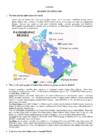
have lost their legal status are called Non-Status Indians. Prime Minister Pierre Trudeau tried to get rid of the Indian Act, but First Nations political groups insisted on keeping it, because it defines their special status. The Inuit are the people who originally lived in the Arctic. Their language is Inuktitut, but it has several dialects the differ considerably from place to place. The Métis, are the group of people who resulted from the mixing of European and Native men and women. The Métis developed a unique culture that included elements of both European and Native ways and artifacts (clothes, tools, means of travel, etc.). They pride themselves on their distinctiveness from both the cultures from which they are descended. 3. From where have the Indians come to Canada? When? Less than 500 years ago, the only people living in Canada were the Aboriginal people of Canada. They all
☄ Puritanism- ideological Protestantism ☄ Some of them thought the luxurious lifestyle of the king and his followers was immoral. They were also fiercely anti-Catholic and suspicious of the apparent sympathy towards Catholicism of the Stuart monarchs. ☄ This led to The Civil War ☄ Victory for the parliamentary force ☄ The king (Charles I) was captured and became the first monarch in Europe to be executed after a formal trial for crimes against his people. 1649 Charles I is executed. For the first and only time, Britain briefly becomes a republic and is called the Common wealth. 1660 The monarchy and the Anglican religion are restored. ☾ The church was restored. However, the conflict between monarch and Parliament soon re-emerged ☾ Prince William and Mary became the king and the queen so this way it was
The British Isles are shared by two separate and independent countries: the United Kingdom of Great Britain and Northern Ireland and the Republic of Ireland. All the islands have administrative ties with the mainland, except some islands which have their own legislative assemblies and systems of law, but the UK Government is responsible for their international relations and defence. Great Britain
They built stable villages, and lived either in birchcovered wigwams or in rectangular longhouses. Later the indigenous people were called indians, by Christopher Columbus who thought that he had reached to India. COLONIAL AMERICA As far as people know were the Vikings first European settlers to visit America. but in 1492, an Italian sailor called Christopher Columbus reached southern America when he was looking for a sea route from Europe to India. He is called to be the man who discovered America. In 1607 two very different groups of English people came to America. a group of farmers began a colony in Jamestown, Virginia. They had to fought with indians and most of them died because there were many diseases and the didn't have enough to eat. But the daughter of an Indian chief, Pocahontas, helped them. The farmers discovered that it was easy to grow tobacco in Virginia, so
свои знания о стране, являющейся родиной английского языка, ставшего ведущим мировым языком, и парламентаризма, который переняли большинство стран мира. 6 INTRODUCTION Aspects of British History presents a brief outline of the most significant milestones in the long and eventful history of Great Britain, such as the five successful invasions of the island, the birth of Parliament and transformation of an absolute monarchy into a constitutional monarchy, the origin of the English language, the rise and fall of the British Empire. The units contain an informative reading text on an important issue, preceded by preparatory discussion questions and followed by notes offering some additional information, and a vocabulary with relevant language notes. The main reading text is
Great Britain Pärnu 2012 Contents Great Britain Great Britain or Britain is an island situated to the northwest of Continental Europe. It is the ninth largest island in the world, the largest European island, and the largest of the British Isles. With a population of about 60.0 million people in mid-2009,
British history Roman Britain Roman Britain was those parts of the island of Great Britain controlled by the Roman Empire between 43 and about 410. The Romans referred to their province as Britannia. Prior to the Roman invasion, Iron Age Britain already had cultural and economic links with Continental Europe, but the invaders introduced new developments in agriculture, urbanization, industry and architecture, leaving a legacy that is still apparent today. Historical records beyond the initial invasion are sparse, although many Roman historians mention the province in passing. Most of the knowledge of the period stems from archaeological investigations and especially epigraphic evidence.
History Before Columbus came to the New World in 1492, the land were inhabited by Native Americans or Indians. After 1492, there was a struggle for land and domination in the New World. England defeated the Spanish navy in 1588. In 1607, it started its first successful colony in America, called ,,Virginia". That was where Captain John Smith met the beautiful Native american princess, Pocahontas. The colonies grew fast, they became the main colonies in the Americas. From 1754 to 1761, Britain fought a war against the French and drove them out of North America. After that the Americans no longer needed Britain to defend them. Britain tried to tax the colonies but the Americans resisted. Fighting began. The colonies formed a Continental Congress in 1774. In 1776, the Continental Congress decided to break away from England, form an alliance with France, and form a Union of the colonies. Thomas Jefferson wrote a Declaration of Independence. It was adopted on July 4. This meant war
.......................................................................................... 8 Population and Ethnicity..............................................................................................9 3 Introduction The official name of the country is the United Kingdom. The United Kingdom is an island country. It consists of the island of Great Britain and Northern Ireland. Great Britain can be divided into three parts England, Wales and Scotland. Each of them has their own capital city. Glasgow in Scotland, Cardiff in Wales and London in England. The country is situated in the north-western Europe. The territory of the United Kingdom is about 244,000 square kilometres and about 60 million people live there. The UK contains a number of small islands. The largest islands that belong to the United
sent to the Tower and was beheaded. HIs 6th wife survived. 3. Edward- was sickly and ruled only for a few years and then he died 4. Mary Tudor/Bloody Mary- was catholic and killed many protesntants. Ruled only for a few years and then died 5. Elizabeth I - very clever and educated,she was fluent in several languages. She wanted to unite England and make it a very important force in Europe. She never married and was called the "Virgin Queen". It was a very peaceful time, she loved theatre and plays. People had good lives and were entertained. Mary (catholic), The queen of Scots, was executed by Elizabeth I. Elizabeth had no heir. The power of the English monarch increased in this period. Bubonic plaguse killed one third of the population in England during its first
History of Great Britain Prehistory (55BC) no written records 6th 3rd c. BC the Celts came to British isles hill figures, hill forts, stone circles ( Stonehenge ) RomanBritain (55BC 400AD) Julius Caesar, named the country Albion Hadrian's Wall, villas, roads, the town of Bath The AngloSaxon, Danish and Norman invasions Germanic tribes settled and stayed Anglia Christianity was brought, religion became important, churches were built 8th century = raids by the Vikings and the Danes
Estonian War of Independence During World War I the greatest colonial power in Europe the Russian Empire seized to exist. On its ruins the formerly enchained nations founded their own states. Among them was the Estonian Republic, officially declared on February 24, 1918. When Germany surrendered to the Western Allies on November 11, 1918 a strategic vacuum arose in Eastern Europe. The new rulers of Russia the Bolsheviks decided to use it as a proper moment to re-conquer their lost territories. The ultimate goal was international communist revolution and Germany was the first standing on their way. Thus on November 13, 1918 the Government of Soviet Russia denounced peace with Germany. On November 16 the Commander-in-Chief of the Red Army, Jukums Vacietis, gave orders to start a massive attack on a long front from the Gulf of Finland to the Ukraine.
09, which is roughly the replacement level for industrialized countries. The total U.S. population crossed the 100 million mark around 1915, the 200 million mark in 1967, and the 300 million mark in 2006 (On Tuesday, October, 17). The U.S. population more than tripled during the 20 th - a growth rate of about 1.3 percent a year - from about 76 million in 1900 to 281 million in 2000. This is unlike most European countries, especially Germany, Russia, Italy and Greece, whose populations are slowly declining, and whose fertility rates are below replacement. The current population according to the U.S Census Bureau is 303,026,362 as of 2nd October 2007. This is based on the 2000 census and national population estimates. 8. Natives Native Americans in the United States are the indigenous peoples from the regions of North America now encompassed by the continental United States, including parts of Alaska. They
The United Kingdom The United Kingdom consists of England, Scotland, Wales and North Ireland and it is situated in the Atlantic Ocean near the mainland of Europe. The population of the UK is 58.6 million and area is 244,110 sq km. Britain has a temperate humid climate. Its characteristic features are mild winters, warm summer, no temperature extremes, abundant rain all year round and frequent changes of weather. The mild climate is partly due to the warm Gulf Stream and partly to the south westerly winds. Occasional winds from the east in winter may bring cold and dry weather. The distribution of rainfall is influenced by the Atlantic Stream. The mountainous areas of the north and west have more rain than the
Some of the things you will learn in THE CODEBREAKERS • How secret Japanese messages were decoded in Washington hours before Pearl Harbor. • How German codebreakers helped usher in the Russian Revolution. • How John F. Kennedy escaped capture in the Pacific because the Japanese failed to solve a simple cipher. • How codebreaking determined a presidential election, convicted an underworld syndicate head, won the battle of Midway, led to cruel Allied defeats in North Africa, and broke up a vast Nazi spy ring. • How one American became the world's most famous codebreaker, and another became the world's greatest.
The Membership of World Organisations Merilin Tamme Xa Tallinna Järveotsa Gymnasium 2008 The schedule · 04.04.1949 establishment of NATO. · 1951 Supreme Headquarters Allied Power Europe (SHAPE) was created near Paris in France. Later, SHAPE was relocated to Mons in Belgium. · 1952 Greece and Turkey join NATO. · 1955 Western Germany joins NATO. · 1982 Spain joins NATO. · 1991 Rome summit. Estonia is one of the founding members of the NACC. · January 1994 Brussels summit. Estonia joins PFP on 3 February. · March 1995 Estonia submits the first Individual Partnership for Peace (IPP) to NATO. It contains priority areas of cooperation with NATO and future cooperation events, altogether in 23 subject fields. · March 1997 beginning of involvement of Estonia in peacekeeping mission
United Kingdom AT115 Martin Pillai Early history • In 1066, the Normans invaded England from France • In 1603, the kingdoms of England, Scotland and Ireland were united in a personal union when James VI, King of Scots, inherited the crowns of England and Ireland and moved his court from Edinburgh to London • In the mid-17th century, all three kingdoms were involved in a series of connected wars, which led to the temporary overthrow of the monarchy and the establishment of the short-lived unitary republic of the Commonwealth of England, Scotland and Ireland.
Years 1154-1485 Henry I was the first unquestioned ruler. One of the most important kings in the Middle Ages. He had lands in Britain & France. Then the government was the monarch, a person, not a place. He had more land than any pervious king. After his marriage to Eleanor of Aquitaine, he also ruled the lands south of Anjou. His empire stretched from the Scottish border to the Pyrenees. England provided most of its wealth, but the heart was Anjou. Henry II began to regain royal control. During the war some barons had become very powerful. He pulled down some of their castles. He tried to restore law & order. He wanted
Js involved in evacuation because of potential for betraying, wealthy capitalists? Crimean factories moved on kurdish straits. Uk factories not moved, Ger war too fast. Month and a half, most J kolkhozes moved. Also evacuated govt officials, those at risk. Also unorganized evacuation, not govt sponsored, those who had feeling, foot, train, cart, sometimes on own, sometimes sponsored by local or abroad org, hundreds of thousands. Many also leaving from C and W Europe. Hundreds of thousands E of Urals where almost no Js were before 1941, not GULag inmates, free SU citizens, living marginally, some employed. During war, major food and housing shortages, no infrastructure. Exiled suspect pops, class, natl enemies, tens of thousands from Crimean, Germans, Bulgarians, Tatars, once war started 41. Nationalist, including Zionist, leaders sent E as chauvinists, more efficient sovietization, 5th column potentiality, 50-60,000 Js, most survived the war
became dominions and independent. Dependencies were regions in the world that became trading partners and where English became a second language. 5. Which British colonies became dominions? What was their status? Is the name dominion used for these countries nowadays? The first dominions were Canada (1867), Australia (1901), and New Zealand (1907) The name "dominion" is not used anymore. 6. Which organisation unites Britain and most of its former colonies nowadays? The Commonwealth unites Britain with its former colonies. Ireland 1. Who were the early inhabitants of Ireland? Seafarers, fisheremen and hunter-gatherers from mainland Europe arrived around 8000 BC 2. When was Christianity established in Ireland? 432 AD Saint Patrick arrived in Ireland and began converting the Irish to Christianity. Who is Ireland's patron saint? Saint Patrick is Ireland's patron saint. When is his feast day? His feast day is on 17 March 3. When did the English conquest of Ireland begin?
2. There are approx. 300-400 million speakers of English in the world. English occupies the 3rd place by its number of speakers; it is right behind Mandarin and Spanish. 3. ESL (English as a Second Language) used in your own country (e.g. India) EFL (English as a Foreign Language) used in a foreign country ESP (English for Specific Purposes) used in business, airlines, hotels etc. 4. Settlement colonies people migrated into them from Britain and started their own communities, they are the present English-speaking countries (USA, Australia, Canada, New Zealand) Trading Empire (dependencies) mainly ESL countries; British people were seen more as a small ruling class (India, Africa) 5. Australia, The USA, Canada, Sri Lanka, India & Pakistan, Irish Free State, Newfoundland, New Zealand, South Africa were the British colonies that became dominions
Girli Vasiljev Report Business Economics, RB1X 06.05.2012 Abstract 06.05.2012 Experience and Wellness management Author Group Girli Vasiljev RB1X Title of report Number of pages Economic Country Review: Finland, Estonia 20 and Hungary Teacher Kalevi Torunen The goal of this paper is to compare the economic performance of Finland, Estonia and Hungary. First, a general overview on the countries will be given. After, economic indicators (real GDP growth rate, inflation, unemployment, household consumption, investment, current account, government budget and deficit) of the three countries will be compared to draw a conclusion. Keywords
from Australia and Poland invaded Iraq and toppled the regime of Saddam Hussein in 21 days of major combat operations. On 13 December 2003, Saddam Hussein was captured by the US forces at a farmhouse in ad-Dawr near Tikrit in Operation Red Dawn. In 2005, the Central Intelligence Agency released a report saying that no weapons of mass destruction had been found in Iraq. Saddam Hussein was hanged on the first day of Eid ul-Adha, 30 December 2006, despite his wish to be shot. In late February 2009, newly elected U.S. President Barack Obama announced an 18- month withdrawal window for combat forces, with approximately 50,000 troops remaining in the country "to advise and train Iraqi security forces and to provide intelligence and surveillance". In a speech at the Oval Office on 31 August 2010 Obama declared: "The American combat mission in Iraq has ended. Operation Iraqi Freedom is over, and the Iraq's people now have responsibility to assure the security of their country."
 annaabi.ee