Leidsid 33 sarnast õppematerjali, mis on seotud failiga "Body language". Need materjalid aitavad sul teemat sügavamalt mõista.
body, language, arab, women, between, express, physical, behavior, facial, arabia, space, states, merilyn, männik, expressions, animals, humans, grammar, meeting, hands, nose, touch, both, gestures, words, žest, posture, kehahoiak, questions, these, feelings, differences, material, prezi, cultures, etiquettecommunications, then it can be classified as the study of Business English communication skills in the workplace. Both are important and used usually together. Culture. Barriers to Intercultural communication Synergy (from Greek for "working together") means that the combined effect is more than the effect of the sum of the individual parts. Culture: Could refer to literature, music, art. Here: refers to the system of shared attitudes, beliefs, values and behavior. The iceberg model: Behaviour, clothing, food above the surface of the water. Meanings, beliefs, attitudes and values below the surface. The onion model: layers of culture (behaviour, clothing, food) can be peeled away to reveal underlying basic assumptions (meanings, beliefs, attitudes and values). The tree model: contrasts visible and hidden culture: the roots- the historical origin of C; the stem- meanings, beliefs, attitudes, values; the branches and leaves- food, clothing, behaviour
Body language Body language means communication with the movement or position of the human body. It can be conscious or unconscious. It is something that is noticed by everybody but is not always given enough attention. We sometimes ignore it and try to hide behind words, but we should never forget that we cannot fool everyone! Children react to body language because they experience the world through intuition. The same can be true for adults when feelings are involved. People who are in bad shape emotionally will often place great importance in it. In fact, they often pick up the smallest hint of a lapse in attention in the person they are speaking to. And they frequently jump to the conclusion that they are boring or a nuisance - thus compounding any sense of depression or poor self-esteem.
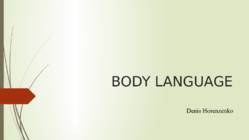
BODY LANGUAGE Denis Horenzenko What is Body Language? Body Language is the communication of personal feelings, emotions , attitudes(), thoughts through body movements gestures(), postures() , facial expressions, walking styles, positions & distance - either consciously(c) or involuntarily( ) .Its not only your tongue you communicate with but also you speak with your body movements and gestures. The Main Aspects of Body Language Gestures: A gesture is the verbal or non-verbal body movement used to express or emphasize() an idea , an emotion or a state of mind. Body Movements: This includes the head, eyes, eyebrows , lips , neck , shoulders, fingers and so on. One can distinguish() four main kinds of gesticulation(): Emblem, illustrators, regular and self-touching. Behavior : This refers quite simply , to everything we do which is overt or observable()
Etiquette in england *meeting and greeting · The British are reserved, which may cause them to appear cool and indifferent or overly formal. In fact, they are very friendly and helpful to foreigners. · Shake hands with everyone present men, women, and children at business and social meetings. Shake hands again when leaving. · Use last names and appropriate titles until specifically invited by your British hosts or colleagues to use their first names. *body language · The English tend to keep about an 23 feet between them while speaking. · Touching is usually kept to a minimum. · Family members are more relaxed and familiar with each other, so touching of the arms,
.. "Smith here!" or simply "Hello". · Many people think it is rude when you use call waiting to talk to someone else in the middle of the conversation you are having with them. · When using a cell phone, try to find a quiet spot to answer a call. It is considered particularly rude to leave a cell phone turned on in public places like: classrooms, libraries, movie theaters, churches, etc. 2. CLOTHES AND DRESS · Also, pay attention to how much of your body you are exposing (have uncovered) and whether it is appropriate for the situation. (Ex. shorts, sandals, a very short or very tight skirt, or low cut or too tight shirt, are really not appropriate for meetings, interviews, etc.) Wearing this type of clothing can also communicate the same negative things. · Men: socks should match their suit. No leg should show between pants and shoe. Remove your their when indoors.
Anthropology is human studies – that investigates the past, the present and the future, culture differences and similarities. Haviland, (1999). Nash (1996) also describes that tourism, including adventure tourism, is a part of socio- cultural anthropology studies. These studies are using the term of culture to refer to various activities as tourism does not take place in a vacuum. Nash (1996) highlights, that anthropology of tourism includes in itself linkages or shortcomings between social life and culture. Taylor (1871) defines culture as a whole complex, which includes knowledge, belief, art, law, 1 Anthropology of Tourism Madli Tuvike morals, custom, and any other capabilities and habits acquired by man as a member of society. Nash (1996) summarized that culture is a system of activities for a group. It can be argued that,
Tallinn´s University Pedagogical College Department of Youth Work and Continuing Education Andra Pant NT-32 GETTING PHYSICAL Tallinn 2012 "Delivery is more important than content." Arch Lustberg, speech trainer According to wellknown social anthropologist Edward T. Hall, 60% of our communication is nonverbal. That means whenever we stand before an audience, our stance, our posture, our facial expressions, our hand gestures, our whole body
the fabliau (a comic, often anonymous tale that is characterised by an excess of sexual and other types of obscenity) and (3) literature on religious topics – either moralistic (teach right from wrong) or ecclesiastical (biblical subject). Middle ages – English becomes a literary language. Geoffrey Chaucer (1343–1400) – Father of English literature, The Canterbury Tales in English, increased the prestige of the language, provided a standardised form. The Canterbury Tales: frame story. Majority in verse, some prose. Intended to contain 124 stories, only finished 24
............................................................24 Identification with Things........................................................................25 The Lost Ring...........................................................................................26 The Illusion of Ownership........................................................................29 Wanting: The Need for More....................................................................31 Identification with the Body.....................................................................33 Feeling the Inner Body.............................................................................34 Forgetfulness of Being.............................................................................35 From Descartes's Error to Sartre's Insight...............................................36 The Peace that Passes All Understanding................................................37
monuments of the Germanic literatures. The main stories of the poem (the fights of B.) are versions of common folk-tales, but the poet also introduces many incidental stories, some of which belong to the world of ancient Germanic legend. He writes his folk-tales and legends in a web of other events, mainly set in the Baltic Kingdoms. He shows a very rich and leisurely portrayal of this Baltic world, providing many customs like the close relationship between lord and man in the war-band and others. All this encouraged the supposition that the unknown author of the poem was himself a bard of the ancient type portrayed within the poem (a lord's scoop). However, many people propose that the author could be Christian poet, perhaps a monk, versed not only in old native traditions, but also in the culture and literature of the Latin Church, and whose purpose of writing was highly moral. For example, the fate is
But why are people dancing? With the latest decades more and more people have started dancing. They all have their own reasons and ways how and why they’re doing it. Some of us do it to entertain others and themselves, some are doing it as an art form. There’s people, who are communicaiting by dancing and those who work out or even meditate by doing it. In my case, I’m doing it because of all the above. [2] What is „A Dance“? Dance is the art of movement of the body, usually rhythmically and to music, using prescribed or improvised steps and gestures. "A dance" is any one prescribed sequence of such movements, or the music to which it is performed, or an event at which it takes place. It can be categorized and described in various ways. Still there’s many generic similarities in dances from many different times and places. Theatrical dance, also called performance or concert dance, is intended primarily as a
future I will refer to this later this will be referred to later Personal pronouns Active verbs use more personal pronouns: I think ... We are working on ... Be careful not to overuse I. We is a good alternative for talking about companies: We will launch the product in June. Reference to the audience As I'm sure you know ... We have all experienced ... You may remember ... As I'm sure we'd all agree ... Everyday language Using slang and everyday expressions can make an impact on the audience and add drama: Where's the caring side of employment gone? I'll tell you where. It's hiding behind a damned set of targets and objectives that's where it is! You need to know your audience very well to use this kind of language. Emphasising and minimising Emphasising Strong adverbs intensify adjectives: We've had an extremely good year.
economies. Business etiquette France is one of the most important business and trading partners on a European and global level In France, the common form of greeting in a professional environment is the handshake. French business culture emphasizes formality, people tend to come closer to each other than in North American and Northern European cultures If you do not speak French, apologize for not knowing the language. French people often appear very direct and they do not hesitate to ask questions When you are invited to a dinner or to a restaurant you should not be more than 10 minutes late A typical gesture in France is to hold open the doors for other people and let them pass through first. If you need to point at something, use your whole hand instead of the index finger. The American symbol for "O.K" (forming a circle with the thumb and index finger) means "zero" or "useless" in France
to freedom during the "Singing Revolution" of 1989-91. Manners Estonians on the whole are quiet and reserved. They tend to speak softly and do not like to draw attention to themselves. Being rational, calm and not going to emotional extremes are all qualities that respected. At first Estonians can come across as aloof. Once a relationship warms up this becomes less so. Meeting and Greeting Greetings can come across as rather formal and rather reserved. Men should initiate greetings with women and the younger person always greets the older person. When meeting someone make sure you are stood up, offer direct eye contact and give a nice firm handshake. The most common greeting is "tere" ("hello"). Titles are very important. "Härra" is for Mr, "Prova" is Mrs and "Preili" is Miss. All should be followed with the surname. Only use first names once you have been invited to do so. Gift Giving Etiquette Gifts are usually exchanged for birthdays and at Christmas.
have anything common with the other. I want to find out whether the outcomes of these studies are reasonable and have any evidence from other studies to support them. My sources include a wide variety of medical journals, studies and webpages. The Californian Seventh-day Adventists study found vegetarian men to have significantly lower risk of coronary artery disease compared to non-vegetarians whereas vegetarian women were at the highest risk. The Oxford vegetarian study, on the other hand, found all vegans and vegetarians to have lower mortality rates when it came to coronary artery disease. Vegans were found to have the lowest cholesterol levels, lowest saturated fat intake and highest dietary fiber intake which are all associated with lower risk of coronary artery disease. A positive correlation between plant based diets and higher mortality rates was found. Word count: 250
more significant than rationalism and science for understanding reality. Opposition to materialism and positivism. Opposition to abstract, untested theories &ideologies. Friedrich Nietzsche ,,God is dead"-through explaining and putting forward theories had killed Christian god. The essence of Freudian theory: the process in the human psyche Superego-society, conscience, morals, traditions, religion, a moral censor Ego-rational behavior, motivation, self-identification, conscious decisions Id-instincts, natural responses, the pleasure principle, aggressive instincts, the death wish Influence: In art and literature, Freud's theories influenced surrealism . Like psychoanalysis, surrealistic painting and writing explores the inner depths of the unconscious mind. Freudian ideas have provided subject matter for authors and artists. Critics often analyze art and literature in Freudian terms. 2
Cats C.Karus 2015 Cat independent Free Graceful the cat will always fall on his feet If the host has / owns a dog, a cat owns the master where the head goes through, there also goes the body through History It is known that people have been living with cats harmonically since 3000 BC in Ancient-Egypt. Cats, living along with humans, started to have sympathetic connection with humans. Probably thanks to cats' usefulness in protecting food, ancient Egyptian started to treats cats as saint animals. Cat was called "miw". Egyptian mourned and embalmed dead cats. They also made special wooden coffins for cats. Cat expressions Friendly
Cats C.Karus 2015 Cat independent Free Graceful the cat will always fall on his feet If the host has / owns a dog, a cat owns the master where the head goes through, there also goes the body through History It is known that people have been living with cats harmonically since 3000 BC in Ancient-Egypt. Cats, living along with humans, started to have sympathetic connection with humans. Probably thanks to cats' usefulness in protecting food, ancient Egyptian started to treats cats as saint animals. Cat was called "miw". Egyptian mourned and embalmed dead cats. They also made special wooden coffins for cats. Cat expressions Friendly
0.07-0.09 BAC: Slight impairment of balance, speech, vision, reaction time, and hearing. Judgement and self-control are reduced, and caution, reason and memory are impaired. 0.10-1.125 BAC: Signficant impairment of moter coordination and loss of good judgement. Speech may be slurred; balance, vision,reaction time and hearing will be impaired. (It is illegal to operate a motor vehicle at this level of intoxication.) 0.13-0.15 BAC: Gross motor impairment and lack of physical control. BLurred vision and major loss of balance. Euphoria is reduced and dysphoria beginning to appear. 0.16-0.20 BAC: Dysphoria (anxiety,restlessness) predominates, nausea may appear. The drinker has the appearance of a "sloppy drunk." 0.25 BAC: Needs assistance in walking; total mental confusion. Dysphoia with nausea and some vomiting. 0.30 BAC: Loss of consciousness. 0.40 BAC and up: Onset of coma,possible death due to respiratory arrest. WHAT IS CONSIDERED A DRINK:
The term ,,stylistics"came into more common use in English only some 35 years ago. It was recorded much earlier; in 1882 as "the study of literary style, the study of stylistic features" Stylistics is a branch of linguistics that studies principles of selecting different linguistic means for passing on thoughts and emotions. It studies: · Different functional styles, styles of genres, individual styles · Expressive, emotional features of different language units Stylist--a writer or a speaker skilled in a literary style Stylistition--a scholar who studies stylistics The word "style" is applied to many things. A linguistic style is a variety of subsystem of lg with its peculiar vocabulary, phraseology, grammatical and phonetic features that are used selectively and purposefully to express ideas in a given situation. The stylistics of language studies different styles, including registers, stylistic devices and shades of meaning.
1. UN as a world organization The United Nations officially came into existence on 24 October 1945, when the UN Charter had been ratified by a majority of the original 51 Member States. The day is now celebrated each year around the world as United Nations Day. The purpose of the United Nations is to bring all nations of the world together to work for peace and development, based on the principles of justice, human dignity and the well-being of all people. It affords the opportunity for countries to balance global interdependence and national interests when addressing international problems. There are currently 192 Members of the United Nations.
12. Special literary vocabulary 13. Special colloquial vocabulary 14. Metre in English poetry. Modifications of metre ("Rhythm and Text") 15. Typically English stanzas ("Rhythm and Text") 16. Rhythm in poetry and in prose ("Rhythm and Text") Study independently 17. Varieties of language (I. Galperin "Stylistics") 18. Emotive prose (I. Galperin "Stylistics") 19. Scientific prose style (I. Galperin "Stylistics") 20. Language of the drama (I. Galperin "Stylistics") 21. Publicistic style (I. Galperin "Stylistics") 22. The style of official documents (I. Galperin "Stylistics") 23. Newspaper style (I
PSYCHOLOGY PART 1: CORE Biological level of analysis Outline principles that define the biological level of analysis. 1) Behavior can be innate, because it is genetically based. Evolution may play a key role in behavior. 2) Animals may be studied as a means of understanding human behavior. 3) There are biological correlates of behavior. Cognitions, emotions and behaviors are products of the anatomy and physiology of our nervous and endocrine system. Explain how principles of the biological level of analysis may be demonstrated in research. 1) Correlational studies: Study by Buss, who hypothesized that across cultures, men will prefer to marry younger women because of greater reproductive capacity and women will place greater value on a potential mate's earning
sauna is a sacred place for the Finns. Remember to respect the nature. Nature is very close to a Finn's heart. Finnish society is very organised. Also, remember to queue! Silence at night is required in tower blocks normally after 10pm. The communal hallways usually have information on the times of silence. Do not disturb! The custom here is that both men and women will shake hands when introduced, or when meeting. Even children will often shake hands upon meeting guests. When greeting someone at a distance, a raised hand or tip of the hat is common. Also,
CHAPTER 1 GETTING TO KNOW THE TOEFL WHAT IS THE TOEFL? The TOEFL is a comprehensive English language examination required by more than 3,000 colleges and universities in the United States, Canada, and other parts of the world. In addition, foreign born professionals frequently need a TOEFL score for certification to practice their profession in the United States or Canada. The TOEFL is a timed test that consists of the three sections listed here. THE TOEFL Section 1 Listening Comprehension 50 questions
ancient people. Already in classical Latin the meaning was extended to denote the manner of expressing one's ideas in written or oral form. Jonathan Swift defined style as "proper words in proper places". In present day English the word "style" is used in about a dozen of principle meanings: 1. the characteristic manner in which a writer expresses his/her ideas (e.g. style of Byron) 2. the manner of expressing ideas, characteristic of a literary movement or period 3. the use of language typical of a literary genre (e.g. the style of a comedy, drama, novel). 4. the selective use of language that depends on spheres / areas of human activity (e.g. style of fiction, scientific prose, newspapers, business correspondence, etc.). STYLISTICS Stylistics is the study of style. The very term "stylistics" came in more common use in English only some 45 years ago.
Tüdrukud: Stressi taluvus Poisid ja tüdrukud taluvad stressi erinevale. Poisid: Taluvad stressi tõesti viimase piirini. Et kui enam ei jaksa siis natukene kannatavad veel. Tüdrukud: Teevad ikka koheselt lärmi, kui midagi ei meeldi. Valu nad ei armasta. Keeled Tüdrukud: Neil on keelte peale hea vaist ja neil on keeli suhteliselt lihtne õppida. Poisid: Peavad tõsiselt pingutama, et uus info ikkagi meelde jääks. Iga uus keel on nende jaoks paras pähkel. Küpsemine 1. than do women. Interestingly, this is the same area of Einstein's brain that was discovered to be abnormally large. The IPL also processes sensory information, and the larger right side in women allows them to focus on, "specific stimuli, such as a baby crying in the night." 2. Reaction to stress. Men tend to have a "fight or flight" response to stress situations while women seem to approach these situations with a "tend and befriend" strategy. Psychologist Shelley E. Taylor coined the
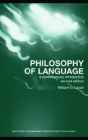
Philosophy of Language Philosophy of Language: a Contemporary Introduction introduces the student to the main issues and theories in twentieth and twenty-first-century phi- losophy of language, focusing specifically on linguistic phenomena. Topics are structured in four parts in the book. Part I, Reference and Referring, includes topics such as Russell's Theory of Descriptions, Donnellan's distinction, problems of anaphora, the description theory of proper names, Searle's cluster theory, and the causalhistorical theory. Part II, Theories of Meaning, surveys the competing theories of linguistic mean- ing and compares their various advantages and liabilities. Part III, Pragmatics
· salutation · Paragraph 1 reasons for writing · Paragraphs 2, 3 development · Final paragraph closing remarks · Name · Letters are divided into two categories, formal and informal. There are various types of formal and informal letters . · It is important to think about the person who you are writing to before you begin writing a letter. If the wrong style is used, the letter will look impolite, silly or odd. For example, if you used formal language to write to a close friend, the letter would look odd, or if you used informal language to write a letter to a company, the letter would look impolite. · There are certain characteristics which allow us to distinguish between formal and informal letters. These are: ~ The salutation (e.g. Dear Sir/Madam, Dear Bill) ~ The style or language (e.g. use of formal language for formal letters, or the use of slang and idioms for informal letters) ~ The closing remarks (e.g
References: Kahny, Jim. Classroom dynamics: An interview with Jill Hadfield. Available at http://ltprofessionals.com/journalpdfs/vol1no1/features/winter2000kahny.pdf accessed 27.12.2012 ESOL Teaching Skills TaskBook. Classroom dynamics: unit 1 a). Available at http://akoaotearoa.ac.nz/download/ng/file/group-4/n2431-esol-teaching-skills- taskbook-unit-1-a---classroom-dynamics.pdf accessed 27.12.2012 III Language teaching methods. · (Traditional: the grammar-translation method/ classical method.) · Traditional: the direct method Youtube: http://www.youtube.com/watch?v=XiQvG-fvzLM Kids lesson (direct method) Language is primarily speech Reading skills are developed through practice with speaking Realia is used to convey the meaning Demonstration instead of translation or explanation Complete sentences instead of vocabulary lists The purpose of language learning is communication
1) Standard and non-standard varieties of English Standard varieties of English are the varieties of the English language that are considered to be a norm and are spoken and written by the minority (educated people). This is the optimum for educational purposes. The standard varieties of English are: BrEng (British), EngEng (English), NAmEng (North-America), USEng (United States), CanEng (Canada), AusEng (Australia), NZEng (New Zealand). Standard English (British English) is the most widely accepted and understood among native speakers, learned by foreigners. It is used in broadcasting, TV, news etc. It doesn't
The making of a new nation. The Enlightenment in America. The emergence of the notion of the American Dream. The great Enlighteners: Crèvecoeur, Jefferson, Paine, Franklin. The American Enlightenment is the intellectual thriving period in the United States in the midtolate 18th century (17151789), especially as it relates to American Revolution on the one hand and the European Enlightenment on the other. Influenced by the scientific revolution of the 17th century and the humanist period during the Renaissance, the Enlightenment took scientific reasoning and applied it to human nature, society, and religion
Homereading 4 Changing world Religions Islam Islam is a monotheistic Abrahamic religion originating with the teachings of Muhammad, a 7th century Arab religious and political figure. The word Islam means "submission", or the total surrender of oneself to God An adherent of Islam is known as a Muslim, meaning "one who submits (to God)". There are between 1.1 billion and 1.8 billion Muslims, making Islam the secondlargest religion in the world, after Christianity. Muslims believe that God revealed the Qur'an to Muhammad, God's final prophet, and regard the Qur'an and the Sunnah (words and deeds of Muhammad) as the fundamental sources of Islam.They do not regard Muhammad as the founder of a new religion, but as the restorer of the original monotheistic faith of Abraham, Moses, Jesus, and other prophets.
 annaabi.ee