Leidsid 33 sarnast õppematerjali, mis on seotud failiga "Bilberry". Need materjalid aitavad sul teemat sügavamalt mõista.
bilberry, berries, late, black, related, several, species, growing, shrubs, edible, nearly, distinct, them, plant, dried, fruit, leaves, medicine, found, acidic, nutrient, poor, throughout, regions, north, wild, sharp, green, summer, including, night, vision, conditions, heart, fatigue, syndrome, diabetes, gout, skin, kidney, disease, tract, finlandsmaller. Männipuistud on valdavad, kuusepuistu ala (18%) ja kaske (13%) leidub vähem. The share of oak forests (5%) is relatively big, especially on Saaremaa Island. Tammemetsade osakaal (5%) on suhteliselt suur, eriti Saaremaal. The most freguently occuring degree of stocking index is 0,5 ...0,7. The quality class is III ...IV. Kõige sagedasem täius on 0,5...0,7. Boniteediklass on III...IV. The density of undergrowth is very varied.: juniper, hazel, fly honeysuckle being the most common species. Alusmetsa tihedus on väga erinev: kõige levinumad liigid on kadakas, sarapuu, harilik kuslapuu. The ground vegetation varies according to the light conditions and geographical lacation. Alustaimestik muutub vastavalt valgustingimustele ja geograafilisele asukohale. The characteristic species are: red grass, heath false brome, mountain melick, blue moor grass, blood-red geranium, dropwort, hepatica. Iseloomulikud liigid on
were soon destroyed. The next invaders were the Anglo-Saxons. They came from nowadays Germany, Holland and Denmark. In 1066 the last successful invasion was made by French-speaking Normans. French became the language of the ruling class, Latin was the written language. By the 14th century, however, English began to replace both French and Latin, but the English language still contains numerous French and Latin borrowings. The Hundred Years War between England and France and the Black Death had a great negative influence on Britain. Over 1/3 of the population died. During the fifteenth century the throne of England was claimed by two rival groups - the House of York and the House of Lancaster. As the symbol of the House of York was a white rose and the symbol of the House of Lancaster was a red rose, the war between the groups was called the War of the Roses. It lasted from 1455 to 1485 and ended with the establishment of the powerful Tudor monarchy.
the olive product. During the 18th Century, the use of sunflower oil became very popular in Europe, particularly with members of the Russian Orthodox Church because sunflower oil was one of the few oils that was not prohibited during Lent. The cake remaining after the seeds have been processed for oil is used as a livestock feed. Some recently developed cultivars have drooping heads. These cultivars are less attractive to gardeners growing the flowers as ornamental plants, but appeal to farmers, because they reduce bird damage and losses from some plant diseases. There are also new breeds of sunflowers which are transgenic, so that they are resistant to some diseases.[citation needed] Sunflowers also produce latex and are the subject of experiments to improve their suitability as an alternative crop for producing hypoallergenic rubber. Additionally, the stem of a dead sunflower can dry out open wounds.[citation needed]
Summers are mild, and average about 70° F, while winter temperatures are often well blow freezing. The average yearly precipitation is 30-60 inches. This precipitation falls throughout the year, but in the winter it falls as snow. There are four seasons in this biome, with warm summers and cold winters, often snowy. In autumn, the leaves change color and fall from the trees. The leaves decay on the forest floor, so the soil is very rich. Because of this, and because of the long growing season, many deciduous forests have been cut down for farming purposes. Plants: Trees of this biome include hardwoods such as maple, oak, hickory, and beech. There are often some evergreens, such as hemlock, spruce, and fir growing amongst them. Decidous forests have usually 3-5 layers of plants; Top layer, or canopy: tall deciduous trees. Although the canopy is quite thick, it does allow sunlight to reach the forest floor, which encourages the other layers to grow.
2. Where is prairie, pampas, steppe, and veldt situated? EurasiaSteppe, North America-Prairie, South AmericaPampa, South AfricaVeldt 3. Using the climate diagram describe the climate of the region. Temperate deciduous forest -Well-defined seasons with a distinct winter characterize this forest biome. Moderate climate and a growing season of 140-200 days during 4-6 frost-free months distinguish temperate forests. Temperature varies from -15° C to 25° C. Precipitation (750-1500 mm) is distributed evenly throughout the year. Temperate grassland- Semiarid, continental climates of the middle latitudes typically have between 25 cm and 50 cm of precipitation a year. Much of this falls as snow, serving as reservoir of moisture for the beginning of the growing season. Warm to hot summers are experienced, depending on latitude
Southern Britain is warmer than Northern because of its latitude, but in winter the North Atlantic Drift keeps the west milder than the east. Wales and the southern peninsula have the most moderate climate and Eastern England the most extreme. Annual rainfall is fairly evenly distributed but the amount of precipitation varies greatly between the mountainous areas of the west and the central and eastern parts. 7. Animals, plants Animals The diversity of animals is modest because of several factors: the size of the land area, seasonal changes and the age of habitats on the island. Because GB has a small area, it means that the number of species that can evolve is limited because there is not enough land mass to support the diversity of animals. The environment is very young due to the Ice Age, so there has not been enough time for such diversity to develop. The seasonal changes that occur across the country mean that the animals have less to eat
Smoking is a serious problem, about 100,000 people in the UK die each year due to smoking. It is very hard to quit smoking but luckily there are things like nicotine patches and gums to help you during the process. But those things won't help you if you lack of two most important things - willpower and determination. 3 Narcotics Narcotics are dangerous and illegal. Narcotics also known as drugs have several forms. You can consume drugs in a shape of a pill, by injecting it with a needle, smoking it and even baking it into a food and then eating it. Let's focus on five drugs marijuana, ecstasy, heroin, mushrooms and LSD. 1. Marijuana Marijuana is a green and brown mix of dried flowers, stems, seeds and leaves from the hemp plant Cannabis sativa. The main active chemical is THC (tretrahydrocannabinol), which
Forests Tropical and subtropical forests, also known as rainforests or tropical rainforests, are lavish and ample forests with broad leave tree. They are mostly found at lowlands near the equator - Asia, Africa, South & Central America and on many of the Pacific Islands. Almost 50% forests of the world are tropical and subtropical in nature. Rainforests are characterized by high rainfall. They are home to two-thirds of all the living animal and plant species on the planet. Tall, broad-leaved evergreen trees are the dominant plants, forming a leafy canopy over the forest floor. The undergrowth or understory in a rainforest generally consists of shade-tolerant shrubs, herbs, ferns, small trees and large woody vines. The temperature ranges from 5°C to 50°C. Human uses of tropical and subtropical forests:
I will be speaking today about strawberries. My presentation will last for about 10 minutes. Please can you save your questions till the end. Choosing Cultivars Some cultivars perform better than others, but it is difficult to predict which will grow best in a particular garden. Perhaps the best way to decide which cultivars to grow is to find out what works well for neighbours or local commercial growers. Before planting strawberries in a large area it’s good to try several promising cultivars Some cultivars that perform well: • Earliglow—perhaps the best-flavored cultivar, it is among the earliest to ripen. • Northeaster—ripens about the same time as Earliglow. It is resistant to red stele and does well on heavier clay soils. The berries are large and have a hint of grape flavor, which some people love and others dislike. • Sable—has excellent flavor and also ripens early.
Tundra swans Tundra swans ● Whooper swan, Bewick´s swan and mute swan (laululuik, väikeluik, kühmnokk-luik) Whooper swan ● Large white swan (bigger than bewick) ● Lenght – 140 to 165 cm ● Deep honking call and powerfull fliers ● Require large areas to live in ● Adult birds – feathers entirely white, black feet, mostly black bill ● Pens (females) – slightly smaller than cobs (males) ● Immatures – white mixed with some dull grey feathering; bills – black, large dirty-pink patch ● In Estonia first nesting - 1979 Whooper swan Behaviour of whooper swan ● Pair for life, cygnets stay with them all the winter ● Breffered breeding habitat – wetlands ● Both build the nest ● Male will stand guard over the nest while female incubates ● 4 to 7 eggs
oxygen to form sulfuric acid, which is strong it ionizes completely to hydrogen ions. H2SO4 2H + SO4-2 Effects pH range Effect 6.59 No effect 6.06.4 Unlikely to be harmful except when carbon dioxide levels are very high (1000 mg I 1) 5.05.9 Not especially harmful except when carbon dioxide levels are high (20 mg I 1) or ferric ions are present 4.54.9 Harmful to the eggs of salmon and trout species (salmonids) and to adult fish when levels of Ca 2, Na and Cl are low 4.04.4 Harmful to adult fish of many types which have not been progressively acclimated to low pH 3.53.9 Lethal to salmonids, although acclimated roach can survive for longer 3.03.4 Most fish are killed within hours at these levels Environmental effects Very obvious environmental effect of acid rain is the loss of fish in acid sensitive lakes and streams. Loads of fishes are not able to survive in acidic water
¤ over 500 nations/tribes ¤ closeness to nature ¤ europeans came for the free land ¤ less civilized ¤ they lived in teepee's ¤ they hunted buffalos for food, clothing BERENGIA- Land Bridge connecting Asia (Siberia) to Alaska 1500 km wide North to South 65 000 B.P (before the present) rised out of the sea to 40 000 B.P a wave when people came from west. 36 000-32 000 B.P arrived people CHEROKEE. Southeast U.S- their heartland, not on the ocean. Lanuage + customs + weapons-> related to IROQUIS family of nations (Iroquis lived around Great Lakes) 1300 A.D. established in South East U.S Classical Cherokee Civilization 16th-19th centuries MATERINEAL-(,,mother line") women controlled home, family, children, inheritana, clan membership. Men hunted and made babies. Cherokee Wedding Ceremony- ¤groom brings meat(,,hunter") ¤ bride brings other food (grains, berries etc.) -> prooves that she's ,,homemaker" They step on the Ceremonial Blanket-> family
25% less chance of developing coronary artery disease when compared to non- vegetarians, which definitely means that high saturated fat intake isn’t the only risk factor. When we look at the total cholesterol levels of vegetarians and meat eaters we see that cholesterol levels in meat eaters are significantly higher [Table 2 in appendix]. Not only that, but vegetarians seem to consume significantly more fiber than meat eaters do. Higher cholesterol and lower fiber intake must be related to lower mortality rates when it comes to coronary artery disease. 15 The cholesterol debate In spite of these findings there are, and have always been, suspicions when it comes to animal derived foods and how they raise blood cholesterol levels. There’s a widespread perception that cholesterol isn’t to blame. However in 1913 a Russian pathologist, Nikolai N. Anitschkow, tested hypercholesterolemia on rabbits
The most common type of rock is granite. It is a ubiquitous part of the scenery, visible wherever there is no soil cover. Moraine or till is the most common type of soil, covered by a thin layer of humus of biological origin. The greater part of the islands are found in southwest in the Archipelago Sea, part of the archipelago of the Åland Islands, and along the southern coast in the Gulf of Finland. Finland is one of the few countries in the world whose surface area is still growing. Owing to the post-glacial rebound that has been taking place since the last ice age, the surface area of the country is growing by about 7 square kilometres (2.7 square miles) a year. The distance from the most Southern point Hanko to the most northern point of Finland Nuorgam is 1,445 kilometres (898 miles) (driving distance), which would take approximately 18.5 hours to drive. This is very similar to Great Britain (Land's End to John
Savanna A savanna is a grassland ecosystem with scattered trees or shrubs. In savannas trees are small or widely spaced so that the canopy does not close. It is often believed that savannas are characterized by widely spaced, scattered trees, however in many savanna communities tree densities are higher and trees are more regularly spaced than in forest communities. The open canopy allows sufficient light to reach the ground to support an unbroken herbaceous layer consisting primarily of C4 grasses
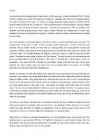
Canada's land ranges from fertile agricultural plains in the south to freezing tundra in the north. The southwest of Canada has a mild climate. Cold winters characterize most of the rest of Canada. The magnetic North Pole is within Nunavut. There are five biomes in Canada: the Arctic Biome, the Tundra, the Taiga Biome, the Prairies and the Deciduous Forests. The Arctic biome is cold, windy and the land is permafrost. There are long periods of darkness and light. The growing season is very short. Some typical animals are Arctic foxes, ermines, polar bears, Arctic terns, walruses and seals. The Tundra is located near the Arctic region. It is cold and windy as well. The land is permafrost and desert-like. The growing season is 50-60 days and that's why there are plants like mosses and lichens. Typical animals are musk oxen, elks, moose, lemmings, wolves and foxes. The Taiga biome, also known as coniferous forests is located south of the Tundra region.
A short overview of veganism Veganism is both the practice of abstaining from What is the use of animal products, particularly in diet, and an associated philosophy that rejects the veganism? commodity status of animals. Eating vegan has a number of benifits that include: Why do Improving one`s health people go Helping the environment vegan? Saving the animals Our planeet is tumoil, humans are ailing in health, and animals are suffering everyday, but that can be fixed by simply going vegan, if you should be interested in contrbuting. So what? A vegan diet benifits everything and everyone on ? our planeet Simple changes in your diet and lifestyle can make a huge impact for yourself and the planeet we live on. Processed meat was rightfully demonized as contributing to rising cancer rates by the world
north. The southwest of Canada has a mild climate. Cold winters characterize most of the rest of Canada. The magnetic North Pole is within Nunavut. There are five biomes in Canada: the Arctic Biome, the Tundra, the Taiga Biome, the Prairies and the Deciduous Forests. The Arctic biome is cold, windy and the land is permafrost. There are long periods of darkness and light. The growing season is very short. The tundra is located near the Arctic region. It is cold and windy as well. The land is permafrost and desertlike. The growing season is 5060 days and that is why there grow plants such as mosses and lichens. 6. Animals Some typical animals are Arctic foxes, ermines, polar bears, Arctic terns, walruses and seals. Typical tundra animals are musk oxen, elks, moose, lemmings, wolves and foxes. The Taiga
Natural zones The wet forests also called the rainforests occupy the narrow coastal region in the east. In the west they give place to grasslands with some trees called savannas. Farther west the trees disappear and the savannas give place to the bushlands. The real desert occupies the centre of the Western Plateau. In the very southwest there are thin forests of evergreen trees. Plants A rich variety of plant can be found in the natural landscapes of Australia. A lot of species can be found in wet tropical forests in the north and in temperate rainforests in the south. The biggest family of the native plants is the myrties. They include more than 500 species of eucalyptus, or gum trees. Only the big river red gum is seen everywhere. These can be found beside rivers and dry riverbeds. Some gum trees are valuable timber species and have been cut down for many years. Gum tree leaves are full of oils, which evaporate easily. That why
(ii) assume allele refers to coat colour allele (coat colour) gene / alleles, only on X chromosome; A no (coat colour), gene / allele, on Y chromosome male cats, XY / only have one X chromosome; males have only one (coat colour) allele / cannot have two (coat colour) alleles; need black and orange alleles for tortoiseshell colour; 2 r r w w (b) parental genotypes C C × C C ; r w gametes C , C ; F1 genotypes and phenotypes 1 mark: r w F1 genotypes (all) C C F1 phenotypes (all) pink; F2 genotypes and phenotypes 1 mark: r w r w gametes C , C C , C ;
In longitude Canada extends from approximately 52° to 141° W, a distance that spans six time zones. In latitude it extends from approximately 42° to 83° N. With its vast Arctic and subarctic territories, Canada is often considered a country only of the far north; however, the peninsula of southern Ontario juts deeply south into the heartland of the United States, and its southernmost point, Middle Island in Lake Erie, is at the same latitude as northern California. The country also includes several major islands, including Baffin, Ellesmere, Victoria, Newfoundland, and Melville, and many small ones. Its border with the U.S., the longest border in the world not patrolled by military forces, extends 8,890 km. 3. Mountains, lowlands Canada's vast area means it has many varying types of terrain, much of which is mountainous. The Cordillera in the west, the Appalachians in the southeast, the mountains of northern Labrador and of Baffin Island in the northeast, and the
Located at latitudes 55° to 70° North. Almost all tundras are located in the Northern Hemisphere, encircling arctic desert and extending south to the coniferous forests of the taiga. The ecotone (ecological boundary region) between the tundra and the forest is known as the tree line or timberline. Tundra comes from the Finnish word tunturi, meaning treeless plain. It is noted for its frost-moulded landscapes, extremely low temperatures, little precipitation, poor nutrients, and short growing seasons. Dead organic material functions as a nutrient pool. The two major nutrients are nitrogen and phosphorus. Nitrogen is created by biological fixation, and phosphorus is created by precipitation. The most distinctive characteristic of tundra soil is its permafrost, a permanently frozen layer of ground. The average winter temperature is -28°C, but the average summer temperature is 3-16°C. During the brief
been diminishing. Although the extremely vigorous period of economic reforms is now over, the changes that Estonia is presently going through are far more extensive than those in the developed countries. The Estonian economy is diverse industry and transport, as well as commerce and different branches of services are all equally important. Due to the available natural resources Estonian economy largely relies on the branches related to the forest; Estonian energy sector is based on oil shale, a resource quite rare elsewhere in the world. Finland and Sweden are the most important trade partners. The Estonian economy profits significantly from the business generated by more than 2 million tourists a year, most of whom come from Finland. More than 67% of the Estonian GDP is derived from the service sectors, industrial sectors yield over 28% and primary branches (including agriculture) approximately 5.5% of the overall output.
maximum length of a summer day on the north coast is 18 hours 14 minutes, wheres during the shortest day in winter the sun appears for a mere 6 hours 3 minutes. Moreover, the long twilight time makes the transition between day and night rather smooth and the nights around the Midsummer Day shorter still. 7. Flora & fauna Estonia's plants and animals aren't represented in great variety. The percent of forests is growing every year and the most common trees are pine, birch, spruce, aspen, oak and alder. Forests offer a habitat to different wild animals. Among 65 species of mammals, the most widespread are the elk, roe deer, wild boar, hare, hedgehog, squirrel, fox and marten. Some endangered species, such as the brown bear, lynx and wolf, are represented in small numbers. Estonia is believed to have 40,000 living species, but only about 23,500 have so far been discovered
Droughts are followed by floods. Australia has three time zones. In Western Australia is equal to Greenwich Mean Time plus 8 hours. In New South Wales, Victoria, Queensland, and Tasmania and in Australian Capital Territory time is equal to Greenwich Mean Time plus 10 hours. In South Australia, Northern Territory, Broken Hill, NSW time is equal to Greenwich Mean Time plus 9 ½ hours. Plants A rich variety of plants can be found in the natural landscapes of Australia. A lot of species can be found in wet tropical forests in the north and in temperate rainforests in the south. The biggest family of native plants is the myrtles. They include more than 500 species of eucalyptus, or gum trees. Only the big river red gum is seen nearly everywhere. These can be found beside rivers and dry riverbeds. Some gum trees are valuable timber species and have been cut down for many years. Gum tree leaves are full of oils, which evaporate easily.
Rainfall is distributed throughout the year with the heaviest rainfall in August. Nature Waterbodies Estonia is a country of thousands of lakes. There are about 1450 natural and man-made lakes in Estonia. The two largest of them are Lake Peipsi (the fifth largest in Europe; 3 555 sq km, shared with Russia) and Võrtsjärv (270 sq. km). Of all the other lakes, only 45 have an area of more than 100 ha. Lake Peipsi and Lake Võrtsjärv are rich in fish. In Lake Peipsi you can find rare species of fish such as the lake whitefish and the Peipsi smelt. Võrtsjärv is famous for its catches of pike-perch and eel, which are regarded as a delicacy. Estonia has more than 7 000 rivers, streams and drainage ditches. Only nine are over 100 km in length. The longest, at 162 km, is the Võhandu River in the southeast, followed by the Pärnu, Põltsamaa and Pedja rivers. Forests Forest covers around one half of Estonia. The most common types of tree are pine, spruce and birch
2012). As an example, Asher et al. (2012) further proved in their research on humus creation that thermal conditions (due to differences in altitude and exposure) and consequently the climate influence soil microflora considerably. Humus being defined as an organic residue in the soil resulting from decomposition of plant and animal residues in soil, or it is the highly complex organic residual matter in soil which is not readily degraded by microorganism (Kausadikari). There are several other variables that impact the soil microflora. For instance, a study by Canbolat et al. (2007) showed that root length, root and shoot weight of plants were decreased by soil compaction, which suggests that microfloral activity in compact soil is lower. Cultural practices The mankind has and will have a major influence on changing the microflora of soils. There are countless activites that have and minor effect, but change the soil composition in the long term as a whole
durability, insulation properties and aesthetic qualities, recent findings show that they also produce less carbon emissions than any other masonry material. History (slide 3) In more detail the earliest bricks were dried bricks, meaning they were formed from clay- bearing earth or mud and dried usually in the sun until they were strong enough for use. The oldest discovered bricks, originally made from shaped mud and dating before 10000 BC, were found in Mesopotamia related to the first known cities. Ceramic or fired bricks were first introduced by the Romans. These were mainly flat, broad thin sections, not unlike a tile, which is probably why they `burnt' so well, causing them to last for centuries. In Estonia the fired clay bricks came in to use in 13 century. The greatest buildings from that time are the St John's Church and the Tartu Cathedral. (Jaani kirik ja Toomkirik) Moving on, What is clay? (slide 4)
Forestry Importance: · Environmental-protective importance Oxygen Cleans the air/soils/ground water Protects the soil from erosion · Timber Firewood Woodwork Building materials Timber cellulose paper · Mushrooms/berries/juices · Habitat of different species Measuring the amount of forest: · Fixing the area under the forests (ha/%) -> In Estonia 47.4%, 2.143 mil/ha It doesn't take into account the amount of timber · To measure the amount of timber (m3) -> 352.7 mil/m3 It doesn't take into account the annual increase · To fix different species of trees (%) -> Pine 40%, Birch 30%, Spruce 20% · To measure the annual increase of timber (m3, ha, year) -> 9 mil. m3/ha/year
Was it a spontaneous mutation? Crossing of those cats with known chocolate and cinnamon colour cats of other breeds ruled out chocolate/lilac and cinnamon/fawn genes. These cats were a totally new colour, peculiar to the Norwegian Forest Cat gene pool and dubbed the "X Colours". They are now called Amber and Light Amber. The Amber effect is due to the extension gene (also called red factor) which controls the production of red and black pigment. The dominant version of the gene produces normal black pigment in the coat while the recessive version produces red pigment. The name comes from the effect of black or brown pigment not being extended throughout the whole coat, but being restricted to the skin of the extremities and to the eyes (for example in bay horses). This Norwegian Forest Cat was bred by Yve Hamilton Bruce from a silver mackerel tabby female (imported from Denmark) and a classic red tabby and white male. The result was 1 silver tabbies and 2 silver tabbies with white
To the north and south of this central mountain range on the main island lie vast stretches of mangrove swamps and coastal river deltas. /1/ Volcanoes and thermal pools are also found in the southeast of other islands. Papua New Guinea offers the greatest variety of terrestrial ecosystems in the South Pacific, including five types of lowland rainforest, 13 types of montane rainforest, five varieties of palm and swamp forest and three different mangrove forests. Two-thirds of the world's species of orchids come from New Guinea. /1/ Birds include 38 species of the bird of paradise, and the megapode and cassowary. Marsupials and mammals include cuscus, tree kangaroos, wallabies, bandicoots, spiny anteaters and, in the coastal waters, the dugong. There are between 170 and 200 species of frog and 450 species of butterfly. /3/ 4 The forests of New Guinea Richer and more diverse in species than their montane counterparts, the lowland
The Slow-Carb Diet--194 People Sex Machine II: Details and Dangers The Meatless Machine I: Reasons to Try a Plant-Based Diet for Two Weeks The Meatless Machine II: A 28-Day Experiment BONUS MATERIAL Spot Reduction Revisited: Removing Stubborn Thigh Fat Becoming Brad Pitt: Uses and Abuses of DNA The China Study: A Well-Intentioned Critique Heavy Metal: Your Personal Toxin Map The Top 10 Reasons Why BMI Is Bogus Hyperclocking and Related Mischief: How to Increase Strength 10% in One Workout Creativity on Demand: The Promises and Dangers of Smart Drugs An Alternative to Dieting: The Bodyfat Set Point and Tricking the Hypothalamus ACKNOWLEDGMENTS PHOTO AND ILLUSTRATION CREDITS INDEX TIM'S DISCLAIMER Please don't be stupid and kill yourself. It would make us both quite unhappy. Consult a doctor before doing anything in this book.
The national flower is cornflower, national bird is barn swallow and national stone is limestone. It is a land of great natural beauty with a long and varied history and rich culture. It has served as a junction of international trade routes for centuries. History. The oldest marks of habitation on the territory of Estonia date from the 8th millennium BC. Fortified settlements were established in the 1 st century BC. The ancestors of Estonians formed several independent states headed by elected elders. Until the beginning of the 13th century Estonia was politically independent. Then began a long chain of occupation and control by foreign powers. In the 1200s the German crusaders converted Estonia into a Christianity by force and took control over South Estonia. In 1219 Denmark conquered Northern Estonia. About a century later, in 1346 Denmark sold its territory to Germany. By the 1500s German nobles owned much of Estonia's land
 annaabi.ee