Murdeealiste ülekaalulisus: mõjud ja teraapia Referaat Carry Kangur Sotsiaal- ja Haridusteaduskond Tartu Ülikool Tartu 2010 Sisukord Sissejuhatus..........................................................................................................................................2 Riskifaktorid ja takistused T.E.E.N.S. programmis osalenutel.............................................................3 Sotsiaalvõrgustiku mõju ülekaalulisusele.............................................................................................4 Käitumuslik teraapia ja sibutramiin......................................................................................................5 Kokkuvõte.....................................................................
i Mis on õigus?, URL = http://www.eesti.ee/est/oigusabi/oigusest_uldiselt/mis_on_oigus/ ii Eesti Vabariigi lastekaitse seadus, I osa Üldsätted, §2. Lapse vanus, URL = https://www.riigiteataja.ee/akt/741888 iii Smith K., Peter; Cowie, Helen; Blades, Mark (2008): Laste arengu mõistmine, 4. Väljaanne , Tallinn: TLÜ Kirjastus iv Puberty, URL = http://en.wikipedia.org/wiki/Puberty, http://puberty101.com/boys/stages-of-puberty/ ja Adolescence and the problems of puberty, URL = http://www.psychologytoday.com/blog/surviving-your-childs- adolescence/201004/adolescence-and-the-problems-puberty v Terell, Ross (2006): Uus Hiina Impeerium, Tartu: Ilmamaa
...........................7 - Kasutatud kirjandus...........................................................................................................................8 2 Sissejuhatus Käesolevas referaadis on käsitletud ajakirja ,,Scandinavian Journal of Psychology" 2006. aastal ilmunud artiklit pealkirjaga ,,Can music bring people togeher? Effects of shared musical preference on intergroup bias in adolescence". Artikli autoriteks on Sotirios Bakagiannis ja Mark Tarrant. Mõlemad tegutsevad Suurbritannias, Keele Ülikoolis (Keele University). Artikkel põhineb uurimusele, mis viidi läbi Manchesteri Keskkoolis, Suurbritannias. Uurimuse taustast Igapäevaselt ringi liikudes puutume tihti kokku muusikalise käitumisega. See võib väljenduda tahtlikus muusika kuulamises (pleier, mobiiltelefon). Võib väljenduda ka kaudselt läbi
Triinu Kask 2010 Baby What is a Baby ? A little human, smaller than You. Well designed Fully functional Why do You need a Baby? For expansion of Your family Provides someone to live for Provides another mouth to feed For entertainment What does it do? Eats Sleeps Produces sounds : cooing, gurgling and other adorable sounds May cause similar behavior in nearby adults Cries when hungry, sleepy or just because How to take care of it? Hand wash With warm water and mild soap After pat dry with soft cloth and talc Internal mechanisms are self-cleaning Needs diapers Colours k to edit Master text styles Second level Third level Fourth level Fifth level Genders Click to edit Master text styles Second level Third level Fourth level ...
come. Until here, I have done really well at school. I have some few bad marks and lots of good marks. Teachers are usually satisfied with my results. Ofcourse my mother still ,,knows" that I could do better. But I'm already doing better. I guess she's never satisfied with my work. As a family were doing perfect. I think as I'm now completely got over my adolescence age, we don't fight so much anymore. It's nice because now the homely atmosphere is much effortless. And as we get along well, I hope that my summer plans will be bigger than ever. Including the trip to London to visit you. I can't wait to tell you and oncle Jo about Estonia, there's so much to talk about. Don't forget to send me your new address! Best wishes .....(name)
William the Bastard Early life about the bastard William I usually known as William the Conqueror and sometimes William the Bastard, he was the first Norman King of England. William was the son of the unmarried Robert I, Duke of Normandy, by Robert's mistress Herleva. During his childhood and adolescence, members of the Norman aristocracy battled each other, both for control of the child duke and for their own ends. About william the first In 1047 William was able to quash a rebellion and begin to establish his authority over the duchy, a process that was not complete until about 1060. His marriage in the 1050s to Matilda of Flanders provided him with a powerful ally in the neighbouring county of Flanders.
teenager, who has no idea what to do with their life. The rebellious tone of the novel and its characters shines out right from the beginning, not only through the actions, such as getting expelled or being in a fight, but also through the frequent use of profanities, which make the characters more realistic rather than adorned. Even though the themes and topics discussed in the novel make it rather relatable, I believe they also make it unsuitable for youngsters who have just reached adolescence. In addition to the frequent use of profanity, the at times strongly depressive, violent or sexual tone of the novel, alongside with the difficulty of the problems addressed and discussed, make it overly difficult for the youngsters to completely understand, thus possibly leaving a wrong impression of the reasons for those situations and actions. To my mind, this novel is meant for the youngsters nearing adulthood, as their thinking is more critical,
him of cheating . Jamal recounts, through flashbacks, the incidents in his life which provided him with each answer. These flashbacks tell the story of Jamal, his brother Salim and Latika. In each flashback Jamal has a point to remember one person, song, or different things that lead to the right answer of one of the questions. The row of questions does not correspond chronologically to Jamal´s life, so the story switches between different periods (childhood, adolescence) of Jamal. Some questions do not refer to points of his life (cricket champion), but by witness he comes to the right answer. I think it was an excellent movie with fantastic cast and acting. The director Danny Boyle is a master. Every scene is explosive- emotionally and visually. I loved the story of Jamal, it was very colorful and the special effects within were superb. The film gave me a good overview of
According to a former coach, Kutcher played sparingly as a wide receiver on a team that won only two games in his entire high school football career and he also appeared in school plays. Kutcher's brother suffering from cardiomyopathy caused his home life to become increasingly stressful. He has stated that "I didn't want to come home and find more bad news about my brother" and "kept myself so busy that I didn't allow myself to feel''. Kutcher admitted that during adolescence, he contemplated committing suicide. At thirteen, he attempted to jump from a Cedar Rapids hospital balcony, with his father intervening in the incident. Kutcher's home life worsened as his parents divorced when he was sixteen. During his senior year, he broke into his high school at midnight with his cousin in an attempt to steal money; he was arrested leaving the scene. Kutcher was convicted of third-degree burglary and sentenced to three years' probation and 180 hours of community service
perpetuates the idea that people should be judged mainly for their physical features. This leads to the question: if it has such harsh consequences, why is body-shaming so common? An example IOP (the Braintree Adolescent Intensive Outpatient Program) often discuss about dealing with conflicts with peers. Why, when we are upset, annoyed, or intimidated by someone, do we default to criticizing their appearance? Insults can be a go-to defense in these situations, particularly during adolescence and the young-adult years. In some ways, it feels easier to shoot for something that will hurt, like targeting physical appearance, rather than expressing what is really going on emotionally. Saying, “I’m really hurt by how my friend treated me,” or “I’m terrified of losing this friendship” opens us up and makes us more vulnerable, and therefore feels easier to bury underneath the body-shaming comments that rush to mind. How do we challenge this
peegeldades meie evolutsioonilist minevikku, näiteks ,,poiste sport", kus nad ajavad üksteist taga, maadlemine ja vangivõtmine ilmselt rahuldavalt osaliselt kiskjalikke instinkte". Seega oli mängu funktsioon oma olemuselt katartiline ja võimaldas varasemat inimajalugu iseloomustavate instinktide ,,välja mängimist". See käsitlusviis sai tuntuks kui ,,rekapitulatsiooni teooria". Halli pakutud kujul on seda kaasajal vähe toetatud, kui üldse. Väitis oma raamatus Adolescence (,,Noorukiiga") (1908) ja mujalgi, et Groosi treenimise teooria on ,,väga erapoolik, pealiskaudne ja perversne". Seda seetõttu, et Groos pidas mängu kaasaegsete tegevuste harjutuseks. Vastupidiselt sellele arvas Hall, et mäng on vahend, mille abil lapsed liiguvad läbi primitiivse kõukumise, peegeldades meie evolutsioonilist minevikku, näiteks ,,poiste sport", kus nad ajavad üksteist taga, maadlemine ja vangivõtmine ilmselt rahuldavalt osaliselt kiskjalikke instinkte"
The Life of Dante, the Inferno of Dante Dante Alighieri, one of the greatest poets of the Middle Ages, was born in Florence, Italy on June 5, 1265. He was born to a middle-class Florentine family. At an early age he began to write poetry and became fascinated with lyrics. During his adolescence, Dante fell in love with a beautiful girl named Beatrice Portinari. He saw her only twice but she provided much inspiration for his literary masterpieces. Her death at a young age left him grief-stricken. His first book, La Vita Nuova, was written about her. Sometime before 1294, Dante married Gemma Donati. They had four children. Dante was active in the political and military life of Florence. He entered the army as a youth and held several important positions in
http://www.kliinikum.ee/psyhhiaatriakliinik/Programm/ravi/ph/40Foobiad.htm http://tnk.tartu.ee/0laste.html http://www.inimene.ee/pages.php3/1604,312 http://www.am.ee/5041 Axline, V. M. (1969). Play Therapy. New York: Ballantine Books Bootzin, R. R. & Acocella, J. R. (1988). Abnormal Psychology: Current Perspectives. McGraw- Hill, Inc. Faw, T. & Belkin, G. S. (1989). Child Psychology. New York: McGraw-Hill Publishing Company Papalia, D. E. & Olds, S. W. (1990). A Child's World: Infancy Through Adolescence. McGraw- Hill, Inc. Campell, R. (1991). Tingimusteta armastus. Eesti Kristlik Kirjastus. Eberlein, G. (1987). Tervete laste hirmud. Tallinn, "Valgus". Mehilane, L., Liivamägi, J. (1988). Lapse psühhopatoloogia. Tartu Ülikool. Psüühika- ja käitumishäirete klassifikatsioon RHK-10. Tartu Ülikool, 1995.
4.7 percent in 2003. In youth, as in adults, some populations are disproportionately affected. African Americans age 13 to 19 represent only 15 percent of the U.S. teenage population, but accounted for 66 percent of new AIDS cases in 2003. The reasons for this disparity are not completely understood; in fact, African American youth have lower rates of drug abuse than Whites and Hispanics. This remains a strong research priority area for NIDA. In general, middle and late adolescence is a time when young people engage in risk-taking and sensation-seeking-behaviors that may put them in jeopardy of contracting HIV. Regardless of whether a young person takes drugs, unsafe sexual practices increase a person's risk of contracting HIV. But drugs and alcohol can increase the chances of unsafe behavior by altering judgment and decision making. Why Do People Use Illegal Drugs? Sometimes kids and teens try drugs to fit in with a group of friends. Or they might be curious
Groos väitis, et peamine lapsepõlve põhjus ongi see, et mäng võiks aset leida: ,,Võib-olla on terve noorsoo eksistents võimalik valdavalt mängu pärast." Seda seepärast, et mäng andis võimaluse harjutada ja arendada ellujäämiseks vajalikke oskusi. Seda arvamust on nimetatud ,,harjutamise" või ,,treenimise" teooriaks ning oma kaasaegses vormis on sel palju pooldajaid. [1] G.Stanley Hall Hall väitis oma raamatus Adolescence (,,Noorukiiga") (1908) ja mujalgi, et Groosi treenimise teooria on ,,väga erapoolik, pealiskaudne ja perversne". Seda seetõttu, et Groos pidas mängu kaasaegsete tegevuste harjutuseks. Vastupidiselt sellele arvas Hall, et mäng on vahend, mille abil lapsed liiguvad läbi primitiivse kõukumise, peegeldades meie evolutsioonilist minevikku, näiteks ,,poiste sport", kus nad ajavad üksteist taga, maadlemine ja vangivõtmine ilmselt rahuldavalt osaliselt kiskjalikke instinkte"
Spencer (sotsioloog), konkurents ja võitlus on ühiskonnas vajalikud, nõrgemad peavad kaduma. Lombardo. Hall'il oma nägemus evolutsiooniteooriast. Asetas rõhu hingele. Intellekt vana, uus mõtteviis seotud südame haridusega. Hingearengu kujunemist mõjutab kogu ühiskonna areng. Child Study liikumine, mis tegeles uurimisega, mida laps Ise pedagoogilise hariduse käigus soovib, milline on tema vajaduste sfäär. Hall võttis kasutusse mõiste, mis andis nime tema peateosele adolescence (1904). 1420ndate eluaastate esimese pooleni (poistel natuke kauem). 1516 eriti keeruline iga. Teos rääkis esimestena positiivselt Freudist. Arendas tema psühhoosi ja neuroosi ilmumise mõtet. Ühiskond esitab noortele liiga ränki nõudmisi, vastanduses darwinistidega (noortele peabki nõudmisi esitama). Kasvatuses ei peaks aluseks olema intelektuaalne jõud vaid hingeline. Väärtustas naiselikkust.
Tegi enesetapu 17a romantismiaja kangelane. · Suur Prantsuse Revolutsioon 1789 - inimeste ja õiguste deklaratsioon. Esimene põlvkond ei tohi peale suruda oma teadmisi uue peale. Noortele anti suurem vabadus. Põlvkondade teadus oli juba 18 saj olemas. See kestis edasi. Noored moodustasid turumoodustise, keda sai teenindada. Noortel oli autonoomsus ja sisemine konfliktsus. Nad olid tulevik. Granville Stanley Hall ( 1844-1924) Am psühholoog. ,,ADOLESCENCE" 1904. Uuris lapsepõlve 12-20a. arengut ja evolutsiooni teooriat. Darvinism mõjutas teda oluliselt. Tüdrukud ja poisid tuleb eraldada koolis puberteedi ajal, et nad saaksid keskenduda õppimisele ja enda arengule. Tüdrukud emadusele ja poisid perekonnapeaks. Nad peavad koolis käima kuni 19 eluaastani. ,,Studant must have the freedom to be lazy". Leidis, et üksiklaps ei suuda kohaneda ühiskonnas, ta on hälve ,,child study movement"
Juhteteede juurdeteke – uute kogemustega tekib (pigem väikelastel), teismelistel vaja neid kiiremini kasutada ja müeliniseeruvad. Padmanabhan A., Luna, B. (2013). Developmental imaging genetics: Linking Dopamine function to adolescent behavior. Brain Cogn. 89; 27-38. Ordaz, S.J., Foran, W., Velanova, K., Luna, B. (2013). Longitudinal growth curves of brain function underlying inhibitory control through adolescence, J.Neurosci. 46,18109-24. Simmonds, D.J., Hallquist, M.N., Asato M., Luna, B. (2014). Developmental stages and sex differences of white matter and behavioral development through adolescence: a longitudinal diffusion tensor imaging (DTI) study. Neuroimage. 15;92:356-68. Sotsiaalsus Kuidas reguleerida nii, et miski ära ei jääks? Tihti vanemad distantseerivad end noorte elust mitte noored vanematest (pole valmis veel eralduma aga vanemad arvavad, et on)
City Court Judge Seymour Robinowitz presided over the hushed ceremony in the law office of Sam Slavitt (the wedding had been kept secret from both the press and the public). In reflecting on his courtship of Monroe, Miller wrote, "She was a whirling light to me then, all paradox and enticing mystery, street-tough one moment, then lifted by a lyrical and poetic sensitivity that few retain past early adolescence".[40] Nominally raised as a Christian, she converted to Judaism before marrying Miller. After she finished shooting The Prince and the Showgirl with Laurence Olivier, the couple returned to the United States from England and discovered she was pregnant. However, she suffered from endometriosis, and the pregnancy was found to be ectopic. A subsequent pregnancy ended in miscarriage. Miller's screenplay for The Misfits, a story about a despairing divorcée, was meant to be a Valentine
Meronymy (partonymy) and holonymy • Part-whole relation • meronym – ‘part of’ • trunk, branch – meronyms • tree – holonym Subtypes of meronymy central type (component of integral object) 1) member – collection tree / forest; card / deck 2) portion – mass slice / pie; grain / salt 3) stuff – objekt gin / martini; steel / bicycle 4) feature – activity paying / shopping; dating / adolescence 5) place – area oasis / desert; Everglades / Florida 44. Collocations A familiar grouping of words, especially words that habitually appear together and thereby convey meaning by association. This term is used in two main ways. The first use refers to any grammatically well-formed sequence of words that go together without oddness, such as an excellent performance. We say that, for instance, excellent ‘collocates with’
siiski tähtsam ehk siis võimalus ellujääda on hingehariduse baasil. See muudab paremakas kogu rahvuse, tsivilisatsiooni. · Child Studies (kasvatus psühholoogia suundumus). Mida laps ise tahab, millised on tema ootused. · See millega Hall tegelikult ajalukku läks oli see, et tuleks uurida seda, mis toimub lapsepõlve ja täiskasvanuks saamise vahel. o Halli poolt võetud kasutusele mõiste ,,adolescence". See on nii sotsiaalne kui bioloogiline puberteediiga. See on teatav noor olemise kategooria. Vanuselt oli see 12/14-20ndate alguseni (poisid ja tüdrukutel erinevused) see oli aeg, kus esines noorte seas kuritegevus, seega oli tegemist sotsiaalse probleemiga. o 1904 ilmus teos ,,Adolescence" 1500 lk paks, 2 köidet. Ühena esimestest oli see tekst, mis viitas ja tunnustas Sigmund Freaudi. Hallil oli palju erinevaid väiteid
o Eyes, lips, nose are meronyms for face 16 Meronyms have subtypes o Member – collection Tree/forest, flower/bouquet o Portion – mass Slice/pie, grain/salt o Stuff – object Steel/bicycle o Feature – activity Paying/shopping, dating/adolescence o Place – area Oasis/desert, Los Angeles/California 45. Holonyms A term (word or phrase), which denotes a whole in relation to a part of something. Tree is a holonym of branch, trunk, leaves Body is a holonym of arms, legs, head, face, ass 46. Collocations The (habitual) occurrence of two or more words within a short space/next to each other in a text or speech with a frequency greater than chance
Kui poisid on 2*7 a vanad siis neil on käitumises ärevus (tüdrukutel on sel ajal menstruatsioon). Tüdrukud vajavad pidevat järelvalvet kuna neil on tugev seksuaalvajadus. Kuna algab teaduslik seos sellega kui noorukiiga erineva arenguperioodid lapseeast eristatakse ja selle ealiste teaduslikult teoreetiliselt piiritleda, eristada ja hakatakse empiiriliselt uurima. *Noorukiea kui teadusdistipliini algus 1904 Ameerikas George Stanley Hall. Esimest korda kirjanduses 1904 (2 -osaline) ''Adolescence''(lüh.)- erinevate arenguvaldkondade iseloomustamine seoses noorukieaga. *termin adolescense- pärineb 15 saj. *19saj lõpuks oli kolm sotsiaalset muutust ühiskonnas, mis lõi alguse selleks kui noorukiiga teadusliku uurimuse konflikti hakati lahendama. Teadusliku uurimuse eeldused: 19 1)Ühiskonnas esimeseks eelduseks oli see, et lastel oli kohustuslik koolis käia 2)Võeti vastu seadus laste tööaja piiremise suhtes 3)19
Freudi noortel esineb rohkem psühhoose jne * ei hinnanud urbanistlikku eluviisi *noori tuleb mõjutada emotsioonide kaudu, mitte vaimsesurve kaudu * hariduses hakkas hindama feminiinsust *kooliiga tuleks pikendada *"The student must have the freedom to be lazy" *probleem, et puuduvad rituaalid täiskasvanuks saamiseks, ei tohiks olla sujuv *USA käsitles ennast kui uur rahvus maailmakaardil, noorte maailm erinev kasvatusprobleem *USA kohta "We are the nation of adolescence" *USA erilisus noores ühiskonnas *20 aastatel noorete kiht muutub omaette turusektoriks *kinoskäimine, palaadimüük *noorte järel tulid tarbima ka teised, 2030 aastate USA edasi Europa *II MS järgne Suurbritannia paternalistlik hoiak on olemas inimesed, kes teavad paremini, mis noortele on parem, ka poliitiliselt * teiselt poolt USA hedonistlik ühiskonnavaade * USA sõdurite ja Briti rahva kohtumine vabam, rikkam. USA s õdurid ja briti tüdrukud probleem *G
htm Ferrari, ML, 1986. Fears and phobias in childhood: some Kokkuvõtteks clinical and developmental considerations. Child Psychiatry and Human Development, 17, 2, pp75-87 Käesolevas artiklis ei ole esitatud uurimuse empiirilisi Gale Encyclopedia of Childhood and Adolescence, 2001. tulemusi, ehkki lapse heaolust ja turvalisusest rääkides käsutame November 14"', 2005, andmeid laste hirmude, murede, psühhosomaatiliste häirete ja http://www.findarticles,com/p/search? käitumise iseärasuste kohta. Lapse heaolu on riigis valitseva qt=Gale+Encyclope-dia&qf=free&tb=art&x=26&y=6 heaolu ja arengu Uks keskseid kriteeriume. Üha sagedamini Graziano, A.M., DeGiovanni, I.S., Garcia, K.A.,1979.
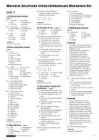
will/'ll be driving won't be living 2 past 4 guy 6 bashing 3 will/'ll have moved 3A Stages of life page 21 4 will/'ll be arriving 1 a childhood d adolescence 2 Tick: c, d, e 5 will/'ll have been travelling b adulthood e middle age 6 won't have been living 3 1 T 3 T 5 T c infancy f old age 7 will/'ll have learned 2 F 4 T 6 T
School Transition as a Measure of Language Competence. Doktoritöö. Tartu Ülikool. Eripedagoogika osakond. Soodla, P., Kikas, E. (2010). Macrostructure in the Narratives of Estonian Children With Typical Development and Language Impairment. Journal of Speech, Language, and Hearing Research, 53, 1321-1333. Stothard, S.E., Snowling, M.J., Bishop, D.V.M., Chipchase, B.B., Kaplan, C.A. (1998). Language impaired preschoolers: a follow-up into adolescence, Journal of Speech, Language, and Hearing Research, 41, 407-418. Tekstiloomeoskuse õpetamine 49 Sunts, K. (2202). vahendatud tekstiloome ehk kuidas lapsi jutustama õpetada. Eripeda- googika. Logopeedia ja emakeel, 43-55. Sülla, K. (2011). Käändevormide kasutamine ja mõistmine primaarse ja sekundaarse alakõne- ga lastel. Magistri töö. Tartu ülikool. Eripedagoogika osakond. Swanson, L. A., Fey, M. E., Mills, C. E., & Hood, L. S
The American, Daisy Miller which won him international fame and which reveals James' fascination with his "international theme", and The portrait of a Lady, one of the greatest books that James ever wrote. The second period of his career extended from 1882 to 1895, in which he dropped the "international theme" and wrote his tales of subtle studies of interpersonal relationships. Between 1895 and 1960, he wrote a few novellas and tales dealing with childhood and adolescence, which was a reveal of his earlier theme of innocence in a corrupted world. The most famous of these are the enigmatic The Turn of the Screw and What Maisie Knew. In the first four years of the 20th century, James wrote three great novels The Ambassadors, The wings of the Dove, and The Golden Bowl which represented the summit of his art. In the last years of his life, he wrote some
cludes that there is something wrong with him. He doesn’t under- stand why it is that he is being criticized or punished, but he assumes that his parents know the truth about him, and that he de- serves it. He begins to feel that he is not valuable or lovable. He is not worth very much. He must therefore be worthless. Almost all personality problems in adolescence and adult- hood are rooted in what psychologists refer to as love withheld. The child needs love like roses need rain. When children feel unloved, they feel unsafe and insecure. They think, “I’m not good enough.” They begin to engage in compensatory behaviors to make up for this inner anxiety. This sense of love deprivation is manifested in misbehavior, personality problems, bursts of anger, ccc_tracy_1_1-17
Tartu: Tartu Ülikooli Gottfried, A. E., Gottfried, A. W. Kirjastus. (1996). A longitudial study of aca- Laidra, K., Pullmann, H., Allik, J. demic intrinsic motivation in intel- (2007). Personality and intelligence as lectually gifted children: Childhood predictors of academic achievement: A through early adolescence. Gifted Child gross-sectional study from elementary Quarterly, 40 (4), 179–183. to secondary school. Personality and In- Guilford, J. P. (1979). Intelligence has dividual Differences, 42, 441–451. three facets. In: Guilford, J. P. (Ed.). Leino, M. (2000). Andekad probleem- Cognitive psychology with a frame of
Thank you so much! To Martha Trachtenberg, copy editor extraordinaire. This book is an important one for me and she treated it that way. Thank you, Martha! To Victoria Colotta, for all her hard work on the interior design and typesetting. She took my plain text and made it gorgeous. Thank you, Victoria! To Tera Kleinfelter, who read the first half of Bared to You and told me she loved it. Thank you, Tera! To all girls who were at Cross Creek at some point in your adolescence: May all your dreams come true. You deserve it. And to Alistair and Jessica, from Seven Years to Sin , who inspired me to write Gideon and Eva's story. I'm so glad the inspiration struck twice! 1 "We should head to a bar and celebrate." I wasn't surprised by my roommate's emphatic pronouncement. Cary Taylor found excuses to celebrate, no matter how small and inconsequential. I'd always considered it part of his charm. "I'm
Clearly, today was going to be nightmarish. Driving to school, I distracted myself from my fear of falling and my unwanted speculations about Edward Cullen by thinking about Mike and Eric, and the obvious difference in how teenage boys responded to me here. I was sure I looked exactly the same as I had in Phoenix. Maybe it was just that the boys back home had watched me pass slowly through all the awkward phases of adolescence and still thought of me that way. Perhaps it was because I was a novelty here, where novelties were few and far between. Possibly my crippling clumsiness was seen as endearing rather than pathetic, casting me as a damsel in distress. Whatever the reason, Mike's puppy dog behavior and Eric's apparent rivalry with him were disconcerting. I wasn't sure if I didn't prefer being ignored. My truck seemed to have no problem with the black ice that covered the roads. I drove very slowly,
hirmudega toime tulema ja neid ületama. Kasutatud kirjandus: 1. Axline, V. M. (1969). Play Therapy. New York: Ballantine Books 2. Bootzin, R. R. & Acocella, J. R. (1988). Abnormal Psychology: Current Perspectives. McGrawHill, Inc. 3. Faw, T. & Belkin, G. S. (1989). Child Psychology. New York: McGraw Hill Publishing Company 4. Papalia, D. E. & Olds, S. W. (1990). A Child's World: Infancy Through Adolescence. McGraw Hill, Inc. 5. Campell, R. (1991). Tingimusteta armastus. Eesti Kristlik Kirjastus. 6. Eberlein, G. (1987). Tervete laste hirmud. Tallinn, "Valgus". 7. Mehilane, L., Liivamägi, J. (1988). Lapse psühhopatoloogia. Tartu Ülikool. 8. Psüühika ja käitumishäirete klassifikatsioon RHK10. Tartu Ülikool, 1995. 251
through childhood without suffering emotional pain. Even if both of your parents were enlightened, you would still find yourself growing up in a largely unconscious world. The remnants of pain left behind by every strong negative emotion that is not fully faced, accepted, and then let go of join together to form an energy filed that lives in the very cells of your body. It consists not just of childhood pain, but also painful emotions that were added to it later in adolescence and during your adult life, much of it created by the voice of the ego. It is the emotional pain that is your unavoidable companion when a false sense of self is the basis of your life. This energy field of old but still very-much-alive emotion that lives in almost every human being is the pain-body. The pain-body, however, is not just individual in nature. It also partakes of the pain suffered by countless humans throughout the history of
184-191 and perceptual and violation of, 34 defenses against, decisional narrow- Regan, Dennis, 22 191- 195 ing, 229 Rejection-then-retreat, experiments on, Procter 8z Gamble, 217 37-39 175-176 Psychological reactance effectiveness of, power of, 176-180 theory, 204 43-44 O'Brien, Lawrence, 41 and adolescence, emotional effects of, O'Connor, Robert, 101 206-207,208 44-45 Odors, emotional asso- and adults, 207-210 mutual satisfaction ciations of, 165 and censorship, after, 45 Official censorship, 210-213 and perceptual con- 212 and child develop- trast, 42-43 ment, 205-206 Religion
cut off at any point.) Probably most ciphers get invented as a bit of recreation, as a part of the spell of interest in cryptology that so many people seem to go through. Sooner or later it occurs to every cryptologist that an acquaintance will say, "It can't be too hard to make a cipher that can't be solved." The friend then offers his theories, which often involve some crude sort of polyalphabeticity or a book code. Frequently he dredges up some system from his adolescence and, taking half an hour to put a ten- word message into that cipher, challenges the cryptologist to break it on the spot. William Jerdan, 19th-century British journalist, told in his autobiography a very typical story of the birth of a cipher, reporting with a refreshing touch of humor on the dreams of glory that often accompany the nativity. One evening, while Jerdan and his young friends were talking, the subject of ciphers came up. Jerdan boasted that "I myself could frame a
 annaabi.ee