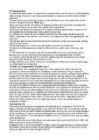
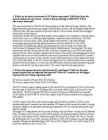
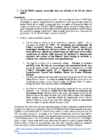
Leidsid 33 sarnast õppematerjali, mis on seotud failiga "Writting a summary". Need materjalid aitavad sul teemat sügavamalt mõista.
europe, section, sections, policy, booklet, work, currency, protection, environmental, important, council, consumer, internal, journaleanoney, come, gives, brief, institutions, these, court, bankarket, live, affect, kauge, following, listed, wider, else, statement, opens, first, chapter, course, lives, areas, flying, cheaper, police, forces, laysAssociation (EFTA). 1960 Creation of European Free Trade Association 1961 UK applies to join the Community. 1962 The Parliamentary Assembly changes its name to the European Parliament. 1965 The Treaty merging the executives of the three Communities (ECSC, EEC, Euratom) is signed in Brussels; enters into force on July 1, 1967. Empty chair crisis 1966 Luxembourg compromise – solution for the empty chair crisis: weaker commission, veto power, common argiculture policy, qualified majority voting 1967 UK re-applies to join the Community. 1968 Agreement of EEC’s common external tarif 1972 Referendum in Norway on joining; majority votes against. Launch of „snake in the tunnel“ 1973 January: Denmark, Ireland and the UK join the European Communities. 1974 April: foreign secretary James Callaghan makes statement to the Council on the new Labour government’s policy on the Community. Calls for major
The European Union (EU) is an economic and political union where are 27 member states drom European continent. The EU operates through a system of independent institutions and decisions are made by the member countries. EUs population is of over 500 million inhabitants which is 7.3% of the world population, there are 23 different languages and for now 17 countries are using EUs common currency Euro. EU was founded after World War II, when Europe was struggeling in social and political devastations. In 1948 a congress in Hague was held to discuss ideas about the development of European political co-operation. There were many important political figures such as Konrad Adenauer and Winston Churchill. On 9th May in 1950 French Minister of Foreign Affairs proposed that France and the Federal Republic of Germany should combine their coal and steel resources and let other European countries join also. From that on, the 9th of May has
The main authorities The European Parliament is the only directly-elected body of the European Union. The 736 Members of the European Parliament are there to represent you, the citizen. They are elected once every five years by voters right across the 27 Member States of the European Union on behalf of its 500 million citizens. Parliament plays an active role in drafting legislation which has an impact on the daily lives of its citizens: For example, on environmental protection, consumer rights, equal opportunities, transport, and the free movement of workers, capital, services and goods. Parliament also has joint power with the Council over the annual budget of the European Union. Jerzy Buzek is the President of the European Parliament The Council is the EU's main decision-making body. Like the European Parliament, the Council was set up by the founding treaties in the 1950s. It represents
At the moment there are 28 member states in the EU. To become a member, a country must meet the Copenhagen criteria. These require a stable democracy that respects human rights and the rule of law; a functioning marketeconomy; and the acceptance of the obligations of membership, including EU law. No member state has ever left the Union. After 1952, there have been 7 enlargements: 1973, 1981, 1986, 1995, 2004 (including Estonia), 2007, 2013. Most important 5 treaties (lepingud) till today are Paris, Rome, Brussels, Maastrict and Lisbon. Leaders: President of the Commission José Manuel Barroso and President of the European Council Herman Van Rompuy. EU law The European Union is based on the rule of law. This means that every action taken by the EU is founded on treaties that have been approved voluntarily and democratically by all EU member countries. A treaty is a binding agreement between EU member countries. It sets out
Britta Kase 143123HAKB Summary The booklet offers a brief, simple explanation how the European Union is relevant to us in our everyday life, how it affects our lives in many areas and how can we benefit from it. The booklet gives also a very readable overview of EU’s history and how its member states have come together. It’s a great starting point to know the roots, history and functioning of the European Union. I found this booklet interesting because it provides an insight into relevance of the EU. I have never thought that making phone calls and flying has become cheaper as a result of EU. EU has abolished national monopolies and has permitted competition. For me the
2007 Romania and Bulgaria No member state has ever left the Union, although Greenland (an autonomous province of Denmark) withdrew in 1985. EU at present Almost in all the territory of the European Union can travel without passport and border checks For personal usage everyone may buy goods without limits and extra taxes from a country where it is cheaper. Common money euro enables buyer to compare the prices in member countries where that currency is in use. Travelling to member countries has become simpler because the discomfort and expenses related to changing the currency is forgotten Over two million young people has been studying or practice in some other EU countries via European Union. Union does not decide the content of schooling programs, but guarantee that acquired education and qualification will be accepted in other EU member states. Because pollution doesn't recognize borderlines the member countries of EU have taken
- Arendab EL ühist välis- ja julgeolekupoliitikat - Sõlmib rahvusvahelisi lepinguid (annab komisjonile volitused pidada EL nimel läbirääkimisi) - Võtab vastu eelarve (koos parlamendiga) - Liikmeteks valitsuse ministrid igast ELi liikmesriigist vastavalt arutamisele kuuluvale poliitikavaldkonnale st esindab riike; permanent representaties (COREPER) - Eesistuja!!! - Asutati 1958 ECSC raames Council of Europe – Euroopa Nõukogu - Rahvusvaheline organisatsioon; 47 riiki Euroopast ja Aasiast - Tegevusvaldkonnad: inimõigused, sotsiaalõigused, keelelised õigused, haridus ja kultuur - Ei ole EL institutsioon - Asutas inimõiguste kohtu pärast EHCR 1950. aastal - Juhtorganiks parlamentaarne assamblee ja ministrite komitee European Council – Euroopa ülemkogu - Liikmeteks riigipead või valitsusjuhid, Euroopa Ülemkogu eesistuja ja Euroopa
are the foundation of everything the EU does. They also lay down the rules and procedures that the EU institutions must follow. The Treaties are agreed by the presidents and/or prime ministers of all the EU countries, and ratified by their parliaments. The EU has a number of other institutions and interinstitutional bodies that play specialised roles: the European Central Bank is responsible for European monetary policy the European External Action Service (EEAS) assists the High Representative of the Union for Foreign Affairs and Security Policy, currently Catherine Ashton. She chairs the Foreign Affairs Council and conducts the common foreign and security policy, also ensuring the consistency and coordination of the EU's external action. the European Economic and Social Committee represents civil society, employers and employees the Committee of the Regions represents regional and local authorities
development). The ENP goes beyond existing relationships to offer political association and deeper economic integration, increased mobility and more people-to- people contacts. The level of ambition of the relationship depends on the extent to which these values are shared. Some examples which steps ENP has made in the field of human rights and which are represented in the report of implementation of the European Neighbourhood Policy about Eastern Partnership: The adherence to the shared values of democracy, rule of law, human rights and fundamental freedoms is the very foundation of the Eastern Partnership. Significant steps have been taken to strengthen bilateral dialogues on these matters. Since July 2009 three rounds of Human Rights Dialogue have taken place with Georgia. The first meeting of the EU Armenia Human Rights Dialogue took place in December 2009 and
The Membership of World Organisations Merilin Tamme Xa Tallinna Järveotsa Gymnasium 2008 The schedule · 04.04.1949 establishment of NATO. · 1951 Supreme Headquarters Allied Power Europe (SHAPE) was created near Paris in France. Later, SHAPE was relocated to Mons in Belgium. · 1952 Greece and Turkey join NATO. · 1955 Western Germany joins NATO. · 1982 Spain joins NATO. · 1991 Rome summit. Estonia is one of the founding members of the NACC. · January 1994 Brussels summit. Estonia joins PFP on 3 February. · March 1995 Estonia submits the first Individual Partnership for Peace (IPP) to NATO
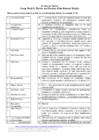
EU Internal Market Group Work I: History and Purpose of the Internal Market Please connect terms (numbers) with correct description (letter), for example 17 M 1 Common Market A ... is characterized by free movement of goods between the participating countries, but autonomous external trade policies in relation to non-participants.
Kati-Liis Karu 03.01.2011 The euro in Estonia Joining the European Union in 2004 made people in Estonia think about the changing of currency. We had almost six years to get used to the fact that the Estonian kroon is eventually going to end. In that time there was a lot of discussion about whether we should stick to the kroon or change our money to the euro. Lots of people were afraid that they lose their money during the period of transition - this belief was quite popular among people who still remember the time when the Russian rubles were changed into kroons and did lose much money. Luckily there haven't been any complaints yet.
and policies as "it lies at the epicenter of a series of conflicts, real and potential" in the region. Turkish accession will bring closer to the EU the instability and tensions of a strategically vital region with strong, conflicting energy-related interests. The unstable neighbourhoods of the Middle East, Caucasus and Central Asia will become the immediate neighbourhood of the EU and its member states. As a major power in the region Turkey could be drawn into conflicts that work against European, Central Asian and Middle Eastern integration and peace (Joseph, J.S., 2006). In conjunction with this point, the addition of new long external borders will present a major challenge to the EU as it will involve critical policies and issues such as migration, asylum and drug-smuggling. TURKEY'S PARTICIPATION IN THE EU INSTIUTIONS The participation of Turkey in the EU institutions will affect dramatically the allocation
judges through decisions of courts and similar tribunals a common law system is based on legal precedents. The roots of the common law legal systems can be traced back to the first common law system created in England during the Middle Ages. Today, most countries that once had ties to England, including the United States, Australia, New Zealand, and Hong Kong, to name a few, operate under common law. Aside from Great Britain, the majority of the countries in Europe operate under a version of civil law modeled after the Roman legal system created centuries ago In a common law system, the law is created by precedents set after judges decide actual cases. When a judge hears a case that has a new issue in it, the judge makes a decision regarding the issue in the case. That decision then becomes a precedent that must be followed by other courts with equal standing within the legal system.
Which side is more interested? The main cornerstones of the EU and Russia relations are the trade and energy relations. One biggest breakthrough has been gas pipeline Nord Stream. Russia is the third biggest trade partner of the EU and is the main importer of gas and crude oil. The economic benefits are the biggest cornerstones of the relations. Cooperation between Russia and the European Union progressively strengthens in foreign policy and security issues, in combating illegal migration, organised crime and terrorism. The main achievement of recent years, which can be hardly overestimated, is the understanding increasingly gaining ground that partnership between Russia and the EU is one of the cornerstones of maintaining stability and prosperity not only in Europe, but world-wide. Joint Russian-EU program called "A Partnership for Modernization" was launched. The main
..................................................................................... 42 1.8.4. Transfer Pricing (TP) ......................................................................................... 43 1.8.5. Personal taxation ............................................................................................... 44 1.9. Financial Reporting ................................................................................................... 45 1.10. Currency regulations .............................................................................................. 46 1.11. Risk of UAH devaluation....................................................................................... 48 2. BELARUS .....................................................................................................................51 2.1. General information ................................................................................................
understandable) that had collapsed: business that has been damaged because of the Member States, clearly too fast restrictions, and safety of citizens (which cannot be ignored and inactivity, by itself, tolerated). From the other side of view concerns regarding dogs that do have their owners, who (on the first place) should be responsible for their pets, clearly haven’t been mentioned in this case at all. I do find important (so as giving a gun allowance) to find out mental(first of all) and financial(for trainings, proper food, medical care etc) aspects of every future owner, to avoid issues when not just people but pets will be suffering from irresponsibility, barbarism and finally indifference of possible owners. Those aspects never (even nowadays) haven’t been fulfilled which is a huge loss and I would name it as a “loophole” of the EU law system.
effect to an import/export restriction contrary to Articles 34-35 TFEU. 1.3. Nature of the measure in question. Discriminatory measure? Selling arrangements? The European Court has consistently held that the Member States may no longer rely on Article 36 of the EEC Treaty to justify rules restrictive of trade, when Community directives provide for the complete harmonization of all measures necessary to ensure the protection of the interests enumerated in that article. According to the case factual circumstances, the exact dog breed selling/buying ban amounts to a discrimination against certain part of goods (dogs). Cassis de Dijon case (Case 120/78 of 20 February 1979) laid down the principle that any product legally manufactured and marketed in a Member State in accordance with its fair and traditional rules, and with the manufacturing processes of that country, must be allowed onto the market of any
The Rise and Demise of the New Public Management Wolfgang Drechsler (University of Tartu and Tallinn University of Technology, Estonia) © Copyright: Wolfgang Drechsler 2005 Within the public sphere, the most important reform movement of the last quarter of a century has been the New Public Management (NPM). It is of particular interest in the post-autistic economics (pae) context because NPM largely rests on the same ideology and epistemology as standard textbook economics (STE) is based (for my take on this, see Drechsler 2000), and it has had, and still has, similar results. Already more on the defensive within public administration (PA) than STE is within
Introduction Estonia, officially the Republic of Estonia (Estonian: Eesti or Eesti Vabariik) is a country in the Baltic region of Northern Europe. It is bordered to the north by Finland across the Gulf of Finland, to the west by Sweden across the Baltic Sea, to the south by Latvia (343 km), and to the east by the Russian Federation (338,6 km). The territory of Estonia covers 45,227 km² and is influenced by a temperate seasonal climate. The Estonians are a Finnic people closely related to the Finns, with the Estonian language sharing many similarities to Finnish. The modern name of Estonia is
5. Financial Institutions and Services Objectives and Outcomes To give overview of main players. 5.1. Introduction It is common to distinguish between monetary financial institutions (MFIs) and other financial intermediaries. The distinction is based on the functions of institutions institutions in the first group (MFIs) play important role in the process of money creation in modern economies. European Central Bank (ECB) describes Monetary financial institutions as including national central banks (and also ECB in the euro area), credit institutions and non-credit institutions which receive deposits from general public (individuals and non-MFI firms) and grant credit and/or invest in securities. Major non-credit MFIs in Europe are money market funds.
and an autonomous grand duchy of Russia after 1809. It won its complete independence in 1917. During World War II, it was able to successfully defend its freedom and resist invasions by the Soviet Union albeit with some loss of territory. In the subsequent half century, the Finns made a remarkable transformation from a farm/forest economy to a diversified modern industrial economy; per capita income is now among the highest in Western Europe. A member of the European Union since 1995, Finland was the only Nordic state to join the euro system at its initiation in January 1999. In the 21st century, the key features of Finland's modern welfare state are a high standard of education, equality promotion, and national social security system currently challenged by an aging population and the fluctuations of an exportdriven economy (Central Intelligence Agency, 2012, ISSN 15538133). 2.1.2 Geography
Government - the group of people who officially control a country System of courts - a set of connected positions which operate together to ensure ... ? To commit a crime to do sth that is forbidden by law Corruption - illegal, immoral or dishonest behaviour, especially by people in positions of power Fine (trahv) - an amount of money that has to be paid as a punishment for not obeying a rule or law Suspension - when a person is temporarily not allowed to work, go to school or take part in an activity, as a punishment Prosecution - to officially accuse someone of committing a crime in a court of law, or to try to prove that a person accused of committing a crime is guilty of that crime Injury bodily harm, damage Public opinion sth that most of the ppl in a society think of sth Simple majority - sth is voted for or against by not more than half of the votes altogether
Are these the books that you wanted me to read? The Indefinite Article is used when referring to a representative of its class, category or profession: I am a teacher. You are a student. A table is a piece of furniture. Mary works as a secretary. In the plural these nouns take no article: Both of my parents are teachers. Tables are pieces of furniture. Mary and Anne work as secretaries. The Definite Article is used when we refer to a particular place, person, animal or thing that is known to the listener/reader. It is used likewise with plural countable nouns. I'll give you the keys, only don't go near the shed or you'll upset the dog. (the keys to my garden, the shed in my garden, my dog) The windows were all broken and all my valuables were gone. (the windows of our house)
Topic Estonia Tallinn 2008 1. Introduction Estonia is a small country about the size of Switzerland, or New Hampshire and Massachussetts combined. Estonia is named after the people called "Ests" who lived in the region in the 1 st century AD. The Republic of Estonia is one of the three countries commonly known as the "Baltic States". The other Baltic States are Latvia and Lithuania. 2. Geographical position Estonia is situated in northeastern Europe. Estonia is bounded on the north by the Gulf of Finland, on the east by Russia, on the south by Latvia and on the west by the Baltic Sea. In the north it borders on Finland. The coastline of the Baltic Sea in Estonia is characterized by numerous gulfs and bays, the biggest of them being the Gulf of Finland, the Gulf of Riga and the Gulf of Pärnu. Bays include the Narva Bay, Matsalu Bay, Kolga Bay, Kunda Bay, Tallinn Bay etc. Estonia has over
I. Portugal ABOUT Photo Location of Portugal (dark green) Portugal (Portuguese: Portugal, IPA: [putua]; officially the Portuguese Republic, Portuguese: República Portuguesa) is a country located in Southwestern Europe, on the Iberian Peninsula. It is the westernmost country of mainland Europe, and is bordered by the Atlantic Ocean to the west and south and by Spain to the north and east. The Atlantic archipelagos of the Azores and Madeira are Portuguese territory as well. The country is named
..................................................17 Appendix 1...................................................................................................................................18 2 Introduction The aim of this research is to get know more about the Netherlands history and its geographical facts. This report is describing one of most the most beautiful countries in the Europe - Netherlands. Netherlands is famous for its windmills and flowers. Netherlands is also known unofficially as Holland. Government is constitutional monarchy of north-western Europe. Netherlands is bordered on the north and west by the North Sea, on the east by Germany and on the south by Belgium. The European portion of the Netherlands has a total area of 41,528 sq km of which 33,939 sq km is land surface. Country's capital and largest city is Amsterdam. Population is about 16 million.
Southern Viljandimaa and in the past years people have started to pay more attention to learning and developing the dialect. The mulgi inhabitants have always been characterised by strong connection to their old-established traditions and customs. At the same time, the way of life of the local people is characterised by strong families, marriage, children and respect and love for fellow men. The local cultural heritage offers as much variety as the nature. Many rare work and mythological motives are retained in folk songs. The flax-growing that spread rapidly in the beginning of the 19th century was the basis of the prosperous Mulgi family farms in Southern Viljandimaa. 19. The second half of the 19th century and the beginning of the 20th century constituted the golden age for many local families. The mulgi inhabitants were actually the first farmers in Estonia who bought the farms for their families after being released from the servitude. The
..................................................................................................10 Introduction I chose finland because there are friendly people and beautiful nature. Finland is bigger than Estonia. There lives over 5 milj. people. Finland capital is Helsingi and there lives about 2 milj. people. Highest top is 1328m. Finland is bordersed with Sweden to the west, Russia to the east and Norway to the north. It is the eight largest city in Europe. Most Finns speak Finnish. The second language is Swedish. Finland is rated the sixth most peaceful country in the World. In Finland there are more than 60000 lakes. Capital: Helsinki Area: 338145km2 Population: 5200000 Language: Finnish, Swedish Currency: Euro (EUR) Goverment: Parliamentary republic
http://www.whitehouse.gov/news/releases/2001/06/20010611-2.html *I also call on Congress to work with my administration to achieve the significant emission reductions made possible by implementing the clean energy technologies proposed in our energy plan. Our working group study has made it clear that we need to know a lot more. *The United States has spent $18 billion on climate research since 1990 -- three times as much as any other country, and more than Japan and all 15 nations of the EU combined. http://www.guardian.co.uk/environment/2004/feb/22/usnews.theobserver
Free of English law foundation of the USA constitution · Puritan Colony in Plymouth, New England America's first permanent puritan settlement Along with Jamestown, the most successful colony Originally 105 colonists First home in an empty Indian village Concluded a peace treaty with neighbouring tribes Aided by natives +++ (how to grow corn etc) went there to find relogious freedom · Puritan ethics and ideology God has a preordained plan for everybody Following the Bible Hard work, spiritual health, living simply, being thrifty, and self-discipline will Leave to salvation Merriness was prohibited The chief duty of a man is to glorify God · Thanksgiving 2 Annual tradition in the U.S Fourth Thursday in Nov. Thanking God The first Thanksgiving was celebrated to thank God for helping the Pilgrims The first feast lasted 3 days Turkey and corn · Religious issues (freedom) People came to search for religious freedom, or not? Many different religions
5. Which British colonies became dominions? What was their status? Is the name dominion used for these countries nowadays? The first dominions were Canada (1867), Australia (1901), and New Zealand (1907) The name "dominion" is not used anymore. 6. Which organisation unites Britain and most of its former colonies nowadays? The Commonwealth unites Britain with its former colonies. Ireland 1. Who were the early inhabitants of Ireland? Seafarers, fisheremen and hunter-gatherers from mainland Europe arrived around 8000 BC 2. When was Christianity established in Ireland? 432 AD Saint Patrick arrived in Ireland and began converting the Irish to Christianity. Who is Ireland's patron saint? Saint Patrick is Ireland's patron saint. When is his feast day? His feast day is on 17 March 3. When did the English conquest of Ireland begin? Henry II, with permission from tha Pope, sought to conquer Ireland. In 1171 he became the first English monarch to set foot on the isle. 4
Gümnaasium Prague referaat Autor: Klass: Juhendaja: 2010 CONTENTS 1. Contents 2. Introduction 3. Compendium about Prague 4. Important about Czech Republic and Prague 5.-7. History 8. Independence 9. Main sights 10. the Czech Republic 11. List of famous people from Prague 12. Geography 13. Weather and climate 14. Population 15. Culture 2 INTRODUCTION The Czech Republic lies at the heart of Central Europe and at its center is the beautiful and historic city of Prague. With a population of some 1
 annaabi.ee