Leidsid 33 sarnast õppematerjali, mis on seotud failiga "Why do we need morality?". Need materjalid aitavad sul teemat sügavamalt mõista.
morality, other, rules, them, good, boys, religion, laws, without, values, purposes, mean, kill, security, there, follow, constant, live, different, lies, evil, hobbes, equal, means, things, fear, feel, nature, interest, enjoy, words, chaos, anyone, peace, accept, golding, desert, island, happy, create, leader, keep, actions, related, important, goal· Hobbes leviathan · Locke second treatise of government · Rousseau - social contract · Montesquieu - The Spirit of the Laws · Kant idea for a universal history from a cosmopolitan point of view · Hegel - philosophy of right Key dates 1603 Shakespear's King Lear , Death of the Queen Elizabeth 1. 1618-48 The Thirty Year's War 1649 Execution of Charels 1 of England, Establishment of Oliver Cromwell's Prodecorate 1651 Hobbes' Leviathan(1588-1679) 1660 The Restoration of Charels 2. as king of England 1688 The Glorious Revolution of Willim and Mary in England
Law-makers breaking the law: torture as a justified interrogation technique? 1 Introduction It was Jeremy Bentham who thought of a famous method to give ethics a rational basis. He was fed up with the penal laws where offenders met corporate punishment and together with Cesario Beccaria he stood up to torture, corporal punishment, and the death penalty. He resisted against irrational moral emotions as the instigation for ethical conduct, saying only reasonable grounds could justify the moral decisions of individuals and legislators. And now his theory of is the one that is known for justifying torture (Verplaetse, 2008).
comparatively few people could become learned. Now, theoretically, our electronic age makes learning easier than ever. Well, technology is indisputably better. We can store and retrieve data much more efficiently. We can communicate in a flash. But still, at the basic level, we must be well grounded -- we must possess common sense, civil manners, frank discussion skills, reasoning abilities, and moral fiber. It is possible to be a technological genius, say a computer nerd, without social skills or civil conscience. I'd rather have as a neighbor an illiterate janitor with an easy-going, friendly disposition. Hence, I value what we might call character more than specialist knowledge from an antisocial person. God knows we want everyone to be a well-mannered genius. But humans are not cut out to be happy like pigs in a pen. We instead have insatiable brains, with mental appetites. So our goal is to balance the brainwork with hearts and smiles. "Facts served with sauce."
Ameerika Kirjandus 30.01.13 Naturalism · France, Emile Zola · Put down his theory in 1879: Le Roman Experimental, attempt to explain the development of human society throuch biological laws · Outlook is deterministic, pessimistic, fatalistic (fate or biology) · Man as an animal-clever than other beasts, still explainable within the framework · Man is not a free agent, is govern by something · Unable to determine his own faith · Hereditary · Naturalists tried to apply in fiction the processes of natural sciences · Writers task is to record facts, systems of behaviour, living conditions, never revealing any natural unbiased (completely natural) · Point of view: amoral-outside the category of morality, neither good or bad
immoral and why we want to follow certain things through, example given why we eat - so to not starve or why we follow the law - so to not go to jail. 4. What was civic democracy in Medieval society? Civic democracy was called feudalism. It comes from the Latin word feodum or feudum. It is a structure in society, which includes higher ups that had land or could afford protection for themselves and fo those, who could not afford it and people working for them in a way that benefits everyone in the society. It is similar to a pyramid scheme. The 3 main classes that held this structure together were lords, vassals and fiefs. There is a common saying from that time period as well - my vassals vassal is not my vassal. It meant that the vassal was only responsible for the person working directly under them and not for the person working under their worker. Then into the play also came division of labour and how to produce more than
When society deems informal relationships and sanctions insufficient to create and maintain a desired social order, there may result more formalized systems of social control imposed by a government, or more broadly, by a State. With the institutional and legal machinery at their disposal, agents of the State can compel individuals to conform to behavioural codes and punish those that do not. Various mechanisms are employed to regulate behaviour, including rules codified into laws, policing people to ensure they comply with those laws, and other policies and practices designed to prevent crime. In addition are remedies and sanctions, and collectively these constitute a criminal justice system. Not all breaches of the law, however, are considered crimes, for example, breaches of contract and other civil law offences. The label of "crime" and the accompanying social stigma are normally reserved for those activities that are
what?" and ,,Who will decide over it?". It is not exactly like that but it is quite close to the trough, to begin with. The first question includes material amenity's, and dividing rights and liberties.(Wolff, 1996) What is power? It is ability to influence others to do something they otherwise would not. Also, others can be affected with threats and force. (Kilp, 2010) Political power includes also right to force the others and to punish them if they disobey. Who should have that kind of power? Actually the political power is quite mysterious by itself. If someone has legitimate political power over me then he or she has a right to force me to do things that they want.(Wolff, 1996) But how can other person have rights to tell me what I have to do? It feels insulting if someone says to me what I have to do especially if he or she thinks that he or she has a right to punish me if I disobey. But of course there is a different view
TOPICS For the PRELIM Year 1 Put down 10-12 relevant terms and retell about: 1. Prescriptive and descriptive law Prescriptive law – prescribe how people ought to behave Descriptive law – describes the way people or natural phenomena behave Break the law – do something illegal Penalty – punishment Government – system by which a state or community is controlled Law – the system of rules System of courts – all judicial institutions Enforce – to make people obey the law Authority – a group of people with official responsibility for a particular area of activity /the moral or legal right or ability to control Prescribe – to tell someone what they must have or do, or to make a rule of something Impose The word law can have several meanings, it can be divided into prescriptive and descriptive law. Descriptive law – describes the way people or natural phenomena behave, e
What is the real meaning of life? Why prefer one thing to another? Can we trust observation? It’s raining outside - how do you know it is? I can see it’s raining. How to convince yourself its raining? A good reason to doubt - 49 other peaople have the same opinion. Falsifiable → possible; not falsified World disappeared in 2012 and got recreated 3 secs later → unfalsifiable - cannot prove it’s true/wrong, cannot provide any tests to prove it. Or - one or another but not both → exclusive - one or another (both) → inclusive (Invited those who are managers or specialists - both) Arguments valid or not - logic is a science where to decide it
letter gets delivered. Why is this so easy, because there are certain international conventions that regulate postal services. E.g. traffic signs are almost the same everywhere, why? Because of certain int conventions that require the states to have more or less unified traffic signs. States apply international regulations to national regulations and they have to be in accordance with each other, the states can always specify these regulations. Therefore, PIL regulates people indirectly. Another unique feature: domestic law sources have a clear pyramid (top to bottom: constitution, laws, individual contracts, they cannot contradict each other) and all sources are written. In PIL there is no such hierarchy, but there are primary sources (all are equally important) and secondary sources and all are not written. Primary sources: written documents
6. Concentrating on something important can make you lose track of your soap opera. 7. Debunking the bunk is everyone's responsibility. 8. Don't ask me to pay for anyone else's mistakes. I make enough of my own. 9. Even those who possess real magic must beware of being misled by "magical thinking." 10. Everyone knows what shit tastes like. 11. Exclusive occupancy of a private room is a basic human right. 12. Fair compensation for genius is wealth. 13. God's not perfect, so it's a pretty good bet that you're not, either. 14. Good institutions help to overcome human moral inertia. 15. I am not one of your little friends. 16. If a dimension is anywhere it's everywhere. 17. If God's not crazy, why are you? 18. If one makes a promise one shouldn't have made it cannot stand against the obligation to do the right thing. 19. If you odn't give a certain amount of attention to filtering distractions, every distraction is a catastrophe. 20
Finally, the Cadle Primary School in Swansea has been used as a case study to investigate the potential change in attitudes in children after the school placed the UNCRC at the heart of its ethos and curriculum across all areas of the school. The primary goal is to critically analyse the commitment of the Cadle towards children`s participation within school and explore the possible spaces created for children that allow them to actively engage with meaningful discussions on the matters that concern them. 3 Introduction Children have `somewhat tenuous relationship to citizenship` as a number of authors interested in children`s citizenship have noted.1 Historically, they have not been considered as subjects of rights, but rather as objects of social concern or citizens-in-making. Children have
The making of a new nation. The Enlightenment in America. The emergence of the notion of the American Dream. The great Enlighteners: Crèvecoeur, Jefferson, Paine, Franklin. The American Enlightenment is the intellectual thriving period in the United States in the midtolate 18th century (17151789), especially as it relates to American Revolution on the one hand and the European Enlightenment on the other. Influenced by the scientific revolution of the 17th century and the humanist period during the Renaissance, the Enlightenment took scientific reasoning and applied it to human nature, society, and religion. American Enlightenment a gradual but powerful awakening that established the ideals of democracy, liberty, and religious tolerance in the people of America.
Homereading 4 Changing world Religions Islam Islam is a monotheistic Abrahamic religion originating with the teachings of Muhammad, a 7th century Arab religious and political figure. The word Islam means "submission", or the total surrender of oneself to God An adherent of Islam is known as a Muslim, meaning "one who submits (to God)". There are between 1.1 billion and 1.8 billion Muslims, making Islam the secondlargest religion in the world, after Christianity. Muslims believe that God revealed the Qur'an to Muhammad, God's final prophet, and
anger(tema viga), young, bad temper o Agamemnon- son of King Atreus - Olympics - Sculptures- more lifelike, human figures come out of the stone - Greek liked physical beauty - Development of medicine - Greeks are pirates, they steal- high technology - Bad tempered people Men's progress towards freedom. (Hegel) Persia is under emperor Xerxes- slaves, fighting for Xerxes and their country, but it does not mean anything to them Greece cities- Patriotism, they are fighting for their freedom and for their country, you can quit, because you volunteered, individuality. o Zeus (son of Chronos Time and Gaia Earth) · Moira- Fate, An underlying order which not even the Gods can alter · Transmigration of Souls- souls leave the bodies · Psyche- the mind · Morality and psychology might be important Miletus
The Flowering of Human Consciousness – 6 Evocation..................................................................................................6 The Purpose of This Book........................................................................8 Our Inherited Dysfunction........................................................................10 The Arising New consciousness..............................................................12 Spirituality and Religion..........................................................................14 The Urgency of Transformation...............................................................16 A New Heaven and a new Earth...............................................................18 Chapter Two Ego: The Current State of Humanity – 19 The Illusory Self......................................................................................20
System of Courts (kohtusüsteem) - organization applying law in the name of states to commit a crime (kuritegu läbi viima) - breaking a law, usually given out by the goverment fine (trahv) - certain sum of money person pays for breaking a law corruption (korruptsioon) - dishonest or unethincal conduct by a person entrusted with a position of authority suspension (kõrvaldamine) - form of punisment that people recieve for violating rules and regulations Civil Action (tsiviilhagi) - lawsuit between two private parties prosecution (süüdistus) - the institution and carrying on of legal proceeding against a person injury (vigastus) - an act or event that causes someone/something no longer to be fully healthy claim (nõudeõigus) - to apply for compensation or to inherit something prison (vangla) - residence for incaretaking criminals majority (enamus) - greater amount of the group
One of the ESP courses. What we are going to do, what is needed: · What we do - 1 test, on words. · 2 Essays, that means that we have to look into academic writing · Homereading we read a case from European Court of Justice thingy. · Oral thing. · 90% you have to attend · Have to prepare for class and take part of it etc What we learn: Terms Expressions / collocations (nt obey/abide by the law) Explaining AWOL absence without a leave Legal English can be divided into 3 levels. We learn the first one, which is needed for the other two! You have to know the vocabulary etc. Second level has to do with legal contracts... The third level both 1 and 2 and explaining... We learn the vocabulary + explaining. Process of law-making draft law/bill (seaduseelnõu) is developed draft is sent to the parliament readings(amendments made to the law (seadusemuudatused)pass/ adopt the lawpass on to the presidentproclame
Copyright © 2003 by Brian Tracy. All rights reserved. Published by John Wiley & Sons, Inc., Hoboken, New Jersey. Published simultaneously in Canada. No part of this publication may be reproduced, stored in a retrieval system, or transmitted in any form or by any means, electronic, mechanical, photocopying, recording, scanning, or otherwise, except as permitted under Section 107 or 108 of the 1976 United States Copyright Act, without either the prior written permission of the Publisher, or authorization through payment of the appropriate per-copy fee to the Copyright Clearance Center, Inc., 222 Rosewood Drive, Danvers, MA 01923, (978) 750-8400, fax (978) 750-4470, or on the web at www.copyright.com. Requests to the Publisher for permission should be addressed to the Permissions Department, John Wiley & Sons, Inc.,
stage of integration called ... 6 Free Trade Area F Emerges due to decentralized approach to integration, when different national systems struggle to produce the best set of rules to attract capital and labor. 7 Full Union G Formed a cornerstone for the creation of the common market. It recommended creation of regional common market, based on a customs union, and achieved by
Summary In this summary I will analyse three articles on the topic of whether it is justified and morally right to use drone warfare in the tribal areas of Pakistan and in Gaza. To begin, we do not know if the drones have done more harm or good in the tribal areas of Pakistan. Most of the information about drone attacks is coming from dubious Pakistan media, which we cannot seriously rely on. Hence, we cannot be sure if the persons killed by drones were innocent civilians or extremists. (Fair, 2013) One the one hand, using drones can be more discriminate, because they hover over the enemy for hours and wait for the perfect moment to attack, when there are no innocent people who might get injured
Sõprus 1. Aristoteles sõpruse olemusest ning tüüpidest Sõprus ja armastus pole selgelt eristatud philia. Sõprus iseloomustab vabal kiindumusel põhinevaid inimsuhteid perekondlikud, võimulolijate suhted kodanikesse, kodanike omavahelised suhted. Sõprus hoiab riike koos. Eeldab vastastikku heasoovlikkust ja ühistegevust. Sõprus jaguneb 2 viisil 3-ks: Vastavalt põhjusele, miks head soovitakse: Kasu äri Nauding sõbrad Täiuslik sõprus loomutäiuselt sarnaste inimeste vahel Vastavalt osapoolte seisundile: Ülimuslikkus vanemad laste suhtes Paremus mehed naiste suhtes Võrdsus vennad Täielikku sõprust naudivad üksikud, sest nad suudavad arendada omavahel loomutäiust täiuslikkuseni. Linnriik põhineb sõprusel, kiindumusel põhinevatel inimestevahelistel suhetel. Timokraatia (varanduslikel klassidel rajanev poliitiline süsteem) põhineb võrdsusel vennalikel suhetel. 2. Cicero isiklikust ja po
butter? Why drown spring lamb in wine or cream and spices, when with just one or two herbs it is absolutely delicious? If you ask foreigners to name some typically English dishes, they will probably say "Fish and chips" then stop. It is disappointing, but true that, there is no tradition in England of eating in restaurants, because the food doesn't lend itself to such preparation. English cooking is found at home. So it is difficult to a good English restaurant with a reasonable prices. In most cities in Britain you'll find Indian, Chinese, French and Italian restaurants. In London you'll also find Indonesian, Mexican, Greek... Cynics will say that this is because English have no "cuisine" themselves, but this is not quite the true. Vocabulary: to criticize - tasteless overcooked - ingredient - to invent - sauces - to disguise - spice herb - delicious - disappointing - to lend cuisine British Youth (2)
The free rider problem is also one justification for the existence of governments which provide public goods. Some ideologies, such as libertarian capitalism, are often rebuked, because in such a system all property in a society would be privately owned, away from any state involvement or regulation. Libertarians counter that potential free riders within their system could face social ostracism, which may deter those who accept services without donating any payment for them. Libertarians stress that the need to healthily co- operate and interact with others in society would lessen the risk and likelihood of free riders. 3 The Example The free rider problem has deep roots in more general bargaining, and issues to do with incentive compatibility. That is to say that, when involved in bargaining problems,
Philosophy: Henri Bergson (French) came to challenge the immediate experience ad intuition are more significant than rationalism and science for understanding reality. Opposition to materialism and positivism. Opposition to abstract, untested theories &ideologies. Friedrich Nietzsche ,,God is dead"-through explaining and putting forward theories had killed Christian god. The essence of Freudian theory: the process in the human psyche Superego-society, conscience, morals, traditions, religion, a moral censor Ego-rational behavior, motivation, self-identification, conscious decisions Id-instincts, natural responses, the pleasure principle, aggressive instincts, the death wish Influence: In art and literature, Freud's theories influenced surrealism . Like psychoanalysis, surrealistic painting and writing explores the inner depths of the unconscious mind. Freudian ideas have provided subject matter for authors and artists. Critics often analyze art and literature in Freudian terms.
cooperate. Amongst the explanations of social order are five outlined by Hechter and Horne: `meaning', `values and norms', `power and authority', `spontaneous interaction' and `networks and groups'. Describe how at least three of these (or other) factors might explain social order, and discuss the extent to which you find the explanations convincing. Introduction For societies to cohere and cooperate, it is necessary for individuals within them to have a predictable and collaborative behaviour. The presence of social order enables individuals to feel more secure publicly, as it enables them to somewhat predict their lives. Social order is also necessary for stability and serves as the basis for collective advancements. There are several theories and explanations for why social order persists and emerges. Hechter and Horne in the reader Theories of Social Order present several widely-acknowledged explanations for social order
do it, enabled us to make significant changes. His work has enabled us to gain significant competitive differentiation and advantage" -LAURENCE HOF, Vice President, Relationship Consulting, Advanta Corporation "This will help executives make better decisions and use their influence wisely ... Robert Cialdini has had a greater impact on my thinking on this topic than any other scientist." -CHARLES T. MUNGER, Vice Chairman, Berkshire Hathaway, Inc. If you're wondering why of Latin America, the Far East, and Central Europe. you should buy this new edition of Influence: o More neuroscience evidence of how the influence process works is inte-
ISLAM Islam is a monotheistic and Abrahamic religion articulated by the Koran, a book considered by its adherents to be the verbatim word of God. By the teachings and normative example of Muhhamad, considered by them to be the last prophet of God. An adherent of Islam is called Muslim. Muslims believe that God is one and incomparable and the purpose of existence is to worship God. Muslims are beliving that Islam is the complete and universal version of a primordial faith that was revealed before many times throughout the world, including notably through Noah, Adam, Abraham, Jesus and Moses, whom they consider prophets. They belive that the
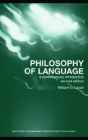
Part IV, new to this edition, examines the four theories of metaphor. Features of Philosophy of Language include: · new chapters on Frege and puzzles, inferentialism, illocutionary theories of meaning, and relevance theory · chapter overviews and summaries · clear supportive examples · study questions · annotated further reading · glossary Praise for the First Edition: "This exceptional text fulfils two essential criteria of a good introduc- tory textbook in the philosophy of language: it covers a broad range of topics well, all of which are the basis of current active research, and does so in an accurate manner accessible to undergraduate students." Mike Harnish, University of Arizona ". . . an excellent textbook for teaching. The examples throughout are delightful and students will love them."
"I am become death, the destroyer of worlds." So said the physicist Robert Oppenheimer, who helped to invent the atomic bomb. The two bombs dropped on Hiroshima and Nagasaki in 1945 killed around 200,000 Japanese people. No other species has ever wielded such power, and no species could. The technology behind the atomic bomb only exists because of a cooperative hive mind: hundreds of scientists and engineers working together. The same unique intelligence and cooperation also underlies more positive advances, such as modern medicine. But is that all that defines us? In recent years, many traits once believed to be uniquely human, from morality to culture, have been found in the animal
During this period a new class called bourgeoeisie came into being. This is the period when monarchies based on nationality were estabilished. The Renaessance started in Italy In the 14th century. Then it spread all over Europe, reached England in 16th century. The struggle for power culminated in a war called The War of Roses. It was a civil war between two dynasties, families. They had different emblems on one side the Yorks (white rose) other Lancasters (red). They couldn't decide who gets the throne. War ended 1485. A new dynasty came to throne, Tudor, the first king in this dynasty was Henry Vll. When he came to throne a period of stability followed because he built a nation based state. He was good at diplomacy.He could avoid quarrels and wars with neigbouring countries. France, Spain - greatest enemies.So he could save much money and thus laid a good economic basis for his state. Besides that he built a
Well there can be no static definition for the channels of mass communication as they are increasing all the time. But any form of communication which is seen and understood by a large mass of people can be taken to mean mass communication or mass media channels. Why is mass media so attractive to people? Mass media holds a kind of mystique in the minds of the people. It is because the communication is designed in such a way that it appeals to a larger demographic segment. The test of a good mass communication marketing drive is to see if it gets the people talking. If it does, then not only does it mean that the advertising drive has been successful, but the organization in charge of the mass communication is also getting publicity by the word-of-mouth channel! Mass Media Influence It is hard to argue with the fact that mass media has a compelling effect on the human mind. Especially on minds which are more impressionable. For example, the mass
„unpotic” figures like compass or mosquito to reach surprise effects, paradox and oxymoron. About the profound areas of experience: love (romantic and sexual), man’s relationship with God. Brief but intense meditations, striking use of wit, irony and wordplay. John Donne: passionate feeling and logical argument are mixed, play of intellect, conceits (extended metaphors), wit, huge range of ideas with startling connections between them, analyses love with different moods (cynicism and profound dedication) The First Anniversary. An Anatomy of the World; The Flea; Love’s Alchemy; Elegy XIX To His Mistress Going To Bed; Holy Sonnets (9, X, XIV); Hymn To God My God, in My Sickness. Francis Quarles: emblem poems Canticle George Herbert: courtly urbanity of language, certain neatness and point, his wit „homely” (simple), sometimes queer, conceits in title. The Dawning; The Altar; The Collar; The Pilgrimage
 annaabi.ee