Leidsid 33 sarnast õppematerjali, mis on seotud failiga "Vene keel - mitmuse moodustamine". Need materjalid aitavad sul teemat sügavamalt mõista.
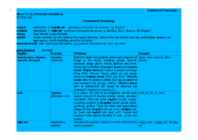
plural, grammar, forms, task, adjective, noun, words, nouns, adjectives, homework, points, insert, boring, answer, crime1 Grammatical Terminology PRACTICAL ENGLISH GRAMMAR FLGR.01.042 Grammatical Terminology analytic analüütiline (= uninflected - grammar is focused in the sentence , e.g. English) synthetic sünteetiline (= inflected - grammar is focused in the word, e.g. Estonian, Latin, Russian, Old English) ending lõpp (käände- ja pöördelõpud) marker tunnus (mitmuse, oleviku, lihtmineviku, tingiva kõneviisi, käskiva kõneviisi, kaudse kõneviisi, umbisikulise tegumoe, ma- tegevusnime, oleviku kesksõna, mineviku kesksõna) derivational affix liide, tuletusliide, tuletusafiks (e.g. postwar, anti-American, wiser, greenish) parts of speech sõnaliigid
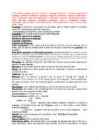
1. Be ready to explain the terms (lecture 1): language, linguistics, synchronic approach to language, diachronic approach to language, linguistic competence, linguistic performance, what is grammar?, prescriptive grammar vs. descriptive grammar; phonology, phonetics, phone, allophone, phoneme; morphology, morphemes (types of morphemes), morphs, allomorphs, types of affixes, derivational affixes, inflectional affixes; open vs closed class words; syntax. Language: a systematic, conventional use of sounds, signs or written symbols in a human society for communication and self-expression. - human language at all levels is rule- or principle-governed. Linguistics: the scientific study of human natural language
Broadly, there are three aspects to the study which are Pragmatics (studies the use of language → interested in the gap between the sentence’s meaning and the speaker’s meaning). Semantics (concerned with the meaning of the language aspects and the way they change, also how objects and language and thinking and language are related). Syntax (concerned with the rules [grammar] and how sentences and words are formed). Synchronic approach to language → A focus in language study on how language exists in one moment in time, not at how this language came to be the way it is now. Example Estonian in the 21st century. Diachronic approach to language → A focus in language study on how a language has changed over some period of time. In a way it is comparing language to what it was and how it is now. For example comparing 18th century and 19th century Estonian.
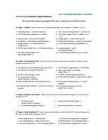
BACK TO GRAMMAR WORKSHEETS WORKSHEET Antworten zum Arbeitsblatt: Adjektivendungen 1 Be sure to refer to your fourquestion flow chart or memorize it and follow its rules! A. Frage 1: Artikel? These nouns have no articles before them, so the answer to question 1 is `no'. 1. Deutsches Brot (n) schmeckt immer gut. 8. Mein Vater darf fettes Fleisch (n) nicht essen. 2. Wir können hier frischen Käse (m) kaufen. 9
Book 1 BASIC ENGLISH BASIC ENGLISH GRAMMAR GRAMMAR BASIC ENGLISH GRAMMAR Book 1 Book 1 Younger students at beginning to intermediate levels will greatly benefit from this step-by-step approach to English grammar basics. This is the ideal supplement to your language arts program whether your students are native English speakers or beginning English language learners. Skill-specific lessons make it easy to locate and prescribe
•He took his boots off. •They called the doctor in. apposition a grammatical construction in which two usually adjacent nouns having the same referent stand in the same syntactical relation to the rest of a sentence (as the poet and Burns in “a biography of the poet Burns”) back-reference In grammatical analysis, the term reference is often used to state a relationship of identity which exists between grammatical units, e.g. a pronoun 'refers' to a noun or noun phrase. When the reference is to an earlier part of the discourse, it may be called a 'back-reference' (or anaphora); collective noun Collective noun is the name we give to a group of nouns to refer to them as one entity. A crew of sailors. A flock of birds. A range of mountains. conjunction any member of a small class of words distinguished in manylanguages by their function as connecto rs between words, phrases,clauses, or sentences, as and, because, but, however. content words
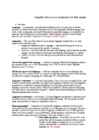
1. Nouns: how is the plural formed? The plural form of most nouns is created simply by adding the letter s: · more than one snake / snakes · more than one ski / skis · more than one Barrymore / Barrymores Words that end in -ch, x, s or s-like sounds, however, will require an -es for the plural: · more than one witch / witches · more than one box / boxes · more than one gas / gases · more than one bus / buses · more than one kiss / kisses · more than one Jones / Joneses BUT! Photos, kilos, pianos, zeros, studios, radios. When the word ends in the letter -y: · country / countries · family / families · story / stories Nouns ending in -f: (should be learned by heart)
Example: She is a student at our school. republic or unionExamples: the UK, the USA with a singular noun to say something about all things of that kind. • with countries which have plural nouns as their names Example: A cat likes drinking milk. Example: the Netherlands, the Bahamas • before newspapers, organisations, hotels, pubs and rest aurants, well known buildings or works of
CHARACTERISTIC FEATURES OF OLD ENGLISH - 15 monophtongs, (7 long, 7 short, 1 central), 4 diphtongs, 17 consonants. Free variaton of R, and it was pronounced everywhere. Very much Germanic in character. Quite some special consonants that no longer exist. About morphology: synthetic with numerous aglutinating tendencies. System of tenses Germanic, but with a reduction of tenses. Paradigmatic leveling; Stress shift; Word order; Loan words (Old Norse, Old French). Dual pronouns. Determiners - no separate definite article. Strong and weak verbs. Word order relatively free with tendencies towards SVO. SVO, SOV, VSO most common. Adposition and podposition were both possible (eesliide ja tagaliide). About syntax: clauses were joined much simpler than nowadays, using and, then etc. Because of case syncretion the word order in a sentence became much more important to be able to tell the difference between words.
STYLISTICS 1. Style, stylistics, a survey of stylistic studies The term ,,style" is polysemantic. Latin ,,stilus"--a writing instrument used by the ancients for writing on waxed tablets. Soon, the meaning was extended to denote the manner of expressing one's ideas in written or oral form. Jonathan Swift said: ,, Style is proper words in proper places" Present day--half a dozen meanings: · the characteristic manner in which a writer expresses his ideas (Style of Byron) · the manner of expressing ideas characteristic of a literary movement or period (symbolism, romanticism) · the use of lg. typical of a literary genre (comedy, drama, novel) · the selective use of lg that depends on spheres of human activity. These
(informal and singular) Notice that Spanish has informal and formal ways of speaking. This is because there is more than one meaning to "you" in Spanish (as well as in many other languages.) The informal you is used when talking to close friends, relatives, animals or children. The formal you is used when talking to someone you just met, do not know well, or someone for whom you would like to show respect (a professor, for example.) Encantado, cansado, enfermo, and aburrido are the masculine forms of the words. If the words refer to a woman or are spoken by a woman, then the final o changes to a: encantada, cansada, enferma, and aburrida In Spain, as well as Argentina, Bolivia, Chile, Paraguay, Peru, Uruguay and Venezuela, the Spanish language is called castellano instead of español. 2. Pronunciation Spanish Letter English Sound a ah e ay i ee
I don't like to be shouted at. (NOT I don't like to be shouted.) This needs to be thought about some more. (NOT This needs to be thought some more.) 6. Don't use a present tense after It's time. It's time you went home. (NOT It's time you go home.) It's time we invited Bill and Sonia. (NOT It's time we invite Bill and Sonia.) 7. Use was/were born to give dates of birth. I was born in 1975. (NOT I am born in 1975.) Shakespeare was born in 1564. 8. Police is a plural noun. The police are looking for him. (NOT The police is looking for him.) I called the police, but they were too busy to come. 9. Don't use the to talk about things in general. Books are expensive. (NOT The books are expensive.) I love music. (NOT I love the music.) 10. Use had better, not have better. I think you'd better see the doctor. (NOT I think you have better see the doctor.) We'd better ask John to help us. 11
This is the optimum for educational purposes. The standard varieties of English are: BrEng (British), EngEng (English), NAmEng (North-America), USEng (United States), CanEng (Canada), AusEng (Australia), NZEng (New Zealand). Standard English (British English) is the most widely accepted and understood among native speakers, learned by foreigners. It is used in broadcasting, TV, news etc. It doesn't concern pronounciation (accent), but grammar and vocabulary. It includes formal and informal styles. British Standard English grammar and vocabulary, together with the RP accent should be called English English. RP (Received Pronounciation) is an accent that originates from South-East of England. A social accent, associated only with England. 12-15% of native speakers in England use Standard English (BrEng). 3-5% of them use RP (EngEng). Non-standard varieties of English are often called dialects. They are any other dialect of
Style The term style is a polysemantic one. The latin word ,,stilus" meant a writing instrument used by the ancients for writing on waxed tablets. Already, in classical latin the meaning of style was extended to denote the manner of expressing one's ideas in written or oral form. One of the abts/the best was given by Jonathan Swift: ,,Proper words in proper places." In present- day english, the world style is used in about half a dozen basic meanings. 1. the characteristic manner in which a writer expresses his ideas. Some speak about the style of Hemingway, Dickens etc. 2. the manner of expressing ideas, characteristic of a literary movement or period. Style of symbolism, romanticism 3. the use of language to pick a literary genre-comedy, novel, drama, O.D (poetic form) etc. 4
you. Standard introduction Nice to meet you. I'd like you to meet John Smith. Hello. I want you to meet John Smith. I'm so pleased to meet you. This is Jane Smith. I'm Jane Smith. My name's John Smith. Informal introduction Hi. John. Jane. Hello. Titles: Mr Mrs Miss Ms Ms is a modern form of address for women. It replaces the traditional forms of Mrs and Miss. Greetings Good morning/afternoon/evening! 'How are you?' Very often people expect you to say something positive. Here's a breakdown of how you can express how you really are without complaining too much. · Fine, thanks. / On top of the world, thanks. · OK, thanks · Not so bad, thanks. / Can't complain, thanks. · So so, thanks. / So and so, thanks. · Not so good, actually
............... 2 The Definite Article ............................................................... 5 Names that take the Definite Article...................................... 6 No article.............................................................................. 7 Countable and uncountable nouns ....................................... 9 General Rules There are two articles in the English language – the Indefinite Article and the Definite Article. The Indefinite Article has two forms – a and an (a precedes words beginning with a consonant sound and an precedes words beginning with a vowel sound). It comes from the Old English word ãn, which meant one. The Definite Article is the. It comes from the Old English word ţis, which meant this. Thus, in most general terms, a and an cannot be used with countable nouns in the plural and with uncountable nouns. Countable nouns are names of the things you can count (one elephant, two elephants, three elephants, etc).
simple simpler the simplest OR simple more simple most simple • with other two-syllable adjectives comparatives and superlatives are formed with more/most: A) adjectives ending in –ful or -less careful more careful most careful hopeless more hopeless most hopeless B) words ending in –ing or –ed boring more boring most boring surprised more surprised most surprised C) many others, e.g. afraid, certain, correct, eager, exact, famous, foolish, frequent, modern, nervous, normal, recent exact more exact most exact 3) three-syllable and longer Adjectives
1.Lexicology as a science L. studies the voc of lg as a system. Word-learning, lexis-logos. The task of L is to establish the general features of modern Engl voc. Theoretical L. gives a complete picture of voc. Practical value lies in using and appretiating the lg more conciously. There is diachronic (historical) L that studies origin and development; syncronic studies voc at a given historical period. There are general L (studies words disregarding particular features of any particular lg); special L (studies specific features of a
1. STYLE The term "style" is polysemantic (has many meanings): a Latin word "stilus" originally meant a writing instrument used by ancient people. Already in classical Latin the meaning was extended to denote the manner of expressing one's ideas in written or oral form. Jonathan Swift defined style as "proper words in proper places". In present day English the word "style" is used in about a dozen of principle meanings: 1. the characteristic manner in which a writer expresses his/her ideas (e.g. style of Byron) 2. the manner of expressing ideas, characteristic of a literary movement or period 3. the use of language typical of a literary genre (e.g. the style of a comedy, drama, novel). 4. the selective use of language that depends on spheres / areas of human activity (e.g
agglutinating language to a fusional language, the canonical word order is SVO. (subject-verb-object) · In Estonian, nouns and pronouns do not have grammatical gender, but nouns and adjectives decline in fourteen cases: nominative, genitive, partitive, illative, inessive, elative, allative, adessive, ablative, translative, terminative, essive, abessive, and comitative, with the case and number of the adjective(s) always agreeing with that of the noun (except in the terminative, essive, abessive and comitative) Vocabulary · Although the Estonian and Germanic languages are of very different origins, one can identify many similar words in Estonian and English · The percentage of Low Saxon and High German loanwords can be estimated at 2225 percent, with Low Saxon making up about 15 percent. Dialects · The Estonian dialects[15][16] are divided into two groups the northern and
passage or phrase from literary characteristic feature, container, combination of 2 w-s tower of Pisa lean"). source marked by inverted instrument, office, effect), meaning of which clash forms ("not so as"), commas; author's name supplied. trite-original (genuine "asked ("shout silently"); may comparison ("no moustache the way"); expressed become colloquial phrase 3. SEMANTICA more than"), words: 4. EPIGRAM
Did you have a party in your yester flat day? When were you here? Articles Rules: 1. Rule: When you have a single, countable English noun, you must always have an article before it. We cannot say "please pass me pen", we must say "please pass me the pen" or "please pass me a pen" or "please pass me your pen". Nouns in English can also be uncountable. Uncountable nouns can be concepts, such as 'life', 'happiness' and so on, or materials and substances, such as 'coffee', or 'wood'. 2. Rule:Uncountable nouns don't use 'a' or 'an'. This is because you can't count them. For example, advice is an
STYLE AND STYLISTICS FGI 1081 Stylistics (I. Ladusseva) 2 The term "style" is polysemantic (has many meanings): a Latin word "stilus" originally meant a writing instrument used by ancient people. Already in classical Latin the meaning was extended to denote the manner of expressing one's ideas in written or oral form. The precise definition was given by Jonathan Swift, who defined style as "proper words in proper places". In present day English the word "style" is used in about a dozen of principle meanings: 1. the characteristic manner in which a writer expresses his/her ideas (e.g. style of Byron). 2. the manner of expressing ideas, characteristic of a literary movement or period (e.g. symbolism, romanticism, renaissance). 3. the use of language typical of a literary genre (e.g. the style of a comedy, drama, novel). 4
· Use an article with bodies of water, oceans and seas - My country borders on the Pacific Ocean · DO NOT use an article when you are speaking about things in general I like Russian tea. She likes reading books. · DO NOT use an article when you are speaking about meals, places, and transport He has breakfast at home. I go to university. He comes to work by taxi. 1. We use the indefinite article, a/an, with count nouns when the hearer/reader does not know exactly which one we are referring to: Police are searching for a 14 year-old girl. 2. We also use it to show the person or thing is one of a group: She is a pupil at London Road School. Police have been searching for a 14 year-old girl who has been missing since Friday. Jenny Brown, a pupil at London Road School, is described as 1.6 metres tall with short blonde hair. She was last seen wearing a blue jacket, a blue and white blouse and dark
LEXICOLOGY 1. Size of English vocabulary 1) Old English – 50,000 to 60,000 words Vocabulary of Shakespeare OE – homogeneous; 1/3 of the vocabulary has survived • 884,647 words of running text About 450 Latin loans (Amosova) • 29,000 different words (incl. work, working, Viking invasions added 2,000 worked, which are counted here as separate 2) Middle English – 100,000 – 125,000 words) English becomes heterogeneous (Norman French, • 21,000 words English, Latin), hybrid of Germanic and Romance languages Norman French influence – about 10,000 words, 75 % are still in use (Baugh) Latin influence continues
We don't mention when it was started or finished. (at 11 o'clock I was driving home) · To describe the atmosphere, setting etc and to give background information to a story (The birds were singing, sun was shining..) TIME EXPRESSIONS USED WITH PAST CONTINUOUS: while, when, as, all morning/day etc Past Perfect · Action which happened before another past action or bf a started time in the past (Lucy had finished her homework by 6) · Action which finished in the past and whose result was visible at a later point in past (He had sprained his ankle few days ago and he was still limping) · General situation in past (Everything had seemed normal at first) TIME EXPRESSIONS USED WITH PAST PERFECT: before, after, already, just, fot, since, until, when, by the time, never etc. Past Perfect Continuous
............................................................................. 4 Both, either and neither ....................................................... 4 Few/a few – a little/little....................................................... 5 A lot of/lots of – much/many................................................ 5 Some, any + -body / -one, + -thing, + -where ........................ 6 Some and any Some and any mean a certain number or amount. They are used with or instead of plural or uncountable nouns. Some is a possible plural form of a/an and one: Have a biscuit/some biscuits. I bought a cake/some cakes. Some, any and none can be used with of + the/this/these/those (+ ...) Some of the staff can speak Portuguese. Did any of your photos come out well? You can take any of these. Some is used: • with affirmative verbs: They bought some honey. • in questions where the answer ‘yes’ is expected:
English lexicology 1. Size of English vocabulary Vocabulary is a sum total of words used in a language by speakers or for dictionary-making. Active and passive vocabulary. The Old English vocabulary was homogenous. There were about 50 000 – 60 000 words, 1/3 of which have survived. o About 450 loans from Latin o About 2000 from the Viking invasions. The Middle-English vocabulary became a heterogeneous hybrid of Germanic and Romanic languages. 100 000 to 125 000 words. o About 10 000 loans from Norman French, 75% are still in use o Continuing Latin influence Early Modern English. 200 000 – 250 000 words
· complex sentence structure - frequent · personal, short, zappy style use of Passive Voice - single word · use of slang or colloquial English use of verbs - non-colloquial English -- formal idioms/phrasal verbs language · pronouns are often omitted · each paragraph develops one specific · chatty, wide use of descriptive adjectives topic · use of short forms · only facts, infrequent use of descriptive Best wishes / Love / Yours / Regards. adjectives · no use of short forms Name: Steve Name: Yours faithfully/Yours sincerely, Steven Hill TASK 2 Put an - for formal and an I for informal language. Give reasons . 1 In reply to your query about ... 2 I trust that this is the information you require ....
achievements in exams. There is nothing like potentials, creativeness, possibilities or even 2nd chances. Families put high expectations on academic achievements and they always compare their kids with other's kids. A minority in each community will be really dedicated to help their kids explore their horizons. It is true that we should re-think the fundamental principles in which we educate our children. Our task is to educate the children so that they can face this future. II 10 effective classroom management techniques. 1. Set and agree the house rules and class regulations with the class. 2. Choose class activities that encourage any good relationships. 3. Be dedicated and care for your students. 4. Accept and even celebrate individual differences. 5. Realise that people learn in different ways 6. Create more student-centred activities. 7
1 SYNTACTIC STYLISTIC DEVICES SYNTACTIC STYLISTIC DEVICES are based on a peculiar place of the word or phrase in the utterance (text, sentence, etc).This special place creates emphasis irrespective of the lexical meaning of the words used. Categories: syntactic stylistic devises based on: SDD: based on ABSENCE OF LOGICALLY REQUIRED ELEMENTS OF SPEECH ELLIPSIS ELLIPSIS or ELLIPTICAL SENTENCES means leaving out one or both principle members of the sentence that is the subject or predicate. NT: Where is the man I'm going to marry? - Out in the garden. (no subject) What is he doing out there? - Annoying father. Here, in the dialogue, ellipsis creates the colloquial tone of the utterance
Extended Rules for Using Commas Comma Use 1. Use commas to separate independent clauses when they are joined by any of these seven coordinating conjunctions: and, but, for, or, nor, so, yet. The game was over, but the crowd refused to leave. The student explained her question, yet the instructor still didn't seem to understand. Yesterday was her brother's birthday, so she took him out to dinner. 2. Use commas after introductory a) clauses, b) phrases, or c) words that come before the main clause. a. Common starter words for introductory clauses that should be followed by a comma include after, although, as, because, if, since, when, while. While I was eating, the cat scratched at the door. Because her alarm clock was broken, she was late for class. If you are ill, you ought to see a doctor. When the snow stops falling, we'll shovel the driveway. However, don't put a comma after the main clause when a dependent (subordinate) clause
........................... 3 When to use the Past Simple ................................................ 3 Past Continuous .................................................................. 4 When to use the Past Continuous......................................... 4 Used to & would................................................................... 5 Unfulfilled past events.......................................................... 5 Past Simple Regular Past Simple forms end in -ed. I worked he danced we apologized Some verbs have an irregular past form. I left he wrote The Past Simple is the same in all persons except in the past tense of be. I/he/she/it was (in the singular) you/we/they were (in the plural) To form a negative or a question in the Past Simple, use did and the verb in the original form: Negative I/you/he/she/it/we/they did not stop/didn’t stop.
 annaabi.ee