Leidsid 33 sarnast õppematerjali, mis on seotud failiga "The Kings Speech - tegelaste lühitutvustus". Need materjalid aitavad sul teemat sügavamalt mõista.
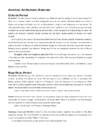
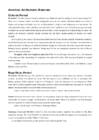
elizabeth, speech, albert, frederick, june, january, good, margaret, charming, queen, mother, april, confident, lionel, king, ernest, mary, arthur, 1895, easily, disorder, strong, reserved, christian, andrew, patrick, wallis, simpson, father, arrogant, easy, going, angela, february, language, therapist, sonsnames and faces, the line of succession to the throne, and even the family's rarely- used last name. But let's start from the beginning. The House of Windsor is the reigning royal house of the United Kingdom and the other Commonwealth realms. The dynasty is of German paternal descent and was originally a branch of the House of Saxe-Coburg and Gotha, itself derived from the House of Wettin, which succeeded the House of Hanover to the British monarchy following the death of Queen Victoria, wife of Albert, Prince Consort. The name was changed from Saxe-Coburg and Gotha to the English Windsor (from "Windsor Castle"[1]) in 1917 because of anti-German sentiment in the British Empire during World War I.[2] There have been four British monarchs of the house of Windsor to date: three kings and the present queen, Elizabeth II. During the reign of the Windsors, major changes took place in British society. The British Empire participated
Mary I Mary I, called Mary Tudor (1516-1558), Queen of England (1553-1558). Mary was born in London on February 18, 1516, the daughter of Henry VIII by his first wife, Catherine of Aragón. Because Henry divorced Catherine, Mary was declared illegitimate. Nonetheless, Henry included her in his will, and on the death of her half-brother, Edward VI, on
The uk Monarchy and parliamentary Click to edit Master text styles system Goverment based on the Second level Westminster system Third level Fourth level A legacy of the British Empire Fifth level Prime minister is the UK's head of government The Queen respects the prime minster's choices Click to edit Master text styles Second level Third level Fourth level Fifth level Her majesty the queen Elizabeth Alexandra Mary Click to edit Master text styles Head of State of the UK and 15 other commonwealth kingdoms
Megalith monument, built by western mediterraneans during 3000-1600 BC Circular structure, large standing stones, aligned with rising sun at teh solstice Attlers and bones were sued to dig pits that hold the stones The Celts in Britain and their legacy 700-200 BC celts invade Britain Gaels or Goehls(Ireland and Scotland),Cymri(Wales) and Brythons(gave name to Brittany) Fierce fighters,superb horsemen.Most of them farmers, lived in thatched houses Good at art, craftmanship, used iron Divided into tribes, ruled by kings, only in face of danger would they choose a single leader Legacy- hill-forts, farms, churches, field system, woodland, pasture, weapons, iron objects, langugae, culture Caesar in Britain The great Roman Emperor Firts came 55 BC to gather information, celts were doing agriculturally well,so romans wanted to get some food too In 54BC Caesar defeated Cassivelaunus
It was watched by a global television audience of 750 million. At the altar Diana accidentally reversed the order of Charles's names, saying Philip Charles Arthur George instead. The ceremony began at 11:20 A.M. and Diana wore a dress valued at £9000 with 25 foot train. On 5 November 1981, Diana's first pregnancy was officially announced, and she frankly discussed her pregnancy with members of the press corps. In the private Lindo wing of St. Mary's Hospital, Paddington on 21 June 1982, Diana gave birth to her first son and heir, William. A second son, Harry, was born a little over two years after William on 15 September 1984. According to Diana, she and Prince Charles were closest during her pregnancy with "Harry". She was aware their second child was a boy, but did not share the knowledge with anyone else, including Prince Charles, who was hoping for a girl. Prince Charles
seasons. It appears in number of novels. These days it is not only the interest of tourists but is also a gathering point of certain minority groups. It is now fenced off to protect it from damage. 3. The Roman conquest Julius Caesar's first raid was in 55 BC but the romans left. Ad 43- the Romans came to stay. The army established Roman rule in the south and SW of the country. The Romans started to introduce their laws to a new province of the Roman Empire and started to build good roads. Officials were appointed (governors, procurators to collect taxes, look after the estates and mines and se that the gold, silver, iron and lead were exported back to Rome). Introduced schools,a new language Latin, large farms (villas), baths. In AD 410 they had to leave . roman occupation lasted nearly 400 years. They left behind very little. Roman province of Britannia covered most of present-day England and Wales. 4. Latin influence on English
Marilyn Monroe Marilyn Monroe (born Norma Jeane Mortenson;[1] June 1, 1926 August 5, 1962), was a Golden Globe award winning[2] American actress, singer, model, Hollywood icon,[3] cultural icon, fashion icon,[4] pop icon and sex symbol. She is known for her comedic acting roles and screen presence. Monroe became one of the most popular movie stars of the 1950s and early 1960s. During the later stages of her career, she worked towards serious roles and her fame surpassed that of many entertainers of her time.[5]
His journalism, in the form of sketches which appeared in periodicals from 1833, formed his first collection of pieces Sketches by Boz which were published in 1836 and led to the serialization of his first novel, The Pickwick Papers, in March 1836. On 2 April 1836, he married Catherine Thompson Hogarth (1816 1879), the daughter of George Hogarth, editor of the Evening Chronice. After a brief honeymoon in Chalk, Kent, they set up home in Bloomsbury, where they had ten children. On 9 June 1865, while returning from France with Ternan, Dickens was involved in the Staplehurst rail crash in which the first seven carriages of the train plunged off a cast iron bridge that was being repaired.Because of that he died.( 9 June1870) Oliver Twist (1837-39), Nicholas Nickleby (1838-39), The Old Curiosity Shop and, Barnaby Rudge: A Tale of the Riots of 'Eighty as part of the Master Humphrey's Clock series (1840- 41), A Christmas Carol written in 1843. Hard Times- For These Times
D. As the century progressed Christianity spread very quickly. Despite official recognition there was no mass conversion to Christianity; worship of the pagan gods and goddesses was not even formally banned until late in the fourth century. *Boadicea/Boudica At his death bed, Boudica's husband left half his possession to the emperor, expecting that this would protect his family. However, his property was confiscated. When Boudica, the queen of the Celts, protested, she was flogged and her daughters were raped. She swept trough Southern Britain with her tribe and tortured every Roman she met. A women having power seemed unnatural to the Romans. She fought back for 2 years, but finally took poison and died. *Hadrian's Wall It was built by the emperor Hadrian and it marked the Northen border of the Roman empire. Hadrian's Wall was built, beginning in 122, to keep Roman Britain safe from hostile attacks from the Picts
Kuigi vaid üks laps kahekümnest on sündinud planeeritud raseduse tulemusel, on Suurbritannia näitaja maailma 100 riigi arvestuses väga heal, alles 84. kohal. · Tööhõive Töötuse tase Suurbritannias on suhteliselt madal- 4,8 %. Ühendatud Kuningriik on ligi 75% tööhõive näitajaga üks edukamaid riike Euroopas. Riigivorm Suurbritannia riigivorm on konstitutsiooniline monarhia. Riigipea: Elizabeth II Peaminister: Tony Blair. Britannial ei ole konstitutsiooni, riigi põhiseaduseks loetakse seaduste (Parlamendi Aktide), pretsedentide (kohtulahendite) ja konventsioonide kogu. Riigipeaks on monarh, praegu kuninganna Elizabeth II, kes põlvneb otseselt kuningas Egbert'ist, kes valitses Inglismaad 9. sajandi algul. Kuninganna ametlik tiitel on Elizabeth the Second, by the Grace of God of the United Kingdom of
All of the island is territory of the sovereign state of the United Kingdom of Great Britain and Northern Ireland, and most of the United Kingdom's territory is in Great Britain. Most of England, Scotland, and Wales are on the island of Great Britain, as are their respective capital cities: London, Edinburgh, and Cardiff. The Kingdom of Great Britain resulted from the political union of the kingdoms of England and Scotland with the Acts of Union 1707 on 1 May 1707 under Queen Anne. In 1801, under a new Act of Union, this kingdom merged with the Kingdom of Ireland to create the United Kingdom of Great Britain and Ireland. After the Irish War of Independence most of Ireland seceded from the Union, which then became the United Kingdom of Great Britain and Northern Ireland. The relatively limited variety of fauna and flora on the island is due to its size and the fact that wildlife has had little time to develop since the last glacial period. The high level of
Francis Drake, who was the first Englishman to sail around the world. The Royal Navy also enabled England to realize her imperialistic ambitions and defy the Pope and the Catholic powers of Europe. Henry used Parliament to establish himself as the head of the Protestant Church with the Act of Supremacy (1534). His Reformation led to the creation of the religiously distinct Anglican Church. The dissolution of the monasteries provided Henry with much needed wealth. The reign of Elizabeth I was called the Golden Age of English history, because it produced poets like Shakespeare and Spenser and prosperity for the entire nation. She also restored national unity and made England Protestant again. The discovery of America placed Britain in the centre of the world's trading routes and brilliant naval commanders (Sir Francis Drake, Sir Walter Raleigh) enabled England to dominate these trade routes. Sir Walter Raleigh is known for being the person who first brought potatoes and
with the Irish golden harp on blue and the other with the Scottish rampant red lion on yellow, ought to be mentioned as the design is the same as that of the national arms. The Royal Standard is the flag of the head of state and the banner refers to the monarch's arms of dominion (excluding Wales). Its present form has been dated back to the accession of Victoria as Queen of the Kingdom of Great Britain and Ireland, on June 20,1837. (Stilling, 1995) No other flags in British flag history have ever rivalled the Union Jack. The flag began as a distinguishing flag of a ship, as an auxiliary of the principal flag, and evolved into the main flag of Britain and its empire. Today the Union Jack is flown for government and military purposes and, at sea, as the flag of the Royal Navy. It is also used by the public. Traditionally the Union Jack has also been
Chapter 17 Chapter 38 Chapter 58 Chapter 18 Chapter 39 Chapter 59 Chapter 19 Chapter 40 Chapter 60 Chapter 20 Chapter 41 Chapter 61 Chapter 21 Chapter 42 Chapter 1 It is a truth universally acknowledged, that a single man in possession of a good fortune, must be in want of a wife. However little known the feelings or views of such a man may be on his first entering a neighbourhood, this truth is so well fixed in the minds of the surrounding families, that he is considered the rightful property of some one or other of their daughters. "My dear Mr. Bennet," said his lady to him one day, "have you heard that Netherfield Park is let at last?" Mr. Bennet replied that he had not. "But it is," returned she; "for Mrs
Witchcraft is the alleged use of supernatural or magical powers. A witch (from Old English wicca m. / wicce f.) is a practitioner of witchcraft. Historically, it was widely believed that witchcraft involved the use of these powers to inflict harm upon members of a community or their property, and that all witches were in league with the devil. Since the mid 20th century, the term witchcraft has sometimes been used to distinguish between bad witchcraft and good witchcraft, with the latter often involving healing. Human misfortune was often blamed on a supernatural entity or a known person in the community. Reasons for accusations of witchcraft fall into four general categories: · A person was caught in the act of positive or negative sorcery · A well-meaning sorcerer or healer lost their clients' or the authorities' trust · A person did nothing more than gain the enmity of their neighbours
religious. In C18, painting was a luxury and necessitated wealth that had by then become available. Portraitures remained at the forefront because the rich could thusly display their status and because it was less "frivolous" than other forms of painting. In early-C18, Baroque was imitated (handsome settings, rich chiaroscuro, rich color and painterly execution). Paintings became gradually more elaborate. During mid-C18, the new immigrants introduced the style of Rococo (gracious, charming and pretty). Exemplary artist. John Singleton Copley (late-C18). He was self-taught and pursued truth in the characters of his sitters and their surroundings. He emphasized the hands of his sitters. After moving to England, he adopted history paintings. Subsidiary artists: Thomas Smith, the Gansevoort Limner, John Smibert, Robert Feke, John Wollaston, Joseph Blackburn, Benjamin West. Republican Period Portraiture
religious. In C18, painting was a luxury and necessitated wealth that had by then become available. Portraitures remained at the forefront because the rich could thusly display their status and because it was less "frivolous" than other forms of painting. In early-C18, Baroque was imitated (handsome settings, rich chiaroscuro, rich color and painterly execution). Paintings became gradually more elaborate. During mid-C18, the new immigrants introduced the style of Rococo (gracious, charming and pretty). Exemplary artist. John Singleton Copley (late-C18). He was self-taught and pursued truth in the characters of his sitters and their surroundings. He emphasized the hands of his sitters. After moving to England, he adopted history paintings. Subsidiary artists: Thomas Smith, the Gansevoort Limner, John Smibert, Robert Feke, John Wollaston, Joseph Blackburn, Benjamin West. Republican Period Portraiture
The capital letter is also called a big letter or upper- case letter, or sometimes just a capital. A B C D E F G H I J K L M N O P Q R S T U V W X Y Z When do you use a capital letter? 4Use a capital letter for the first letter in a sentence: The dog is barking. Come here! 4Always use a capital letter for the word I : I am eight years old. Tom and I are good friends. 4Use a capital letter for the names of people: Alice, Tom, James, Kim, Snow White 4Use a capital letter for the names of places: National Museum, Bronx Zoo, London, Sacramento 4Use a capital letter for festivals, holidays, days of the week, months of the year: New Year's Day, Christmas, Labor Day, Mother's Day, Sunday, Monday, Friday, January, May, July, October Exercise 1 Circle the letters that should be CAPITALS. Then write
Christopher Columbus (1451-1506) was an Italian explorer who sailed across the Atlantic Ocean in 1492, hoping to find a route to India (in order to trade for spices). He made a total of four trips to the Caribbean and South America during the years 1492-1504. He discovered America in 1492. I Indian sun, they pray for fan. J we hate Jews, they are fools. K Bush is okey, because he is not gay. L Americans are large, they eat much. M Mc`Donalds is good, there is a lot of food. N is for Nigga who pulled the trigger. O is for Osama who wears pyjamas. P is for Pamela who likes camera. Puritans The Puritans were a group of people who grew discontent in the Church of England and worked towards religious, moral and societal reforms. The writings and ideas of John Calvin, a leader in the Reformation, gave rise to Protestantism and were pivotal to the Christian revolt
Later in life Kipling illustrated many of Rudyard Kipling's books, and other works. Kipling also remained editor of the Journal of Indian Art and Industry, which carried drawing works from the students of the Mayo School. COUPLE named their son after the place they had first met Rudyard Lake. Alice Kipling Fleming - Sister of British author Rudyard Kipling who became a well-known psychic, producing automatic writing under the name "Mrs. Holland." Born June 11, 1868, Alice Kipling was privately educated. She went to India at age 16 and married British army officer John Fleming. While in India she wrote a number of poems, and in 1893 initially experimented with automatic writing. After a long illness she returned to England in 1902 and in the following year read the classic study Human Personality and Its Survival of Bodily Death, by F. W. H. Myers. As a result she contacted the secretary
(though the Stephens already moved to Bloomsbury in 1904) and 1930 at the Bloomsbury house in the Bloomsbury district of London. Time of great changes in England – Queen Victoria died in 1901; Britain affected by WWI. They searched for definitions of the good, the true, and the beautiful and questioned accepted ideas. Challenged strict Victorian norms by practicing sexual freedom and bisexual relations. The Bloomsbury group included the novelist E.M. Forster, the biographer Lytton
They became known for energetic live performances which often included instrument destruction. The Who have sold about 100 million records and have charted 27 top forty singles in the United Kingdom and United States with 17 top ten albums, including 18 Gold, 12 Platinum and 5 Multi-Platinum album awards in the United States alone. The Who rose to fame in the UK with a series of top ten hit singles, boosted in part by pirate radio stations such as Radio Caroline, beginning in January 1965 with "I Can't Explain". The albums My Generation (1965), A Quick One (1966) and The Who Sell Out (1967) followed, with the first two reaching the UK top five. They first hit the US Top 40 in 1967 with "Happy Jack" and hit the top ten later that year with "I Can See for Miles". Their fame grew with memorable performances at the Monterey Pop and Woodstock music festivals. The 1969 release of Tommy was the first in a series of top ten albums in the US, followed by Live at
2. с.-х. культура Wheat is a widely grown crop in Britain. 27. it is not surprising неудивительно 28. much / more / the most большая/'большая/наибольшая власть power 29. shape (n) форма; состояние What shape is the table, round or square? The team is in very good shape. shape (v) формировать 30. more than once не раз, неоднократно 31. invade (v) вторгаться invader захватчик invasion вторжение 32. se'curity безопасность; уверенность 33. ice age (the Ice Age) ледниковый период
You do the opposite of my instructions; You've no respect for anything; each one Must have his say; it's perfect pandemonium. DORINE If . . . MADAME PERNELLE You're a servant wench, my girl, and much Too full of gab, and too impertinent And free with your advice on all occasions. DAMIS But . . . MADAME PERNELLE You're a fool, my boy--f, o, o, l Just spells your name. Let grandma tell you that I've said a hundred times to my poor son, Your father, that you'd never come to good Or give him anything but plague and torment. MARIANE I think . . . MADAME PERNELLE O dearie me, his little sister! You're all demureness, butter wouldn't melt In your mouth, one would think to look at you. Still waters, though, they say . . . you know the proverb; And I don't like your doings on the sly. ELMIRE But, mother . . . MADAME PERNELLE Daughter, by your leave, your conduct In everything is altogether wrong; You ought to set a good example for 'em;
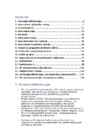
SISUKORD 1. Sotsaalpsühholoogia......................................................2 2. Inimsuhete ajalooline areng...........................................7 3. Eneseteadvus..............................................................17 4. Sotsiaalne taju............................................................23 5. Hoiakud......................................................................30 6. Sotsiaalne mõju...........................................................35 7. Inimestevahelised suhted.............................................45 8. Inimsuhete ruumiline mõõde........................................49 9. Grupid ja gruppidevahelised suhted..............................54 9a Zimbardo vanglaeksperiment......................................62 10. Liider grupis..............................................................66 11. Agressiivsus ja prosotsiaalne käitumine......................77 12. Suhtlemine I........................................................
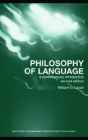
Topics are structured in four parts in the book. Part I, Reference and Referring, includes topics such as Russell's Theory of Descriptions, Donnellan's distinction, problems of anaphora, the description theory of proper names, Searle's cluster theory, and the causalhistorical theory. Part II, Theories of Meaning, surveys the competing theories of linguistic mean- ing and compares their various advantages and liabilities. Part III, Pragmatics and Speech Acts, introduces the basic concepts of linguistic pragmatics, includes a detailed discussion of the problem of indirect force and surveys approaches to metaphor. Part IV, new to this edition, examines the four theories of metaphor. Features of Philosophy of Language include: · new chapters on Frege and puzzles, inferentialism, illocutionary theories of meaning, and relevance theory · chapter overviews and summaries · clear supportive examples · study questions
a) Why hasn't Steve written earlier? b) What does he think of Hong Kong? c) What is the weather like? d) What happened to him recently? e) What does he say about his new colleagues? f) Is his new job easier than the one he had in London? g) How does the writer feel about his new situation? Informal (friendly) letters are normally written to relatives, friends or other people we know very well. A good informal letter should be divided into paragraphs. Each paragraph should deal with one aspect of the subject and start with a topic sentence which gives the main idea of the paragraph. Tenses Present Perfect and Past Simple are often used in letters giving news. The Present Perfect is used to refer to recent activities and the Past Simple to refer to activities which happened at a stated time in the past. TASK 7 Read the following letter and correct the mistakes
· Man as an animal-clever than other beasts, still explainable within the framework · Man is not a free agent, is govern by something · Unable to determine his own faith · Hereditary · Naturalists tried to apply in fiction the processes of natural sciences · Writers task is to record facts, systems of behaviour, living conditions, never revealing any natural unbiased (completely natural) · Point of view: amoral-outside the category of morality, neither good or bad · Naturalist find it absurd to blame the wicked. These criminals are doing what nature, environment, their unconscious tells them to do. Naturalists do not judge their characters, they simply report. Try to describe facts like they are. Naturalists depict the lower, coarser forms of life. · Drab, squallid set of scene. Revolting, disgusting · Characters are people with strong animal desires
FRANCISCO Nay, answer me: stand, and unfold yourself. BERNARDO Long live the king! FRANCISCO Bernardo? BERNARDO He. FRANCISCO You come most carefully upon your hour. BERNARDO 'Tis now struck twelve; get thee to bed, Francisco. FRANCISCO For this relief much thanks: 'tis bitter cold, And I am sick at heart. BERNARDO 4 Have you had quiet guard? FRANCISCO Not a mouse stirring. BERNARDO Well, good night. If you do meet Horatio and Marcellus, The rivals of my watch, bid them make haste. FRANCISCO I think I hear them. Stand, ho! Who's there? Enter HORATIO and MARCELLUS HORATIO Friends to this ground. MARCELLUS And liegemen to the Dane. FRANCISCO Give you good night. MARCELLUS O, farewell, honest soldier: Who hath relieved you? FRANCISCO Bernardo has my place. Give you good night. Exit MARCELLUS 5 Holla! Bernardo! BERNARDO
music and the song became the unofficial Estonian national anthem that miraculously slipped by the Soviet censors. In 1969, more than a hundred thousand participants gathered for the century anniversary of a national song festival and, in a spontaneous act of nonviolent resistance, sang this song. For fifty years, it was a musical statement of every Estonian's desire for freedom. http://www.blogto.com/events/3626 Pärnu Hanseatic Days 2008 June 27th 28th Pärnu prepares for the International Hanseatic Days of 2010 by holding handicraft fairs every summer. Traditionally, the Hanseatic Days are declared open by the Mayor who leads the colourful procession from the City Hall to the field of Vallikäär. Among the traders there shall be a stage in the site of the fair, where both singers and actors shall perform. A knights' tournament and several dance shows shall take place. http://www.visitparnu.com/index.php?id=789&L=1
1% of the population Minority group, less privileged Social problems Self-awareness Mixture of old and new HOW GOVERNMENT ACTS NOW- gives natives money and near Las Vegas the right to own casinos to compensate injustice and taking away land. II First Settlements · Jamestown Colony (living conditions, population, plantations, import of slaves) First permanent English colony in North-America 214 settlers Searching for gold (none found) Strategically good location, James River Quite poor conditions. Starvation, diseases, lack of water, attacks of natives , fierce weather Tobacco plantations African slaves, working in tobacco harvest 1620 by Dutch boat. Also Englishmen (convicts and poor people) Mayflower and Pilgrim Fathers Mayflower- cargo ship In 1620 one hundred Puritans boarded the Mayflower From Plymouth, England, to today's Plymouth, Massachusetts, United States Claim they are the forefathers of USA aristocracy- FALSE
she meets an exquisitely handsome boy at school for whom she feels an overwhelming attraction and who she comes to realize is not wholly human. ISBN 0-316-16017-2 [1. Vampires -- Fiction. 2. High schools -- Fiction. 3. Schools -- Fiction. 4. Washington (State) -- Fiction.] I. Title. PZ7.M57188Tw2005 [Fic] --dc22 2004024730 Printed in the United States of America For my big sister, Emily, without whose enthusiasm this story might still be unfinished. But of the tree of the knowledge of good and evil, thou shalt not eat of it: for in the day that thou eatest thereof thou shalt surely die. Genesis 2:17 PREFACE I'd never given much thought to how I would die -- though I'd had reason enough in the last few months -- but even if I had, I would not have imagined it like this. I stared without breathing across the long room, into the dark eyes of the hunter, and he looked pleasantly back at me. Surely it was a good way to die, in the place of someone else, someone I loved. Noble, even
cryptanalysis, radio, and the Japanese language. Rochefort, who had begun his career as an enlisted man, had headed the Navy's cryptographic section from 1925 to 1927. Two years later, a married man with a child, he was sent, because of his outstanding abilities, as a language student to Japan, a hard post to which ordinarily only bachelor officers were sent. This three-year tour was followed by half a year in naval intelligence; most of the next eight years were spent at sea. Finally, in June of 1941, Rochefort took over the command of what was then known as the Radio Unit of the 14th Naval District in Hawaii. To disguise its functions he renamed it the Combat Intelligence Unit. His mission was to find out, through communications intelligence, as much as possible about the dispositions and operations of the Japanese Navy. To this end he was to cryptanalyze all minor and one of the two major Japanese naval crypto-systems.
 annaabi.ee