Leidsid 33 sarnast õppematerjali, mis on seotud failiga "Tenses". Need materjalid aitavad sul teemat sügavamalt mõista.
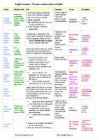
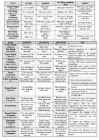
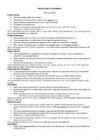
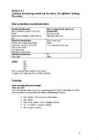
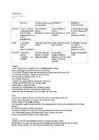
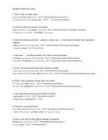
work, worked, working, going, gone, infinitive, signal, words, wasn, present, never, olevik, minevik, simple, doesn, continuous, perfect, already, haven, went, lihtolevik, sometimes, often, usually, works, goes, look, listen, since, lihtminevik, yesterday, whileenglisch-hilfen.de LEARNING ENGLISH ONLINE Examples Examples Examples Tense Signal words Use Form affirmative negative interrogative every day something happens repeatedly sometimes how often something happens always I work. I don't work. Do I work?
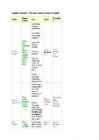
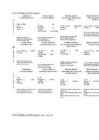
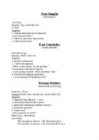
English Grammar - The most common tenses in English Tense Signal words Use Estonian Form Examples · something happens repeatedly *korduv tegevus every day · how often something happens *püsiv olukord sometimes, *tulevikus · one action follows another I work
English Grammar - The most common tenses in English Signal Example Tense Use Form words s something happens repeatedly how often something happens every one action day follows sometim another es I work
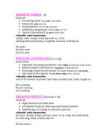
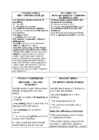
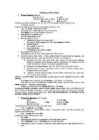
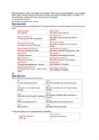
PRESENT SIMPLE [s] lihtolevik · kestvad tegevused. Tom works in the market. · rutiinid. He works every day. · loodusseadused. The sun sets in the west. · ajatabelid ja programmid. The buss leaves at 7 am. · (spordi) kommentaarid. Ben passes ball to Tom. väljendid, mida kasutatakse: usually, often, always, every day/week etc, in the morning/afternoon/evening, at night/the weekend, on Friday etc. He works He don't work Does he work PRESENT CONTINUOUS [ is + ing] kestev olevik · tegevused, mis praegu leiavad aset. Karl is doing his homework at the moment. · plaanitud tegevus lähitulevikus. I am going to school tomorrow. · kui midagi toimub/muutub praegu. The number of burglaries is increasing. · alati sama korduv tegevus. You are always eating, when i wake up. väljendid, mida kasutatakse: now, at the moment, at present, these days, nowdays, still, today, tonight etc. He is working He isn't working
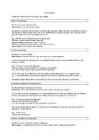
2. Things that happen all the time or repeatedly. She usually goes away at weekends. 3. Laws of nature (things that are true in general). The sun rises in the east. 4. Timetable events. The train leaves at 6.50 p.m. Negative form: I don't (do not) normally eat my lunch here. He doesn't (does not) like this film at all. Question form: Do you live here? How often does it rain around here? Signal words: always, every day/month, never, normally, often, seldom, sometimes, usually etc. PRESENT CONTINUOUS/PROGRESSIVE (kestev olevik) Form: am/is/are + ing Use: 1. Unfinished actions happening at or around the time of speaking. Listen! Somebody is crying. They are building a new bridge in our town. 2. Changes happening around now. The population of the world is increasing fast. 3. Arrangements for the future
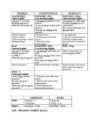
Get/ Have something TENSE ACTIVE PASSIVE WHEN? done Present Simple Am/is/are + Every day, year, often, I pv + do/does Have/ get + sth+ III pv Lihtolevik III pv usually, always Past Simple Yesterday, last year,
FUTURE SIMPLE BE GOING TO Will + infinitive (will go) Am/is/are going to + infinitive (is going to rain) 1.A decision at the moment of 1.Future plans made before the speaking: moment of speaking: A: 'I'm cold'. A: 'We've run out of milk.' B: 'I'll close the window'. B: 'I know, I'm going to buy some.' 2.Prediction based on opinion: 2.Prediction based on present I think the Conservatives will win the evidence: next election. Look at those boys playing football! 3.A future fact: They're going to break the window. He will be ten next year. 4.Promises / requests / refusal / willingness: I'll help you with your homework. Will you give me a hand? 5.In the same way as the future
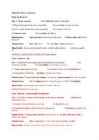
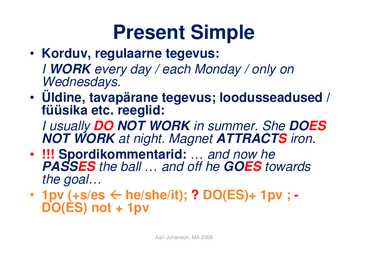
Present Simple · Korduv, regulaarne tegevus: I WORK every day / each Monday / only on Wednesdays. · Üldine, tavapärane tegevus; loodusseadused / füüsika etc. reeglid: I usually DO NOT WORK in summer. She DOES NOT WORK at night. Magnet ATTRACTS iron. · !!! Spordikommentarid: ... and now he PASSES the ball ... and off he GOES towards the goal... · 1pv (+s/es Å he/she/it); ? DO(ES)+ 1pv ; - DO(ES) not + 1pv Aari Juhanson, MA 2008 Present Progressive · Hetkel toimuv, pooleliolev tegevus: S/he IS TALKing on the phone now. I AM READing an interesting book. · Ajutine, regulaarsele ja tavapärasele vastanduv tegevus (tulevikku viitav): This summer they ARE not GROWing cucumbers as usual. They'RE GROWing tomatoes instead. · !!! Halvakspanu väljendus harjumuspärase tegevuse kohta: He IS always COMPLAINing! · BE (am/is/are) + 1pv-ing Aari Juhanson, MA 2008 Present Perfect ON -NUD
http:// THE PLURAL www.english-4u.de/plural_ex6. htm Singular + s parrot – parrots apple – apples girl – girls Words ending with y if a consonant is written before. ----> ies lolly – lollies story – stories strawberry – strawberries but: boy – boys toy - toys bay - bays Words ending with ch, x, s, sh, o ----> es
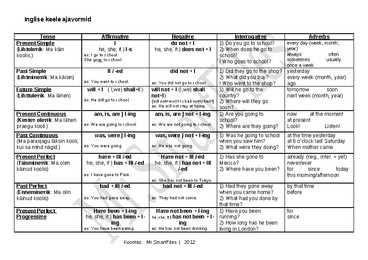
Tense Tense Signal words Use Form Examples Present Every day, Sometimes, Infinitive, I work simple sometimes, happens The workes always, often, repeatly, He/she/it I go usually, seldom, how often + -s She goes never, first...then. something (1.pv.) happens. Present Now Something To be Iam working progressive At the moment is (am/is/are) He's working Look
TENSES. ACTIVE VOICE. 1. Present Simple (üldolevik) I (he, she, it s) he works Eitav,küsiv do (I, you, we, they) he does not work does (he, she, it) does he work? Verbidele, mis lõpevad infinitiivis ss, -sh, -ch, -x või o, lisatakse ainsuse 3. pöördes es he touches, she goes Verbidel, mis lõpevad y-ga, mille ees on konsonant, muutub y->ies carry - he carries Vrdl: play he plays 1. Harjumuspärane, korduv tegevus või seisund olevikus. Tom drinks tea every day. He lives in Brussels. 2. Üldtuntud tõed, loodusseadused The earth goes round the sun. 3. Tulevikus toimuv tegevus
TIME CLAUSES Present Simple · Permanent states, facts (Tom works..) · Repeated and habitual actions, routines (She usually goes..) · Laws of nature and general truths (The sun sets in the west) · Timetables and programmes · Sporting commentaries, rewiews (Beckham wins the ball, crosses and Owen scores) · Feelings and emotions (I love Tallinn..) TIME EXPRESSIONS USED WITH PRESENT SIMPLE: usually, often, always, every day/week etc, in the morning/evening etc, at night/the weekend, on Fridays etc. Present Continuous · Actions taking place at or arount the moment of speaking (The kids are watching TV..) · Fixed arrangements in the near future (I'm going to the dentist tomorrow) · Currently changing ang developing situations (The number of burgularies is increasing)
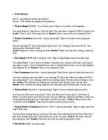
Future Forms Future Forms · 1) Future Simple will work · 2) Be going to am/is/are going to work · 3) Present Continuous am/is/are working · 4) Present Simple start(s) Future Forms · 5) Future Continuous will be working · 6) Future Perfect will have worked · 7) Future Perfect Continuous will have been working Future Simple · We do our morning exercises and think, "I think we will have a nice day " · Prediction (ennustused kõhutunde põhjal) · verbs think, believe, guess, expect, hope etc · expressions be sure, be afraid etc · adverbs probably, perhaps, certainly Future Simple · You see your little brother carrying a very heavy suitcase and you think, "I will help him carry the suitcase." · on-the-spot decision
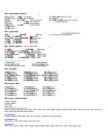
you are, they are. He is jane he/she/it isn't Is he/she/it German? No I'm not, you aren't, he/she/it isn't, we aren't, She is marta we aren't are we German? you aren't, they aren't. It is a school. you aren't are you German? We are students they aren't are they German? You are in class 12 They are teachers Unit 2 / present simple + - ? yes- I do, you do, he/she/it does. I work I don't work Do I work no I don't, you don't, he/she/it doesn't You work you don't work do you work? He/she it works he/she/it doesn't works does he/she/it work We work we don't work do we work
Tests Superstar 1 Luke Prodromou Test 1 Name____________________ Class_______ Use your English 1 Complete these sentences using the correct form (present simple or present continuous) of the verb in brackets. _ 1 She is in a band and she _________________________________ (record) a CD at the moment. _ 2 She is an actress and often _________________________________ (appear) on television. _ 3 At the moment she _________________________________ (have) a rest because she is tired. _ 4 Mike is a doctor and he _________________________________ (live) in Manchester. _ 5 I _________________________________ (start) work at 8.30 every morning.
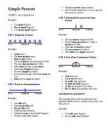
Simple Present Present Progressive/Continious (99%) infinitive form of 'be' and verb + ing (3rd person singular: infinitive + 's') I speak I am speaking you speak you are speaking he / she / it speaks he / she / it is speaking we speak we are speaking they speak they are speaking
Here's a breakdown of how you can express how you really are without complaining too much. · Fine, thanks. / On top of the world, thanks. · OK, thanks · Not so bad, thanks. / Can't complain, thanks. · So so, thanks. / So and so, thanks. · Not so good, actually 1 The English alphabet Spelling Work with your partner and spell out first your name and then some names of places. Write down each letter as you hear it, and then say the word. The English alphabet on the phone: You might find the following alphabet (used by international airlines) useful when trying to spell a word on the telephone. A Alpha O Oscar Ä Alpha-Echo Ö Oscar-Echo B Bravo P Papa
[ ma töötan (igal suvel) ] [ ma töötan (praegu) ] [ ma olen (siin) töötanud (alates [ (täna) olen ma (jub 1987. a.) ] töötanud ] O L I, you, we, they I am E work working I, you, we, they have worked I, you, we they have bee V He, she, it He, she, it is He, she, it has He, she, it has b I works working worked We, you, they are working K He has been working hard al
Windows are not made of wood. Simple Present · · New York is a small city. It is not important that this fact is untrue. [VERB] + s/es in third person USE 3 Scheduled Events in the Near Examples: Future · You speak English. · Do you speak English?
SIMPLE CONTINUOUS PERFECT I (-s) DO/DOES AM/IS/ARE + ING HAVE/HAS + III pv. I learn English I am learning English I have learned English. I get up at 7 every day. I'm reading a good book at the I've learned 10 words today. He doesn't get up at 7. moment. He hasn't learned any new What time do you get up? He isn't reading anything at the words today. moment. How many words have you What are you reading at the learned today? moment? 1 Korduv tegevus. 1 Praegu toimuv. 1 Äsja lõppenud 2 Püsiv olukord
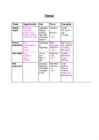
Tenses 27. jaanuar 2012. a. 9:24 SIMPLE CONTINUOUS -ing PERFEFCT PERFECT on alati sees! CONTINUOUS PRESEN I work in school. I am working in I have worked in I have been working T loodusseadused school. school. in school for/since 5 pidev korduv lähituleviku plaanid Surnute kohta EI SAA years. tegevus(hommiku ÖELDA! siiamaani kestab kohvi) aja-graafikud PAST I worked in I was working in the I had worked in school. I had been working. school. school
(Lihttulevik: Ma lähen) not+I) country? next week (month, year) ex: He will go to school. [will not=won't / shall not=shan't] 2) Where will they go ex: He will not stay at home. soon? Present Continuous am, is, are } I-ing am, is, are } not + I-ing 1) Are you going to now at the moment (Kestev olevik: Ma lähen school? at present praegu kooli.) ex: We are going to school. ex: We are not going to school. 2) Where are they going? Look! Listen! Past Continuous was, were } I-ing was, were } not + I-ing 1) Was he going to school at the time yesterday
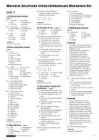
5 haven't finished enjoying their lesson. They look 3 She was unlucky because she was 6 have/'ve known interested and it looks as though shipwrecked three times. 7 walked they are working hard. Most of She was lucky because she survived 8 have you phoned them are looking at the experiment each of the three disasters. 2 1 written 8 was trying and working together. They are
1. Active/Passive Active - the professor teaches the students. Passive - The students are taught by the professor 2. Present Simple [VERB] + s/es in third person. Tegevus on korduv või tavapärane. You speak English. I play tennis. Cats like milk. The train leaves tonight at 6 PM. I am here now. Active= Once a week, Tom cleans the car. Passive= Once a week, the car is cleaned by Tom. 3. Present Continuous [am/is/are + present participle]. Tegevus toimub/ei toimu praegusel hetkel. You are watching TV. You are learning English now. I am studying to become a doctor. I am meeting some friends after work. Active= Right now, Tom is writing the letter. Passive= Right now, the letter is being written by Tom. 4. Past Simple [VERB+ed] or irregular verbs. Tegevus algas/lõppes minevikus täpsel ajal. . You called Debbie. I saw a movie yesterday. I finished work, walked to the beach, and found a nice place to swim
Golden Grammar rules 1. Don't use an with own. Sue needs her own room. (NOT Sue needs an own room.) I'd like a phone line of my own. (NOT ... an own phone line.) 2. Use or rather to correct yourself. She's German or rather, Austrian. (NOT She's German or better, Austrian.) I'll see you on Friday or rather, Saturday. 3. Use the simple present play(s), rain(s) etc to talk about habits and repeated actions. I play tennis every Saturday. (NOT I am playing tennis every Saturday.) It usually rains a lot in November. 4. Use will ..., not the present, for offers and promises. I'll cook you supper this evening. (NOT I cook you supper this evening.) I promise I'll phone you tomorrow. (NOT I promise I phone you tomorrow.) 5. Don't drop prepositions with passive verbs. I don't like to be shouted at. (NOT I don't like to be shouted
,,I met him yesterday" 2. Used To, mineviku harjumused. ,,I used to play tennis." Past Continius (kestev minevik) was/were + ing Kasutus: When, while, as Tegevus: 1. ajutised sündmused. 2. 2 või enam tegevust ,,While i was reading, he was garding." 3. minevikus katkestatud tegevus ,,I was having a shower, when the phone rang." 4. konktreetne kellaaeg minevikus ,, I was watching TV yesterday at 5!" Present Perfect (täisminevik,olevikuaeg) have/has + III pv. Kasutus: Never, ever, already, yet, before, since, for. Tegevus: 1. tegevused alg. Minevik -> now ,,I have been a teacher for 5 years." 2. mineviku situatsiooni resultaat olevikus ,,I have lost my purse." 3. kogemused ,,Have you been in USA?" Have Gone Have Been Go Verbid: She has gone to Austria ( Ta läks Austriasse.) She has been to Austria ( Ta on käinud Austrias.)
Reported speech is often also called indirect speech. When we use reported speech, we are usually talking about the past (because obviously the person who spoke originally spoke in the past). The verbs therefore usually have to be in the past too. For example: "I'm going to the cinema". He said he was going to the cinema. Basic tense chart The tenses generally move backwards in this way (the tense on the left changes to the tense on the right): present simple past simple I'm a teacher. He said he was a teacher past continuous. present continuous He said he was having lunch with his I'm having lunch with my parents. parents. past perfect simple
Conditionals Sentences with if are used to express possibilities. 0 Zero conditional If-clause present (past) simple Main clause present (past) simple Sometimes sentences with if express certainty rather than possibility. The zero conditional is used to talk about sth. that is always true (such as a scientific fact), or that was always true in the past. In this type of conditional we can use when instead of if. E.g., If/When you mix blue and red, you get purple. If/When you don't water flowers, they die. (present simple in both parts of the sentence) If/When I asked her to come with us, she always said no.
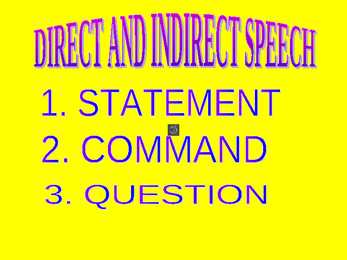
· NOW · THEN · TOMORROW · THE FOLLOWING DAY · NEXT WEEK · THE FOLLOWING WEEK · TONIGHT · THAT NIGHT · TODAY · THAT DAY · YESTERDAY · THE DAY BEFORE · LAST NIGHT · THE NIGHT BEFORE · LAST WEEK · THE WEEK BEFORE · HERE · THERE · THIS · THAT · THESE · THOSE CHANGES OF TENSES · DIRECT · INDIRECT · SIMPLE PRESENT · SIMPLE PAST · SIMPLE PAST · PAST PERFECT · PRESENT PERFECT · PAST PERFECT · PRESENT · PAST CONTINUOUS CONTINUOUS · PAST PERFECT · PRESENT PERFECT CONT. CONT. · SIMPLE FUTURE · PAST FUTURE 1. STATEMENT HE SAID HE SAID TO ME THAT REPORTED WORDS HE TOLD ME STATEMENT EXAMPLE · DIRECT · INDIRECT
Ing Present Simple Present Progressive/Continuous (lihtolevik) (kestev olevik) I vorm (play) am JAATAV he is I vorm+ing (playing) she I vorm+s (plays) are it do not I vorm (don't play) am
Ing Present Simple Present Progressive/Continuous (lihtolevik) (kestev olevik) I vorm (play) am JAATAV he is I vorm+ing (playing) she I vorm+s (plays) are it do not I vorm (don't play) am
Ing Present Simple Present Progressive/Continuous (lihtolevik) (kestev olevik) I vorm (play) am JAATAV he is I vorm+ing (playing) she I vorm+s (plays) are it do not I vorm (don't play) am
1) Ann is my best friend! We........each other for years A know B knew C knows D have known 2) Nicky........to San Francisco when the accident happened. A flies B has flown C was flying D has been flying 3) Why don`t you let her........her story? A finish B to finish C finishing D have finished 4) Tim........in a cafe at present, but he has already applied for a new job A work B have worked C is working D worked 5) My father........already worked for two years before he went to University. A was B had C has D is 3. Change the order of the words to make a correct sentence. ( 5 points ) 1) I wonder / can / you / me / help / if 2) a / my / to / written / I / mother / already / letter / long / have 3) the / watch / often / they / TV / in / evening
 annaabi.ee