Leidsid 33 sarnast õppematerjali, mis on seotud failiga "Taxes". Need materjalid aitavad sul teemat sügavamalt mõista.
rate, taxes, income, direct, duty, taxation, different, indirect, social, goods, corporate, profit, primary, function, raise, revenue, finance, government, flat, quite, unique, marginal, both, working, higher, cheat, highly, paid, lots, such, insurance, passed, divided, land, heavy, vehicle, reform, took, place, goal, economic, growth, available, ideaTAXATION To tax- maksu võtma kelleltki (riigimaksu) Taxation- maksustamine, maksundus Primary fonction of taxation- To collect money to government expenditures. Direct tax- are collected by the government from the income of individuals and businesses. Indirect tax- are levied on the production or sale of goods and services. They are included in the price paid by the final purchase. Business profits are generally taxed twice- After the company pays tax on its profits, the shareholders pay income tax on any dividends recieved from these profits. Progressive tax- people with higher incomes pay a higher rate of tax than people with lower incomes. Proportional- tax that is imposed at a fixed rate. Regressive tax- (direct taxes are usually) people with a lower income pay a proportionally
.............................................................. 11 2.2. Limited Liability Company ..................................................................................................... 11 2.3. Closed Joint-Stock Company ................................................................................................. 13 2.4. Company name ..................................................................................................................... 14 2.5. Comparison of different forms of incorporation of companies ............................................ 15 3. TAXATION, DUTIES AND EXCISES .............................................................................................. 17 3.1. The essence of the tax system, the principles and functions of taxes .................................. 17 3.2. The main taxes ...................................................................................................................... 20 3.3
.................................................................................................... 5 1.1.1. Country Profile ..................................................................................................... 5 1.1.2. Post-Independent Ukraine. Economy and politics ............................................... 6 1.1.3. Key Macroeconomic indicators ......................................................................... 14 1.1.4. Foreign Direct Investments ................................................................................ 16 1.1.5. Demographics and labor force .......................................................................... 17 1.1.6. New emerging industry....................................................................................... 19 1.2. The Business Environment ........................................................................................ 23 1.3. Banking system....
Kerli Uue 10.r The Republic of Estonia Estonia is a democratic parliamentary republic divided into 15 counties. The capital and largest city is Tallinn. Estonia's neighbours are Latvia, Russia and Finland. The parliment is named ,,The Riigikogu." The Estonian parliament has 101 members and influences the governing of the state primarily by determining the income and the expenses of the state. The Riigikogu elects and appoints several high officials of the state, including the President of the Republic. The Parliament of Estonia is elected by people for a four year term by proportional representation. The Government of Estonia is formed by the Prime Minister of Estonia, nominated by the president and approved by the parliament. The government exercises executive power
Last but not least, Georgia ranks first in the Post-soviet space, excluding the Baltic countries, in terms of counter-corruption policy. It is worth noting that de- spite the current difficulties related to the global financial crisis, Georgia managed to overcome economic challenges due to economic liberalization reforms. In this direction, Georgian Govern- ment made several important steps: Tax -The administration of tax and customs systems has been simplified. The number and rates of taxes have been significantly reduced making it easier for local and foreign businesses to do business. Currently, there are only 6 taxes and no capital gains, inheritance, wealth, property transfer; social, branch remittance or any other taxes are in place in Georgia. The coming into effect of a new comprehensive Tax Code (including customs legislation) on January 1, 2011 con- stitutes a further milestone in the development of tax legislation.
THE INTERNET AND E-COMMERCE 1. ISP it is a organization that provides internet access. The internet service provider. 2. e-tailing - the selling of goods and services on the Internet or through e- mail solicitation. 3. B2C.- business-to-consumer, selling to the public on the internet. 4. e-procurement - 5. B2G business-to-goverment, business applay for government contracts and pay taxes. 6. shopping cart Shopping cart is where you put product you have purchased from online shop. 7. last mile problem how to deliver products, purcased on internet to the customers 8. bricks-and-mortar shop Brick and mortar shops are physical shops where customers interact face-to-face. They are opposite to online shops. TELEMARKETING 1. telemarketing for of direct marketing, where telemarketers call to their customers 2
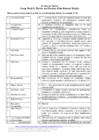
EU Internal Market Group Work I: History and Purpose of the Internal Market Please connect terms (numbers) with correct description (letter), for example 17 M 1 Common Market A ... is characterized by free movement of goods between the participating countries, but autonomous external trade policies in relation to non-participants. 2 Comparative B A top-down approach to integration that can be best Advantage explained by market failure.
Cost accounting measures, analyzes, and reports financial and no financial information relating to cost of acquiring or using resources in an organization. Value-chain analysis: sequence of business functions in which customer usefulness is added to products and services. 1. Research and development 2. Design of products, services, or processes 3. Production 4. Marketing 5. Distribution 6. Customer service. Supply chain describes the flow of goods, services, and information from the initial sources of materials and services to the delivery of products to consumers, regardless of whether those activities occur in the same organization or in other organizations. Five step decision making process: 1. Identify the problem and uncertainties. 2. Obtain information. 3. Make predictions about the future. 4. Make decisions by choosing among alternatives. 5. Implement the decision, evaluate performance, and learn.
PRODUCTS and BRANDS 1. product catalogue - a list of different products of one company 2. product mix - a range of similar in some way products considered together 2. product range - different particular and specific products of a company 3. product lifecycle - the stages of product lifetime and amount of people who use it at each stage 4. product positioning - is how we see a product or how a company would like us to see it in relation to other products 5. product placement - hidden commercial of a product. Customer can see a product in films, music videos and so on. 6. raw materials - basic materials from which products are made or manufactured 7
There are over 1400 lakes in Estonia. Lake Peipsi, lying between Estonia and Russia, covers 3 555 sq km. It is the biggest in Estonia and the fourth biggest in Europe. The second largest lake is Lake Võrtsjärv (270 sq km), while the deepest id Rõuge Suurjärv (38 m). The longest rivers are the Võhandu (162 km) and Pärnu (144 km). The Emajõgi flows for 101 km and its drainage basin covers 9740 sq km. NATURE CONSERVATION AND PROTECTED AREAS In 2004 Estonia had 360 different protected areas, apart from 448 protected parks, and over 1200 natural monuments. The total area of protected land covers over 550 000 hectares (more than 10% of the Estonian territory). Protection is extended to diverse elements such as waterfalls, hills, karst areas, outcrops, caves, lakes, craters an so on. Lahemaa National Park is the largest and oldest national park in Estonia. It covers 1119 square km. The park has reserves where any human
Liaison with central and local governments Liaison with branch chambers and NGOs www.investbg.government.bg GENERAL INFORMATION Official name: Republic of Bulgaria Area: 110 994 sq.m. Population: 7.4 million Capital: Sofia Time zone: EET (UTC+2) Official language: Bulgarian Currency: Lev (BGN) Fixed exchange rate: 1 = BGN 1.95583 Type of government: Parliamentary Member of: EU, NATO, WTO www.investbg.government.bg DID YOU KNOW THAT BULGARIA The best outsourcing destination in Europe, according to Cushman & Wakefield's rating for 2015. In the world our country takes the third place. Accommodated about 50 companies producing components and systems for the global automotive industry. In eight of every ten cars
membership by the end of 2002 and now has one of the strongest economies of the new member states of the European Union, which it joined on 1 May 2004. The Estonian economy is growing quickly, partly due to a number of Scandinavian companies relocating their routine operations to the country and Russian oil transit using Estonian ports. Estonia has a strong information technology (IT) sector. Its GDP PPP per capita is at $17,802, the highest of the Baltic states, while its unemployment rate was 4.2% in July 2006, one of the lowest in the European Union. The north-west coast of Estonia near Nõva, Lääne county In 1994, Estonia became one of the first countries in the world to adopt a flat tax, with a uniform rate of 26% regardless of personal income. In January 2005 the personal income tax rate was reduced to 24%. A subsequent reduction to 23% followed in January 2006. The income tax rate will be decreased by 1% annually to reach 20% by January 2009
telecom (T-Mobile USA), electronics, biotechnology, aluminum production, lumber and wood products (Weyerhaeuser), mining, beverages (Starbucks, Jones Soda), real estate (John L. Scott, Colliers International, Windermere Real Estate, Kidder Mathews), retail (Nordstrom, Eddie Bauer, Car Toys, Costco, R.E.I.) and tourism (Alaska Airlines, Expedia, Inc). Taxes The state of Washington is one of only seven states that does not levy a personal income tax. The state does not collect a corporate income tax or franchise tax either. However, Washington businesses are responsible for various other state levies, including the business and occupation tax a gross receipts tax which charges varying rates for different types of businesses. Wine Washington ranks second in the United States in the production of wine, behind only California. By 2006, the state had over 130 km2 of vineyards, a harvest of 109,000t of grapes and exports going to
ESTONIAN UNIVERSITY OF LIFE SCIENCES Institute of Economics and Social Sciences BOOK REVIEW ("Foreign direct investments in the Estonian economy", University of Tartu, Urmas Varblane) (Pages : 10 20) Prepared: Kadri Tamm, MF-I-5 Tartu 2007 I read book about direct investments in the Estonian economy. The book is issued by University of Tartu and the writers are also scientists from University of Tartu.
Riigikohus, with 19 justices whose chairman is appointed by the parliament for life on nomination by the president. Internet voting has been used in local elections in Estonia. The lawmakers in Estonia have authorized internet voting for parliamentary elections as well. The current president is Toomas-Hendrik Ilves. Before him there have been three presidents in Estonia Arnold Rüütel, Lennart Meri and Konstantin Päts. Currency and taxes. In June 1992, Estonia replaced the ruble with its own freely convertible currency, the Kroon (EEK). A currency board was created and the new currency was pegged to the German Mark at the rate at 8 EEK for 1 DEM. When Germany introduced the Euro, the peg was changed to 15.6466 Kroon for 1 Euro. The Estonian government is intending to adopt the Euro as the country's currency on 1 January 2008 due to continued high inflation, and finalised the design of Estonia's Euro coins in late 2004.
367. the ministry of justice justiitsministeerium 368. had no valid grounds polnud seaduslikke aluseid 369. they were rehabilitated ennistati oma ametisse 370. a gradual increase järk-järguline kasv 371. were admitted vastu võetud 372. barrister (kõrgem) advokaat *U10 373. elaboration väljatöötamine 374. supporters of the first version esimese versiooni toetajad 375. won the dispute võitsid vaidluse 376. statutes are incorporated in different acts määrused koondatakse erinevatesse aktidesse 377. the Supreme Council ülemnõukogu 378. still valid endiselt kehtiv 379. terminate lõpetama 380. contemporary kaasaegne 380. recognised as legal successor õiglusjärglane 381. over the last decade viimase kümnendi 382. dispelling the myth tõrjuma müüti 383. it is very difficult to be admitted väga raske on saada vastuvõetud 384. rejuvenescence taasnoorenemine 385
I Native Americans · Origin of Native Americans Origin is debatable Siberia->Alaska Crossed the land bridge around 14,000 years ago "ice-free corridor" Hunters, searching for fresh grounds · Different tribes and their way of life In tents, dark skin, hair is long, black and straight, women-agriculture, men- hunting. bands(chief. Travelled together) and tribes land was owned by the tribe that occupied it. 200 different tribes Apache- "enemy"- hunted buffalos, oil and natural gas from their land Cherokee- largest tribe Cheyenne- from Minnesota and S & N Dakota. High system of laws Northwest Ordinance of 1787 Signed in 1787 by Thomas Jefferson. The creation of the Northwest Territory as the first organized territory Ohio River was settled, 5 new states Advancement of education, maintenance of civil liberties, exclusion of slavery Promised not to invade or disturb Indians
2 The Political Problem A common example of a free rider problem is defense spending: no one person can be excluded from being defended by a state's military forces, and thoes free riders may refuse or avoid paying for being defended, even though they are still as well guarded as those who contribute to the state's efforts. Therefore, it is usual for governments to avoid relying on volunteer donations, using taxes and, in some countries, conscription instead. In the case of defense spending, alternative perspectives of the free rider problem also exist. A free rider may be an individual or group of military contractors, ideologues, government officials or lobbyists that inflate the risk of enemies, or even convinces the state to launch an unnecessary and expensive war, in order to sell more arms and consolidate their power. In this example, the free riders avoid all of the personal risks of
Report Purpose The purpose of this report is to give an overview of Estonian population, political factors, technological factors, economic factors and the trends in Estonian economy compared to Germany and to briefly discuss Estonian business environment. Estonian population The total population of Estonia is 1 313 271 according to Statistics Estonia, of which 69.1% are Estonians, 25.1% Russians, 4.9% of which are of different nationalities for example Ukrainians, Belarusians and Finns. Rest are of unknown nationality. 68.5% of population speaks Estonian as a mother language, 29.6% speaks Russian as a mother language and 0.6% Ukrainian. Estonia has only one official language which is Estonian. According to information by the Institute of the Estonian Language there are about 75% of Estonian people who speak Estonian. The most common foreign languages learned by
Gross Domestic Product (GDP) The gross domestic product (GDP) or gross domestic income (GDI) is a measure of a country's overall economic output. It is the market value of all final goods and services made within the borders of a country in a year. It is often positively correlated with the standard of living, alternative measures to GDP for that purpose. · Gross domestic product comes under the heading of national accounts, which is a subject in macroeconomics. Gross National Product Gross national product (GNP), in economics, a quantitative measure of a nation's total economic activity, generally assessed yearly or quarterly.
86 company shop firmapood 87 competence võimed, oskuseed 88 complementary skills täiendavad oskused 89 compulsory cover kohustuslik kate 90 condone võlga kustutama 91 conduct of directors direktorite käitumine 92 confirm kinnitama, ratifitseerima 93 consume tarbima 94 consumer tarbija 95 consumer goods tarbekaubad 96 consumer price tarbija hind 97 consuption tarbimine 98 contract of employment tööleping 99 contract price kokkuleppehind 100 contribution panus, annetus 101 convey vedama, transportima 102 cooperate koostööd tegema 103 cost of capital kapitalikulu 104 cost proposal hinnapakkumine
of creating new combinations of existing resources. ● Schumpeter Mark I: focusing on individual entrepreneurs ● Schumpeter Mark II: innovation in large firms Innovation diffusion: tendency for innovations to “cluster” in certain industries, areas and time periods à long waves in the world economy (Business Cycles, 1939) Innovation is a continuous improvement process – involving different inventions/innovations Innovation as a moving target The linear model and alternative approaches; innovation research "generations" ● The linear model (Kline and Rosenberg, 1986): Research (science) → development → production → marketing Problems: ● Generalising a chain of causation that only holds for a minority of innovations – disregarding important inputs (e.g. users’ experience)
Author Group Girli Vasiljev RB1X Title of report Number of pages Economic Country Review: Finland, Estonia 20 and Hungary Teacher Kalevi Torunen The goal of this paper is to compare the economic performance of Finland, Estonia and Hungary. First, a general overview on the countries will be given. After, economic indicators (real GDP growth rate, inflation, unemployment, household consumption, investment, current account, government budget and deficit) of the three countries will be compared to draw a conclusion. Keywords GDP, inflation, unemployment, household consumption, investment, current account, government budget, deficit, surplus Table of contents 1 Introduction .......................................................................................1 2 Country Specs ......................................
aastat Tsehhi 31 8,3 Regressiivne 12 aastat Ungari 18 6,9 Lineaarne 20% Venemaa 35 11,7 Lineaarne 4-10 aastat Allikas: PriceWaterhouseCoopers (2002) Corporation Taxes Wordlwide Summaries 2002-200,, New Jersy; IMF Government Finance Statistics yearbook, 2001, Washington. väljaspool Eestit. Selle protsessi korrektseks teaduslikuks analüüsiks on andmeid kahjuks liiga vähe. EL ja Eesti maksusüsteem Liitumine EL kutsub esile hulga muudatusi Eesti maksusüsteemis. 2004. a. domineerivad veel mitte põhimõttelised muudatused. Olulisemad neist on aktsiiside tõus
Turundus II Sociological factors: Religions: Main religion is Roman Catholic 41,8%, then comes Protestants with 35,3% and on the third place are so called non-believers (people with no religion) 11,1%. (Other: muslin, orthodox, other Christian and so on). Birth rates: Switzerland has a birthrate of 9, 51 births to 1000 people, it's in the 199 place in the world's birth rate comparison. Leisure activities: Leisure activities range from taking part in grueling sports to relaxing with family and friends. Many people also devote part of their leisure time to the public service. Life expectancy at birth: total average is 81 years but if you look at genders separately it's: male 78 years and female 84 years. Environmental problems: air pollution from vehicle emissions and open-air burning; acid rain; water pollution from increased use of agricultural fertilizers
competition and market forces within the EU; ability to meet the obligations of membership, including the support for the goals. Country's administrative system must be capable of applying EU laws and put them to use. According to Vahur Kraft, the leader of Estonian Nordea Bank, the euro creates many new opportunities for the country's economy and the society as a whole. Bo Kragh, the vice president of the Bank of Estonia, has a bit different point of view. He has said in his article that the euro takes away our financial independence. Kragh says the Bank of Estonia won't be an independent institution anymore and it will be a branch office of European Central Bank from now on. That won't change much for average persons though, but the state loses the opportunity to manage monetary policy independently. The importance of this concern is probably known to everyone, who is more
1. Social Policy aspects in EU Treaties Social and employment policy: Objectives: - The promotion of employment - Improved living and working conditions - Proper social protection - Dialogue between management and labour - The development of human resources with a view to lasting high employment and the combating of exclusion. Treaty of Rome: belief that improved working and living conditions would arise from the functioning of the common market – cooperation in the areas of employment, labour law and working conditions, vocational training, social security, occupational health and safety, and social dialogue
6 months for students €0 €1,000 €2,000 €1,500 €2,000 €1,500 €1,500 €1,000 €1,000 €500 €0 €0 12 months for students €2,000 €5,000 €4,000 €4,000 €5,000 €7,000 €4,000 €5,000 €2,000 €2,000 €2,000 €2,000 Total Direct Cost €2,525 €10,205 €17,015 €17,760 €23,930 €23,955 €20,165 €20,400 €12,955 €13,305 €12,805 €10,530 Gross Margin €750 €2,655 €4,590 €4,910 €6,455 €6,280 €5,490 €5,450 €3,580 €3,655 €3,505 €2,880 Gross Margin % 23% 21% 21% 22% 21% 21% 21% 21% 22% 22% 21% 21%
Prescribe – to tell someone what they must have or do, or to make a rule of something Impose The word law can have several meanings, it can be divided into prescriptive and descriptive law. Descriptive law – describes the way people or natural phenomena behave, e. g. law of gravity Prescriptive law – prescribe how people ought to behave e.g. speed limits In all societies relations between people are regulated by prescriptive law; customs (informal rules of social and moral behaviour); rules we accept if we belong to a particular institution (religion, organization); laws imposed on people by a government Penalties for breaking the rules are different. For not following the customs there may not be a punishment, or a person may be criticized by the society; rules of a social institution tend to carry precise penalties but they are not enforceable by any political authority; however
TALLINN UNIVERSITY OF TECHNOLOGY Faculty of Social Sciences Ragnar Nurkse School of Innovation and Governance ! ! ! ! Elise Tõllimäe Pay-for performance: necessary or unsuitable way to increase efficiency in the public sector Essay
Estonian history between 1710-1850 and 1850-1918 Contents Contents.................................................................................................................................. 2 17101850.............................................................................................................................. 3 Population and social structure........................................................................................ 4 Serfdom and the intensifying manorial economy ............................................................. 4 Influences of Pietism and the Moravian Brethren............................................................. 5 Enlightenment and enlightened absolutism...................................................................... 6 18501918..................................
1.1990-92 majanduslanguse järgselt- following the receission of 1990-92 2.tõus osalise tööajaga töötamises- growth in part-time employment 3.avalike teenuste pakkumine- provision of public services 4.edendama ettevõtte konkurensivõimet- to improve the competitiveness of companies 5.kaupade ja teenuste hind- the proce of goods and services 6.keskkonna kaitsmine- protection of the environment 7.kulutuste eelisvaldkonnad- priority areas for expenditure 8.aastakäive- annual turnover 9.tööjaotus- division of labour, work allocation, labour distribution 10.kõrgkvaliteetsed seadmed- high quality equipment 11.tasakaaluhind- clearing price 12.töötlev tööstus- manufacturing industry, primary industry, secondary industry 13.pikaajalised majapidamiskaubad- household durables 14
Indroduction This assignment will examine Britain's car market and shows how the external and internal environment factors influences it, mostly on Mini Ltd. External marketing environment is divided into 4 different groups; socio-cultural, economic, technological and political factors. Internal marketing evironment is divided into 6 different groups; which are customers, competitors, suppliers, distributors, employees and stakeholders. Also this assignment is provided with the SWOT analysis, where strengths, weaknesses, opportunities and threats are examined. Mini Mini was at first manufactured by the Austin Motor Company Ltd. In 1957 Alec Issigonis was commissioned to develop a new type of small car. At the same year were the first sketches of Mini made and after that the Mini model is been created from wood and also the most
 annaabi.ee