Leidsid 33 sarnast õppematerjali, mis on seotud failiga "Tag - questions". Need materjalid aitavad sul teemat sügavamalt mõista.
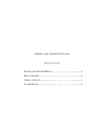
statement, positive, questions, english, negative, auxiliary, speak, special, construction, whole, mean, something, agree, basic, structure, snow, look, these, examples, notes, subject, verbTable of Contents Types of Sentences ..................................................................................2 Parts of the Sentence ..............................................................................2 Word Order in Affirmative Sentences ...................................................3 Position of Adverbs of Frequency .........................................................5 Word Order in Negative Sentences......................................................6 Word Order in General Questions.........................................................7 Word Order in Special Questions ..........................................................8 Word Order in Subject Questions ..........................................................9 Types of Sentences There are four basic types of sentences in English. AFFIRMATIVE and NEGATIVE sentences both end with a full stop ( ) : .
Book 1 BASIC ENGLISH BASIC ENGLISH GRAMMAR GRAMMAR BASIC ENGLISH GRAMMAR Book 1 Book 1 Younger students at beginning to intermediate levels will greatly benefit from this step-by-step approach to English grammar basics. This is the ideal supplement to your language arts program whether your students are native
Firstly/First of all/To start with, I'd like to look at ... Let me begin with/start by ... I'd like to start by saying something about ... I'd like to begin by ... Secondly/Then/Next, I'll be talking about ... Thirdly,/And then we come to ... My fourth point will be about ... Finally/lastly/last of all, I'll be looking at ... Firstly, ... secondly, ... thirdly, ... lastly, ... First of all ... then ... next ... after that ... finally ... To start with ... later ... to finish up ... Inviting questions If anyone has any questions, please feel free to interrupt at any time. If you have any questions, please stop me at any time, and I will be happy to answer them. If you have any questions, please feel free to interrupt. Please interrupt me if there's something which needs clarifying. Otherwise, there'll be time for discussion at the end. Discouraging questions (during the presentation/talk) I'd be glad to answer any questions at the end of my talk.
English structure revision for the exam 1. Terms Language → A systematic, conventional (tavakohane) use of sounds, signs or written symbols in a human society for communication and self-expression. Human language at all levels is rule- or principle- governed (valitsema) meaning that language corresponds to the grammar. Natural language is usually spoken, while language can also be encoded into symbols (such as letters, morse etc) For example: Estonian, English. Linguistics → The scientific study of human natural language. Broadly, there are three aspects to the study which are Pragmatics (studies the use of language → interested in the gap between the sentence’s meaning and the speaker’s meaning). Semantics (concerned with the meaning of the language aspects and the way they change, also how objects and language and thinking and language are related).
consideration, considerate, inconsiderate, inconsiderateness Inflectional affixes: Inflectional affixes may be described as `relational markers' that fit words for use in a sentence (express a syntactic relation). Inflections do not change the grammatical class of a given item or produce new lexemes, just different word forms. Inflection is a general grammatical process that combines words and affixes to produce alternative grammatical forms of words. Inflectional affixes are always suffixes in English. consider, considers, considered Open vs. Closed class words: In linguistics, a closed class (or closed word class) is a word class to which no new items can normally be added, and that usually contains a relatively small number of items. Typical closed classes found in many languages are adpositions (prepositions and postpositions), determiners, conjunctions, and pronouns.[1] Contrastingly, an open class offers possibilities for expansion. Typical open classes such
Why did I fail? What was the most difficult time of my life? How did my perspective of life change due to that difficult time? Where do I want to go? What would I most like to be doing right now? Where would I like to be? Who would I most like to be with? What are my dreams for the future? What do I intend to do to achieve these dreams? What will I be doing ten years from now? How does this university fit in my plans for the future? You can also brainstorm using the following questions: What might help the evaluating committee in understanding me better? What distinguishes me from other applicants? What are my career aims? What skills do I possess that would improve your chances for success in this field? What has stimulated my interest in this field of study? Why should an admissions committee be interested in me? Why am I interested in this field? 1
.......................................................... 2 Types of Adverbs ..................................................................................... 2 Position of Adverbs.................................................................................. 4 Yet, still, already ....................................................................................... 6 Adverbs and Adverbial Phrases An adverb describes a verb, an adjective, another adverb or a whole sentence. Adverbs can be divided according to the information that they give. Types of Adverbs 1. Some adverbs tell us how somebody does something or how something happens. These are called Adverbs of Manner. Please speak quietly. Tom drove carefully along the narrow road. 2. Some adverbs tell us where. These are called Adverbs of Place: She put the book on the table. 3. Some adverbs tell us when. These are called Adverbs of Time. We met them at five o´clock.
) We'd better ask John to help us. 11. Use the present progressive am playing, is raining etc to talk about things that are continuing at the time of speaking. I'm playing very badly today. (NOT I play very badly today.) Look! It's raining! (NOT Look! It rains!) 12. Use for with a period of time. Use since with the beginning of the period. for the last two hours = since 9 o'clock for three days = since Monday for five years = since I left school I've been learning English for five years. (NOT I've been learning English since three years.) We've been waiting for ages, since eight o'clock. 13. Don't separate the verb from the object. VERB OBJECT She speaks English very well . (NOT She speaks very well English.) Andy likes skiing very much. (NOT Andy likes very much skiing.) 14. Don't use the present perfect have/has seen, have/has gone etc with words that name a finished time. I saw him yesterday. (NOT I have seen him yesterday.)
1) Standard and non-standard varieties of English Standard varieties of English are the varieties of the English language that are considered to be a norm and are spoken and written by the minority (educated people). This is the optimum for educational purposes. The standard varieties of English are: BrEng (British), EngEng (English), NAmEng (North-America), USEng (United States), CanEng (Canada), AusEng (Australia), NZEng (New Zealand). Standard English (British English) is the most widely accepted and understood among native speakers, learned by foreigners. It is used in broadcasting, TV, news etc. It doesn't concern pronounciation (accent), but grammar and vocabulary. It includes formal and informal styles. British Standard English grammar and vocabulary, together with the RP accent should be called English English. RP (Received Pronounciation) is an accent that originates from South-East of England. A
................................ 5 Making requests ................................................................... 6 Expressing possibility/probability......................................... 7 Asking about possibilities ..................................................... 7 Infinitives ............................................................................. 8 Introduction Modal Verbs are can, could, may, might, must, will, would, shall, should, ought to. They are known as modal auxiliary verbs because they ‘help’ another verb, i.e. they are always used with another verb in its base form. e.g. I can swim. Do you think I should go? Characteristics of Modal Verbs • There is no -s in the third person singular: She can ski. He must be tired. It might rain. • They are used to form questions and negatives: Shall we go for a walk? What should I do? He can’t dance. You mustn’t tell lies!
and Speech Acts, introduces the basic concepts of linguistic pragmatics, includes a detailed discussion of the problem of indirect force and surveys approaches to metaphor. Part IV, new to this edition, examines the four theories of metaphor. Features of Philosophy of Language include: · new chapters on Frege and puzzles, inferentialism, illocutionary theories of meaning, and relevance theory · chapter overviews and summaries · clear supportive examples · study questions · annotated further reading · glossary Praise for the First Edition: "This exceptional text fulfils two essential criteria of a good introduc- tory textbook in the philosophy of language: it covers a broad range of topics well, all of which are the basis of current active research, and does so in an accurate manner accessible to undergraduate students." Mike Harnish, University of Arizona ". .
I'm so pleased to meet you. This is Jane Smith. I'm Jane Smith. My name's John Smith. Informal introduction Hi. John. Jane. Hello. Titles: Mr Mrs Miss Ms Ms is a modern form of address for women. It replaces the traditional forms of Mrs and Miss. Greetings Good morning/afternoon/evening! 'How are you?' Very often people expect you to say something positive. Here's a breakdown of how you can express how you really are without complaining too much. · Fine, thanks. / On top of the world, thanks. · OK, thanks · Not so bad, thanks. / Can't complain, thanks. · So so, thanks. / So and so, thanks. · Not so good, actually 1 The English alphabet Spelling
.... 5 A lot of/lots of – much/many................................................ 5 Some, any + -body / -one, + -thing, + -where ........................ 6 Some and any Some and any mean a certain number or amount. They are used with or instead of plural or uncountable nouns. Some is a possible plural form of a/an and one: Have a biscuit/some biscuits. I bought a cake/some cakes. Some, any and none can be used with of + the/this/these/those (+ ...) Some of the staff can speak Portuguese. Did any of your photos come out well? You can take any of these. Some is used: • with affirmative verbs: They bought some honey. • in questions where the answer ‘yes’ is expected: Did some of you sleep on the board? (I expect so.) • in polite offers and requests: Would you like some wine? Could you do some typing for me? Any is used: • With negative verbs: I haven’t got any matches.
Sometimes just taking the time to discuss things with troubled people is a great favor and aid. I don't have much surplus money to give to worthy causes, yet donate my time freely. I don't pretend to be able to educate in general -- but do know enough about plant life in Seattle to be valuable teaching that. I suppose I could share my plant knowledge with a single student, or several, and it wouldn't make much difference to me. The whole role of apprenticeship and master-apprentice needs to be expanded beyond its present confines of carpentry, masonry, electricity, and the like. It is true all of us are genetically capable of only so much; that our upbringing and education can be the same yet we turn out differently because of our genes. Well, how should you or I raise kids? Or if we don't want to be parents, how do we help educate children in general?
english-4u.de/present Ann (= She) hates chewing gums. Ann doesn't hate chewing gums. do - does / go - goes / have – has _ex5.htm Bob (= He) speaks English. Bob doesn't speak German. 4. http:// PRESENT TENSE - ASKING QUESTIONS ◦ That's the way how to form questions. The question word (what, ...) always comes first! 1. with verbs - do, does 2. am - is -are - can - must - have got Do the Where do the Are they happy? Where are the children? boys play football? boys play? Is she a nice girl? What is the time? Do you like ice What do you like? Can you swim? What can you draw?
Byron) · the manner of expressing ideas characteristic of a literary movement or period (symbolism, romanticism) · the use of lg. typical of a literary genre (comedy, drama, novel) · the selective use of lg that depends on spheres of human activity. These are called functional styles or registers (fiction, newspaper) Stylistics is the study of style. However, for some reason, English stylistics is less developed than French, German or Russian. The term ,,stylistics"came into more common use in English only some 35 years ago. It was recorded much earlier; in 1882 as "the study of literary style, the study of stylistic features" Stylistics is a branch of linguistics that studies principles of selecting different linguistic means for passing on thoughts and emotions. It studies: · Different functional styles, styles of genres, individual styles
1. Active/Passive Active - the professor teaches the students. Passive - The students are taught by the professor 2. Present Simple [VERB] + s/es in third person. Tegevus on korduv või tavapärane. You speak English. I play tennis. Cats like milk. The train leaves tonight at 6 PM. I am here now. Active= Once a week, Tom cleans the car. Passive= Once a week, the car is cleaned by Tom. 3. Present Continuous [am/is/are + present participle]. Tegevus toimub/ei toimu praegusel hetkel. You are watching TV. You are learning English now. I am studying to become a doctor. I am meeting some friends after work. Active= Right now, Tom is writing the letter. Passive= Right now, the letter is being written by Tom. 4
FGI 1081 Stilistika (Irina Ladusseva) Kab. 420 2 AP Ends with an exam; lasts only for 1 semester. At the exam you get 2 questions and an exercise (50 sentences: establish the device used, recognize it, and name it). Care about the pronunciation of the terms. Books: - I. Galperin "Stylistics" - I. Ladusseva "Rhythm and Text" - I. Ladusseva "Vocabulary and Style" - I
Style The term style is a polysemantic one. The latin word ,,stilus" meant a writing instrument used by the ancients for writing on waxed tablets. Already, in classical latin the meaning of style was extended to denote the manner of expressing one's ideas in written or oral form. One of the abts/the best was given by Jonathan Swift: ,,Proper words in proper places." In present- day english, the world style is used in about half a dozen basic meanings. 1. the characteristic manner in which a writer expresses his ideas. Some speak about the style of Hemingway, Dickens etc. 2. the manner of expressing ideas, characteristic of a literary movement or period. Style of symbolism, romanticism 3. the use of language to pick a literary genre-comedy, novel, drama, O.D (poetic form) etc. 4
Time - when, whenever, as, as soon as, while, before, until/till, after, since etc. Place - where, wherever Exception - except, apart from Relatives - who, whom, whose, which, what, that Listing points/events - to begin: initially, first, at first, firstly, to start/begin with, first of all etc. To continue: secondly, after this/that, second, afterwards, then, next ect. To conclude: finally, lastly, in the end, et last, eventually ect. Summarising - in conclusion, in summary, to sum up, on the whole, all in all, altogether, in short etc. Question Tags Let's has the tag shall we? Let's go out, shall we? Let me has the tag will you? You'll let me borrow your car, won't you?
We use the present simple for the future when we are talking about a timetable, usually a public one. The train leaves at six twenty tomorrow morning. The match starts at half past seven. The verb 'be' The verb 'be' has irregular forms in the present simple. I am /I'm you/we/they are /you're/we're/they're he/she/it is /he's/she's/it's The verb 'be' is also used in negatives and questions. Negative I am not /I'm not you/we/they are not /aren't he/she/it is not /isn't Question Am I? Are you/we/they? Is he/she/it? 4 Present Continuous The present continuous is the present tense of be + an ing-form I am looking I' m looking you/we/they are working you/we/they're working
adjective + preposition omadussõna + eessõna proud of, good at, married to adverb particle Some verbs are followed by adverb particles. Examples are: put on, take off, give away, bring up, call in. Sometimes the particle is detached from the verb and put after the object. •He took his boots off. •They called the doctor in. apposition a grammatical construction in which two usually adjacent nouns having the same referent stand in the same syntactical relation to the rest of a sentence (as the poet and Burns in “a biography of the poet Burns”) back-reference In grammatical analysis, the term reference is often used to state a relationship of identity which exists between grammatical units, e.g. a pronoun 'refers' to a noun or noun phrase. When the reference is to an earlier part of the discourse, it may be called a 'back-reference' (or anaphora);
No warranty may be created or extended by sales representatives or written sales materials. The advice and strategies contained herein may not be suitable for your situation. The publisher is not engaged in rendering professional sevices, and you should consult with a professional where appropriate. Neither the publisher nor author shall be liable for any loss of profit or any other commercial damages, including but not limited to special, incidental, consequential, or other damages. For general information on our other products and services, please contact our Customer Care Department within the United States at (800) 762-2974, outside the United States at (317) 572-3993 or fax (317) 572-4002. Wiley also publishes its books in a variety of electronic formats. Some content that appears in print may not be available in electronic books. For more information
1. STYLE The term "style" is polysemantic (has many meanings): a Latin word "stilus" originally meant a writing instrument used by ancient people. Already in classical Latin the meaning was extended to denote the manner of expressing one's ideas in written or oral form. Jonathan Swift defined style as "proper words in proper places". In present day English the word "style" is used in about a dozen of principle meanings: 1. the characteristic manner in which a writer expresses his/her ideas (e.g. style of Byron) 2. the manner of expressing ideas, characteristic of a literary movement or period 3. the use of language typical of a literary genre (e.g. the style of a comedy, drama, novel). 4. the selective use of language that depends on spheres / areas of human activity (e.g. style of fiction, scientific prose,
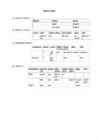
Word order: positive sentences subjects verb(s) object I speak English. I can speak English. Negative sentences subject verbs Indirect object Direct object place time I will not you the story at Tomorro tell school w. Subordinate Clauses conjunction subject verb(s) Indirec Direct place time
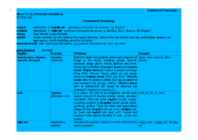
1 Grammatical Terminology PRACTICAL ENGLISH GRAMMAR FLGR.01.042 Grammatical Terminology analytic analüütiline (= uninflected - grammar is focused in the sentence , e.g. English) synthetic sünteetiline (= inflected - grammar is focused in the word, e.g. Estonian, Latin, Russian, Old English) ending lõpp (käände- ja pöördelõpud)
have to understand that success means various things for different persons. The main question is what makes a human being happy? In my opinion, as a person claims that he is happy, then we can firmly say that this person is successful in life because he feels content with his life. Contentedness and happiness are the key factors in determing how succesful someone is. It is often said that for a small town inhabitant, it is a lot harder to achieve something in life. I totally disagree with this statement. There are just other values in a town with a small population density. Values concerning family life are coming more forth, career and such kind of personal ambitions are kept in the backround. Also it is often mentioned that making a successful career in a small town is largely impossible, because of the lack of different resources and opportunities. By these it is commonly ment a uncompetitive education and few opportunities to develop extracurricular activities
Arguments valid or not - logic is a science where to decide it Different arguments lead to different methods. 1 - Recognizing arguments What is an argument? An argument is a group of statements, so that one or more of them (called the premises) is said to provide support for one of the others (called the conclusion). When the course starts, you should listen But the course has started Therefore, you should listen. What is a Statement? Statements are declared sentence. A statement (or a Proposition) is a sentence that is either true or false. Truth and falsity are called Truth values. - Tallinn is the capital of Estonia - Statement (true/false) - Sydney is the capital of Australia Example of sentences that are not statements: Let us go to have lunch (invitation) What time is it? (question) Go away! (command) What is an Inference? An argument has one or more premises and one conclusion.
people argue that, opponents of this view say, however there are people/those who oppose, contrary to popular belief To express personal opinion in my opinion/view, to my mind, personally I believe, it strikes me that, I feel very strongly that, I am inclined to believe that, it seems to me that, as far as I am concerned To conclude finally, lastly, all in all, taking everything into account, on the whole, all things considered, in conclusion, as I have said, as was previously stated, to sum up Additional linking words To refer to other sources according to, with reference to To express cause because of, owing to, due to, for this reason To express effect therefore, thus, as a result, consequently, so, as a consequence To emphasize what you say clearly, obviously, of course, needless to say, in particular
QUESTIONS 1.) If there is the verb be or modal verb in a sentence, then a question is formed by changing the word order. * We're going to be late. - Are we going to be late? * He can sing - Can he sing? 2.) Present and past simple questions are usually formed with the auxiliary verb do/did/done. The main verb is the infinitive. * They live in Paris - Do they live in Paris? * He saw her today - Did he see her today? 3.) A question can also begin with a question word. Notice that the word order changes * She is dancing. - What is she dancing? NB! Who did Peter phone? (Subject is Peter) Kellele Peeter helistas? Who phoned Peter? (Subject is who) Kes helistas Peetrile? REPORTED QUESTIONS When we ask for information, we often say Do you know...
................................... 5 Unfulfilled past events.......................................................... 5 Past Simple Regular Past Simple forms end in -ed. I worked he danced we apologized Some verbs have an irregular past form. I left he wrote The Past Simple is the same in all persons except in the past tense of be. I/he/she/it was (in the singular) you/we/they were (in the plural) To form a negative or a question in the Past Simple, use did and the verb in the original form: Negative I/you/he/she/it/we/they did not stop/didn’t stop. Question Did I/you/he/she/it/we/they stop? Note! stopped stop. If a sentence contains was or were, use them, not did to form negatives and questions. Negative I/he/she/it was not /wasn’t you/we/they were not /weren’t Question Was I/he/she/it? Were you/we/they? 2
You have to use one of them. 1. The first paragraph is meant for saying why you write, where did you get the information from and what the advertisement was about. In case newspaper's name is not mentioned in the task, it would be good if you could make one up. P1: General information For example: ,,I am writing to you in response to your advertisement in The Times about a flat to let at Finsbury Park, London." This would be the whole first paragraph and totally acceptable. Usually it is quite well said in the task, which information you have to ask. There are about 6-7 questions. It is essential that you put them in a logical order. Some of the questions (at least 3-4 questions) should be indirect questions. NB! Sentence ,,Could you tell me, when will be the flat available" is NOT an INDIRECT QUESTION, because it is a request. Requests are not good to be used in a formal letter.
-term paper 10-15 sources (1 page), -graduation paper (2 pages of sources). FGI 1811 Proseminar I. Ladusseva 1 10.09.2002 At the defense aspects that are considered are: - your own contribution (whether it is there and is sufficient) - theory (you should have at least 6-10 connected pages discussing the state of the art) - mechanics (the layout of the paper: font size 12, double space, etc.) - answering questions - performance (pronounce distinctly, make good impression, no language mistakes, etc.) - extra linguistic part (how you stand, how you speak, etc.). Will be checked student's ability to classify, to describe material, to draw conclusions (e.g. you give an example and then comment on it). Internet sources: it is nice to have some Internet sources to show your sophistication, but not too many of them, because they are not very reliable.
 annaabi.ee