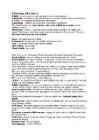
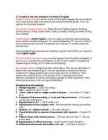
Phonology. Mid-term 2. Syllable - is a phonological unit consisting of one or more phonemes. In phonetics a syllable is a unit which consists of a centre, that has little or no obstruction to airflow; it is comparatively louder than other sounds. In phonology syllables are the possible combinations of phonemes. The syllable consists of - onset, nucleus, coda. (every syllable has a nucleus: vowel, syllabic l, or m, n). Rhyme/rime nucleus + coda; the nucleus and the coda constitute a sub-syllabic unit rhyme. Words rhyme, when their nucleus and coda are identical. (E.g 'cr-o-wn', 'd-o-wn'). The hierarchical structure of the syllable: Onset the beginning of the syllable Nucleus/peak the open part of a syllable, generally a vowel.
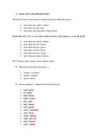
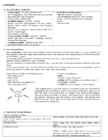
Musical instruments: · The violin; the guitar Academic subjects: · Biology; history Go to------ school, university, sea, bed, work, hospital: · - Nationalities: · Dutch; Spanish 4. Comparison of adjectives: Adjectives with one syllable: clean cleaner cleanest new newer newest cheap cheaper cheapest Adjectives with two syllables and the following endings: Adjectives with two syllables, ending in -y dirty dirtier dirtiest easy easier easiest happy happier happiest pretty prettier prettiest Adjectives with two syllables, ending in -er clever cleverer cleverest Adjectives with two syllables, ending in -le simple simpler simplest
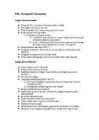
The Danes and the Anglo-Saxons The cultural differences relatively small Similar way of life Different varieties of the same Germanic language The Danes soon converted to Christianity By the end of the 10th c, England was a united kingdom with a Germanic culture throughout Most of Scotland united (at least in name) in a (Celtic) Gaelic kingdom Anglo-Saxon verse No rhyme nor regular number of syllables in a line, rhythm is important. The stressed syllables in a line usually begin with the same consonant alliteration. A line is divided into two half-lines by a pause a caesura, it is a natural place for a stop. Parallelism the repetition of the same idea in a different form. Many nouns and names substituted with metaphors and kennings. sea: salt-streams, sail-road, wave-deeps warriors: the famous-for-prowess, heroes-in-battle, the cased-in- helmets
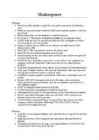
who were skilful and highly trained · In a soliloquy the actor's alone on the stage, speaking to himself and revealing to the audience his inner thoughts and feelings · In an aside the actor speaks words that the other characters on stage are not supposed to hear Sonnet · A sonnet (from the Italian fot ,,little song") is a fourteen-line lyric poem with a fixed rhyme pattern and a regular rhythm, or predictable pattern of stressed and unstressed syllables called metre · The basic unit of metre is foot which usually contains one stressed syllable and one or two unstressed syllables · The usual metre of a sonnet is iambic pentameter · The English sonnet (Shakespearean sonnet) differs from the Italian one on its structure · The Italian sonnet has 2 four-line and 2 three-line stanzas, the English sonnet divides into three quatrains, or groups of four lines, and a rhymed couplet, or a pair of lines
most important in A-S lives: war, the sea that surrounded the British Isles and death. · Main qualities: somberness, awareness of inevitable death. Formal features of A-S poetry: 1. No rhyme, instead they used alliteration; A-S poetry is alliterative. (Alliteration the repetition of the same consonants in a line); 2. Every line contains a caesura a pause in the middle of a line; 3. In every half-line there are two stressed syllables, so all in all, 4 in a line; 4. The number of unstressed syllables is not fixed; 5. There is no rhyme; 6. There are very few similes (a direct comparison, i.e your hair is like gold), in Beowulf there are 5 similes; 7. On the other hand there are many metaphors, typically A-S metaphors kennings (a special type of metaphor comprised of two words, i.e swan-road the sea; the bone- house the body; sword-game war; Beowulf bee + wolf = bear) 8
Yogh-letter (cf yoke Estonian "ike") modified Latin g. Probably stood for several sounds starting with /j/ up to /g/. Prefix ge probably · not stressed · yokh-letter stood for /j/. Reasons for surmising this: 1. The prefix is still there in German (Past Participle, e.g. gehen, ging. gegangen). It is not stressed in German. 2. The prefix was lost during the Middle English times (geholpan holpen), it is easier to drop unstressed syllables. 3. The middle version was /i/ (spelt in Middle English as y): y-ronne (run Past participle). More logical that /je/ turns into /i/ than that /ge/ turns into /i/. Modern English still had the obsolete form "yclept" so-called. C stood for /k/, except when there was a dot on it then it stood for /kj/ which later turned into /tS/ in the Southern part of Britain, but not in the Northern part. Cf irie church, but in Scottish English (i.e. Northern English) Auld Kirk, Free Kirk
5 kinds of feet in English verse: 1. iambic iambus (1 unstressed and 1 stressed syllable) x / 2. trochaic trochee (the stressed syllable is followed by the unstressed one) /x 3. dactylic dactyl (1 stressed syllable is followed by 2 unstressed) /xx 4. amphibrachic amphibrach (1 stressed syllable between 2 unstressed ones) x / x 5. anapaestic anapaest (2 unstressed syllables followed by 1 stressed) xx/ monometer - 1 foot; dimetre - 2 feet; trimetre - 3 feet; tetrametre - 4 feet; pentametre - 5 feet; hexametre - 6 feet; eptametre -7 feet; octametre - 8 feet.
Nowadays it is often rejected. Even in titles. It adds intimacy. The arrangement of lines has become a significant feature of modern literature, particularly in poetry. Figure poems, for example, appeal more to the eye than to the ear. They have often the shapes of cross, heart, bird, etc. Multiplication of letters--letters are doubled to reflect the way they are pronounced. This is mostly used in dialogues. (laaarge) Hyphenation is used when a word is split up into syllables or even letters to indicate additional stress on the word (des-pise) The Italics show that the words are important in the present context and should be pronounced accordingly. Graphon means distorting the spelling of the words. It is characteristics of prose only. It occurres in dialogue. It is used to suggest that the person is drunk, very young or ignorant of the discussed topic (temporary things) Permanent are educational and social factors. (Fella, helluva, don't cha, gimme etc.)
3.) Describe Old English Poetry in terms of form and content. Old English poetry is highly formal. Each line of it is divides into two halves, separated by a caesura, or pause, and is often represented by a gap on the page. The verse form contains complicated rules for alliteration designed to help scops, or poets, remember the many thousands lines they were required to know ny heart. Each of the two halves of an Anglo-Saxon line contains two stressed syllables, and an alliterative must be carried over across the caesura. Often features a distinctive set of rhetorical devices, like the kenning. 4.) Who is the Venerable Bede and what is he famous for? The Venerable Bede is the author of "The Ecclesiastical History of the English People", which is a record of the development of Christianity in England. 150 manuscripts have survived of the piece. 5.) Name the Fours significant volumes of Old English Verse that date back to the Anglo Saxon Period.
wikipedia.org/w/index.php?title=Nahuatl_orthography Vaadatud 11.10.2014 Nahuatl (2014, 10. okt) Wikipedia, The Free Encyclopedia. http://en.wikipedia.org/wiki/Nahuatl Vaadatud 11.10.2014 Ager, S. (2014) Nahuatl http://www.omniglot.com/writing/nahuatl.htm Vaadatud 11.10.2014 Ager, S (2014) Useful phrases in Nahuatl http://www.omniglot.com/language/phrases/nahuatl.php Vaadatud 11.01.2014 Tuggy, D. (2008) Syllables and stress in Nahuatl http://www-01.sil.org/mexico/nahuatl/23i- SyllablesNah.htm Vaadatud 14.10.2014
Boulton): b and p - suggest quickness, movement, triviality, scorn; m, n, ng - provide various effects of humming, singing, music, occasionally sinister; l - suggests liquids in motion, streams, water, rest, peace, luxury, voluptuousness; f and w - and to a lesser extent v, suggest wind and any motion of a light kind; th - tends to be quiet and soothing (). ASSONANCE - it is resemblance or similarity in sound between vowels followed by different consonants in two or more stressed syllables. Assonance differs from RHYME in that RHYME is a similarity of vowel and consonant. "Lake" and "fake" demonstrate RHYME; "lake" and "fate" assonance. Assonance or vocalic alliteration enhances () the rhythmical pattern. It has melodious and emphatic qualities. Normally, assonance does not appear alone: it is accompanied by other means of sound orchestration, i.e. alliteration, rhyme , etc. There have been attempts to relate vowel sounds to the meaning they convey
Estonian written language · O is replaced by Õ : is based on the central olema>olema dialect · D does not disappear in Is the most common laadivahetusega words : Pada- dialect and also most wide pajas>padas spread Western dialect The most important feature of the western dialect is the V changing into B : kõva kivi>kõba kibi It is usual that in the non-stressed end syllables I changes to E : nimi>nime, ei tohi>ei tohe In comparative the A-stem exists : kõvem>kõvam, parem>param A characteristic feature is the strong form of Inessive:jalas> jalgas, rannas>randas. insular dialect The absence the Õ-vocal, instead Ö is used, but in addition to Ö can also E, A, O and U be used instead of Õ Eg: sõber>söber, kõik>keik, sõnad>sanad, jõulu>jõulu, lõhki >luhki The vowels O, E and Ä will change if they are in
2. RP - Accent which is normally taught to students who are studying EngEng. Used natively by only 3-5% of the population of England. RP has a large number of diphthongs and not a particularly close relationship to English orthography. RP is a social accent, rather than regional, and is associated particularly with the upper-middle and upper classes. Some features: · The /i:/ of bee, rather than the // of be, occurs in the final syllable of very, many, etc. · The vowel // in unstressed syllables (in RP) often corresponds to // (in near-RP accents). · The consonant /t/ may be realized as a glottal stop [?]. · Most EngEng accents have lost the original contrast. · Some English accents are ,,rhotic" or ,,r-ful" and others are ,,non-rhotic" or ,,r-less". 3. Estuary English - a dialect of English widely spoken in South East England. IT is commong among young Londoners. Something between RP and Cockney. Some features: · Non-rhotic · They use intrusive / r /
Core meaning is the meaning which is at the centre of the word.periphery – vague. Formal usage (often polysyllabic words) from Norman French (rank, courtliness,refinement). Learning, science, abstraction: Latin, and Greek. The core vocabulary is predominantly Germanic (the, I, you, etc.) Only 4 of the topranked one hundred words in the Brown Corpus are of foreign origin. 93 of the first one hundred words in the Brown Corpus are monosyllabic, and the remaining have two syllables (only, about, other, also, many even people) Origin of the ten 10000 most frequent words: Example of stratification • Old English 31.8 % heart • French 45 % core ME [origin unknown] (!) • Latin 16.7 % cardiac LME [Fr. cardiaque or L cardiacus adjs., f. • Other Germanic languages 4
f and w - and to a lesser extent v, suggest wind and any motion of a light kind; t, d - like k, g, but less emphatic; are much used in contexts where short actions are described; r - depends on the sounds near it, but is generally found in contexts of movement and noise; th - tends to be quiet and soothing (). ASSONANCE (book, page 44.) It is resemblance or similarity in sound between vowels followed by different consonants in two or more stressed syllables. Assonance differs from RHYME in that RHYME is a similarity of vowel and consonant. "Lake" and "fake" demonstrate RHYME; "lake" and "fate" assonance. Assonance or vocalic alliteration, as any other repetition, enhances () the rhythmical pattern. Like alliteration, it has melodious and emphatic qualities. Normally, assonance does not appear alone: it is accompanied by other means of sound orchestration, i.e. alliteration, rhyme , etc.
Centring diphthongs end with a central vowel, the glide is towards . Closing diphthongs end with a closed vowel, the glide is towards ý and . English vowels: a vowel is longest in an open syllable and in monosyllabic words (sea, speed) a vowel is next longest in a syllable closed with a voiced consonant and in two-syllable words (seed, speedy) a vowel is shortest in a syllable closed with an unvoiced consonant and in words with more than two syllables (seat; speedily). Stop Consonants (Plosives). A stop (or plosive) - is a consonant articulation which stops the airflow in the vocal tract completely, the air cannot escape through the mouth. When the articulators come apart, the airstream will be released in a small burst of sound. Aspiration a period of voicelessness after the release of an articulation, e.g. pie [paý] NB! K, p, t are unvoiced/aspirated consonants and g, b, d are unaspirated/voiced consonants
Most vowel sounds in English are made with the mouth in one position and with one pure sound. These vowel sounds are called monophthongs (mono meaning “one” and phthong meaning “sound”). A diphthong is one vowel sound formed by the combination of two vowel sounds. A diphthong begins as one vowel sound and moves toward another, such as the vowel sounds in coin or loud. Diphthongs can be contrasted with two monophthong vowel sounds together that form two syllables, such as in chaos, triage, or violin. When teaching reading, the two vowel sounds most commonly identified as diphthongs are /oy/ and /ow/. The most common spellings for the vowel sound /oy/ are oy (toy) and oi (void), and the two most common spellings for /ow/ are ow (cow) and ou (cloud). For the curious: a Youtube video by English Language Club https://www.youtube.com/watch? v=d1HZPx8DuDw Farrell, Linda. 2010. The Difference Between Diphthongs and Digraphs. Available at http://www.cdl
Bowls from river clay. Intricate designs+craftsmanship. GREEN CORN FESTIVAL. During (around) full moon, when corn was ready. Holy Man- light+tend sacred fire Eating corn-bread, soup,roasted corn, etc. Lacrosse. Music. 1) Water drum-clay pot with skin stretched on top. 2-3cm of water. 2) River cane flute-30 cm long, 6 holes 3) Trumpet-buffalo horn or long necked gourd. 4) Turtle-shell rattle Unusual music, instrumental+lyrical music. Lyrics:family+tribe: sometimes meaningless, syllables. Men were usually composers. Great emotional depth. RELIGION. Certain numbers were important. 4: a) elements: earth, air, fire, water b) directions (north etc.) 7: a) directions: north etc. + up, down, centre 7- purity, sacredness-it was occosiated with owl+cougar (wild cat), days of creation, state of perfetion: pine, spruce, hollybush, * udor Circle: important symbol, Ceremonial dances moved in circular directions Rivers. ,,Long Man" ,,going to water" spirtual cleansing.
(nt, ad, advertisment; siss, sister; doc, doctor). Are usually colloquial. If the shortened form is used more often than the long form, it becomes neutral (nt, phone, telephone). Abbr. Types of shortening: *initial shortening- means dropping the first part (nt, telephone, phone) *final shortening- second part dropped (exam, examination) *acronyms- words made up of initial letters (nt, USA, WC) *ellipsis- shortening an expression (nt, bub, public house) *syncope-dropping unstressed syllables in the middle of the word(mathS, mathematics) 13. Blending it is joining 2 stems and dropping points of both(nt, smog smoke plus fog, fringlish- french plus engl, motel- motorists plus hotel)It operates in colloquial engl. It is concidered a minor word building type. Yet new words appear today as well and it is quite productive. Blends began to appear in the 14th century. Nowadays blends are popular in newspapers and advertisments. 14. Words from the historical point of view.
panorama of human nature including everything that is noble and base (the opposite of noble). · GC was in a transitional stage into the Renaissance. There is humanity and humanism in his works and it is why he has sympathy for people. · GC decided to break free from Italian and French literature. His vocabulary is very informal, easy, he doesn't use alliteration and his verse is musical. He uses lines of 10 syllables with 5 stresses each. His lines run in rhyming couplets. · GC was a forerunner of the Renaissance. Literature of the 15th century · The barren century · Ethnic groups in England had become a more or less unified nation · Beginning of the English nation, no longer Saxon or French Norman, or Celtic · An earlier consciousness of nationality than elsewhere in Europe · The Hundred Years War 1337-1453
Before death designed his own epitaph( text on tombstone). If anybody touched is bones and ashes, he would be cursed. That stopped reburying Three periods in his literary period I Optimistic period II Pessimistic period III Romantic The Optimistic period He wrote poems and sonnets (154), world famous comedies, bright comedies, two tragedies "Romeo and Juliet" and some historical plays. 4 different items. Sonnet A poem of 14 lines, perfected in Italy by Petrarch. Each line has 10 syllables an d the stress is on everu other syllable. Adressed on two people. One was so called The Dark Lady. Other was The Writers Young Friend. Started to wrote them because sonnets abled him to criticise various human vices to express his feelings of love and friendship and his admiration of beauty. The above mentioned themes were very important in the Renaissance period. The ideal woman of those days looked like Elizabeth I. She had golden hair and ... complection, but The Dark Lady was totally
vowels. Estonian is quite hard to learn but that is no problem for local inhabitants, because most of Estonians are hard-working and appreciate education. They are also cool and reserved, but also not too eager to open a conversation with a stranger. Estonia has rich culture. Music and dances have always played an important role in people's life. The most original part of Estonian folklore is the runic folksong. It was based on the alteration of long and short syllables. In different folksongs either men or women sang and the songs were often accompanied by a musical instrument. Today folksongs are often used by modern composers. A major change in Estonian culture occurred during the period of the National Awakening. Choirs and brassbands were founded in every corner of Estonia, it culminated with the 1 st Song Festival in 1869. Since then the Song Festivals have taken place every 4-5 years and have certainly helped Estonians maintain their national identity
or event in terms of such entities as time, place, manner, own ice cream. degree, intensity, reason, frequency. An adjunct can be realised by an adverb phrase, a prepositional phrase, a noun phrase or adverbial clause. affix afiks A syllable or group of syllables which are added to the unworkable un-prefix, -able suffix beginning or end of a word to make a new word. Affixes added to the beginning of a word are prefixes. Affixes added to the end of a word are suffixes. auxiliary abitegusõna Refers to a closed set of verbs (be, do, have) that are He was working over there.
create intimacy with the reader. Even in headings small letters tend to be used. E.g. under milk wood (by dylan thomas). The arrangement of lines on a page has become very significant in poetry. The so called figure poems have appeared. There are poems having shape of a figure (star, fly) depending on a context. Multiplication of letters, that is, letters are doubled to reflect the way they are pronounced. E.g. laaaaarge, ruuuuuuin. Hyphenation may split up a word into syllables or even letters, thus, emphesizing this very word. E.g. I des- pise him! Italics show that words are important in this very context or words are used in some special, ironic meaning. It is a tradition to italicize foreign words. Graphical stylistic devices Graphon is distorted spelling of a word. It renders phonetic peculiarities of pronunciation and occurs in prose only and not in authors´ narrative but dialogue. I suggest blurred, coherent or careless pronunciation caused by
These are traditional cases (registered in dictionaries). More original and hence expressive instances comprise nonce coinages: The train choo-chooed to the station. Rrrr-umph! A devastating crash.. A jet whooshed into the sky. He tut-tutted his tongue. Punk, punk, punk, her needle broke the taut circle... Clop, -clop, -clop! Up the street came the delivery wagon. Alliteration The repetition of similar or identical consonants at the beginning of neighbouring words or stressed syllables: Most musical of mourners, weep again! This device goes back to Anglo-Saxon poetry that knew no rhyme and did not yet rely on metre. An example of this period: In a somer seson, when soft was the sonne, I shope me in shroudes, as I shepe were. (W.Langland) The importance of A. Is fully recognized by contemporary poets as well. They use it more sparingly, yet rather frequently and effectively. The complete alliteration of Anglo-Saxon poetry is sometimes used for humorous purposes:
3 % The core vocabulary is predominantly Germanic (the, I, you, etc.) Only 4 of the top-ranked one hundred words in the Brown Corpus are of foreign origin. o 64 state o 81 use v (Old French) o 93 people (Anglo-Norman, > Old French) o 100 just (> Old French) Core vocabulary and syllable structure: o 93 of the first one hundred words in the Brown Corpus are monosyllabic, and the remaining have two syllables (only, about, other, also, many even people) Core vocabulary – often short (monosyllabic) words of Germanic and Old Norse origin. 3. Native and foreign element. The native vocabulary has 3 strata Indo-European words - names of close relatives, names of natural objects, parts of the body, numerals. o Mother, father, night, foot, heart, bear (bore, born), see Germanic words
before adding er to form the comparative, and -est to form the superlative. For example: Comparative Superlative big bigger biggest dim dimmer dimmest mad madder maddest sad sadder saddest 4Some adjectives have two syllables and end in -y. With these adjectives change the y to i. Then add -er to form the comparative, and -est to form the superlative. For example: Comparative Superlative busy busier busiest dirty dirtier dirtiest happy happier happiest
The dialects often show distinct and non-standard features of pronunciation and intonation, vocabulary and grammar. Some of these are relics of ancient usage now completely discarded by the standard language. The Northern Russian dialects and those spoken along the Volga River typically pronounce unstressed /o/ clearly, a phenomenon called okanye (). Besides the absence of vowel reduction, some dialects have high or diphthongal /ei/ in the place of Proto-Slavic * and /ou/ in stressed closed syllables (as in Ukrainian) instead of Standard Russian /e/ and /o/. An interesting morphological feature is a post-posed definite article -to, -ta, -te similarly to that existing in Bulgarian and Macedonian. In the Southern Russian dialects, instances of unstressed /e/ and /a/ following palatalized consonants and preceding a stressed syllable are not reduced to [] (as occurs in the Moscow dialect), being instead pronounced [a] in such positions (e.g. is pronounced [nasli],
alphabet under the one given above and then to use the two in rotation, the first alphabet for the first plaintext letter, the second for the second, the first again for the third plaintext letter, the second for the fourth, and so on. Modern cipher machines produce polyalphabetic ciphers that employ millions of cipher alphabets. Among the systems of substitution, code is distinguished from cipher. A code consists of thousands of words, phrases, letters, and syllables with the codewords or code-numbers (or, more generally, the codegroups) that replace these plaintext elements. plaintext codeword emplacing DVAP employ DVBO en- DVCN enable DVDM enabled DVEL enabled to DVFK This means, of course, that DVDM replaces enable. If the plaintext and the code elements both run in alphabetical or numerical order, as above, the code is a one-part code, because a single book serves for
switch to a learner's dictionary as soon as possible, or to use it in conjunction with a bilingual dictionary. You will find that your vocabulary will increase faster by using an English language dictionary. What You Can Learn A dictionary gives you the information required to choose the best word for your needs. A typical dictionary entry contains the correct spelling of a word, followed by the word written in a phonetic alphabet, which shows how to pronounce it. The word is separated by syllables. These help you determine where to separate it at the end of a line when writing. Following the phonetic spelling of the word, its part of speech is indicated. The meanings of the word are given in a numerical order, sometimes followed by a sentence that shows the proper use of the word. While many modern dictionaries list the meanings of words from the most common and current meaning to the oldest meaning, some list their definitions from the earliest meaning to the latest meaning
cognition may be heard clearly. The sharpness of poetic sensitivity is reviving some features of romanticism in a novel quality... associative sound figuration demands quite empirical perception of reality here, it is willingly elementary.1 Sink’s increasing interest in “pure” sound led him in 1969 to experiments in instrumental theatre. With different chamber ensembles he reached the purely phonetic, unconnected syllables in the manner of John Cage. This was a sign of arriving at a certain creative vacuum. We may draw some parallels between the music of Sink and Pärt in that period. Both began in the neoclassical manner and reached novel methods of composition, but at the end of the Sixties, a sharp branching took place. Sink continued with his dodecaphonic works for some time. Pärt, composing his Third Symphony, reached
sort. (Contrast the case where spies are using chess moves as an actual secret code; for example, NQ3 may have conventionally been stipulated to mean "Take the zircon to Foppa and tell him we move tonight.") What, then is supposed to distinguish language-games from ordinary games? Suppose some community agrees to use certain words--or at any rate sounds and marks--in a peculiar way; say they decide to put only "words" with the same number of syllables next to each other in threes, or they utter "sentences" only in rhyming pairs, where each string begins with a one-letter word and adds one letter successively to each ensuing item. (This might be a sort of community-wide parlor game.) If a newcomer happened upon this whimsical society and knew nothing of the arrangement, s/he would not understand what was going on. The newcomer might, in time, work out all the rules according to which the various tokens were being used, and yet
naroer 56 : - :re task Thendo item 'l with 5s 5swork in pairs :: :re exerciseElicitstructures usedfor comparatives .-cerlativesRefer5s to the GrammarReference : - .or moredetail : ,, erKey(Seeoverprinted answers) . usedbeforesometwo-syllable adjectives and adverbs cdjectives and adverbswith morethantwo syllables to :' ecomparativedegree. : usedbeforesometwo-syllable adjectives and adverbs cdjectives and adverbswith morethantwo syllables to ^esuperlativedegree. : - . '- the taskand the key.Thenreadout the example , : ^: afterthe other,makeup a sentence - - ; gestedAnswerKey . :!
naroer 56 : - :re task Thendo item 'l with 5s 5swork in pairs :: :re exerciseElicitstructures usedfor comparatives .-cerlativesRefer5s to the GrammarReference : - .or moredetail : ,, erKey(Seeoverprinted answers) . usedbeforesometwo-syllable adjectives and adverbs cdjectives and adverbswith morethantwo syllables to :' ecomparativedegree. : usedbeforesometwo-syllable adjectives and adverbs cdjectives and adverbswith morethantwo syllables to ^esuperlativedegree. : - . '- the taskand the key.Thenreadout the example , : ^: afterthe other,makeup a sentence - - ; gestedAnswerKey . :!
naroer 56 : - :re task Thendo item 'l with 5s 5swork in pairs :: :re exerciseElicitstructures usedfor comparatives .-cerlativesRefer5s to the GrammarReference : - .or moredetail : ,, erKey(Seeoverprinted answers) . usedbeforesometwo-syllable adjectives and adverbs cdjectives and adverbswith morethantwo syllables to :' ecomparativedegree. : usedbeforesometwo-syllable adjectives and adverbs cdjectives and adverbswith morethantwo syllables to ^esuperlativedegree. : - . '- the taskand the key.Thenreadout the example , : ^: afterthe other,makeup a sentence - - ; gestedAnswerKey . :!
naroer 56 : - :re task Thendo item 'l with 5s 5swork in pairs :: :re exerciseElicitstructures usedfor comparatives .-cerlativesRefer5s to the GrammarReference : - .or moredetail : ,, erKey(Seeoverprinted answers) . usedbeforesometwo-syllable adjectives and adverbs cdjectives and adverbswith morethantwo syllables to :' ecomparativedegree. : usedbeforesometwo-syllable adjectives and adverbs cdjectives and adverbswith morethantwo syllables to ^esuperlativedegree. : - . '- the taskand the key.Thenreadout the example , : ^: afterthe other,makeup a sentence - - ; gestedAnswerKey . :!
"No -- I was very surprised to see him there." Her lips puckered in disappointment at the transparent honesty in my voice. "But he picked you up for school today?" she probed. "Yes -- that was a surprise, too. He noticed I didn't have a jacket last night," I explained. "So are you going out again?" "He offered to drive me to Seattle Saturday because he thinks toy truck isn't up to it -- does that count?" "Yes." She nodded. "Well, then, yes." "W-o-w." She exaggerated the word into three syllables. "Edward Cullen." "I know," I agreed. "Wow" didn't even cover it. "Wait!" Her hands flew up, palms toward me like she was stopping traffic. "Has he kissed you?" "No," I mumbled. "It's not like that." She looked disappointed. I'm sure I did, too. "Do you think Saturday... ?" She raised her eyebrows. "I really doubt it." The discontent in my voice was poorly disguised. "What did you talk about?" She pushed for more information in a whisper. Class had started but Mr.
room to do them justice." "Oh! it is of no consequence. I shall see her in January. But do you always write such charming long letters to her, Mr. Darcy?" "They are generally long; but whether always charming it is not for me to determine." "It is a rule with me, that a person who can write a long letter with ease, cannot write ill." "That will not do for a compliment to Darcy, Caroline," cried her brother, "because he does not write with ease. He studies too much for words of four syllables. Do not you, Darcy?" "My style of writing is very different from yours." "Oh!" cried Miss Bingley, "Charles writes in the most careless way imaginable. He leaves out half his words, and blots the rest." "My ideas flow so rapidly that I have not time to express them--by which means my letters sometimes convey no ideas at all to my correspondents." "Your humility, Mr. Bingley," said Elizabeth, "must disarm reproof."
 annaabi.ee