Estonian dialects
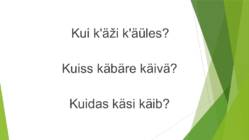
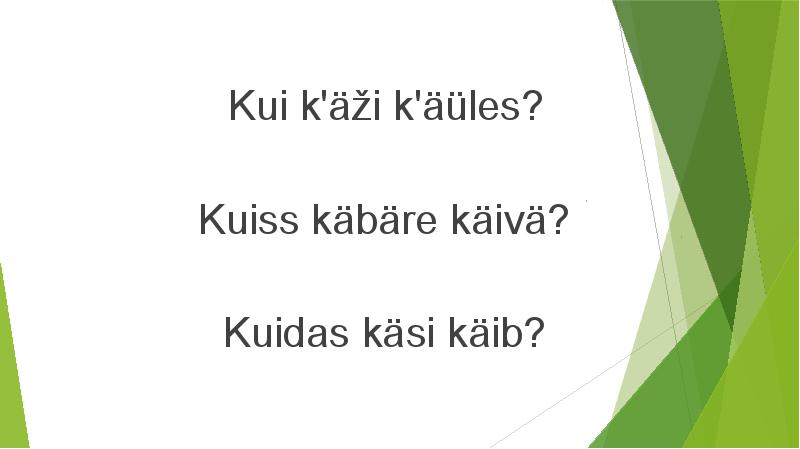
Kui k'äži k'äüles?
Kuiss käbäre käivä?
Kuidas käsi käib?
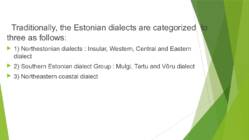
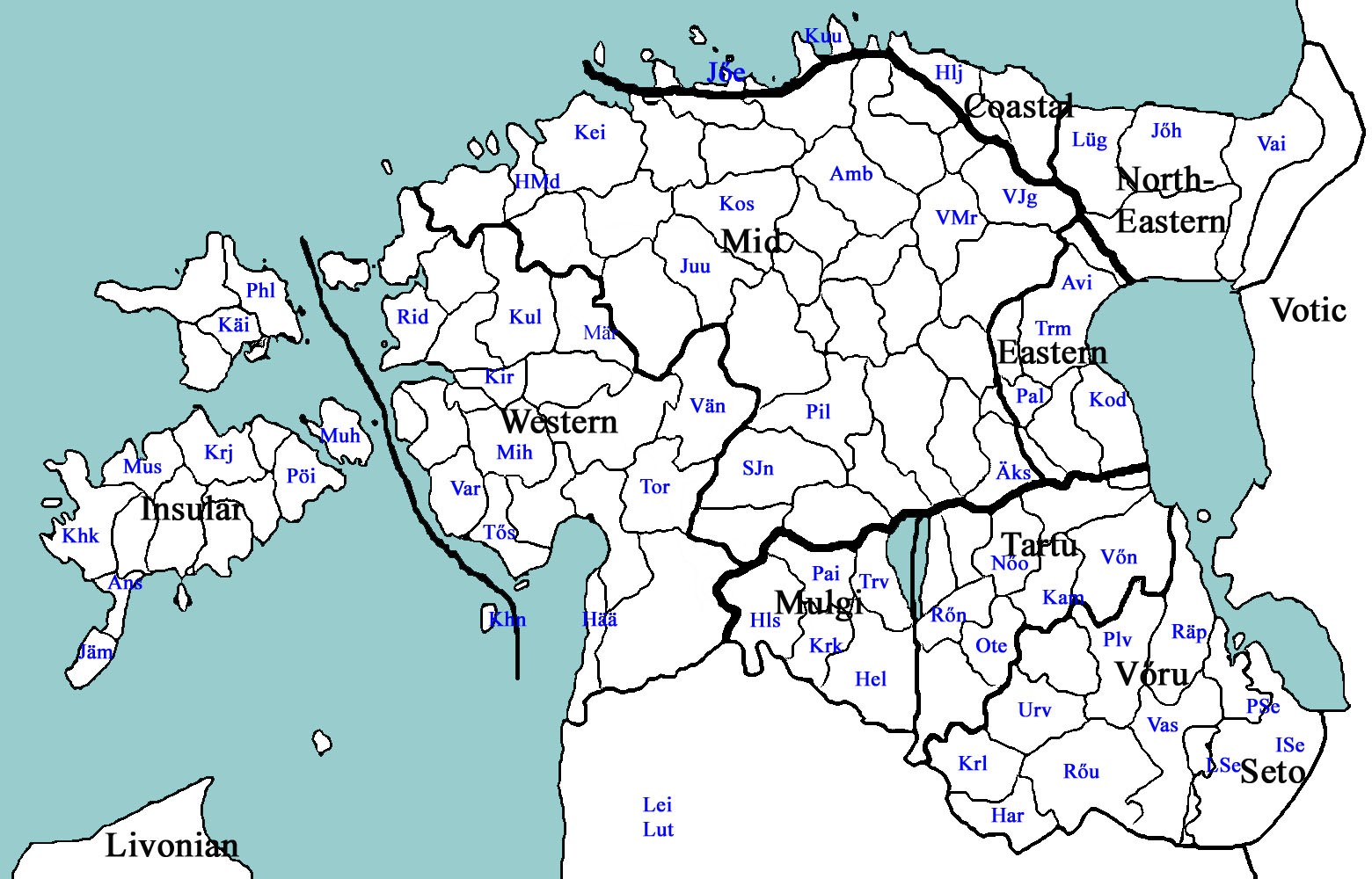
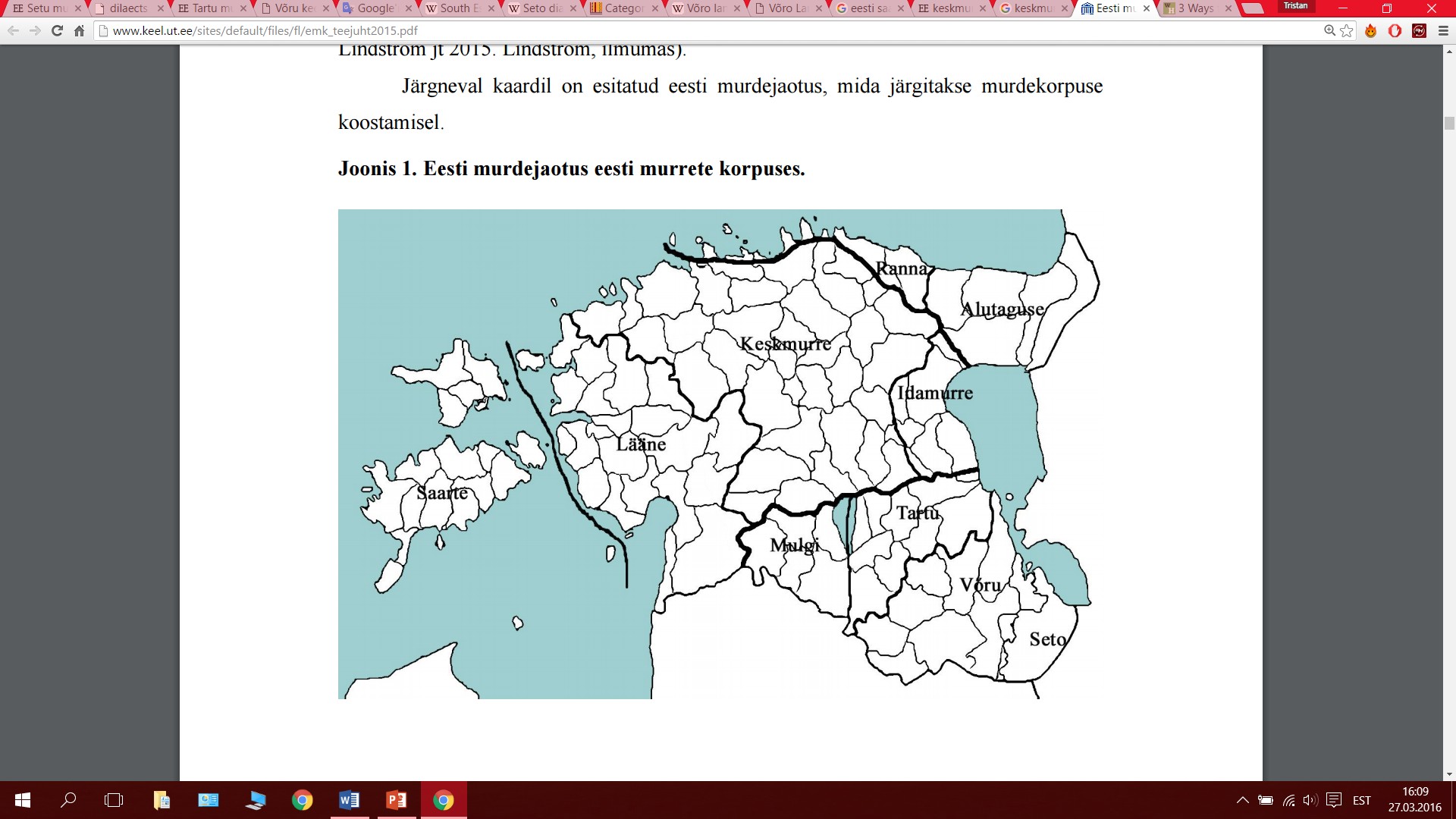
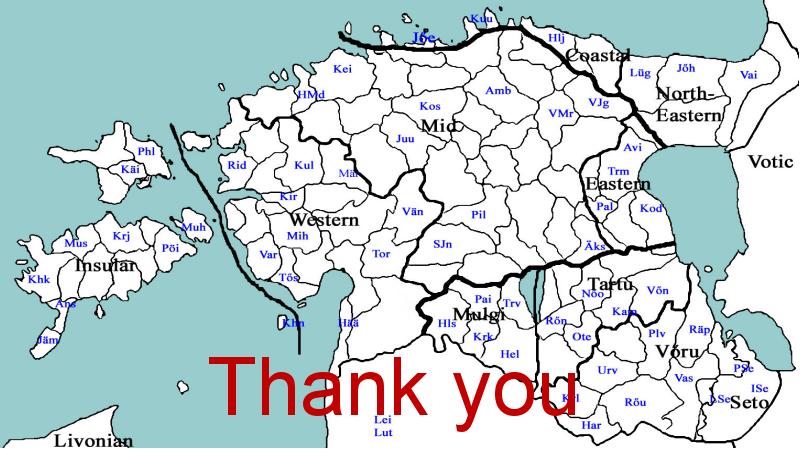
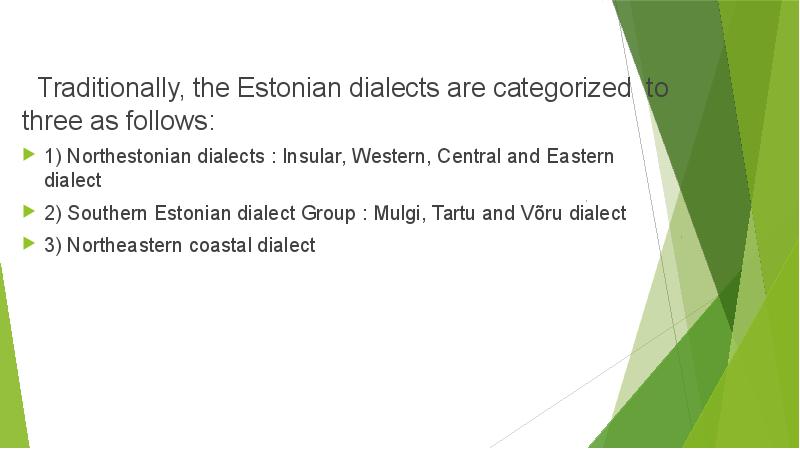
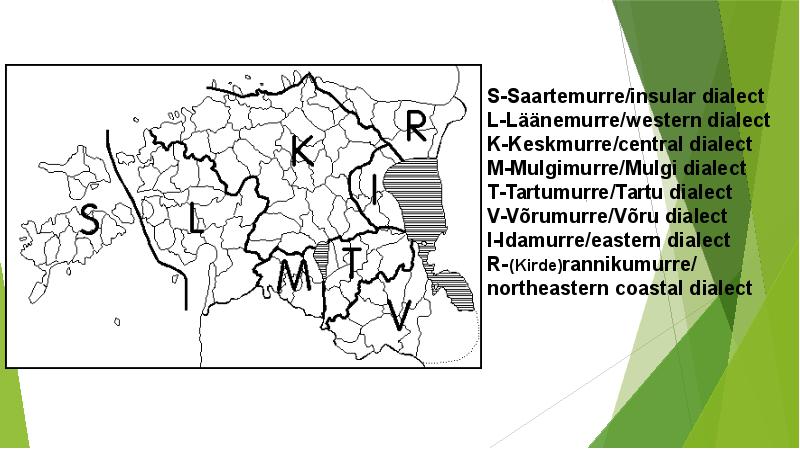
Traditionally, the Estonian dialects are categorized to
three as follows:
1) Northestonian dialects : Insular,
Western , Central and
Eastern dialect 2)
Southern Estonian dialect Group :
Mulgi , Tartu and Võru dialect
3) Northeastern
coastal dialect
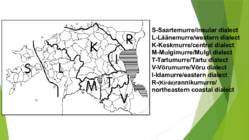
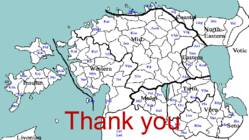
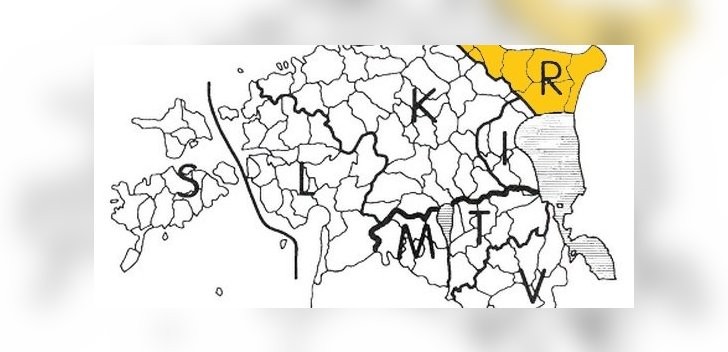
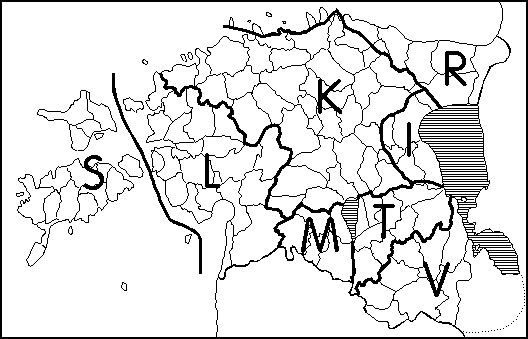
S-Saartemurre/insular dialect
L-Läänemurre/western dialect
K- Keskmurre /central dialect
M-Mulgimurre/Mulgi dialect
T-Tartumurre/Tartu dialect
V-Võrumurre/Võru dialect
I-Idamurre/eastern dialect
R-(Kirde)rannikumurre/
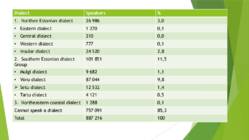
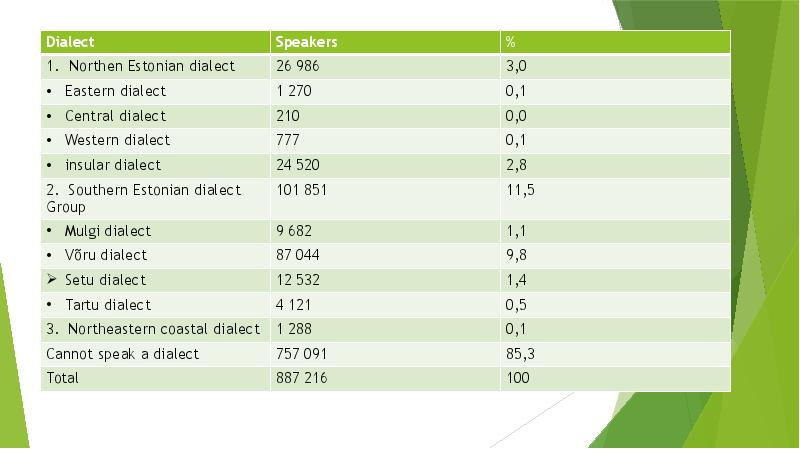
northeastern coastal dialectDialect Speakers %1. Northen Estonian dialect
26 986
3,0
• Eastern dialect
1 270
0,1
• Central dialect
210
0,0
• Western dialect
777
0,1
• insular dialect
24 520
2,8
2. Southern Estonian dialect
101 851
11,5
Group
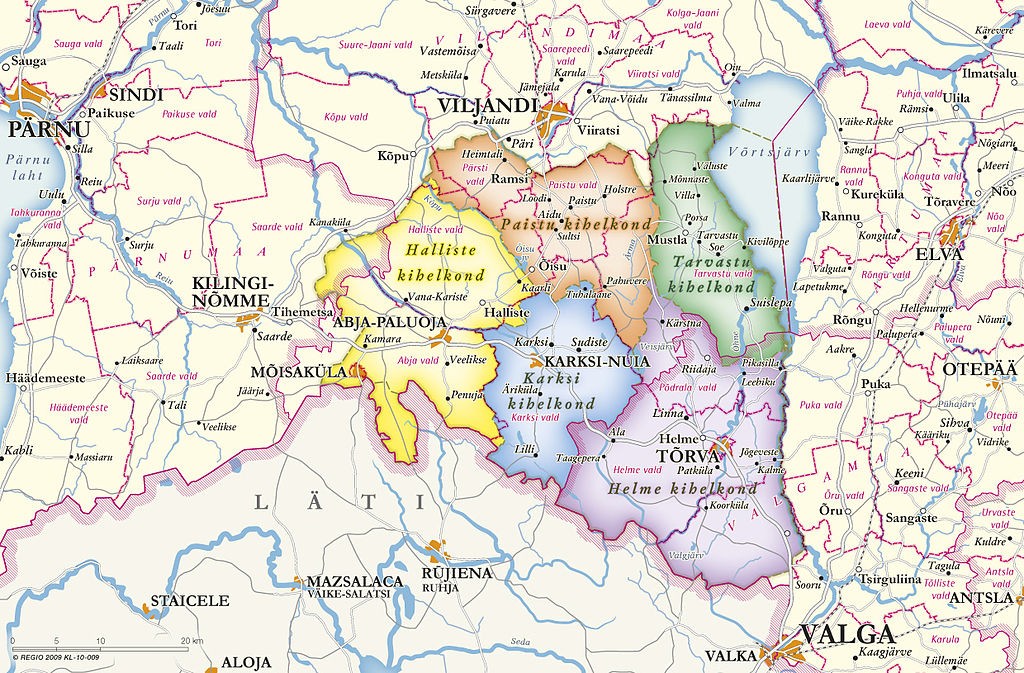
• Mulgi dialect
9 682
1,1
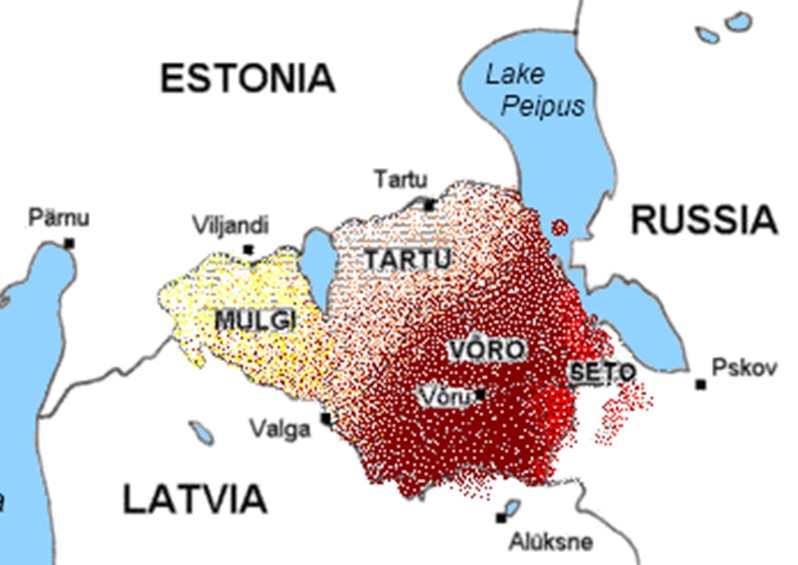
• Võru dialect
87 044
9,8
Setu dialect
12 532
1,4
• Tartu dialect
4 121
0,5
3. Northeastern coastal dialect 1 288
0,1
Cannot speak a dialect
757 091
85,3
Total 887 216
100
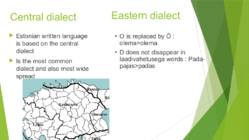
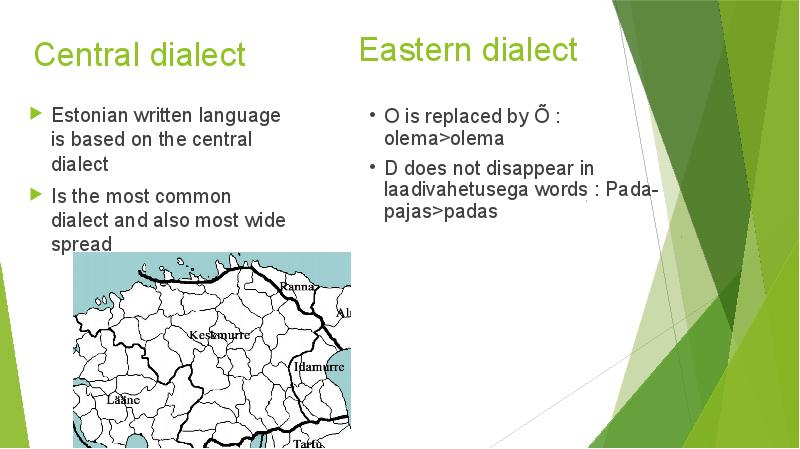
Central dialect
Eastern dialect
Estonian written
language • O is replaced by Õ :
is
based on the central
olema>olema
dialect
• D does not disappear in
Is the most common
laadivahetusega
words :
Pada -
dialect and also most
wide pajas>padas
spread
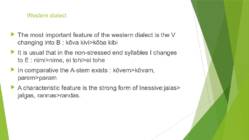
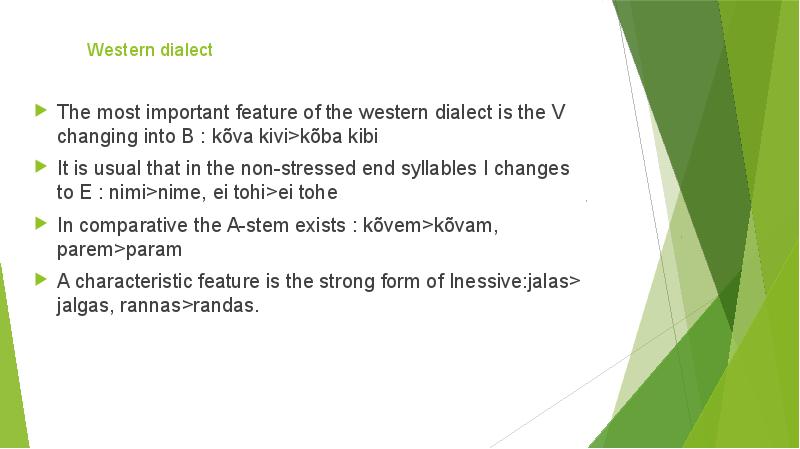
Western dialect
The most important feature of the western dialect is the V
changing into B : kõva kivi>kõba kibi
It is usual that in the non-stressed end syllables I changes
to E : nimi>nime, ei tohi>ei tohe
In
comparative the A-stem exists : kõvem>kõvam,
parem>param
A
characteristic feature is the
strong form of Inessive:jalas>
jalgas, rannas>randas.
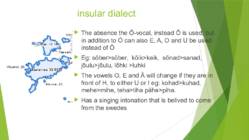
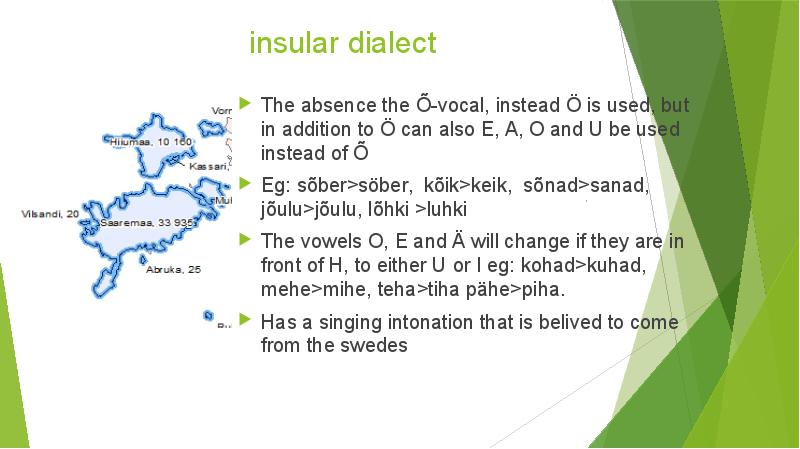
insular dialect
The absence the Õ-
vocal , instead Ö is used, but
in
addition to Ö can also E, A, O and U be used
instead of Õ
Eg: sõber>söber, kõik>keik, sõnad>sanad,
jõulu>jõulu, lõhki >luhki
The
vowels O, E and Ä wil
change if they are in
front of H, to either U or I eg: kohad>kuhad,
mehe>mihe, teha>tiha pähe>piha.
Has a
singing intonation that is belived to
come from the swedes
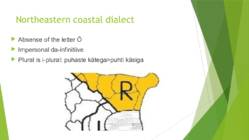
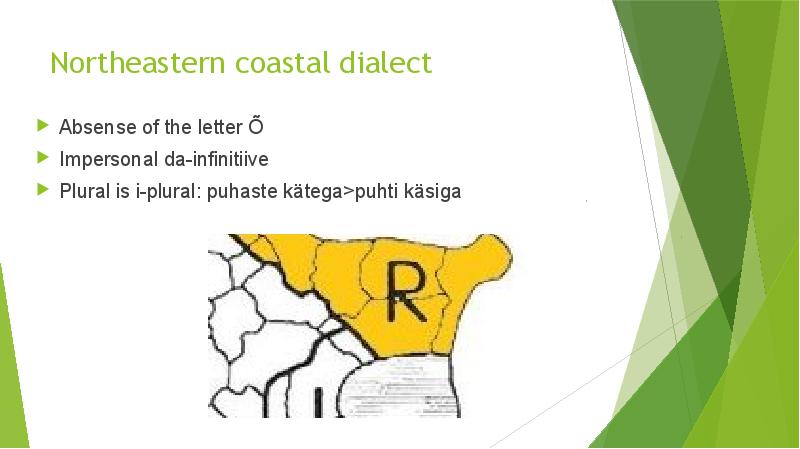
Northeastern coastal dialect
Absense of the
letter Õ
Impersonal da-infiniti ve
Plural is i-plural: puhaste kätega>puhti käsiga
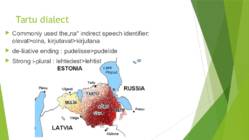
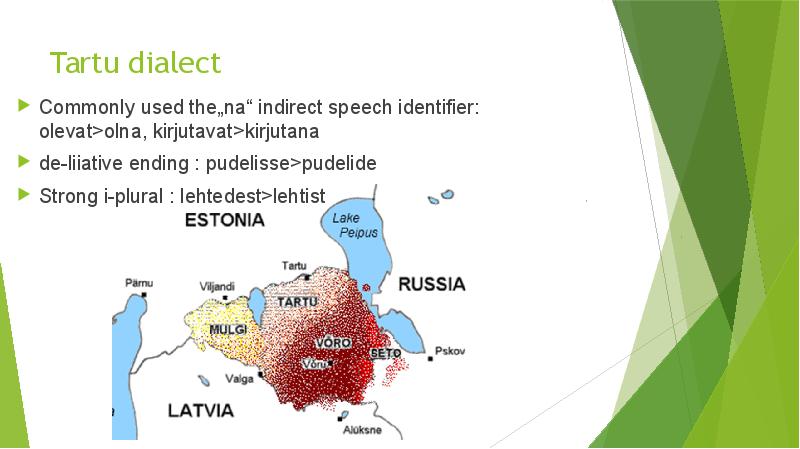
Tartu dialect
Commonly used the„na“
indirect speech identifier:
olevat>olna, kirjutavat>kirjutana
de-li ative
ending : pudelisse>pudelide
Strong i-plural : lehtedest>lehtist
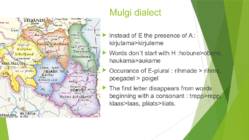
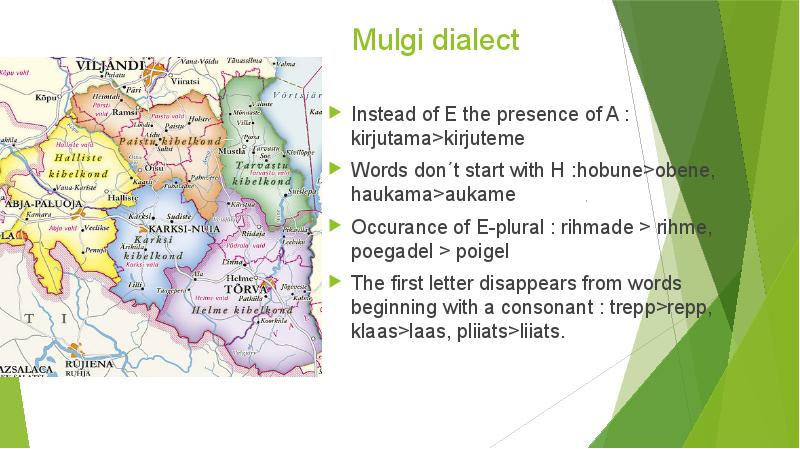
Mulgi dialect
Instead of E the presence of A :
kirjutama>kirjuteme
Words don´t start with H :hobune>obene,
haukama>aukame
Occurance of E-plural : rihmade > rihme,
poegadel > poigel
The
first letter disappears from words
beginning with a consonant :
trepp >repp,
klaas>laas, pli ats>li ats.
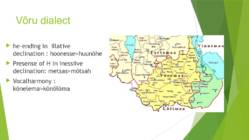
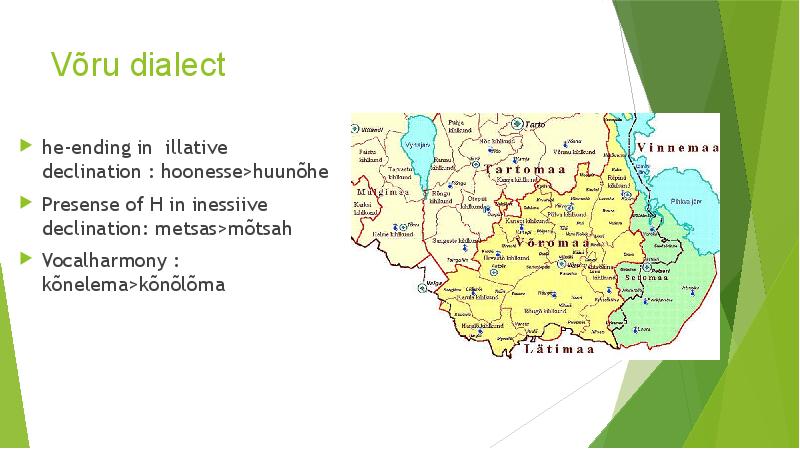
Võru dialect
he-ending in illative
declination : hoonesse>huunõhe
Presense of H in inessiive
declination: metsas>mõtsah
Vocalharmony :
kõnelema>kõnõlõma
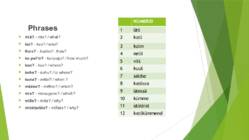
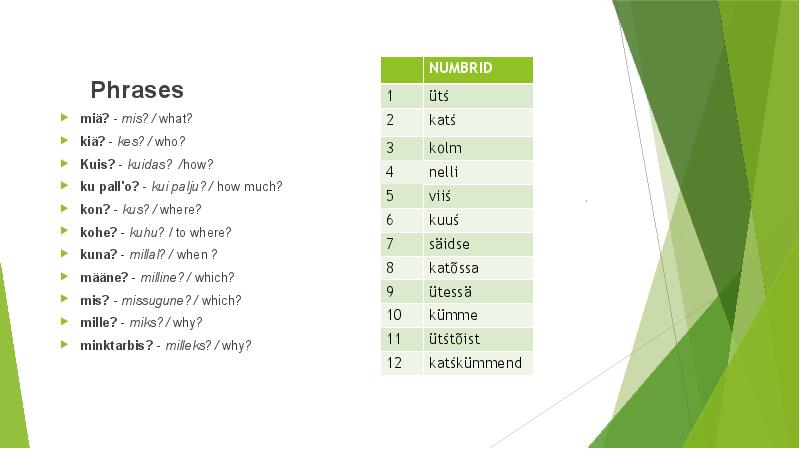
NUMBRID Phrases 1
ütś
miä? -
mis? / what?
2
katś
kiä? -
kes? / who?
3
kolm
Kuis? -
kuidas? /how?
4
nelli
ku pall'o? -
kui palju? / how much?
5
viiś
kon? -
kus? / where?
6
kuuś
kohe? -
kuhu? / to where?
7
säidse
kuna? -
mil al? / when ?
8
katõssa
määne? -
mil ine? / which?
9
ütessä
mis? -
missugune? / which?
10
kümme
mille? -
miks? / why?
11
ütśtõist
minktarbis? -
mil eks? / why?
12
katśkümmend
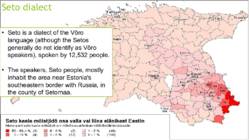
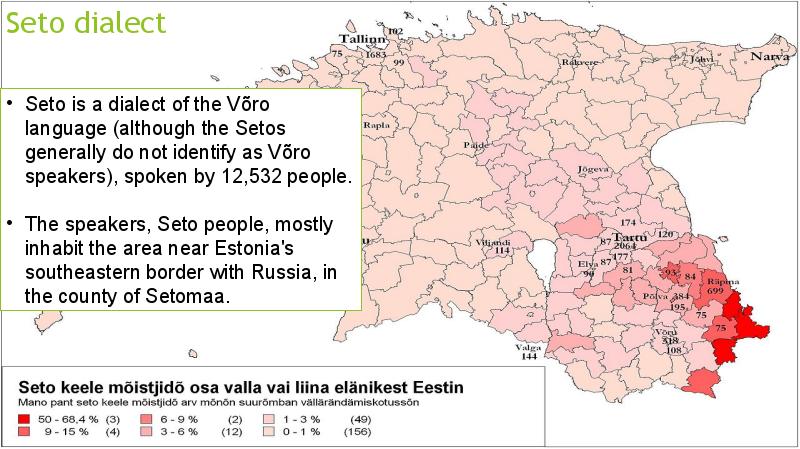
Seto dialect
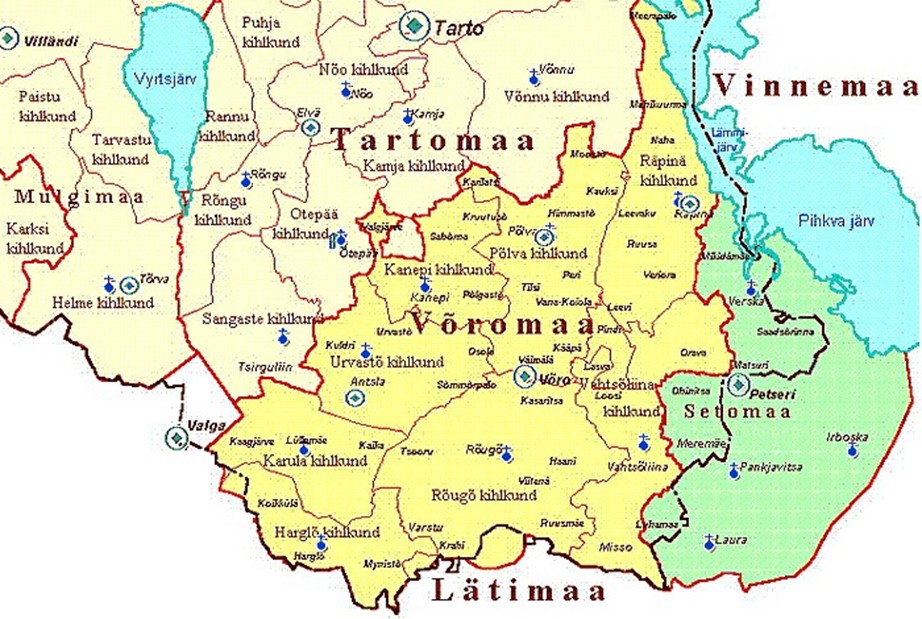
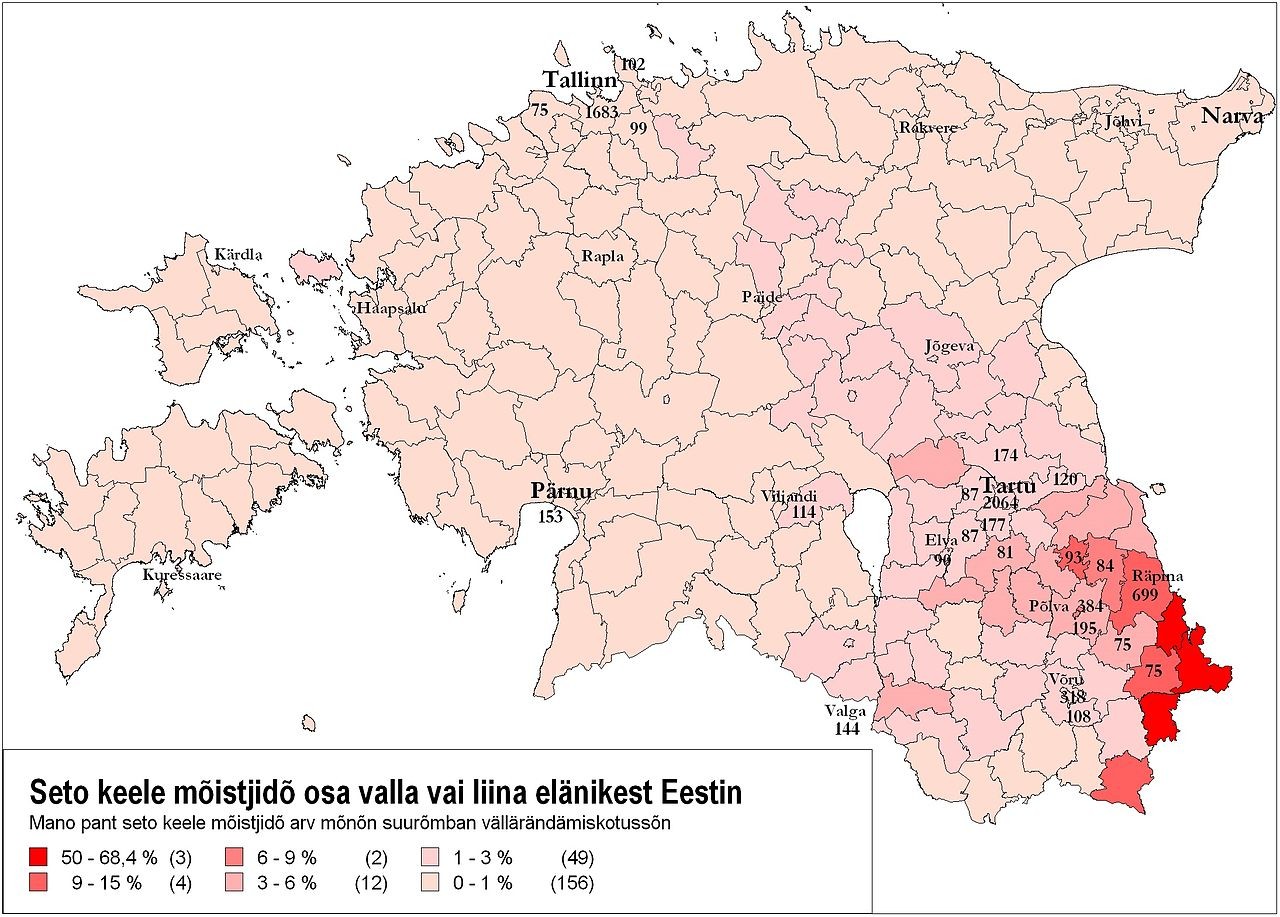
• Seto is a dialect of the Võro
language (although the Setos
general y do not identify as Võro
speakers), spoken by 12,532 people.
• The speakers, Seto people, mostly
inhabit the area near Estonia's
southeastern border with
Russia , in
the
county of Setomaa.
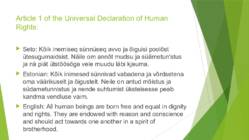
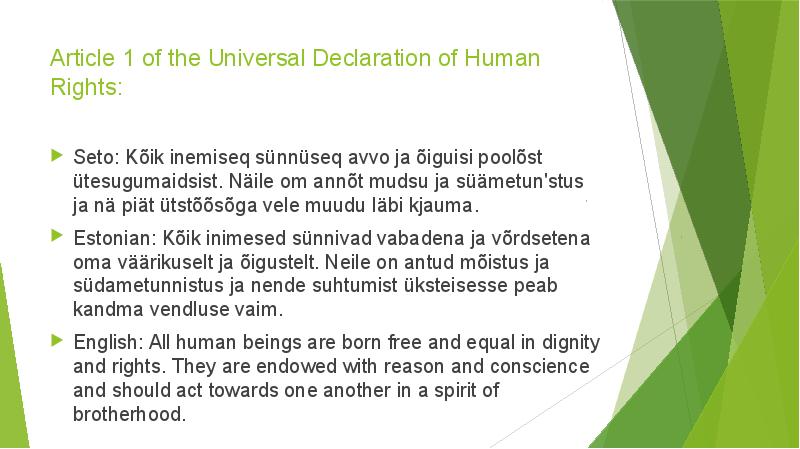
Article 1 of the
Universal Declaration of Human
Rights :
Seto: Kõik inemiseq sünnüseq avvo ja õiguisi poolõst
ütesugumaidsist. Näile om annõt mudsu ja süämetun'
stus ja nä piät ütstõõsõga vele muudu läbi kjauma.
Estonian: Kõik inimesed sünnivad vabadena ja võrdsetena
oma väärikuselt ja õigustelt. Neile on antud mõistus ja
südametunnistus ja nende suhtumist üksteisesse peab
kandma vendluse vaim.
English: Al human beings are born free and equal in dignity
and rights. They are endowed with
reason and conscience
and should act towards one
another in a
spirit of
brotherhood.
Thank you
Document Outline
- Slide 1
- Slide 2
- Slide 3
- Slide 4
- Slide 5
- Central dialect
- Western dialect
- insular dialect
- Northeastern coastal dialect
- Tartu dialect
- Mulgi dialect
- Võru dialect
- Slide 13
- Seto dialect
- Article 1 of the Universal Declaration of Human Rights:
- Thank you
 10 punkti
Autor soovib selle materjali allalaadimise eest saada 10 punkti.
10 punkti
Autor soovib selle materjali allalaadimise eest saada 10 punkti.
 ~ 16 lehte
Lehekülgede arv dokumendis
~ 16 lehte
Lehekülgede arv dokumendis
 2017-02-26
Kuupäev, millal dokument üles laeti
2017-02-26
Kuupäev, millal dokument üles laeti
 2 laadimist
Kokku alla laetud
2 laadimist
Kokku alla laetud
 0 arvamust
Teiste kasutajate poolt lisatud kommentaarid
0 arvamust
Teiste kasutajate poolt lisatud kommentaarid
 kolmteist
Õppematerjali autor
kolmteist
Õppematerjali autor
 annaabi.ee






Kõik kommentaarid