Leidsid 33 sarnast õppematerjali, mis on seotud failiga "Stalin's Russia: political, cultural". Need materjalid aitavad sul teemat sügavamalt mõista.
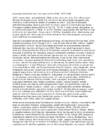
holocaust, jews, science, camps, evidence, deny, nazi, prove, kill, scientific, method, nation, killed, concentration, cause, through, collection, based, work, established, regime, genocide, took, place, german, there, single, fact, several, chambers, deaths, invention, books, role, knowledge, truths, operation, laws, obtained, physical, beliefs....................................................................4 1.2. The Armenian Massacre...........................................................................4 1.3. Young Turks and the Young Turk Revolution..................................................5 1.4. Armenian Genocide, 1905-1917 period.........................................................5 1.5. Death marches.......................................................................................5 1.6. Extermination camps...............................................................................6 2. The consequences of Armenian Genocide...........................................................7 2.1. Death and migration................................................................................7 2.2. Cultural loss..........................................................................................7 2.3. Turkish denial.................................................................................
resettling Js, feelers to SU, knows not ideal. Phillipines, Ghiana, Madagascar, not a lot of viable options. Not mentioned in Evian, under League of Nations, all about Js though not said. SU not interested in Ger/Pol Js, SU knows there will be war against capitalist world, Ger/Pol capitalists sort of. Dominican Republic the answer, 400-500 in 1940, never goes anywhere. Highest rate of Aliyah from former SU from Birobidzhan. Holocaust Erad's book changed the face of research and teaching Holocaust in IL, Heb, not a whole lot in synthetic way in other langs. 2004, much less conjecture. Rev in 1960s-70s about Eur, not SU. Everywhere but SU, records about ind Js on pathways, ghettoization, labor, murder. SU, no Ger records, system fundamentally diff. Still probs w #s. 2/3 killing in camps, ghettos. 2 mill SU Js. Slave labor complex not known until recently, extensive throughout Europe. Not a straightforward subject, several subjects intertwined, SU Holocaust. Js dying en masse certainly at
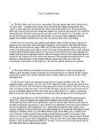
for ''slave work'' . Germanys only concern was to keep themselves happy and powerful. They wanted to make themselves the superior race. Hitlers idea of the perfect race, the Aryan race also didn't help, because the Aryan race should have people with light eyes,hair and skin, they should be tall and powerful. He didn't care for people who didn't meet his expectations of the perfect race. In his eyes all other groups of people like the Russians, Jews and just crazy, crippled or diseased people were worthless and didn't have any other use than for slave work or just killing. b) After the war twenty-four major political and military leaders of Nazi Germany, indicted for aggressive war, war crimes, and crimes against humanity, were brought to trial before the British, French, Russian and American judges. More than 100 additional defendants, representing many sectors of German society, were tried in a series of 12 trials
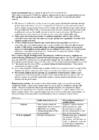
created to do the job for them. Humanitarian doctrine if a certain country violates human rights very severely and if other attempts have failed to prevent and stop this, then war can be used as a method to stop this stuff. Süüria chemical weapons doctrine is one of the strongest doctrine ever, respected by almost everyone, that's why people are so shocked about the events there. It's a grave violation of PIL. If there's enough evidence that chemical weapons were used, then war is basically a legal method, but not fully, because it isn't one of the reasons that allows war as a method to resolve conflict. Differences: Public International Law Private International Law = conflict of laws Subjects States, intergovernmental Regulates relations between
They reinvest it by buying from other Indians. Indians have studied the art of being a major economic force in America without antagonizing any particular group. You don’t see them in hostile neighbourhood, where they could be held hostage by the anger of that group. They are mostly in businesses which cater to every group – newspaper retailing, taxi/limousine, gas station ownership, and motel/hotel operators. The Jews have used to some extent this “Spider Web Economic” doctrine, but not on the scale of Indians. The Indians are its best ardent practitioners. It is the only and best economic method I have seen which can easily catapult an economy like ours out of its indolent state. I feel totally librated. I feel free. I feel I am in charge. I am in control. From here on, whatever happens is because I allowed it to happen. I have made what I believe is my own major contribution to the debate
languages. However, the Russians did great damage to the local environment by depleting the sea otter population. 4. Significance of the Jewish element in Russian immigration to the US. Immigration from Russia to the US in 18811914: Nearly 3.2 million immigrants from the Russian Empire. The most prominent Russian groups that immigrated in this period were the groups seeking freedom from religious prosecution. Nearly half of the immigrants were Jews. Religion of the Russian immigrants: Russian Orthodox, Jews, Nominal Jews (non-religious people of Jewish descent). Eastern European Jews dominated New York's garment industry!!! Immigration in 19201939: A large wave of Russians immigrated in the short time period of 19171922, in the wake of October Revolution and Russian Civil War as refugees from the Bolshevik regime due to the hatred for the new Bolshevik regime in their homeland. Great emphasis was put on education
2 With the exception of Buddhists, all of the world’s major religious groups are poised for at least some growth in absolute numbers in the coming decades. The global Buddhist population is expected to be fairly stable because of low fertility rates and aging populations in countries such as China, Thailand and Japan. Worldwide, the Hindu population is projected to rise by 34%, from a little over 1 billion to nearly 1.4 billion, roughly keeping pace with overall population growth. Jews, the smallest religious group for which separate projections were made, are expected to grow 16%, from a little less than 14 million in 2010 to 16.1 million worldwide in 2050. Adherents of various folk religions – including African traditional religions, Chinese folk religions, Native American religions and Australian aboriginal religions – are projected to increase by 11%, from 405 million to nearly 450 million.
education. National wealth accumulated: markets all over the world, many factories; social contradictions i.e. double standard: rich/poor, empire/colonies, wealth/exploitation, family/law, personal expression/social criteria, great expectations/failure. Conflict between religious beliefs and science, e.g. Darwin’s theory of evolution, discoveries in geology and biology disprove the Bible. Early Victorians – boundless optimism, mid-‐Victorians – confident but conservative, late Victorians – anti-‐Victorian.
British Literature in the 20th-21st Century REVISION QUESTIONS 1. The Contradictory, diverse, chaotic 20th century. New developments in science and philosophy. The essence and influence of Freudian theory. Contradictory, diverse, chaotic 20th c- simultaneous rejection and invocation of the past. While modernists apotheosized the creative geniuses of the past, they also rejected old poetic forms. Challenge old and established beliefs and more and more people had access to books and education more people went to universities. profound change in morals: · No universal value and perspective on things
· By the end of the 18th century the naturalism depicts in europe, but stars to become the literature method no 1 in america · Naturalism appealed American authors because they found it very right to describe what was going on in the turn of century in America · They wanted something fresh, new · They were disgusted by romantics · Showed the harsh tone in moral life · Refleced the development of science · Period of intense urbanisation, the city is in the center of the novel, often · New characters were businessmen, salesman, immigants, poor farmers · These characters were in new settings, skyscrapers, departments store, apartment building, ghetto, stockyard (cattle, cows were slaughtered), commercial trust · Their world is not one of culture or high moral standards · For these new writers controlling new american social experience
inhabitant each. Many writers have estimated the total number killed to have been in the millions. Women made up some 85 percent of Athose executed old women, young women and children. In locale and timing, the most virulent witch hunts were associated with periods of great social upheaval shaking feodalism at its roots mass peasent uprising and conspiracies, the beginnings of capitalism, and the rise of Protestantism. There is fragmentary evidence which feminists ought to follorw up suggesting that in some areas witchcraft represented a female-led peasant rebellion. The history of the witches was recorded by the elite, so that today we know the witch only through the eyes of her persecutor. Two of the most common theories of the witch hunts are basically medical interpretations, attributing the the witch witch craze to unexplainable outbreaks of mass hysteria. One version has it that the peasantry went mad
1 billion and 1.8 billion Muslims, making Islam the secondlargest religion in the world, after Christianity. Muslims believe that God revealed the Qur'an to Muhammad, God's final prophet, and regard the Qur'an and the Sunnah (words and deeds of Muhammad) as the fundamental sources of Islam.They do not regard Muhammad as the founder of a new religion, but as the restorer of the original monotheistic faith of Abraham, Moses, Jesus, and other prophets. Islamic tradition holds that Jews and Christians distorted the revelations God gave to these prophets by either altering the text, introducing a false interpretation, or both. Islam includes many religious practices. Adherents are generally required to observe the Five Pillars of Islam, which are five duties that unite Muslims into a community. In addition to the Five Pillars, Islamic law (sharia) has developed a tradition of rulings that touch on virtually all aspects of life and society
What is the real meaning of life? Why prefer one thing to another? Can we trust observation? It’s raining outside - how do you know it is? I can see it’s raining. How to convince yourself its raining? A good reason to doubt - 49 other peaople have the same opinion. Falsifiable → possible; not falsified World disappeared in 2012 and got recreated 3 secs later → unfalsifiable - cannot prove it’s true/wrong, cannot provide any tests to prove it. Or - one or another but not both → exclusive - one or another (both) → inclusive (Invited those who are managers or specialists - both) Arguments valid or not - logic is a science where to decide it Different arguments lead to different methods. 1 - Recognizing arguments What is an argument? An argument is a group of statements, so that one or more of them (called the premises) is said to provide support for one of the others (called the conclusion)
.. Robert Cialdini has had a greater impact on my thinking on this topic than any other scientist." -CHARLES T. MUNGER, Vice Chairman, Berkshire Hathaway, Inc. If you're wondering why of Latin America, the Far East, and Central Europe. you should buy this new edition of Influence: o More neuroscience evidence of how the influence process works is inte- Science and Practice, gra ted throughout. For instance, brain imaging research is presented, showing here are 5 good reasons! how the "Expensive = Good" heuristic o Updated coverage of social influence leads people to perceive more costly
Scientists don't know exactly when they arrived but it is somewhere between 40000 and 60000 years ago. When British came to Australia in 1788, they called these native people “aboriginals”, meaning people who had lived there since the earliest times. Captain James Cook set the colonization of Australia into motion by exploring and mapping the fertile eastern coast of Australia, but he was not the first to visit Australia. There is evidence suggesting Aborigines in northern Australia maintained trade with some of the Indonesian islands closest to the coast. Chinese and Arab's may have had contact with the Aborigines in the 15th century. When British people came to live in Australia, they decided that the land was empty, that there were no people living there. This was called "Terra nullius", Latin words for "empty land".Under British law, all land belongs to the king,who is then able to sell it to other people
This gives room to place truth and morality aside, because the goal is set and the means to obtain it serve the purpose of the goal. A great flaw that arises here though is what is called the association fallacy. What can happen according to such reasoning is that an incorrect understanding of a situation causes for a certain new behaviour, which makes the original incorrect understanding true. The believer of the original understanding will present the series of events to prove that they were right from the beginning. In the case of torture and the saving of innocent lives, this would mean that the wrong understanding that torture rescues lives leads to the event of torture, because of which lives were saved and thus the original erroneous understanding becomes true. This so to say then proves that torture indeed does save lives. This leads to a self-fulfilling prophecy, prone to become institutionalized on its own (Driver, 2014).
taken by hard-nosed, right-wing economist Václav Klaus. More change was to come: the decision on whether the Czech Republic should join the European Union was settled by a referendum - with 77% voting in favour - and on 1 May 2004 the Czech Republic became a member of the EU. However, the parliamentary elections of June 2006 ended in stalemate - it looks like a rocky road ahead for Czech politics in the next few years. From the beginning The oldest evidence of human habitation in the Prague valley dates from 600, 000 BC, but more numerous clues were left by hunters during the last Ice Age, about 25, 000 years ago. Permanent communities were established around 4000 BC in the northwestern parts of Prague, and the area was inhabited continuously by various Germanic and Celtic tribes before the arrival of the Slavs. The name Bohemia came from a Celtic tribe called Boii, and is still used today for the western part of the Czech Republic.
output. Manufacturing though still plays a vital role in the economy. Britain excels in high-technology industries like chemicals, plastics, pharmaceuticals, aerospace, electronics, motor vehicles and components, offshore equipment and paper and printing. Here the British companies are among the world`s biggest and most successful. The British construction industry continues to be engaged in some of the most prestigious international projects. Britain also excels in the field of scientific and technological innovation. The oldest universities are Oxford and Cambridge which are also centres of scientific research. There have been several British breakthroughs in genetics research, including the identification of genes linked to diseases e.g. a form of breast cancer. In 1997 scientists in Edinburgh succeeded in cloning a sheep. Scotland and Northern Ireland have long been noted for their production of whisky and textiles, notably tweed and linen respectively
everyday usage is associated with physical conditioning and athletic ability. "Survival of the most suited to its environment" would be a more accurate, and convincing expression for this pedicular concept. But to most of us, "evolution" simply means that human beings are descended from apes, a slight misunderstanding, since both humans and modern apes are descendants of a mutual ancestor that is now extinct. It's not evolution but the theory of natural selection and the evidence he collected to prove to fellow scientists, peers, students, and most importantly the masses of public and the church that were at the heart of Darwin's contribution to biological science. Charles Darwin did not invent the concept of evolution. A number of prominent scientists and other thinkers during the eighteenth century and the first half of the nineteenth century (among them Charles Darwin's grandfather, Erasmus Darwin) had offered detailed theories of evolution (Clark, 1984, pg.24-25).
I hear of some children who watch excessive television, or who never do any school homework, or are technical wizards yet know nothing of getting their hands dirty outside playing. Even as we must vary the curriculum for the sake of the mind, we must vary it with the ideal seasons and age levels of students. At what developmental stage children should be exposed to various subjects is wholly unfamiliar to me. I recall my love of art in the 3rd grade, of science in 8th grade, of comparative literature in 11th grade. Probably each student learns at an individual pace, and has personal likes and dislikes, yet overall some fair generalizations can be made about what approach usually works best for most children at various ages. Education for adults is so much different. Almost all of my teaching has been directed to adults. I've dealt with preschoolers, elementary and junior high school kids exclusively in my
I want to do things that are worthwhile and be admired because my actions are admirable, not for foolish subjective reasons. 1 38. People think that they "make up their minds," and they're right, but not in the way that they think. Their choices are not their own and what they call their "mind" is a fabrication. 39. People won't be interested in your ideas unless you demonstrate your mastery of their ideas. 40. Science is like country music--those guys can't resist a clever turn of phrase. 41. Some of the worst warmongers are frustrated peacemakers. 42. Stuff that's "over your head" is only a problem if you don't look up. 43. Technology should be made idiot-proof but it should not thereby be made genius-proof. 44. The bullshit isn't all in one place. 45. The fact that there's demand for your stuff does not mean that it's true, beautiful, or ethical. 46. The heart must go out but it must not bleed. 47
Curriculum within in philological faculty includes courses of Russian and European languages and literature, courses of Linguistics and Theory of Literature for students to familiarize themselves with various schools and trends of Russian and foreign philology. The core curriculum also includes a number of Liberal Arts courses (Philosophy, History, Psychology, Pedagogy), as well as courses of basic mathematics and computer studies, and optional courses of science and the Humanities. The Department of Theory of Literature and the Department of General and Comparative Linguistics teach a vast number of core courses to junior students, both offering major courses to senior students in all the divisions of the faculty. The Department of Theory of Literature teaches literature as a type of art, focusing on the genesis, structure, classification, and functioning of literary works, on stylistics and
Teaduslik revolutsioon 15431600 I One of the most important developments in the western intellectual tradition was the Scientific Revolution. The Scientific Revolution was nothing less than a revolution in the way the individual perceives [ tajub ] the world. As such, this revolution was primarily an epistemological revolution it changed man's thought process. It was an intellectual revolution a revolution in human knowledge. Even more than Renaissance scholars who discovered man and Nature, the scientific revolutionaries attempted to understand and explain man and the natural world
The making of a new nation. The Enlightenment in America. The emergence of the notion of the American Dream. The great Enlighteners: Crèvecoeur, Jefferson, Paine, Franklin. The American Enlightenment is the intellectual thriving period in the United States in the midtolate 18th century (17151789), especially as it relates to American Revolution on the one hand and the European Enlightenment on the other. Influenced by the scientific revolution of the 17th century and the humanist period during the Renaissance, the Enlightenment took scientific reasoning and applied it to human nature, society, and religion. American Enlightenment a gradual but powerful awakening that established the ideals of democracy, liberty, and religious tolerance in the people of America. If there were just one development that directly caused the American Revolution and uplifted the intellectual culture of the continent while it was only
head, won the battle of Midway, led to cruel Allied defeats in North Africa, and broke up a vast Nazi spy ring. • How one American became the world's most famous codebreaker, and another became the world's greatest. • How codes and codebreakers operate today within the secret agencies of the U.S. and Russia. • And incredibly much more. "For many evenings of gripping reading, no better choice can be made than this book." —Christian Science Monitor THE Codebreakers The Story of Secret Writing By DAVID KAHN (abridged by the author) A SIGNET BOOK from
One of the most famous case studies of how brain damage can affect behavior is the study of Phineas Gage by Dr John Harlow. Gage was in a serious accident, where a metal pole pierced his skull and brain. Luckily he survived, losing vision in his left eye. He had no difficulty with speech or language, but the balance between his intellectual abilities and emotional control had been destroyed. He became highly agitated and irrelevant, often impatient and rude. Study to his frontal lobe provided evidence that the brain affects personality and social behaviors. Discuss ethical considerations related to research studies at the biological level of analysis. In case studies for example, the researcher often obtains deeply personal information, which is not usually shared with other people. Any researcher conducting a case study must be very protective of the identities of the participants. The researcher should also have the professional competence to deal with the focus of the case study.
mark, as an archer who misses the target, so to sin means to miss the point of human existence. It means to live unskillfully, blindly, and thus to suffer and cause suffering. Again, the term, stripped of its cultural baggage and misinterpretations, points to the dysfunction inherent in the human condition. The achievements of humanity are impressive and undeniable. We have created sublime works of music, literature, painting, architecture, and sculpture. More recently, science and technology have brought about radical changes in the way we live and have enabled us to do and create things that would have been considered miraculous even two hundred years ago. No doubt: The human mind is highly intelligent. Yet its very intelligence is tainted by madness. Science and technology have magnified the destructive impact that the dysfunction of the human mind has upon the planet, other life-forms, and upon humans themselves. That is why the history of the
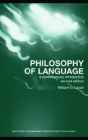
philosophy rather than to convince students of a single position. Classical Philosophy Philosophy of Mind Christopher Shields Second Edition John Heil Epistemology Second Edition Philosophy of Religion Robert Audi Keith E. Yandell Ethics Philosophy of Science Harry Gensler Alex Rosenberg Metaphysics Social and Political Second Edition Philosophy Michael J. Loux John Christman Philosophy of Art Philosophy of Psychology Noël Carroll José Bermudez Philosophy of Language Classical Modern Second Edition Philosophy William G
far out-numbering the southern whites. [3, p.35] The nineteenth century saw a massive increase in American immigration, as people fled the results of revolution, poverty, and famine in Europe. Large numbers of Irish came following the potato famine in Ireland in the 1840s. Germans and Italians came, escaping the consequences of the failed 1848 revolutions. And, as the century wore on, there were increasing numbers of Central European Jews, especially fleeing from the pogroms of the 1880s. In the first two decades of the twentieth century, immigrants were entering the USA at an average of three-quarters of a million a year. In 1900, the population was just over 75 million. This total had doubled by 1950. [3, p.35] Within one or two generations of arrival, most of these immigrant families had come to speak English, through a natural process of assimilation. Grandparents and grandchildren
organizations or between the government and the public Private law – the area of law that deals with disagreements between people or companies Family law – an area of the law that deals with matrimonial matters and domestic relations Plaintiff – someone who makes a legal complaint against someone else in court On the balance of probabilities – a dispute is decided in favour of the party whose claims are more likely to be true Evidence – proof To prove – to show that something is true Procedure – a series of steps followed in a definite order Dispute – disagreement Citizen – a member of a state One way of classifying law is to divide it into public and private law. Civil law is part of the private law and concerns disputes between citizens. It is made up of rules about how individuals interact with one another in specific situations. Civil law includes
oppose but which, as Eugenie Samier has demonstrated, it rather fosters. (2001) As a result of this insight, we are currently witnessing a fundamental shift of emphasis in PA discourse, and even practice, from efficiency to effectiveness, i.e. in effect from getting something done cheaply to actually accomplishing one's goal. But even by the standards of business efficiency, NPM cannot be said to be successful from today's perspective. We have no empirical evidence that NPM reforms have led to any productivity increase or welfare maximization. At best, one may say that "Several years of attempts and experiences of public management reforms in western Europe and other OECD countries give evidence of relative failure rather than success." (van Mierlo 1998: 401; see Manning 2000, section "Did it work?" on global evidence along these lines this is the web-page of the World Bank!) The catchword promises have empirically not been delivered flat
legacy of order. In Spain, everything works well, there is education, cleanliness, respect. We should follow their example." After his remarks caused an outcry in Spain, the Italian sought to distance himself from his comments, explaining that he was not praising totalitarianism. He said: "I just wanted to say that Spain is better that Italy in some respects and provide a political context. I would never dream of praising dictatorships. My father conceived me after having been imprisoned in Nazi concentration camps." Born in 1946 in a village in the northern Italian province of Gorizia, near the border with the then Yugoslavia, Capello insists a hardworking upbringing and the encouragement of his father to pursue his footballing dreams are the roots of his success. His father played for an Italian third division side and an uncle was so good that he played for the national side. Not only was football in the genes but it also provided an
A book is a set or collection of written, printed, illustrated, or blank sheets, made of paper, parchment, or other various material, usually fastened together to hinge at one side. A single sheet within a book is called a leaf, and each side of a leaf is called a page. A book produced in electronic format is known as an electronic book (e-book). Books may also refer to works of literature, or a main division of such a work. In library and information science, a book is called a monograph, to distinguish it from serial periodicals such as magazines, journals or newspaper. The body of all written works including books is literature. In novels and sometimes other types of books (e.g. biographies), a book may be divided into several large sections, also called books (Book 1, Book 2, Book 3, etc.). A lover of books is usually referred to as a bibliophile, or, more informally, a bookworm. A store where books are bought and sold is a bookstore or bookshop
 annaabi.ee