Leidsid 33 sarnast õppematerjali, mis on seotud failiga "Stacey Kemp". Need materjalid aitavad sul teemat sügavamalt mõista.
kemp, pair, king, season, highest, total, score, during, july, english, britain, british, changed, summer, moved, poland, train, skating, ranks, them, earnedTallinn English College 8b form 2007 1. Introduction For some people sport plays a very important part in their lives. And to some, it is even a way of life. There are different kinds of sports. For instance, there are sports meant for playing indoors, some can be practised only at a certain time of year. There are winter and summer sports also. Skiing, figure-skating, sledding and snowboarding these four most popular are practised during winter. Good examples of summer sports are: swimming, badminton, roller skating and golf. 2. The ancient Olympic Games The first recorded Olympic Games took place in 776. B.C. at Olympia but the city may have functioned as a meeting place for worship and other political practices many years earlier. The city is located in western Greece. The games were held every four years. It is also presumed that such competitions pleased the spirits of the dead and were organized as part of funeral
COMPENDIUM ABOUT PRAGUE Prague is the capital and largest city of the Czech Republic. Nicknames for Prague have included Praga mater urbium/Praha matka mst ("Prague Mother of Cities") in Latin/Czech, Stovzatá Praha ("City of a Hundred Spires") in Czech or Zlaté msto/Goldene Stadt ("Golden City") in Czech/German. Situated on the Vltava River in central Bohemia, Prague has been the political, cultural and economic centre of the Czech state for more than 1100 years. For many decades during the Gothic and Renaissance eras, Prague was the permanent seat of two Holy Roman Emperors and thus was also the capital of the Holy Roman Empire. 4 Today, the city proper is home to about 1.3 million people, while its metropolitan area is estimated to have a population of over 1.9 million. Since 1992, the extensive historic centre of Prague has been included in the UNESCO list of
The highest peak in Scotland is Ben Nevis (1343 m) Wales Earthwork / :w:k / mullavall Beacon / 'bi:kn / tuletorn, majakas Peninsula / p'nnsjl / poolsaar Wales is surrounded by the sea on three sides and has two major mountain systems: the Black Mountains and the Brecon Beacons. The rivers offer a wide variety of fish. Wales gets a bit more rain than other parts of Britain. The highest peak in Wales is Snowdon (1085 m), one of the mountains of Snowdonia. Ireland Emerald / 'emrld / smaragdroheline Intensity / n'tenst / jõulisus, intensiivsus Tranquility / 'trækwliti / hingerahu, rahu ja vaikus Ornithologist / :n'ldst / linnuteadlane Pasture / 'p:st / karjamaa
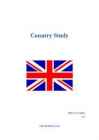
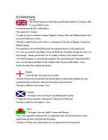
* everybody from the UK is called British * the capital city is London * is made up of four constituent countries: England, Scotland, Wales and Northern Ireland which in turn are divided into counties * the flag is called the Union Jack which is a combination of the flags of England, Scotland and Northern Ireland * the population is about 60,000,000 people, the population density is 242 people/sq km * its coasts are washed by the Atlantic Ocean, the North Sea, the English Channel, the Celtic Sea, Saint George's Channel, and the Irish Sea. It is linked to France by the Channel Tunnel * the United Kingdom is a constitutional monarchy. The current monarch is Queen Elizabeth II, who is also the Queen and Head of State of fifteen other Commonwealth Realms, such as Canada, Australia, New Zealand and Jamaica. England: * it has 50 cities, the capital city is London
Officials were appointed (governors, procurators to collect taxes, look after the estates and mines and se that the gold, silver, iron and lead were exported back to Rome). Introduced schools,a new language Latin, large farms (villas), baths. In AD 410 they had to leave . roman occupation lasted nearly 400 years. They left behind very little. Roman province of Britannia covered most of present-day England and Wales. 4. Latin influence on English *The influence of Latin is noticeable also in the names of European cities: the Latin noun colonia (settlement, colony) may be found in numerous place-names: Lincoln, Colchester, Cologne ; from Latin word castrum (military camp) were derived English affixes -chester and -castle: Manchester, Lancaster, Newcastle; Latin word portus (seaport) in Portsmouth *-tor - person, doer, masculine form. The suffix is attached to the stem: victor (`winner', from the
Her father acceded to the throne as George VI in 1936 on the abdication of his brother Edward VIII. She began to undertake public duties during the Second World War, in which she served in the Auxiliary Territorial Service. On the death of her father in 1952, she became Head of the Commonwealth and queen regnant of seven independent Commonwealth countries: the United Kingdom, Canada, Australia, New Zealand, South Africa, Pakistan, and Ceylon. Her coronation service in 1953 was the first to be televised. Between 1956 and 1992, the number of her realms varied as territories gained independence and some realms became republics
Introduction I chose Swedish royal family, because it is not far away from Estonia and we have a good friendship with each other. I also chose it, because it seemed so interesting. I really wanted to know, who controls Estonia's neighbour Sweden. Anyway, I enjoyed doing this report and now you can read a little about them. 3 King Carl XVI Gustaf Carl XVI Gustaf is the King of Sweden. Carl Gustaf was born twenty minutes past ten in the morning on Tuesday, on April 30, 1946, at Haga Palace. He was baptised at the Palace church and his real name is Carl Gustaf Folke Hubertus. He is also the Duke of Jämtland. Carl became Sweden's King on September 19, 1973 at the age of 27, succeeding his grandfather, King Gustaf VI Adolf. He is son of the Crown
Sports. Sports has a very old history. The ancient Olympic Games were the first big sports competitions. The history of the Olympic Games is linked with many myths referred to in ancient sources, but in the historic years their founder is said to be Oxylos whose descendant Ifitos later rejuvenated the Games. According to the tradition, the Olympic Games began in 776 B.C. when Ifitos made a treaty with Lycourgos the king and famous legislator of Sparta and Cleisthenes the king of Pissa. In this treaty that was the decisive event for the development of the sanctuary as a Panhellenic centre, the "sacred truce" was agreed. That is to say ceasing of fighting in all of the Freek world for as long as the Olympic Games were on. The Olympic Games were held, after the completion of four years during the month of July or August. The time between two competitions was called the Olympiad
Tallinn English College Topic The United States of America Tallinn 2007 1. Introduction The United States of America's territory is over 3.7 million square miles (over 9.6 million km²) and population more than 300 million people. The capital city is Washington D.C. Although the United States has no official language at the federal level, English is the de facto national language. English is the most common language for daily interaction among both native and non-native speakers. Spanish is the second language. The largest city is the New York City. The Government is Federal constitutional republic and the president is George W. Bush. 2. Geographical position The United States of America is located on the continent of North America. It has borders with two countries Mexico and Canada. There are also the Atlantic Ocean, the Pacific Ocean and
They say it's unimaginable, boring, tasteless, it's chips with everything and totally overcooked vegetables. The basic ingredients, when fresh, are so full of flavour that British haven't had to invent sauces to disguise their natural taste. What can compare with fresh pees or new potatoes just boiled and served with butter? Why drown spring lamb in wine or cream and spices, when with just one or two herbs it is absolutely delicious? If you ask foreigners to name some typically English dishes, they will probably say "Fish and chips" then stop. It is disappointing, but true that, there is no tradition in England of eating in restaurants, because the food doesn't lend itself to such preparation. English cooking is found at home. So it is difficult to a good English restaurant with a reasonable prices. In most cities in Britain you'll find Indian, Chinese, French and Italian restaurants. In London you'll also find Indonesian, Mexican, Greek..
*Surfing is a surface water sport in which a person (the surfer) moves along the face of a breaking ocean wave (the surf). Surfing also takes place on rivers, riding a standing wave. *Two major subdivisions within stand-up surfing are longboarding and shortboarding, reflecting differences in surfboard design -- particularly including surfboard length, and riding style. *It's important to observe the correct etiquette while out surfing, otherwise things will just descend in to total chaos. These are the most importand rules you have to follow. Probaly the most important word and rule in surfing. Respect for the land, the ocean and the people who grew up surfing here. You have to give respect and behave while visiting a spot, keep things friendly, earn some respect yourself *You will never know what may happen out there and its better if you have some friend with you.They can look over you and you over them. * Always know the water where you choose to surf.
SOCIETY AND CULTURE OF ENGLISH-SPEAKING COUNTRIES Introduction 1. Nowadays, English is so widely spoken that it can hardly be considered "a one nation's" language. The main countries where English is spoken are: the U.K, the U.S, Canada, Australia, the Republic of Ireland, New Zealand, West Indies 2. There are approx. 300-400 million speakers of English in the world. English occupies the 3rd place by its number of speakers; it is right behind Mandarin and Spanish. 3. ESL (English as a Second Language) used in your own country (e.g. India) EFL (English as a Foreign Language) used in a foreign country ESP (English for Specific Purposes) used in business, airlines, hotels etc. 4. Settlement colonies people migrated into them from Britain and started their own
The UK contains a number of small islands. The largest islands that belong to the United Kingdom are the Isle of Man in the Irish Sea and the Isle of Wight which lies off of England's southern coast. The largest groups of islands are the Shetland Islands, the Orkney Islands and the Hebrides. Geographical Position The UK is situated in the Northern Hemisphere. The United Kingdom is bordered by the Atlantic Ocean in the west, the North Sea in the east, the Norwegian Sea in the north, and the English Channel, also known as La Manche, in the south and it also separates the country from the continent of Europe. The neighbours of the United Kingdom are Iceland in the north-west, Norway in the east and France in the south. Britain also has many dependant territories which are scattered throughout the world and are the remains of the huge former British Empire. Today Britain assists them, but they may become independent whenever they wish
The population of the island is just under 6 million (2006); just over 4.2 million in the Republic of Ireland[2] (1.6 million in Greater Dublin[3]) and just over 1.7 million in Northern Ireland[4] (0.6 million in Greater Belfast[5])). Politics Politically, Ireland is divided into: · The Republic of Ireland, with its capital Dublin. · Northern Ireland, which is part of the United Kingdom, Geography A ring of coastal mountains surrounds low central plains. The highest peak is Carrauntuohill , which is 1,041 m. The island is bisected by the River Shannon, at 386 km (240 miles) the longest river in Ireland. The island's lush vegetation, a product of its mild climate and frequent but soft rainfall, earns it the sobriquet "Emerald Isle". The island's area is 84,412 km². Ireland is divided into four provinces: Connacht, Leinster, Munster and Ulster. Ireland's least arable land lies in the south-western and western counties. These areas are largely
A.D. Romans occupied Britain for four centuries. The Roman way of life all vanished after the invasions from Northern Europe by the Angles, Saxons and Jutes from the 5th century onwards. They ruined Londinium, but they were easily turned into Christianity and religion became more and more important. The Vikings, who came in the 9th century, first raided England to plunder it, but then they decided to stay. In the 10th century England fell under Danish Rule, with King Canute finally managing to unite the Anglo-Saxons and Danes at the beginning of 11th century. Medieval England After defeating the Anglo-Saxon King Harold at the Battle of Hastings in 1066, William of Normandy (who became William I, also called William the Conqueror) introduced the Norman feudal system, rewarding his French-speaking followers with land in return for their continued support. French remained the language of the upper classes and administration until the 14th century.
and she was a part of the family, too. She is dead and if somebody reads it, he or she can learn about her and will know what she was like. The purpose of the work is to introduce Diana and get to know her better. Diana Facts about Diana Main Facts Her full name is Diana Frances Spencer and she was the Princess of Wales. Diana was called people's Princess. She was born on 1. July 1961 in Park house, Sandringham, Norfolk. She was born at the same place as her mother. She was married to Charles, Prince of Wales in 1981 and divorced in 1996. She died in car a accident on 31. August 1997 when she was only 36 years old. She is buried at Althorp, Northamptonshire. Family Her mother's full name is Frances Ruth Shand Kydd (1936 - 2004) and father's full name is Edward John Spencer (1924 1992). She has two sons with Prince Charles: Prince William, aged
Roman forts were briefly set along the Gask Ridge close to the Highland line (none are known to have been constructed beyond that line). Three years after the battle the Roman armies had withdrawn to the Southern Uplands. They erected Hadrian's Wall to control tribes on both sides of the wall, and the Limes Britannicus became the northern border of the empire, although the army held the Antonine Wall in the Central Lowlands for two short periods--the last of these during the time of Emperor Septimius Severus from 208 until 210. The extent of Roman military occupation of any significant part of Scotland was limited to a total of about 40 years, although their influence on the southern section of the country occupied by Brythonic tribes such as the Votadini and Damnonii would still have been considerable. A replica of the Pictish Hilton of Cadboll Stone. Medieval period
off the Welsh mainland, the largest being Anglesey in the northwest. About 3 million people live in Wales. The main population and industrial areas are in South Wales, consisting of the cities of Cardiff (also the capital), Swansea and Newport and surrounding areas. Much of Wales' beautiful and diverse landscape is mountainous. It has two major mountain systems: the Black Mountains and the Brecon Beacon in the south and the mountains of Snowdonia in the south. The highest mountains in Wales are in Snowdonia and include Snowdon, which at 1085 m (3,560 ft) is the highest peak in Wales. Welsh flag has a red dragon on a white and green background. It is not represented on the Union Jack. England is 130 000 square kilometres. Its capital is London. The population is about 50 million people and growing because of immigration. England is bordered to the north by Scotland and to the west by Wales. It is
and Julius Caesar never returned to Britain after that. The island was left undisturbed for nearly a century. *The Roman occupation of Britain 43-410 and its legacy Britain was conquered by Emperor Claudius, the Roman rule in England lasted up to 410. The Romans left behind a huge legacy: many types of animals and plants were brought to Britain in Roman times. Roman introduced theire measurements, Christianity, reading and writing. Also, many words in English and Welsh have been borrowed from the Latin language. An important legacy of the Romans was its roads, agriculture and cities. In the Roman times the land was dominated by rules and reguations. *Christianity in Roman Britain The Roman authorities were suspicious of Christianity because followers of Jesus Christ refused to take an oath of loyalty to the Roman emperor. For this reason the early Christians were regarded as dangerous enemies of the Empire. That
His ancestry includes Irish and Italian. He was born with a Tetralogy of Fallot, a congenital heart defect for which he endured two open-heart operations before the age of one. He stands 5'8" (1.73 m) tall. White spent his formative years riding Okemo Mountain and Bear Mountain, small ski resorts found in Ludlow, Vermont, and the San Bernardino Mountains of Southern California. Snowboarding career White's skateboard career took place during the same time he was rising through the snowboard ranks. White quickly drew the eyes of many in the skateboarder scene including professional skateboarder Tony Hawk. At this point Hawk befriended the nine-year-old White at a local skatepark and mentored him, helping him turn pro in skateboarding at the age of 17. White has gone on to win many titles on his skateboard, most notably winning the overall title of Action Sports Tour Champion, as well as being the first
The USA expanded westward in the 1800s and reached the Pacific Ocean. As it grew, it became the greatest industrial power in the world. It wanted to stay out of European problems, but in the two World Wars, it decided that it could not afford to let Germany win. In the 1940s it became the leader of the West and organized an alliance of the democracies. Today it is the only superpower left in the world. Tensions between American colonials and the British during the revolutionary period of the 1760s and early 1770s led to the American Revolutionary War. On June 14, 1775, the Continental Congress, convening in Philadelphia, established a Continental Army under the command of George Washington. Proclaiming that "all men are created equal" and endowed with "certain unalienable Rights," the Congress adopted the Declaration of Independence, drafted largely by Thomas Jefferson, on July 4, 1776. This meant war. Britain lost the war and lost America
Stonehenge One of the best known ancient wonders of the world, 5000 years old Megalith monument, built by western mediterraneans during 3000-1600 BC Circular structure, large standing stones, aligned with rising sun at teh solstice Attlers and bones were sued to dig pits that hold the stones The Celts in Britain and their legacy 700-200 BC celts invade Britain Gaels or Goehls(Ireland and Scotland),Cymri(Wales) and Brythons(gave name to Brittany) Fierce fighters,superb horsemen.Most of them farmers, lived in thatched houses Good at art, craftmanship, used iron
Portuguese territory as well. The country is named after its second largest city, Porto, whose Latin name was Portus Cale. SETTLEMENT The land within the borders of the current Portuguese Republic has been continuously settled since prehistoric times. In the 8th century most of the Iberian Peninsula was conquered by Moorish invaders professing Islam, who were later expelled by the Knights Templar. During the Christian Reconquista, Portugal established itself as an independent kingdom from León in 1139, claiming to be the oldest European nation-state. In the 15th and 16th centuries, as the result of pioneering the Age of Discovery, Portugal expanded western influence and established the first global empire, becoming one of the world's major economic, political and military powers. In addition, the Portuguese Empire was the longest-lived of the modern
The Romans gave us a language based on Latin, the calendar, law and legal system, the census and also straight roads, central heating and concrete. Anglo- Saxons around AD 400 Anglo- Saxons were warrior farmers from Germany, Denmark and the Netherlands. Later in the 5th century, Anglo-Saxons settled just west of Londinium, around the Strand, and formed the town of Lundenwic. The area of the old Roman city became a landing-place for ships and a centre for trade.The first English King to convert to Christianity, King Ethelbert, founded St Paul's Cathedral in 604. The Vikings 8th and 9th century By the 9th century, London was a very prosperous trading centre, and its wealth attracted the attention of Danish Vikings. The Danes periodically sailed up the Thames and attacked London. In 851 some 350 longboats full of Danes attacked and burned London to the ground. King Alfred the Great totally defeated the Danes in 878 and they split the country between them
Elias and the Pelly Mountains in the northern regions. The vast majority of mountains in Canada lie in the western provinces of British Columbia and Alberta and the Yukon territory. Mountains can be found all over British Columbia while those in Alberta are mainly concentrated on the eastern side of the Canadian Rockies. The Saint Elias Mountains in the Yukon hold some of country's highest mountains, including the highest, Mount Logan at 5,959 metres. The Appalachian mountain range extends from Alabama in the southern United States through the Gaspe Peninsula and the Atlantic provinces, creating rolling hills indented by river valleys. It also runs through parts of southern Quebec. The Appalachian mountains are an old range of mountains about 380 million years old. Notable
This fact, coupled with the grandeur of the landscape, has been central to the sense of Canadian national identity. 2. Geographical position Canada is the second largest country in the world after Russia. In the Arctic, Canada reaches almost as far north as Greenland. To the south it extends to the same latitude as southern France. The distance from Canada's west coast, the Pacific Ocean, to its east coast, the Atlantic Ocean, is farther than from North America to Europe. Canada's total land area includes thousands of adjacent islands, notably Newfoundland in the east and those of the Arctic Archipelago in the north. In longitude Canada extends from approximately 52° to 141° W, a distance that spans six time zones. In latitude it extends from approximately 42° to 83° N. With its vast Arctic and subarctic territories, Canada is often considered a country only of the far north; however, the peninsula of southern Ontario juts deeply south into the heartland
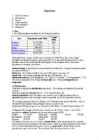
Population 1. Size, its changes 2. Distribution 3. Towns 4. Ethnic makeup 5. Age breakdown 6. Religion(s) 1. Size. 1 July 2006 population estimates by UK National Statistics: % (mid- Part Population (mid-2006) 2006) England 50,762,900 83.8 Scotland 5,116,900 8.4 Wales 2,965,900 4.9 Northern Ireland 1,741,600 2.9 United Kingdom 60,587,300 100
six km north-east of the Tallinn city center. The tower has a specified height of 314 m (1030.2 ft), though some sources put it at 312.6 m (1026.6 ft). The building is administered by the public company Levira (formerly Estonian Broadcasting Transmission Center Ltd) and is a member of the World Federation of Great Towers. The tower was designed by architects David Baziladze and Juri Sinis. The cornerstone was laid on September 30, 1975, and the building was inaugurated July 11, 1980 (although the first transmission took place in 1979). The tower body was constructed of reinforced concrete rings 50 cm thick that weigh a total of 17,000 metric tons, and the total tower weight is approximately 20,000 tons. The tower survived a fire during the construction stage. The observation deck on the 21st floor, originally designed to have a rotating section, is located 170 m above ground, and has a diameter of 38 m. The Tower has been closed to the
Tallinn English College Topic Great Britain 2007 1. Introduction The official name of Great Britain is `the United Kingdom of Great Britain and Northern Ireland (or short United Kingdom)' The population is about 60.4 million. The capital is London. Other biggest cities include Birmingham, Bristol, Portsmouth, Glasgow and Swansea. English is the main language of Great Britain, but Welsh is officially recognized in Wales and Gaelic in Scotland. 2. Geographical position The British Isles is the geographical term for a group of about 5000 islands off the coast of mainland Europe. The largest island is Great Britain, which is also the largest island in Europe. It consists of England, Wales and Scotland. The next largest island is Ireland, which is made up of Northern Ireland and the Irish Republic. Britain and
Society and culture of english-sspeaking countries Introduction 1. The countries of the world where the English language is spoken. 2. Approximate number of mother tongue speakers of English approximately 350-400 million native speakers. Which place does English occupy in the world by its number of speakers?After which language? English occupies second place by its number of speakers after Mandarin Chinese. 3. What is the difference between English as a Second Language, English as a Foreign Language and English for Specific Purposes? Give examples of situations where they are used. English as a Second Language (ESL or TESL) is a traditional term for the use or study of the English language by non-native speakers in an English-speaking environment. That environment may be a country in which English is the mother tongue (e.g., Australia, the U.S.) or one in which English has an established role (e.g., India, Nigeria)
United States of America Table of Contents 1. Facts 2. Geography 3. Nature 4. History 5. Population 6. Government 7. Industry, economy 8. America's pop culture Facts Official Name: United States of America Capital City: Washington, D.C. Largest city: New York City Official languages: None at federal level National language: English Government: Federal constitutional republic President: Barack Obama ( Barack Hussein Obama II) Vice President: Joe Biden (Joseph Robinette "Joe" Biden, Jr) Population: 2009 estimate 306,108,000 people Area: Total 9,826,630 km2 (by CIA World Factbook) Currency: United States dollar ($) Motto: In God We Trust Anthem: "The Star-Spangled Banner" Flag Names: The Stars and Stripes, Old Glory, The Starry Banner Seal: Great Seal of the United States
9. The Anglo-Saxon Invasion. The Angles, Saxons and Jutes came from present-day Northern-Germany and Denmark in 449. A number of tribes from the European mainland invaded and settled in large numbers; however, they were not always victorious. These Anglo- Saxons soon had the south-east of the country in their control. In the west, their advance was temporarily halted by an army of (Celtic) Britons under the command of the legendary King Arthur. By the 7th century the Anglo-Saxons were ruling most of Britain. 10. Scandinavian raids. In 789 three Viking ships landed on the coast of the kingdom of West Saxon. They were traders and raiders. In the 9th century they conquered and settled the islands around Scotland and some coastal regions of Ireland. Their conquest of England was halted when they were defeated by King Alfred of the Saxon kingdom of Wessex
Outstanding figures in British literature Eva Martina Põder 11.b British literature Refers to all literature produced by British authors from the United Kingdom, which includes England, Scotland, Northern Ireland, Wales, the Channel Islands, and Isle of Man Includes early works written in Gaelic, Welsh, and Latin, works in Old, Middle, and Modern English, each of which represents a different period Full of great works British works in Latin Venerable Bede He lived between 673 and 735 AD The greatest of all the AngloSaxon scholars He's the earliest English historian, whose work has shed light on a period of English history that would have otherwise been unknown ,,The Father of English History" Wrote / translated about 40 books on almost every area of knowledge, i.e. nature, astronomy, and poetry
 annaabi.ee