Leidsid 33 sarnast õppematerjali, mis on seotud failiga "Sri Ishopanisad Introduction summary notes MRdd". Need materjalid aitavad sul teemat sügavamalt mõista.
know, knowledge, vedas, through, spiritual, focus, sense, bhakti, books, there, krishna, goal, real, material, four, bhagavad, gita, these, philosophy, vedanta, limit, ultimate, able, soul, lord, different, universal, means, person, perception, therefore, understand, introduction, understanding, faith, nastik, dual, bheda, same, direct, wisdom, truthBhakti Sastri Online Modul 1, lesson 3 Student: Madhuri Radhika dd (Almviks Gard, Sweden) 18th of January 2014 VIDEO: Bhakti Shastri (003) - Sri Isopanisad Mantra 1 ISOPANISAD BRIEF OVERVIEW Invocation mantra 3: Live in harmony with Ishvara Mantra 4.-8. The Ishvara can be understood by spiritual vision Mantra 9.-11. Right & wrong vidya (knowledge) - for understanding Ishvara Mantra 12.-14. Right & wrong upasana (disposition of the heart) for worshiping Ishvara Mantra 15.-18. Prayers to Ishvara to reveal Himself If I want to obey someone, I should know this person. We can know the Ishvara by the spiritual vision. Developing the spiritual vision has two parts: · cultivating the proper knowledge & then
Bhakti Sastri Online Modul 1, lesson 2 Student: Madhuri Radhika dd (Almviks Gard, Sweden) 11th of January 2014 VIDEO: Bhakti Shastri (002) - Sri Isopanisad Invocation Isopanishad written originally as series of articles by Srila Prabhupada in his "Back to Godhead" magasine published by 1944. There is most mystical address of the Absolute Truth in Isopanishad. Style of Isopanishads isthat they are enigmatic, because it is meant for intellectuals and intellectuals don't like whne things are too simple, they like to speculate and stretch their minds. This is catering this need and at the same time
substance), that are united in the pineal gland. 12. What is the main problem of Descartes philosophy? Dualism. Idea- Things; soul-body c. Hume 13. What is the problem that Hume is trying to solve? What answer he gives to this problem? Can we be certain about anything? He wants to show that this pretension is absolutely false. 14. What is Empiricism? 15. What is Skepticism? Skepticism is generally any questioning attitude towards knowledge, facts, opinions or beliefs stated as facts, or doubt regarding claims that are taken for granted elsewhere. 16. According to Hume, what different kind of mental perceptions can we find in human mind? Ideas(thoughts), impression(sensation and feelings). 17. What does Hume think about general abstract ideas? Why? “There is no such thing as abstract or general ideas, properly speaking”. 18. According to Hume, what is the difference between relations of ideas and matters of fact
Education Education is so multifaceted that it is difficult for me to know where to begin discussing it, or how to prioritize the many factors. Relaying my own experience is easy: I had a standard classroom approach, supplemented by inordinate reading. In only the briefest and least memorable instances did I receive any individual tutoring. Education is commonly thought of as the job of schools. Adults cry "educate our children!" Everyone has opinions about the best way to do the job. It is of urgent importance, and all the
about intelligence ; reaalsuse üle mõtisklus ; believes that god is truth 4. Name three characteristics of Modern philosophy. believes that superior was created by inferior (!) ; more negative ; about will ; power ; domain of reality ; believes that knowledge is truth ; man is god 5. What was the problem that the first philosophers tried to solve? The problem of motion. (Intemporality) They tried to explain nature. 6. What was the “arché”? Greek word for the primary sense of origin or beggining Arche is the element and the first principle of existing things, the source of action. 7. What was the “arché” for Thales? And for Anaximander? Thales claimed that the first principle of all things is water For Anaximander arche did not exist. He proposed the existence of the apeiron, an indefinite substance from which all things are born and to which all things will return. It was completely indefinite. 8. What was the “arché” for Anaxímenes
- animals and plants do things for the sake of an end - plants grow leaves to provide shade for fruit - has roots downwards for nourishment - spiders have a web to catch flies Bacon - argues against Aristotle and his theory of syllogism (deduction) - Deduction: All men are mortal - Socrates is a man - Therefore, Socrates is mortal - deduction from self-evident axioms had led to little or no new scientific knowledge - it only leads to what we already knew or confuses us to make false assumptions - to understand nature properly an empirical method (based on observation) is needed - There are 4 idols (obstacles) to true knowledge 1. Idols of he Tribe: - false illusions caused by the human nature - argues against Protagoras ("man is the measure of all things") - all perceptions of senses and mind are according to the measure of the
Prior to this momentous event that heralds an evolutionary transformation in the life of plants, the planet had already been covered in vegetation for millions of years. The first flower probably did not survive for long, and flowers must have remained rare and isolated phenomena, since conditions were most likely not yet favorable for a widespread flowering to occur. One day, however, a critical threshold was reached, and suddenly there would have been an explosion of color and scent all over the planet – if a perceiving consciousness had been there to witness it. Much later, those delicate and fragrant beings we call flowers would come to play an essential part in the evolution of consciousness of another species. Humans would increasingly be drawn to and fascinated by them. As the consciousness of human beings developed, flowers were most likely the
What is the real meaning of life? Why prefer one thing to another? Can we trust observation? It’s raining outside - how do you know it is? I can see it’s raining. How to convince yourself its raining? A good reason to doubt - 49 other peaople have the same opinion. Falsifiable → possible; not falsified World disappeared in 2012 and got recreated 3 secs later → unfalsifiable - cannot prove it’s true/wrong, cannot provide any tests to prove it. Or - one or another but not both → exclusive
The Noble Savage in 20th Century Fiction Pop culture has a important part in shaping the mind of today's people. A large part of pop culture consists of stories which have the ability to change a person his take on life, taste in music and books, how to treat other people etc. It may seem simple and pointless but all the devoted fans, all the trekkies, warsies, twihards, potterheads and ringers (there are many more, with crazier names) prove us that stories can become more than entertainment. Of course, a story can change people without making them go to all sorts of conventions. Even the small ideas make a change. The main part in a story, the one that seemingly makes the impact, who guides the consumer
Anaximenes All is aer (spirit or mist) - all things come from spirit or mist. Spirit is distilled liquor. From cloud- air, water, earth, fire- all comes from aer. Connection between spirit, mind and world 08.02.2012 Pythagoras (570-495 BC) and the Pythagoreans · Studied Mathematics (Pythagorean Theorem) · Made discoveries about music (sympathy of the strings, musical theory providing that there are hidden mathematical relations governing harmony) Political Theory: A Pythagorean was asked how one could give one's son the best possible education, to which he replied that one should make him citizen of a state with good laws (cited in Hegel) · Something of a mystery cult, with special rituals, diet (no beans) and claiming to have access to hidden knowledge. (early form of brain washing) a c b Plato's Timaeus- dialogue, myth of Atlantis.
I One of the most important developments in the western intellectual tradition was the Scientific Revolution. The Scientific Revolution was nothing less than a revolution in the way the individual perceives [ tajub ] the world. As such, this revolution was primarily an epistemological revolution it changed man's thought process. It was an intellectual revolution a revolution in human knowledge. Even more than Renaissance scholars who discovered man and Nature, the scientific revolutionaries attempted to understand and explain man and the natural world. Thinkers such as the Polish astronomer Nicholas Copernicus(14731543), the French philosopher René Descartes(15961650) and the British mathematician Isaac Newton(16421727) overturned the authority of the Middle Ages and the classical world. And by authority I am not referring
y Ch. 2 & 11 On duality and Formlessness y Ch. 8 & 78 The Virtues of Water Lao Zi The Person y Real name was Lee Er, who was a highly regarded philosopher of his time y Keen observer of the virtues of Nature and the relationship between man and his environment y Realized the existence of a formless and indescribable origin: Tao y Can not thoroughly analyzed by our thoughts and logic y Its existence gave rise to everything and pervades all that we know y The manifestation of Tao in humans is called our True Nature y Purity and innocence of a child y Spring and Autumn, Warring States Era of the Chou dynasty (~500BC), during a time of turmoil and spiritual disintegration y Decided to ride on the back of a water buffalo to spread the Truth that he realized, or Tao, westward y Requested by an official at the border of China to write down the essence of his wisdom as a guide for future generations
, Hoboken, New Jersey. Published simultaneously in Canada. No part of this publication may be reproduced, stored in a retrieval system, or transmitted in any form or by any means, electronic, mechanical, photocopying, recording, scanning, or otherwise, except as permitted under Section 107 or 108 of the 1976 United States Copyright Act, without either the prior written permission of the Publisher, or authorization through payment of the appropriate per-copy fee to the Copyright Clearance Center, Inc., 222 Rosewood Drive, Danvers, MA 01923, (978) 750-8400, fax (978) 750-4470, or on the web at www.copyright.com. Requests to the Publisher for permission should be addressed to the Permissions Department, John Wiley & Sons, Inc., 111 River Street, Hoboken, NJ 07030, (201) 748-6011, fax (201) 748-6008, e-mail: [email protected].
relates to American Revolution on the one hand and the European Enlightenment on the other. Influenced by the scientific revolution of the 17th century and the humanist period during the Renaissance, the Enlightenment took scientific reasoning and applied it to human nature, society, and religion. American Enlightenment a gradual but powerful awakening that established the ideals of democracy, liberty, and religious tolerance in the people of America. If there were just one development that directly caused the American Revolution and uplifted the intellectual culture of the continent while it was only a British colony, it would be the American Enlightenment. Broadly, the Enlightenment was an intellectual movement that changed the fundamental perspective of the masses, urging them to foster skepticism and apply scientific principles in matters of religion and morality. Its chief values were: Liberty, Democracy, Republicanism, Religious Tolerance
understanding of behavior and cognition of our self and other people Why do we do what we do? Why do we think what we think? Why do we feel what we feel? · The aim is to... · Describe behavior what is the nature of this behavior? · Understand and explain behavior - why does it occur? · Predict behavior can we forecast when and under what circumstances it will occur? · Change behavior - how can we change behaviour? For discussion: there is a clear connection between behavior and mental processes, but the mental processes are not objectively observable through behavior. Why? What is psyche? · A soul or a spirit? · Psyche is a reflection of actuality in the mind, cognition of the environment and ourselves · Psyche as a form of interaction with oneself or an environment based on an individual experience More for discussion.. · What is the aim of psyche? · Is it possible to change psyche
14. Good institutions help to overcome human moral inertia. 15. I am not one of your little friends. 16. If a dimension is anywhere it's everywhere. 17. If God's not crazy, why are you? 18. If one makes a promise one shouldn't have made it cannot stand against the obligation to do the right thing. 19. If you odn't give a certain amount of attention to filtering distractions, every distraction is a catastrophe. 20. If you don't know what your duty is, your duty is to find out. 21. If you're not an animal, then you must be a vegetable. 22. If you want to get along you have to get along with those who don't want to get along. 23. If you whine whenever anybody messes with your crutches you can't claim not to be crippled. 24. I hate an unfair fight, so I need to be ganged up on. 25. Inattention is not O.K. 26. Injustice in your vicinity is your business--particularly your own. 27
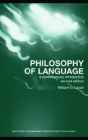
" Mike Harnish, University of Arizona ". . . an excellent textbook for teaching. The examples throughout are delightful and students will love them." Edwin Mares, Victoria University of Wellington William G. Lycan is William Rand Kenan Professor of Philosophy at the University of North Carolina. He is the author of over 150 articles as well as seven books. Routledge Contemporary Introductions to Philosophy Series Editor: Paul K. Moser Loyola University of Chicago This innovative, well-structured series is for students who have already done an introductory course in philosophy. Each book introduces a core general subject in contemporary philosophy and offers students an accessible but substantial transition from introductory to higher-level college work in that subject. The
05144023 Compare and contrast the `direct` perception theory of Gibson with the `constructivist` perception theory of Gregory. Which provides a better account of human perception? Sensation involves physical stimulation of the sense organs, while perception is the organisation and interpretation of incoming sensory information. The Gestalt theorists first identified many of the principles that dominate in human visual perception. As Dowell (1995) has observed: "To perceive seems effortless. To understand perception is nevertheless a great challenge" (cited in Gross, 2005, pp 244). This essay will look at Gregory's theory and Gibson's theory of visual perception whether one or the other
Harold McMillan articulated his now famous “winds of change” sweeping Africa. We had high hopes for Africa, for the Black race, that the insidious imposition of foreign rule on us, the looting of Africa’s natural resources by our colonial masters accorded us would be things of history. That is more than forty years ago. Unfortunately, the promise of independence has not been fulfilled. Today, Africa has become more desolate; there is more starvation, diseases and non-provision of essential services than when we got our independence. There are all kinds of wars in Africa than the rest of world put together. The majority of so-called Africans leaders want to stay in power until the day their bodies are put in the grave. Through buffoonery, utter mismanagement and downright stealing of the wealth of the masses, these leaders have so impoverished Africa that we are now nothing but a beggar continent. We beg for
meaning of being in be-ing in itself is unclear. Non Material things can also be or exist. If something is, then it is a being. But what exactly is this IS that we can see or on the opposite can not see? Therefore this is one of the fundamental questions of philosophy. 2. Can you reject solipsism? Solipsism (solus ipse) means nothing exists, therefore everything is an illusion outside of our own minds. I think that it is true that we know WE as in myself exists. But i can not for certain say that the person reading this exists although it might seems like it to me. I think that you really can’t reject solipsism on the whole because you do know that you exists, but can you for certain say that anybody else does? It may as well be just an illusion, but you never can say for certain. That is why you can not reject it, although you may say that you don’t believe it. 3. What is Kant’s categorical imperative?
ELT Methodology (FLGR.01.041) 27.12.2012 Home Assignments. I Youtube clips: · A vision of K-12 students I personally think that Estonian learners are also digital learners. They spend more time at the computers or laptops or iPads etc. than read books or move outside. And another thing is that teachers are less capable in using technological appliances. But the latter mentioned fact is an advantage for us teachers as well. It gives us an opportunity to provide our students to experience success. They can help and assist us if we need some technological help. Another thing is that in schools, in classes generally students are not allowed to use their appliances, so it means they have to communicate verbally as well. I
REVISION QUESTIONS 1. The Contradictory, diverse, chaotic 20th century. New developments in science and philosophy. The essence and influence of Freudian theory. Contradictory, diverse, chaotic 20th c- simultaneous rejection and invocation of the past. While modernists apotheosized the creative geniuses of the past, they also rejected old poetic forms. Challenge old and established beliefs and more and more people had access to books and education more people went to universities. profound change in morals: · No universal value and perspective on things · Multiple truths, multiple perspectives · Nothing has inherent (kaasasündinud, sisemist) importance · Life lacks purpose Science: Albert Einstein-general theory of relativity had a huge impact on culture as well. Everything is relative. Philosophy: Henri Bergson (French) came to challenge the immediate experience ad intuition are
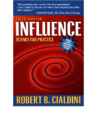
Polish neighborhood, in a historically German city (Milwaukee), in an otherwise rural state. Preface The initial version of Influence was designed for the popular reader, and as such, an attempt was made to write it in an engaging style. In the subsequent versions, that style is retained, but in addition, I present the research evidence for my statements, recommendations, and conclusions. Although they are dramatized and corrobo- rated through such devices as interviews, quotes, and systematic personal observa- tions, the conclusions of Influence are based on controlled, psychological research. This fact allows the reader to feel confident that the book is not "pop" psychology but represents work that is scientifically grounded. The subsequent versions also provide new and updated material, chapter summaries, and study questions to en- hance its utility.
comparison. Maori are the host people of New Zealand. Their name is derived from Ma-Uri which means the children of heaven. The arrival of the Maori people to New Zealand is considered to be somewhat of a mystery. It is known that first Polynesians arrived to New Zealand about 1000 years ago, when navigator Kupe discovered the land in 950 AD. He named it Aotearoa The Land of the Long White Cloud. Although these facts can be debatable, I will focus my attention on this interpretation of Maori history. After the Maori arrived to New Zealand, they started to develop into tribes and sub tribes, this tribal system is still in use. Their culture had almost no influence from the rest of the world. They evolved a culture endorsed by agriculture and hunting. Of course the Maori were warriors as well. They had inter-tribal battles, mostly over territory and the losers became slaves or food
by its adherents to be the verbatim word of God. By the teachings and normative example of Muhhamad, considered by them to be the last prophet of God. An adherent of Islam is called Muslim. Muslims believe that God is one and incomparable and the purpose of existence is to worship God. Muslims are beliving that Islam is the complete and universal version of a primordial faith that was revealed before many times throughout the world, including notably through Noah, Adam, Abraham, Jesus and Moses, whom they consider prophets. They belive that the previous messages and revelations have been partially misinterpreted or alerted over time, but consider the Arabic Koran to be both the unalerted and the final revelation of God. Religious concepts and practices include the five pillars of Islam, which are basic concepts and obligatory acts of worship, and following Islamic law, which touches on virtually every aspect
and shake off theire yoake” (Winthrop, 1996). These differences give humans the opportunity to manifest the work of the Spirit within them. The poor are recommended be loyal and honest in their worship to their betters and to authorities. The rich and powerful should honestly and loyally share justice and mercy to the poor. Because of that God’s ignition is to have these different types of people come together as one religious community that serves both God and one another through their different strengths. The element “love” is subjected through the Bible again, referencing to the sin of Adam’s. Another way of defining this element is expressed as following:“might be all knitt more nearly together in the Bonds of brotherly affection.”(Winthrop, 1996) Also, this can be looked as the love of the community and the attempt of bringing the society more closer to each other. Individuals are as one part of a body, serving God and having love as following:”his
Because this is how slaves tried to control the masters. 27.02.13 1920-jazz, post war euphoria, people were more less ,,From whom the bell tolls" Hemingway. Spanish civil war. Franco vs the Republicans. Three days are described. Protagonist is Robert Jordan. American, but teaches Spanish, joins the Spanish guerillas-the spanish partisans, in the fight against the facist. He is wounded and left to die. We get this sense of betrayal-most powerful emotions. The bell tolls for everybody, the bell is symbolically the funeral bell, it conserns everybody. The message of the novel is presented through inner monologue. When jordan joins the war agains facist, he wants to fight all tyrannia and improve social conditions, he has all the typical features of Hemingway heroe, tough, competent, brave. Seems to be against all forms of governments, comes to conclusion that the republicans way is the best
When taking revenge, one should look to the future, not the past. None should declare hatred or ontempt for others Part Two: Of Commonwealth I authorise and give up my right of governing myself to this man, or to this assembly of men, on this condition; that thou give up, thy right to him, and authorise all his actions in like manner. Death of the king (charles I) XVII Convenant w/o the sword are but words" A nation will fight with another nation, but once there is peace they will fall back into fighting among themselves The state is mortal god *The soveregin can do no injury to the individual because he has delegated authoroty to him *The sovereign has the right to ban books in the intrest of peace *The sovereign has the right to make laws regarding property and reward or punish according to the law and act as a final arbiter *he can make war and raise taxes for it XIX The king has the right to kill you but has no right to make you kill yourself XXI
hive mind: hundreds of scientists and engineers working together. The same unique intelligence and cooperation also underlies more positive advances, such as modern medicine. But is that all that defines us? In recent years, many traits once believed to be uniquely human, from morality to culture, have been found in the animal kingdom (see part one in this two-part series). So, what exactly makes us special? The list might be smaller than it once was, but there are some traits of ours that no other creature on Earth can match. No animal can get close to the devastation humans can cause (Credit: Thinkstock) No animal can get close to the devastation humans can cause (Credit: Thinkstock) Ever since we learned to write, we have documented how special we are. The philosopher Aristotle marked out our differences over 2,000 years ago. We are "rational animals" pursuing knowledge for its own sake. We live by art and reasoning, he wrote.
· And when you begin to miss me, dont forget it was you who let me go. · There is an end to things no matter how much we want to hold into them. · Otsisin keset seda pimedust, sind ja loodetud vabadust,kui mu käed su poole, tegid alguse loole, printsessist ja printsist, ühest kaunist kandist, kus oleme meie kaks, kus lõbutseme, kuni otsas jaks. Sa ei pea muinasmaad looma, sa ei pea tähti taevast tooma. Ole vaid minu kõrval, kui tõuseb päike. Ole vaid mu kõrval kui mind piinab meeleheide. Ole mu kõrval, kui kumab kuu, kui su nime
It is only knowledge produced with difficulty that we truly value. To what extent do you agree with this statement? Session: May 2017 Word count: 1212 It is only knowledge produced with difficulty that we truly value. To what extent do you agree with this statement? To be knowledgeable is to have an understanding about how things are and how things work. Knowledge is the combination of facts, information, and/or skills that when put together create a whole picture enabling us to fully understand a subject or situation. We, as ordinary people, can acquire knowledge either from our first hand experiences (personal knowledge) or from education and research (shared knowledge). Difficulty depends on how much effort or skill must be implemented for the information to be acquired, and the value of something lies in it's importance, usefulness or worth
The Guelphs supported the church and liked to keep things as they were, unlike the Ghibellines. The Ghibellines were mostly supporters of the German emperor and at the time Dante was born, were relieved of their power. When this change took place, the Guelphs for whom Dante's family was associated took power. Although born into a Guelph family, Dante became more neutral later in life realizing that the church was corrupt, believing it should only be involved in spiritual affairs. At the turn of the century, Dante rose from city councilman to ambassador of Florence. His career ended in 1301 when the Black Guelph and their French allies seized control of the city. They took Dante's possessions and sentenced him to be permanently banished from Florence, threatening the death penalty upon him if he returned. Dante spent most of his time in exile writing new pieces of literature. It is believed that around 1307 he interrupts his unfinished
worthy individuals with rights of their own. 3 The UNCRC has been considered as one of the most innovative international treaties ever ratified. It laid the foundation for the potential change of attitude and perception of children as primarily objects of the adult world. The recognition of children by the UNCRC as respected individuals with rights of their own has given impetus to a significant field of academic study. Since then, there has been increasing sociological interest in children which has provided a new perspective around the idea of children as social actors, and that childhood is not a natural phenomenon but a social 4 construct. It is now recognised that childhood is a culturally constructed phenomenon arising from human interaction.5 However, the new knowledge of children as competent 1 Mark Drankeford and Jonathan Scourfield and Sally Holland, `Welsh Children`s Views on
 annaabi.ee